

Business
OPEC+ debates oil output boost as US war on Iran disrupts shipments



Business
Apple Stock Dips 3.2% to $264.18 Amid Geopolitical Tensions, But Upcoming Product Fuel Optimism for 2026
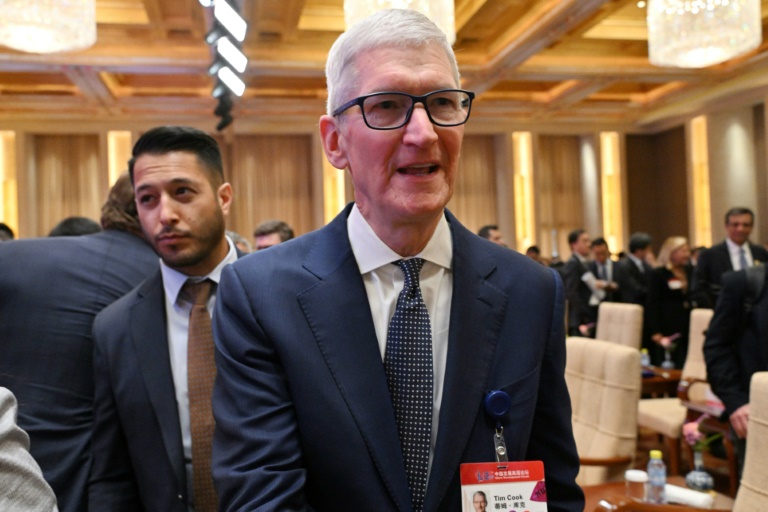
Apple Inc.’s stock closed at $264.18 on Friday, Feb. 27, 2026, down $8.77 or 3.21% from the previous session’s close, as broader market concerns over escalating U.S.-Israel-Iran conflict and potential oil price spikes weighed on technology shares. Despite the pullback, AAPL remains near its recent highs, with analysts highlighting resilient demand for iPhones, record Services growth and anticipated AI-integrated product reveals as drivers for potential recovery and gains through the rest of 2026.
AFP
Trading volume reached 72.4 million shares on the Nasdaq, reflecting heightened investor activity amid global uncertainty. The decline followed a volatile week where shares traded in a range of $262.89 to $272.81. After-hours trading saw a further modest dip to $263.55.
The drop came against a backdrop of geopolitical risks, with U.S. and Israeli strikes on Iran prompting retaliatory actions and raising fears of disrupted supply chains and higher energy costs impacting consumer spending on premium devices. Apple’s heavy reliance on Asian manufacturing, particularly in regions sensitive to regional instability, added to caution among some traders.
Yet Apple’s fundamentals remain robust. The company reported record fiscal first-quarter results for the period ended Dec. 27, 2025, with revenue surging 16% year-over-year to $143.8 billion and diluted earnings per share climbing 19% to $2.84, both exceeding Wall Street expectations. iPhone revenue jumped 23%, driven by strong demand for the iPhone 17 series, while Services hit an all-time high with 14% growth to around $30 billion. Operating cash flow approached $54 billion, enabling nearly $32 billion in shareholder returns via buybacks and dividends.
CEO Tim Cook described the quarter as “remarkable,” noting an installed base exceeding 2.5 billion active devices and unprecedented iPhone performance across all geographic segments. The results underscored Apple’s ability to weather macroeconomic headwinds through premium pricing power, ecosystem loyalty and diversification beyond hardware.
Looking ahead, Apple is gearing up for a significant product event on March 4, 2026, with launches expected in New York, London and Shanghai. Reports point to new AI-enhanced wearables, a potential lower-priced iPhone model (possibly the iPhone 17e starting at $599), updated MacBooks and iPads. Bloomberg and other outlets suggest these could include advanced AI features, building on Apple’s push into generative AI companions and integrations.
Analysts view the March 4 event as pivotal for sustaining momentum. J.P. Morgan and others have highlighted AI companions as a potential game-changer, positioning Apple to capitalize on the AI boom despite lagging some peers in headline-grabbing announcements. Daniel Ives of Wedbush called 2026 potentially “monumental” for Apple’s AI execution, forecasting meaningful growth from monetizing the technology roadmap.
Market research from IDC forecasts a challenging year for smartphones, predicting a 12.9% drop in global shipments to 1.12 billion units due to rising memory chip prices—the largest-ever decline. However, Apple and Samsung are expected to gain market share, benefiting from brand strength and premium positioning. Apple’s minimal impact from memory costs in the December quarter positions it well, though a greater effect is anticipated in the current March quarter.
Institutional sentiment remains positive. Berkshire Hathaway’s Greg Abel emphasized Apple’s long-term compounding potential in the company’s annual letter, reinforcing confidence in its enduring value. Some hedge funds, including those linked to George Soros, have increased stakes, viewing AAPL as undervalued relative to its cash generation—nearly 28% free cash flow margins—and consistent returns to shareholders.
Wall Street consensus leans bullish. MarketBeat aggregates a Moderate Buy rating from 36 analysts, with an average 12-month price target around $291.70 to $293.41, implying roughly 10-11% upside from current levels. Other forecasts range higher, with some eyeing $300+ if AI and new products drive acceleration. Public.com cites a consensus Buy with targets near $287.95.
Challenges persist. Apple’s P/E ratio hovers around 33.4x, reflecting a premium valuation. Geopolitical risks, potential slowdowns in China (despite recent iPhone strength), and competition in AI from Microsoft, Google and others could pressure multiples. A stronger dollar or economic softening might also curb discretionary spending on high-end gadgets.
Despite Friday’s decline, Apple’s year-to-date performance in 2026 has been solid, with shares recovering from early-year dips and benefiting from the blowout holiday quarter. The 52-week range spans $169.21 to $288.62, with the all-time high closing price at $285.92 in December 2025.
As March begins, focus shifts to the March 4 event and upcoming fiscal second-quarter guidance. With strong cash flows supporting buybacks, a $0.26 quarterly dividend (yield ~0.4%) and ongoing innovation, Apple appears well-positioned to navigate uncertainty and deliver shareholder value in a turbulent 2026 landscape.
Investors will watch closely for signs of sustained demand and AI traction, which could propel shares toward consensus targets and beyond amid a market hungry for resilient tech leaders.


In polarised Iran, Khamenei’s death triggers celebrations and grief
Sen. Roger Marshall, R-Kan., argues Google is committing election interference by suppressing search results for the failed Trump assassination on ‘The Big Money Show.’
Thirty years ago, Congress passed Section 230 to help fragile internet start-ups survive litigation attempts on multiple fronts. In 1996, Americans logged on with dial-up modems and gathered on message boards. Lawmakers wanted to protect burgeoning companies from crushing defamation, copyright, and other lawsuits over something a random user posted. Congress aimed to nurture innovation, protect free speech, and let a competitive marketplace flourish.
That may have made sense then. Today it does not.
What Congress framed as a narrow free-speech shield became a permanent amnesty program for trillion-dollar Silicon Valley monopolists. Section 230 no longer protects speech. It protects power.
Instead of scrappy start-ups, Americans now answer to online oligarchs. Google. Facebook. Amazon. Apple. These companies do not merely host content. They control search, social media, online commerce, app distribution, and digital advertising. They shape what Americans see, read, buy, and believe. And they invoke Section 230 to shield themselves while they censor, silence, and cancel their political opponents.
UNDER OATH, META’S ZUCKERBERG SHOWED WHY BIG TECH CAN’T POLICE ITSELF
Congress granted platforms immunity for content users post, and Congress allowed them to moderate content in “good faith.” Lawmakers assumed competition would discipline abuse. If one platform censored too aggressively, users could leave for another.
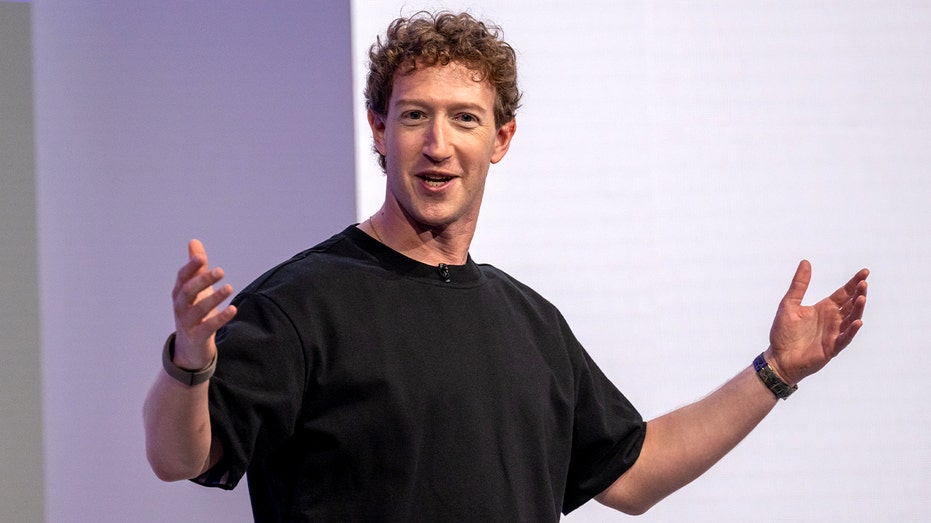
Mark Zuckerberg, chief executive officer of Meta Platforms Inc., appears during the Meta Connect event in Menlo Park, California, on Sept. 17, 2025. (David Paul Morris/Bloomberg via Getty Images / Getty Images)
That competition never materialized. Big Tech executives bought rivals, crushed start-ups, and leveraged network effects to lock in dominance. They turned platforms into monopolies. They used scale to entrench power. Even conservatives who distrust these companies must still use their platforms to reach voters, customers, and each other.
Meanwhile, courts expanded Section 230 far beyond its original purpose. Judges stretched the statute to cover conduct Congress never contemplated. Silicon Valley lawyers pushed aggressive interpretations, and courts accepted them. As a result, trillion-dollar monopolists now decide what Americans may say online while they coordinate with politicians and bureaucrats who demand crackdowns on so-called “misinformation.”
That is not a free market. That is government-enabled censorship.
Conservatives paid the price. Big Tech companies hunted down, censored, and canceled voices that challenge the Ruling Class. They deplatformed doctors and scientists who questioned COVID orthodoxy. They censored Hunter Biden’s criminal activity under the guise of “content moderation.” Americans would rather call it viewpoint discrimination. They deplatformed the sitting President of the United States of America.
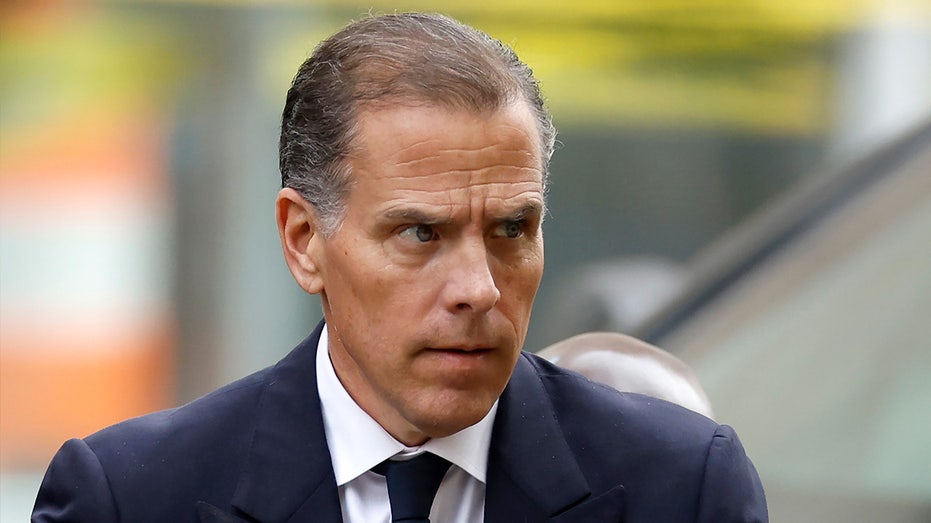
Hunter Biden, son of U.S. President Joe Biden, arrives to the J. Caleb Boggs Federal Building on June 06, 2024 in Wilmington, Delaware. The trial for Hunter Biden’s felony gun charges continues today with additional witnesses. (Kevin Dietsch/Getty Images / Getty Images)
At the same time, these companies insist they need blanket immunity to avoid liability for horrific content – human trafficking, terrorism, drug trafficking – content they monetize through ads and engagement. They profit from the system at every step. But when harm follows, they point to Section 230 and deny responsibility.
JILLIAN MICHAELS: BIG TECH BUILT A DIGITAL DRUG — AND OUR KIDS ARE HOOKED
That is not neutrality. That is corporate welfare.
Section 230 does not appear in the Constitution. Congress created it in 1996, and Congress can reform or repeal it. No company possesses a constitutional right to government-granted immunity. When lawmakers grant special protections to powerful corporations, those corporations use that protection to accumulate even more power.
Washington made that choice. Washington can reverse it.
If Meta had competed against Instagram instead of acquiring it, Americans might enjoy more choices and less centralized control. If YouTube had competed with Google instead of merging into it, creators might not depend on a single gatekeeper. Consolidation strengthened censorship power. Immunity protected consolidation.
For three decades, Congress and federal regulators coddled Silicon Valley. They tolerated consolidation. They defended immunity. They ignored warning signs. Now, Americans live under digital gatekeepers who answer to no one.
Conservatives do not want bureaucrats to police speech. But we must refuse to let trillion-dollar corporations wield government-granted immunity while they silence half the country. We must reject permanent amnesty for politically biased monopolists.
CLICK HERE TO DOWNLOAD THE FOX NEWS APP
Thirty years is long enough. Congress should strip Big Tech of its Section 230 immunity. Lawmakers should restore competition, enforce antitrust laws, and hold platforms accountable under the same legal standards that govern everyone else.
Stop the amnesty. End the sweetheart deal. Repeal Section 230.
Business
Gold, silver prices likely to soar tomorrow amid escalating Middle East war; what lies ahead?

Khamenei’s death, which was confirmed by Iranian state media earlier today, triggered warnings about sharp retaliation from Tehran. US President Donald Trump announced that the 86-year-old leader had been killed on the first day of what he described as massive joint airstrikes.
Geopolitical tensions trigger risk-off sentiment, shifting investors away from equity markets and towards safe-haven assets like gold and silver. The precious metals had seen a record bull run in the beginning of this year, strongly rallying amid Trump’s tariff flip flops and other uncertainties, before seeing some correction.
Expect volatility in precious metals
Gold and silver prices are set to remain highly volatile with a gap up in the opening session tomorrow as the Middle East conflict involving renewed US and Israeli military action against Iran continues to dominate global risk sentiment, said Jateen Trivedi, VP Research Analyst – Commodity and Currency, LKP Securities.
“A sharp escalation in hostilities, with coordinated strikes and retaliatory moves is fueling uncertainty and diminishing hopes of a quick diplomatic resolution. This elevated geopolitical risk can drive investors toward traditional safe-haven assets like gold and silver, and widely expect a gap-up opening for bullion markets,” he said.

As global equities and risk assets come under pressure, capital tends to shift into precious metals, which act as a hedge against uncertainty, the analyst explained. “Earlier moves have already pushed gold and silver prices higher in recent sessions, and this momentum could continue if the conflict intensifies further. Energy markets are also responding, with crude oil prices rising on fears of supply disruption through key routes like the Strait of Hormuz, which further adds to risk-off sentiment and supports bullion interest,” he further said.
Also read: Crude oil prices to cross $100? What experts predict after US, Israel attack on Iran
Profit booking to follow?
However, the impact may not be uniform. If there are any signs of diplomatic developments or indications of de-escalation, precious metals could see profit-taking after an initial spike of 3-6%, Trivedi said.
“We would expect the ongoing rally in US treasuries, oil, gold, and silver to extend. For India, the impact is typically magnified: higher crude oil prices widen the current account deficit, stoke domestic inflation, pressure the rupee, and could lead to FII outflows as global investors reduce risk exposure,” said Nachiketa Sawrikar, Fund Manager at Artha Bharat Global Multiplier Fund.
Gold rose to near a one-month high on Friday, trading at $5,230.56 per ounce. US gold futures for April delivery settled at $5,247.90. The increase marked a 7.6% gain for February this year.
Silver also climbed, with spot prices rising 4.8% to $92.60 per ounce, recording a 9.7% monthly gain. Platinum increased to $2,350.34 per ounce, while palladium fell slightly to $1,775.31.
Bears likely to take control of Dalal Street
Indian capital markets are expected to see a gap-down opening tomorrow amid the rising uncertainties. Ashish Anand, Partner at Fortuna Asset Managers, said that financial markets will probably experience risk-off behaviour together with foreign FIIs possibly selling holdings while market prices experience intense and fast price changes during the day.
Will Sensex, Nifty react amid escalating Middle East war after Khamenei’s killing?
“Our advice to investors is simple: avoid panic-led decisions. Businesses need to implement volatility as a strategic tool, which should be handled with care. People who want to invest for the long term should keep their Systematic Investment Plans (SIP) running and distribute their money between reliable, strong, and fundamentally strong companies. A person needs to follow asset allocation rules, which include stocks, gold, and bonds, because these guidelines help through unpredictable market times. We believe wealth is built through discipline, not reaction and the key theme would be “patience over pace,” said Ashish Anand, Partner, Fortuna Asset Managers.
(Disclaimer: Recommendations, suggestions, views and opinions given by the experts are their own. These do not represent the views of The Economic Times)


China’s Wang Yi says attacks on Iran ’unacceptable’, urges ceasefire and talks

SunOpta surges 63% after InvestingPro Fair Value signal
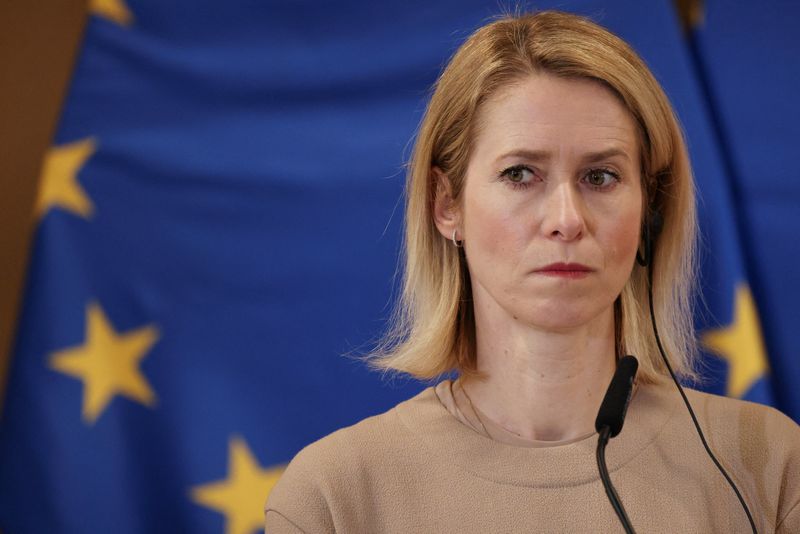

There is now an open path to a different Iran, EU’s Kallas says
Edited excerpts from a chat:
What is your assessment of the current market cycle, and where do you believe we stand in terms of valuations versus earnings visibility?
The Indian markets continue to appear expensive on a headline basis as they are trading above their median valuations. However, there are pockets of opportunities across sectors and market caps that could benefit from strong domestic demand and policy support. Earnings visibility has been improving for sectors such as financials, industrial products, auto, and select consumer categories, while pockets like defense, and infrastructure continue to offer long-term growth potential. External factors such as global trade tensions, tariff concerns and India being viewed as an Anti AI trade has weighed on the sentiment of the market. India’s pursuit of signing free trade agreements (FTAs) with different countries like the EU and New Zealand is creating new avenues for trade, investment, and market diversification, which could support earnings growth over the medium term. We believe that the market is currently in a phase where broad valuations may appear rich, but earnings visibility is improving, and pockets of opportunities continue to exist for investors who focus on quality, growth potential, and sectors positioned to benefit from both domestic and global trends.
What stood out for you in the Q3 earnings season? Are you more hopeful of broad-based growth than before?
What stood out this Q3 earnings season was the divergence between underlying operating performance and the direction of earnings revisions. Corporate Earnings this quarter were broadly in line with expectations. Several consumption-linked and cyclical sector companies witnessed a growth in top-line with operating margins broadly stabilized or expanded and profit growth remained healthy. Banks and NBFCs showed signs of stability in asset quality and profitability metrics and industrial and defence names continued to benefit from execution momentum and policy tailwinds. Earnings downgrades in a couple of sectors were not driven purely by weak quarterly performance but due to a confluence of external factors such as currency volatility, commodity price swings, competitive intensity in certain segments, and global volatility. Management commentary indicated that domestic demand showed early signs of improvement following policy support, with autos and select consumer categories reflecting better business commentary. However, competitive intensity remains elevated in some sectors such as paints, consumer durables and telecom. IT services delivered a steady quarter with management commentary highlighting the concerns around AI related disruptions. Overall, the quarter reinforced a cautiously constructive view operationally, corporate India appears to be on a firmer footing as compared to previous quarters, but forward earnings expectations are still adjusting to a complex mix of macro, regulatory and competitive factors.
Which sectors appear structurally well-positioned over the next three to five years, and why?
Sectors that are beneficiary of secular trends and policy support given by the government appear structurally well positioned over the next three to five years. One prominent theme is defence. There is a multi-year potential for businesses in this sector due to rising government spending on defense equipment modernization, local manufacture, and indigenization. Strategic Partnerships with global players are improving technological access.
Furthermore, companies that are involved in the manufacturing of advanced electronics, aerospace components, and systems integration are well positioned to benefit from these structural tailwinds.
Pockets of consumer discretionary is another structurally attractive sector, reflecting changing preferences of the consumers as per capita income improves, urbanization and digital adoption encourages consumers to spend more on upgrading and preimmunizing their lifestyles.Banks and NBFCs are improving on asset quality, healthy credit growth, and increasing penetration across retail and corporate segments. The combination of robust balance sheets, policy support, and innovation in digital lending and payments provides a structural tailwind for earnings.
What is your outlook on financials, particularly in the context of credit growth, asset quality and margin sustainability?
The outlook on the financial sector remains constructive given improvement of credit growth and stable operating conditions. There are early signs that corporate lending is picking up which is expected to continue. Deposit growth continues to remain a challenge, and a higher reliance on bulk deposits could keep the cost of funds slightly elevated. Banks should be able to maintain their stable margins given the repricing of MCLR linked loans. Increased collection effectiveness and stress level mitigation, especially in unsecured portfolios, ensure that asset quality and credit costs continue to be controlled. Management commentary suggests that the second half of the year should be better, as growth is expected in both lending and controlled credit costs, which will improve their profitability. This creates a favorable backdrop for banks, balancing growth opportunities with prudent risk management.
How should investors approach the IT and digital ecosystem amid AI-led disruption and shifting global tech spending?
Investors should adopt a wait and watch approach in this space. AI is changing business models of traditional IT companies. The pace of AI-driven change is unprecedented in nature. Global hyperscalers are committing capex more than $600 billion towards AI related infrastructure, including data centers. As a result of these developments within the field of AI, companies are now investing more in automation and artificial intelligence as compared to traditional IT services. Companies who successfully implement AI stand to benefit from these changes, while others could lag, thereby impacting their revenue and profit margins. For Indian IT, the structural shift presents a dual challenge. Traditional service models face pressure as automation and generative AI reduce demand for conventional software maintenance. At the same time, India’s deep talent base and growing digital capabilities provide opportunities to support global clients in AI adoption.
How are you currently positioning portfolios in terms of sector allocation, cash levels and market-cap bias?
We use momentum as a factor across our funds and allocate capital to sectors and companies based on relative price strength, growth in revenue, and accelerating earnings, while using absolute momentum to manage risk and protect capital. From a market-cap bias, positioning depends on the mandate of the scheme. In categories such as Flexicap, ELSS and Special Opportunities where the fund managers have flexibility to allocate across market caps, we have a slight bias towards mid and small caps. Sector-wise, we are positioned in BFSI, Autos, Pharma and Industrial Products where we believe the balance between growth prospects and risk is favourable. These sectors offer a mix of cyclical recovery, structural tailwinds and improving profitability dynamics. On the risk management side, we actively use hedging to reduce downside risk particularly during phases where markets remain sideways or uncertain. In addition, we maintain cash in certain portfolios where near-term risk-reward warrant a more cautious stance. Overall, our approach seeks to participate in momentum-led opportunities while maintaining flexibility and prudent risk control.
Do you think that the sell-off in smallcaps we saw in last 1.5 years is done and that we will see gradual recovery in next 2 quarters?
Given the results in Q3FY26, there are encouraging signs that the extended weakness in small-caps could be stabilizing. Across a broad set of companies, revenue and profitability growth is accelerating, with smaller companies showing stronger momentum. Earnings downgrades appear to be moderating, and we expect upgrades to gradually emerge as macro conditions stabilize and companies benefit from policy tailwinds. Supportive monetary conditions due to the rate cuts done by the Reserve Bank of India should improve corporate earnings and investor sentiment. While valuations are above median levels at the broader index level, there continue to be selective pockets within this space with solid fundamentals and clear growth drivers. The combination of the above-mentioned factors suggests that small-caps could see a gradual recovery in the coming quarters.


Global reaction to the killing of Iran’s Khamenei

K-pop supergroup BTS will make a highly anticipated return to the stage with a free, one-hour comeback performance at Gwanghwamun Square in central Seoul on March 21, 2026, featuring premiere tracks from their upcoming fifth full-length album “Arirang” alongside beloved hits, their agency HYBE confirmed.
Titled “BTS The Comeback Live: Arirang,” the outdoor event at 8 p.m. KST will mark the septet’s first full-group live appearance in three years and nine months, following individual activities and military service commitments. The performance will stream live exclusively on Netflix to viewers in approximately 190 countries, directed by acclaimed Super Bowl halftime show producer Hamish Hamilton, amplifying its global reach.

HYBE emphasized that the approximately one-hour duration was a deliberate choice by the organizers to prioritize audience safety, crowd control, stage management, public transportation convenience and noise considerations in the bustling downtown location. “The performance time has been set at an appropriate duration to ensure safe and smooth operations,” HYBE stated in a release addressing online speculation.
Rumors had circulated suggesting the Seoul Metropolitan Government imposed the time limit, but both HYBE and city officials swiftly clarified that the decision originated with the agency. “The Seoul Metropolitan Government has never limited the Gwanghwamun Square concert to one hour,” HYBE said, adding that discussions from December 2025 onward included the one-hour request from HYBE. City authorities echoed this, noting they handle non-performance logistics like safety while the concert structure falls under the organizer’s responsibility.
The event has generated massive excitement since its announcement. Tickets for seated sections—limited and requiring registration via NOL Ticket—sold out almost instantly when sales opened, with systems crashing under the surge of over 100,000 simultaneous users at peak times. A special standing zone near the extended stage was allocated to 2,000 fans selected through a draw from those who preordered “Arirang.” Authorities expect up to 260,000 people to gather in and around the area, treating Gwanghwamun Square as a “virtual stadium” with 29 designated entry points, heavy police presence and traffic controls.
To manage crowds, Seoul city is hosting separate fan events nearby for about 30,000 additional attendees. Gyeongbokgung Palace, adjacent to the square, will close entirely on March 21—a rare weekend shutdown for the historic Joseon Dynasty site—to facilitate security and flow.
The concert coincides with the March 20 release of “Arirang,” BTS’s first full-group album since 2022. The title draws from the traditional Korean folk song symbolizing resilience and longing, reflecting themes of reunion and cultural pride. The setlist will include new songs from the album plus fan favorites, offering a concise yet powerful showcase of BTS’s evolution.
BTS members—RM, Jin, Suga, J-Hope, Jimin, V and Jungkook—have expressed gratitude for the opportunity to reconnect with fans in such an iconic setting. Gwanghwamun Square, framed by the statue of King Sejong and the National Museum of Korea, holds symbolic weight as a historic public space for cultural and political gatherings.
The Netflix livestream positions the event as a global cultural moment, following BTS’s history of breaking streaming records and influencing soft power diplomacy. Economic projections estimate a significant boost for Seoul, potentially in the hundreds of millions of dollars from tourism, merchandise and related activities.
Preparation has involved close coordination between HYBE, Seoul authorities, police and emergency services. Fans worldwide are already planning trips, with travel guides and eSIM recommendations circulating online for international ARMY (BTS’s fandom name).
As March 21 approaches, anticipation builds for what promises to be a landmark in K-pop history—a free, accessible return in the heart of Seoul, bridging BTS’s past triumphs with their next chapter before launching an 82-date world tour, “BTS WORLD TOUR ARIRANG,” starting in Goyang, South Korea, in April.
For now, the focus remains on safety and celebration. HYBE urged fans to follow official channels for updates, while city officials stressed cooperation to ensure a smooth, memorable night.

Ian Huntley ‘bludgeoned 15 times from behind as he bent over’ in prison attack

Apple Stock Dips 3.2% to $264.18 Amid Geopolitical Tensions, But Upcoming Product Fuel Optimism for 2026

Star colt Observer victorious in 2026 Australian Guineas


-

 Sports6 days ago
Women’s college basketball rankings: Iowa reenters top 10, Auriemma makes history
-

 Fashion2 days ago
Weekend Open Thread: Iris Top
-

 Politics6 days ago
Nick Reiner Enters Plea In Deaths Of Parents Rob And Michele
-

 Business5 days ago
True Citrus debuts functional drink mix collection
-

 Politics3 days ago
ITV enters Gaza with IDF amid ongoing genocide
-
Sports1 day ago
The Vikings Need a Duck
-

 Crypto World5 days ago
XRP price enters “dead zone” as Binance leverage hits lows
-

 Tech9 hours ago
Unihertz’s Titan 2 Elite Arrives Just as Physical Keyboards Refuse to Fade Away
-

 Business7 days ago
Mattel’s American Girl brand turns 40, dolls enter a new era
-

 Tech5 days ago
Unsurprisingly, Apple's board gets what it wants in 2026 shareholder meeting
-
 NewsBeat19 hours ago
Dubai flights cancelled as Brit told airspace closed ’10 minutes after boarding’
-

 Business7 days ago
Law enforcement kills armed man seeking to enter Trump’s Mar-a-Lago resort, officials say
-

 NewsBeat3 days ago
Cuba says its forces have killed four on US-registered speedboat | World News
-
 NewsBeat1 day ago
The empty pub on busy Cambridge road that has been boarded up for years
-
 NewsBeat4 days ago
Manchester Central Mosque issues statement as it imposes new measures ‘with immediate effect’ after armed men enter
-
 NewsBeat6 days ago
‘Hourly’ method from gastroenterologist ‘helps reduce air travel bloating’
-

 Tech7 days ago
Anthropic-Backed Group Enters NY-12 AI PAC Fight
-

 NewsBeat15 hours ago
Abusive parents will now be treated like sex offenders and placed on a ‘child cruelty register’ | News UK
-

 NewsBeat7 days ago
Armed man killed after entering secure perimeter of Mar-a-Lago, Secret Service says
-

 Politics7 days ago
Maine has a long track record of electing moderates. Enter Graham Platner.