

Connect with us

NewsBeat

Lunar New Year draws crowds to Buddhist temple relic display

Published

on

Lunar New Year draws crowds to Buddhist temple relic display

ROSEMEAD, Calif. (AP) — Katherine Nguyen stood with hands folded and head bowed at the altar of a Buddhist temple in Southern California.

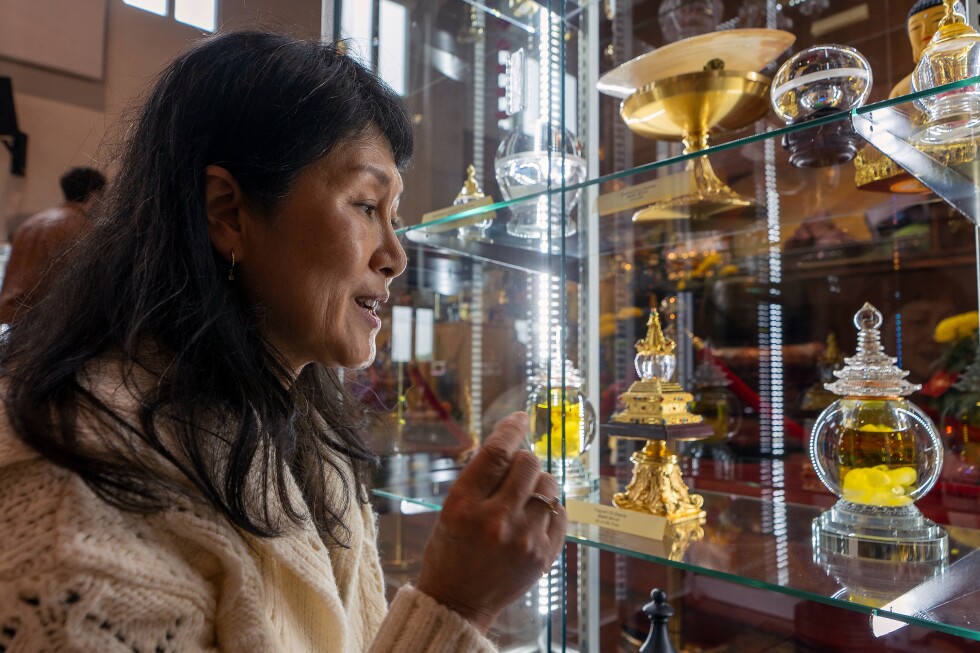
Before her were tooth and finger bone relics believed to belong to Shakyamuni Buddha, the founder of Buddhism who is said to have attained enlightenment in India about 2,500 years ago.

“To be able to see the Buddha, to get close to him and feel the energy — it’s very special for a Buddhist,” Nguyen said.

Every Lunar New Year, the Wei Mountain Temple in Rosemead, California, publicly displays what it calls the “10,000 Buddha Relics,” though the actual number contained in several glass display cases and miniature stupas or reliquaries is far larger, according to the temple’s founder, Master YongHua.

Advertisement

The collection prominently features bones and teeth believed to have come from the bodies of the Buddha, his relatives and disciples. It also includes numerous shariras — colorful pearl- or crystal-like objects said to have been culled from the cremated ashes of Buddhist masters and the Buddha.

Relics in Catholicism and Orthodox Christianity are venerated as links to the saints or Christ, while Buddhist relics are primarily seen as living, active sources of blessings imbued with supernatural qualities. It’s believed they can appear on their own, grow or even multiply, which is how Buddhists often explain the mystery of why there are so many spread across the world. Relics of the Buddha or revered monks are typically enshrined in a stupa — a sacred, dome-shaped monument that Buddhists also use for meditation and pilgrimage.

Belief in relics is a matter of faith

At the Rosemead temple, the teeth and finger bone relics are significantly larger than those in the average human body. YongHua said that’s because they have “grown” over the years. The tooth relic, he said, produces “baby shariras,” the multicolored crystals believed to have multiplied and filled several containers in their exhibit.

Most Buddhist sects acknowledge the spiritual significance of relics even if some teachers have tried to shift the focus to Buddha’s teachings that emphasize mindfulness and kindness. Relics can be found in every country where Buddhism has a deep history: India, Japan, Myanmar, Nepal, Singapore, Sri Lanka, Taiwan and Thailand. In temple and monastic settings, the authenticity of these items is rarely questioned; spiritual leaders avoid subjecting them to scientific tests over worries that it might strip them of what makes them extraordinary.

Advertisement

Over the years, there have been many reports of fake tooth and bone relics as well as manufactured acrylic shariras flooding markets in Asia and online shopping platforms, often sold with falsified authenticity certificates.

Singapore’s Buddha Tooth Relic Temple and Museum houses a tooth relic said to have been recovered from the Buddha’s funeral pyre in a giant stupa fashioned from 705 pounds (320 kilograms) of gold. That relic came under scrutiny in 2007 after dental experts pointed out that the 3-inch (7.5 centimeter) tooth’s characteristics were incompatible with the dimensions of a human tooth and most likely belonged to a cow or a buffalo. The temple’s abbot, the Venerable Shi Fazhao, said at the time that he had never questioned its authenticity and “if you believe it’s real, it’s real.”

YongHua says the main purpose of the relics donated to the Rosemead temple about 14 years ago by a collector is to inspire faith. He has no doubts about their ethereal nature.

“I have seen them multiply with my own eyes,” he said. “They move on their own, they levitate. … I’ve seen people get cured of various ailments just by being in their presence.”

Advertisement

John Strong, professor emeritus of religion at Bates College in Lewiston, Maine, wrote the book “Relics of the Buddha” in 2004. He said the earliest accounts of Buddha’s funeral are found in Pali texts dating from about the 2nd century B.C.E. Later commentaries describe the relics that came out of the Buddha’s ashes as glittering jewels — some as small as mustard seeds and others resembling gems or golden nuggets.

Theories abound about what generates these relics and why, Strong said, adding that they do serve the important purpose of connecting Buddhists to the Buddha, who is “essentially absent” because he became enlightened and liberated from the cycle of birth, death and reincarnation.

Relics are signs of a spiritually realized yogi

Geshe Tenzin Zopa, a Tibetan monk and educator, said relics are “the most precious, most sacred, most powerful holy objects in our understanding.” As a young monk in Nepal, he believes he saw his teacher, Geshe Lama Konchog — who was recognized as a realized yogi by the Dalai Lama — generate relics as his body was being cremated. The guru died in October 2001.

Zopa said he observed pearl-like relics popping out of the crematorium “like popcorn.” He said senior monks advised that the structure be sealed and left undisturbed for three days. When they returned, disciples found hundreds of relics and to their shock, the guru’s intact heart, tongue and eyes, Zopa said.

Advertisement

“I’d never seen anything like that in my life. It was truly a miracle,” he said. It’s widely believed the relics later multiplied; most are enshrined in a memorial stupa at Kopan monastery in Nepal.

For students of yogis, looking for relics in cremains is not a morbid fascination, but an act of unshakeable faith and an expectation that their guru would leave behind a message — a physical sign of their spiritual realization, Zopa said. They’re not easy to produce either.

“We believe that the relics are left behind due to the kindness of these holy gurus for the sake of us sentient beings to collect merit and purify ourselves,” Zopa said. “One has to make very strong and extensive prayers and preserve pure morality for many lifetimes in order to create the causes that produce relics.”

Not all Buddhist teachers view relics the same way

In Southern California, at the U.S. headquarters for the Fo Guang Shan Buddhist order, the Venerable Hui Ze explained that their founder, Venerable Master Hsing Yun, taught his followers not to solely focus on relics.

Advertisement

“Our venerable master emphasized Humanistic Buddhism — how we can bring Buddha’s teachings into our daily lives with good thoughts, words and actions,” said Hui Ze. “He instructed us that relics should not distract us from the path to liberation.”

The order’s headquarters in Taiwan houses a Buddha tooth relic gifted to Hsing Yun by a lama, Kunga Dorje Rinpoche, who carried the sacred object as he fled Tibet in 1968 and safeguarded it for three decades. Hui Ze said he was moved by the relic the moment he saw it.

“I had this really intimate experience and felt like I had connected with the Buddha who was here 2,600 years ago, and that connection is priceless,” he said.

Hsing Yun had instructed disciples not to look for relics in his ashes. He died Feb. 5, 2023, at age 95. Following the master’s cremation, his disciples sifted through the cremains and found several colorful, pearly relics.

Advertisement

But in deference to the master’s wishes, they’ve been left in the ashes to be spread across the order’s dozen centers across five continents.

Hsing Yun’s ashes containing the relics will be enshrined in the Southern California headquarters during a ceremony on March 21.

___

Associated Press religion coverage receives support through the AP’s collaboration with The Conversation US, with funding from Lilly Endowment Inc. The AP is solely responsible for this content.

Advertisement

Source link

Advertisement
Continue Reading
Click to comment

Leave a Reply

Your email address will not be published. Required fields are marked *

NewsBeat

State pension concerns as some workers ‘not able to retire as early’

Published

on

Cambridgeshire Live

MPs debate concerns as state pension age rises to 67 between April 2026 and 2028

MPs have been debating changes to state pension rules and how people could face varying retirement ages. The state pension age is set to rise from April 2026.

Advertisement

Currently, you can claim your state pension upon reaching 66, but the access age is increasing to 67 between April 2026 and April 2028. With this major shift approaching, the Work and Pensions Committee has been discussing with policy specialists the potential consequences.

A significant concern is that workers may reach a point where they’re physically unable to continue working, particularly in demanding manual roles. Yet they still face years of waiting before accessing their state pension.

The committee heard from policy advocates about the challenges confronting older employees and what additional measures could be introduced to assist them. The committee asked the panel about the suggestion the Government should offer better workplace support to sectors it can “influence most directly”, such as health, social care, and education.

Jon Richards, assistant general secretary at public service union UNISON, highlighted how the rules can vary for different workers. He said: “If you compare ambulance workers to fire and police workers, they have different retirement ages. It’s very difficult for ambulance workers, even though they are manually handling all the time, all the day, more so than police and fire workers, yet they are not able to retire as early.”

Advertisement

Mr Richards stated that the union carried out a survey among ambulance workers to determine what would persuade them to stay in their roles, reports the Mirror. The most frequent response was a reduction in their retirement age.

Numerous NHS staff, including ambulance crews, have their retirement age linked to the state pension age, which is due to rise beyond 67, reaching 68 between April 2044 and 2046. Some workers can choose to access reduced benefits from the age of 55, which is also the age at which private pensions can be accessed.

However, this threshold is set to increase to 57 in April 2028. Research carried out by the GMB Union in 2024 revealed that 75 per cent of ambulance workers who retired in 2023 did so before the age of 60.

By comparison, the retirement age for many police and fire service personnel is 60, although early pension access may be available in certain circumstances. Mr Richards also pointed out that initiatives to improve support within the education sector frequently overlook some vital members of staff.

Advertisement

He told the committee: “If you look at other sectors like education, the focus is always on teachers, professional workers, yet 50 percent of people in schools is support staff, cleaners, teaching assistants.”

He referenced a previous Department for Education study examining teachers’ mental health. Researchers believed the findings could also be applicable to teaching assistants and other school staff. Mr Richards explained that they were required to inform the department that workers such as teaching assistants function “in a completely different way” to teachers.

The policy advocate was keen to dispel a further misconception, saying: “You get this idea of public sector workers with their ‘gold-plated pensions’ and other things like that. I always say this, but the local Government pension scheme average pension is just over £5,000.”

State pensioners are set to receive a welcome boost this April thanks to the triple lock mechanism. This guarantee ensures payments increase in line with whichever is the highest of three figures: 2.5 per cent, wage growth, or inflation.

Advertisement

Earnings growth proved the highest measure last year, meaning pension payments will rise by 4.8 per cent from April. This will see the full new state pension climb from the current £230.25 weekly to £241.30 weekly, while the full basic state pension will increase from the present £176.45 weekly to £184.90 weekly.

Source link

Continue Reading

NewsBeat

Reece James admits Chelsea have a problem after ‘bitterly disappointing’ Arsenal loss | Football

Published

on

Reece James admits Chelsea have a problem after 'bitterly disappointing' Arsenal loss | Football
Reece James knows Chelsea must fix a problem to progress (Picture: Getty Images)

After Chelsea suffered yet another red card in defeat to Arsenal, captain Reece James admitted the Blues have a discipline issue.

The Gunners went five points clear at the top of the Premier League again after a 2-1 victory over the Blues at the Emirates.

William Saliba and Jurrien Timber scored the goals for the home team, either side of a Piero Hincapie own goal just before half-time.

It was a tight game with all three goals coming from corners and not a great deal of creativity from open play on either side.

Advertisement

Chelsea were left disappointed to leave with nothing, but only have themselves to blame as they played the last 20 minutes with 10 men, thanks to Pedro Neto’s red card.

The winger lunged in on Gabriel Martinelli to earn himself a second yellow and pick up Chelsea’s seventh red card in the Premier League this season and ninth in all competitions.

It is a really poor disciplinary record and James admits it is a problem which the Blues must solve.

Your football fix

Metro‘s Head of Sport James Goldman delivers punchy analysis, transfer talk and his take on the week’s biggest stories direct to your inbox every week.

Advertisement

Sign up here, it’s an open goal.

‘We’ve spoken about it, it’s come up a number of times, every time it’s someone different, not the same player,’ James told Sky Sports.

Advertisement

‘Internally we need to review and keep improving. It’s a problem, we are playing in the toughest league in the world, you play against top or bottom 11 v 11 it’s tough, 11 v 10 is even harder no matter who you are playing.

‘I have no doubt in the team and staff, it didn’t go our way today but we need to regroup and go again.’

Arsenal v Chelsea - Premier League
Pedro Neto was shown a second yellow for scything down Gabriel Martinelli (Picture: Getty Images)

Blues boss Liam Rosenior was frustrated and disappointed with the result, which was his third defeat to Arsenal since taking over at Stamford Bridge in January.

On Chelsea’s red card issues, the manager said: ‘It is a difficult things to put your finger on. We get paid to try and win games of football.

‘If you don’t think we have tried to address that it is crazy. We are trying to address it.

Advertisement

‘Sometimes you have to learn from consequence and the pain.

Arsenal v Chelsea - Premier League
Neto raged with referee Darren England after his red card (Picture: Getty Images)

‘I felt the consequence of the pain of losing points against Leeds and Burnley when 2-0 up would switch us on against a very good set-play team.

‘It hasn’t and that has been the most frustrating thing about this afternoon. We come off the pitch with no points.

‘I don’t want to talk about all the good things we did in the game – of which there was a lot – when we haven’t got anything from the game. It is a really frustrating one today.’

FBL-ENG-PR-ARSENAL-CHELSEA
Liam Rosenior suffered his third loss to Arsenal (Picture: Getty Images)

He added: ‘In the end it is a bitterly disappointing day because we came here with a game plan we felt we could execute.

‘Again we haven’t because we haven’t had good discipline and we conceded two goals from set-plays.’

Advertisement

Chelsea are left sixth in the Premier League on a bad day for them as Manchester United climbed to third with a win over Crystal Palace.

The Blues are now three points behind Liverpool in fifth and six behind Aston Villa in fourth.

Arsenal, in contrast, are flying high at the top of the table, five points clear again, although second-placed Manchester City have a game in hand.

Advertisement

Source link

Advertisement
Continue Reading

NewsBeat

Ayatollah Khamenei killed: What next for The Middle East? Q&A with Richard Engel | World News

Published

on

'Not a Palestinian in sight': Inside Gaza after the ceasefire | World News

👉Listen to The World with Richard Engel and Yalda Hakim on your podcast app👈

Can you carry out regime change without boots on the ground? Will President Trump walk away now the supreme leader is dead? Does this feel like 2003 all over again?

Richard has been in Israel watching events unfold. He was in Tel Aviv when Israel and America launched strikes against Iran which ultimately led to the killing of Ayatollah Khamenei and many members of the top command.

Advertisement

In this special episode, Richard answers some questions about the situation and what might happen next.

He will be back with Yalda for a regular episode later in the week.

The two of them will answer listeners’ questions, so write to them at theworld@sky.uk

You can also watch the podcast on our YouTube channel here.

Advertisement

Source link

Continue Reading

NewsBeat

Marco Pierre White visits Bolton gastropub, The Spread Eagle

Published

on

Marco Pierre White visits Bolton gastropub, The Spread Eagle

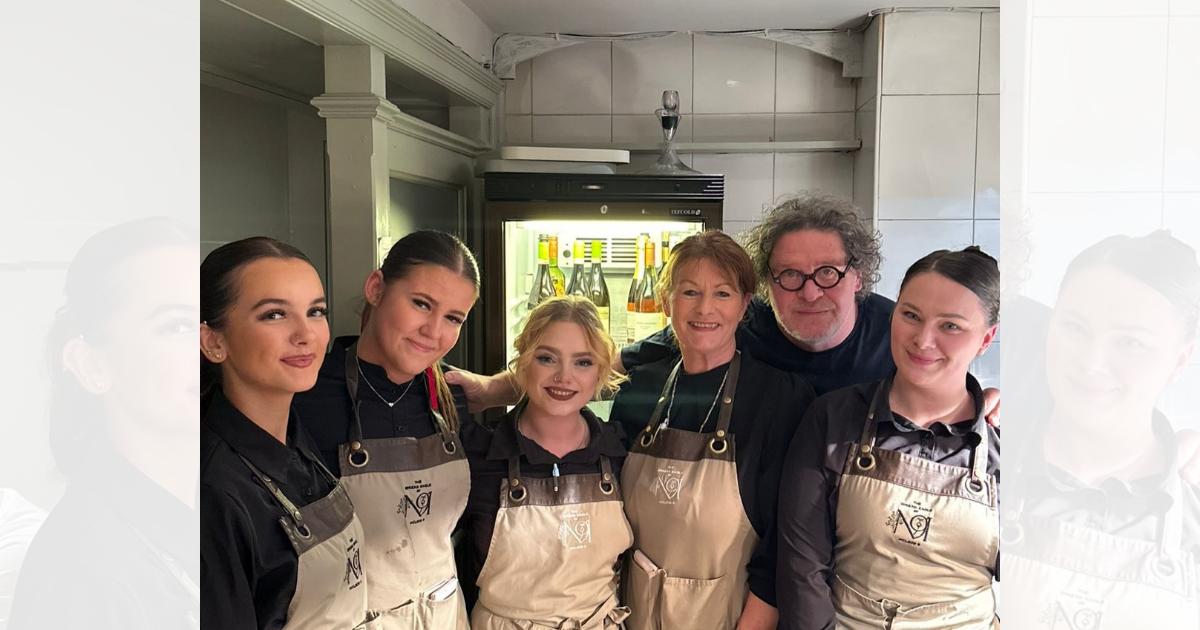
British TV star and restaurateur Marco Pierre White paid a visit to The Spread Eagle on Bolton Road on Saturday and is already said to be ‘making plans to come back soon’.

Joe McLoed of McLoed 9 took over the former Italian restaurant in June last year and it is already going from strength to strength.

Speaking to The Bolton News, Joe said: “I met Marco at Bolton Food and Drink Festival last year and he said that he would come along in the new year.

Marco Pierre White spent time in the kitchen with the team (Image: supplied)

“I got a call from chef Mike Harrison asking if we had space for Marco to come in for food as he was in the area.

Advertisement

“Marco was on fantastic form and had a chat and laugh. He gave us all the time in the world when he didn’t have to.

“We got pictures together and had a good laugh in kitchen about the industry.”

Marco Pierre White with team members at The Spread Eagle (Image: supplied)

Marco Pierre White is widely dubbed the ‘godfather of modern cooking’ and was the first British, and then the youngest, chef to earn three Michelin stars.

He headlined as a guest at the Bolton Food and Drink Festival (BFDF) last year marking his first-ever appearance at the event as it celebrated its 20th anniversary.

Advertisement

Joe was also invited to cook at the prestigious BFDF Gala Dinner alongside some of the UK’s best-known chefs, creating one of the courses for VIP guests.

Joe added: “When a chef of that calibre comes in, you’re nervous about it! If you don’t get it right, it could go wrong.

“Marco was very complimentary and said that he wants to come back soon.

“It was a lovely experience for the team; to attract chefs of that level is humbling,

Advertisement

“There is a lot of love put into the food here and Marco’s words are a nod that we’re heading in the right direction.”

“We’re so grateful that he chose to dine with us.”

Marco Pierre White also signed a menu during his visit (Image: supplied)

Joe also announced that The Spread Eagle has just launched a new lunch offer from Wednesday to Saturday, where diners can try dishes prepared with locally sourced ingredients from sustainable farms and producers for less than £33.  

Morsels and Measures is a “McLeod 9 interpretation of bar food” with a selection of Joe’s favourite snippets inspired by the restaurants tasting menu.

Advertisement

 The Spread Eagle, 10 Bolton Rd, Edgworth, BL7 0DS


Source link

Advertisement
Continue Reading

NewsBeat

The horror story at Beit Shemesh where an Iranian missile evaded Israel’s formidable defences | World News

Published

on

The horror story at Beit Shemesh where an Iranian missile evaded Israel's formidable defences | World News

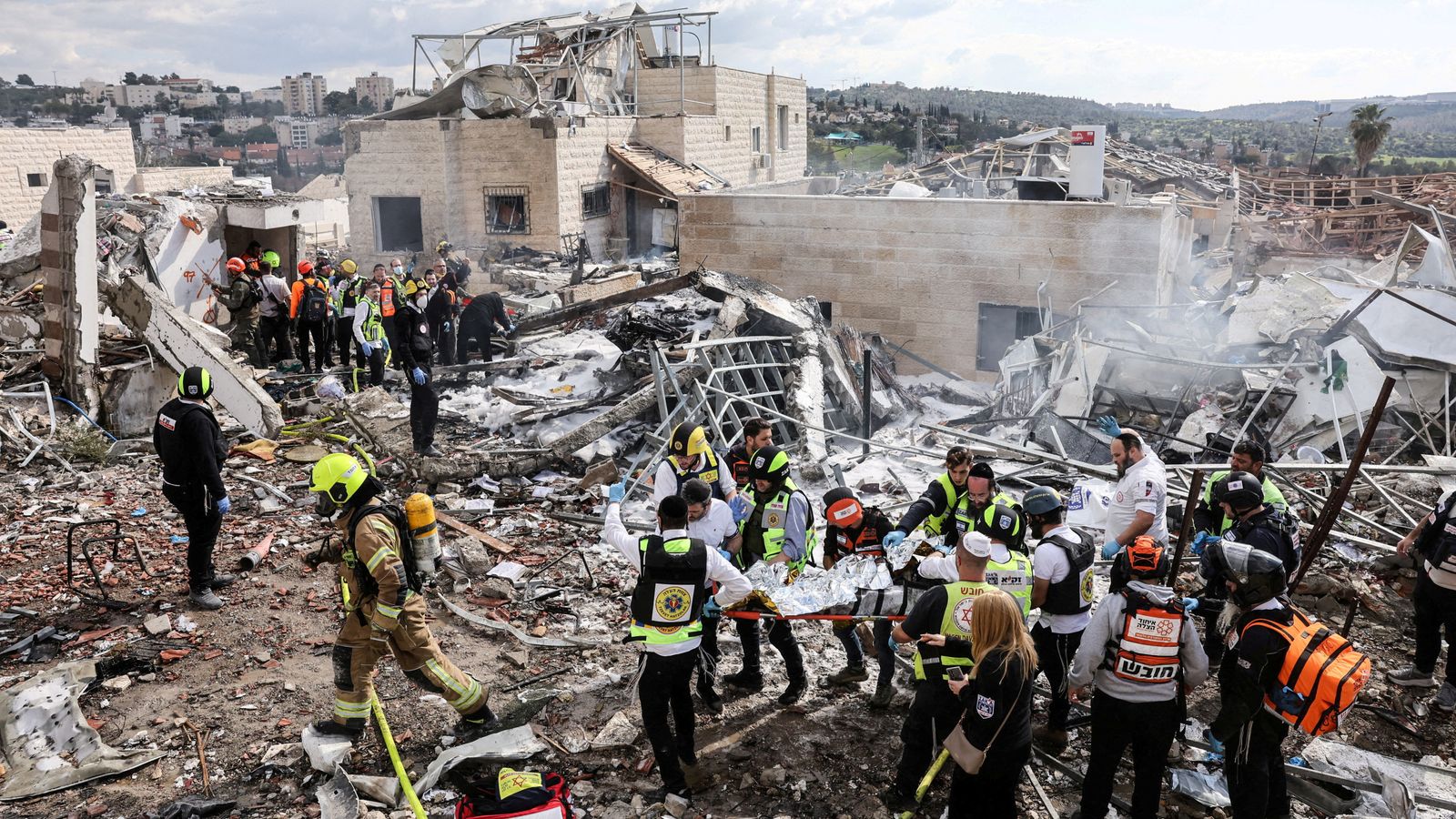
It is an image that will haunt very many people across Israel. A corner of Beit Shemesh, flattened by an Iranian missile; a synagogue destroyed; people killed while they sought refuge in a bomb shelter.

If you wanted proof that war, even this war, is not just about aerial defences and surgical strikes, this was it. A ghastly vista of sudden death.

Live updates on strikes

When we arrived on the scene, we were told, repeatedly, that this was just a place where people lived, prayed and got taught. No military base, no hardware, not even a government office.

Advertisement

“Why would this be a target,” said one person. “There is no excuse.”

What we saw when we arrived was a chaotic aftermath. What we heard was a horror story.

Dozens of residents had gone to the bomb shelter after receiving an alert on their phone and then hearing an air raid siren. It is the sort of behaviour that is, at once, disconcerting and also normal.

Thanks to previous conflicts, including the 12-day war just eight months ago, Israelis are accustomed to getting such warnings.

Advertisement

The shelter was supposed to be their sanctuary. Instead, it became a tomb in a matter of moments.

Image:
The aftermath of the strike in Beit Shemesh, Israel. Pic: AP

The missile somehow evaded Israel‘s formidable air defences.

“Nothing can be one hundred percent effective,” said one Israeli military official to me. “We cannot stop every single missile. We can try, but we know that eventually one will get through.”

And so it did, devastatingly. We watched as huge diggers were brought in to try to clear the rubble, and as search and rescue teams worked out how to look for survivors. There were soldiers, emergency workers, local residents, police and politicians.

Advertisement

We spoke to one of them, Amichai Eliyahu, Israel’s outspoken culture minister. He was surveying the destruction, his head shaking. This, he said, was an embodiment of why Israel needed to fight Iran.

“What did these people here ever do to them? What did these babies do to harm them?” he said to me.

“They have never done anything bad to Iran, we don’t even share a border with Iran. This was done for no reason at all, except pure hatred for the sake of hatred. So I’m asking all those who defend them in the world, who are you defending? Monsters, Monsters want to kill us.”

Read more:
What we know so far about the strikes

Which Iranian officials are dead?
Attacks close Middle East airports

Advertisement

Lieutenant Colonel Yochay Manoff was more sanguine, when we spoke on a ridge overlooking the scene. He is a company commander in Israel’s National Rescue Unit, accustomed to difficult situations and traumatic problems.

But, for him, this one was difficult to accept.

“Just for reference, this is one missile that hit and affected so many buildings and so many lives,” he told me. “Think about the amount of missiles that were on the way from Iran to Israel over the last two days. The damage could be immense.”

Could be, but hasn’t been. Israel puts so much store by its aerial defence systems that sometimes its citizens can appear complacent, so confident are they in the military technology.

Advertisement

But this was proof that nothing works perfectly, all of the time.

Every now and then a missile will get through the array of defence systems that guard Israel’s airspace, and sometimes they strike with horrific impact. This corner of Beit Shemesh offered grim evidence of that.

Source link

Advertisement
Continue Reading

NewsBeat

Britain agrees to help bomb Iran and will work with US after strikes

Published

on

Daily Record

Sir Keir Starmer said the UK will allow the US to use British bases after Britain, France and Germany together said they would help ‘destroy Iran’s capability to fire missiles and drones at their source’

The UK has agreed to a US request to use British military bases to strike Iranian missile sites, Sir Keir Starmer has confirmed.

But the UK Prime Minister said the UK “will not join offensive action” in Iran, adding: “We all remember the mistakes of Iraq and we have learned those lessons.”

It comes as Iran continues its assault on the Middle East in revenge attacks for the joint US-Israeli operation yesterday which saw missiles rain down on Tehran, Mirror reports.

Advertisement

A joint statement between UK, France and Germany said: “We will take steps to defend our interests and those of our allies in the region, potentially through enabling necessary and proportionate defensive action to destroy Iran’s capability to fire missiles and drones at their source.

“We have agreed to work together with the US and allies in the region on this matter.”

In an update this evening, Mr Starmer said it “remains the case” that the UK is not involved with the strikes on Iran, but Britain will allow the US to use British bases to support its operation.

He said “partners in the Gulf have asked us to do more to defend them”, adding that “it’s my duty to protect British lives.”

Advertisement

“We have British jets in the air as part of coordinated defensive operations. Which have already successfully intercepted Iranian strikes. But the only way to stop the threat is to destroy the missiles at source. In their storage depots or the launchers which are used to fire the missiles,” Mr Starmer continued.

“The US has requested permission to use British bases for that specific and limited defensive purpose. We have taken the decision to accept this request. To prevent Iran firing missiles across the region, killing innocent civilians, putting British lives at risk and hitting countries that have not been involved.

“The basis of our decision is the collective self-defence of longstanding friends and allies, and protecting British lives.”

The PM said while the UK is “not joining these strikes”, Britain “will continue with our defensive actions in the region.”

Advertisement

“And we will also bring experts from Ukraine together with our own counter drone expertise, to help our Gulf partners shoot down Iranian drones attacking them.”

He concluded: “We all remember the mistakes of Iraq and we have learned those lessons. We were not involved in the initial strikes on Iran, and we will not join offensive action now.

“But Iran is pursuing a scorched earth strategy, so we are supporting the collective self-defence of our allies and our people in the region, because that is our duty to the British people.

“It is the best way to eliminate the urgent threat and prevent the situation spiralling further.

Advertisement

“This is the British government – protecting British interests and British lives.”

Source link

Continue Reading

NewsBeat

Park taped off with police helicopter scouring scene after ‘serious assault’

Published

on

Manchester Evening News

A large cordon was in place on Stockport Road

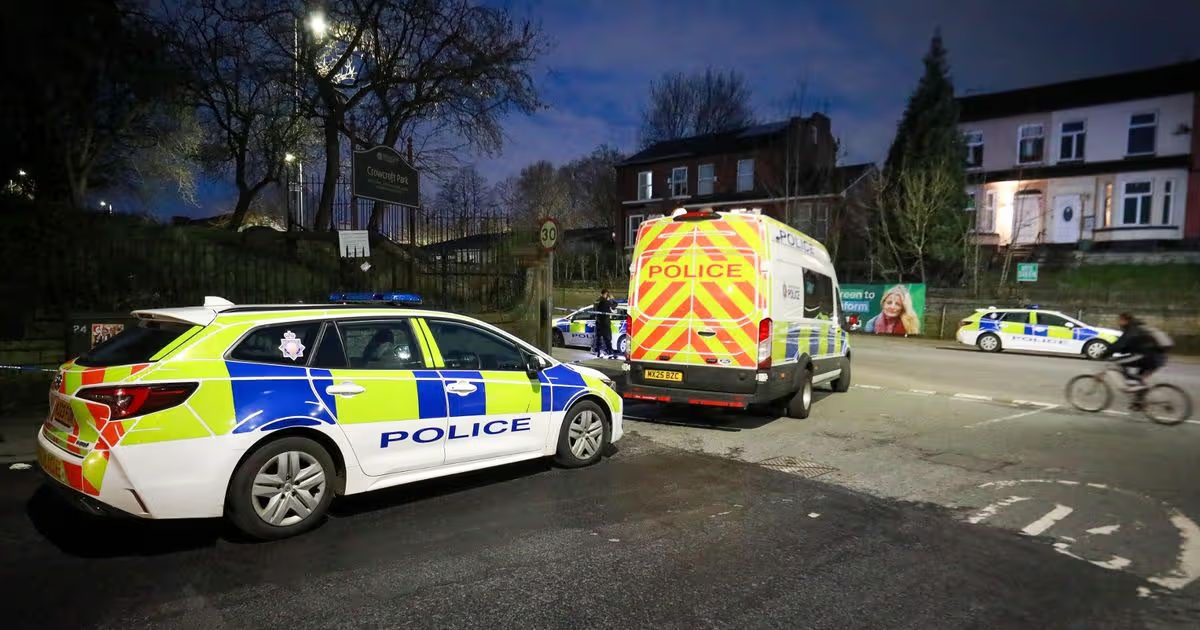
A Manchester park was taped off this evening (March 1) with a police helicopter scouring the scene following reports of a ‘serious assault’ in the area.

Advertisement

Greater Manchester Police attended the scene on Stockport Road in Longsight just after 5:30pm on reports of a ‘serious assault’ in the area around Crowcroft Park.

An injured man was found at the scene and was taken to hospital for treatment, the force said. Photos from the scene showed multiple police cars in attendance outside the takeaways on Stockport Road.

Click here to prioritise Manchester news in Google from the MEN

There were also several cordons in place along Stockport Road and East Road, which run to the north and west of the park. Multiple accounts on Facebook reported seeing a police helicopter in the area and over the park.

Advertisement

A spokesperson for GMP said: “At around 5.35pm today (1 March) officers responded to reports of a serious assault at Crowcroft Park, Stockport Road.

“A man has been taken to hospital for treatment and enquiries are currently ongoing.”

Source link

Advertisement
Continue Reading

NewsBeat

Arsenal: Ugly or a tactical masterclass? Gunners set-pieces prove decisive again

Published

on

Arsenal players celebrate their goal

Arsenal are going to have to navigate the tension of the title race with just nine matches left in their bid to win a first league title since 2004.

And when asked by BBC Sport if they have had to go to another level with their work on set-pieces due to the work other sides are doing, Arteta agreed.

“Yes but every team is to be fair,” he said. “Look where they are in terms of the amount of goals that they score.

“We hadn’t scored set-pieces for a few weeks now, but we scored so many in open play.

Advertisement

“Today was an option to score from this kind of situation. We’ve done it so well and we conceded as well.”

Chelsea were starting to grow into the game before Timber’s crucial goal, while they needed goalkeeper David Raya to produce some excellent saves to deny the sixth-placed Blues a point.

“I didn’t think there was an awful lot between the two teams, but Arsenal came out on top and at this stage of the season that’s vital, isn’t it?,” added Arteta’s former Everton team-mate Osman.

“If your strengths are pacy wide men that create things all the time, you give them the ball all the time.

Advertisement

“If your strength is set-pieces, you try to win set-pieces and score from them and they’re very good at it, very effective.

“And ultimately that was that was the difference between the teams, but Arsenal won’t care because it’s another three points.”

According to Osman, Arsenal can be criticised for their style of play and are often compared to title winners of the past but if they win the title, that is all that matters.

“Many people watching want to see beautiful football or purists want to see open play great goals back to front.” he said.

Advertisement

“That’s not how football’s always played. Football is about being effective in both penalty areas, finding a way.

“I think whatever happens in between can be pleasing, can be enjoyable, can be exciting.

“But ultimately, it’s less important than what happens in both penalty areas because that’s where games are won and lost.”

Source link

Advertisement
Continue Reading

NewsBeat

‘Being Welsh can’t be just about looking backwards’

Published

on

Wales Online

Our columnist asks what he would like Wales and Welshness to be know for

It’s one of those questions that people think they know the answer to until they try to write it down because being Welsh isn’t about a flag, a rugby shirt or a childhood memory of rain on a caravan window in Tenby, it’s a living identity shaped as much by what we’ve had done to us as by what we’ve chosen for ourselves.

Advertisement

And if we’re honest as we celebrate St David’s Day in 2026, Welshness is caught between two powerful instincts of being culturally confident and economically cautious. Yes, we are a nation that has never lacked a voice – against the odds, we’ve kept a language alive that history tried to suffocate and produced artists, athletes, and scientists who have done far more than our scale should allow.

When Wales is at its best, it has a kind of intensity where talent and community sit close together, and you’re never far from someone who will help you, introduce you, or just put the kettle on for a panad (cup of tea).

But we are also a nation that too often behaves as if economic success will only happen elsewhere, and to me, that is the tension at the heart of modern Welsh identity.

If we want to understand what it means to be Welsh today, we need to recognise that a nation of just over three million people does not get many “free hits,” and that every year of under-performance matters. So, when Wales has consistently been below the UK average on productivity, wages and economic output since devolution in 1999, those aren’t just another bunch of statistics but a situation that is shaping national confidence, narrowing the horizon of ambition, and quietly rewriting our Welsh identity from “we can” to “we cope”.

Advertisement

Welshness has always contained resilience, and we have endured industrial collapse, political marginalisation, and decades of being talked about as a problem to be managed rather than a place to be built. But resilience is not the same thing as ambition and modern Welshness, if it is to mean anything beyond nostalgia, has to be deliberate in deciding that’s how we will shape our economic future.

That we will not just host economic summits that discuss investment but actually go out and create it; not just train the talent of the future but retain it in our communities; and not just talk about innovation but use it to create companies that scale and stay rooted in their communities.

This is where the conversation usually becomes uncomfortable because it forces a harder question for the economic future of this nation: do we truly believe Wales can build globally significant businesses that dominate their sectors, anchor high-value jobs and recycle wealth into the next generation of founders?

To date, Wales has not normalised that kind of ambition and in fact we treat it as exceptional by celebrating the odd outlier rather than building a pipeline to make it happen.

Advertisement

And that’s why belief matters: small countries with a deep, repeated pattern of scale build a different psychology by producing founders who pitch bigger, firms that recruit for global growth, and policymakers who design programmes to support success.

Let me make it unequivocal – I have always believed Wales has talent, ingenuity and innovation in spades, but what we have lacked repeatedly is the conversion mechanism namely the capital, institutional muscle and the cultural permission to think outrageously big without constantly being told to “be realistic”.

Too often, the aim is preservation through metrics such as businesses supported or jobs safeguarded, and whilst those things matter, they are not the same as creating employment, growing firms and building national prosperity. In other words, we have become a development economy obsessed with avoiding failure, and the inevitable consequence is that the Welsh story has become one of survival rather than success.

This is not about demanding that every business becomes a unicorn, but about understanding that a small nation needs high value wins to change its trajectory as the mathematics of economic development are unforgiving. Simply put, you cannot build prosperity on low productivity and low value-added and instead, need firms that invest, export and grow.

Advertisement

That then brings us to the deeper question: what do we want Wales to be known for? Obviously not another romanticised version of coal and choirs, but do we know what the modern Welsh proposition is in a world of AI, clean energy and deep tech?

Because being Welsh shouldn’t be simply about looking backwards, but about choosing what comes next, and if we want an identity that is proud, modern and confident, then we all need to embrace an economic narrative rooted in better performance.

That requires institutional courage, such as serious mechanisms to turn research into investable companies, development finance that knows when to protect and when to go for it, and a political culture that stops mistaking announcements for outcomes. Until we fix that, Welshness will remain proud of what we have kept but uncertain about what we can create.

So, back to the question of what does it mean to be Welsh in 2026? We will have different answers but to me, it means refusing to accept underperformance as a national personality trait. It means celebrating community but not letting it become a comfort blanket. And it means being proud of what we have whilst constantly demanding better.

Advertisement

But most important of all, Welshness should never be reduced to grievance, nostalgia, or sentimentality, as it needs a modern identity in a modern economy with modern choices. Yes, a small nation does not need to dominate everything, but it should be expected to dominate something, and when we start acting as if we believe that calling in our institutions, our companies, and our culture, the question “what does it mean to be Welsh?” will have a completely different kind of answer.

Source link

Continue Reading

NewsBeat

BBC Call The Midwife spin-off ‘sealed’ with show legends as exit confirmed

Published

on

Daily Mirror

Call the Midwife could be set to air an epic spin-off show according to a new fan theory

Call the Midwife fans are predicting a major spin-off involving two show favourites.

The iconic BBC programme has been a staple on screens since 2012. And over the years viewers have been introduced to several beloved characters, including Sister Veronica (Rebecca Gethings).

Advertisement

As fans will recall Sister Veronica, also known as Beryl, been going through an emotional journey recently. Earlier in the series, she expressed her desire to have her own child despite her religious calling.

Fortunately, Sister Veronica has had Geoffrey, played by Christopher Harper by her side for support. The pair have even moved in with another and in Sunday’s episode (March 1) Geoffrey attempted to give Sister Veronica a makeover.

But now, with the Series 15 final just around the corner, fans can’t help but think a spin-off could be in the works for Sister Veronica and Geoffrey.

Advertisement

On X, one person declared: “Give me a whole series of Geoffrey and Beryl living their lives together.” Another added: “Please Please can we have a Jeffrey and Beryl spin-off. Best flatmates ever.”

A third penned: ”Geoffrey and Beryl are just the perfect friendship.” Echoing their thoughts, someone else wrote: “Beryl and Jeffrey spin off or they get married, and have a baby, and have to navigate two worlds.”

Meanwhile, opening up on what it’s like working with the actor, Sister Veronica actress Rebecca previously revealed: “Christopher Harper has become a pal over the years, and it’s really lovely to play scenes with him.”

Advertisement

She continued: “He and Sister Veronica have an ease with each other and a deep friendship, and they have a lot of fun. He takes the mickey out of her and she likes that, and I’ve really loved building that relationship with him.”

**For the latest showbiz, TV, movie and streaming news, go to the new **Everything Gossip** website**

It comes as Call the Midwife is set to air its Series 15 finale next week, with the sad death of Sister Monica Joan likely to take place then. The character’s physical and mental wellbeing has been declining across recent series and was recently diagnosed with chronic kidney disease.

Advertisement

And according to actress Helen George – who plays Trixie – the audience will be a “mess” watching the series finale.

“There’s this scene, I won’t really go into detail, but it sort of encompasses all of the characters that we’ve had on the show over the last 15 years,” she told Radio Times. Helen added: “So if I was a mess – and I’m heart of steel – then the audience will be a mess as well.”

While Renee Bailey, who plays Joyce, described the finale: “It makes you laugh, it makes you cry. It’s a hug and it’s also heartbreaking. It’s a mix of everything, but I think audiences are going to love it.”

Ensure our latest headlines always appear at the top of your Google Search by making us a Preferred Source.** Click here to activate**** or add us as your Preferred Source in your Google search settings.**

Advertisement

Call The Midwife airs every Sunday at 8pm on BBC One.

Source link

Continue Reading

Trending

Copyright © 2025