
Business
EXCLUSIVE: Rosewood eyes Oman and Jordan as it steps up Middle East expansion – CEO

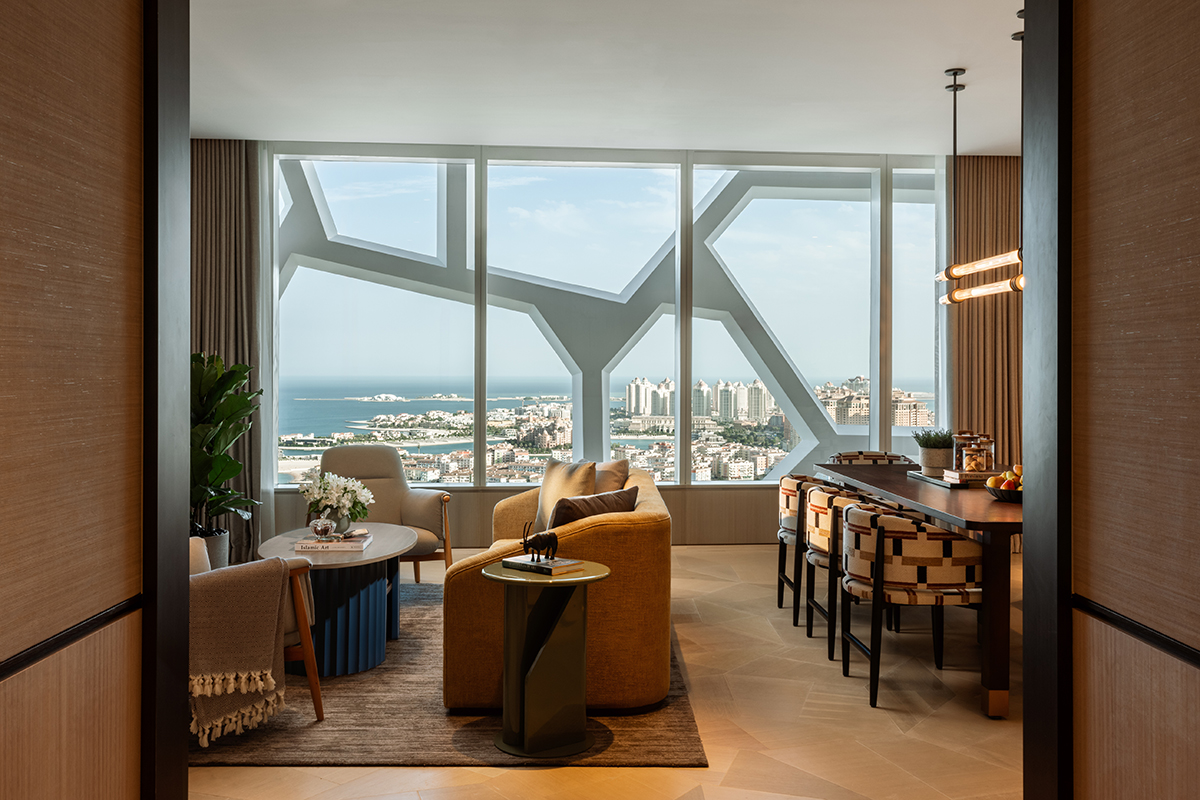
Rosewood Hotel Group is exploring opportunities in Oman and Jordan as it accelerates its expansion across the Middle East, its chief executive said, as rising demand from high-spending Gulf travellers reshapes global luxury hospitality strategies.
Speaking to Arabian Business in an exclusive interview during the official opening of Rosewood Doha on Wednesday, Sonia Cheng said the group was assessing additional markets beyond its existing and announced pipeline in Saudi Arabia, Qatar and the United Arab Emirates.
“We are looking to expand further in this region,” Cheng said, pointing to Oman and Jordan as markets under consideration as Rosewood evaluates its next phase of Middle East growth. She did not provide further details on potential timelines or projects in either market.
The comments come as Rosewood deepens its presence in the Gulf, a region Cheng described as one of the fastest-growing luxury tourism markets globally. The group currently operates hotels in Abu Dhabi and Doha, and has an established presence in Saudi Arabia through Rosewood Jeddah.
Saudi Arabia drives future growth
In Saudi Arabia, the group is developing two Rosewood-branded resorts as part of the kingdom’s Red Sea tourism programme, including Rosewood Red Sea on Shura Island.
Cheng said Saudi Arabia remains a key growth market for the group as international arrivals rise and travellers increasingly seek new destinations. “Every year there are around 30 million international visitors coming into Saudi, and that number continues to grow,” she said, adding that curiosity-driven travel is playing a growing role in demand.
“As Saudi really grows as a tourism destination, it’s something refreshing for our travellers,” Cheng said. “Our customers are always looking for something new.”
Beyond inbound tourism, Cheng said the Gulf has become increasingly important to Rosewood as a feeder market to its global portfolio. Travellers from the GCC tend to stay longer and spend significantly more than the global average at Rosewood properties, she said, citing strong demand for hotels in cities such as Paris, London, Madrid and Munich.
“GCC clients are one of our fastest-growing feeder markets globally,” Cheng said. “They have a longer average length of stay and a much higher level of spend, which is very important for our global portfolio.”
She also pointed to strengthening economic and business ties between the Gulf and Asia, particularly China and Hong Kong, as another factor driving travel flows into and out of the region. Cheng noted that a growing number of Chinese and Hong Kong companies are establishing offices in the GCC, reinforcing the region’s role as a global business and aviation hub.
Market-by-market expansion approach
Rosewood’s expansion strategy in the Middle East is anchored in a selective, market-by-market approach, Cheng said, with each property designed to reflect its local environment rather than following a standardised global model.
“There’s no one single formula for every Rosewood,” she said. “Every property has its own personality and celebrates the local culture, heritage and community. That’s what our customers love — whenever they go to a Rosewood, they discover something new.”
In the United Arab Emirates, Rosewood is planning its first Dubai property, a mixed-use hotel and branded residences development on the Peninsula Dubai waterfront, scheduled for completion by 2030. The project will mark the brand’s entry into Dubai and further expand its Middle East footprint.
Rosewood Hotel Group operates close to 60 properties worldwide. In the Middle East, it currently has two operating hotels, with further openings planned in Saudi Arabia and Dubai as the group continues to scale its regional presence.



