
News Beat
Best electric heaters for cold nights at home

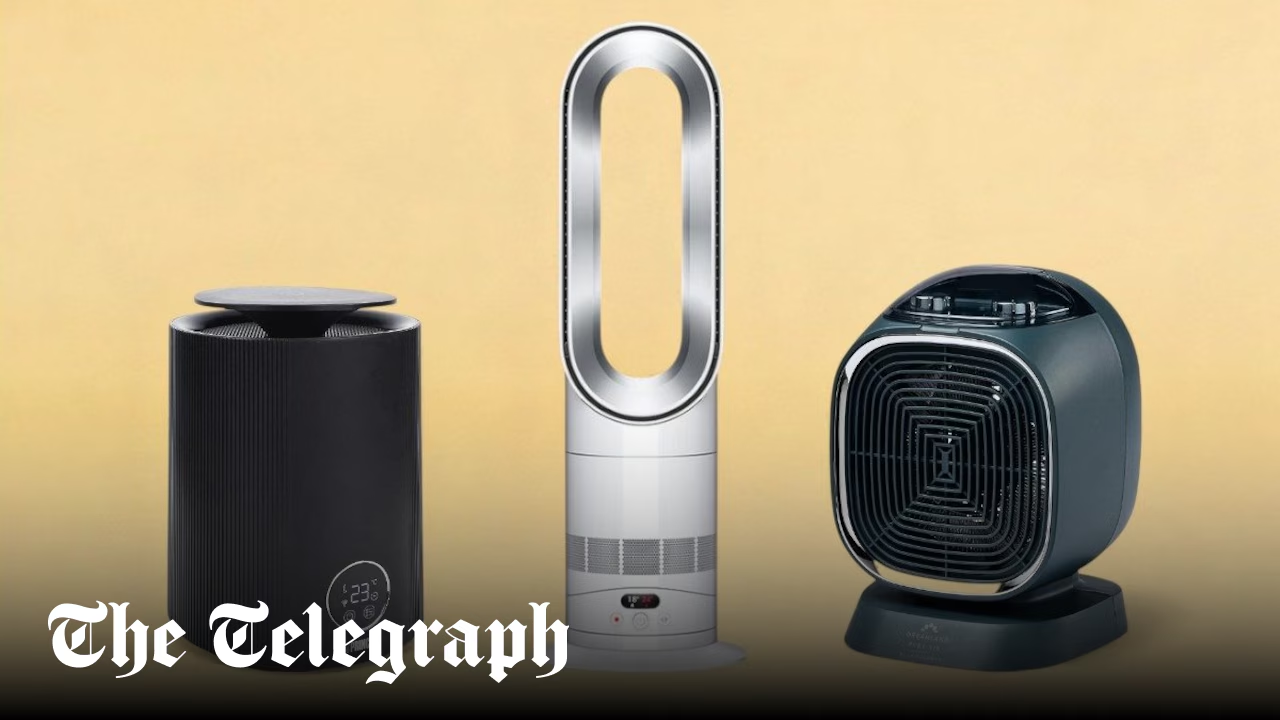

During freezing winter weather, it’s all too easy to twist the thermostat up a notch (or three). But while it may end with a toasty home, it can also result in an energy bill that leaves you questioning every degree of comfort. In some cases, a decent electric heater is the smarter move, as it warms the space you’re in, rather than empty rooms.
Luckily, there’s a heater for every budget, from basic VonHaus models to high-end technology from Dyson that doubles as a fan and comes with app connectivity. The best designs warm up chilly rooms quickly, feature adjustable thermostats and timers, and operate quietly enough to avoid disturbing you. Look for integrated safety features, and watch out for power-hungry models that may be costly to run.
To help you choose, we’ve found the best electric heaters, covering every price point and size. We tested 16 models in total, with 12 reviewed below, plus answers to frequently asked questions.
The best electric heaters in 2026: At a glance
How to choose the best electric heater
Picking an electric heater isn’t just about grabbing the cheapest one on the shelf. For starters, there are several types to choose from. Brian Horne, technical knowledge lead at Energy Saving Trust, says: “Oil-filled, convector, halogen and fan electric heaters are equally efficient, but they distribute heat differently.”
Consider your room size when choosing between them. Horne says: “Oil-filled heaters heat up and cool down slowly, so are best for providing low level heat for an extended period.” This also makes them well suited to living rooms as they can distribute heat across a bigger area. Similarly, “convector heaters warm the air which then circulates around the room, making them effective for heating the whole space”.
For smaller spaces, Horne recommends fan or halogen heaters: “Fan heaters blow hot air directly at you, offering a quick burst of warmth when needed. Halogen heaters emit radiant heat that warms only what’s in front of them, so are best for keeping you warm without heating the rest of the room.”
Power output, measured in Watts, determines how quickly a heater can warm a space and running costs (higher Watts mean faster heating and higher electricity consumption). Charlotte Friel, director at Ofcom, says: “Using heaters all the time can quite quickly increase energy bills, so if possible, use them for short bursts or to heat one room and not as an alternative to central heating.”
Adjustable thermostats and timers help prevent energy waste once the room reaches temperature, while tip-over and overheat protection are must-haves for homes with pets or children. And don’t forget noise levels, as some heaters hum quietly in the background, others sound like a jet engine.
“If you need to use an electric heater, choose the type that best suits what you want to heat and for how long. Position the heater in the part of the room you want to warm, keeping it at a safe distance from yourself and any furniture,” concludes Horne. “Remember to always follow the safety instructions that come with the product.”



