

Crypto World
X to Label Paid Promotions, Prohibits Crypto Ads in EU & UK


X has updated its labeling framework to allow paid promotional crypto posts under a revamped framework, paving the way for influencers and projects to monetize content on the platform while maintaining disclosures. The change comes with persistent geographic caveats, as promotions tied to crypto remain banned in several large markets, notably the United Kingdom and the European Union, where stringent financial-promotion rules apply to digital assets. The policy shift was framed by X’s head of product, Nikita Bier, who described the move as intended to foster transparency and help creators build their businesses on the platform. At the same time, the broader vision around X Money, Elon Musk’s payments initiative for the app, is poised to move from concept to a limited beta in the near term, with a wider rollout anticipated thereafter. Separately, X has signaled plans for in-app trading features, including a Smart Cashtags function designed to support stock and crypto trading within the service.
Key takeaways
- X has lifted its ban on paid crypto and gambling promotions, but regional restrictions remain in place for the UK, EU, and Australia due to strict financial-promotion laws.
- The platform now requires paid-partnership labeling and permits third-party compensation for promoting products and services, subject to visibility controls in restricted regions.
- Promotions for other regulated categories—such as sex products, alcohol, drugs, tobacco, weapons, and certain health products—continue to be barred or heavily restricted, along with political content used commercially.
- X Money, the planned payments feature, is slated to enter a limited beta within the next two months, with a wider global launch to follow if pilot tests proceed smoothly.
- The company also plans an in-app trading capability through a Smart Cashtags feature, enabling users to trade stocks and crypto within the platform in the coming weeks.
- The move underscores X’s broader ambition to evolve into an “everything app” that blends social networking, messaging and financial services, though regulatory and user-experience considerations remain.
Sentiment: Neutral
Market context: The policy update arrives amid heightened scrutiny of crypto advertising and a broader push by major platforms to monetize content through transparent sponsorships. Regional enforcement of financial-promotion rules continues to shape how digital-asset messaging is presented and amplified on social networks.
Why it matters
The change in X’s advertising and sponsorship rules signals a practical shift for crypto projects and influencers who rely on social channels to reach audiences. By enabling paid partnerships, creators can monetize content more directly, but they must comply with labeling requirements that help followers distinguish between organic posts and paid promotions. The absence of a universal global rollout means a substantial portion of the crypto community—especially in the UK, EU, and Australia—will still encounter visibility restrictions on paid content. For advertisers, the policy introduces a structured framework that could unlock new revenue streams while requiring stricter compliance discipline to avoid regulatory penalties.
Beyond monetization, the policy update aligns with X’s broader strategy to build an integrated platform that combines social and financial capabilities. Musk has described X Money as a potential cornerstone of an “everything app” akin to WeChat, a vision that would integrate payments into everyday social activity. The beta for X Money is expected within the next couple of months, offering a testbed for how payments, social engagement and transactions might intertwine in a single interface. If the beta proves successful, the wider rollout could intensify competition among fintech-enabled social platforms and raise questions about data privacy, cross-border regulatory compliance, and the monetization of user attention in a market still dominated by traditional advertising models.
Today we’re announcing Paid Partnership labels on posts. X’s core value is providing on authentic pulse on humanity.
While we want to encourage people to build their businesses on X, undisclosed promotions hurt the integrity of the product and lead people to distrust the content… pic.twitter.com/CmrRDx5tU1
— Nikita Bier (@nikitabier) March 1, 2026
Even with the removed blanket ban on paid crypto content, the updated exclusions are explicit. Promotions tied to adult services, recreational or prescription drugs, tobacco, weapons and other restricted categories remain out of scope for commercial posts. Political content intended for commercial purposes is also restricted, underscoring a continued tension between monetization goals and compliance with advertising standards. The delineation between what constitutes an authentic, monetized collaboration and what crosses into promotional manipulation remains an ongoing area of governance for platform operators and policymakers alike.
X’s roadmap and what to watch next
The company has flagged a slate of developments tied to its broader product strategy. In particular, the two-pronged push of X Money and Smart Cashtags points to an in-app ecosystem that could blur lines between social activity and financial transactions. The beta timeline for X Money—described by Musk as a limited rollout in the near term—will be a critical test for how a payments feature integrates with social interactions, identity verification, and compliance controls across diverse jurisdictions. Meanwhile, the Smart Cashtags initiative, announced as a forthcoming feature, would enable users to trade stocks and crypto directly within the X interface, potentially expanding content monetization channels while attracting a broader cadre of financial-toward audiences and creators.
Observers will be watching how these features interact with regulatory expectations in the UK, EU, and Australia, where strict guidelines govern the advertising of financial products and crypto offerings. If X can maintain a transparent, compliant approach while expanding monetization opportunities for creators, the platform could become a more attractive venue for crypto projects seeking to leverage social reach. Conversely, continued geographic restrictions could hamper scale and limit the impact of the new policy on the global crypto marketing landscape.
What to watch next
- Arrival of X Money in limited beta within the next two months, with early user feedback and merchant adoption metrics to follow.
- Rollout and user uptake of Smart Cashtags for in-app trading of stocks and crypto, along with regulatory confirmations on feasibility.
- Regulatory developments in the UK, EU, and Australia that could alter the visibility of paid crypto promotions and influencer partnerships.
- Disclosures and labeling practices by creators, including verification mechanisms to ensure compliance with the paid partnership framework.
Sources & verification
- Paid partnerships policy page: https://help.x.com/en/rules-and-policies/paid-partnerships-policy
- Nikita Bier’s statement tweet: https://twitter.com/nikitabier/status/2028172473624395976?ref_src=twsrc%5Etfw
- X Money external beta article: https://cointelegraph.com/news/elon-musk-x-money-external-beta-live-next-1-2-months
- X Money Smart Cashtags in-app trading article: https://cointelegraph.com/news/x-nikita-bier-in-app-trading-couple-weeks
X’s paid partnerships for crypto content: policy, roadmap and regulatory caveats
X recently updated its approach to paid promotional content related to crypto, introducing a formal framework that requires partnerships to be labeled as such and to comply with a set of visibility rules. While the update loosens the previous blanket restrictions on crypto promotion, it simultaneously narrows the field by excluding promotions in regions with stringent financial-promotion laws. The practical effect is a more transparent promotional environment for creators on X, coupled with a robust set of regional constraints intended to protect users from misleading or undisclosed endorsements.
The centerpiece of the change is a paid partnership mechanism designed to give influencers and brands a clear path to monetize their crypto content, provided they disclose sponsorships and adhere to platform policies. As part of this approach, X allows partnerships to be blocked or hidden in the UK, EU, and Australia, reflecting the realities of global compliance regimes that govern digital asset advertising. This creates a bifurcated experience for users: audiences in permissive markets may see promoted content more readily, while users in restricted zones will encounter limited visibility or no exposure to paid crypto promotions at all.
Beyond the policy mechanics, the platform continues to restrict the promotion of certain product categories even as it expands opportunities for crypto creators. The updated exclusions include sex products and services, alcohol, dating platforms, recreational and prescription drugs, health and wellness supplements, tobacco, and weapons. Content that involves politics or social issues remains off-limits when used for commercial purposes, underscoring ongoing considerations about the lines between free expression, advertising, and user trust. These guardrails aim to balance monetization with consumer protection and regulatory compliance, a tightrope that several social platforms are navigating in real time.
The public-facing rationale behind these changes centers on encouraging a healthier ecosystem of creators who can monetize their work while maintaining transparency with their followers. Bier’s commentary, captured in a widely circulated post, emphasizes that paid partnerships should reflect authentic collaboration and be labeled clearly to preserve the integrity of the platform. The overarching narrative is one of experimentation, with X seeking to merge social activity with financial services in a manner that remains compliant with a patchwork of regulatory environments around the world.
As X presses ahead with its “everything app” ambitions, the fate of crypto monetization on the platform will likely hinge on regulatory clarity and the ability of creators to build sustainable businesses under the new labeling regime. The platform’s bet is that a structured, transparent recruitment of paid promotions will reduce the ambiguity that often surrounds influencer campaigns, while the planned introduction of X Money and Smart Cashtags could create new pathways for engagement, liquidity and value capture within the X ecosystem. The coming months will reveal how these interlocking pieces perform in concert, and whether users, creators and financial services partners will respond with greater adoption and confidence.


Hyper casual games look simple on the surface, but building profitable titles requires far more than a basic gameplay idea. A number of projects fail not because the concept is weak, but because the development process lacks structured testing, proper monetization planning, and scalability considerations.
Professional hyper casual game developers approach development differently. Instead of focusing only on building a playable game, they design systems that maximize retention, optimize monetization, and allow rapid iteration. This structured approach is what separates profitable titles from the thousands of hyper casual games that disappear shortly after launch.
Understanding the basics behind successful hyper casual games plays a pivotal role in helping how successful studios operate helps decision-makers evaluate whether their project is being built for long-term revenue or short-term experimentation.
Why Most Hyper Casual Games Fail Financially
Hyper casual games have one of the lowest barriers to entry in the gaming industry. Small teams can build simple prototypes quickly, which has led to a flood of titles entering the market. However, simplicity in gameplay does not mean simplicity in business success.
Most failed hyper casual projects share similar characteristics. They are often developed around a single idea without validation through testing cycles. Developers may launch a game assuming that downloads will automatically translate into revenue, but without retention and monetization optimization, even large user acquisition numbers fail to produce sustainable income.
Another common issue is the absence of structured monetization planning. Advertising is the primary revenue source for hyper casual games, yet poorly implemented ad placements can drive players away before revenue is generated. Balancing engagement with monetization requires careful data-driven tuning.
Infrastructure planning is also frequently underestimated. Games that unexpectedly gain traction may struggle with analytics integration, event tracking, or backend services required for optimization. Without proper tracking, developers cannot identify what drives retention or revenue.
These challenges explain why the majority of hyper casual games never recover their development investment. Profitability is rarely accidental; it is engineered through disciplined development practices.
What Professional Hyper Casual Game Developers Do Differently
Experienced hyper casual game developers follow structured workflows designed specifically for rapid validation and monetization optimization. Their goal is not simply to launch games, but to identify concepts that can scale profitably.
Professional teams start by analyzing market trends and player behavior before development begins. Instead of building fully featured games immediately, they create small prototypes designed to test core gameplay loops. These early prototypes help determine whether players respond positively to the concept before additional investment is made.
Professional developers typically focus on:
- Market-driven concept validation instead of idea-first development
- Rapid prototyping cycles to reduce investment risk
- Early analytics integration to measure retention and engagement
- Iterative gameplay tuning based on real user data
- Monetization planning before launch
Another key difference lies in data-driven decision-making. Professional studios integrate analytics systems early in the development process so that retention metrics, session length, and monetization behavior can be tracked from the first test release.
A professional hyper casual game development company approaches development as a cycle of testing and refinement rather than a single build-and-launch process. This methodology significantly increases the probability of building profitable titles.
The Real Hyper Casual Game Development Process
The hyper casual game development process is built around speed, validation, and continuous optimization rather than long development cycles. While hyper casual games appear simple, profitable titles are created through structured development stages designed to reduce risk and improve monetization potential.
Successful hyper casual game developers treat development as a sequence of validated steps rather than a single build-and-launch cycle.
Step 1 — Concept Discovery & Market Validation
The process begins with identifying game mechanics that have strong engagement potential. Instead of relying purely on creative ideas, experienced teams analyze market trends and player behavior to determine what types of mechanics are currently performing well. This stage typically includes:
- Studying successful hyper casual titles
- Identifying proven gameplay mechanics
- Evaluating market demand
- Defining the core gameplay loop
- Estimating monetization potential
The goal is to reduce uncertainty before development begins.
Step 2 — Rapid Prototype Development
Once a concept is validated, developers build a fast prototype that focuses entirely on the core interaction loop. At this stage, visual polish is secondary to testing gameplay engagement.
Prototype builds typically focus on:
- Core gameplay mechanics
- Basic player controls
- Essential game physics
- Initial difficulty balancing
- Minimal UI elements
This stage allows developers to test whether the gameplay idea is engaging before committing to full production.
Step 3 — Production & Gameplay Refinement
After prototype validation, the project moves into production. Developers refine gameplay mechanics while improving visual quality and usability. Production usually includes:
- Final UI/UX design
- Improved animations and feedback systems
- Difficulty progression tuning
- Level design and structure
- Performance optimization
- Analytics integration
During this stage, the game begins to resemble a launch-ready product while still allowing room for adjustments.
Step 4 — Testing & Soft Launch
Testing is one of the most important phases in the hyper casual game development process. Soft launches allow developers to measure how real players interact with the game. Teams typically monitor:
- Player retention rates
- Session length
- User progression patterns
- Ad engagement behavior
- Drop-off points
These metrics determine whether the game has the potential to scale profitably. Soft launch insights often lead to multiple iterations before global release.
Planning to Launch a Revenue-Generating Hyper Casual Game?
Step 5 — Launch & Post-Launch Optimization
Even after launch, development does not stop. Successful hyper casual games continue evolving based on player behavior and performance metrics. Post-launch optimization usually involves:
- Adjusting difficulty balance
- Improving retention mechanics
- Optimizing ad placements
- Adding new levels or variations
- Refining user experience
This stage transforms a functional game into a profitable product.
Process Insight
A structured development pipeline is what allows professional hyper casual game developers to launch multiple titles efficiently. Instead of investing heavily into a single idea, successful teams validate concepts early and refine them continuously. This disciplined process is one of the key reasons why experienced studios consistently produce profitable hyper casual games.
Core Mechanics That Drive Retention
Retention determines whether a hyper casual game can generate consistent revenue. Even small improvements in retention rates can dramatically increase lifetime value per user.
Successful hyper casual games rely on intuitive mechanics that players can understand immediately. Clear goals and instant feedback encourage players to continue interacting with the game. Smooth controls and responsive interactions prevent frustration during early sessions. Professional hyper casual game developers typically focus on optimizing:
- Immediate player understanding within the first few seconds
- Fast and responsive controls
- Short and repeatable gameplay sessions
- Clear progression milestones
- Reward-driven engagement loops
Progression systems play an important role in maintaining engagement. Unlockable content, level-based challenges, and performance milestones give players reasons to return. Even simple progression systems can significantly improve long-term engagement.
Visual feedback also contributes to retention. Animations, sound effects, and reward notifications reinforce player actions and create a sense of accomplishment. These small improvements collectively produce large gains in retention and monetization performance.
How Hyper Casual Games Actually Make Money
Understanding how hyper casual games make money is essential for evaluating project viability. Unlike many other game genres, hyper casual titles rely primarily on advertising revenue rather than direct purchases. Most successful hyper casual games generate income through a combination of:
- Rewarded video ads that players voluntarily watch for extra rewards
- Interstitial ads shown between gameplay sessions
- Banner ads that provide passive revenue streams
- Optional in-app purchases such as ad removal or cosmetic upgrades
Rewarded ads usually produce the highest engagement because players receive direct benefits. Interstitial ads generate consistent income when placed carefully between gameplay sessions. However, aggressive monetization can quickly reduce retention. Successful studios carefully balance engagement and monetization to maintain long-term revenue.
Monetization Optimization Techniques
Monetization optimization involves continuous adjustment based on player behavior. Developers analyze engagement patterns to determine when players are most receptive to advertisements or purchases.
A/B testing is commonly used to compare different ad placement strategies. By testing multiple configurations, developers identify which approaches generate the highest revenue without reducing retention.
Session-based monetization strategies also help maximize earnings. Players who remain engaged longer provide more opportunities for revenue generation. Developers, therefore, focus on increasing session duration through balanced difficulty progression.
Optimization continues after launch as new data becomes available. Successful hyper casual games often undergo multiple iterations of monetization tuning before reaching peak profitability.
Testing and Iteration Strategy
Hyper casual game development relies heavily on testing cycles. Soft launches provide valuable insights into player behavior and monetization potential before global release.
During testing phases, developers monitor key performance indicators such as retention rates, session frequency, and average revenue per user. These metrics help determine whether a game has the potential to scale.
Rapid iteration allows teams to implement improvements quickly. Adjustments to gameplay mechanics, visual design, and monetization systems can significantly improve performance over time.
Testing reduces the risk associated with launching new games and increases the likelihood of financial success.
Talk to Our Hyper Casual Game Developers/ Schedule a Free Demo
Scaling Winning Games
When a hyper casual game demonstrates strong performance metrics, scaling becomes the next priority. User acquisition campaigns increase player numbers, allowing developers to maximize revenue potential. Scaling typically involves:
- Expanding user acquisition campaigns
- Optimizing monetization performance
- Adding new levels and gameplay variations
- Improving analytics tracking
- Refining retention mechanics
Scaling requires stable infrastructure and reliable analytics systems. Developers must ensure that performance remains consistent as player numbers grow.
Successful titles often expand through additional content updates and feature enhancements. New levels and gameplay variations help maintain engagement among existing players. Scaling transforms validated prototypes into sustainable revenue-generating products.
Choosing the Right Hyper Casual Game Development Company
Selecting the right development partner plays a critical role in project success. Experienced hyper casual game developers bring structured workflows, analytics expertise, and monetization knowledge that reduce development risks.
Antier, as a reliable hyper casual game development company, demonstrates proven experience in building and launching multiple titles. Proven testing processes and optimization capabilities are strong indicators of Antier’s expertise.
The team combines technical development with a monetization strategy to provide greater long-term value. Development partners who understand both gameplay and business metrics are better positioned to deliver profitable outcomes.
Organizations planning to invest in hyper casual projects should prioritize partners who can support both development as well as optimization.
Final Thoughts
Hyper casual games may appear simple, but profitable titles are the result of disciplined development processes and continuous optimization. Professional hyper casual game developers focus on validation, retention, and monetization rather than simply launching games. This approach reduces risk and improves the probability of financial success.
For decision-makers considering hyper casual projects, understanding the development process and revenue model is essential. Projects built with structured workflows and experienced teams are far more likely to generate sustainable returns.
Frequently Asked Questions
01. What are the common reasons why hyper casual games fail financially?
Hyper casual games often fail due to a lack of structured testing, poor monetization planning, and inadequate scalability considerations. Many projects are developed around a single idea without validation, leading to low retention and revenue despite high download numbers.
02. How do professional hyper casual game developers approach game development?
Professional developers focus on creating systems that maximize player retention, optimize monetization, and allow for rapid iteration, rather than just building a playable game. This structured approach helps ensure long-term revenue generation.
03. Why is monetization planning important for hyper casual games?
Monetization planning is crucial because advertising is the primary revenue source for hyper casual games. Poorly implemented ad placements can drive players away, making it essential to balance engagement with effective monetization strategies to generate sustainable income.
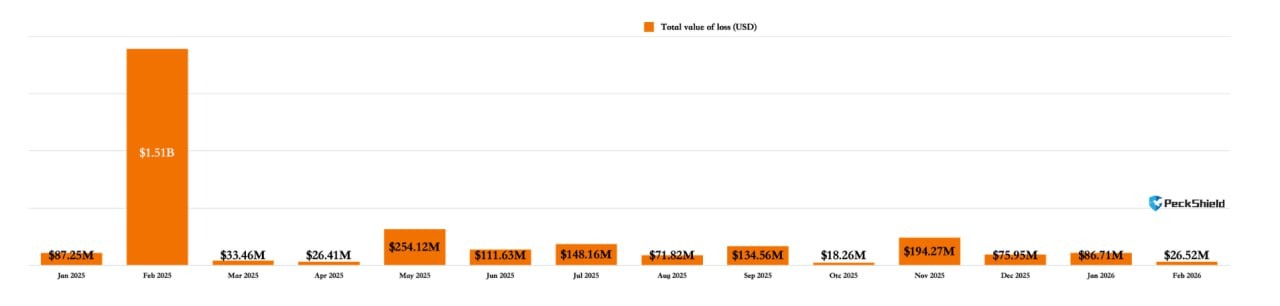
The monthly losses from crypto hacks and scams in February hit the lowest level since March 2025, with $26.5 million stolen last month, says blockchain security company PeckShield.
Out of 15 instances in February, only two accounted for most of the month’s losses, with the largest being the $10 million theft from YieldBlox’s DAO-managed lending pool via a price manipulation attack on Feb. 21, PeckShield reported in an X post on Sunday.
The second-largest exploit targeted the decentralized identity protocol IoTeX, which lost about $8.9 million to a private key exploit on Feb. 21. Overall, February’s total represents a 69.2% month-on-month decrease from January, which recorded just over $86 million in losses.
A PeckShield spokesperson told Cointelegraph that “mega-hacks,” such as the $1.5 billion Bybit hack in February 2025, didn’t inflate last month’s statistics, and market volatility led to a significant cooling period in exploit activity.

“A sharp market correction in early February, with Bitcoin dipping below $70,000, shifted the industry’s focus toward institutional deleveraging and math-based sell-offs. During such high-volatility periods, the tactical focus often moves away from protocol exploits toward navigating market liquidity,” the spokesperson added.
Security improvements could be a factor
Kronos Research analyst Dominick John told Cointelegraph that the decline could also reflect tighter risk controls, stronger counterparty standards and improved real-time monitoring across major venues.
“Capital is becoming more selective, rewarding protocols with mature security frameworks. Sustained downside will depend on whether security standards keep pace with innovation,” he said.
John said losses could continue to decline through the year as audits, monitoring, and institutional risk frameworks mature.
Artificial intelligence might also accelerate the shift, powering automated code reviews, anomaly detection, and pre-deployment attack simulations to catch vulnerabilities earlier in the lifecycle,’ he added.
“Crypto security is leveling up. Protocols are doubling down on audits, formal verification, and real-time monitoring, while institutions are raising the bar on what they’ll fund,” John said.
“AI-driven checks and automated vulnerability scans are catching issues earlier, though the fast-moving ecosystem keeps the game high-stakes.”
Phishing remains a persistent problem
Losses from phishing have declined, with attacks tied to wallet drainers dropping sharply in 2025, from $494 million to $83.85 million.
The PeckShield spokesperson said that the attacks, where a scammer poses as a trusted person or organization to steal sensitive information, remain a lingering issue.
Related: Traveling? ‘Evil Twin’ WiFi networks can steal crypto passwords
“Phishing remains the most persistent threat. Instead of trying to hack the contract, bad actors are increasingly focused on hacking the human,” they added.
“It is critical for both institutions and whales to adopt multi-sig cold storage solutions and strictly guard their wallets and private keys.”
Magazine: Would Bitcoin really be at $200K if not for Jane Street? Trade Secrets


A public fight is unfolding at Empery Digital (EMPD), a bitcoin treasury company holding 3,723 BTC whose shares have slumped 45% in the past 12 months.
While it’s a small holding compared to firms like Michael Saylor’s Strategy, the boardroom drama with an activist investor brought this company into the spotlight.
In a Feb. 4 letter, investor Tice P. Brown, founder and managing partner of the Woodmont Partners family office, said he owns 9.8% of the firm, accused management of reckless behavior and poor governance, allowing employees to “day-trade tens, or hundreds of millions of dollars of bitcoin derivatives.” He called for the resignation of co-CEO Ryan Lane and the rest of the board, and demanded the sale of all its bitcoin, returning the cash to shareholders.
Empery’s management rejected Brown’s claims and offered a different account of recent events. The dispute now spans buyout talks, office meetings and the use of bitcoin derivatives at the company.
“Management attempted to reach an agreement with Mr. Brown as it believed such an agreement would be in the best interests of the Company and all its shareholders,” the company said in a post on its website. “It is disappointing Mr. Brown ended these conversations and issued his letter to advance his self-serving campaign.”
At the core is a simple question: Should Empery, which has a market capitalization of $140 million, keep building around its bitcoin holdings or sell them and wind down, especially when the bitcoin price has cratered from its all-time high and most treasury companies are hurting?
Options trading
Brown, who started building his stake in December and is now the third-largest shareholder, according to WallStreetZen data and SEC filings, argues for the latter.
Brown, who declined to comment for this story, said in his letter that liquidating all the bitcoin would close the gap between the company’s share price of around $3.96 and its net asset value of $4.72.
Empery, however, says that selling all bitcoin would destroy long-term potential and undermine its strategy.
That strategy involves using its holdings to support an options trading plan that involves selling out-of-the-money calls and puts, along with spreads, to collect premiums. It’s an approach employed by some other bitcoin treasury firms, including Metaplanet, the fourth-largest corporate holder of bitcoin, to generate income against their bitcoin holdings.
In plain terms, that means the company earns fees from other market participants who want exposure to bitcoin price moves. If bitcoin stays within certain price ranges, Empery keeps the premium. If it moves sharply, the company faces limits defined by the contracts.
It’s personal
The disagreement also turned personal.
Brown, a graduate of Harvard College and Harvard Law School, noted in recent filings that he has made “a few hundred million dollars of public and private investments” since 2014 through his family office and previously served as chairman of PharmChem, which was acquired last year at a premium to their open market price.
He described a January meeting at Empery’s Rockefeller Center office, where he said Lane had him removed by security. Empery says the meeting ended after Brown insisted the company liquidate immediately and refused to leave unless security escorted him out.
In a Feb. 23 letter, Brown says the company offered to buy his shares at a premium in exchange for a standstill agreement.
The company, in its post, says it did not initiate an offer to buy Brown’s shares. Instead, it claims Brown’s prime broker approached the firm to explore a potential deal. Empery confirmed discussions took place, but said the talks broke down over price.
A person familiar with the talks told CoinDesk Brown sought $7.50 per share, valuing the company at roughly $270 million vs its current market cap of $136 million.
A bid for the board
The proxy fight escalated further on Feb. 26 when Brown filed a formal notice nominating himself for election to Empery’s board of directors. In the filing, Brown disclosed his stake had grown to 10.3%, representing over 3.3 million shares.
He criticized the company’s “poison pill” and further referenced “management’s efforts to impose standstill agreements,” arguing they serve only to entrench incumbents rather than allow stockholders to effect change.
Touting his background as a Harvard Law graduate and former chairman of PharmChem, Brown stated that if elected, he would work to remove impediments to shareholder oversight and dramatically increase the capital returned to investors.
“The Company’s continued retention of bitcoin holds no ongoing business purpose, as dozens of cheaper ways to achieve bitcoin exposure exist,” Brown wrote in the filing.
Bitcoin treasury in limbo
CoinGecko data shows the company’s bitcoin was purchased at an average price of $122,283 each, costing a total of $455 million. The current value stands at $235.5 million, meaning a sale would result in a realized loss of nearly $220 million.
Still, the company signaled some flexibility. In its latest statement, Empery said it may use existing cash or reduce its bitcoin holdings to fund share repurchases or repay borrowings, something that other treasury companies have done. It stopped short of endorsing a full sale.
It also said recent buybacks had narrowed the gap between its share price and net asset value by roughly 40% in less than a month.
For now, neither side appears ready to back down. The dispute could shape not only Empery’s future, but also may foreshadow what awaits other smaller public companies with large bitcoin treasuries in a volatile market.
Crypto World
HYPE jumps 5% as token burn offsets $316 Million unlock, JUP gains weekly on supply freeze


Hyperliquid’s HYPE token outperformed bitcoin and the broader market as traders flocked to the decentralized exchange over the weekend, placing bullish bets on TradFi-linked futures amid escalating Middle East tensions.
HYPE has climbed more up to 5% in the past 24 hours, as exploding platform activity led to higher token burn rate, countering fears of an impending $316 million token unlock. Bitcoin, meanwhile, dropped 0.7% to $66,700. The CoinDesk 20 Index, a broader market gauge, has declined by 1.7% to 1,937 points.
Hyperliquid’s fee mechanism channels a portion of trading fees directly into HYPE buy-backs and burns. So spikes in activity, like the weekend rush into oil futures, lead to increased fee revenue and slash circulating supply of the token.
The protocol has earned $2.8 million in fees over the past 24 hours and over $13 million in one week, according to data source Defillama. It has burned $9.22 million worth of tokens over the past seven days, a 20.4% increase from the prior period.
This has shifted attention away from the token unlock – roughly 9.92 million HYPE, equal to about 2.7% of released supply, is scheduled to unlock this week. With historical unlocks often resulting in smaller-than-projected releases, according to data tracked by Tokenomist, traders appear to be betting that net circulating supply will not expand meaningfully.
Jupiter’s JUP token – up 13% in the last week and largely steady over 24 hours – has drawn similar attention after holders in a late-February governance vote approved eliminating net-new emissions for 2026, shelving planned token distributions and preventing any additional JUP from entering circulation this year, reinforcing the same supply-discipline narrative now driving selective altcoin strength.
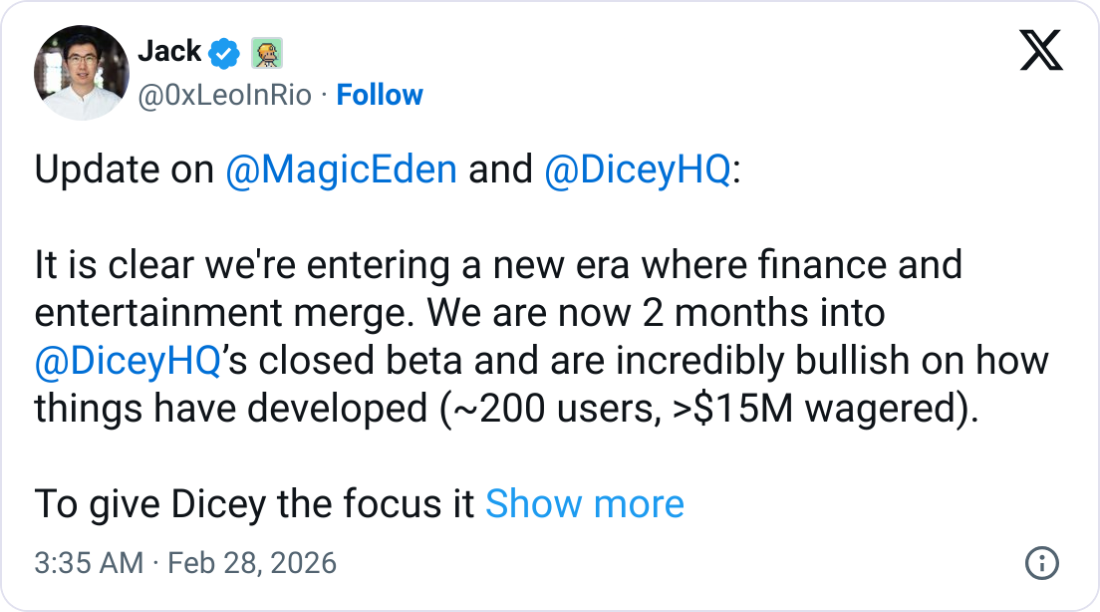
Solana-based nonfungible token (NFT) marketplace Magic Eden is winding down its support for Bitcoin and Ethereum as it plans to double down on its upcoming online casino and sportsbook, Dicey.
Magic Eden CEO and co-founder Jack Lu said in an X post on Friday that it is winding down support for its Ethereum Virtual Machine and Bitcoin-based Runes and Ordinals marketplaces on March 9, followed by its Bitcoin API on March 27, and its crypto wallet on April 1.
He added that the platform will end its NFT buyback program and would be “doubling down” on Dicey, with Lu saying there is a “massive opportunity” in iGaming, or online gambling.
“It is clear we’re entering a new era where finance and entertainment merge,” Lu said, adding he was “incredibly bullish” on Dicey’s two-month-old closed beta, which has seen 200 users wager over $15 million.

Dicey offers an on-chain casino and plans to launch a sportsbook in a similar fashion to blockchain gambling sites such as Stake.
Magic Eden cutting NFTs to streamline toward gambling
The changes see Magic Eden, once one of the most popular NFT marketplaces, significantly scale back its focus on NFTs.
Lu said the platform will “exclusively” focus on NFT packs, which bundle random NFTs from various collections, similar to physical trading card packs.
Related: Logan Paul sells Pokémon card for $16.5M, years after fractional NFT row
Lu said the shift was ultimately down to most of the platform’s products not contributing significantly to revenues.
“80% of our cost are tied to products generating only 20% of our revenue. By winding down these products, we’re refocusing on our Solana roots [and] retaining our most profitable products, betting on deep on crypto entertainment, and positioning our products for long term growth.”
The NFT market has been impacted significantly amid a broader crypto market downturn over the past few months, with big names such as Nifty Gateway announcing in January that it was shutting down.
In early February, the total NFT marketplace had retraced to levels not seen since before the market boomed in 2021, falling below a $1.5 billion market cap.
Magazine: AI won’t make you rich but crypto games might, Axie founder steps down: Web3 Gamer
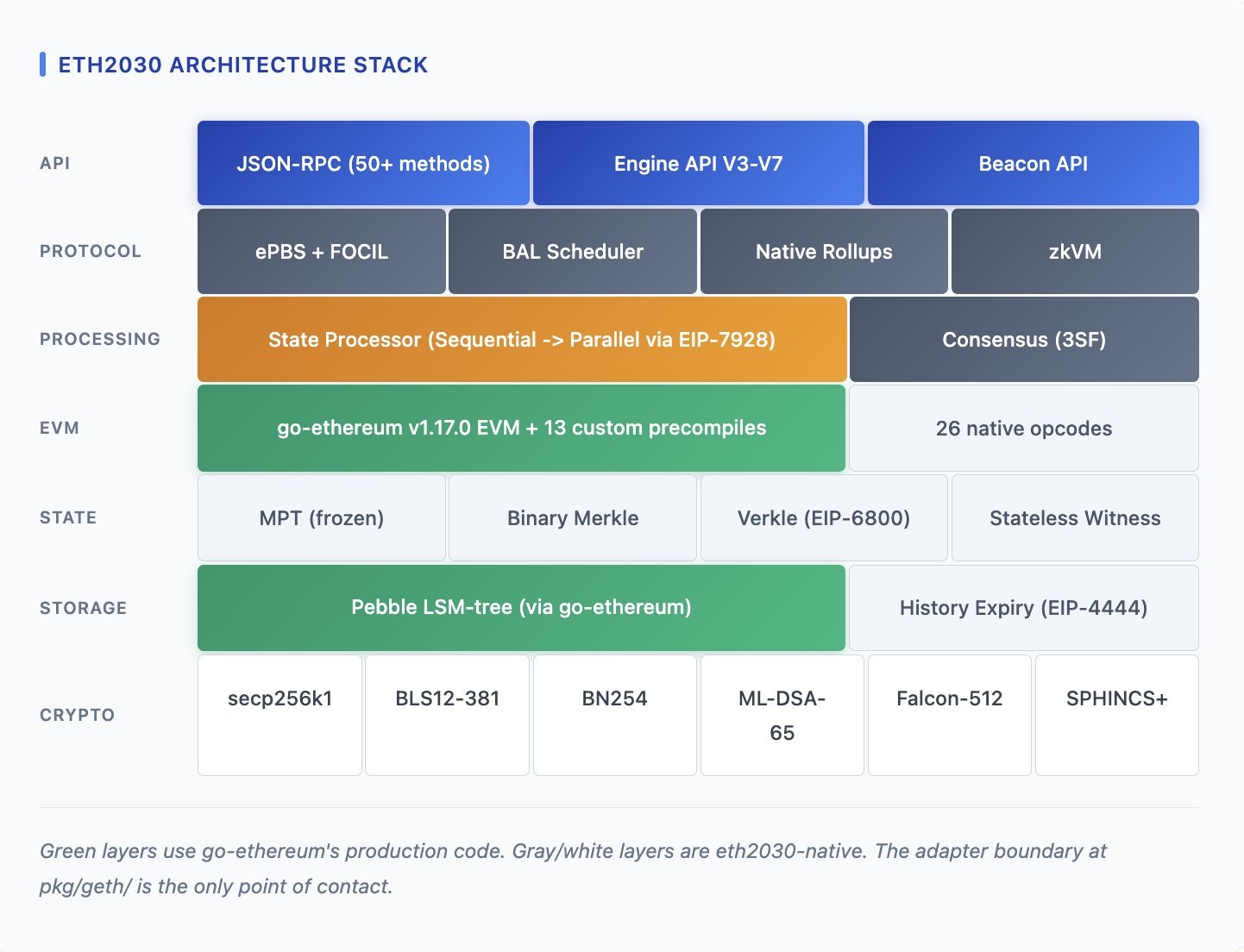
Ethereum co-founder Vitalik Buterin says an experiment that used artificial intelligence to prototype the blockchain’s roadmap out to 2030 in just a few weeks could have lessons for developers.
“This is quite an impressive experiment. Vibe-coding the entire 2030 roadmap within weeks,” Buterin posted to X on Saturday after a developer made a bet with Vitalik in February that one person could use AI to code a reference implementation of the blockchain’s roadmap.
Buterin added that AI is “massively accelerating coding” and that people “should be open to the possibility that the Ethereum roadmap will finish much faster than people expect, at a much higher standard of security than people expect.”
Vibe coding is where AI creates the code for an application, allowing developers to quickly create software. The practice has become more popular as AI models have improved at coding; however, some warn that AI-generated code can be insecure.

Vitalik says AI code would have “critical bugs”
Vitalik said that there were “massive caveats” to using AI, as the speed at which the code was written means it “almost certainly lots of critical bugs, and probably in some cases ‘stub’ versions of a thing where the AI did not even try making the full version.”
“But six months ago, even this was far outside the realm of possibility, and what matters is where the trend is going,” he added.
Related: Ethereum smart accounts are finally coming ‘within a year’ — Vitalik Buterin
Buterin cautioned that instead of focusing on speed, more emphasis should be dedicated to security.
“The right way to use it is to take half the gains from AI in speed, and half the gains in security: generate more test-cases, formally verify everything, make more multi-implementations of things.”
He said that he was personally excited about the possibility that bug-free code, “long considered an idealistic delusion,” will finally become first possible and “then a basic expectation.”
Buterin has been active commenting on the recently released roadmap from the Ethereum Foundation called “Strawmap,” which lays out all upgrades planned for the next four years.
He has previously proposed plans to make Ethereum quantum-resistant and on Sunday said that account abstraction, or smart accounts, would “happen within a year.”
Magazine: 6 massive challenges Bitcoin faces on the road to quantum security

Trump Media & Technology Group is weighing a structural pivot that could redefine its crypto playbook: spinning Truth Social into a publicly traded entity as part of ongoing talks with energy-fusion developer TAE Technologies and Texas Ventures Acquisition III, a SPAC that would take the platform public. If the merger advances, Truth Social would become a stand-alone company named SpinCo, which would subsequently merge with Texas Ventures III, with SpinCo shares distributed to Trump Media shareholders. The arrangement follows a December merger agreement valued at more than $6 billion and aligns with the company’s broader strategy to monetize its platform through fintech and crypto ventures while pursuing energy-tech ambitions. The moves come against a backdrop of Trump Media’s forays into crypto and digital assets, including a Bitcoin treasury that has been built up over time and a slate of crypto product filings that signal a broader push into tokenized finance.
Key takeaways
- The Truth Social spin-out would be paired with a merger between TAE Technologies and Trump Media, with SpinCo expected to merge into Texas Ventures Acquisition III and distribute SpinCo shares to Trump Media shareholders once closed.
- Truth Media’s crypto arm, launched as Truth.Fi in 2025, now anchors a broader crypto strategy that includes a Bitcoin treasury and a portfolio of crypto ETFs filed in the US, including those tracking Bitcoin (BTC), Ether (ETH), and Cronos (CRO) with staking options.
- The SPAC-backed deal and spin-out are tied to a merger with TAE Technologies, a project that could accelerate Trump Media’s interests in energy fusion and related data-center deployments driven by AI workloads.
- Financial disclosures from 2025 show a significant unrealized drag from crypto prices, with a stated loss of about $712.3 million for the year and end-2025 assets around $2.5 billion, illustrating the volatility and risk in crypto-focused corporate ventures.
- Regulatory and market developments in the near term—SEC filings, merger approvals, and ETF approvals—will shape whether SpinCo can launch as planned and how quickly Truth Social’s crypto ambitions scale.
Tickers mentioned: $BTC, $ETH, $CRO
Sentiment: Neutral
Market context: The unfolding discussions reflect a broader wave of corporate actors pursuing crypto and blockchain-related products within SPAC-structured deals and strategic partnerships, even as macro liquidity and regulatory scrutiny shape the pace of such initiatives.
Why it matters
The potential spin-out of Truth Social into a separately listed company marks a notable shift in how Trump Media plans to monetize its user base and brand footprint. By isolating Truth Social within a public vehicle—SpinCo—the group could unlock capital markets’ interest in a platform with significant reach, while kaleidoscopically aligning with a diversification strategy that extends into fintech, crypto, and energy tech. The arrangement would place SpinCo in a position to pursue crypto product innovations and tokenized offerings without immediate interference from the parent’s other lines of business, potentially attracting investors drawn to crypto-enabled social platforms and revenue streams tied to digital assets.
Truth Media’s crypto arm, launched under the Truth.Fi umbrella, has evolved into a broader fintech initiative that includes a Bitcoin treasury and an appetite for crypto exchange-traded products. The company has filed for Truth Social-branded crypto ETFs in the United States, including ones focused on Bitcoin (BTC) and Ether (ETH) as well as Cronos (CRO), with staking features linked to its ecosystem and a backend partnership framework with Crypto.com. This suite of filings signals an intent to create regulated, investable crypto products that could broaden the company’s investor base and provide diversified exposure to digital assets beyond the social media platform. The plan incorporates the Crypto.com partnership as a crucial enabler for the CRO-related ETF strategy and treasury mechanics.
On the energy front, the merger with TAE Technologies is pitched as a synergy play: a fusion-focused technology developer that could support the power needs of expanding AI data centers and other high-demand workloads. The tie-up would integrate Trump Media’s media and fintech ventures with a long-horizon energy project, aligning with a broader industry trend where crypto mining and blockchain infrastructure searches intersect with energy procurement and efficiency initiatives. The combination could create a framework for deploying fusion-powered energy solutions in data centers, potentially reducing energy costs and capacity constraints for crypto and fintech operations that require robust compute resources.
Financial disclosures from 2025 illustrate the risk profile of such ambitious ventures. Trump Media reported a loss of about $712.3 million for the year, driven largely by unrealized losses tied to crypto prices and related securities. At year’s end, the company noted roughly $2.5 billion in assets, a figure that dwarfs the $776.8 million cash and short-term investments reported for 2024. These numbers underscore the sensitivity of crypto ventures to price cycles and market sentiment, while also highlighting the capital intensity of pursuing a combined media, fintech, and energy-tech agenda. The public-private nature of the SpinCo proposition means investors will be scrutinizing how the tech stack—from Truth.Fi-powered products to fusion-energy capabilities—can scale and become financially material over time.
The storyline also hints at a broader narrative around governance, valuation, and timing. The proposed path—Truth Social’s spin-out followed by a merger with a SPAC—depends on closing conditions, regulatory clearances, and market reception. If the merger with TAE Technologies proceeds, SpinCo would be positioned as a listed vehicle that retains exposure to the crypto product suite while benefiting from the potential upside of energy-tech partnerships. The discussions reflect a strategic attempt to combine a high-visibility social platform with a diversified set of growth engines, including digital assets and energy innovation, in a bid to create value across multiple cycles and market conditions.
From a market-structure perspective, the plan underscores how corporate entities pursue crypto-adjacent strategies by leveraging SPAC frameworks and multi-industry combinations. It also raises questions about risk management, liquidity, and concentration risk in a portfolio that spans social media, fintech, and energy tech. As the parties move through due diligence, investors will be looking for clarity on how SpinCo’s governance, earnings potential, and asset allocation will be balanced against the volatility inherent in crypto markets and the evolving regulatory landscape surrounding crypto ETFs and digital assets.
For now, Trump Media’s narrative remains a blend of strategic ambition and regulatory navigation. The company has not announced a closing date for the merger or SpinCo listing, and the outcome will hinge on regulatory approvals, investor sentiment, and the successful execution of the merger with TAE Technologies. Stakeholders will be watching the timeline for SpinCo’s listing, any subsequent stock distributions to Trump Media holders, and updates on the Truth.Fi roadmap, including ETF approvals and the performance of the Bitcoin treasury and CRO treasury-backed initiatives.
What to watch next
- Clearance and timing of the SpinCo formation and its merger with Texas Ventures Acquisition III; any regulatory milestones or approvals with a timeline.
- Status updates on the TAE Technologies merger, including closing conditions and any amendments to the original >$6B valuation.
- Progress of Truth Social-branded crypto ETFs, with updates on SEC approvals, product launches, and staking features.
- Development and deployment schedules for Truth.Fi products and the performance of the Bitcoin and Cronos treasuries under Crypto.com and Yorkville Acquisition partnerships.
- Regulatory or market developments affecting SPAC activity and crypto-centric offerings that could influence investor appetite for SpinCo and related assets.
Sources & verification
- Trump Media & Technology Group discusses spinning Truth Social into SpinCo as part of a potential deal with TAE Technologies and a SPAC vehicle (the merger agreement listing and SPAC structure).
- The merger agreement with TAE Technologies for a deal valued at more than $6 billion.
- Truth.Fi crypto initiative and a Bitcoin treasury reported by Trump Media, including holdings exceeding 11,500 BTC as of late September.
- Truth Social-branded crypto ETFs filed in the US for BTC, ETH, and CRO, including staking arrangements, tied to partnerships with Crypto.com.
- Partnerships and related disclosures connecting CRO ETFs to the CRO treasury and Yorkville Acquisition.
Trump Media’s potential spin-out ties Truth Social to broader crypto and fusion-energy ambitions
Trump Media & Technology Group is exploring a path that could redefine how a presidential brand expands into crypto, while layering in energy-tech ambitions. The core idea is to spin Truth Social, the company’s flagship social platform, into its own publicly traded entity—SpinCo—then merge that vehicle with Texas Ventures Acquisition III, a blank-check company. The hailed trigger is the ongoing merger with TAE Technologies, the energy-fusion startup that has been positioned as a strategic partner in the broader plan. The deal landscape suggests a multi-layered strategy: a public listing for Truth Social within SpinCo, followed by a merger with SPAC sponsor Texas Ventures III, and a distribution of SpinCo shares to Trump Media shareholders, all contingent on the closing of the merger with TAE Technologies, which itself has a reported value exceeding $6 billion.
Within this framework, Truth Media has emphasized crypto as a growth vector. In 2025, the company expanded its fintech footprint under the Truth.Fi banner, laying the groundwork for crypto products and services that could sit alongside a social platform with a global footprint. A key element of this expansion has been a Bitcoin treasury reported to be in excess of 11,500 BTC as of late September, underscoring a deliberate accumulation of digital assets that could support future product launches or collateral arrangements. The crypto strategy is further reflected in the filing of Truth Social-branded crypto ETFs in the United States—facilities that would allow investors to gain exposure to BTC, ETH, and the Cronos ecosystem while embedding staking features. The ETFs are linked to ongoing partnerships that include Crypto.com, a connection that appears central to the CRO ETF and related treasury operations.
Beyond the crypto dimension, the merger with TAE Technologies signals a parallel emphasis on energy innovation. TAE’s fusion technology is portrayed as a mechanism to address the growing power demands of AI data centers and other data-intensive infrastructure. If realized, the combination would tether a social-media-centric fintech venture to a fusion-energy roadmap, marrying user engagement with a long-horizon energy supply strategy. The ambition is not merely to diversify revenue streams but to create an integrated platform where crypto products, fintech services, and energy tech coalesce under a single corporate umbrella. The public listing—which SpinCo would pursue through the SPAC route—could also broaden access to capital, enabling more ambitious product development and potential partnerships in the crypto and high-performance computing ecosystems.
Of course, the path forward remains contingent on a series of milestones. The 2025 financials already reveal a challenging year, with a reported loss of about $712.3 million largely tied to unrealized crypto losses and related securities, alongside end-of-year assets around $2.5 billion. The figures illustrate the risk profile inherent in crypto-centered corporate bets, where price swings and regulatory shifts can swiftly impact balance sheets. Investors will be evaluating whether SpinCo’s governance, capital structure, and cash flow prospects demonstrate a credible route to profitability, or whether the proposals remain predominantly strategic, with upside tied to future crypto adoption and energy-tech commercialization. As always, the timing of regulatory approvals, due diligence, and market conditions will ultimately shape whether SpinCo’s vision becomes a measurable segment of Trump Media’s portfolio or remains an aspirational blueprint for a broader ecosystem that blends social media, crypto, and fusion energy.

Tangem has announced a limited-time Spring Flash Sale running from March 2 to March 8, offering a 20% discount across its website. The promotion applies to all products, giving customers a timely opportunity to secure a hardware wallet at a reduced price.
For readers of Crypto Breaking News, the offer becomes even more attractive. By using the partner promo code CRYPTO at checkout, customers can unlock an additional 10% discount on top of the existing 20% sale price. This means significantly lower costs for those looking to enhance their crypto security while taking advantage of stacked savings.
Importantly, the current BTC Reward campaign remains valid during the Spring Flash Sale. This means buyers not only benefit from discounted pricing but may also qualify for the ongoing Bitcoin reward initiative, adding further value to their purchase.
Tangem Wallet has gained recognition in the crypto community for its card-based hardware design, mobile-first experience, and focus on self-custody. As the industry continues to emphasize the importance of owning private keys, hardware wallets remain a core tool for long-term holders and active users alike. Solutions like Tangem aim to simplify self-custody without compromising on security, offering an alternative to traditional seed phrase storage methods.
With increasing attention on exchange risks, phishing attempts, and wallet exploits, many users are reassessing how they store digital assets. A hardware wallet can help reduce exposure to online threats by keeping private keys offline, under the direct control of the user.
This Spring Flash Sale provides a limited window to secure Tangem products at a combined discount while the BTC Reward is still active. Readers can apply the promo code CRYPTO at checkout or use our affiliate link to ensure the additional 10% discount is automatically applied.
The offer runs from March 2 through March 8, and discounts will revert to standard pricing once the campaign ends.


BitMEX co-founder Arthur Hayes published a new essay on March 2 arguing that prolonged US military engagement with Iran would increase the likelihood of Federal Reserve rate cuts and money printing, ultimately driving Bitcoin higher.
His thesis rests on a four-decade pattern: every major US military campaign in the Middle East has been followed by Fed easing, and he expects Iran to be no different.
War and the Fed: A Recurring Pattern
In “iOS Warfare,” Hayes presented a historical analysis linking US military operations in the Middle East to subsequent monetary easing by the Fed. He noted that every US president since 1985 has launched missile strikes or full-scale wars against Middle Eastern countries, and that the Fed consistently lowered interest rates in the aftermath.
Hayes cited three precedents. During the 1990 Gulf War under President George H.W. Bush, the Fed held rates steady at its first post-war meeting but signaled easing was likely if the conflict dragged on. The central bank cut rates at its November and December 1990 meetings, even as oil-driven inflation persisted.
After the September 11 attacks in 2001, Fed Chair Alan Greenspan pushed through an emergency 50-basis-point rate cut, citing downward pressure on asset prices and the need to restore economic confidence. The wars in Iraq and Afghanistan that followed were accompanied by an extended easing cycle.
Under President Obama’s 2009 troop surge in Afghanistan, rates were already at zero, and quantitative easing was underway, leaving no further room for cuts.
Turning to the present, Hayes framed Trump’s apparent endorsement of regime change in Iran as following the same pattern. He argued that Iranian regime change has been a bipartisan objective among US policymakers since 1979, giving the Fed political cover to ease monetary policy to finance the effort.
Hayes supported his argument with a chart showing that the percentage of the federal budget allocated to the Department of Veterans Affairs rose twice as fast as aggregate federal spending since 1985, alongside declining effective Fed Funds Rates following major military engagements.
Wait for the Cut
Despite his bullish long-term outlook, Hayes advised caution in the near term. He recommended investors wait for the Fed to actually cut rates or begin printing money before adding exposure to Bitcoin and select altcoins.
“We do not know how long Trump will remain interested in spending billions, if not trillions, of dollars reshaping Iran’s politics to his liking,” Hayes wrote. “The prudent action is to wait and see.”
Bitcoin was trading around $66,200 at the time of publication, down nearly 30% year-over-year and roughly 47% below its all-time high of $126,000 reached in October 2025. The coin has fallen for five consecutive months, with the Crypto Fear and Greed Index stuck in extreme fear territory.


Asian markets plunged on Monday as the fallout from US and Israeli military strikes on Iran sent oil surging, stocks tumbling, and investors scrambling for safe havens — but Bitcoin held up better than expected, trading around $66,500 after a weekend that saw it swing between $63,000 and $68,000.
With the Strait of Hormuz effectively shut and Brent crude up as much as 13%, the conflict is now testing whether Bitcoin’s 24/7 liquidity makes it a crisis shock absorber or just another risk asset caught in the downdraft.
Asia Opens in the Red, Then Pares Losses
Japan’s Nikkei plunged as much as 2.15% at the open, shedding over 1,260 points. By midday, it had pared the drop to 1.66%, trading at 57,875. Hong Kong’s Hang Seng fell 2.54%, and Singapore’s Straits Times fell 2.13%. Shanghai held up better, dipping just 0.45%.
Airline stocks across the region — Qantas, Singapore Airlines, and Japan Airlines among them — fell more than 5% as the Hormuz closure disrupted flight routes and sent fuel costs soaring. Chinese airlines were also hit hard.
Oil’s initial surge faded sharply through the session. Brent had jumped as much as 13% at the open, but WTI was up just 4.24% by midday. US equity-index futures also recovered, with the S&P 500 down 0.67% and the Dow off 0.71% — well off earlier lows of over 1%. Gold rose 1.76%.
China’s energy sector bucked the trend. PetroChina opened up 7% in Shanghai, and the CSI Energy Index jumped 5%. Korea’s Kospi, one of Asia’s top-performing markets this year, was closed Monday for a national holiday — delaying what could be a sharp reaction on Tuesday.
Bitcoin, down 2.2% on the day, outperformed the steep losses in equity futures and Asian stock benchmarks.
A Wild Weekend for Crypto
The turbulence began Saturday when US-Israeli strikes hit targets across Iran, killing Supreme Leader Ayatollah Ali Khamenei. Bitcoin dropped below $64,000 within hours as the total crypto market shed roughly $128 billion in value, with forced liquidations cascading across derivatives markets.
The bounce came fast. After Iranian state media confirmed Khamenei’s death, traders bet the power vacuum could accelerate de-escalation, pushing Bitcoin back above $68,000 in thin Sunday liquidity. But the optimism faded as Iran launched retaliatory missile and drone strikes across the Gulf, hitting targets in Israel, the UAE, and Bahrain, dragging the price back below $66,000 by Sunday evening in New York.
By early Monday in Asia, Bitcoin was trading at around $66,543, with a 24-hour range of $65,149 to $68,043. The 24-hour trading volume topped $43.6 billion, reflecting heightened activity as traders repositioned ahead of the US market open.
Hormuz: The Real Risk
The biggest market risk is the effective closure of the Strait of Hormuz. Roughly 20% of global seaborne oil passes through the waterway. Digital signals indicate tanker traffic has nearly halted. At least three ships have been attacked near the mouth of the Persian Gulf. Economists have warned that a sustained closure could push oil prices as high as $108 per barrel.
OPEC+ moved to ease supply fears on Sunday, announcing a production increase of 206,000 barrels per day starting in April — more than analysts had expected. Saudi Arabia, Russia, Iraq, the UAE, and four other members are set to boost output. But analysts cautioned the move may offer limited relief. If Gulf flows remain constrained, additional production means little. Export routes matter more than headline output targets.
For crypto, the oil shock creates a dual threat. Higher energy prices feed directly into inflation expectations, potentially delaying Federal Reserve rate cuts that the market has been counting on. Even with OPEC+ stepping in, prolonged disruption to Hormuz could keep crude elevated long enough to push inflation readings higher, which is negative for risk assets, including Bitcoin.
Pressure Valve or Risk Asset?
The weekend reinforced Bitcoin’s evolving identity in geopolitical crises. When traditional markets are closed, crypto absorbs selling pressure from equities, bonds, and commodities. Analysts call this the “pressure valve” effect. Bitcoin is the only large liquid asset trading around the clock. It took the brunt of weekend risk-off flows. The real price discovery is expected on Monday when US equity markets and Bitcoin ETFs reopen.
That ETF dynamic adds a new variable. Spot Bitcoin ETFs drew nearly $254 million in net inflows over three sessions last week. Monday’s open could test whether institutional holders maintain positions through escalating geopolitical turmoil.
Bitcoin futures funding rates have turned sharply negative, with the CMC Crypto Fear and Greed index at 15 — deep in “Extreme Fear” territory where it has been stuck for weeks. Some analysts view this as a contrarian signal, arguing that the market is mechanically paying traders to go long.
What Comes Next
Some initial panic has faded after President Trump told the New York Times he was open to dropping sanctions on Iran if its new leadership proves pragmatic. A senior White House official also said to the press that Iran’s new interim leadership had suggested it was open to talks, and Trump said he had agreed to engage.
Some Wall Street strategists warned against buying the dip too quickly. This episode risks lasting longer than the geopolitical flare-ups investors have grown accustomed to.
For Bitcoin, which has already fallen 47% from its October all-time high of $126,000, the $60,000 support level remains the line in the sand. A break below could open the path to the mid-$50,000 range. A sustained move above $70,000, on the other hand, could trigger a short squeeze given the heavy bearish positioning currently built up in derivatives markets.
With CPI data due March 11 and the Fed decision on March 18, the crypto market faces a gauntlet of catalysts that the Iran conflict has made exponentially harder to navigate.

Finance Minister Godongwana presents 2026 Budget Speech

Sinners wins top prize at Actor Awards as Jessie Buckley proves unbeatable

Savills appointed to Swindon Designer Outlet


-

 Sports6 days ago
Women’s college basketball rankings: Iowa reenters top 10, Auriemma makes history
-

 Fashion2 days ago
Weekend Open Thread: Iris Top
-

 Politics6 days ago
Nick Reiner Enters Plea In Deaths Of Parents Rob And Michele
-

 Business5 days ago
True Citrus debuts functional drink mix collection
-

 Politics3 days ago
ITV enters Gaza with IDF amid ongoing genocide
-

 Tech1 day ago
Unihertz’s Titan 2 Elite Arrives Just as Physical Keyboards Refuse to Fade Away
-
Sports2 days ago
The Vikings Need a Duck
-

 Crypto World6 days ago
XRP price enters “dead zone” as Binance leverage hits lows
-

 Tech5 days ago
Unsurprisingly, Apple's board gets what it wants in 2026 shareholder meeting
-
 NewsBeat2 days ago
Dubai flights cancelled as Brit told airspace closed ’10 minutes after boarding’
-

 NewsBeat4 days ago
Cuba says its forces have killed four on US-registered speedboat | World News
-
 NewsBeat2 days ago
The empty pub on busy Cambridge road that has been boarded up for years
-

 NewsBeat15 hours ago
‘Significant’ damage to boarded-up Horden house after fire
-
 NewsBeat4 days ago
Manchester Central Mosque issues statement as it imposes new measures ‘with immediate effect’ after armed men enter
-
 NewsBeat7 days ago
‘Hourly’ method from gastroenterologist ‘helps reduce air travel bloating’
-

 NewsBeat1 day ago
Abusive parents will now be treated like sex offenders and placed on a ‘child cruelty register’ | News UK
-
 NewsBeat5 days ago
Police latest as search for missing woman enters day nine
-

 Business4 days ago
Discord Pushes Implementation of Global Age Checks to Second Half of 2026
-
 Sports7 days ago
2026 NFL mock draft: WRs fly off the board in first round entering combine week
-

 Business3 days ago
Only 4% of women globally reside in countries that offer almost complete legal equality