

Business
Nifty IT in sell-on-rise mode, may fall another 8-10%: Rupak De


Edited excerpts from a chat:
Nifty ended last week around 1% lower as IT stocks pulled the index down. How do you see the market shaping up in the first week of March?
Nifty ended the week on a negative note due to the fall on the last day, when it slipped below the 200 DMA, confirming a negative sentiment that might persist for a few more days. The week started with selling in IT stocks, but the selling pressure spilled over into heavyweight Reliance and the realty pack. The final nail in the coffin came from the strongest sector, banks. The Bank Nifty slipped below the 21 EMA for the first time in many days, giving rise to a cautious sentiment. Going into March, I expect the stage to be set for a weak market, at least in the first half of the month. Support on the lower end is visible at 24,500. On the higher end, resistance is placed at 25,500, above which sentiment might improve slightly.

In the last 3 days, Nifty IT attempted to climb up. What do you think is this a dead cat bounce or sustainable uptrend? Is it too early to say that IT stocks have bottomed out?
The last three-day bounce in the IT space was feeble, limited, and unconvincing. As the index fell below the previous swing low, more investors unwound their long positions, as risk-averse sentiment in the space is in place, not the other way around. I believe that as long as it remains below 31,500, the index is likely to remain a sell on rise. On the lower end, we might see another round of selling in the space, taking the index down by another 8–10%.
In the last 3 trading sessions, have we seen shorts winding up in IT stocks?
I don’t feel so; in fact, more people sold on the bounce, leading to a fall from the three-day high.
Metals are doing well. What are the charts telling you?
Metals did really well, ending the month as gainers, but the momentum seems to be lacking, as the proximity to the upper band of the rising channel has led to lackluster movement. I believe there is a strong possibility of further correction in the space. However, the fundamental difference between metals and IT is that metals still remain a buy on dips, but the same cannot be said for IT.
Tejas was the biggest gainer in the week. How would you trade the stock now?
The stock generally moves up to give a one-off kind of rally and then retraces back below the previous low, which has been the phenomenon for more than a year. However, this time it seems to be a bit different, as the price rise was backed by significantly higher volume. The follow-through buying on the second day is also a confirming factor. The stock should be held or bought with a stop loss of 400, while on the higher end, it might move towards 550.
Give us your top ideas of the week.
Buy CHENNAIPETRO 962 | SL 929 | TGT 1010
The stock has given a decent upside breakout, leading to a definitive rise in positive sentiment, as more buyers are now willing to pay higher prices for the same stock. The 21 EMA and 50 DMA are in a bullish crossover, giving a thumbs up to a positive trend. The RSI is in a bullish crossover. Over the short term, the trend is likely to favor the bulls, with potential to reach 1010, while support is placed at 929.
Buy SAILIFE 998 | SL 964 | TGT 1040
The stock has given a previous swing high breakout, leading to an increase in positive sentiment. The price has been sustaining above the 21 EMA and 50 DMA, giving a thumbs up to a positive trend. The RSI is in a bullish crossover. Over the short term, the trend is likely to favor the bulls, with potential to reach 1040, while support is placed at 964.
Sell AXISBANK 1383 | SL 1416 | TGT 1330
The stock has given a consolidation breakdown, raising a bearish view on the stock. On the hourly chart, the stock price has fallen below the 21 EMA, suggesting the emergence of a negative trend. The hourly RSI is in a bearish crossover. On the lower end, it might fall towards 1330, while resistance is placed at 1416, above which sentiment might improve.

Business
Asian Paints, other paint stocks plunge up to 6% as Israel-Iran war fuels rally in crude oil prices: What lies ahead?

Crude oil is a key raw material source for paint companies because many of their inputs are petroleum-based derivatives. Hence, the expectations of rising oil prices putting pressure on their margins may have dampened investor sentiment for the shares of these companies.
Asian Paints shares declined more than 3% to trade at Rs 2,298 apiece, the lowest level seen by the stock since June 27, 2025. The stock was among the top losers on benchmark indices Sensex and Nifty.
Indigo Paints shares plunged nearly 6% and Berger Paints shares tumbled more than 5% to hit their respective 52-week lows on Monday morning.
Iran-Israel war fuels spike in oil prices
Brent Crude jumped more than 6.5% to $77.63 per barrel, while WTI Crude surged over 65 to $71.23 per barrel, as seen at around 11 am. More than 20% of the world’s oil passes through the Strait of Hormuz, which connects the Persian Gulf with the Gulf of Oman and the Arabian Sea. The heavy missile strikes around the area have raised worries about supply constraints, leading to a spike in oil prices.
At least three ships were attacked today near the Strait of Hormuz as Iran continues to launch retaliatory strikes across the Middle East, according to a report by BBC. The report mentioned that international shipping has almost come to a standstill at the entrance to the area.
Paint companies likely to face margin pressure from rising oil prices
This further fuelled concerns around supply disruption, boosting oil prices. “Upstream energy and defence may see relative support, while oil-sensitive sectors such as OMCs, paints, tyres, aviation and chemicals face margin pressure. Crude remains the key macro variable for Indian equities under the current escalation scenario,” said JM Financial in its latest note.
Notably, there is no official confirmation yet on whether the Hormuz Strait is closed, obstructing oil transport through the strait. UK’s second largest bank Barclays on Saturday increased its forecast for Brent Crude oil futures to $100 per barrel. “Oil markets might have to face their worst fears on Monday. As things stand right now, we think Brent could hit $100 (per barrel), as the market grapples with the threat of a potential supply disruption amid a spiraling security situation in the Middle East,” the bank said in its report.
Iran is located along the Strait of Hormuz, through which approximately a fifth of the world’s oil supply passes, Ali Vaez, who heads the Iran Project at the International Crisis Group, said in a post on X. “Even limited disruption could spike energy prices, fuel inflation, and rattle global markets,” he added.
This comes amid broader market weakness, with Indian benchmark indices opening sharply lower and wiping off a significant chunk of investors’ wealth. At the open, Sensex plunged 2,743 points to start the day at 78,543, while the Nifty 50 plunged 519 points to open at 24,659. The sharp decline wiped off more than Rs 7.8 lakh crore from the total market capitalisation of all companies listed on the BSE at open.
(Disclaimer: Recommendations, suggestions, views and opinions given by the experts are their own. These do not represent the views of The Economic Times)

Sacramento Kings rookie guard Nique Clifford delivered a career-high 26 points on 11-of-18 shooting in a March 1, 2026, loss to the Los Angeles Lakers, continuing a strong recent stretch that has fans and analysts buzzing about his potential despite the team’s struggles. The 24-year-old, drafted 24th overall in 2025, has emerged as a reliable contributor amid injuries and a rebuilding phase for the 14-47 Kings.

Clifford’s latest performance—adding seven rebounds and four assists—capped a week that included a near triple-double (13 points, eight rebounds, seven assists) in a win over the Dallas Mavericks on Feb. 26. Over his past seven games, mostly as a starter, he averaged 11.2 points, 4.0 rebounds, 3.2 assists, 1.8 steals and 1.5 threes in 31.6 minutes per contest.
Here are 10 essential facts about Clifford, whose journey from high school standout to NBA rookie highlights perseverance, versatility and late-blooming talent.
1. **Born Dominique Akai Clifford on February 9, 2002, in Colorado Springs, Colorado.** At 24 years old (turning 24 in February 2026), Clifford is older than most rookies due to a full college career. His first name is pronounced “NEEK,” and his middle name “Akai” reflects family heritage. He grew up as an only child to parents Akai and Angelique Clifford.
2. **High school star at The Vanguard School in Colorado Springs.** Clifford earned Colorado Gatorade Player of the Year honors as a senior in 2020, averaging 26.3 points, 13.7 rebounds, 3.5 steals and 2.8 blocks per game. The multi-talented athlete helped lead his team to success while showcasing the rebounding and defensive instincts that define his game today.
3. **Began college career at the University of Colorado Buffaloes (2020-2023).** Clifford played three seasons in Boulder, appearing in 82 games with 50 starts. He averaged 5.4 points and 3.6 rebounds overall, contributing to one NCAA Tournament appearance and two NIT berths. Highlights included a 17-point game against Oregon and a double-double versus Utah.
4. **Transferred to Colorado State for senior year explosion (2023-2024).** In his fifth and final college season, Clifford started all 36 games, averaging 18.9 points, 9.6 rebounds, 4.4 assists and 1.2 steals while shooting 49.6% from the field and 37.7% from three. He earned third-team All-Mountain West honors and helped the Rams to an NCAA Tournament upset win over Memphis.
5. **Drafted 24th overall by Oklahoma City Thunder in 2025, traded to Sacramento Kings.** On draft night, the Kings acquired his rights in exchange for a protected 2027 first-round pick. He signed a two-year, $6.37 million rookie contract with a team option for 2027-28, joining a crowded wing rotation featuring DeMar DeRozan, Zach LaVine, Malik Monk and Keegan Murray.
6. **Versatile 6-foot-5, 175-pound wing known for rebounding and defense.** Clifford excels as a rebounder for his size—leading Colorado State in rebounds and ranking high nationally in defensive boards. His ability to defend multiple positions, facilitate as a secondary playmaker and score efficiently has helped him earn minutes despite limited elite athletic traits.
7. **Current NBA stats (2025-26 season):** Through 57 games (11 starts), Clifford averages 6.9 points, 3.2 rebounds, 1.8 assists, 0.9 steals and 0.3 blocks in 22.2 minutes. He shoots 39.7% from the field, 31.8% from three and 72.6% from the free-throw line. His recent surge shows growth in confidence and production.
8. **Recent breakout performances highlight upside.** Clifford’s 26-point night against the Lakers on March 1 followed strong showings like 15 points and four steals versus Houston. Analysts, including podcaster Matt George, note he’s “starting to figure things out,” praising his energy, rebounding and complementary skills in limited roles.
9. **Active on social media with motivational presence.** Under @otn_nique on Instagram (25,000 followers), Clifford shares updates from games, All-Star Weekend and personal insights. His bio includes “Prove em wrong,” references to the 719 area code (Colorado Springs), his agency and Colorado State, plus a faith symbol reflecting his values.
10. **Offers hope for Kings’ future amid tough season.** With Sacramento far from playoff contention, Clifford’s emergence provides optimism. Injuries to Murray and Westbrook have opened starting opportunities, where he averages 9.2 points, 4.7 rebounds and 2.9 assists. Fantasy experts monitor him closely as a waiver-wire add for defense and efficiency.
Clifford’s path—from Colorado high school dominance to college transfer success to NBA contributor—embodies late-blooming potential. Named after NBA legend Dominique Wilkins, he continues proving skeptics wrong with versatile, high-motor play. As the Kings navigate the remainder of 2025-26, Clifford’s recent confidence surge suggests he could become a key piece moving forward.

A spokesperson from the NRMA has warned oil companies not to jack up petrol prices amid the conflict in the Middle East.
The concern over the supply of petrol comes as the Strait of Hormuz, where one-fifth of the world’s oil supply passes through, remains closed.
NRMA Warns Oil Companies
According to 9News, NRMA spokesperson Peter Khoury warned oil companies not to impose higher prices prematurely, stressing that the conflict in the Middle East should not be an excuse to “jack up prices.”
“We will be watching that closely,” Khoury stressed.
It should be noted that the spokesperson said that oil prices are indeed set to rise by 10 per cent initially, according to 9News.
Khoury, however, that the impact on petrol prices in the country shouldn’t be felt for at least a week.
Strait of Hormuz
As the conflict between the United States, Israel, and Iran continue, the Strait of Hormuz has been closed by Iran.
According to the BBC, global oil prices have gone up after at least three ships have been attack at the Strait of Hormuz. These ships are reportedly from the US and the United Kingdom.
Iran has warned ships from passing through the strait. BBC noted, however, that some ships from Iran and China have been allowed passage.
In response to concerns over the supply of oil, the Opec+ group of oil producing nations has agreed to increase their output by 206,000 barrels a day. However, some experts believe that this will not be of much help.
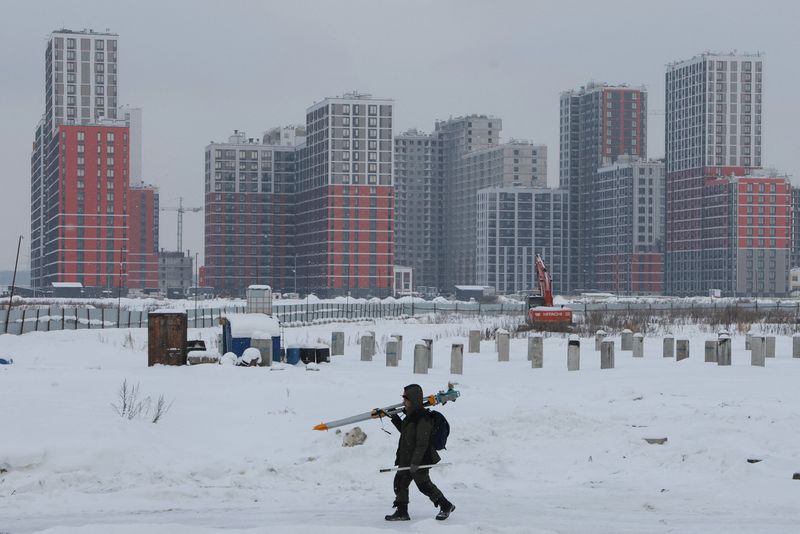

Russian manufacturing sector contracts at slower pace in February, PMI shows

Matt Orton from Raymond James Investment, noted that while there was a negative reaction to the news, it was more benign than expected. “Investors had been prepared for some hostilities given recent US-Iran negotiations. Crude prices have eased from the worst jumps, and some Asian futures are recovering. The key question is what happens to the Strait of Hormuz, which will guide energy prices over the next weeks.”
On commodities, Orton explained that markets had already priced in much of the risk. “Gold is well bid and crude already includes a $10 per barrel premium. There isn’t much room to rise unless more disruptions occur, but US naval presence may limit duration,” he said.
The strategist also weighed in on the recent US clampdown on AI company Anthropic, which has raised questions about returns on AI investments. “Anthropic’s Claude code is powerful, but the market faces two narratives: money spent on AI may not yield ROI soon, yet AI is rapidly being implemented. Investors must weigh where the trade goes. For now, I focus on companies benefiting from AI integration and capex spend,” Orton said.
Looking at India, Orton highlighted the country’s attractiveness for global investors. “India has low correlation with the S&P 500. Even amid global risk-off scenarios, India performed well in 2022 and 2023. Being selective is key, but high-quality investments exist in India and globally, regardless of geopolitical tensions,” he explained.
As the week unfolds, market watchers will continue monitoring crude prices, the Strait of Hormuz, and investor sentiment. For now, careful preparation appears to have helped global markets weather the first shocks of geopolitical tension.

Toyota Raises Offer Price For Toyota Industries To $132 Per Share

Middle East Escalation Leaves Significant Upside For Oil And Gas Markets
Pakistan Manufacturing Sector Sees Record Job Growth in February
The key question confronting investors is whether markets had already priced in the possibility of military escalation — or whether further volatility lies ahead.
Peter Cardillo, from Spartan Capital Securities, addressed the traditional safe-haven narrative surrounding the U.S. dollar and broader market implications.
“Well, let me first address your guest thinking about going into the dollar as a safe haven; that has always been the case, and the reason for that is because we are the reserve currency and we are the largest economy in the world. Presently, in terms of GDP growth, we are the leaders among the seven industrial nations. So yes, traditional hedges such as gold and silver obviously are the true hedges, but the dollar is considered one, just like Treasury bonds. If you look at what is happening in Treasury bonds, they are moving lower. Why? We are seeing foreign buying coming into the markets as a safe haven. So yes, the dollar in times of crisis is a safe haven.”
Early currency and bond market moves reflected that logic. The greenback firmed as investors sought liquidity and relative safety, while U.S. Treasury yields edged lower amid foreign inflows — a classic flight-to-quality pattern.
Oil’s Shock Trade
The more immediate and potentially disruptive impact is unfolding in the energy markets.
Cardillo explained that the initial market reaction in oil tends to be driven by positioning and uncertainty rather than fundamentals alone.
“Now, in terms of what this means for oil prices, obviously the initial trade is always that shock trade. So you have a combination of three things happening. One, the shorts running for cover. Second, you have the unknown of where prices may reach and finally stabilise at. And third, it is true that Iran produces 3%. But let us take a step backwards and look back at what happened in the 70s when the Strait of Hormuz was closed. It caused disruption, and that is what this is all about.”
The Strait of Hormuz remains the focal point. Roughly one-fifth of global energy trade passes through the narrow waterway. Even a temporary disruption could have outsized ripple effects across supply chains and inflation expectations.
Cardillo pointed to the potential duration of the military operation as the critical variable.
“So, the real emphasis here is how long will this operation last. I was reading just a minute ago that flashed across your board there, and it said that President Trump said it might last for four weeks. Well, if it lasts for four weeks and the price of oil goes to $100, that is going to be significant because you can rest assured that gasoline prices throughout the world will spike and will be inflationary, even though probably a temporary factor.”
A sustained move toward $100 per barrel would likely complicate the global disinflation narrative that central banks have been cautiously embracing in recent months. Higher fuel costs tend to filter quickly into transportation, manufacturing and consumer prices.
India and China in a Strategic Bind
For energy-importing nations, especially in Asia, the stakes are considerably higher.
The Strait of Hormuz shutting down for a longer period would choke at least one-fifth of the world’s total energy trade. For India, an estimated 45% to 50% of crude oil imports move through the Strait, along with roughly 60% of natural gas and energy shipments. That creates a significant dilemma: turning to cheaper Russian oil may appear economically attractive, but it risks straining trade and diplomatic ties with the United States.
Cardillo acknowledged that Asian economies would bear the brunt of any sustained disruption.
“Well, there is no question that India and China are going to suffer the most because most of the oil that is shipped through the Strait of Hormuz is shipped towards India and China, and so they are going to have to probably come to the United States and buy oil. Let us not forget that with the Venezuelan situation, there are ample supplies in the short term, and so that just means they are going to pay for more oil. But remember that one of the pledges that India made with the last trade deal was to buy oil from the United States and not buy oil from Russia, which is much cheaper. So, if you have to pay for something more than you were paying, obviously it is a negative.”
For India, the dilemma is stark. Cheaper Russian crude has helped cushion import bills in recent quarters. A disruption in Hormuz could push New Delhi to diversify further toward U.S. barrels, but at a higher cost — potentially widening the current account deficit and pressuring the rupee.
China faces similar calculations, though with greater strategic reserves and alternative supply routes.
Markets at a Crossroads
In the near term, markets appear to be trading on two intertwined variables: duration and disruption. If military action remains contained and shipping lanes stay operational, the shock may fade into volatility rather than a sustained crisis. But if the Strait of Hormuz faces prolonged instability, the consequences could extend far beyond oil — touching inflation, monetary policy and global growth.
For now, the dollar and Treasuries are absorbing safe-haven flows, equities are wobbling, and oil remains the barometer of geopolitical risk. Whether this episode becomes a temporary spike or a structural turning point will depend less on headlines and more on how long the Strait remains under threat.
Philippines manufacturing sector posts strongest growth in over eight years
Michael J. Fox receives sustained applause for emotional Actor Awards 2026 speech amid Parkinson's battle

I Finally Made a Hard Decision With My Crypto Portfolio.

Tribute to Jean Toynbee,105, who inspired National Velvet


-

 Sports6 days ago
Women’s college basketball rankings: Iowa reenters top 10, Auriemma makes history
-

 Fashion2 days ago
Weekend Open Thread: Iris Top
-

 Politics7 days ago
Nick Reiner Enters Plea In Deaths Of Parents Rob And Michele
-

 Business5 days ago
True Citrus debuts functional drink mix collection
-

 Politics3 days ago
ITV enters Gaza with IDF amid ongoing genocide
-

 Tech1 day ago
Unihertz’s Titan 2 Elite Arrives Just as Physical Keyboards Refuse to Fade Away
-
Sports2 days ago
The Vikings Need a Duck
-

 Crypto World6 days ago
XRP price enters “dead zone” as Binance leverage hits lows
-

 Tech6 days ago
Unsurprisingly, Apple's board gets what it wants in 2026 shareholder meeting
-
 NewsBeat2 days ago
Dubai flights cancelled as Brit told airspace closed ’10 minutes after boarding’
-

 NewsBeat4 days ago
Cuba says its forces have killed four on US-registered speedboat | World News
-
 NewsBeat2 days ago
The empty pub on busy Cambridge road that has been boarded up for years
-
 NewsBeat4 days ago
Manchester Central Mosque issues statement as it imposes new measures ‘with immediate effect’ after armed men enter
-

 NewsBeat16 hours ago
‘Significant’ damage to boarded-up Horden house after fire
-
 NewsBeat7 days ago
‘Hourly’ method from gastroenterologist ‘helps reduce air travel bloating’
-

 NewsBeat1 day ago
Abusive parents will now be treated like sex offenders and placed on a ‘child cruelty register’ | News UK
-
 NewsBeat5 days ago
Police latest as search for missing woman enters day nine
-

 Business4 days ago
Discord Pushes Implementation of Global Age Checks to Second Half of 2026
-
 Sports7 days ago
2026 NFL mock draft: WRs fly off the board in first round entering combine week
-

 Business3 days ago
Only 4% of women globally reside in countries that offer almost complete legal equality