

Crypto World
Vitalik Buterin Says AI Coding Could Help Ethereum Roadmap

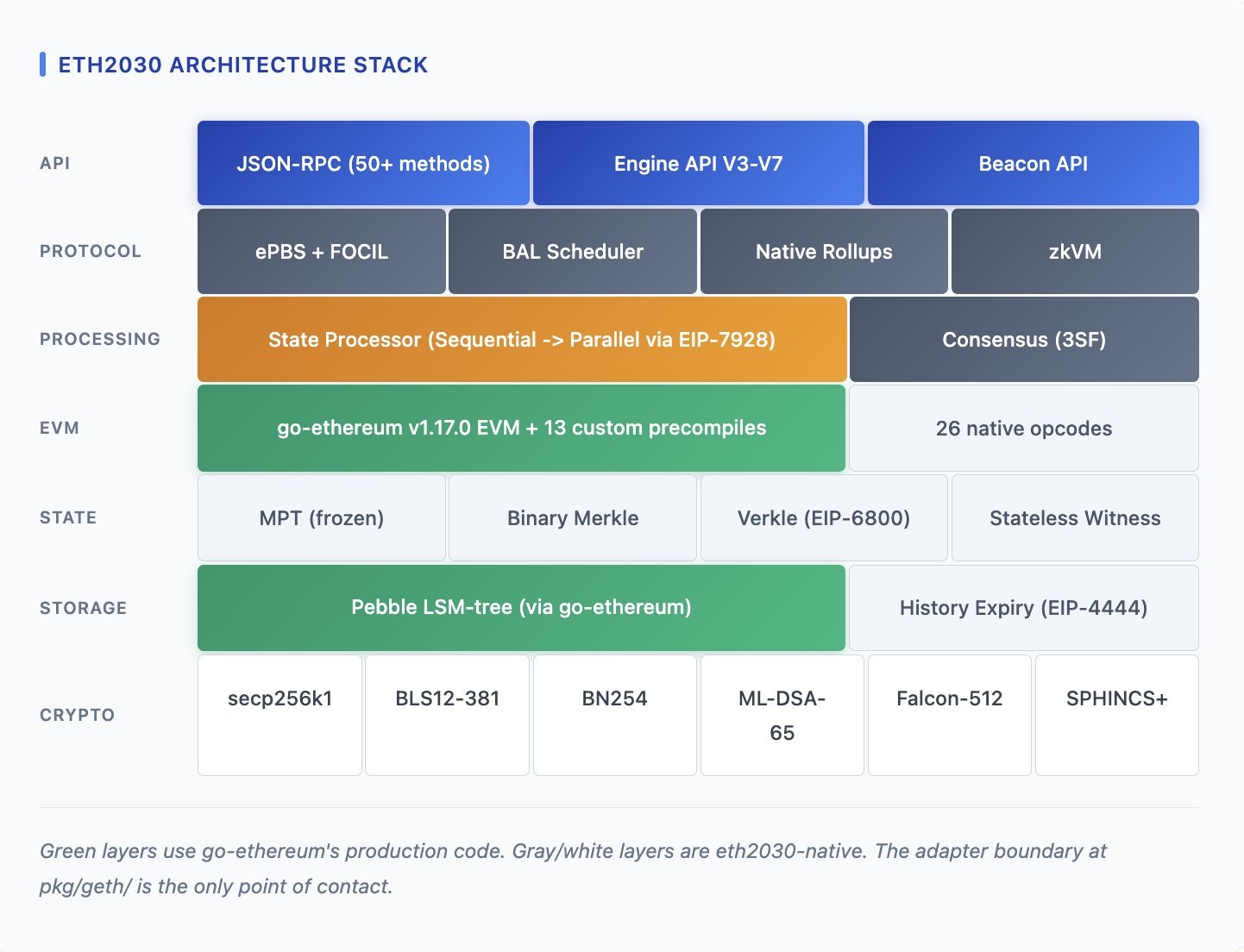
Ethereum co-founder Vitalik Buterin says an experiment that used artificial intelligence to prototype the blockchain’s roadmap out to 2030 in just a few weeks could have lessons for developers.
“This is quite an impressive experiment. Vibe-coding the entire 2030 roadmap within weeks,” Buterin posted to X on Saturday after a developer made a bet with Vitalik in February that one person could use AI to code a reference implementation of the blockchain’s roadmap.
Buterin added that AI is “massively accelerating coding” and that people “should be open to the possibility that the Ethereum roadmap will finish much faster than people expect, at a much higher standard of security than people expect.”
Vibe coding is where AI creates the code for an application, allowing developers to quickly create software. The practice has become more popular as AI models have improved at coding; however, some warn that AI-generated code can be insecure.

Vitalik says AI code would have “critical bugs”
Vitalik said that there were “massive caveats” to using AI, as the speed at which the code was written means it “almost certainly lots of critical bugs, and probably in some cases ‘stub’ versions of a thing where the AI did not even try making the full version.”
“But six months ago, even this was far outside the realm of possibility, and what matters is where the trend is going,” he added.
Related: Ethereum smart accounts are finally coming ‘within a year’ — Vitalik Buterin
Buterin cautioned that instead of focusing on speed, more emphasis should be dedicated to security.
“The right way to use it is to take half the gains from AI in speed, and half the gains in security: generate more test-cases, formally verify everything, make more multi-implementations of things.”
He said that he was personally excited about the possibility that bug-free code, “long considered an idealistic delusion,” will finally become first possible and “then a basic expectation.”
Buterin has been active commenting on the recently released roadmap from the Ethereum Foundation called “Strawmap,” which lays out all upgrades planned for the next four years.
He has previously proposed plans to make Ethereum quantum-resistant and on Sunday said that account abstraction, or smart accounts, would “happen within a year.”
Magazine: 6 massive challenges Bitcoin faces on the road to quantum security

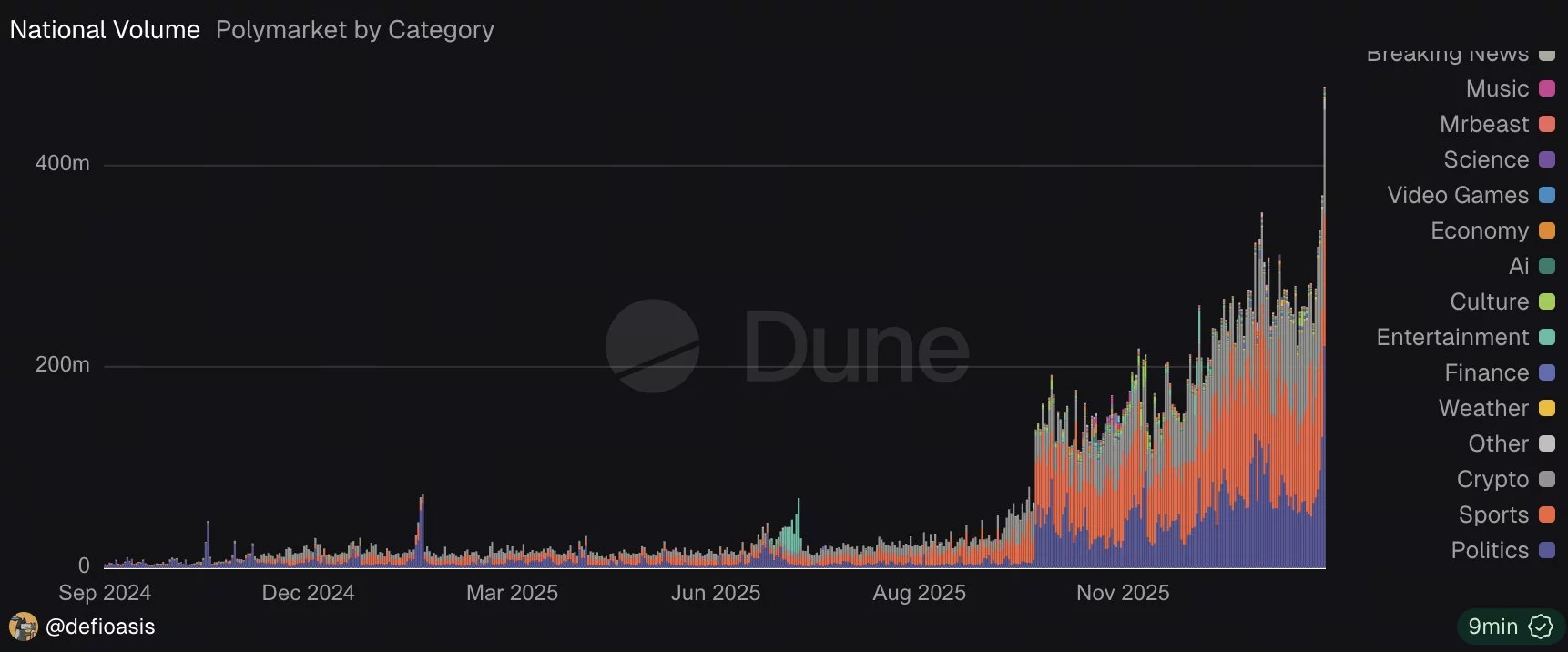
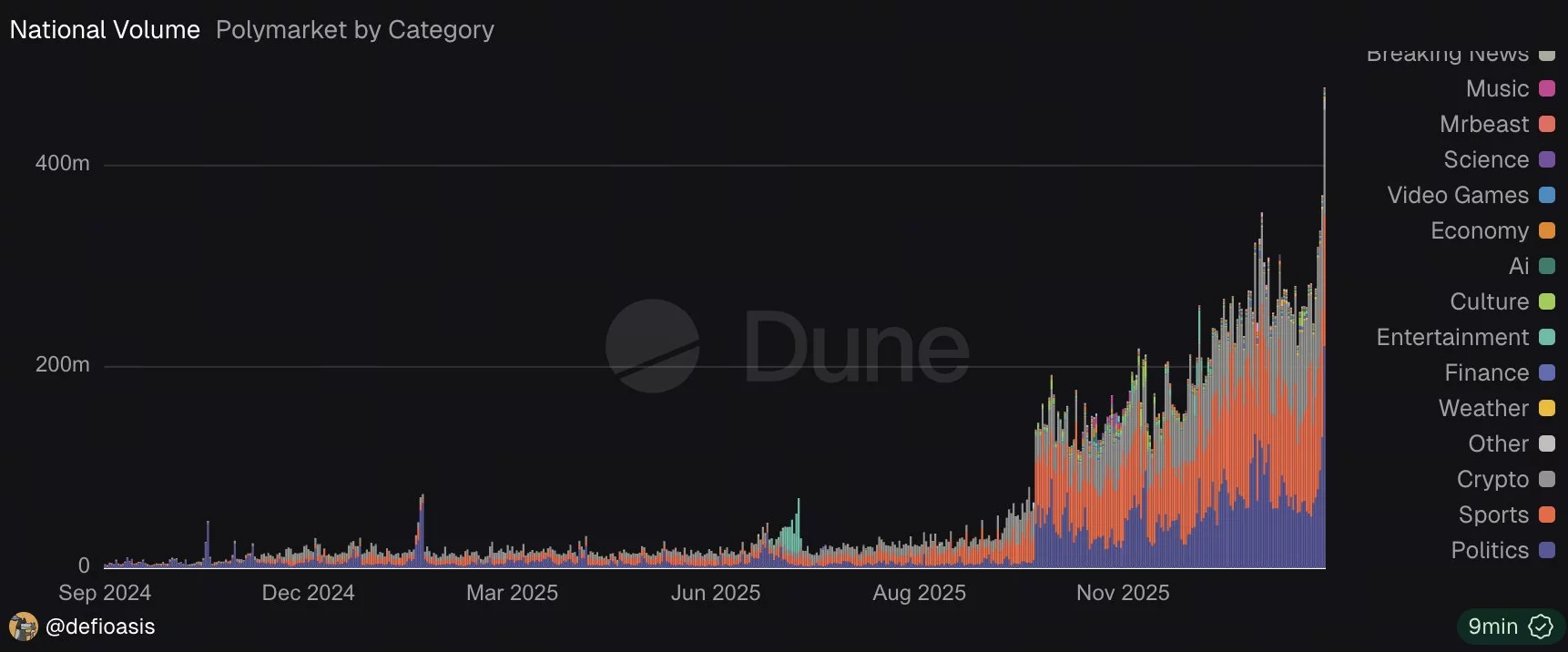
Polymarket recorded historic trading activity on the day of the joint U.S.–Israel strike on Iran, with single-day nominal trading volume reaching $478 million, according to an analyst tracking platform data.
Summary
- Polymarket hit a historic $478 million in single-day trading volume, with politics markets alone accounting for $220 million.
- Six newly funded wallets reportedly made $1.2 million betting “yes” on a U.S. strike just hours before it happened.
- A major trader who had been betting against a strike lost $6.5 million in one day when the airstrikes occurred.
War bets surge: Polymarket hits $478M daily volume
The surge marked the highest daily volume in the platform’s history. The politics sector alone accounted for $220 million, or 46.2% of total daily volume, also setting a record. Polymarket Builders, the ecosystem’s infrastructure arm, similarly posted a single-day high as geopolitical tensions drove traders into war-related contracts.
At the center of the activity was the contract titled “US strikes Iran by February 28, 2026?” hours before coordinated airstrikes were launched early Saturday morning, several newly created wallets piled into “yes” shares.
On-chain analytics firm Bubblemaps flagged six wallets that collectively profited roughly $1.2 million.
According to its findings, most of the wallets were funded within 24 hours of the attack, specifically targeted the February 28 deadline, and accumulated “yes” positions just hours before the strikes occurred, raising suspicions of potential insider knowledge.
The surge has drawn scrutiny from analysts and regulators alike, with critics suggesting that fresh accounts profiting off the timing of strikes could indicate access to privileged information.
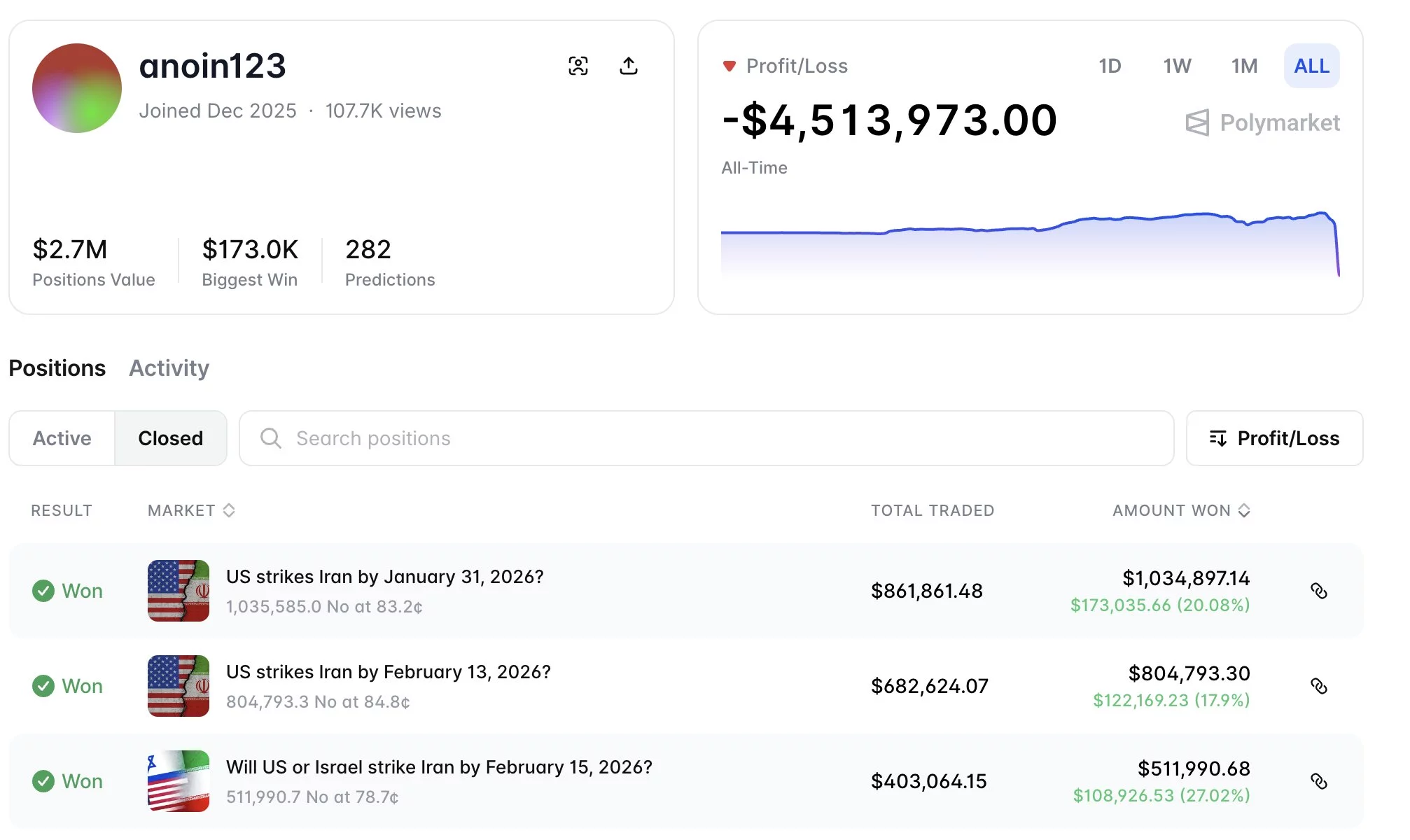
Not all traders emerged unscathed. On-chain tracker Lookonchain highlighted one high-profile bettor, “anoin123,” who had built more than $2 million in profits over two months by consistently wagering that the U.S. and Israel would not strike Iran.
When the strike ultimately took place, the trader lost $6.5 million in a single day, flipping from multimillion-dollar gains to more than $4.5 million in losses.
The episode shows both the explosive growth of blockchain-based prediction markets during geopolitical crises and the mounting scrutiny surrounding suspiciously timed bets.


Bitcoin pulled back from Asian session highs alongside losses in the U.S. stock futures as Iran stepped up attacks in the Middle East.
The leading cryptocurrency fell back below $66,000 after hitting a high of nearly $67,000 in early Asian hours. The S&P 500 e-mini futures fell to 6,790, down 1.4% on the day, reversing the early rise to 6,857. Meanwhile, oil prices continued to trade higher by over 7% on both sides of the Atlantic.
Iran reportedly stepped up missile attacks on the U.S. assets in Bahrain, Kuwait and the UAE. It also attacked Saudi Arabia’s oil infrastructure, the widely-followed Warn and Gore OSINT handle. Saudi Arabia is one of the largest oil producers in the world.

AI Summary
Blockchain platforms have become essential for enterprises in various industries, driving investments in scalable and secure systems. However, the cost of blockchain development in 2026 can vary significantly based on factors like architecture, infrastructure, and scalability planning. Different types of blockchain platforms, such as public, private, and consortium, have varying complexities and costs. The core components influencing the cost include architecture design, smart contract development, platform infrastructure, and integration systems. In 2026, the typical cost ranges for blockchain platforms are: basic platforms ($25,000 – $60,000), mid-scale platforms ($60,000 – $150,000), and large enterprise platforms ($150,000 – $400,000+). Ongoing infrastructure expenses are crucial for long-term planning, representing 10-25% of development costs annually. Choosing between building an internal team or hiring a blockchain development company impacts costs, with experienced teams often reducing long-term expenses. Careful planning and collaboration with reputable development teams are key to successful
Blockchain platforms are no longer experimental technologies. Enterprises across finance, supply chain, gaming, identity, and digital assets are investing in blockchain infrastructure to build scalable & secure systems. However, one of the first things that comes to the mind of the decision-makers is blockchain development cost 2026.
The answer depends on multiple factors, including architecture, infrastructure requirements, development scope, and long-term scalability planning. Unlike standard applications, blockchain platforms require specialized engineering, distributed infrastructure, and security-focused development practices.
Understanding the real cost structure helps organizations plan investments properly and avoid expensive redesigns later.
Reasons Behind the Varying Cost of Blockchain Platform Development
Blockchain platform development costs vary widely because platforms differ significantly in complexity and scale. A simple blockchain application is very different from a full enterprise blockchain infrastructure.
Several factors drive cost differences:
- Type of blockchain architecture (public, private, or consortium)
- Number of platform features
- Security requirements
- Transaction throughput requirements
- Infrastructure scale
- Integration with existing systems
For instance, a basic blockchain-based solution may involve limited smart contract functionality, while enterprise platforms require advanced permission management, auditing, analytics, and compliance layers. This is exactly the reason why blockchain development cost in 2026 can vary significantly depending on project scope.
What Defines a Blockchain Platform
Many organizations underestimate the scope of a blockchain platform. A blockchain platform is not just a smart contract or decentralized application; it is a complete software ecosystem.
A typical blockchain platform includes:
- Consensus mechanism implementation
- Smart contract infrastructure
- Node management systems
- User identity and permission layers
- APIs and integrations
- Admin dashboards
- Monitoring and analytics
- Security layers
Each of these components requires specialized development and testing. Blockchain software development services typically include both infrastructure engineering and application-layer development, which is why blockchain software development cost is higher than traditional application development.
Types of Blockchain Platforms Enterprises Build
Enterprise blockchain platforms vary depending on business objectives. Different types of platforms require different levels of investment.
Public Blockchain Platforms
Public blockchain platforms allow open participation and decentralized validation. These platforms typically require advanced token logic and high scalability. Typical use cases include:
- Tokenized ecosystems
- NFT marketplaces
- Web3 platforms
- Decentralized finance applications
Public platforms usually require higher security investments and extensive smart contract testing.
Private Blockchain Platforms
Private blockchain platforms restrict access to authorized participants and are commonly used by enterprises. Common use cases include:
- Supply chain tracking
- Identity management
- Enterprise data sharing
- Internal record management
Private platforms often require integration with internal systems, which increases development complexity.
Consortium Blockchain Platforms
Consortium blockchains are operated by multiple organizations. These platforms require advanced governance and permission models. Typical use cases include:
- Banking networks
- Healthcare data sharing
- Trade finance
- Logistics networks
Consortium platforms typically involve the highest coordination and development complexity.
Core Components That Determine Blockchain Development Cost
Several technical components directly influence blockchain software development cost. Understanding these components helps organizations estimate budgets more accurately.
Blockchain Architecture
Architecture design defines how nodes communicate and how data is validated. Poor architecture decisions often lead to expensive redesigns later. Architecture planning includes:
- Consensus mechanism selection
- Network topology design
- Data storage structure
- Security model definition
- Scalability planning
Architecture design alone can require significant engineering effort for enterprise platforms.
Smart Contract Development
Smart contracts form the logic layer of blockchain platforms. Secure smart contract development requires careful design and testing. Smart contract work includes:
- Token logic implementation
- Business rule automation
- Permission management
- Upgrade mechanisms
- Security testing
Smart contract errors can be extremely costly, making security-focused development essential.
Platform Infrastructure
Blockchain infrastructure cost represents a major portion of total investment. Infrastructure typically includes:
- Node hosting
- Cloud services
- Storage systems
- Monitoring tools
- Backup systems
- Load balancing
Enterprise-grade platforms require infrastructure designed for reliability and scalability.
Integration Systems
Most enterprises need blockchain platforms to integrate with existing systems. Typical integrations include:
- ERP systems
- Payment gateways
- Identity systems
- APIs
- Analytics platforms
Integration complexity significantly affects development cost.
Real Blockchain Development Cost Ranges
In 2026, the cost to build a blockchain platform depends largely on complexity and scale.Typical enterprise cost ranges include:
Basic Blockchain Platforms
Basic platforms with limited functionality typically cost:
$25,000 – $60,000
These platforms usually include:
- Basic smart contracts
- Simple dashboards
- Limited integrations
- Small-scale infrastructure
Suitable for prototypes or pilot deployments.
Mid-Scale Blockchain Platforms
Production-ready platforms typically cost:
$60,000 – $150,000
These platforms usually include:
- Advanced smart contracts
- Scalable infrastructure
- Multiple integrations
- Security testing
- Admin dashboards
Most enterprise projects usually fall into this range.
Large Enterprise Blockchain Platforms
Enterprise-grade blockchain platforms typically cost:
$150,000 – $400,000+
These platforms usually include:
- Custom blockchain architecture
- High transaction throughput
- Advanced security systems
- Complex integrations
- Compliance features
- Monitoring systems
Large platforms require extensive engineering and infrastructure planning.
These ranges represent typical enterprise blockchain development cost estimates in 2026. However, the actual costs depend on architecture complexity and feature requirements.
Blockchain Infrastructure Cost Explained
Blockchain infrastructure cost continues after development. Ongoing infrastructure expenses are an important part of long-term planning. Typical infrastructure costs include:
- Cloud hosting services
- Node operation costs
- Data storage
- Monitoring tools
- Security services
- Maintenance support
Infrastructure costs typically represent 10–25% of development cost annually, depending on platform scale. Planning infrastructure early helps avoid unexpected operational expenses.
Development Team vs Development Company
One major cost decision involves whether to build an internal team or hire a blockchain development company.
Internal Development Team
Building an internal team requires:
- Blockchain engineers
- Backend developers
- DevOps engineers
- Security specialists
- Project managers
Internal teams provide control but require significant hiring and training investment.
Hiring a Blockchain Development Company
On the other hand, many enterprises choose to hire a blockchain development company to reduce development risk. The key benefits include:
- Experienced blockchain engineers
- Established development processes
- Faster delivery timelines
- Proven architectures
- Lower hiring overhead
Blockchain software development services provided by experienced teams often reduce long-term costs by avoiding architectural mistakes.
Hidden Costs Enterprises Often Miss
Many blockchain projects exceed budgets because hidden costs are not considered early. Some of the common hidden costs include:
- Architecture redesign
- Security improvements
- Infrastructure scaling
- Compliance updates
- Performance optimization
- Integration changes
Planning these factors early improves cost predictability.
Get a Custom Quote for Your Blockchain Platform Development
Final Thoughts
Blockchain platforms require significant investment, but properly designed platforms provide long-term value through automation, security, and scalability.
The cost to build a blockchain platform in 2026 depends on architecture complexity, infrastructure requirements, and development scope. Organizations that plan carefully and work with experienced blockchain development teams are more likely to build platforms that scale successfully.
Enterprises planning blockchain platforms should focus not only on initial development cost but also on infrastructure and long-term scalability.
Working with an experienced blockchain development company like Antier plays a significant role in ensuring that blockchain platforms are built for both performance and long-term sustainability.


A busy week lies ahead on the United States economic calendar as markets continue to digest the fallout from the US-Israeli strikes on Iran over the weekend.
Volatility will be abundant this week as US stock futures open and react to the weekend’s violence in the Middle East. Crypto markets remained relatively flat on Sunday, but have started their usual Monday morning retreat.
US President Donald Trump provided details on “Operation Epic Fury” on Sunday, stating that the US will “avenge” the deaths of Americans, there will be more US casualties, military operations will continue until “objectives are achieved,” and claimed the entire Iranian military command is “gone.”
It is not World War III, said the Kobeissi letter, pointing to oil prices, which have already erased nearly half of their opening gap higher, and US stock market futures, which are down marginally while gold prices are up again. “Don’t panic. The dust will settle,” they said.
Economic Events March 2 to 6
This week sees the release of a lot of labor market reports, which the Federal Reserve looks at to make its monetary policy decisions. The first major report of the week is February’s ISM Manufacturing PMI data, released on Monday, providing insight into the state of the manufacturing sector.
The tranche of employment data begins on Wednesday with the February ADP Employment report, followed by Initial Jobless Claims on Thursday, and the February Jobs Report on Friday, which will also include the January Retail Sales data.
Friday’s jobs report comes after surprisingly strong job gains in January, potentially signaling positive developments in the labor market. The report is expected to show an increase of 60,000 jobs, according to a Reuters poll.
“We saw a good January jobs report, but we also have seen a really weak 2025 for the job market, and so the question becomes, where do we go from here?” Kristina Hooper, chief market strategist at Man Group, told the outlet.
Key Events This Week:
1. US Futures React to Iran Situation – TODAY 6 PM ET
2. February ISM Manufacturing PMI data – Monday
3. February ADP Employment data – Wednesday
4. Initial Jobless Claims data – Thursday
5. January Retail Sales data – Friday
6. February Jobs Report -…
— The Kobeissi Letter (@KobeissiLetter) March 1, 2026
You may also like:
Crypto Market Outlook
Crypto markets are back in the red today following a positive Sunday. Total cap has dropped back to $2.35 trillion, erasing weekend gains.
Bitcoin was rejected at $67,000 three times over the past 24 hours and has fallen back to $66,300 during the Monday morning Asian trading session. It has been trading sideways for the past three weeks, however.
Ether prices could not hold above $2,000 and have retreated to $1,950 at the time of writing. The altcoins are mostly in the red with larger losses for XRP, Solana, Cardano, Canton, and Stellar.
Binance Free $600 (CryptoPotato Exclusive): Use this link to register a new account and receive $600 exclusive welcome offer on Binance (full details).
LIMITED OFFER for CryptoPotato readers at Bybit: Use this link to register and open a $500 FREE position on any coin!
Crypto World
Crypto rally in H2 2026? JPMorgan points to Clarity Act, analyst says ‘buy the rumor’ starts now


JPMorgan analysts say a long-anticipated U.S. crypto market structure bill could be approved by mid-2026 and act as a major positive catalyst for digital asset markets in the second half of the year.
Summary
- JPMorgan says the Clarity Act could trigger a significant crypto recovery in H2 2026.
- The bank cites regulatory clarity, institutional scaling, and tokenization growth as key drivers.
- Analyst argues markets may rally well before passage, following classic “buy the rumor, sell the news” patterns.
The report highlights that despite subdued sentiment and weak trading volumes across the sector, regulatory clarity from the proposed legislation, commonly referred to as the CLARITY Act, could help unlock growth and investment later in 2026.
JPMorgan says Clarity Act may spark second-half crypto upswing
According to the note, the Clarity Act represents not a marginal tweak but a “structural transformation” of the regulatory environment. JPMorgan outlined three key impacts.
First, the elimination of “regulation by enforcement” as the default approach to oversight. The bill would clearly divide jurisdiction between the SEC and CFTC, reducing the legal ambiguity that has deterred institutional investors worried about retroactive token reclassification and undefined liability.
Second, clearer rules could convert institutional crypto interest from exploratory allocations into high-conviction positions. The note argues pension funds and asset managers currently testing exposure may scale significantly once regulatory risks are reduced.
Third, JPMorgan expects an acceleration of real-world asset tokenization, with Wall Street firms moving projects from pilot stages to production scale under a defined legal framework.
However, another analyst strongly disputed JPMorgan’s timeline, arguing that the market reaction would not wait until the second half of 2026. The critic contended that if the Clarity Act is expected to become law by July, the rally would likely begin well in advance, following a classic “buy the rumor, sell the news” pattern.
In that view, crypto prices could start climbing months before the bill is signed, potentially as much as 150 days ahead of the event, followed by a pullback around the official signing, and then a renewed upward move afterwards.
XRP (XRP) holders appear to be adopting a defensive stance amid intensifying geopolitical tensions between the United States, Israel, and Iran.
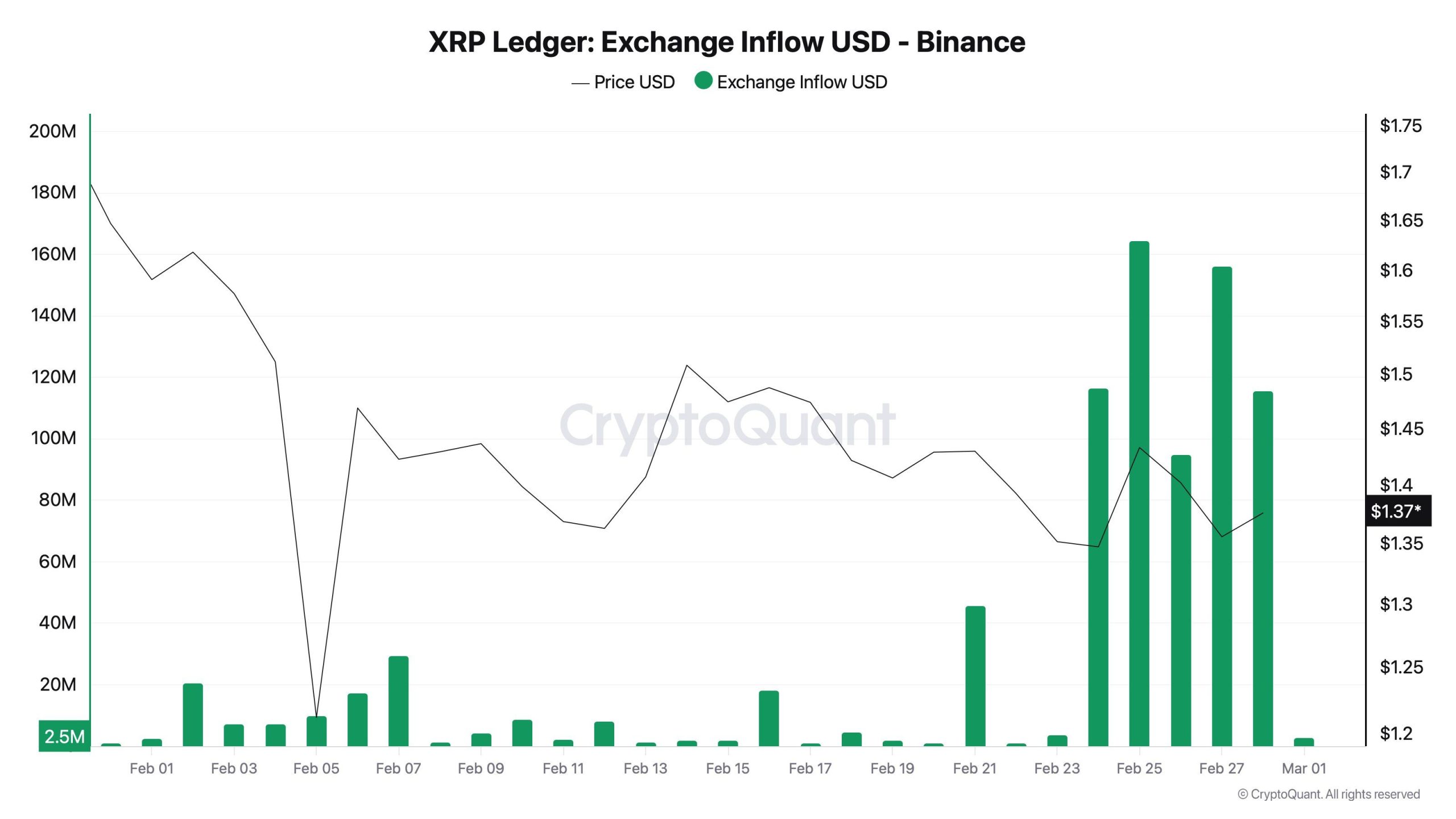
On-chain data shows more than $650 million worth of XRP flowing into Binance over the past week. The sharp rise in exchange inflows suggests investors may be positioning for increased volatility, raising the risk of short-term downside if market uncertainty persists.
Rising Middle East Tensions Trigger XRP Positioning Shift
BeInCrypto reported that a joint strike by Israel and the United States on Iran on Saturday triggered a sharp sell-off across crypto markets.
“The first strikes were launched shortly after the close of traditional financial markets. This timing amplified uncertainty across risk assets, with crypto reacting almost immediately to the geopolitical shock,” analyst Darkfost stated.
Tensions escalated further over the weekend following reports that Iran’s Supreme Leader, Ayatollah Ali Khamenei, had been killed. Iran has intensified retaliatory attacks targeting Israel and several Gulf Arab countries, deepening fears of broader regional instability. The rising geopolitical risk has weighed heavily on investor sentiment.
Crypto markets have declined alongside other risk assets. Meanwhile, gold surged as capital rotated toward traditional safe havens. XRP has not been immune.
On-chain analyst Darkfost noted that more than 472 million XRP, worth approximately $650 million, were transferred to Binance over the past week. According to the analyst, this was the “largest inflow period of the month of February.”
Follow us on X to get the latest news as it happens
Large exchange inflows are often interpreted as a sign of potential selling pressure, as tokens typically need to be moved onto trading platforms before they can be sold. However, inflows do not automatically translate into immediate sell-offs.
Such transfers may also reflect liquidity repositioning, arbitrage strategies, collateral management, or precautionary moves during periods of heightened volatility. Still, it raises concerns.
“Such inflows typically reflect a more defensive posture from investors holding XRP. When large amounts of tokens move onto exchanges, it often signals a potential willingness to sell or at least to position liquidity closer to the market. When amount of flows like this are recorded, they can create the conditions for a sudden wave of selling pressure capable of impacting price action in the short term,” Darkfost said.
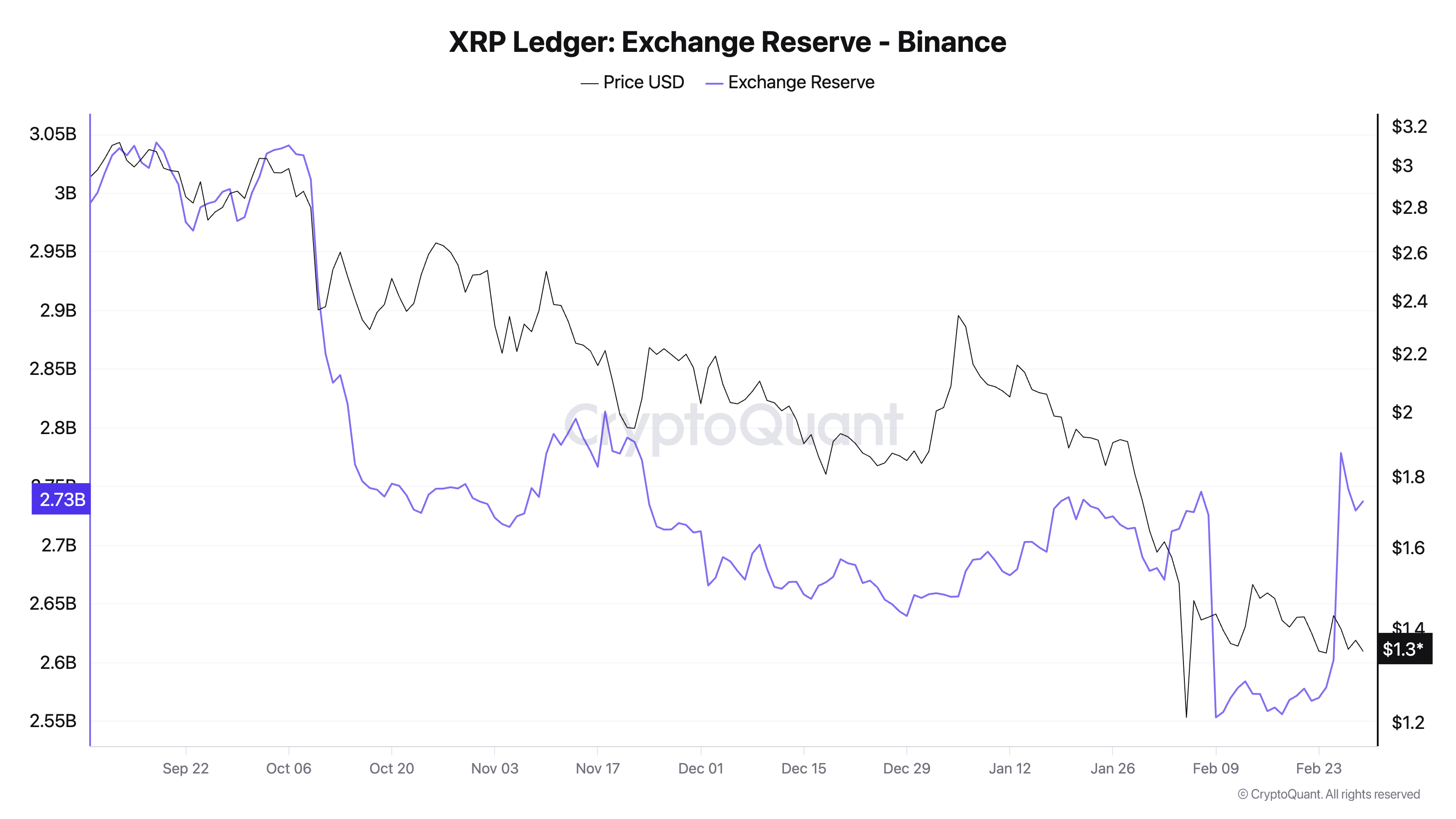
The main question is whether the large inflow signals a lasting distribution phase or just a temporary response to crises. Notably, the transfer has caused Binance’s XRP reserves to tick up.
CryptoQuant data showed that exchange reserves had been broadly declining since October 2025. The recent inflow marks a modest reversal of that trend for now.
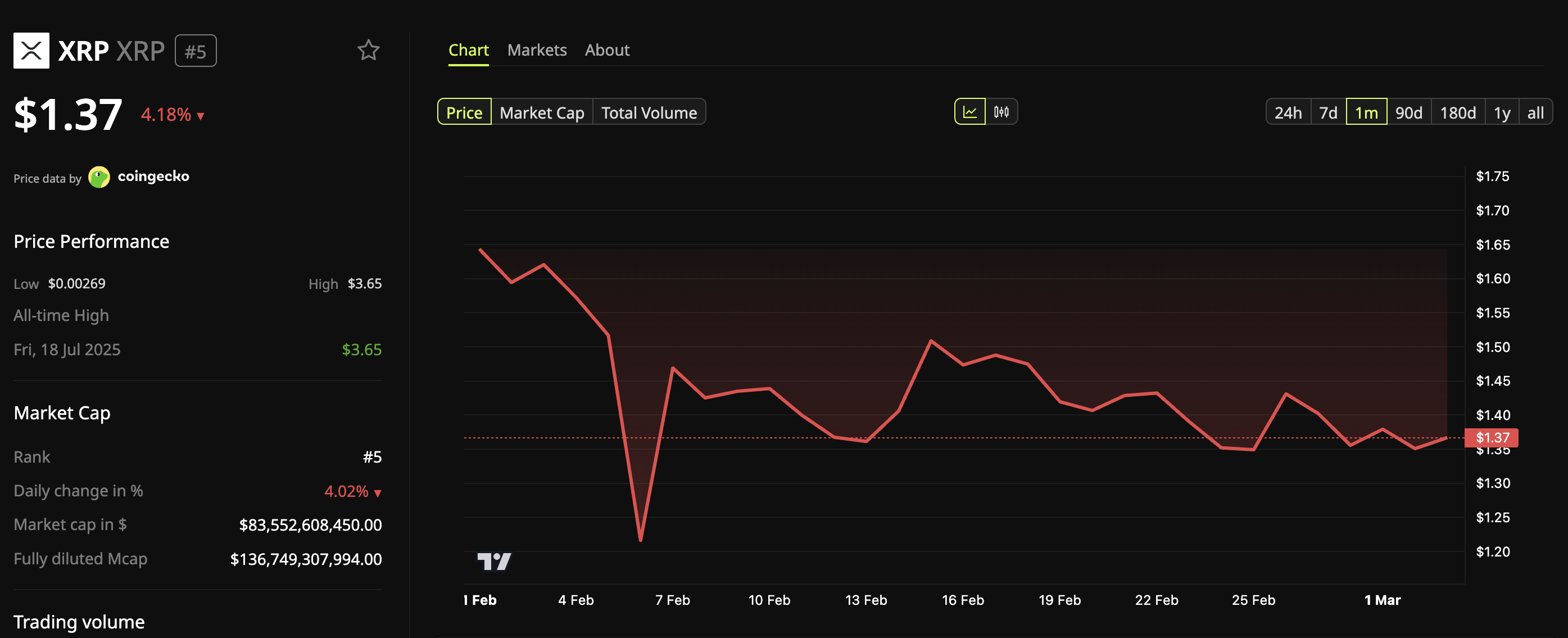
Meanwhile, XRP extended its losses in line with the broader crypto market downturn. According to BeInCrypto Markets data, the altcoin has dropped more than 4% in the past 24 hours. At the time of writing, XRP was trading at $1.37.
The next few days will reveal whether this $652 million move was a one-off or signals the start of further adjustments among XRP holders. As geopolitical risk and crypto market structure collide, both near-term volatility and long-term adoption narratives remain at the forefront.
Subscribe to our YouTube channel to watch leaders and journalists provide expert insights
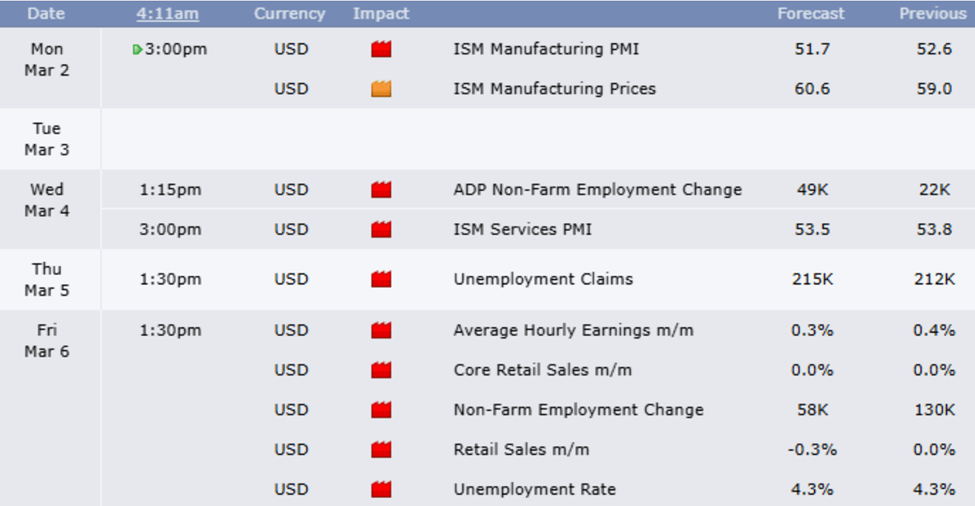
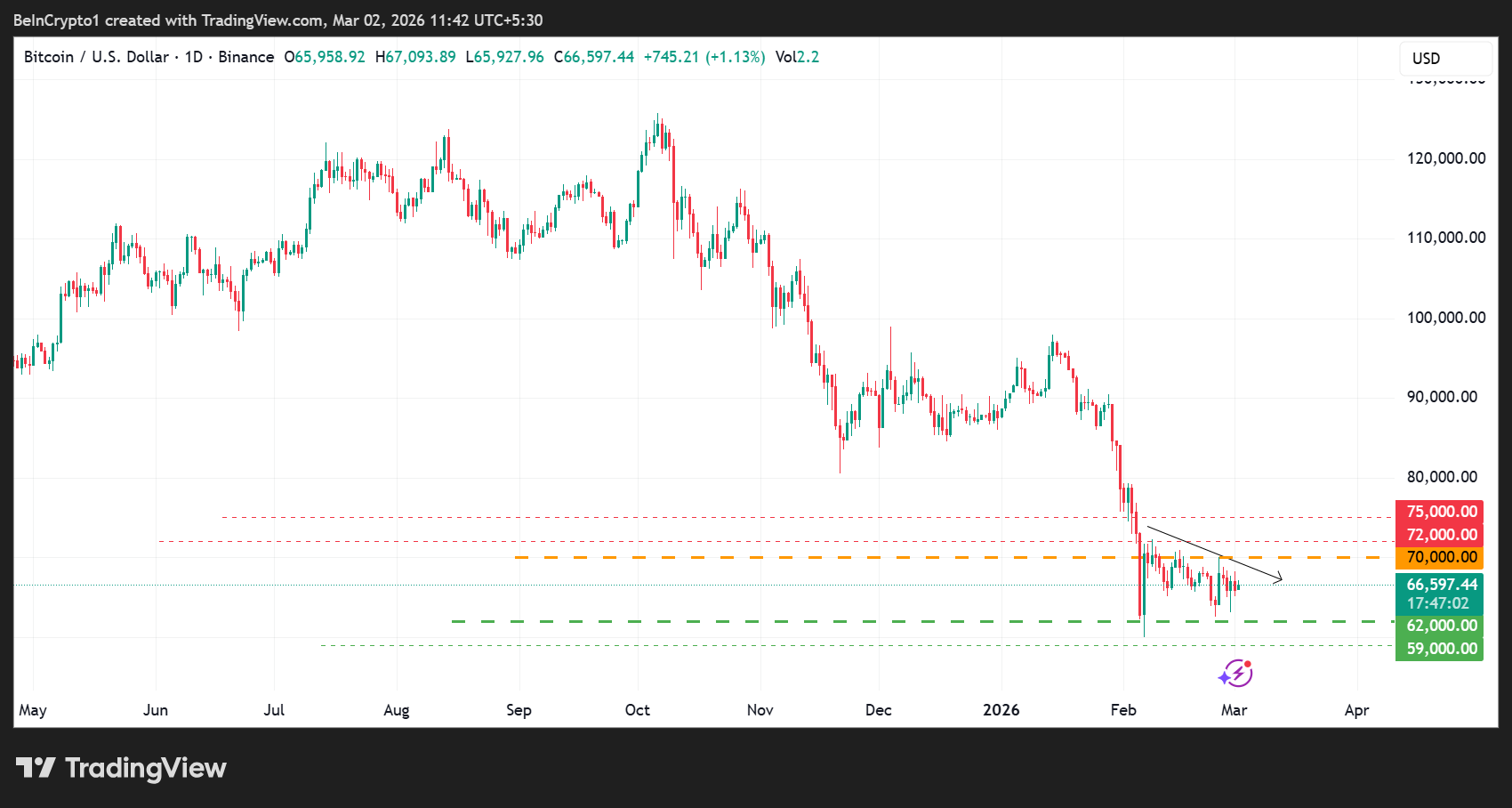
Bitcoin price enters one of the most consequential macro weeks of the first quarter, trading in the $66,000 range, down modestly amid fragile sentiment, thin liquidity, and geopolitical overhang.
After weeks of several lower highs, and with the pioneer crypto recording its weakest start to a year on record, traders are now turning to a heavy slate of US economic data that could redefine Federal Reserve (Fed) rate-cut expectations and, by extension, crypto market direction.
US Economic Data Points to Influence Bitcoin Price This Week
Below are the five key reports expected to sway Bitcoin sentiment this week.
Manufacturing PMI
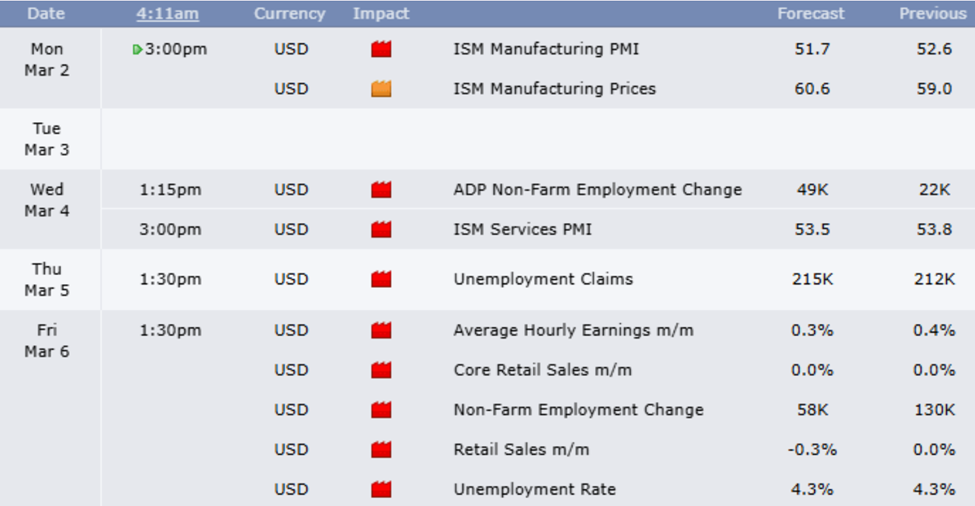
The week begins with February’s S&P Global Manufacturing PMI and the closely watched ISM Manufacturing PMI.
Consensus expects readings around 51.2 for S&P and 52.0–52.3 for ISM, following January’s surprise surge to 52.6, the strongest expansion since 2022.
The implications could extend to Bitcoin, where a reading above 52.5, particularly if new orders and production strengthen, would reinforce the “resilient economy” narrative.
That scenario typically delays Fed rate cuts, lifts Treasury yields and the U.S. dollar, and puts pressure on non-yielding assets like BTC.
Conversely, a drop toward 50, the contraction threshold, would shift expectations toward earlier easing. Historically, contraction combined with weak BTC positioning has delivered strong upside reversals.
“ISM above 50 is bullish for markets,” commented analyst Bull Theory.
Notably, manufacturing is not the dominant engine of the U.S. economy. However, as the week’s first catalyst, it could set the volatility tone for March.
ADP Employment Signals Labor Tightness
Meanwhile, Wednesday’s ADP Employment Change report acts as the market’s first real labor pulse for February. Economists expect roughly 50,000 new private-sector jobs, up from January’s modest 22,000 gain.
Because ADP often serves as a preview for Friday’s Non-Farm Payrolls (NFP), traders react aggressively to deviations. A strong print above 60,000–75,000 would suggest labor resilience, reinforcing the Fed’s “higher for longer” posture. That would likely push yields and the dollar higher, weighing on Bitcoin.
On the other hand, a soft reading, especially below 40,000, would revive the liquidity narrative. Signs of cooling labor conditions strengthen expectations for rate cuts later this year, which historically benefit risk assets and crypto.
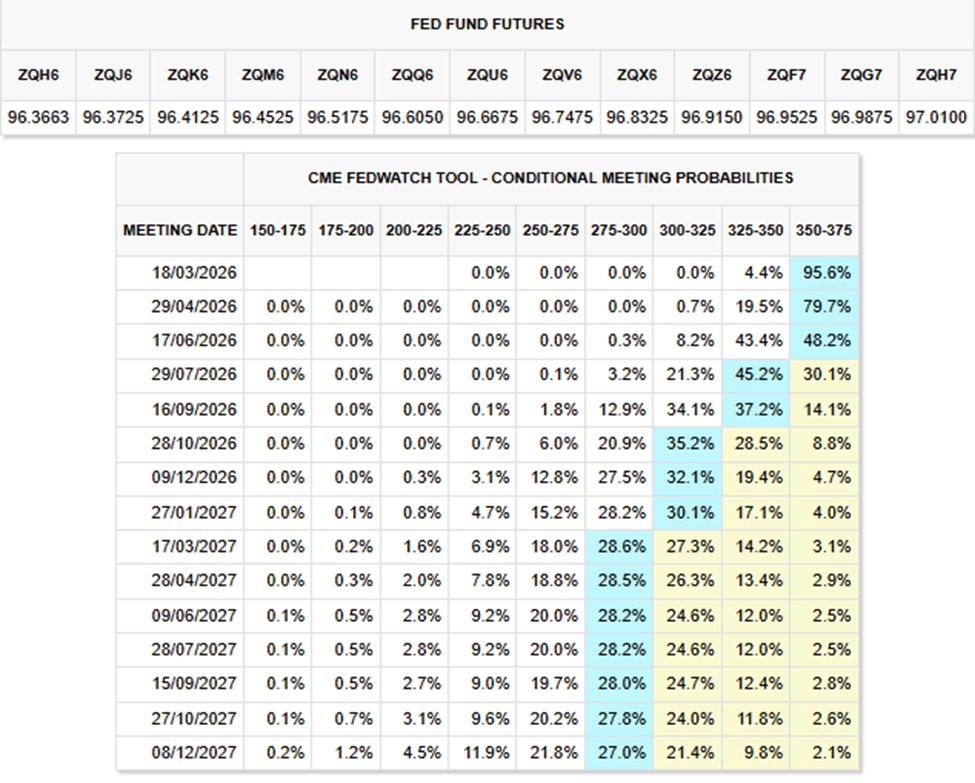
With markets already pricing roughly two to three cuts in 2026, even modest surprises could recalibrate positioning.
Services PMI
Later Wednesday, attention shifts to the services sector with the S&P Services PMI and ISM Services PMI.
Expectations sit in the 52.3–53.5 range, consistent with steady expansion. January’s ISM Services reading came in at 53.8.
Because services account for the majority of U.S. economic activity, this report carries more influence than manufacturing.
Strong services print alongside solid employment data would reinforce economic resilience, dampening hopes for near-term easing and pressuring BTC.
However, signs of slowing demand or weaker employment could quickly change the narrative. Markets remain hyper-sensitive to any indication that growth momentum is cooling.
A combined miss across ADP and services would amplify dovish bets, potentially sparking a relief rally in Bitcoin toward the $70,000 psychological level.
Jobless Claims
Thursday’s Initial Jobless Claims, expected around 215,000, versus the previous 212,000, provide a high-frequency gauge of labor-market stress.
While often overlooked compared to NFP, claims can meaningfully shape expectations ahead of Friday’s headline report.
Last week’s lower-than-expected claims reinforced tight labor conditions and coincided with BTC slipping below $68,000.
If claims remain subdued, it strengthens the hawkish case: a tight labor market limits urgency for rate cuts.
Conversely, an unexpected spike would support the cooling narrative, softening yield pressure and providing near-term support for crypto.
Given its proximity to NFP, Thursday’s release could either validate earlier signals or introduce fresh uncertainty.
Non-Farm Payrolls
Friday’s U.S. Employment Report is the week’s defining event and the highest beta catalyst. Consensus calls for approximately 54,000 new jobs in February, down sharply from January’s strong 130,000 gain.
The unemployment rate is expected at 4.3%, with hourly wages rising 0.3% month-over-month.For Bitcoin, notwithstanding, the NFP is the highest-beta macro catalyst.
A hot print, say above 80,000 jobs with firm wage growth, would reinforce the narrative that the economy remains too strong for imminent cuts.
Yields would likely spike, the dollar would strengthen, and BTC could test lower support zones near $62,000–$59,000.
A soft report, particularly below 40,000 jobs or rising unemployment, would accelerate rate-cut pricing and potentially ignite a liquidity-driven rally.
With sentiment fragile and Bitcoin trading below key resistance in the $72,000–$75,000 range, this week’s data could define March’s trajectory.


Kalshi’s CEO has defended the company’s handling of its market on whether Iran’s Supreme Leader, Ali Khamenei, would be “out” of power, after backlash from users who accused the platform of unfair settlement practices.
Summary
- Kalshi says it does not allow markets that directly settle on death and structured the Khamenei contract with a “death carve-out.”
- The market was settled at the last traded price before the time of death, with fee refunds and reimbursements issued.
- Users accused the platform of unclear rules, unfair payouts and inconsistent standards, threatening to switch to competitors.
In a detailed post on X, the CEO said Kalshi does not list markets that settle directly on someone’s death.
When outcomes may involve death, he explained, the company structures rules to prevent users from profiting from it. That approach was applied to the Khamenei contract, which allowed trading on whether he would be out as Supreme Leader, a development the company argued carries major geopolitical, economic and national security implications, including potential effects on oil and commodity prices.
Under Kalshi’s rules, the market was settled at the last traded price before the time of death. All positions, regardless of when they were opened, were paid out based on that final pre-death price. In addition, the company said it reimbursed the difference for users who bought shares after the time of death at higher prices and refunded all trading fees tied to the market.
The CEO acknowledged that some users disagreed with the “death carve-out,” arguing that simpler rules without exceptions would be preferable. He said the company would work on improving how such caveats are displayed in the user interface.
However, several users pushed back sharply, accusing Kalshi of unclear rules, deleting responses, and failing to honor what they believed was a straightforward bet. Some claimed financial losses and said they would move to rival prediction markets.
Others pointed to previous contracts involving elderly public figures, arguing the company had previously allowed markets where death was a foreseeable outcome.
The dispute highlights growing tensions over how regulated U.S. prediction markets handle sensitive, mortality-linked events.


Bitcoin will see a boost if artificial intelligence disrupts the labor market or causes volatility that would prompt central banks to ease their monetary policy, says Greg Cipolaro, the research lead at crypto services company NYDIG.
Cipolaro said in a research note on Friday that AI could likely be seen as a “general-purpose technology” such as electricity, and the macroeconomic effects it would have on employment, economic growth and risk appetite will affect Bitcoin (BTC).
“If AI-driven growth occurs alongside expanding liquidity and contained real rates, that backdrop can be supportive for Bitcoin,” Cipolaro said. “But if stronger growth lifts real yields, tightens policy, and reduces the need for monetary accommodation, Bitcoin may face headwinds.”
“Conversely, if AI generates labor disruption or volatility that prompts fiscal expansion and easier monetary policy, the resulting liquidity impulse would likely favor Bitcoin,” he added.
The economy is already seeing the impact of the technology, as companies are undertaking mass layoffs fuelled by AI, as billions of dollars in investments pour into companies creating AI models.
Jack Dorsey said on Friday that his payments company Block would cut roughly 40% of its staff due to AI, and predicted that many more companies would soon follow suit.
AI transition may be volatile and uneven
Goldman Sachs’ research arm claimed in a report in August that widespread AI adoption could displace up to 7% of the US workforce, but would also likely create new job opportunities.
Related: Crypto VC Paradigm expands into AI, robotics with $1.5B fund: WSJ
Cipolaro acknowledged the transition will “pose challenges,” requiring workflow redesign, new skills, and additional investment. Still, he predicts AI will follow the same “historical pattern” as previous technological advancements.
“The implication is not that disruption will be painless, but that the equilibrium response to new technology has historically been integration, not obsolescence. Society’s response to AI will likely follow the same pattern,” he said.
“Firms that integrate it effectively will widen margins and productivity gaps. Workers who adapt will enhance their relevance. Those who resist may fall behind,” Cipolaro added.
AI adoption is also expanding within the crypto. In October, crypto exchange Coinbase announced a new tool, Payments MCP, that grants AI agents access to the same on-chain financial tools used by people, with AI and blockchain executives noting that it can be safe but also introduces new risks.
Magazine: Bitcoin’s ‘biggest bull catalyst’ would be Saylor’s liquidation — Santiment founder
Crypto tokens worth more than $572 million will enter the market over the next seven days. Notably, three major ecosystems, Hyperliquid (HYPE), Ethena (ENA), and RedStone (RED) will release new token supply into circulation in early March 2026.
The token unlocks will inject fresh liquidity into the market and can also trigger price swings and volatility. So, here is a breakdown of what to watch for in each project.
1. Hyperliquid (HYPE)
- Unlock Date: March 6
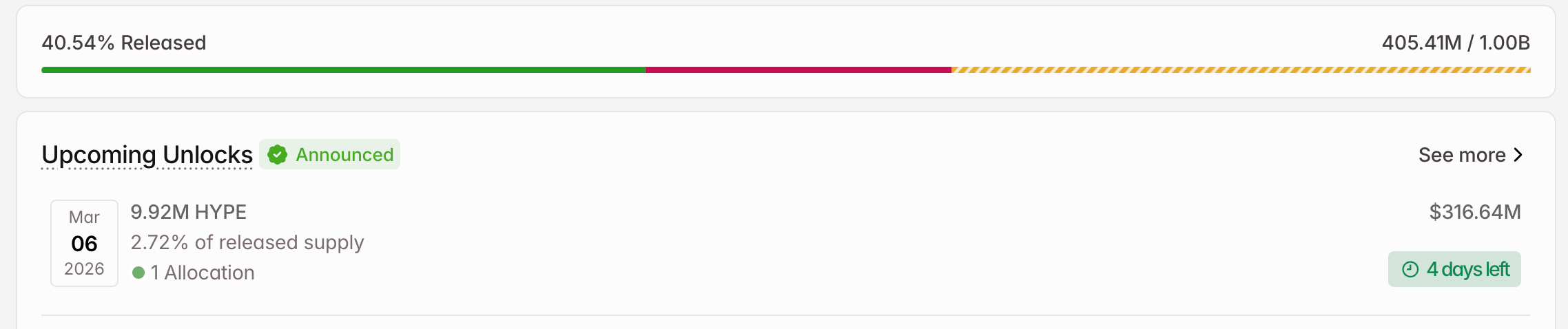
- Number of Tokens to be Unlocked: 9.92 million HYPE
- Released Supply: 405.41 million HYPE
- Total Supply: 1 billion HYPE
Hyperliquid is a leading decentralized perpetual futures exchange built on its own Layer-1 blockchain. It offers high-performance trading with low latency, on-chain order books, and sub-second transaction finality.
On March 6, the team will unlock 9.92 million HYPE worth $316.64 million. The tokens account for 2.72% of the released supply.
Hyperliquid will direct all unlocked altcoins to core contributors.
2. RedStone (RED)
- Unlock Date: March 6
- Number of Tokens to be Unlocked: 40.85 million RED
- Released Supply: 253.25 million RED
- Total Supply: 1 billion RED
RedStone is a modular blockchain oracle protocol that feeds trusted, real-time external data into smart contracts and decentralized finance (DeFi) applications across multiple blockchains.
The team will release 40.85 million tokens on March 6. The tokens are worth $6.04 million. Furthermore, they account for 16.13% of the released supply.
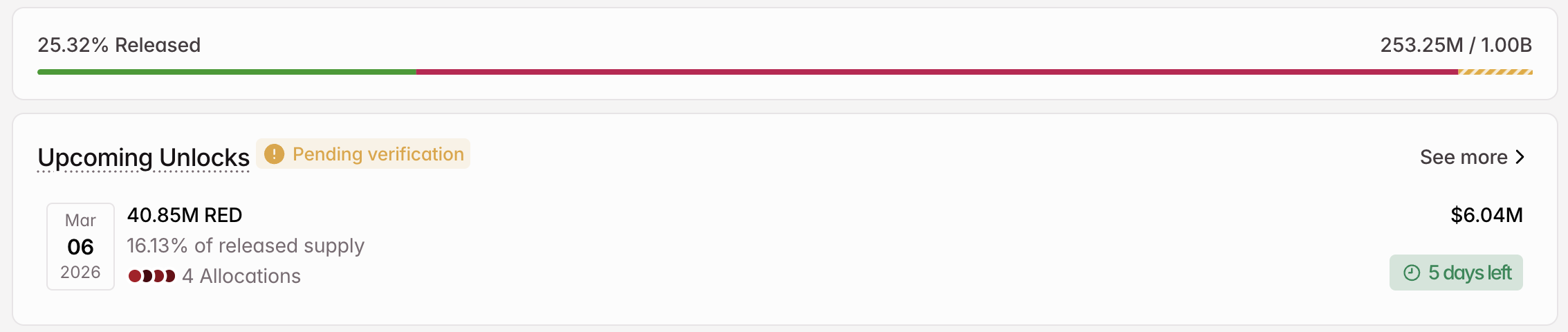
The team will split the unlocked supply four ways. Early backers will get 26.42 million tokens. Core contributors will receive 5.56 million RED.
In addition, the team will allocate 5.54 million altcoins to the ecosystem and data providers. Lastly, it will direct 3.33 million tokens towards protocol development.
3. Ethena (ENA)
- Unlock Date: March 2
- Number of Tokens to be Unlocked: 40.63 million ENA
- Released Supply: 7.62 billion ENA
- Total Supply: 15 billion ENA
Ethena is a synthetic dollar protocol built on Ethereum (ETH). The protocol’s flagship product is USDe, a synthetic dollar stablecoin. Furthermore, ENA is the protocol’s governance token.
The team will release 40.63 million ENA tokens on March 2 via its cliff vesting schedule. The tokens, worth $4.21 million, account for 0.53% of the released supply.
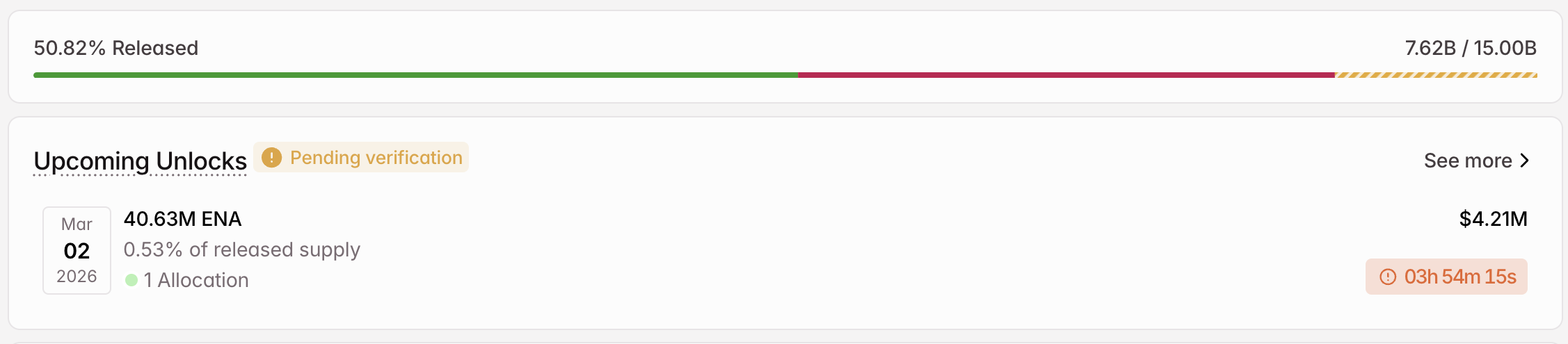
Ethena will award the entire unlocked supply to the Foundation. In addition to these three, Staika (STIK), Spectral (SPEC), and IOTA (IOTA) will also experience new supply entering the market in the first week of March.
The best and worst moments from the 2026 Actor Awards

BBC Breakfast’s Jon Kay and Sally Nugent open show with ‘concerning’ breaking news

British Business Bank backs $8.6bn Wayve funding round in UK robotaxi push


-

 Sports7 days ago
Women’s college basketball rankings: Iowa reenters top 10, Auriemma makes history
-

 Fashion3 days ago
Weekend Open Thread: Iris Top
-

 Politics7 days ago
Nick Reiner Enters Plea In Deaths Of Parents Rob And Michele
-

 Business5 days ago
True Citrus debuts functional drink mix collection
-

 Politics3 days ago
ITV enters Gaza with IDF amid ongoing genocide
-

 Tech1 day ago
Unihertz’s Titan 2 Elite Arrives Just as Physical Keyboards Refuse to Fade Away
-
Sports2 days ago
The Vikings Need a Duck
-

 Crypto World6 days ago
XRP price enters “dead zone” as Binance leverage hits lows
-

 Tech6 days ago
Unsurprisingly, Apple's board gets what it wants in 2026 shareholder meeting
-
 NewsBeat2 days ago
Dubai flights cancelled as Brit told airspace closed ’10 minutes after boarding’
-

 NewsBeat4 days ago
Cuba says its forces have killed four on US-registered speedboat | World News
-
 NewsBeat2 days ago
The empty pub on busy Cambridge road that has been boarded up for years
-
 NewsBeat4 days ago
Manchester Central Mosque issues statement as it imposes new measures ‘with immediate effect’ after armed men enter
-

 NewsBeat17 hours ago
‘Significant’ damage to boarded-up Horden house after fire
-
 NewsBeat7 days ago
‘Hourly’ method from gastroenterologist ‘helps reduce air travel bloating’
-

 NewsBeat1 day ago
Abusive parents will now be treated like sex offenders and placed on a ‘child cruelty register’ | News UK
-
 NewsBeat5 days ago
Police latest as search for missing woman enters day nine
-

 Business4 days ago
Discord Pushes Implementation of Global Age Checks to Second Half of 2026
-
 Sports7 days ago
2026 NFL mock draft: WRs fly off the board in first round entering combine week
-

 Business3 days ago
Only 4% of women globally reside in countries that offer almost complete legal equality