The major retail location was recently acquired by Frasers Group
Swindon Designer Outlet
Savills has been appointed by Frasers Group to provide property management services to Swindon Designer Outlet. The retail scheme, which extends to 250,000 sq ft and comprises of 110 units, is located in the historic Great Western Railway buildings in the centre of Swindon.
The retail destination has experienced a sustained rise in footfall, turnover and average spend, supported by the arrival of new brands such as Rituals and Crocs. This has been alongside reinvestment from long standing tenants. which include Polo Ralph Lauren, Reiss, Tommy Hilfiger, New Balance and Nike.
Its recent acquisition by Frasers Group represents a significant addition to its growing retail portfolio and reflects continued confidence in the performance and potential of the outlet sector.
Savills will provide property management and operational support across the scheme, ensuring the smooth running of a destination with complex heritage considerations and a diverse occupier mix
Saagar Sachdev, director, London retail and leisure, property management at Savills, said, “Designer Outlet Swindon is a well-established destination with a strong track record and a unique setting.
“Alongside its offering of leading global brands, there is a commitment to fostering a vibrant local community through initiatives such as a weekly street food market and the ‘Makers Yard’ craft market.
Joining an established and expanding group of outlet centres under Savills management, this appointment reflects our depth of sector expertise, from working closely with occupiers to maintaining an environment that meets the expectations of both brands and visitors.
Advertisement
“It also further strengthens our specialist expertise in the outlet sector, enabling us to add value through operational enhancements, brand curation and long term asset stewardship.”
Shares of Tejas Networks surged as much as 15% to hit the day’s high of Rs 503 on the BSE on Monday, marking their fourth consecutive session of gains. With today’s rally, the stock has delivered an impressive 60% surge over the same period.
Volumes were strong in today’s session as 7 crore shares changed hands, significantly higher than the 1 week and 1 month average of 4 crore and 1 crore shares, respectively.
Last week, the company announced that it has signed an agreement with NEC Corporation to manufacture and supply 5G massive MIMO radios. With today’s rise, the stock has snapped a 4-day losing streak.
MIMO (Multiple-Input Multiple-Output) is a wireless technology that boosts data speed and signal reliability by using multiple antennas at both the transmitter and receiver, rather than just one.
Advertisement
Tejas Networks is a leading manufacturer and supplier of a versatile mobility product suite comprising 4G and 5G radio access network (RAN) offerings, including high-capacity 32TR and 64TR massive MIMO radios that comply to both 3GPP and O-RAN standards.
Live Events
Sanjay Malik, Chief Strategy and Business Officer of Tejas Networks said, “We are delighted to win this deal in partnership with NEC as we expand our business internationally. We are looking forward to building on this momentum and replicate this success in other 4G/5G mobile networks across emerging and established markets.”
Tejas Networks Q3 snapshot
The domestic telecom equipment maker reported a consolidated loss of Rs 196.55 crore for the October–December quarter, marking its second consecutive quarterly loss. The weak performance was largely driven by a sharp decline in sales, including the deferment of purchase orders from state-owned Bharat Sanchar Nigam Limited (BSNL). In the same quarter last year, the company had posted a profit of Rs 165.67 crore. Consolidated revenue from operations fell sharply by about 88% year-on-year to Rs 307 crore in the December 2025 quarter, compared with around Rs 2,642 crore reported in the December 2024 quarter.
During the reported quarter, around 85% of the company’s revenue mix, excluding operating revenue, came from the domestic market, while the remaining 15% was contributed by international operations.
The company said it maintained inventory worth Rs 2,363 crore as of the December 2025 quarter, which it expects to convert into finished goods and ship over the coming months. Cash balances stood at Rs 537 crore during the quarter.
Advertisement
(Disclaimer: Recommendations, suggestions, views and opinions given by the experts are their own. These do not represent the views of The Economic Times.)
Michael B. Jordan solidified his place among Hollywood’s elite on March 1, 2026, when he captured the Outstanding Performance by a Male Actor in a Leading Role at the Actor Awards for his dual portrayal of twin brothers in Ryan Coogler’s “Sinners.” The upset victory over frontrunners like Timothée Chalamet shocked the Shrine Auditorium crowd and injected fresh momentum into his Oscar campaign for the vampire horror epic set in the Jim Crow-era South.
Jordan, 39, described the win as a lifelong dream fulfilled in an emotional acceptance speech. “I don’t even know where to begin. I wasn’t expecting this at all,” he said, thanking director Coogler, his mother Donna Jordan for her sacrifices and fellow actors for making him “feel seen.” The triumph, his first Actor Award in the lead category, came alongside “Sinners” claiming the night’s top prize for Outstanding Performance by a Cast in a Motion Picture.
Here are 10 key things to know about the versatile actor, producer and director whose career has spanned television breakthroughs, blockbuster franchises and critical acclaim.
1. **Born Michael Bakari Jordan on February 9, 1987, in Santa Ana, California.** Raised in Newark, New Jersey, as the middle of three children, Jordan’s middle name “Bakari” means “of noble promise” in Swahili. He attended Newark Arts High School, where his interest in performing arts took root early.
2. **His first major role came as Wallace on “The Wire” in 2002.** At just 15, Jordan portrayed the tragic young drug dealer whose death became one of the HBO series’ most heartbreaking moments. He later revealed he asked his mother not to watch the filming of his character’s final scene to shield her from the intensity.
Advertisement
3. **Frequent collaborator with director Ryan Coogler.** The pair first teamed on “Fruitvale Station” (2013), where Jordan played real-life shooting victim Oscar Grant. They reunited for “Creed” (2015), “Black Panther” (2018), “Creed II” (2018), “Creed III” (2023)—which Jordan also directed—and now “Sinners” (2025), his fifth project with Coogler. The ongoing partnership has defined much of his career.
4. **Iconic as Erik Killmonger in “Black Panther.”** Jordan’s charismatic villain stole scenes in the 2018 Marvel blockbuster, earning praise for bringing depth and complexity to the antagonist role. The performance helped the film become a cultural phenomenon and gross over $1.3 billion worldwide.
5. **Named People’s Sexiest Man Alive in 2020.** The honor highlighted his widespread appeal, with the magazine calling him a “modern-day Renaissance man” for his acting, producing and philanthropy.
6. **Co-owner of English Premier League club AFC Bournemouth.** In December 2022, Jordan became a minority owner of the soccer team, expanding his interests beyond entertainment into sports ownership and demonstrating his growing business acumen.
Advertisement
7. **Directed “Creed III” in 2023.** Stepping behind the camera for the first time on a major feature, Jordan helmed the boxing drama, which grossed over $275 million worldwide and received positive reviews for his storytelling and visual style.
8. **Estimated net worth around $50 million as of early 2025.** Earnings from blockbuster roles, producing credits, endorsements and his Bournemouth stake contribute to his wealth, positioning him as one of the industry’s top-earning actors.
9. **Time 100 honoree twice.** Named among the world’s 100 most influential people in 2020 and 2023, Jordan’s inclusion reflects his cultural impact, from representation in film to advocacy for social issues.
10. **Recent triumph with “Sinners” reshapes awards season.** Jordan’s dual role as bootlegging twins Smoke and Stack—who battle vampires in 1930s Mississippi—earned him the Actor Award upset on March 1, 2026, over heavyweights including Chalamet, Leonardo DiCaprio, Ethan Hawke and Jesse Plemons. The win, coupled with the film’s ensemble victory and 16 Oscar nominations—the most in Academy history—positions Jordan as a serious contender for best actor at the March 15 Oscars.
Advertisement
Jordan’s acceptance speech emphasized gratitude, particularly to his mother and Coogler, whom he called a “visionary who believed in me when others didn’t.” Backstage, he told reporters he “feels the love” from the outpouring of support, calling the recognition from fellow actors especially meaningful.
As “Sinners” continues generating buzz—turning early controversy into awards momentum—Jordan’s latest achievement underscores his evolution from child actor to one of Hollywood’s most respected and bankable stars. With the Oscars approaching, the industry watches to see if his “Sinners” performance will add an Academy Award to his growing list of accolades.
The UK government has secured what it describes as a “seat at the table” in the fast-moving global race to commercialise driverless cars, after the British Business Bank backed a landmark $1.5 billion fundraising round for British autonomous driving firm Wayve.
The investment round, completed last week, valued the Cambridge-founded artificial intelligence company at $8.6 billion, the highest valuation yet achieved by a UK AI start-up. The round was led by SoftBank and supported by global heavyweights including Microsoft, NVIDIA, Uber, as well as major automotive groups Nissan, Stellantis and Mercedes-Benz.
The British Business Bank invested £25 million in the round, one of its largest direct equity commitments to date, signalling growing government ambition to anchor high-growth technology firms in the UK rather than see them migrate or list abroad.
Leandros Kalisperas, chief investment officer at the state-backed lender, said the participation was about more than financial return.
“It will ultimately be for the company itself to determine its exit strategy,” he said. “But being invested gives us a seat at the table.”
Advertisement
Founded in 2017 by Cambridge PhD researchers Alex Kendall and Amar Shah, Wayve has become one of Europe’s most prominent players in autonomous driving. Unlike some rivals that rely heavily on high-definition mapping and complex sensor stacks, Wayve has focused on end-to-end AI models capable of learning to drive using large volumes of real-world data, an approach the company believes will allow faster scaling across cities and geographies.
Kalisperas recently experienced the technology first-hand during a demonstration drive in London alongside Kendall. He described the underlying AI architecture as “a fantastic technology that we want to support,” adding that its potential applications could materially shape urban mobility in the UK and internationally.
The investment comes at a pivotal moment for the company. Wayve is transitioning from what Kalisperas described as “technology risk to scale-up risk”, moving beyond proving its system works, to commercial deployment and global expansion.
Wayve plans to begin commercial robotaxi trials in 2026, working alongside Uber, and is targeting broader international rollout thereafter. The company has also indicated ambitions to license its autonomous driving software directly to carmakers, embedding its technology in consumer vehicles rather than operating fleets itself.
Advertisement
The British Business Bank’s involvement reflects a broader shift in government industrial strategy. Since Labour’s spending review last year, ministers have pledged to expand the scale and pace of the bank’s direct investments, committing £6.6 billion of additional capital and increasing its total capacity to more than £25 billion.
The objective is clear: prevent promising UK technology firms from being forced to seek capital abroad or sell prematurely to overseas buyers. The UK has historically struggled to retain ownership of its fastest-growing technology companies, with many listing in the US or being acquired by global competitors.
By investing directly into late-stage scale-ups such as Wayve, the government hopes to encourage greater participation from domestic institutional investors, including pension funds.
Kalisperas said part of the strategy was to “make the ecosystem bigger, and therefore the British involvement in British companies to be bigger,” helping to crowd in additional private capital.
Advertisement
That approach has not gone unchallenged. Last month, Cressida Hogg, president of the Confederation of British Industry, questioned whether state equity stakes genuinely attract private capital or risk distorting markets.
Kalisperas rejected that characterisation, arguing that Wayve’s commercial fundamentals alone justified the investment.
“We would have made this in any and all scenarios in all likelihood because we’re compelled by the narrative and the commercial returns to the taxpayer,” he said.
The scale of the funding round underscores the growing strategic importance of autonomous mobility technology. Global carmakers and technology firms are racing to secure leadership in software-defined vehicles, with AI increasingly seen as the decisive competitive differentiator.
Advertisement
For the UK, Wayve represents one of the few domestically founded companies operating at the very frontier of AI-driven transportation. With backing from some of the world’s largest investors and industrial partners, its progress will now serve as a test case for whether Britain can nurture and retain globally competitive technology champions.
Jamie Young
Jamie is Senior Reporter at Business Matters, bringing over a decade of experience in UK SME business reporting.
Jamie holds a degree in Business Administration and regularly participates in industry conferences and workshops.
When not reporting on the latest business developments, Jamie is passionate about mentoring up-and-coming journalists and entrepreneurs to inspire the next generation of business leaders.
Irish actress Jessie Buckley cemented her status as the awards season’s standout performer on March 1, 2026, winning Outstanding Performance by a Female Actor in a Leading Role at the Actor Awards for her heartbreaking portrayal of Agnes Shakespeare in Chloé Zhao’s “Hamnet.” The victory, her latest in a string of major precursor wins, positions the 36-year-old as the clear frontrunner for the best actress Oscar at the March 15 ceremony.
Jessie Buckley
Buckley, who swept the Golden Globes, Critics Choice, BAFTAs and now the Actor Awards, delivered an emotional speech dedicating the honor to co-star Emily Watson, calling her “the realest of the real” and her “north star.” Watson, visibly moved, wiped away tears as cameras captured the moment. Buckley became the first Irish performer to win the Actor Awards lead actress category, highlighting her meteoric rise from stage roots to Hollywood powerhouse.
Here are 10 essential facts about Buckley, whose versatile career blends raw emotional depth with fearless choices across film, television and theater.
1. **Born December 28, 1989, in Killarney, County Kerry, Ireland.** Now 36, Buckley grew up as the eldest of five siblings in a musical household. Her mother, Marina Cassidy, a vocal coach, nurtured her singing talent early on. Buckley attended Ursuline Secondary School in Thurles, County Tipperary, where she performed in school productions.
2. **Rose to fame on a BBC talent show in 2008.** At 18, she finished second on “I’d Do Anything,” a competition to cast Nancy in a West End revival of “Oliver!” Though offered the understudy role, she declined to pursue other opportunities, making her West End debut later that year in Stephen Sondheim’s “A Little Night Music.”
Advertisement
3. **Trained at the prestigious Royal Academy of Dramatic Art.** Buckley graduated with a BA in 2013, honing her craft in classical theater. She performed at Shakespeare’s Globe as Miranda in “The Tempest” and appeared in “Henry V” in the West End, establishing herself as a formidable stage presence before transitioning to screen work.
4. **Breakthrough film role came in “Wild Rose” (2018).** Playing a Scottish ex-convict pursuing a country music dream, Buckley earned a BAFTA nomination for best actress. Her singing and acting blend shone, showcasing the musical roots that continue to inform her performances.
5. **Acclaimed for intense dramatic roles in prestige projects.** Buckley earned praise for her work in the miniseries “Chernobyl” (2019) as a nuclear plant worker, the BBC adaptation of “War and Peace” (2016), and films like “I’m Thinking of Ending Things” (2020), “The Lost Daughter” (2021)—which brought her first Oscar nomination—and “Women Talking” (2022).
6. **Won a Laurence Olivier Award for “Cabaret” in 2021.** Her portrayal of Sally Bowles in the West End revival earned the best actress in a musical honor, proving her stage prowess and versatility across genres.
Advertisement
7. **Portrays Agnes Shakespeare in “Hamnet” (2025).** Directed by Chloé Zhao and adapted from Maggie O’Farrell’s novel, the film explores grief and love in Shakespeare’s family after their son’s death. Buckley’s quiet, devastating performance as the intuitive wife and mother has been hailed as career-defining, earning universal acclaim.
8. **Swept major 2026 precursor awards.** Buckley’s “Hamnet” wins include the Golden Globe for best actress in a drama, Critics Choice, BAFTA and now the Actor Awards. The peer-voted SAG honor carries significant Oscar weight, with analysts predicting she could become the first Irish best actress winner.
9. **Known for emotional, transformative speeches.** In her Actor Awards acceptance, Buckley reflected on being “categorically changed” by inspiring colleagues, particularly praising Watson’s influence. Her speeches often highlight collaboration and gratitude, resonating deeply with industry peers.
10. **Poised for Oscar history on March 15.** With no major losses this season, Buckley’s dominant run suggests a likely win for “Hamnet.” Her journey from Irish talent show contestant to global frontrunner underscores resilience, talent and an unwavering commitment to complex, emotionally rich roles.
Advertisement
Buckley’s victory at the Actor Awards—streamed live on Netflix and hosted by Kristen Bell—came amid a night of surprises, including Michael B. Jordan’s upset lead actor win for “Sinners.” Backstage, Buckley expressed being “overwhelmed by the love” from fellow actors, calling the recognition especially meaningful.
As the Oscars near, Buckley’s sweep has shifted the best actress race decisively. Her portrayal in “Hamnet” captures profound grief with subtlety, drawing comparisons to past winners like Frances McDormand and Olivia Colman. Whether she claims the Oscar or not, Buckley’s 2026 run marks her as one of the most compelling talents of her generation.
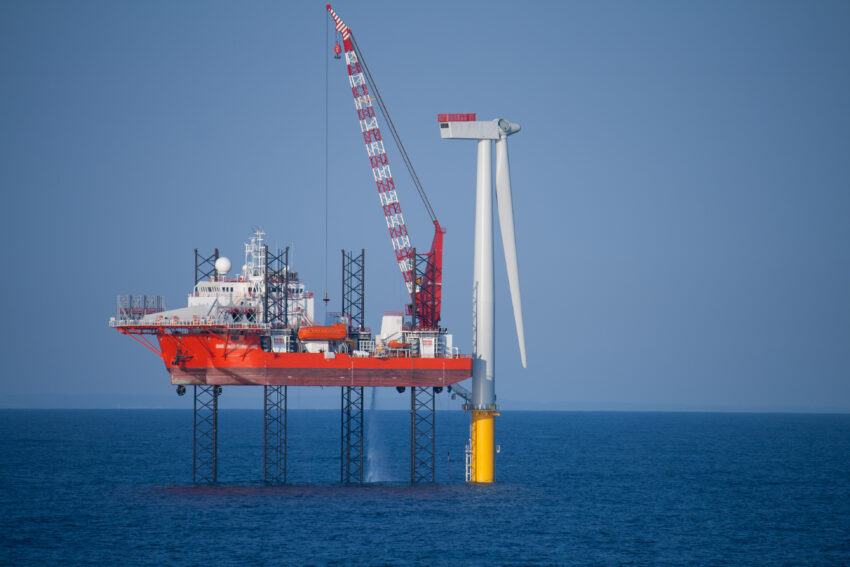
Scottish Power has warned that “shovel-ready” offshore wind farms capable of contributing to the government’s 2030 clean power target have missed out on subsidy contracts to earlier-stage schemes that may not be built in time, or at all.
The row centres on the latest Contracts for Difference (CfD) subsidy auction, Allocation Round 7 (AR7), the results of which were published in January. CfDs guarantee developers a fixed price for the electricity they generate, underpinning the economics of large-scale renewable projects.
Scottish Power had hoped to secure backing for its £4 billion East Anglia One North offshore wind farm off the Suffolk coast. The project is fully consented and, according to the company, could power up to 900,000 homes. However, it failed to win a contract, losing out to six other offshore wind proposals.
Keith Anderson, chief executive of Scottish Power, said the outcome was particularly frustrating because his company could have moved immediately to a final investment decision.
“We had literally a shovel-ready project,” Anderson said. “We would have taken a final investment decision the day after being awarded the contract. Construction would have started immediately and the project would have been at full output before the end of 2030.”
Advertisement
Instead, the winning projects include schemes that are at earlier stages of development. Two of the six do not yet have planning consent, and several have not finalised supply chain agreements.
Five of the successful bids were led by RWE, the German energy group. RWE acknowledged earlier this year that not all of its AR7 projects were likely to be operational by 2030, the government’s deadline for achieving 95 per cent clean electricity generation.
Anderson said the rule changes introduced for AR7, which allowed projects to bid before receiving planning consent and before locking in supply chain contracts, increased the risk of non-delivery.
“In the past, we’ve seen speculative bids,” he said, referencing previous offshore schemes that secured contracts but were later withdrawn when rising costs made them uneconomic. Inflation and supply chain pressures have previously forced developers to return CfD contracts rather than proceed at a loss.
Advertisement
The concern is that early-stage projects could encounter similar cost overruns or planning delays, undermining the government’s clean power timetable.
RWE defended its position, stating that planning approvals for its outstanding projects were “well advanced” and that negotiations with suppliers were progressing. It said it remained confident that, subject to timely grid connections, its AR7 portfolio would be delivered.
The Department for Energy Security and Net Zero said the auction results “put us firmly on track to take back control by delivering clean, home-grown power by 2030”, maintaining that the CfD process continues to drive investment into offshore wind at scale.
The dispute highlights a broader tension within the UK’s energy transition strategy: whether auction rules should prioritise immediate build-readiness or maximise competition by including projects at earlier stages of development.
Advertisement
For Scottish Power, the message to ministers is clear. Anderson said the company is now pressing the government to proceed swiftly with the next CfD auction round this year. “We can still get this project built by 2030,” he said. “It will contribute meaningfully to your net-zero target, but it needs certainty.”
As the race to meet the 2030 target intensifies, the credibility of the subsidy system, and its ability to translate auction wins into steel in the water, is likely to face increasing scrutiny from industry and investors alike.
Jamie Young
Jamie is Senior Reporter at Business Matters, bringing over a decade of experience in UK SME business reporting.
Jamie holds a degree in Business Administration and regularly participates in industry conferences and workshops.
When not reporting on the latest business developments, Jamie is passionate about mentoring up-and-coming journalists and entrepreneurs to inspire the next generation of business leaders.
The shares of Asian Paints, Indigo Paints and other paint makers plunged up to 6% to multi-month lows on Monday as crude oil prices shot up amid strong escalations in the ongoing tensions in the Middle East after US and Israel attacked Iran, killing the latter’s supreme leader Ayatollah Ali Khamenei and sparking strong retaliation from the country.
Crude oil is a key raw material source for paint companies because many of their inputs are petroleum-based derivatives. Hence, the expectations of rising oil prices putting pressure on their margins may have dampened investor sentiment for the shares of these companies.
Asian Paints shares declined more than 3% to trade at Rs 2,298 apiece, the lowest level seen by the stock since June 27, 2025. The stock was among the top losers on benchmark indices Sensex and Nifty.
Indigo Paints shares plunged nearly 6% and Berger Paints shares tumbled more than 5% to hit their respective 52-week lows on Monday morning.
Advertisement
Iran-Israel war fuels spike in oil prices
Live Events
Brent Crude jumped more than 6.5% to $77.63 per barrel, while WTI Crude surged over 65 to $71.23 per barrel, as seen at around 11 am. More than 20% of the world’s oil passes through the Strait of Hormuz, which connects the Persian Gulf with the Gulf of Oman and the Arabian Sea. The heavy missile strikes around the area have raised worries about supply constraints, leading to a spike in oil prices. At least three ships were attacked today near the Strait of Hormuz as Iran continues to launch retaliatory strikes across the Middle East, according to a report by BBC. The report mentioned that international shipping has almost come to a standstill at the entrance to the area. Paint companies likely to face margin pressure from rising oil prices
This further fuelled concerns around supply disruption, boosting oil prices. “Upstream energy and defence may see relative support, while oil-sensitive sectors such as OMCs, paints, tyres, aviation and chemicals face margin pressure. Crude remains the key macro variable for Indian equities under the current escalation scenario,” said JM Financial in its latest note.
Notably, there is no official confirmation yet on whether the Hormuz Strait is closed, obstructing oil transport through the strait. UK’s second largest bank Barclays on Saturday increased its forecast for Brent Crude oil futures to $100 per barrel. “Oil markets might have to face their worst fears on Monday. As things stand right now, we think Brent could hit $100 (per barrel), as the market grapples with the threat of a potential supply disruption amid a spiraling security situation in the Middle East,” the bank said in its report.
Iran is located along the Strait of Hormuz, through which approximately a fifth of the world’s oil supply passes, Ali Vaez, who heads the Iran Project at the International Crisis Group, said in a post on X. “Even limited disruption could spike energy prices, fuel inflation, and rattle global markets,” he added.
This comes amid broader market weakness, with Indian benchmark indices opening sharply lower and wiping off a significant chunk of investors’ wealth. At the open, Sensex plunged 2,743 points to start the day at 78,543, while the Nifty 50 plunged 519 points to open at 24,659. The sharp decline wiped off more than Rs 7.8 lakh crore from the total market capitalisation of all companies listed on the BSE at open.
Advertisement
(Disclaimer: Recommendations, suggestions, views and opinions given by the experts are their own. These do not represent the views of The Economic Times)