

Politics
James Ford: The Night Czar is dead. But for London’s publicans the Night Mayor has only just begun

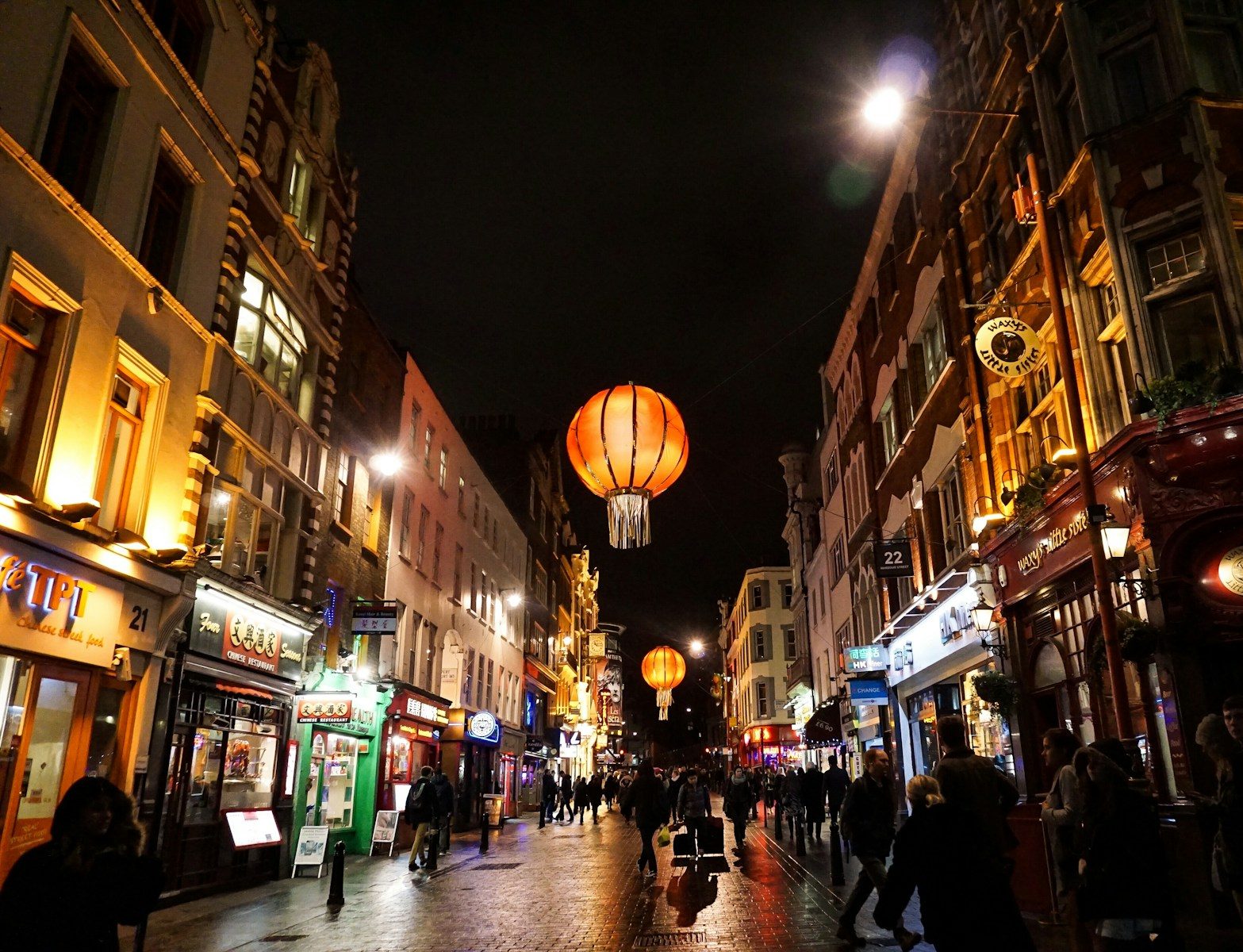
James Ford is a columnist for City AM and is a former adviser to Boris Johnson during his tenure as Mayor of London.
The Mayor of London’s dreaded Night Czar is no more. The post has been deleted. Permanently. This should come as no great surprise. The role was an unmitigated failure when occupied by Sadiq’s hapless appointee, Amy Lamé, and the post has sat vacant for more than a year following her resignation. We would probably raise a glass to celebrate this news, but sadly, all the clubs have closed down. (Thanks, Amy!)
Indeed, rejoicing that the Night Czar has gone the way of the Romanovs may be premature. On the recommendation of the Mayor’s Nightlife Taskforce (a committee of industry experts from across the nighttime economy) it is being replaced by a Nightlife Commission (a committee of…wait for it…industry experts from across the nighttime economy). Although the input of genuine business people with real frontline experience must surely be welcomed, it is not clear that City Hall is really taking the Commission, or the nighttime economy, seriously. The Commission has been allocated the rather miserly sum of £300,000 for its initial work, with the intention that it will ultimately become self-funded.
For comparison, £300,000 is what City Hall spent last year promoting al fresco dining. It is equivalent to the combined salary of just two of Sadiq’s nine deputy mayors. It is significantly less than the £958,000 that City Hall spent on providing stewards for the Notting Hill Carnival in 2025. Even more tellingly, £300,000 is slightly less than the total increase in business rates that would have been paid by the three London boozers (the Spread Eagle in Wandsworth, the Beaten Docket in Cricklewood, and the Dog & Bell in Deptford) worst hit by the government’s botched business rates hike prior to the recent screeching U-turn.
Given that the Nightlife Taskforce’s own report found that one in four working Londoners work in the evenings or at night and that the capital’s nighttime economy was worth more than £139bn in 2024, £300,000 now, and an uncertain future funded via GoFundMe and corporate sponsorship, does not really sound like it is going to move the dial much.
Whilst the capital’s overburdened boozers, bars and nightclubs should be concerned (and arguably insulted) that their future has been entrusted to an underfunded, underwhelming City Hall quango with a possibly short lifespan, this is sadly just one example of the indifference that Sadiq Khan’s City Hall has for the hospitality sector.
The sector has faced a torrid time during Khan’s tenure as Mayor. Data from the Night Time Industries Association found that more than 3,000 pubs, bars and nightclubs have closed in London since 2020. In 2024, research by Bonus Finder saw London ranked as the worst city in the UK for a night out because of the prohibitive cost of pints and hotel rooms and the dwindling number of licensed premises per 100,000 population. A further study found that just 24 per cent of all London bars, pubs and clubs were open past midnight on a Saturday night (compared to 44 per cent in Edinburgh and 38 per cent in Manchester). No surprise then that #LameLondon became a popular hashtag prior to Lamé’s departure because of public anger over the lack of late-night options in the capital. Even popular brewing brand Brewdog closed three of its London bars – in Camden, Shepherd’s Bush and Shoreditch – in July 2025. (And you know things must be bad if landlords even struggle to sell overpriced, trendy craft beers to hipsters in Shoreditch of all places).
What has London’s Mayor actually done to help the capital’s struggling hospitality sector during a decade at City Hall? He created the post of Night Czar…but gave it to a Labour Party crony. When clubs and venues continued to close at an accelerated rate, he gave that Night Czar a 40 per cent pay rise. It has taken him nearly a decade in office to get to the point where he has sourced industry recommendations on what the hospitality sector needs.
Was the Mayor one of the many voices that lobbied the Chancellor hard to reverse the business rates rise that licensed premises faced? Nope. Has he spoken out against the national insurance rises that are thought to have destroyed 100,000 jobs in the hospitality sector? Of course not. Is he a critic of the Employment Rights Act or the ‘banter ban’ contained within it? No, in fact he welcomed the legislation.
And it is not like Sadiq to stay quiet on issues of even peripheral relevance to Londoners. He was happy to fly to Los Angeles in 2022 to visit a cannabis farm to make the case for decriminalisation. He never shuts up about Brexit, even though it has been a decade since the referendum. He chose to use his annual keynote address to the City of London (arguably the biggest ‘state of the nation’ moment in the Mayor’s year) recently to warn of the possible dangers posed by AI in the future. But, on the fate of the capital’s historic pubs and the vital jobs they support, our mayor has been conspicuously silent. Other senior Labour figures have had the courage to speak out about the crisis engulfing licensed venues and directly challenge government policy – most notably Angela Rayner and Andy Burnham. But not London’s Mayor.
Where the Mayor has been busy on this issue it is to weaponise the crisis to his own advantage. He has been eager to use the travails of the hospitality sector to acquire new powers for himself. The devolution bill currently meandering its way through Parliament is set to grant City Hall sweeping new powers to call in strategic licensing applications and overrule decisions made by the boroughs. Worse still, he is one of many mayors set to impose a tourism tax on visitors to his city. This is set to clobber tourists visiting the capital to the tune of £350m a year.
All this is despite a lack of evidence that giving Sadiq Khan extra powers will make a positive difference. Afterall, City Hall was granted significant additional planning powers in 2010 but it has not prevented the collapse of housebuilding in London on the current mayor’s watch. And Sadiq Khan has not indicated that he will reinvest any of his tourism tax windfall in initiatives that will boost profits or ease burdens for tourism businesses.
When it comes to taking credit for the achievements of others when things are going well or grabbing additional powers to intervene, Sadiq Khan is always at the front of the queue, enthusiastically shouting “me, me, me”. But, when times are hard and his intervention could make a real difference to Londoner’s livelihoods or quality of life, the mayor is nowhere to be seen or heard. His much-trumpeted existing powers go unused, his high public profile remains unleveraged, and his lack of influence within his own party is vividly exposed. The crisis engulfing the capital’s hospitality industry and destroying essential jobs is not easing up or going away. If anything, it is accelerating. London needs a mayor that will roll his sleeves up and get stuck in or is at least willing to speak out on Londoners’ behalf. It’s a pity that we don’t have one.


Our body clock, or Circadian rhythm, might have an even greater effect on how we feel than the number of hours we’ve slept, a 2025 study suggested.
And more recent research has found that people with insomnia seem to have a completely different inner schedule than those without.
So perhaps it’s no wonder that member of the British Psychological Society, Rachel Wood, told Blinds2go that adding more natural light to their lives in the “Dutch method” could “offer several benefits for Britons”.
What is the Dutch method?
It involves sleeping with your curtains or blinds open. It’s so named because some households in the Netherlands have nothing covering their windows.
Maryanne Taylor, Sleep Consultant at The Sleep Works, who’s also working with Blinds2go, said: “Natural light is one of the most powerful ways to regulate our body clock, which influences sleep timing, mood, and daytime energy.
“If your blinds and curtains are open in the morning as you wake, this can have a positive impact on sleep as morning light exposure strengthens the circadian rhythm and signals to the brain that it’s time to be alert.”
Some studies have suggested that morning sunlight is uniquely good at regulating our body clock.
That means that not only do you feel more alert in the morning, but you could be sleepier at night, too.
“Sunlight strengthens the body clock and helps us feel alert. It builds a strong sleep drive by evening – which helps us fall, and critically, stay, asleep,” Taylor shared.
Better news: as little as 10 to 30 minutes a day should be enough to help keep your body clock in check.
The ‘Dutch method’ may also make us feel less lonely
That may not be the only benefit.
Wood said, “Open curtains not only let in more light but also help people feel less alone, and more connected to their neighbourhoods. In the UK, where loneliness is a growing concern, small changes like this could make a difference.”
And, she said, “Keeping blinds and curtains open increases the amount of daylight indoors, which can boost mood, improve sleep, and enhance cognitive function.
“Open curtains also foster a sense of connection and safety in communities, as seen in Dutch neighbourhoods.”
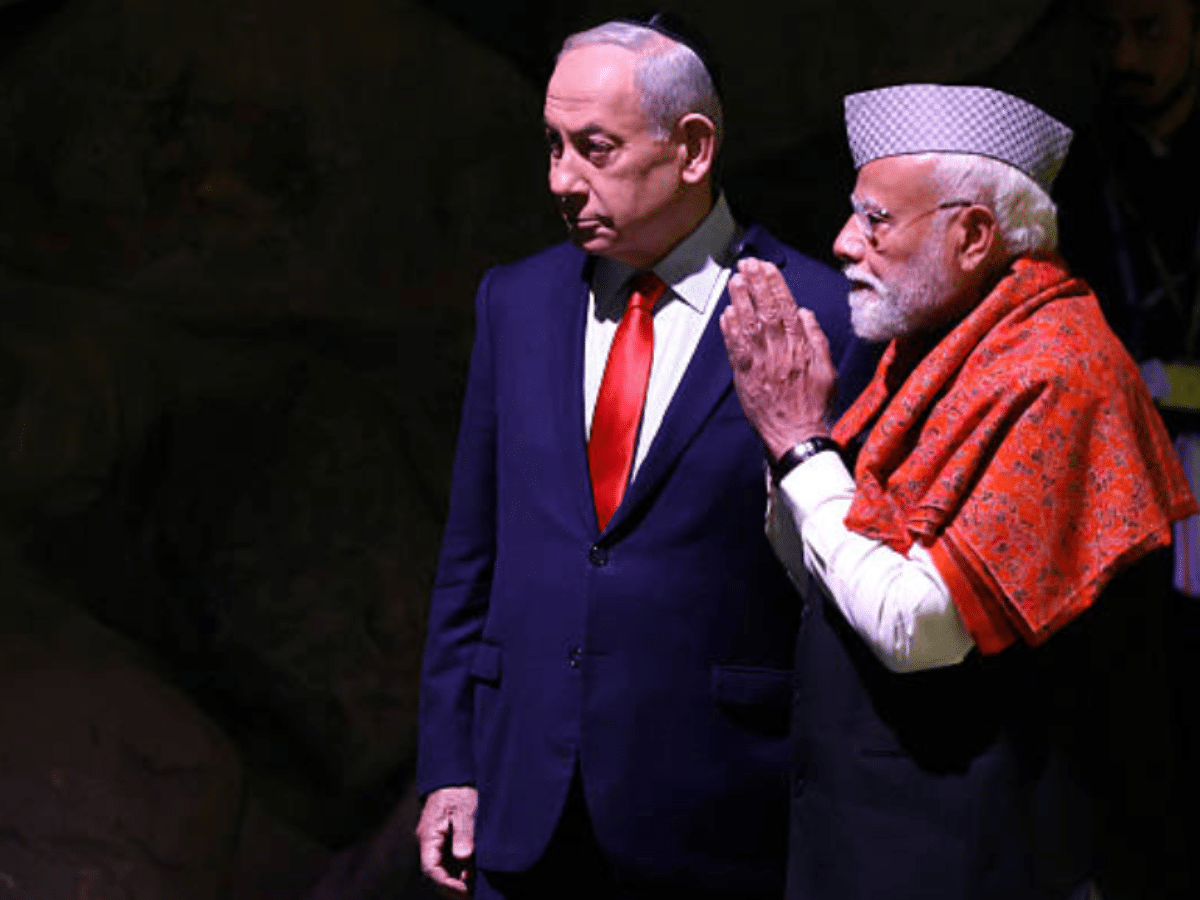
Mourners gathered in various parts of India and Indian-administered Kashmir over the weekend to mourn the assassination of Iranian Leader Ayatollah Ali Khamenei by a joint US-Israel-led attack, despite no official condemnation from India itself.
PM Narendra Modi said that he had a call with Netanyahu just days after the butcher of Gaza attacked Iran. During his conversation with Netanyahu, Modi stated that he “conveyed India’s concerns over recent developments and emphasised the safety of civilians as a priority,” adding that “India reiterates the need for an early cessation of hostilities.”
Modi has also communicated with the US-Israel ally, the UAE, and expressed “solidarity.”
And, Modi also visited Israel from February 25-26, warmly embracing Netanyahu and promising that India and Israel’s friendship would continue to soar. In fact, as chair of BRICS, India has broken from the bloc’s consensus by refraining from condemning the US-Israel attacks on Iran. Other BRICS members like Brazil, Russia, China, and South Africa issued strong statements criticizing the strikes and urging restraint.
Reactions from streets of India
Officials told The Hindu newswire that hundreds of protestors took to the streets in Shia-majority areas of Kashmir on Sunday to demonstrate against the killing of the Iranian leader.
Maktoob Media reported mourning by people at Masjid Babul Ilm in Jamia Nagar, Delhi:
According to reports from Newx, the death of Khamenei has sparked widespread protests across India. “From Kashmir to Lucknow, mourners gathered to honor the Iranian Supreme Leader, leaving social media bitterly divided over the reactions,” it said.
Ayatollah Ali Khamenei’s Death Triggers Massive Protests In India: From Kashmir To Lucknow, Protestors Mourn Iran Supreme Leader’s Death Leaving Internet Bitterly Dividedhttps://t.co/MCC0KtWhZS pic.twitter.com/qnwPdX6jUY
— NewsX World (@NewsX) March 2, 2026
Meanwhile, opposition parties condemned the targeted killing of the Iranian leader. Modi’s main opposition – the Congress Party – said:
We condemn the targeted assassination of Iran’s Supreme Leader, Ali Hosseini Khamenei, as a grave violation of international law. pic.twitter.com/23wglH42ww
— Congress (@INCIndia) March 2, 2026
Dissent from within
And, the Communist Party of India (Marxist-Leninist) Liberation said the US has no business inflicting regime change on Iran.
The assassination of Iran’s supreme leader Ayatollah Ali Khamenei by forces of the invading US-Israel axis must be condemned unequivocally even by the critics of the Iranian government. The US has no business to inflict a regime change on Iran. The experience of countries like Iraq, Libya, Syria, Afghanistan that have been targeted earlier by the US for regime change operations clearly shows that the US is only interested in destabilising sovereign countries to establish its own exclusive geo-political domination in West Asia. For decades the US and Israel have falsely accused Iran of being just weeks away from becoming a nuclear power. Even as Iran accepted the diplomatic process to seek a negotiated settlement, the US-Israel axis attacked Iran and assassinated Iran’s supreme leader and several of his family members and close officials. The people of Iran alone have the right to determine the future of their country and India must unequivocally denounce the US-Israel bid to subjugate Iran and install a puppet regime.
Statement | The assassination of Iran’s supreme leader Ayatollah Ali Khamenei by forces of the invading US-Israel axis must be condemned unequivocally even by the critics of the Iranian government.
The US has no business to inflict a regime change on #Iran. The experience of… pic.twitter.com/a7u6IgudYE
— CPIML Liberation (@cpimlliberation) March 1, 2026
Clearly, the many protesters and opposition parties in India do not view Israel the same craven manner Modi does.
Featured image via the Canary
Politics
Politics Home | Cruelty Free International calls for government action on animal testing strategy


The publication of the UK’s strategy to replace animals in science was a good start. Now it is time to deliver.
The UK can be a global leader in regulatory science innovation and animal protection. To achieve this, the government must ensure that its Strategy to Replace Animals in Science delivers real, measurable progress and establishes the foundations for fundamental change.
In 2026, Cruelty Free International (CFI) will be pushing ministers to deliver the commitments it has set for this year, in full and on time, while asking them to plan to go much further in the longer term.
We will provide clear, factual analysis of progress made and key milestones reached, identify gaps where ambition or detail falls short, and hold the government to account for timely delivery on their commitments. Through rigorous scrutiny and constructive advocacy, we will demonstrate the need for a programme of change that not only delivers the strategy as written but also lays the groundwork for advancing beyond it.
The strategy could be a landmark moment, but only if it is delivered in full and on time
- The publication of the UK strategy signals a turning point in how we approach science, innovation and public health.
- It offers genuine potential to accelerate the phase-out of animal testing and to modernise the science – bringing forward ethical, innovative and human-relevant methods and ultimately delivering better outcomes.
- This can only be achieved through sustained implementation and delivery, appropriate resourcing, expert oversight and proper accountability.
Analysing what the strategy actually commits the government to deliver
- CFI is thoroughly analysing the key commitments, setting out what it promises, what it enables, what the impact will be, what is required to deliver it, and how it could be made even more impactful.
- Crucially, our analysis aims to highlight both the opportunities and shortcomings of the strategy, to demonstrate that we can and should be optimistic while ensuring that we hold the strategy to the highest scrutiny, and never stop demanding greater ambition until every experiment on animals has ended.
Accountability to drive public trust and scientific progress
- Without transparent reporting and accountability, the strategy will remain a list of aspirations rather than a roadmap for action with clear and concrete deliverables driven by targets, milestones and robust timeframes.
- The strategy must not gather dust on the shelf. It must be a living and active document that is a tool for driving change.
- We will push the government to deliver on its commitment to set up clear and impartial accountability processes of its own, but will also take responsibility for holding them accountable in a positive, constructive yet challenging way. This will include pushing for stronger mechanisms for transparent monitoring, and asking for clear and enforceable milestones, confirmed targets, and independent assessment of progress.
- Responsible ministers must be held accountable for making every effort to meet targets and, where possible, to push beyond them. We will make the case for clear ministerial duties to drive action from the government.
- There should also be a regular and transparent process for updating timelines, targets, and milestones.
- A key element of accountability is the inclusion of civil society organisations to draw in their trusted expertise and encourage public confidence. Systems and processes for accountability must therefore include transparent mechanisms for involving key stakeholders such as civil society organisations and NGOs.
The UK must be more ambitious if it wants to lead internationally
- The strategy should be a baseline from which to build UK leadership on the international stage and not a ceiling for ambition.
- With ambitious and potentially far-reaching commitments in the United States and the European Union, the UK risks falling behind international peers unless it accelerates innovation in human-relevant science and takes bold steps to accelerate the uptake of non-animal approaches throughout the sciences.
2026 deadlines in the Strategy
Actions that must be started in the first half of 2026:
- Publish areas of research interest for non-animal methods
- Quantify annually the inclusion of second species testing in clinical trial applications
- Initiate provision of ministerial leadership on the development and adoption of non-animal methods
- Initiate formal involvement of DSIT in the direct commissioning and receipt of advice from the Animals in Science Committee
- Enable better advice on non-animal methods
- Restart the survey on public attitudes to animal research
- Establish KPIs with which to assess the delivery of this strategy
Measures the government must deliver by the end of 2026:
- Create a Preclinical Translational Models Hub
- Establish the UK as a global leader in the science and regulatory application of non-animal methods
- Increase the visibility of available non-animal methods to facilitate their uptake
- Accelerate uptake of non-animal methods through reform of animals in science regulation
- Establish a UK Centre for the Validation of Alternative Methods (UKCVAM)
- Prepare specific projects to help secure international acceptance of new test methods, after UKCVAM is established
- Publish regulatory agency-accepted non-animal methods and priorities for future development and validation
- Establish a programme to support the upskilling of regulatory assessors
- Establish data‑sharing frameworks to support equitable access to public and private data sources
- Enhance data curation and quality control, and develop regulatory frameworks for data use
- Develop mechanisms to enable regulators to provide pre‑submission feedback
Work that must begin once 2026 funding is released by the government and research funders:
- Increase investment in the development of non-animal methods
- Enable funders to thoroughly scrutinise the apparent need for animal research in funding decisions
- Provide foundational training for early-career researchers in non-animal methods
- Expand challenge‑led innovation for non-animal methods
- Increase investment in data‑driven biology
We welcome the strategy’s ambition in setting a framework of commitments to guide action in the short to medium term, some of which will require urgent work and rapid delivery. It represents a strong start for the government, and an approach that could put the UK in a leadership position if words are matched by actions. Now it must deliver. In many ways, the real work starts here and must continue well beyond these first deadlines.
For more detail or to support our work, visit www.crueltyfreeinternational.org or email [email protected].
The Police Service of Northern Ireland (PSNI) have again engaged in shocking intimidation tactics clearly designed to deter peaceful pro-Palestine activism. On Friday February 27, police abducted a Belfast campaigner from his home. Two officers entered BDS Belfast activist Damian Quinn’s house without showing evidence of a warrant. This is likely illegal, given the alleged offence they were citing was merely contempt of court.
The police’s outrageous disregard for the law only got worse from there, as Quinn described in a video posted to the BDS Belfast Instagram page. After the cops handcuffed him, the activist described how they:
…brought me out to this unmarked car and told me that I was being driven to Musgrave Police Station.
We got to Musgrave Police Station and parked in an empty car park within the station itself. The two policemen got out of the car, came around to my side of the car, opened the door and stood and continued to talk with each other. This lasted over about 40 odd minutes.
He continued:
At one stage it seemed like the two police officers were in disagreement with each other over my detention because one of them had said he needs to be detained, the other had said no.
PSNI incompetence or malice?
Quinn said that soon after that:
…a policewoman…came over to me and proceeded to tell me that she was not authorising my detention because there’s a voluntary route that I can take to speak with my solicitor and come back down at a later date.
The police then drove the 33 year old home. When removing the cuffs before doing this, they warned Quinn not to try anything, otherwise they’d have to intervene with force. The suggestion that a peaceful activist being taken home would suddenly become violent is absurd, and clearly amounts to another pathetic attempt at intimidation.
So to summarise: cops entered – probably illegally – a peaceful activist’s home, dragged him in cuffs to an unmarked car, then kept him captive for over an hour outside in the late February cold. They were then told by a superior that the whole arrest was unnecessary, and returned him home. All for a minor alleged offence the PSNI claim was committed four months ago.
The abduction may be an attempt to intimidate six (previously nine) activists being prosecuted for road protests in 2025. All witnesses in those cases are PSNI officers.
According to the activist:
Cardin Solicitors Limited have been instructed to consider a civil action for unlawful arrest and false imprisonment of myself.
Pattern of criminalising peaceful activism
Quinn’s supposed transgression seemingly relates to “images or video” allegedly taken by the 33 year old in the corridor of a court building in October 2025. BDS Belfast members have appeared in court multiple times due to the prosecution service launching numerous frivolous attempts to criminalise their activists. No guilty verdicts have ever been returned by magistrates.
The group are a local pro-Palestine direct action collective. They have a particular focus on getting ‘Israeli’ products removed from supermarkets. Videos on their social media pages show their activists entering supermarkets, removing Zionist items from shelves and covering them with ‘Boycott Israeli apartheid’ stickers.
In his video, Quinn highlighted many other cases of state repression of Palestine activists:
We’ve seen Mothers Against Genocide in Dublin go through strip searching for just sitting outside the Dáil and blocking the gates…We’ve seen QUB [Queen’s University Belfast] students get dragged through courts for protesting complicit companies at their careers fairs, as well as the war criminal Hillary Clinton when she arrived to Queen’s University Belfast.
And even two days ago, we’ve seen a BDS Belfast activist arrested for storming the stage of a Google Engage conference, where he highlighted the complicity of Google and the disgraceful, disgraceful decision that the ‘Israelis’ were at that conference in Dublin.
He nonetheless urged activists not to be disheartened, but rather be encouraged by the legal wins obtained by the likes of Palestine Action and BDS Belfast.
“Boycott ‘Israel’, free Palestine”
Speaking to the Canary, Quinn said that during his abduction, he:
…thought about police mistreatment and abuse of other comrades across Ireland, Britain, Europe and elsewhere across the world.
He said it was part of:
…a pattern of mistreatment of fellow activists as they stand against a live streamed genocide, with our government, institutions and companies you spend money in everyday, supporting and facilitating this economy of genocide.
What we go through as activists pales in comparison to what our brothers and sisters are experiencing in Palestine as they endure a barbaric, horrifying occupation, apartheid and genocide.
Everyone must do what they can – join solidarity groups, follow the BDS movement, boycott ‘Israel’, and free Palestine.
Featured image via the Canary
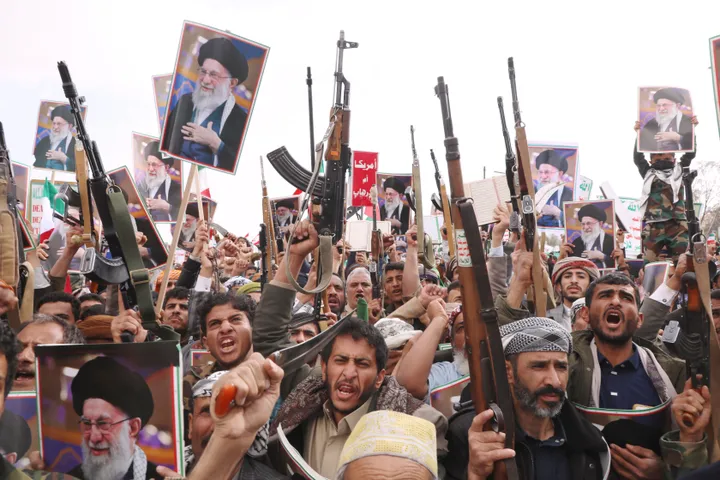
Donald Trump has sparked global chaos once again after giving the green lught to joint US and Israeli strikes on Iran over the weekend.
The attacks killed Iran’s Supreme Leader Ayatollah Ali Khamenei – a devastating moment for the Islamic Republic he has ruled for almost 40 years.
Iran retaliated by firing its own missiles at countries linked to US military operations across the Middle East, plunging the region into fresh turmoil.
As more countries get roped into the violence, here’s what we know so far.
How Did This Conflict Start?
The White House has been trying to force Iran to accept a new deal which would prevent the country from acquiring nuclear weapons.
Israel and the US have pointed to Iran’s extensive uranium enrichment programme as proof, as it has almost reached weapons-grade level.
Iran continues to reject their accusations, claiming its programme is for peaceful, civilian purposes.
Iran also terminated their previous nuclear agreement in June 2025, after the US and Israel waged a 12-day war against the country, hitting its nuclear and military sites.
During last week’s negotiations. Tehran’s leadership agreed to stop uranium stockpiling and allow full verification by the International Atomic Energy Agency – but the talks ended without a deal, and Trump said he was “not thrilled”.
The president has also been building up the largest US military presence in the region since the US-led invasion of Iraq in 2003.
At the same time, public protests in Iran against the oppressive regime have increased in recent months – and been brutally suppressed.
Trump and Israel have even encouraged demonstrators to rise up against the government, telling Iranians “this will be, probably, your only chance for generations”.
Then on Saturday, Israel launched so-called “pre-emptive” strikes on Iran and Trump accused Tehran of waging an “unending campaign of bloodshed and mass murder” targeting the US.
He claimed Iran had rejected every chance to renounce its nuclear programme and alleged it was developing long-range missiles that could threaten Europe, US troops overseas and even “soon reach the American homeland”.
What Is ‘Operation Epic Fury’?
The US announced it would be taking action against Iran with the so-called “Operation Epic Fury”, while Israel called its own offensive “Lion’s Roar”.
Trump has announced his plans to destroy Iran’s missile capabilities, target Iran’s navy, disrupt Iran-back armed groups in the Middle East and prohibit Iran from building any nuclear weapons.
Israel’s president Isaac Herzog told BBC Radio 4′s Today programme that they have a “huge amount of proof” to justify the attacks on Iran.
“We are in a historic juncture where the future of the Middle East dependso n the success of this operation,” Herzog said, calling the Islamic Republic the “empire of evil” which wants to “wipe us off the map”.
He said: “We have huge amount of proof which we are sharing of course with our British allies and every other allies.
“We want to make sure that there is a real change in the region.”
How Deadly Have The Strikes Been So Far?
Saturday’s strikes killed Iran’s Ali Khamenei who has ruled the country since 1989.
The missile strikes killed 148 people at a girls’ school in southern Iran, too, according to Iranian state media.
Iran’s retaliatory missiles also hit the Israeli city of Beit Shemesh, killing at least nine – the deadliest attack on Israel since this war started.
Three US service members have been killed in action as part of the American military operation, the US Central Command said non Sunday.
Trump warned on social media there would likely be more casualties to come, saying in a video posted last night: “That’s the way it is.”
The Iranian Red Crescent Society says 555 people have been killed in the country after the attacks hit more than 130 cities.
How Is Lebanon Involved?
Iran’s allies have leapt into action after the death of Khamenei, who controlled a range of militias across the region.
Lebanese Shia milita group Hezbollah – despite being depleted from a prolonged war with Israel 18 months ago – sent missiles and drones towards Israel on Saturday in retaliation.
Israel ordered the residents of 50 towns and villages to leave before striking the capital of Beirut and the south of the country, killing at least 31.
Lebanon’s prime minster Nawaf Salam has since stepped in to discourage any Lebanese groups from launching rockets towards Israel.
He said this was an “irresponsible and suspicious act” which “provides Israel with pretexts to continue its attacks”.
Meanwhile, the Israeli Defence Force (IDF) said Hezbollah would “pay a heavy price” for its strikes, which would continue with an increased “intensity”.
The Israeli military say its “offensive campaign” against the milita is likely to last several days.
What About The Rest Of The Middle East?
The United Arab Emirates (UAE) also reported that three people have been killed since Saturday in Iran’s retaliatory strikes.
Explosions have been heard in Bahrain, Jordan, the Iraqi city of Erbil, and Quatar’s capital of Doha.
Smoke has been seen near the US embassy in Kuwait, too.
Supporters of Khamenei’s regime have also taken to the streets in cities across the region.

How Is The UK Involved?
Britain has tried not to get directly involved with Trump’s strikes, with ministers citing the mistakes of the UK’s past interventions in the Iraq war.
But UK prime minister Keir Starmer said he had allowed the US to strike Iranian missile sites from British bases.
He said this was defensive action, and that the UK would “not join offensive action now”.
Hours after that announcement, a suspected drone strike hit RAF Akorotiri, a UK base in Cyprus, according to the UK’s Ministry of Defence, though there were no casualties.
British officials are also planning an unprecedented rescue operation for UK citizens in the Gulf.
There are more than 300,000 UK citizens in the region, and 102,000 of them have “registered their presence” with the British Foreign Office, according to foreign secretary Yvette Cooper.
How Could This Conflict Be Felt Around The World?
There are widespread fears of a global economic shock triggered by the attack.
It seems from cocerns the strait of Hormuz, essential to worldwide trade, could become inaccessible as it sits between Iran and the UAE.
Oil prices have already increased and the stock markets are struggling, with brent crude increasing by 13% during early trading hours on Monday.
Airlines are also having to grapple with new routes as countries across the Middle East closing their airspace.
Local authorities from New York City to LA say they are on high alert out of fears of a pending Iranian attack on the US mainland, too.
What Happens Next?
The US president said combat operations would continue in Iran “until all of our objectives are achieved”.
He justified the strikes by claiming “an Iranian regime armed with long range missiles and nuclear weapons would be a dire threat to every American”.
But Trump also tried to appeal to the Iranian soldiers, saying: “I once again urge the Revolutionary Guard, the Iranian military police, to lay down your arms and receive full immunity or face certain death.”
Trump claimed his attacks have already killed 48 Iranian leaders.
The president has also alleged that Iran’s new leadership wants to talk to him and that he has agreed.
However, Iran’s security chief, Ali Larijani, said “we will not negotiate with the United States” overnight.
Meanwhile, Trump’s domestic audience could put pressure on the president to slow down.
He was elected on a promise not to drag Americans into other unnecessary wars overseas, and on his famous “America First” pledge.
A Reuters/Ipsos poll found only 27% of Americans approve of the strikes, and a quarter of Republicans think Trump is too willing to use military force.
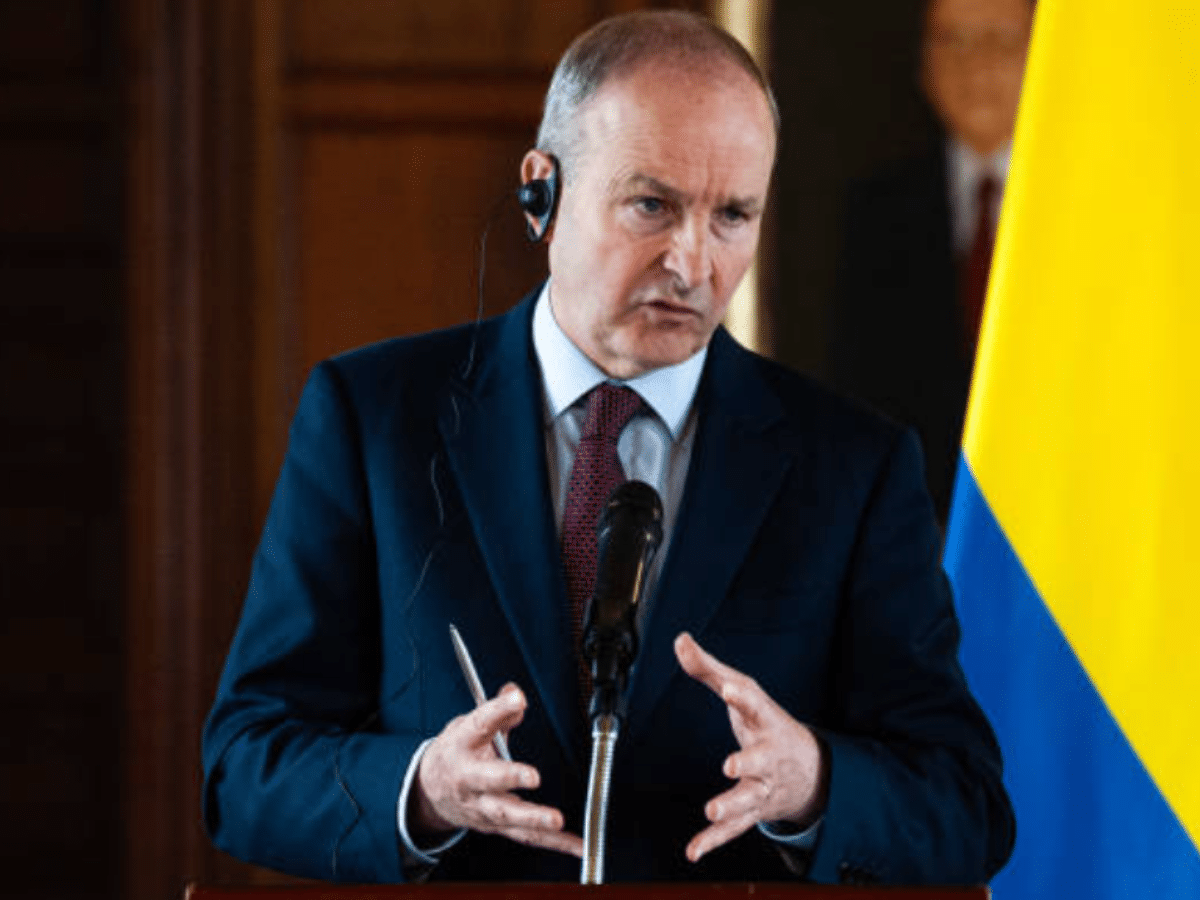
Taoiseach Micheál Martin has acknowledged he will be spending almost €1 million on a war room. He didn’t describe it that way, of course, instead referring to:
…secure meeting facilities to allow continued engagement with international partners.
He did, however, accept that the room, designed to be surveillance proof, would be key for meetings of the nations backing Ukraine in the war against Russia. Martin revealed a further clue to the purpose of the project by saying it is “NATO proof”. In other words, up to the standards required by the NATO war machine.
Most of the Irish population would like the country to be NATO proof, but in entirely the opposite meaning of the way in which Martin used the term. I.e. – proofed from co-option by the belligerent and expansionist alliance.
Martin unilaterally rips up neutrality in alignment with NATO
That prospect seems a long way off, as the war room is just another grim step in a week full of moves towards integration in the North Atlantic Treaty Organization. On Tuesday, Martin released an unprecedented statement, declaring that Ireland is:
…proud to stand with Ukraine, politically, economically, militarily and diplomatically.
The most notable word there is obviously “militarily”. With the Triple Lock in place, Martin has no authority to make such a pledge. Ireland can only deploy troops if the cabinet, Dáil and UN security council all give approval. The warmongering government of Martin is eager to scrap this policy, however.
The day after, defence minister Helen McEntee announced the country’s first ever Maritime Security Strategy. She said:
Every day, we see an increasingly volatile geopolitical situation highlighting the vulnerabilities of our critical maritime infrastructure and our ability to monitor and protect our waters.
She also declared Ireland will be:
cooperating closely with our near neighbours on new initiatives and exploring the opportunity for Ireland to host or partner in a regional cable monitoring hub for the EU in the North Atlantic.
US Big Tech pushing Ireland into militarism
The emphasis on cable protection illustrates how Ireland’s role as a hub for largely US Big Tech infrastructure is also pushing it into increased militarism. As reported previously by the Canary, the US and others are placing increased pressure on Ireland to beef up its armed forces to defend these assets.
There are signs of obvious mission creep here, however, as McEntee also referenced:
…emerging and changing threats in terms of hybrid threats, hybrid warfare and shadow fleets.
“Shadow fleets” refers to vessels ferrying cargo to Russia, often under a fake flag. If NATO powers expect the Irish navy to police this, it will inevitably mark a step towards integration in the alliance.
Donnchadh Ó Laoghaire, who is Sinn Féin Spokesperson on Defence, pointed out that cooperation could be:
…on a bi-lateral basis – between Ireland and France, between Ireland and Britain – not with NATO.
Instead, the strategy seeks increase ties with the Joint Expeditionary Force (JEF). All 10 members of the JEF – Denmark, Estonia, Finland, Iceland, Latvia, Lithuania, Netherlands, Norway, Sweden, Britain – are part of NATO. The JEF itself is not formally connected to NATO.
The Irish Times reports that Ireland will be:
…part of “JEF+”, a new concept to allow allied nations to take part in individual exercises and operations as they see fit.
“When did we sign up for that, Taoiseach?”
People Before Profit TD Paul Murphy tore into the policy, saying:
It’s part and parcel of an agenda of militarisation and dismantling neutrality…It is a shameful abandonment of any independent foreign policy. Instead committing us to deep military cooperation with the old colonial powers of Britain and France. Advocating further integration with NATO and using huge amounts of public money to defend the infrastructure of big tech companies.
The strategy refers to, I quote, “our responsibilities and commitments to support the security and defence of Europe.” When did we sign up for that, Taoiseach? That sounds awfully like a mutual defence pact when the protocol associated with the Lisbon Treaty explicitly stated no common defence involved.
Again and again and again the document refers positively to NATO. It says, I quote, Ireland can play a positive role in supporting greater EU-NATO cooperation. Action 4.6 is foster relations with NATO in the maritime security space. Action 4.8 pursue opportunities to participate in joint expeditionary force activities. The JEF is 10 NATO countries led by Britain. Is that one of the reasons you want to abolish the triple lock?
He also referenced a recent major arms deal with French genocidaires Thales:
No money for SNAs [Special Needs Assistants] until people power force you back. No money for electricity credits. What is there money for? The arms industry. To develop an Irish arms industry and to give to the French arms industry.
The French media is reporting that we will be spending public money a billion euros on armoured vehicles, tanks and a howitzer. Thales, who supplied weapons to Israel for the slaughter of Palestinians, will be the main recipient.
Sleazy arms deal shows the rot has taken hold
The Ditch reported on how a firm – KNDS, partner of Thales – set to benefit from that €800 million deal was part of a lobbying group that hid those efforts from scrutiny.
It amounts to one more grubby footnote in an ugly march toward European rearmament that will ultimately make the world less, not more, secure. It fills the coffers of the military-industrial complex, whose profits lie in death and destruction. With greater wealth, their ability to push governments in that direction increases.
The Irish population strongly backs neutrality, partial though it may always have been. That voice must now be heard louder than ever to pull Ireland back from the clutches of the NATO death cult.
Featured image via the Canary
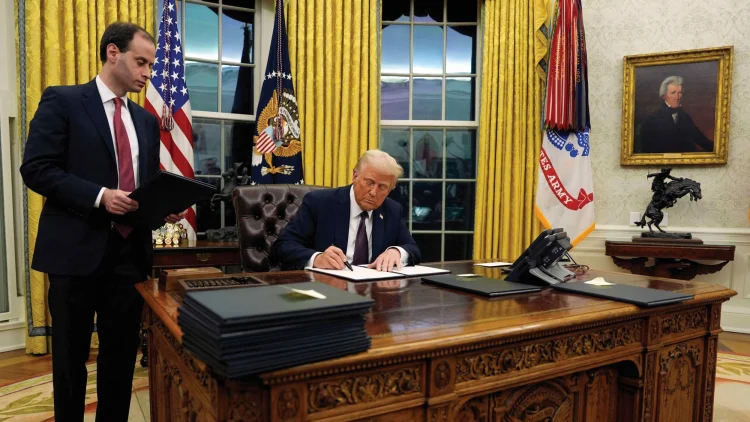
January 2025: Newly inaugurated President Donald Trump signs the executive order withdrawing from the WHO | Image by: Associated Press / Alamy
5 min read
Donald Trump has already left the World Health Organization, and Nigel Farage says Britain could follow suit. Sally Dawson reports on the backlash to the global health agency
The removal of the stars and stripes from outside of the World Health Organization’s headquarters in January was an emblematic start to the year – but it may not be the last member flag to be lowered at the WHO’s Geneva base.
For although the USA finally completed its withdrawal from the WHO on 22 January – after Donald Trump signed an executive order to leave at the start of his second presidency in January 2025 – Maga is not the only movement hostile to the WHO.
An international campaign-group co-founded and chaired by Nigel Farage, Action on World Health (AWH), is due to report in late spring on its core mission of “reforming or replacing the WHO” – and its findings could be influential in shaping Reform UK health policy.
Writing in The Telegraph back in May 2024, the same month he launched AWH, Farage threatened to leave the WHO if it did not reform, describing comparisons between the EU and the organisation as “stark”: “The WHO is a failing, expensive, unelected, unaccountable, supranational body that wants more and more powers to run roughshod over nation state democracies and free citizens.”
A particular point of contention for critics of the WHO in recent years has been the process of drafting the Pandemic Agreement (formally adopted by WHO in May last year), the original version of which Farage condemned as “signing away our sovereignty”.
There has also been ideological resistance among the WHO’s opponents to any moves that advocate ‘nanny-state’ regulations on food, alcohol and tobacco – and also to programmes that support the provision of abortion. Like Trump, the AWH has also accused the WHO of “supporting the Chinese Communist Party cover up of Covid-19”.
Farage is not alone in his party in his view of the organisation. Speaking to The House, Reform UK MP and the party’s head of preparing for government Danny Kruger agrees with his party leader, stating that there is a “fundamental problem” with the WHO, “in the degree to which it is in the thrall not just to big pharma but to the countries with some very bad records on health, with China being the main one”.
Referring to the pandemic treaty, Kruger adds: “I was very opposed to the new regulations that were passed last year… The treaty that was agreed gave much greater power to the WHO to impose responses to major outbreaks, pandemics, and such like, onto countries.”
The original draft, he says, was “horrendous” – particularly the “proposals to mandate all sorts of particular responses, from lockdowns to masks and vaccinations and everything, all from the WHO, rather than member state governments”.
The treaty that was agreed gave much greater power to the WHO to impose responses to major outbreaks
The Department of Health and Social Care counters that the organisation plays a “crucial” role in the global health system, with a spokesperson saying: “The UK is committed to working with the WHO to tackle the world’s health issues, and to ensure it is equipped to meet today’s global health challenges.
“Our membership of the WHO helps to protect the UK’s heath security by sharing crucial information and acting on all health-related threats and emergencies, as well as by supporting other countries in improving their health systems.”
Although Kruger concedes that “there were some improvements” to the treaty in response to “pushback”, the MP says he remains anxious about the WHO’s agenda.
“I worry about the whole trend of a global health agency. Yes, we need global data and collaboration, but fundamentally it must be governments that take responsibility for introducing major interventions,” he says. “So, I’d rather the WHO got back to fighting malaria, rather than bossing everyone around when there’s a pandemic.”
Labour member of the Health Select Committee and public health doctor Beccy Cooper argues that “a Reform-led government would be a risk to the public health of this country, just as their views on vaccinations have shown”.
“Taking us out of the WHO would be catastrophic because we need to be able to identify emerging threats before they become the next pandemic,” she says. “We need the WHO to collect, analyse and disseminate data to all countries in real time. Similarly, the threat of antimicrobial resistance is a biosecurity issue that no amount of investment in guns and tanks will prevent from reaching our shores.”
Since Trump’s withdrawal from the WHO, China has only strengthened its influence within the 194-member-state organisation, with it now set to replace the USA as the largest member state contributor. (The UK was the fourth largest member contributor in the WHO’s accounts for 2024 and 2025.)
But Cooper contends a “properly resourced, right-sized” WHO that leads on key issues and brings together health leaders to shape global responses to the emerging health threats of the day is a “valuable resource” that the UK should not leave: “The UK should now show leadership in this space and support the WHO to transition into an organisation fit for the 21st century.”
Meanwhile, whether Farage will still support remaining within a reformed WHO now that the USA has left – or advocate following Trump in exiting the organisation – may become clearer once the AWH report is published.
If Farage remains unconvinced of the WHO’s will to change direction, and his party wins a majority at the next general election, then, in the words of the Reform leader, “a second Brexit will be on the cards”.
Additional reporting by Sienna Rodgers

Donald Trump raised eyebrows for the way in which he boasted about US forces wiping out Iranian ships.
Trump posted on his Truth Social platform on Sunday:
“I have just been informed that we have destroyed and sunk 9 Iranian Naval Ships, some of them relatively large and important. We are going after the rest — They will soon be floating at the bottom of the sea, also!”
Critics quickly seized on the phrasing, noting how sunken vessels generally don’t float.
The boast came as the US military continued to escalate its major combat operations in the country, which began on Saturday.
Three US troops have been killed and five others seriously wounded in the operation. Trump has acknowledged that there could be further casualties in the conflict, which he has suggested may last up to a month.
RAF base in Cyrpus hit by drone strike after Starmer U-turn on military bases
“An RAF airbase in Cyprus was struck by a “kamikaze” attack drone shortly after Britain gave the US permission to mount strikes against Iran from joint bases. Families of service personnel in Cyprus are being evacuated from RAF Akrotiri as a “precautionary measure”, the Ministry of Defence said. The suicide drone, of the type used extensively in Ukraine, hit the base late on Sunday evening although there was minimal damage. The attack took place around midnight local time. A defence source told The Times there was a “full assessment” underway to establish whether it was deliberate or not. Due to the time taken for the drone to reach RAF Akrotiri, the UK believes it was probably launched before Sir Keir Starmer announced he had given the green light to the US to mount airstrikes against Iran from joint bases. The prime minister said he had given the US permission to use Diego Garcia, a joint military base in the Indian Ocean, and RAF Fairford in Gloucestershire. He said that the move would allow the US to carry out airstrikes for a “limited defensive purpose”… Britain remains opposed to “offensive” attacks against Iranian targets. John Healey, the defence secretary, refused to say whether Britain supports the original airstrikes by Israel and the US.” – The Times
- Brit families evacuated from Cyprus RAF base & schools shut hours after Iranian drone attack as UK joins US blitz – The Sun
- Foreign Office plans emergency evacuation for Britons stuck in Middle East – Daily Telegraph
- Iran rejects Trump’s ultimatum and launches new strikes as F-15 fighter jet crashes over Kuwait and explosions rock Dubai, Doha and Cyprus – Daily Mail
- ‘Several’ US warplanes crash in Kuwait, but crews survive, officials say as video shows jet on fire in a tailspin – Daily Mail
- Britain at risk of terror attacks from Iran’s sleeper agents and militias – The i
Comment:
- The Iran crisis has Labour insiders asking if Rayner could really be PM – Anne McElvoy, The i
- I want a free Iran, but deep down I don’t trust Trump to do it – Matthew Syed, The Times
- Starmer denies U-turn claims after giving go-ahead for US to use UK military for strikes on Iran – Sky News
- Tell us, Trump, how this Iran operation ends – Max Hastings, The Times
- Has Britain – once a major player in the Middle East – ever looked SO irrelevant on the world stage? – Stephen Glover, Daily Mail
- Cowardly Starmer simply isn’t cut out to lead Britain – there are 2 very pressing reasons why he must go now – Rod Liddle, The Sun
> Today:
> Yesterday:
Channel migrant crossings hit record levels this year as authorities struggle to cope with surge
“The number of migrants crossing the Channel is up on this time last year. Figures show 2,209 made the perilous journey compared to 2,056 in the first two months of 2025. Home Secretary Shabana Mahmood is set to launch strict Danish-style immigration reforms that have cut asylum claims there to a 40-year low. But Shadow Home Secretary Chris Philp said only leaving the European Convention on Human Rights will fix the problem by deporting “every illegal immigrant within a week of arrival”. He told The Sun: “This weak Labour Government cannot control our borders. Under Labour, channel crossings are getting worse. Keir Starmer and Shabana Mahmood lack the strength to do what is needed.”” – The Sun
- Britain to pay migrants ‘more than £3k’ to leave UK as Home Secretary faces 40-strong MP migration rebellion – LBC News
- Shabana Mahmood tells GB News she WOULD live next door to a migrant camp – GBNews
- Home Secretary will introduce stricter migrant rules today in crackdown that will see refugee status reviewed every 30 months – Daily Mail
- Mahmood: I come from a migrant family. But the system is broken – Daily Telegraph
Labour’s employment shake-up ‘makes Britain worse than France’
“Labour is making Britain’s employment law “worse than France” with new workers’ rights that put bankers and lawyers in line for unlimited payouts if they win unfair dismissal claims. In a series of private meetings last month, business leaders warned the Government that multinational companies will shun Britain if new laws championed by Angela Rayner, the former deputy prime minister, come into force. Angry City bosses told officials at the Department for Business and Trade that scrapping a compensation cap on successful claims will make Britain less competitive than European countries such as France, Spain and Italy. At one meeting between government officials arranged by lobby group TheCityUK, several attendees highlighted that the UK was moving in the “180-degree opposite direction to what our competitors have done” on the Continent. The meeting – which was attended by legal and human resources executives at a number of Magic Circle law firms and City giants – stressed that it would leave Britain in a less competitive position than countries such as France, which is known for its onerous labour code. “We will end up with worse labour laws than France,” said one person at the meeting. “And that’s really saying something.”” – Daily Telegraph
- Executives’ mood sours on economy as consumers cut spending – The Times
- Economy could unlock £11bn GDP boost if Labour tackles ‘rising female unemployment’ – GBNews
- Soaring numbers of jobless young women costing economy billions – report – The Independent
Comment:
- Reeves has powerful reasons to resist pressure to spend – Roger Bootle, Daily Telegraph
- Reeves should cut alcohol duty and watch the money roll in – Matthew Lynn, Daily Telegraph
> Today:
News in brief:
- International law should not prevent regime change in Iran – Stephen Daisley, The Spectator
- The Iran war makes it official – America is breaking with Europe – Freddie Hayward, The New Statesman
- Starmer’s perfect storm: The rot in Labour runs deep – Helen Thompson, UnHerd
- Trump goes to war – Peter Caddick-Adams, The Critic

As we enter March, which marks endometriosis awareness month, it’s worth noting that not only is endometriosis woefully under-funded, most areas of women’s healthcare are still incredibly behind in research, diagnosis and treatment.
The thing is, once you realise the inequality and how many women are needlessly suffering, it’s hard to stop seeing it absolutely everywhere. It’s frustrating, to say the least.
For example, did you know that there’s more research on marathon running than there is on giving birth?
Writing for The Conversation, Anastasia Topalidou, an Associate Professor in Perinatal Biomechanics and Health Technologies at the University of Lancashire said: “Labour is one of the most physically demanding processes the human body experiences. It involves coordinated muscle activity, shifting pressure through the pelvis and spine, and joints adapting under intense physiological stress.
“Yet there are currently no studies directly measuring how labour positions, movement, hands-on techniques and physical forces affect the mother and baby in real time during active labour.
“As a result, many positioning strategies are based largely on tradition and accumulated clinical experience rather than direct measurement.”
This is sadly barely scratching the surface of women’s healthcare downfalls
According to the World Health Organization, 70% of people with Polycystic Ovary Syndrome (PCOS) do not know that they have the condition. PCOS causes heavy bleeding, fertility issues and thinning hair, just to name a few symptoms and it affects 10-13% of women worldwide.
If this isn’t maddening enough, even just looking into consumer menstrual health care, the first time human blood was ever used to test the absorbency of menstrual products was in… 2023.
As we explained at the time: “Until now, researchers have used saline water or even just water to test the efficacy of period products which means people may not have an entirely accurate idea of whether their periods are heavy or not.
“This is because menstrual blood contains not only blood cells but secretions and tissues from endometrial lining ― unlike water or its saline counterpart.”
People with menstrual health problems are no strangers to being dismissed so perhaps to them, these statistics aren’t as shocking as they ought to be but when you consider that women in Europe spend 25% more of their lives in pain than men, it’s fair to say this is something we should be keeping at the forefront of conversations about inequality.
It’s worse for women who aren’t white
In a government-commisioned review into maternity care services in England, it has been revealed that Black and Asian women face further discrimination during what is already an incredibly vulnerable time in their lives.
Speaking to BBC Breakfast, Baroness Amos who is leading the investigation said: “We have heard about stereotypes being used in maternity and neonatal services… This includes accounts of Asian women being stereotyped as ‘princesses’, with the implication that they are overly demanding or unable to cope with pain.
“Black women described experiences of being deemed as having “tough skin” and ‘able to tolerate pain’.”
The report also revealed that Muslim families described feeling discriminated against on the basis of their religion and feeling unable to raise concerns due to fear that discriminatory attitudes may result in poor treatment for their baby.
Outwith maternity care, The Royal College of Obstetricians and Gynaecologists reported in January that Black women are more likely to develop uterine fibroids, experience more severe symptoms, and face longer delays in diagnosis and treatment.
Left untreated, uterine fibroids can lead to symptoms such as bowel or bladder dysfunction, excessive fatigue and pain during sex, just to name a few symptoms.
If you are affected by any of the conditions mentioned, NHS surgeon Dr Karan Rajan has shared a guide to advocating for yourself in women’s healthcare.
Help and support:
- Mind, open Monday to Friday, 9am-6pm on 0300 123 3393.
- Samaritans offers a listening service which is open 24 hours a day, on 116 123 (UK and ROI – this number is FREE to call and will not appear on your phone bill).
- CALM (the Campaign Against Living Miserably) offer a helpline open 5pm-midnight, 365 days a year, on 0800 58 58 58, and a webchat service.
- The Mix is a free support service for people under 25. Call 0808 808 4994 or email help@themix.org.uk
- Rethink Mental Illness offers practical help through its advice line which can be reached on 0808 801 0525 (Monday to Friday 10am-4pm). More info can be found on rethink.org.

Mango and passionfruit mess with basil and pistachios

Stock Markets Slump, Oil Prices Surge on Iran Conflict. Futures Drop.

Xiaomi Faces Memory Chip Crisis as Prices Jump 90% in 2026


-

 Sports7 days ago
Women’s college basketball rankings: Iowa reenters top 10, Auriemma makes history
-

 Politics7 days ago
Nick Reiner Enters Plea In Deaths Of Parents Rob And Michele
-

 Fashion3 days ago
Weekend Open Thread: Iris Top
-

 Business6 days ago
True Citrus debuts functional drink mix collection
-

 Politics3 days ago
ITV enters Gaza with IDF amid ongoing genocide
-

 Tech1 day ago
Unihertz’s Titan 2 Elite Arrives Just as Physical Keyboards Refuse to Fade Away
-
Sports2 days ago
The Vikings Need a Duck
-

 Crypto World6 days ago
XRP price enters “dead zone” as Binance leverage hits lows
-

 Tech6 days ago
Unsurprisingly, Apple's board gets what it wants in 2026 shareholder meeting
-
 NewsBeat2 days ago
Dubai flights cancelled as Brit told airspace closed ’10 minutes after boarding’
-

 NewsBeat4 days ago
Cuba says its forces have killed four on US-registered speedboat | World News
-
 NewsBeat4 days ago
Manchester Central Mosque issues statement as it imposes new measures ‘with immediate effect’ after armed men enter
-
 NewsBeat2 days ago
The empty pub on busy Cambridge road that has been boarded up for years
-

 NewsBeat20 hours ago
‘Significant’ damage to boarded-up Horden house after fire
-

 NewsBeat2 days ago
Abusive parents will now be treated like sex offenders and placed on a ‘child cruelty register’ | News UK
-
 NewsBeat6 days ago
Police latest as search for missing woman enters day nine
-

 Business4 days ago
Discord Pushes Implementation of Global Age Checks to Second Half of 2026
-
 Sports7 days ago
2026 NFL mock draft: WRs fly off the board in first round entering combine week
-

 Business4 days ago
Only 4% of women globally reside in countries that offer almost complete legal equality
-
 Tech3 days ago
NASA Reveals Identity of Astronaut Who Suffered Medical Incident Aboard ISS