

Tensions are growing in east Asia. The threat of a Chinese attack on Taiwan persists and, in recent weeks, North Korea has been testing its long-range missile capabilities. Russia’s reorientation of ties from Europe towards Asia is also accelerating and the America First rhetoric of Donald Trump is raising questions about the commitment of the US president to his country’s east Asian allies.
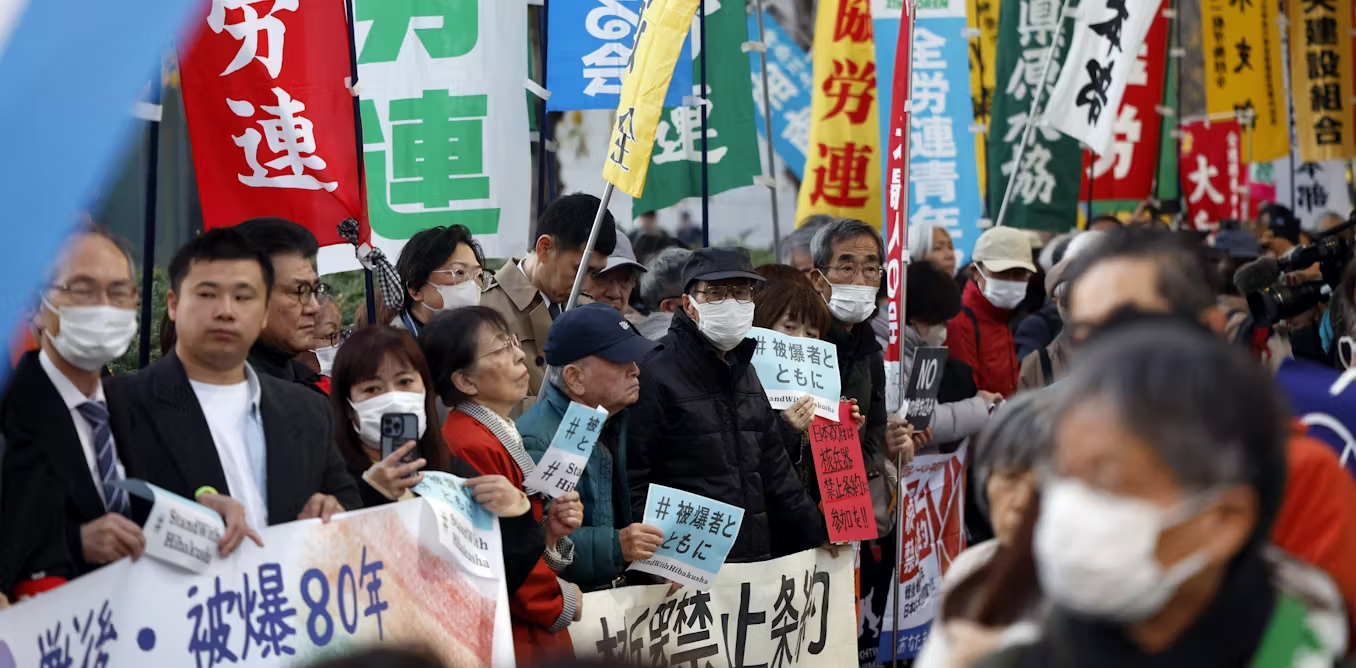
In navigating this context, Japan has returned to one of its recurring national debates: whether it should possess nuclear weapons. This debate was reignited in December following comments from an unnamed government security adviser that they believe Japan should have nuclear weapons given the severity of the surrounding security environment.
The Japanese government swiftly reaffirmed its commitment to nuclear non-proliferation. This response was probably, at least in part, intended to prevent relations with China from deteriorating further. China had already condemned any talk of a Japanese nuclear weapons programme, labelling Japan a “troublemaker” that was ignorant of its militaristic history.
Japan doesn’t seem likely to develop nuclear weapons in the short-term. However, the tensions that triggered this episode are not likely to end soon. This raises questions about the feasibility of a Japanese nuclear programme and the sustainability of Japan’s non-nuclear position.
Japan’s nuclear programme
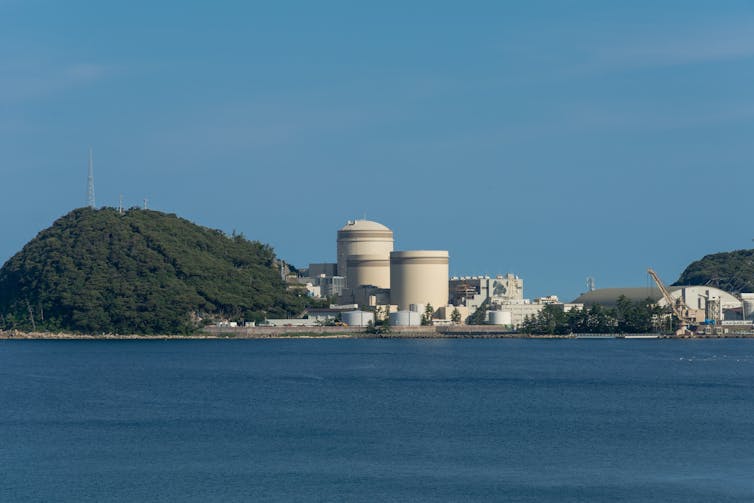
The development of nuclear weapons is a lengthy process that requires years of research and infrastructure development. However, Japan’s extensive nuclear energy programme would shorten the timeline of nuclear weapons development significantly. This is because the infrastructure and expertise required to produce energy-grade nuclear material contributes to the development of more refined weapons-grade material.
In fact, Japan’s energy programme is already producing weapons-grade uranium and plutonium (the primary materials used in nuclear weapons) in its fuel production cycles. It is producing so much that, in 2014, Japan agreed to ship excess material to the US over fears that its storage sites would be targeted by terrorist groups seeking nuclear weapon capabilities.
So a Japanese nuclear arsenal is certainly feasible, with analysts in China predicting that such an arsenal could be developed within just three years.
Mkaz328 / Shutterstock
However, there are several reasons why Japan is unlikely to develop its own nuclear weapons. First, developing nuclear weapons does not serve Japan’s immediate interests. Maintaining a nuclear weapons programme is expensive, with even the UK’s relatively small nuclear deterrent costing tens of billions of pounds annually. Given Japan’s vast public debt and its other economic challenges, this is money that could be put to use elsewhere.
Second, Japan’s current approach to foreign and security policy is well established and generally effective. This includes a so-called human security approach, through which Japan provides aid to address the underlying humanitarian causes of crises before they can escalate. The approach includes funding global healthcare initiatives to prevent the spread of diseases like malaria and tuberculosis, while fostering positive relations with developing countries.
Meanwhile, Japan has long managed relations with major international powers through economic and diplomatic dialogue and engagement. For its relationship with China, this takes the form of what some researchers have called “hot economics, cold politics”. This approach, which involves using intensive economic cooperation to avoid confrontation over contentious political issues, has been in place for decades and would almost certainly end should Japan pursue a nuclear weapon.
Third, there are constitutional barriers to a Japanese nuclear weapons programme. The “pacifist clause” of Japan’s constitution, Article 9, renounces aggression as a tool of foreign policy.
This does not strictly outlaw a defensive nuclear deterrent. But the act of launching a nuclear weapon, even in retaliation, is itself an offensive action incompatible with international law and human rights. Thus, even if Article 9 is interpreted in such a way that technically allows for nuclear weapons, their use would probably be restricted to a point of redundancy.
Japan’s parliament also passed a national policy known as the three non-nuclear principles in the 1970s. These commit Japan to not possessing, producing or permitting the presence of nuclear weapons in its territory. These principles would need to be overturned by parliament to allow for a nuclear weapons programme. However, this is unlikely given that recent polling indicates around 70% of the Japanese public oppose nuclear weapons.
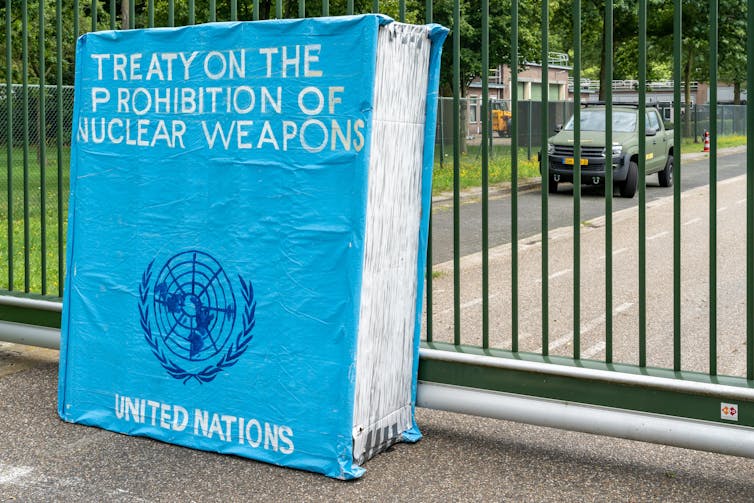
And fourth, Japan’s nuclear programme would face international legal barriers. In 1970, Japan signed the Nuclear Non-Proliferation Treaty alongside 190 other countries. In signing, Japan agreed to prevent the spread of nuclear weapons and work towards nuclear disarmament. Failing to comply with this treaty could result in significant economic and diplomatic sanctions that would probably offset any security gain from a weapons programme.
Milos Ruzicka / Shutterstock
These factors make imminent Japanese nuclear weapons very unlikely. But the longer-term prospects are different. Japanese pacifism is slowly eroding, with repeated reinterpretations of Article 9 in recent years to permit more military autonomy.
In 2022, Japan adopted counterstrike capabilities into its defence policy, giving Japanese forces the capacity to launch offensive acts as part of a larger defensive strategy. This could, for example, involve launching missiles at an enemy port that is supplying a hostile fleet. These capabilities set a precedent that might eventually permit nuclear counterstrikes as part of a defensive deterrence programme.
This would still require legal change. However, young Japanese people are less opposed to nuclear weapons than their older counterparts. A 2025 survey found that around a third of Japanese teenagers support the development of a nuclear deterrent, coinciding with an increase in far-right and nationalistic views domestically. This opens the door for the eventual revocation of the non-nuclear principles.
Meanwhile, the Non-Proliferation Treaty is increasingly struggling to control the global spread of nuclear weapons, raising questions of whether it could deter states like Japan from pursuing nuclear weapons in the future. Should attitudes in Japan continue to shift and nuclear non-proliferation continue to struggle, a nuclear-armed Japan is a serious possibility over coming decades.



