
News Beat
Putin’s payments to Russian sabotage agents wreaking havoc in UK & Europe revealed

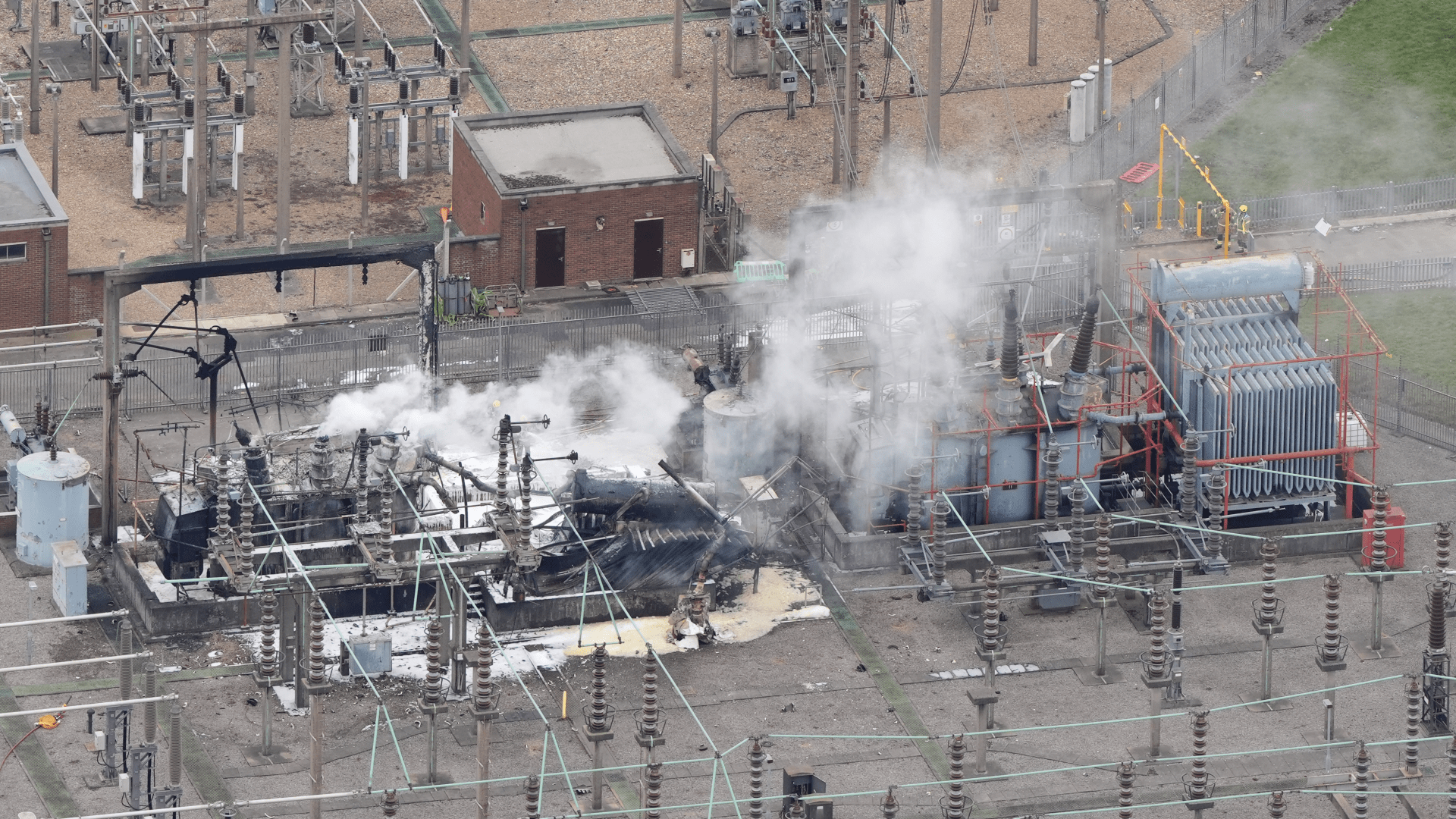
A TENNER for graffiti, £445 for reconnaissance and £7,000 for murder – these are the going rates for Europeans willing to betray their country for Vladimir Putin.
A bombshell report released today reveals how devastating “hybrid warfare” operations attributed to Russian military intelligence have tripled across NATO allies since Putin’s invasion of Ukraine.
Russia is increasingly recruiting so-called “disposable agents” – many from Ukraine – to do their dirty work and sow chaos with attacks on civilian targets like shopping centres and railways.
The increase in attacks suggests the “emergence of a broader campaign designed to raise the cost of supporting Ukraine and test the red lines of NATO states”, the report from RUSI think tank warns.
Money is a key driver, not the love for Putin or his bloodshed across Ukraine, experts say.
But financing these sometimes “low-level or opportunistic” attacks is not breaking the bank for the Kremlin.
Read more about Russia’s war

Russia appears to be taking full advantage of the low wages and the stark youth unemployment in some EU member states, like Poland.
Recruits are paid no more than £10 for slogans scribbled on a wall – or less than £300 for installing a security camera.
Payments for serious offences such as murder can go up to £7,000, the report warns.
And hoodwinked recruits are also often scammed.
Daniil Bardadim, 18, was convicted of an arson attack on an IKEA store in Vilnius, Lithuania, in 2024 on behalf of Russian security services.
The teenager had agreed to set fire to and blow up shopping centres in Lithuania and Latvia in return for £8,657 and an old BMW.
But in the end, he only got a second-hand car and no cash, before he was sentenced to three years and four months in prison.
One source cited by RUSI revealed that desperate Ukrainian nationals are often offered about 10 per cent of the amounts paid to recruits in Western Europe.
While data on the number of attacks across Europe differs, the International Centre for Counter-Terrorism identified 110 incidents linked to Russia since 2022, most often targeting Poland and France.
In November, a crucial rail link between Poland and Ukraine was blown up, in what Polish officials called an “unprecedented act of sabotage.”
Other attacks saw a Ukrainian-owned warehouse in east London set alight, a letter bomb planted on a plane to Britain and booby-trapped parcels deployed across Germany’s Leipzig.
Elsewhere, a DHL jet plummeted from Lithuania’s skies and erupted into a fireball in a disaster linked to Putin’s spies.
This is all part of what the report described as “the gig-economy era” of Russian sabotage.
“The methods used to recruit and task saboteurs have shifted from Cold War-era reliance on trained intelligence operatives to a model characterised by remote, freelance and highly deniable assignments: the ‘gig-economy era’ of Russian sabotage,” the RUSI report said.
Warning Britain faces £10bn defence gap

BRITAIN faces an annual funding shortfall of up to £10 billion to be battle-ready in the fight against Russia, a new report warns.
The military must be ready for a high-intensity conflict in Europe in urban and drone warfare expected in any confrontation, the study says.
The intervention comes after NATO boss Mark Rutte said Moscow could attack a member of the military alliance within the next five years.
Andrew Fox, from the Henry Jackson Society, argues that if Britain is drawn into conflict it lacks equipment, stockpiles and training infrastructure to prevail.
The former Parachute Regiment Major said: “If Britain ends up in a conflict with Russia, we will face exactly these conditions – and right now, we are not ready.
“Our modelling shows a £7–£10 billion annual gap between what the Army needs and what current funding provides. The Government’s budget does nothing to close it.”
It follows the head of the Royal Navy General Sir Gwyn Jenkins pleading to the Treasury to match the cash spend by the UK’s enemies.
Labour has put off meeting 2.5 per cent of GDP on defence until later on in 2027.
Ministers have pledged to spend 3 per cent in the next Parliament.
An Ministry of Defence spokesperson, commenting on the study, said: “This government is delivering the largest sustained increase in defence spending since the end of the Cold War – with a £5bn boost last year and hitting 2.6% of GDP by 2027, a level not seen since 2010.
“The Spending Review set out a historic real terms increase in the MOD’s budget which will see over £270 billion invested into defence across this parliament, meaning no return to the hollowed out and underfunded armed forces of the past.
“Through the Strategic Defence Review we are learning the lessons of the war in Ukraine, which is why we’re surging investment into drone and counter drone systems.
“The Government is also bolstering the UK’s readiness and resilience, signing over 1,000 major contracts, increasing our spend with British businesses and building six state-of-the art munitions factories, helping us to create an ‘always on’ munitions system, which resupplies our stocks.”
“Hostile actors now outsource low-cost tasks to disposable individuals (or
‘agents for a day’) recruited online”, it adds.
After the widespread expulsion of Russian diplomats across NATO in 2022, recruitment is rarely in person.
The entire process, including the coordination, has shifted online, taking advantage of encrypted platforms such as Telegram and Viber, and even mainstream social media apps like Instagram and Twitch.
The report adds: “By embracing a distributed network of disposable agents, Russia has created a cost-effective, deniable and difficult-to-map sabotage ecosystem.”



