
Crypto World
The users of blockchain will be AI agents, NEAR co-founder says



SAN FRANCISCO, CA – For years, the crypto industry has searched for its next breakout moment — something on the scale of DeFi summer or the NFT boom. Meanwhile, artificial intelligence has quietly embedded itself into daily life. Developers use ChatGPT as a co-pilot. Consumers rely on AI assistants to draft emails, plan travel, and increasingly manage workflows. Crypto, by comparison, still feels infrastructural.
Illia Polosukhin, co-founder of NEAR, believes that divide is about to collapse — but not in the way many expect.
“The users of blockchain will be AI agents,” Polosukhin said in an interview. “AI is going to be on the front end, and blockchain is going to be the back end.”
His framing cuts against much of crypto’s recent experimentation with AI, which has largely centered on speculative tokens, memecoins and agent-themed trading bots. Instead, Polosukhin argues that AI will become the primary interface layer for everything online, including crypto, abstracting away wallets, explorers and transaction hashes.
“The goal is to make your AI hide all the blockchain,” he said. “The fact that we have [blockchain] explorers is effectively a failure, because we don’t abstract the technology.”
In this view, blockchain doesn’t disappear — it recedes. AI agents interact with protocols directly, executing payments, managing assets, coordinating services and even voting in governance systems. Humans, meanwhile, interact with the AI.
“AI is the front end, not just for blockchain, but for everything,” Polosukhin said. “In a few years, it’s going to be just AI, like the operating system.”
That shift, he argues, could explain why crypto hasn’t had an “AI moment” comparable to the consumer explosion of generative tools. “Blockchain is inherently financial,” he said. “It will be limited to finance, but everything we do in our life is finance.”
Rather than competing with AI platforms, crypto’s role may be to provide neutral financial rails beneath them: settlement, ownership, verifiability and programmable incentives.
Still, Polosukhin is critical of how the industry has approached both AI and governance so far — comments that come just days after Ethereum co-founder Vitalik Buterin proposed “AI stewards” to help reinvent DAO governance.
“In blockchain, we propose technical solutions before asking: what is the core problem?” he said.
He points to decentralized autonomous organizations, or DAOs, as an example. “DAOs have dramatically failed because they have been unbounded, not really designed to solve any problem,” he said, arguing that governance tools, including AI-assisted voting agents, only make sense if they’re tied to clearly defined economic or coordination needs.
Another friction point between the AI and crypto communities has been culture. “The memecoins are ruining [the industry’s] reputation,” Polosukhin said, arguing that rampant speculation and scams have alienated serious AI researchers. “AI people are banning crypto effectively because of memecoins.”
The longer-term convergence, however, may be less about token launches and more about infrastructure. As AI systems increasingly act on users’ behalf, like paying bills, hiring services, allocating capital, they will require trusted execution, privacy and programmable financial coordination.
“Blockchain is about neutral markets and neutral infrastructure,” Polosukhin said.
If AI becomes the operating system of the internet, crypto’s future may not lie in being the app users open, but in becoming the invisible settlement layer their AI agents quietly depend on.
Read more: NEAR Launches Near.com super app, touting AI capabilities and confidential transactions

Crypto World
Definium Therapeutics (DFTX) Stock Climbs Following White House Psychedelic Policy Shift
Key Takeaways
- Definium Therapeutics voiced support for a White House Executive Order promoting mental health innovation through psychedelic therapies
- The biotech firm is advancing DT120 ODT (lysergide tartrate), a next-generation LSD formulation, targeting GAD and MDD
- DT120 holds FDA Breakthrough Therapy Designation with four ongoing Phase 3 clinical trials
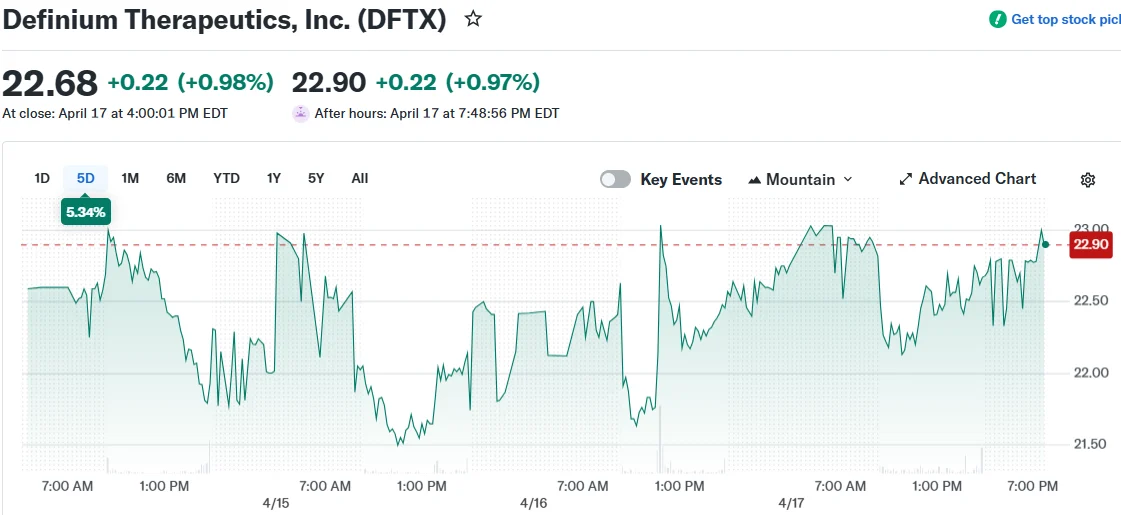
- On April 17, Stifel launched coverage with a Buy recommendation and $30 price target, compared to the current ~$22.46 trading level
- Recent insider transactions reveal zero stock purchases and approximately $0.8M in sales during the previous three months
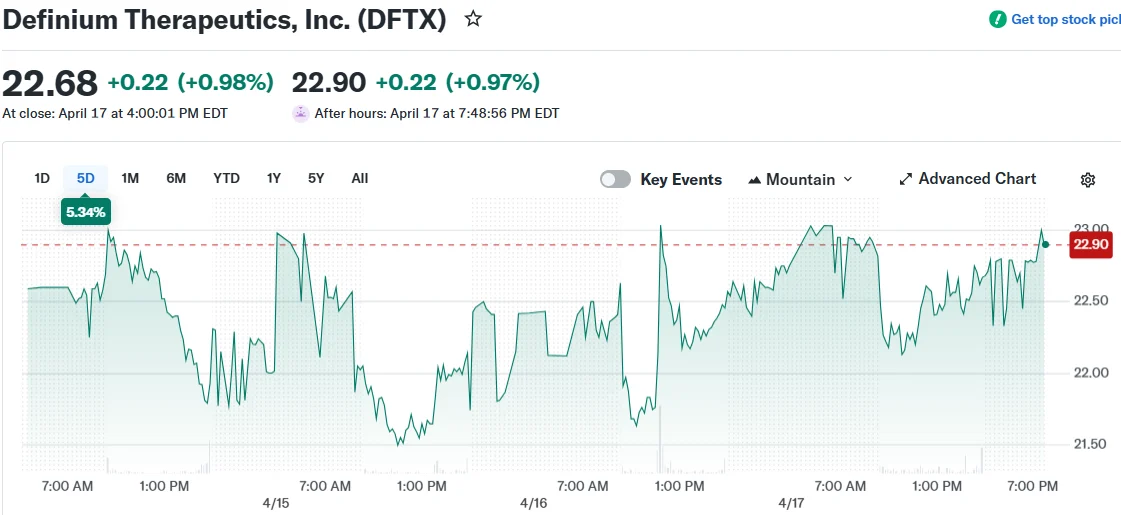
On April 19, Definium Therapeutics (DFTX) released a public statement endorsing a recently signed White House Executive Order designed to fast-track approval for psychedelic-derived mental health interventions. Shares advanced 0.98% following the announcement.
The presidential directive instructs federal departments to make mental health therapies a top priority, reduce regulatory barriers, and enhance interagency cooperation. The order explicitly identifies psychedelic compounds as promising resources in combating America’s mental health emergency.
Chief Executive Rob Barrow praised the directive, describing it as “an important recognition of the persistent unmet treatment needs in serious mental illness.” He emphasized the company’s commitment to progressing its comprehensive clinical development program for DT120 in patients suffering from generalized anxiety disorder (GAD) and major depressive disorder (MDD).
DT120 ODT represents Definium’s lead therapeutic candidate. The compound is a scientifically refined formulation of lysergide tartrate — the tartrate salt variant of LSD — created using Catalent’s proprietary Zydis rapid-dissolve platform.
This innovative delivery system enables quicker absorption, enhanced bioavailability, and reduced digestive system complications versus conventional administration routes. The molecule functions as a partial agonist targeting serotonin-2A receptors.
DT120 has secured FDA Breakthrough Therapy Designation. Definium is presently conducting four Phase 3 clinical studies, which represent pivotal milestones for potential commercialization.
Stifel Launches Coverage With Bullish Outlook, $30 Price Objective
Just two days prior to the White House policy announcement, Stifel commenced coverage of DFTX on April 17 with a Buy rating and established a $30.00 price objective. With shares trading near $22.46 at that juncture, the target suggests approximately 34% potential appreciation.
The coverage launch signals increasing institutional attention toward the psychedelic therapeutics sector as regulatory tailwinds strengthen.
Some Warning Indicators Worth Monitoring
However, certain metrics warrant caution. Definium’s GF Score registers at merely 38 out of 100, accompanied by a profitability ranking of 1 out of 10 — consistent with the company’s pre-commercial, development-phase position.
Financial strength fares considerably better at 7 out of 10, indicating a relatively solid balance sheet foundation. Momentum achieves a score of 6, matching recent stock performance trends.
Insider transaction patterns during the past three months present a somewhat concerning picture. Zero insider buying activity has occurred, while company insiders have divested $0.8 million in shares. Though such unidirectional selling isn’t uncommon for early-stage biotechnology companies, it merits attention.
The company maintains a market capitalization of roughly $2.24 billion.
The White House policy directive complements Definium’s current clinical development strategy, and management indicated eagerness to maintain collaborative efforts with government agencies, healthcare professionals, and patient advocacy organizations.
Definium’s DT120 is undergoing evaluation for GAD, MDD, and additional severe neurological conditions. The company operates from its New York headquarters and maintains a listing on Nasdaq.



Ethereum has become the center of discussion after a statement suggested that banks could rely on its network in the future.
Summary
- Raoul Pal claims Ethereum could become core infrastructure used by banks in future financial systems.
- Bill Morgan reacts as crypto community debates whether banks will adopt Ethereum technology widely.
- Discussion follows FXRP transfer pause, raising questions about blockchain interoperability and system reliability issues.
The claim was made by macro investor Raoul Pal, who argued that Ethereum has long-term relevance in financial systems.
Pal dismissed suggestions that Ethereum is losing relevance. He described such views as ”hilarious” and pointed to its continued development and adoption as reasons for confidence.
He also stated that banks tend to adopt technologies with strong track records. Based on this, he said ”all banks will use Ethereum” when referring to future financial infrastructure.
The statement triggered a wide range of reactions across the crypto community. Some participants questioned the claim and suggested that traditional banking systems may not rely on a single blockchain network.
Pro-crypto lawyer Bill Morgan responded by sharing the statement, which some interpreted as a sarcastic reaction. He did not clearly confirm support or opposition to the claim.
Several users argued that the relationship between banks and blockchain networks remains uncertain. The discussion reflected ongoing differences in views about how financial institutions may adopt digital assets.
Context Linked to Cross-Network Developments
The debate followed developments involving FXRP and cross-network activity. Transfers linked to FXRP were temporarily paused as a precaution after an issue connected to rsETH.
The pause affected movement between networks such as Flare and Ethereum. Users holding FXRP outside the Flare network were unable to complete redemptions until assets are returned to the main network.
Despite the pause, core operations on the Flare network continued without disruption. The situation added context to the broader discussion about blockchain interoperability and system reliability.
Meanwhile, Ethereum continues to trade actively in the digital asset market. At press time, the asset is priced near $2,300 with daily trading volume exceeding $14 billion.
The token has recorded a weekly gain of over 6 percent despite a slight daily decline, based on CoinGecko data. Market capitalization remains above $280 billion based on current supply levels.


The Pi Network Core Team has outlined its position on user growth, stating that verified identities play a central role in its ecosystem.
Summary
- Pi Network reports over 18 million verified users through its identity-based KYC system.
- Team claims verified users provide stronger trust compared to unverified wallet counts on other networks.
- Community response shows growing support for identity verification as core feature in blockchain ecosystems.
Meanwhile, the team reported that the network now has over 18 million identity-verified users. The project emphasized that this figure differs from standard wallet counts seen on other blockchain networks. It stated that ”1 million verified users on Pi is not equal to 1 million users on other networks” when comparing growth metrics.
The team explained that many blockchain platforms measure adoption through wallet creation, which may include inactive or unverified accounts.
Pi Network has built its system around identity verification through Know Your Customer (KYC) processes. The Core Team said this approach helps reduce spam and ensures that users are real individuals.
The project stated that ”verified identities are needed for meaningful transactions” in digital economies. According to the team, this supports trust between participants when assets are transferred.
The network aims to create a system where each transaction can be linked to a verified participant. This model is designed to support real-world use cases and economic activity.
Community response shows increased support
Recent statements from the Core Team have received mixed reactions in the past. However, this update saw more supportive responses from community members.
Some users noted that reaching millions of verified users before full smart contract deployment is an important step. One response stated that ”this level of verified distribution stands out compared to other networks” in public discussion.
Other comments pointed to the scale of the KYC process and its role in building a structured user base. The discussion reflected growing engagement from the community.
Moreover, Pi Network continues to operate with ongoing development of its ecosystem. The project has yet to fully enable certain features, including broader smart contract functionality.
At press time, the token traded near $0.17 with a market capitalization of around $1.7 billion. Trading volume remains active, with moderate price movement over the past week.
Crypto World
XRP Ledger Votes on Native Lending Protocol While ETH Breaks Out and Pepeto Targets 100x
The best crypto to buy now just got a fresh signal after XRP Ledger validators began voting on a native lending protocol that brings DeFi directly onto the chain. At the same time, CoinDesk reported that the ETH/BTC ratio bounced to a three-month high as Ethereum added 284,000 new users in Q1.
Capital is rotating back into crypto. Pepeto leads with more than $9.21 million raised, a confirmed Binance listing, and 100x targets backed by a live exchange.
XRP Ledger validators started voting on amendments XLS-65 and XLS-66 on April 16, a pair of proposals that would add on-chain lending and single-asset vaults to the ledger for the first time according to CoinMarketCap.
XRP jumped 8% on the week and led every major token in performance per CoinDesk, while Ethereum’s ratio against Bitcoin climbed to 0.0313 on the back of record Q1 network activity. Both moves point to the same thing: money is flowing back into crypto, and the best crypto to buy now is the entry that turns this rotation into the biggest return.
Ethereum, XRP, Pepeto, and the Best Crypto to Buy Now Before Listings Reprice Everything
Pepeto: The Live Exchange That Makes Every Other Presale Look Like a Promise
Headlines about wars and oil prices grab attention, but the threat that actually drains wallets every cycle sits inside the contracts. Hidden permissions, fake liquidity, and token traps cost billions, and most traders find out after their money is gone.
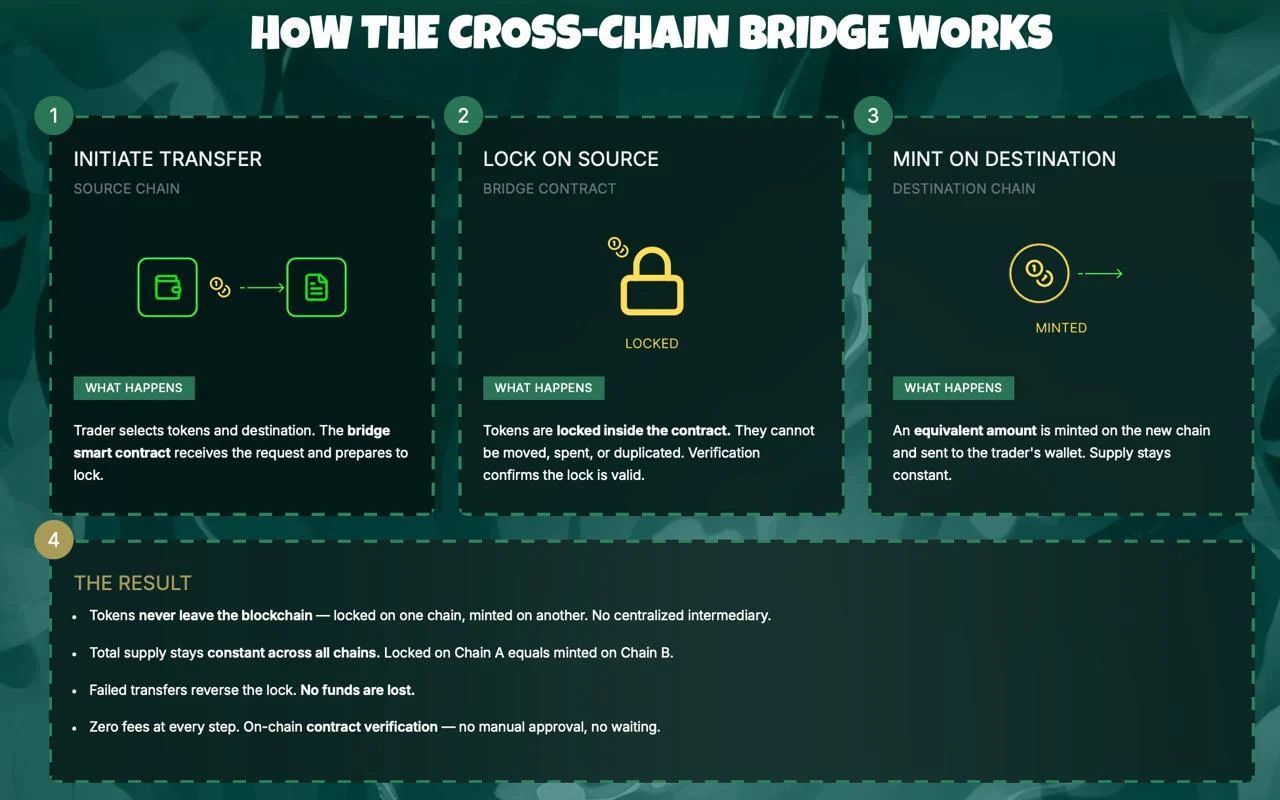
Pepeto built a scanner that catches all of it first. Before you commit capital, the tool reads the contract code, spots admin overrides and exit traps, and shows the risk in plain words. Zero-fee trading through PepetoSwap means the entry price is the real price with nothing skimmed, and a cross-chain bridge handles transfers between Ethereum, BNB Chain, and Solana at no gas cost.
The best crypto to buy now is where your capital stays protected while it compounds. ETH and XRP need billions and months to recover. Pepeto needs one listing. The Pepe ecosystem cofounder who turned a meme token into $11 billion built this exchange with a former Binance executive, and SolidProof signed off on every contract before the presale opened.
Capital committed has passed $9.21 million at $0.0000001865, staking at 181% APY compounds around the clock, and the CoinMarketCap preview page is live. The gap between today’s presale cost and the listing price is where the biggest return in this cycle sits.
Ethereum (ETH) Price at $2,330 as ETH/BTC Ratio Hits Three-Month High
Ethereum (ETH) trades near $2,330 per CoinMarketCap, up roughly 5.12% on the week after clearing the $2,330 ascending triangle resistance that held the price down for weeks.
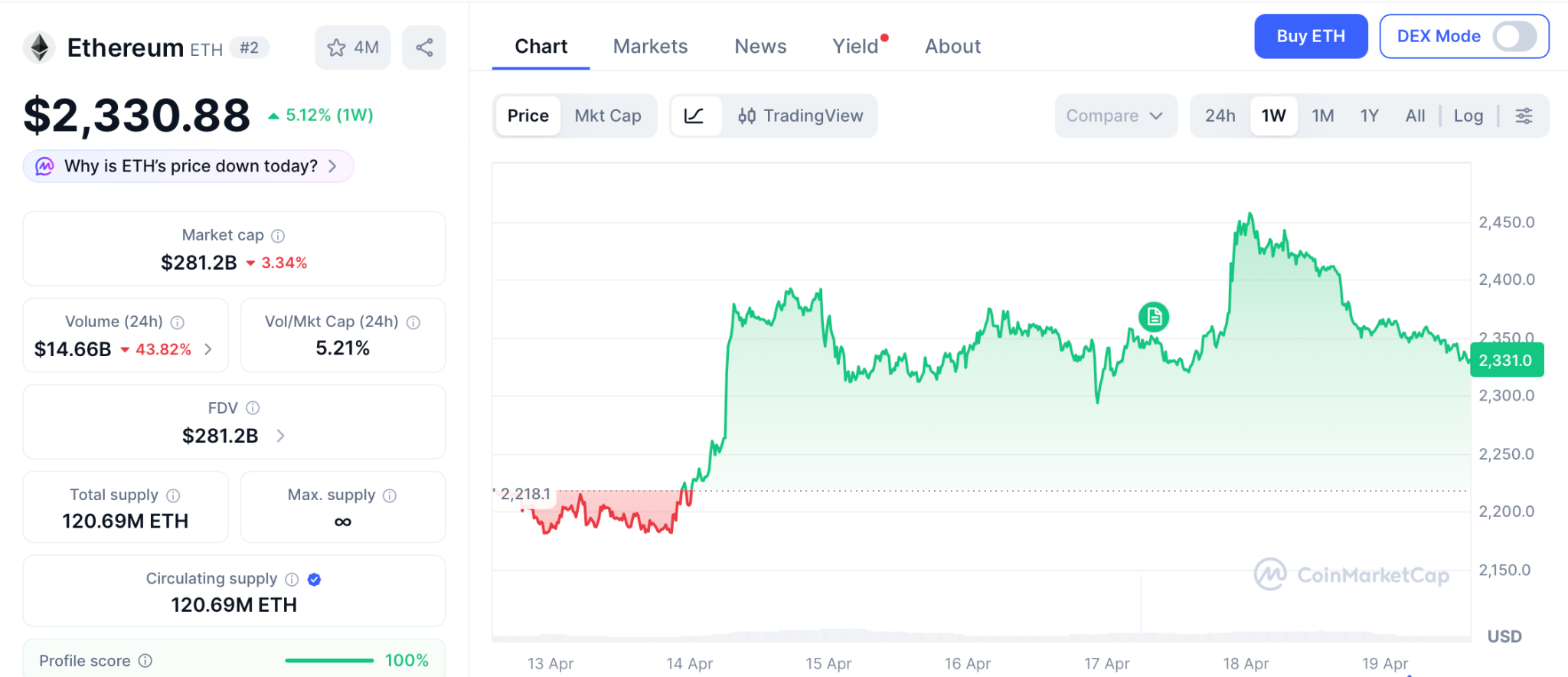
The ETH/BTC ratio climbed to 0.0313, its highest reading since January, as 284,000 new wallets joined the network in Q1 and stablecoin supply on Ethereum hit $180 billion.
Standard Chartered still targets $12,000 by year-end. A move back to $3,000 returns roughly 25% over months, but the best crypto to buy now at presale pricing delivers that in a single listing session.
XRP Price at $1.42 as Validators Vote on Native Lending Protocol
XRP trades near $1.42 per CoinMarketCap, climbing 8% on the week and leading both Bitcoin and Ethereum in performance. Validators began voting on XLS-65 and XLS-66, which would bring lending and vault features directly onto the XRP Ledger.
Spot XRP ETFs hold $1.08 billion in total assets with $11.87 million in daily inflows on April 17. Even a push to $2.00 is only a 39% gain from here, and the best crypto to buy now at presale pricing carries 100x from one exchange launch.
Conclusion
ETH is climbing. XRP is leading the market. And the one token that sits below all of them in price but above all of them in upside is still open at $0.0000001865. That will not last. The Binance listing is confirmed and the date moves closer every day. When it hits, the presale closes and this price is gone for good.
The people who bought SHIB and PEPE early did not wait for perfect conditions. They saw the setup, they moved, and the listing did the rest. Pepeto has $9.21 million in committed capital, a live exchange, and the same Binance path those tokens walked. Missing this entry is the kind of mistake you remember every time you open a chart for the rest of 2026.
Click To Visit Pepeto Website To Enter The Presale

FAQs
What makes Pepeto the best crypto to buy now while ETH and XRP recover?
Pepeto carries 100x analyst targets backed by a confirmed Binance listing with $9.21 million already committed. Ethereum targets 25% from $2,330 and XRP targets 39% from $1.42, both over months.
How does the XRP Ledger lending vote affect the best crypto to buy now?
The XLS-65 and XLS-66 vote adds DeFi to the XRP Ledger for the first time. Pepeto at presale pricing delivers the return that XRP needs quarters to match from a single listing event.
Disclaimer: This is a Press Release provided by a third party who is responsible for the content. Please conduct your own research before taking any action based on the content.
Crypto World
FanDuel Alternative Searches Keep Climbing and ZunaBet Is at the Center of the Conversation
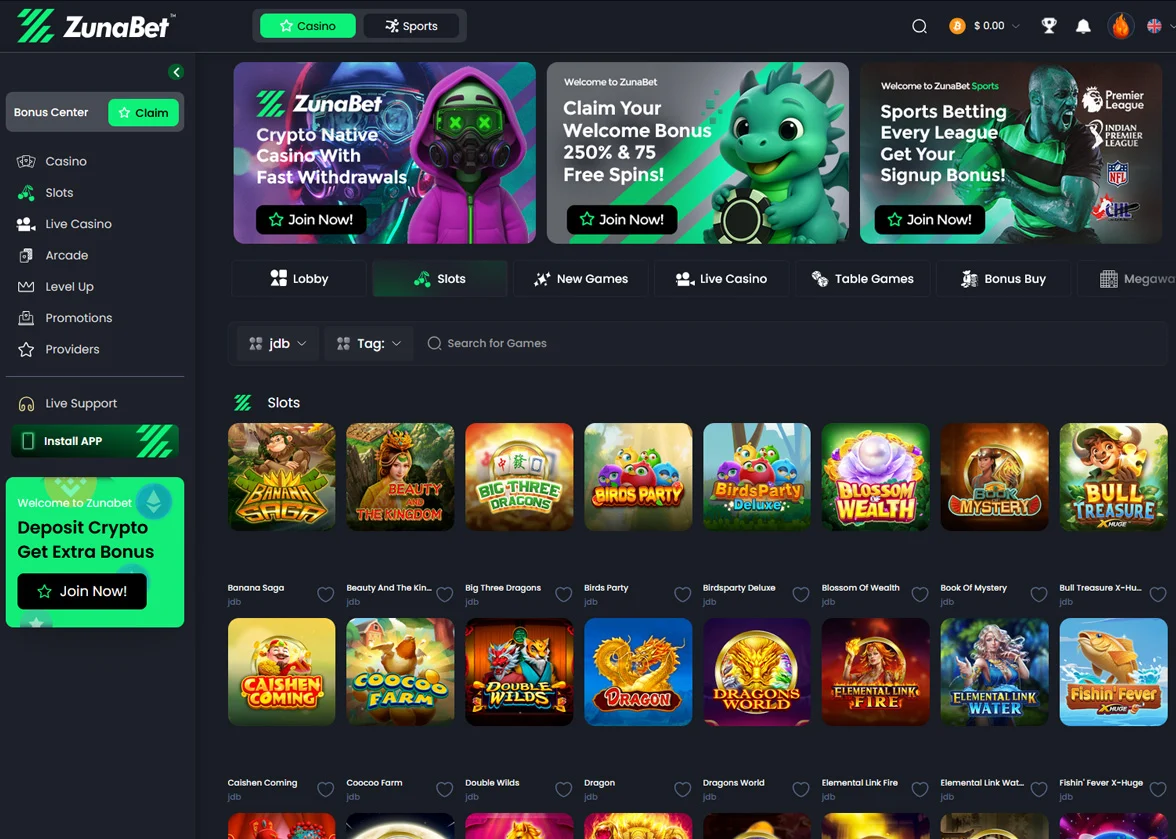
There is a pattern forming in the online gambling market that is difficult to ignore. Players are searching for alternatives to the platforms they already know, and they are doing it in increasing numbers. FanDuel, long considered one of the pillars of the industry, is one of the brands most frequently appearing alongside the word “alternative” in search queries. This does not indicate that FanDuel has suddenly become a bad product. It indicates that the market around it has expanded and that players now have access to options that challenge the assumptions FanDuel was built on. Chief among those options is ZunaBet, a crypto-native casino and sportsbook that entered the market in 2026 with a platform so feature-rich that it immediately inserted itself into the conversation about where online gambling is heading next.
FanDuel: A Brand That Defined an Era
FanDuel helped shape what modern online gambling looks like in the United States. Its origin in daily fantasy sports gave it a head start in building a massive, engaged user base before the sports betting wave hit. When state-by-state legalization began opening the door to real-money wagering, FanDuel was ready. It expanded into sports betting and online casino gaming with speed and confidence, securing licenses across multiple states and locking in partnerships with some of the biggest names in professional sports.
Today, FanDuel operates a sportsbook that covers the full spectrum of American professional and college sports alongside international events in football, tennis, golf, motorsports, and more. Its casino section provides a solid collection of slots, table games, and live dealer experiences. The mobile app performs reliably and ranks consistently among the top gambling downloads in app stores. Brand awareness is extraordinarily high thanks to years of sustained advertising investment.
The payment experience on FanDuel reflects the era in which the platform matured. Bank transfers, debit cards, credit cards, PayPal, Venmo, and other established methods handle the movement of funds. These are familiar options that work without confusion for most users, even if they come with the processing times and transaction fees that are inherent to traditional financial systems.
FanDuel built a strong product for the conditions that existed when it grew. It optimized for US regulatory compliance, traditional payment accessibility, and broad mainstream appeal. Those were the right priorities at the time. But conditions have changed. Players now hold crypto. They expect instant transfers. They want game libraries that seem bottomless. They want loyalty programs that feel personal and exciting. The platforms meeting those new expectations do not look much like FanDuel, and that divergence is what is driving the search trend.
ZunaBet: A Platform That Arrived Ready
ZunaBet did not launch as a work in progress. When it went live in 2026, the platform presented a fully realized product that rivaled operators with years of additional runway. It is owned by Strathvale Group Ltd, managed by a team carrying more than two decades of collective industry experience, and licensed through an Anjouan gaming authority with registration in Belize. Every element of the platform reflects a deliberate decision to build for the crypto-native audience first and expand from there.
The game library is the most immediate evidence of that ambition. ZunaBet opened with 11,294 games drawn from 63 separate providers. That is not a goal or a projection. That is the number available to players from the first day. The providers contributing to this catalog include Pragmatic Play, Evolution, Hacksaw Gaming, Yggdrasil, BGaming, and a long list of additional studios that collectively ensure there is no gap in the offering. Slots naturally dominate the count, but the library extends meaningfully into RNG table games covering blackjack, roulette, baccarat, and poker variants, as well as a live dealer section that delivers the kind of real-time, studio-quality experience that has become essential for modern casino platforms.
The practical effect of having over 11,000 games is that players never hit a wall. Discovery remains part of the experience for weeks and months rather than days. New providers and titles keep the catalog fresh, and the sheer volume means that even players with very specific preferences — whether that is a particular slot mechanic, a niche table game, or a specific live dealer format — are likely to find exactly what they want without compromise.
ZunaBet pairs this casino depth with a sportsbook that stands on its own merits. Coverage extends across football, basketball, tennis, NHL, combat sports, and virtual sports. Esports receives dedicated and comprehensive treatment with betting markets on CS2, Dota 2, League of Legends, and Valorant. This is a meaningful distinction from traditional platforms that either overlook esports entirely or offer a token handful of markets. Competitive gaming is not a passing trend. It is a global entertainment category with an audience that overlaps heavily with the demographic most likely to gamble online using cryptocurrency. ZunaBet recognized this overlap and built accordingly.
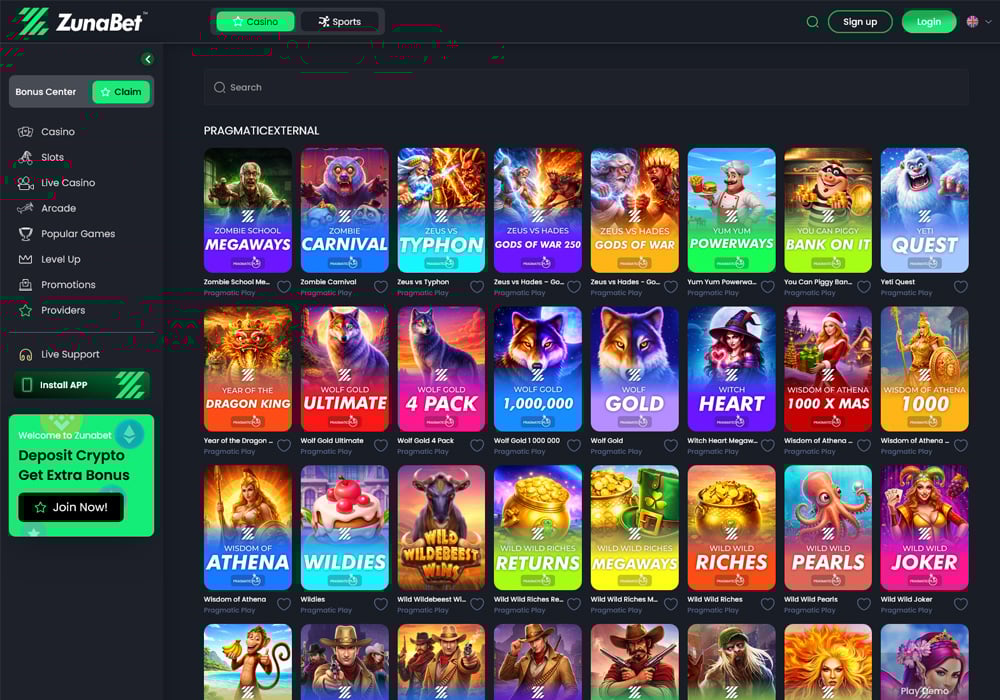
Cryptocurrency sits at the center of the payment experience. The platform accepts more than 20 coins and tokens including Bitcoin, Ethereum, USDT on multiple blockchain networks, Solana, Dogecoin, Cardano, and XRP. No processing fees are charged by the platform on any deposit or withdrawal. Speed is a defining feature — blockchain settlement means funds move in minutes rather than days, without the dependency on banking hours that traditional systems impose. Because ZunaBet was conceived as a crypto platform from its earliest design stages, there is no friction between the payment layer and the rest of the user experience. Everything flows from the same foundational logic.
The welcome offer provides up to $5,000 plus 75 free spins split across three deposits. The first deposit qualifies for a 100% match up to $2,000 and 25 free spins. The second delivers a 50% match up to $1,500 with another 25 spins. The third closes the package with a 100% match up to $1,500 and a final 25 spins. The multi-deposit structure serves a practical purpose beyond generosity. It gives players a reason to return after their first session, explore more of the library, and develop a relationship with the platform over time rather than treating it as a one-visit destination.
Technically, ZunaBet operates on HTML5 with a dark interface theme, fast load times, and responsive design that adapts seamlessly across screen sizes. Native applications are available for iOS, Android, Windows, and MacOS. Live chat support runs continuously, covering every hour of every day without interruption.
Crypto Infrastructure vs Traditional Payment Systems
The difference between crypto and traditional payment platforms in online gambling is not a minor technical detail. It is a core experience differentiator that affects how players interact with a platform during every single session.
Traditional payment infrastructure routes money through banks, card networks, and digital wallet services. Each intermediary in that chain introduces potential delays and costs. Deposit processing can be near-instant for some methods but slower for others. Withdrawals almost universally involve waiting periods that range from hours to several business days depending on the method selected, the day of the week, and any verification requirements the platform imposes. Transaction fees appear at various points — some charged by the platform, some by the payment provider, some by the player’s bank.
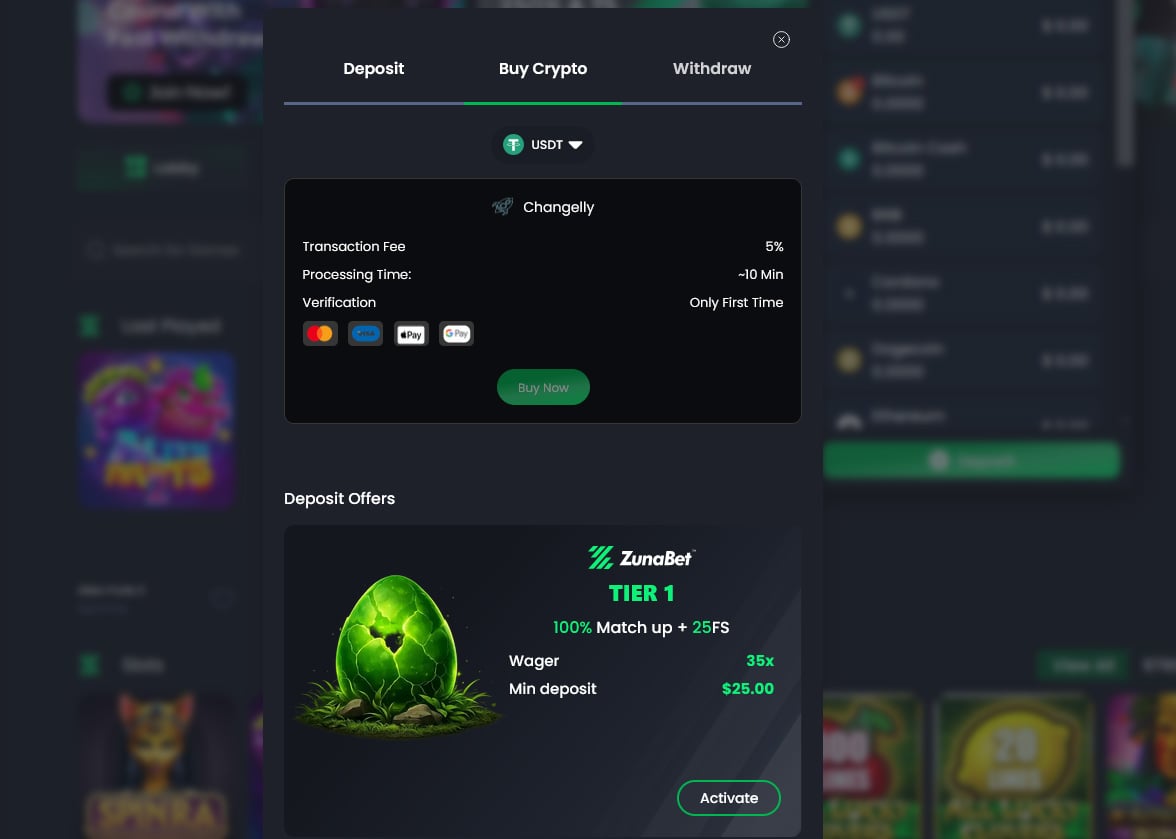
Crypto infrastructure operates on fundamentally different principles. Transactions settle on decentralized blockchain networks that run continuously. There are no business hours. There are no intermediary banks holding funds in pending status. When a player deposits Bitcoin or Solana into their ZunaBet account, the transaction confirms on the blockchain and the funds become available in minutes. Withdrawals follow the same path in reverse with comparable speed. The platform adds no fees of its own to any transaction.
This is not just faster. It is structurally different in ways that compound over time. A player who makes fifty deposits and fifty withdrawals over the course of a year saves meaningful amounts of both time and money on a crypto platform compared to a traditional one. Those savings are not theoretical. They accumulate in real terms with every transaction.
ZunaBet’s decision to build entirely on crypto infrastructure rather than bolting it onto a traditional system means the experience is consistent from end to end. There is no secondary payment path creating a disjointed experience. Every player interacts with the same streamlined, fee-free, fast-settlement system regardless of which specific cryptocurrency they choose to use.
Dragon Evolution vs Points Collection
The standard online casino loyalty program has not changed in any meaningful way in well over a decade. The formula is simple and universal — wager money to earn points, accumulate enough points to claim a reward, repeat indefinitely. It works as a basic retention mechanism, but it generates almost no emotional engagement. Players participate because the rewards exist, not because the process of earning them is interesting or enjoyable in any way.
ZunaBet designed its loyalty program to be an experience in itself. The dragon evolution system includes six progression tiers that each carry their own identity and reward structure. Squire begins at 1% rakeback. Warden increases to 2%. Champion reaches 4%. Divine climbs to 5%. Knight jumps significantly to 10%. Ultimate reaches the ceiling at 20% rakeback. At each tier, additional benefits unlock — free spins that scale from modest allocations at lower levels to 1,000 at the top, VIP club access, and double wheel spins. Tying the entire system together is Zuno, a dragon mascot that visually transforms as the player progresses upward through the ranks.
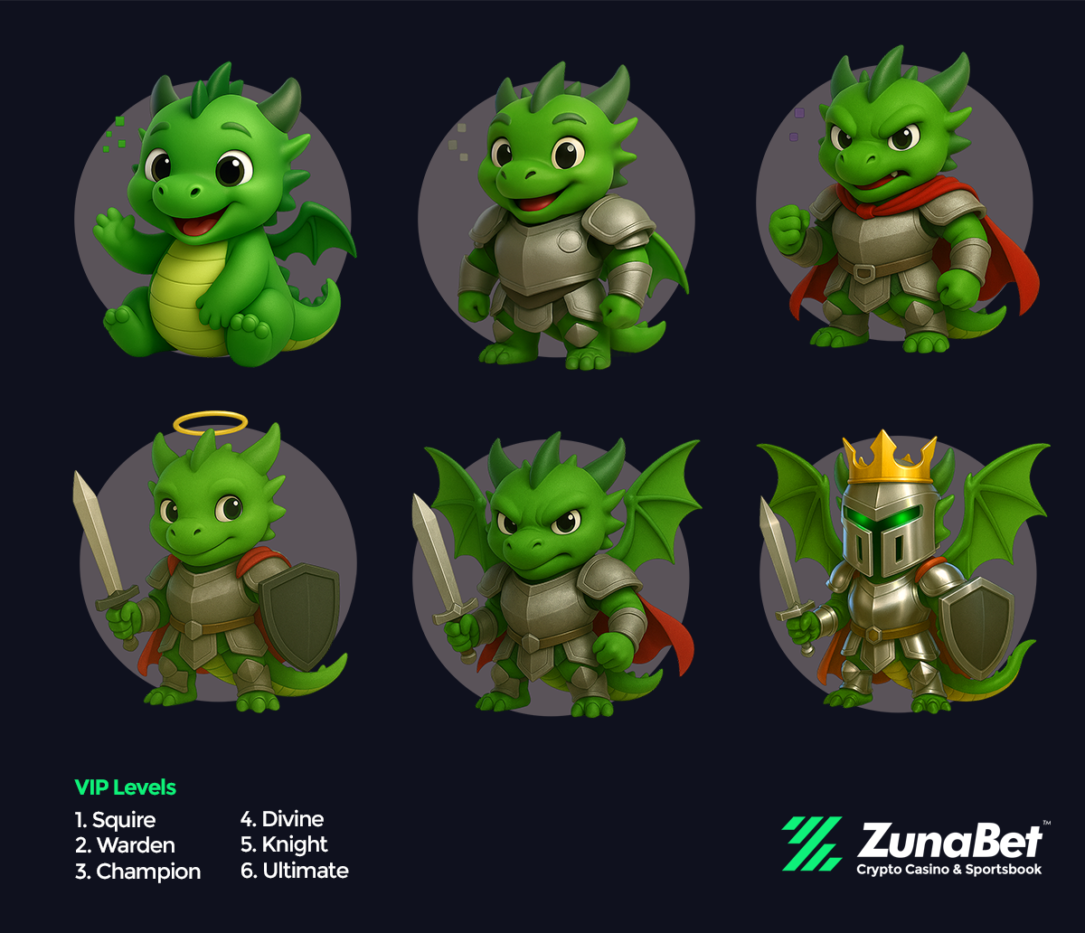
The structure mirrors the progression systems found in modern video games. There are defined levels with visible thresholds. Advancing feels like an achievement rather than an arbitrary accounting milestone. The rewards escalate meaningfully enough that reaching the next tier always feels worthwhile. And the visual evolution of the Zuno character gives players a tangible representation of their journey that a number on a screen simply cannot replicate.
This approach works because it aligns with how a large and growing portion of the gambling audience already thinks about engagement. Players who grew up with leveling systems, achievement badges, and progression-based unlocks in games understand this structure intuitively. It feels natural. It feels rewarding. And it gives them a reason to remain engaged with the platform beyond any individual session or bet.
What the Numbers Are Saying
The continued growth in searches for FanDuel alternatives tells a straightforward story about a market in transition. FanDuel built its position during a specific phase of the industry’s development and it built well. That position is not under immediate threat. The brand, the licenses, the user base, and the financial backing ensure that FanDuel will remain relevant for years.
But relevance and momentum are different things. The momentum in online gambling right now belongs to platforms that are solving the problems players actually talk about — slow payments, limited game variety, uninspiring loyalty programs, and a lack of crypto integration. ZunaBet addresses every one of those issues with solutions that are not incremental improvements but fundamental rethinks of how each element should work.
The players driving the search trend are not nostalgic for something old. They are looking forward. They want a platform that matches the speed, variety, and digital fluency they experience in every other area of their online lives. ZunaBet was built from the ground up to be that platform. It arrived with the game library of a veteran operator, the payment infrastructure of a blockchain-native fintech company, and a loyalty system that finally makes progression feel like something worth caring about. Every week, more players discover it. Every week, the search numbers confirm that discovery is accelerating. The trajectory is clear, and ZunaBet is riding it.
Disclaimer: This is a Press Release provided by a third party who is responsible for the content. Please conduct your own research before taking any action based on the content.


Aave just watched $6.6 billion walk out the door, and it’s not because anyone hacked Aave.
The protocol’s total value locked dropped from $26.4 billion on April 18 to nearly $20 billion in U.S. morning hours on Sunday, per DefiLlama. The AAVE token fell 16% to $92, and daily fees spiked to $1.99 million as liquidations ripped through the weekend.
Depositors are running because Aave is carrying a hole it did not create. When attackers drained 116,500 rsETH from Kelp’s bridge on Saturday, they dumped the stolen tokens on Aave V3 as collateral and borrowed wrapped ether against them.
On-chain trackers put the Aave-specific borrow at roughly $196 million, with total positions across Aave, Compound and Euler around $236 million.
Aave is the largest lending protocol in DeFi, where users deposit crypto to earn yield and other users borrow against collateral. Kelp is a liquid restaking protocol, which takes ether that has already been staked on Ethereum and routes it through a separate yield-generating system called EigenLayer, issuing a receipt token called rsETH in exchange.
That rsETH is what users trade and, critically, what some users posted on Aave as collateral to borrow against.
On Saturday, attackers tricked Kelp’s cross-chain bridge into releasing 116,500 rsETH, about $292 million worth, to an address they controlled. They then deposited that stolen rsETH onto Aave V3 as collateral and borrowed wrapped ether against it.
A bridge is a blockchain-based took that transfers tokens between different networks, where they may not be originally supported.
Aave first said the Umbrella reserve would cover any deficit. By Saturday afternoon the language had softened to “explore paths to offset the deficit.” That is not how a protocol talks when it knows how much it owes and has the money to pay it.
The concentration explains why the damage lands here. Aave’s loan book spans 22 chains, but Ethereum alone holds $14.24 billion of the $17.82 billion in outstanding borrows. WETH is 39.49% of all loans on the protocol, meaning the attack hit the exact collateral-to-WETH pair that dominates Aave’s book.
Stani Kulechov, Aave’s founder, said the exploit was external and the protocol’s contracts were not compromised. But Aave accepted a liquid restaking token as collateral, and that token’s backing vanished on a bridge Aave does not control. The depositors lose either way.
Liquid restaking tokens were whitelisted across every major lending protocol because they carried yield and represented growing share of Ethereum’s locked value.
The risk models priced them as if they would hold peg under normal conditions. However, none of them priced a scenario where the collateral goes to zero because a bridge on a chain Aave does not touch got exploited on a Saturday.
“AAVE is the backbone of DeFi, has billions in there, and pretty much every single new DeFi infrastructure on new chains is a fork of it,” trader Altcoin Sherpa wrote on X. “When AAVE has contagion risk, it shows the fragility of the entire system.”
What the token price is trying to answer now is whether Umbrella is big enough to cover the hole, and whether stkAAVE holders who back that reserve are about to eat the loss.

Key Takeaways
- AbbVie delivered 2025 revenues of $61.16 billion with 8.6% year-over-year growth and boosted its dividend by 5.5% heading into 2026
- Chevron achieved unprecedented production volumes in 2025 alongside a 158% reserve replacement ratio, maintaining strong analyst support
- Shell’s operations produced $26.1 billion in free cash flow during 2025, leveraging its position as a global LNG leader
- Enterprise Products Partners maintains a robust 1.7x distribution coverage ratio while offering nearly 6% yield
- Realty Income delivered Q4 2025 adjusted funds from operations of $1.08 per share with monthly dividend distributions
Income-focused investors seeking dependable returns through 2028 are examining five dividend-paying equities: AbbVie, Chevron, Shell, Enterprise Products Partners, and Realty Income.
These companies all deliver yields exceeding 3%, supported by fundamentals that extend well beyond their dividend distributions. The strategy centers on identifying enterprises with consistent cash generation, sustainable leverage levels, and distributions supported by actual profitability.
AbbVie
AbbVie stands out as the premier selection among these dividend stocks. Trading with approximately a 3.3% yield, the pharmaceutical giant posted 2025 revenues totaling $61.16 billion, representing an 8.6% increase year-over-year.
The company’s immunology drugs Skyrizi and Rinvoq have successfully offset revenue declines from Humira, which encountered biosimilar competition. This product transition has exceeded expectations across the analyst community.
For 2026, AbbVie announced a 5.5% dividend increase. Wall Street sentiment tracked by MarketBeat reveals 16 buy recommendations, 9 hold ratings, and zero sell calls, establishing a Moderate Buy consensus. The absence of any sell ratings demonstrates notable analyst confidence.
Chevron
Chevron achieved peak production volumes throughout 2025 while posting a 158% reserve replacement ratio, indicating the energy giant added substantially more reserves than it extracted during the period.
The company elevated its quarterly distribution to $1.78 per share. MarketBeat data shows analyst sentiment averaging a Hold, with 14 buy ratings, 6 holds, and 4 sell recommendations.
This tempered Wall Street enthusiasm could present opportunity. When analyst excitement remains moderate, stocks often have greater appreciation potential—particularly if commodity prices stabilize and shareholder returns continue.
Shell
Shell extends beyond traditional petroleum operations. The company ranks among the world’s foremost liquefied natural gas operators, providing diversification versus typical U.S. energy majors.
During 2025, Shell produced $42.9 billion in operating cash flow and $26.1 billion in free cash flow. Management maintains a policy of distributing 40% to 50% of operating cash flow to shareholders.
MarketBeat tracking shows 6 buy ratings, 13 holds, and zero sell recommendations. The company’s LNG operations provide exposure that traditional oil-focused competitors cannot match.
Enterprise Products Partners
Enterprise Products Partners delivers the strongest yield among these five stocks at approximately 6%. The partnership recently reported 1.7x distribution coverage, demonstrating that cash flow substantially exceeds payout obligations.
Coverage ratios carry significant weight in evaluating high-yield investments. While a 6% yield might raise sustainability concerns, robust coverage indicates the distribution faces no immediate risk.
MarketBeat consensus stands at Moderate Buy with 10 buy ratings, 6 holds, and 2 sells. Prospective investors should note that partnership ownership generates K-1 tax documentation, standard for master limited partnerships.
Realty Income
Realty Income markets itself as “The Monthly Dividend Company,” distributing payments to shareholders twelve times annually. The REIT reported fourth-quarter 2025 adjusted funds from operations of $1.08 per share, maintaining a net debt to EBITDAre ratio of 5.4x.
The stock demonstrates sensitivity to interest rate movements, with performance closely tracking monetary policy changes. Should rates decline over the coming years, Realty Income stands to benefit through both its yield appeal and potential multiple expansion.
Analyst perspectives remain measured, with MarketBeat showing 6 buys, 9 holds, and 1 sell rating, while StockAnalysis consensus leans toward Hold.
Bottom Line
Among these five dividend opportunities, AbbVie leads based on its combination of income generation and earnings expansion. Chevron and Shell provide energy sector exposure supported by substantial cash returns. Enterprise Products ranks fourth for investors prioritizing current income, while Realty Income places fifth with its monthly payment structure and potential interest rate tailwinds.


Monero (XMR) has reached its 12-year milestone since its launch in 2014.
Summary
- Monero celebrates 12 years since launch in 2014 as leading privacy-focused cryptocurrency network.
- Network hides sender, receiver, and amount using cryptographic tools like Ring Confidential Transactions.
- Despite over 70 exchange delistings, Monero maintains active users and steady market participation.
The project has positioned itself as a privacy-focused cryptocurrency designed to hide transaction details on a public blockchain.
On April 18he project marked the occasion with a public message shared on X. The team stated “we’re celebrating our 12th birthday today” while thanking users for continued support of privacy-focused transactions.
Monero has maintained its position as one of the leading privacy coins in the digital asset sector over the years, focusing on confidentiality in transfers.
Monero was built to address transparency found in other blockchain networks. Unlike Bitcoin, where transactions are publicly visible, Monero hides sender, receiver, and transaction amounts.
The network uses technologies such as Ring Confidential Transactions and stealth addresses. These tools are designed to prevent linking transactions to specific users or wallet balances.
The system also ensures that coins cannot be traced through transaction history. This design aims to prevent tracking of individual units across the network.
Moreover, Monero has faced ongoing regulatory scrutiny due to its privacy features. Over the years, several exchanges have removed the token from their platforms.
Reports suggest the token has experienced more than 70 delistings across different jurisdictions. Despite this, trading activity and user participation have continued across alternative platforms and peer-to-peer markets.
The project has remained active through a global developer and user community that continues to maintain and update the protocol.
Development Activity and Market Performance
Monero developers are currently working on upgrades, including a planned FCMP++ update aimed at improving network performance and privacy features.
Interest in privacy coins has shown periodic changes in market cycles. Monero experienced renewed attention earlier this year alongside movements in other privacy-focused assets such as Zcash.
At the time of reporting, Monero trades near $351 with a market capitalization of about $6.47 billion (per CoinGecko’s data). The asset has recorded short-term gains over recent trading sessions, with modest increases in both daily and weekly performance.

TLDR:
- A $292M rsETH exploit enabled massive borrowing on Aave, leaving the protocol with unbacked collateral exposure.
- Aave’s ETH pool reached full utilization, restricting withdrawals as panic-driven outflows exceeded $5.4 billion.
- Technical indicators show AAVE weakening after rejection near $120, with momentum still favoring downside pressure.
- Critical support near $90 remains under watch as markets assess stability following one of 2026’s largest DeFi events.
Aave’s lending markets faced acute stress after a large exploit tied to Kelp DAO triggered a liquidity crunch. The incident drained hundreds of millions in assets and pushed Aave’s ETH pool to full utilization, limiting withdrawals across the protocol.
Liquidity Crunch Follows Kelp DAO Exploit
A sudden exploit involving Kelp DAO’s rsETH token triggered widespread concern across decentralized finance markets.
The attacker reportedly drained 116,500 rsETH, valued at about $292 million, from a LayerZero bridge. The stolen assets were then deployed in a strategy that strained Aave’s liquidity.
According to Coin Bureau, the attacker deposited the compromised rsETH as collateral on Aave V3. This move allowed the borrowing of nearly $236 million in wrapped ETH.
However, the rsETH backing those positions is now considered invalid, leaving the loans without proper collateral support.
As a result, Aave is facing an estimated $280 million in unrecoverable debt. The protocol’s ETH pool reached 100% utilization, meaning nearly all available liquidity has been borrowed. Users attempting to withdraw ETH encountered delays or were unable to exit positions.
Market reaction was swift, with large-scale withdrawals reported across the platform. Data suggests over $5.4 billion in ETH outflows occurred خلال the panic phase. High-profile withdrawals added to the pressure, including a reported 65,584 ETH withdrawal by Justin Sun.
This situation marks a major stress event for Aave’s risk management systems. It also serves as a real-time test for its Umbrella safety module, which is designed to handle extreme conditions. The unfolding events continue to draw attention across the crypto sector.
AAVE Price Faces Pressure After Failed Rally
Market data shows that AAVE experienced a sharp rejection after attempting a breakout toward the $115–$120 range. The price has since retreated to around $93.90 on the 4-hour chart. Despite a modest recovery within the session, broader momentum remains weak.
Earlier price action reflected a steady decline from the $120 region toward $90 levels. This phase was followed by a period of sideways consolidation between $92 and $102. The recent rally attempt failed to hold, leading to renewed selling pressure.
Technical indicators show a bearish short-term structure. The Relative Strength Index is currently at 34.55, approaching oversold territory but not fully there. Its position below the moving average suggests continued downward momentum.
At the same time, the MACD indicator remains in negative territory. The widening histogram signals sustained selling activity, with no clear crossover indicating a reversal yet. This aligns with the broader price rejection seen on the chart.
Key support is now concentrated around the $90 level, with $89.50 acting as a critical breakdown point. If this zone fails, the next downside targets could fall between $85 and $80. On the upside, resistance remains firm near $100 and higher around $110.
Traders are closely monitoring whether the price can stabilize above the current support levels. A rebound would require improving momentum signals and renewed buying activity. Until then, the market structure continues to reflect caution following the recent exploit.
TLDR:
- PEPE remains within a strong weekly demand zone, signaling possible accumulation despite an 88% correction from highs.
- A breakout above $0.000006 resistance could confirm trend reversal and open room for major upside targets.
- Historical fractal patterns suggest potential for explosive rallies if the current support structure holds steady.
- Failure to hold above $0.0000017 may invalidate the bullish setup and extend consolidation further.
PEPE traded near a major support zone after a steep correction, with price stabilizing around $0.00000376. The weekly structure showed a potential re-accumulation phase forming, as traders monitored whether the current demand area could sustain a recovery.
Weekly Accumulation Zone Draws Market Attention
The latest chart showed PEPE sitting within a high-confluence support region formed by a fair value gap, order block, and horizontal demand. This area ranged between $0.0000030 and $0.0000018, where price activity remained steady.
A tweet from Crypto Patel described this setup as a rare fractal structure, noting similarities with a previous accumulation phase. The post referenced a past 4,515% move that followed a similar pattern during the earlier cycle.
Price data confirmed that the current level aligned with historical consolidation zones before large upward expansions. The chart also showed price maintaining position above the lower boundary, which remained critical for structural stability.
At the same time, the analysis noted that invalidation would occur below $0.0000017. Holding above this level kept the accumulation structure intact, while a breakdown could shift the market into a deeper consolidation phase.
Resistance Levels and Price Structure Define Next Move
The chart marked a key resistance zone near $0.000006 to $0.000007123, where previous support turned into resistance. Price attempts to reclaim this level, which had failed during earlier retests following the breakdown.
Trendline analysis showed that two ascending supports were broken before the decline accelerated. Each breakdown was followed by rejection, forming a consistent pattern of lower highs across the weekly timeframe.
The chart also presented projected upside targets if the price breaks and holds above resistance. These targets ranged between $0.000028 and $0.0001, based on earlier expansion patterns.
At the same time, historical data showed projected moves of 3,079% and 5,592% during bullish cycles. These projections aligned with prior market behavior observed during strong upward phases.
Current price action remained below resistance, keeping the structure within a defined range. Short-term movement showed minor upward attempts, although no confirmed breakout had formed.
The chart also showed an 88.99% correction into the current zone, reflecting deep pullbacks seen in previous cycles. This retracement brought the price back into a demand area where accumulation had occurred before.
Traders continued to watch whether the price could reclaim the resistance level and confirm a shift in structure. Until then, the market remained within a consolidation phase defined by support holding and resistance capping upward movement.

Stop Ignoring Repeating Numbers (It’s a Financial Code)

Alfie Joey lists his top ten Northeast monuments and heros

(VIDEO) Apple iPhone Ultra Leak Reveals Passport-Style Foldable Design and $2,000 Price Tag


-
 NewsBeat7 days ago
Pep Guardiola and Gary Neville agree over Arsenal title problem that benefits Man City
-

 Crypto World6 days ago
The SEC Conditionalises DeFi Platforms to Be Avoided for Broker Registration
-

 Fashion2 days ago
Weekend Open Thread: Theodora Dress
-

 Crypto World6 days ago
SEC Signals Exemption for Crypto Interfaces From Broker Registration
-

 News Videos4 days ago
Secure crypto trading starts with an FIU-registered
-

 Sports2 days ago
NWFL Suspends Two Players Over Post-Match Clash in Ado-Ekiti
-

 Crypto World5 days ago
SEC Proposes Certain Crypto Interfaces Don’t Need to Register as Brokers
-

 NewsBeat5 days ago
Trump and Pope Leo: Behind their disagreement over Iran war
-

 Politics2 days ago
Palestine barred from entering Canada for FIFA Congress
-

 Business45 minutes ago
Powerball Result April 18, 2026: No Jackpot Winner in Powerball Draw: $75 Million Rolls Over
-

 Crypto World2 days ago
Russia Pushes Bill to Criminalize Unregistered Crypto Services
-

 Sports6 days ago
NWFL opens Pathway for new Clubs ahead of 2026 Season
-
 Business3 days ago
Creo Medical agree sale of its manufacturing operation
-

 Crypto World6 days ago
Trump whales load up ahead of Mar-a-Lago luncheon.
-
 Entertainment6 days ago
Brand New Day’ Footage Reveals the Devastating Impact of ‘Now Way Home’
-

 Politics6 hours ago
Zack Polanski demands ‘council homes not luxury flats for foreign investors’
-
Business6 days ago
Kering slides after Morgan Stanley downgrade, Gucci woes loom
-

 Tech6 days ago
Google adds E2E encryption to Gmail for iOS and Android enterprise users
-
Crypto World7 days ago
Sei Network Enters Quiet Reset Phase as On-Chain Metrics Signal a Slowdown in 2026
-

 Tech6 days ago
Apple glasses won’t go brand shopping like Meta did with Ray-Ban and Oakley
You must be logged in to post a comment Login