
Business
China’s Record Trade Surplus Spells Mixed Fortunes for Thai Economy

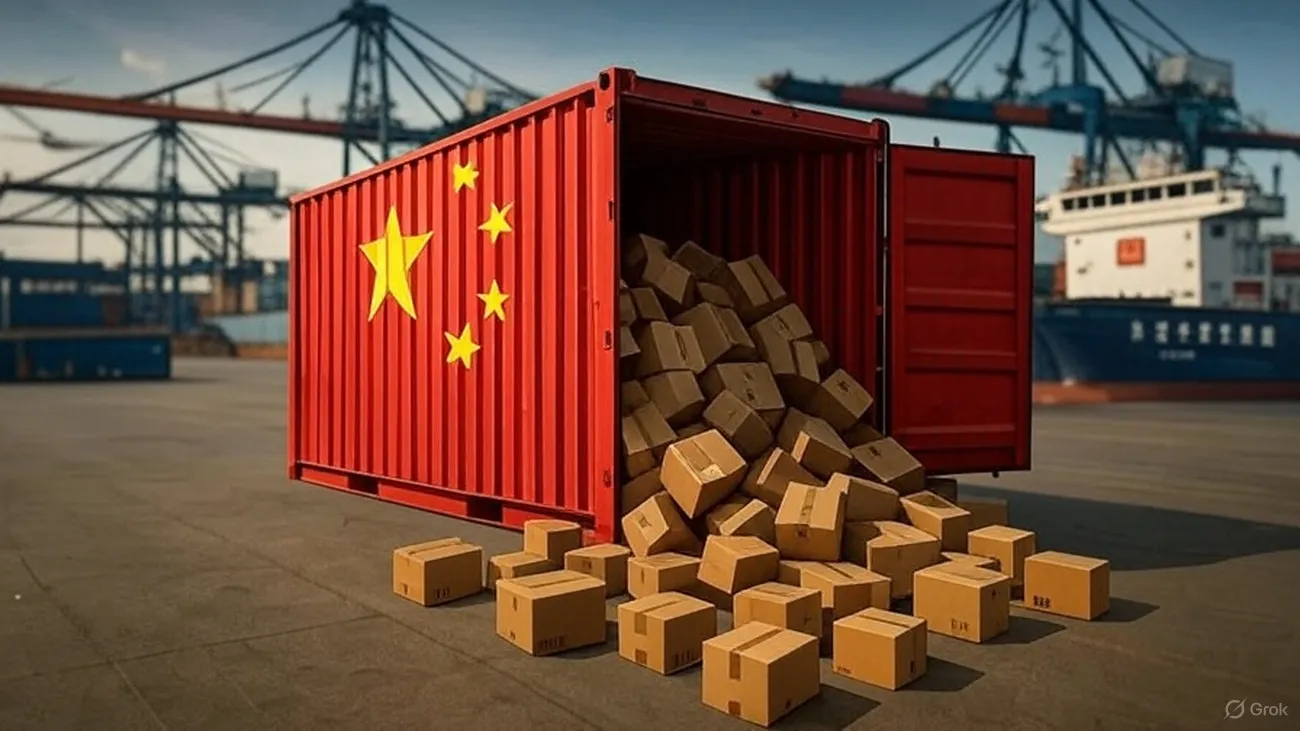
Bangkok, January 15, 2026 – China has shattered global records with a staggering trade surplus of approximately $1.2 trillion for 2025, fueled by a relentless export boom that has flooded international markets with everything from electronics to machinery. While this achievement underscores Beijing’s manufacturing prowess amid domestic headwinds, it poses both opportunities and significant challenges for Thailand, its largest trading partner in ASEAN.
As Thailand grapples with its own economic recovery, the influx of low-cost Chinese goods is exacerbating trade imbalances, pressuring local industries, and prompting calls for strategic responses from policymakers. Here’s a closer look at the implications for Thai businesses and the broader economy.
Surging Chinese Exports: A Global Phenomenon with Local Ripples
China’s customs data reveals exports hit $3.77 trillion in 2025, up 5.5% year-on-year, while imports remained flat at $2.58 trillion, yielding the unprecedented surplus. This imbalance has been amplified by Beijing’s pivot away from the US market—where shipments plummeted nearly 30% in some months due to tariffs—toward emerging regions like Southeast Asia.
For Thailand, this redirection has meant a deluge of Chinese products. In the first 11 months of 2025, Thailand’s imports from China surged, contributing to a record trade deficit of US$60.64 billion (about 2.02 trillion baht) with its northern neighbor. This figure eclipses the full-year 2024 deficit of US$45.36 billion and is on pace to be the widest on record, driven primarily by inflows of machinery, electrical equipment, and consumer goods.
Thailand-China Trade Snapshot (Jan-Nov 2025)
Value (US$ Billion)
Year-on-Year Change
Thai Exports to China
29.36
+14.2%
Thai Imports from China
90.00
+12.8%
Trade Deficit
60.64
Widest since records began
Data from Thailand’s Commerce Ministry highlights how this gap has widened steadily, with imports outpacing exports despite gains in Thai shipments of agricultural products, fruits, and rubber to China.
Pressures on Thai Industries
The flood of Chinese exports is intensifying competition in key Thai sectors. In electronics and automotive manufacturing—pillars of Thailand’s export economy—local producers are struggling against cheaper, high-tech alternatives from China. Analysts at the National Economic and Social Development Council (NESDC) warn that US tariffs under President Donald Trump are accelerating this trend, with Chinese firms rerouting goods through Thailand to bypass restrictions, potentially inflating imports by an additional $2.4 billion over the next three years.
This dynamic has contributed to Thailand’s overall trade deficit ballooning to its largest since 2023, reaching $3.4 billion in October alone, as inbound shipments rose 16.3% amid frontloading by US buyers. Small and medium-sized enterprises (SMEs) in household goods and machinery are particularly vulnerable, facing potential job losses and reduced profitability.
On a regional scale, China’s $278 billion surplus with ASEAN amplifies these concerns, granting Beijing greater leverage in trade negotiations and geopolitical matters. Thailand, as a key “connector” country in global supply chains, risks becoming a mere pass-through hub rather than a value-adding player.
Opportunities Amid the Challenges
Despite the downsides, China’s export strength presents upsides for Thai businesses. Enhanced supply chain integration under agreements like the upgraded ASEAN-China Free Trade Area could open doors in AI, fintech, and green technologies. Thai exporters have already seen benefits, with shipments to China growing faster than imports in percentage terms.
Moreover, as global trade shifts, Thailand’s strategic position in pacts like the Regional Comprehensive Economic Partnership (RCEP) positions it to attract foreign investment diverted from China. Between 2018 and 2023, Thai exports to the US rose 80%, signaling potential for diversification.
Experts suggest Thailand could mitigate risks by bolstering domestic manufacturing through incentives, investing in high-value sectors like electric vehicles, and negotiating fairer trade terms with China. The NESDC has urged vigilance, noting that while the surplus highlights China’s resilience, it also underscores the need for ASEAN unity to address imbalances.
Looking Ahead: Policy Responses Key
As 2026 unfolds, Thailand’s government faces a delicate balancing act. Prime Minister Paetongtarn Shinawatra’s administration has signaled intentions to review import duties and promote local content requirements to shield industries. With China’s surplus equivalent to the GDP of a top-20 economy, ignoring its ripple effects could widen vulnerabilities.
For Thai businesses, adapting to this new reality means embracing innovation and exploring untapped markets. As one analyst put it, “China’s flood is a wake-up call—Thailand must swim smarter, not just faster.”



