
Business
Thai Government Strengthens Regulations on Farm Burning to Reduce PM2.5 Levels

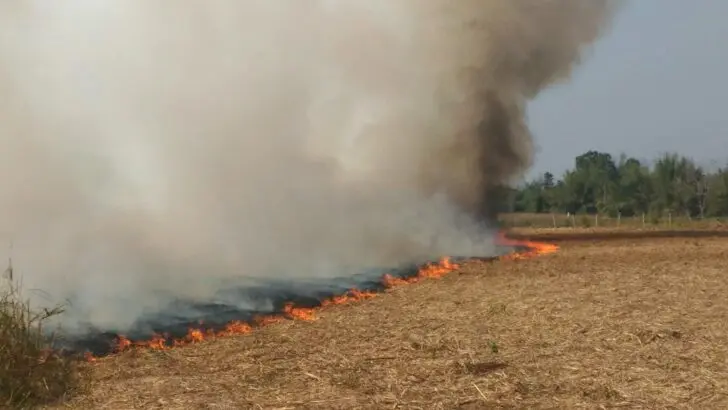
The government targets a 15% reduction in agricultural burning to combat PM2.5 pollution, enforcing stricter controls, monitoring via satellite, and incentivizing alternative uses for crop residues to minimize fires.
Key Points
- The government has implemented stricter controls on agricultural burning to tackle PM2.5 pollution, aiming for a 15% reduction in burned farmland, focusing on major economic crops. Data from the upcoming haze season indicates persistent high burning levels due to agriculture.
- National action plans for particulate pollution and forest fire control have been approved, emphasizing coordinated enforcement and monitoring, particularly through real-time satellite data in rice paddies and sugarcane plantations. Farmers who burn crop residues may face penalties, including loss of government assistance.
- A registration system will regulate unavoidable burning, requiring prior approval. Authorities encourage alternative uses for crop residues, such as biomass energy. Additional measures include restrictions on imports associated with burning and allocating over 250 million baht for sustainable farming practices.
The government has tightened controls on agricultural burning as part of a broader effort to address PM2.5 pollution, setting a nationwide target to reduce burned farmland by at least 15 percent. The measures prioritize major economic crops, for which reductions must be clearly demonstrated.
Deputy Government Spokesperson Airin Phanrit said hotspot data from the 2025–2026 haze season show continued high levels of burning, largely linked to agricultural activity. In response, national action plans on particulate pollution and forest fire control have been approved, providing a framework for stronger oversight and coordinated enforcement in 2026 and the years ahead.
The Ministry of Agriculture and Cooperatives will oversee monitoring of burning in rice paddies, animal feed corn, and sugarcane plantations using real-time satellite data. Farmers face penalties for burning crop residues, including loss of access to government assistance and possible suspension or revocation of land-use rights.
Burning deemed unavoidable will be regulated through a registration system requiring prior approval via a government platform. Authorities are encouraging farmers to redirect crop residues to alternative uses such as biomass energy or industrial processing to reduce open fires in agricultural areas.
Additional measures include restrictions on imports of agricultural products linked to burning, supported by traceability requirements, and the allocation of more than 250 million baht to farming practices that eliminate burning.
Source : Thai Government Tightens Farm Burning Rules to Cut PM2.5



