News Beat
Prostate cancer overtakes breast as most common form of the disease

PROSTATE cancer has become the most common form of the disease in Britain for the first time.
Analysis of NHS figures by Prostate Cancer UK found 64,425 men were diagnosed across the UK in 2022.

It is the latest data and the highest total on record, up from 51,823 in 2021 and a previous high of 59,363 in 2018.
The men’s cancer overtook breast tumours as the most common in all four nations, with lung and bowel disease next in the ranking.
Government advisers last year rejected calls for a routine NHS screening programme to try and catch more prostate cancers early.
It has a very high survival rate when caught early but around 12,000 men per year are diagnosed too late to cure.
Read more on prostate cancer


‘Unacceptable’ that men have to ask GP for a test
Prostate Cancer UK director Chiara de Biase said: “Prostate cancer is now the most common cancer in the UK but men’s experiences vary hugely based on where they live.
“We urgently need an early detection programme that will address inequalities.
“It’s unacceptable that the full weight of responsibility still falls on men to understand their risk and talk to their GP.”
Men who are black or working class blokes are more likely to be diagnosed late.
Prostate cancer was already the most common type in England, Wales and Northern Ireland but has now become top in Scotland and therefore the whole UK.
Better awareness has boosted the number of men getting tested and some of the increase is due to delays caused by Covid in 2020 and 2021.
Prostate cancer is curable if found early
Sir Chris Hoy,
Celebrity campaigners for better testing and treatment have included Chris Hoy, Stephen Fry and darts star Luke Humphries.
The NHS in England last week approved a new drug that will save the lives of more than 500 patients per year.
Olympic cycling champion Sir Chris Hoy, who has incurable prostate cancer, said: “Prostate cancer is curable if found early.
“That’s why it’s vital we get the message out to men to think about their risk and to talk to their GP about a simple blood test to check.
“That way we’ll get more men with prostate cancer diagnosed earlier, and we’ll save thousands more lives.”
Men are at higher risk of prostate cancer if their father or brother has had it, if they are black or if they are over 50 years old.
Check your risk online at www.prostatecanceruk.org/risk-checker.
What is prostate cancer?
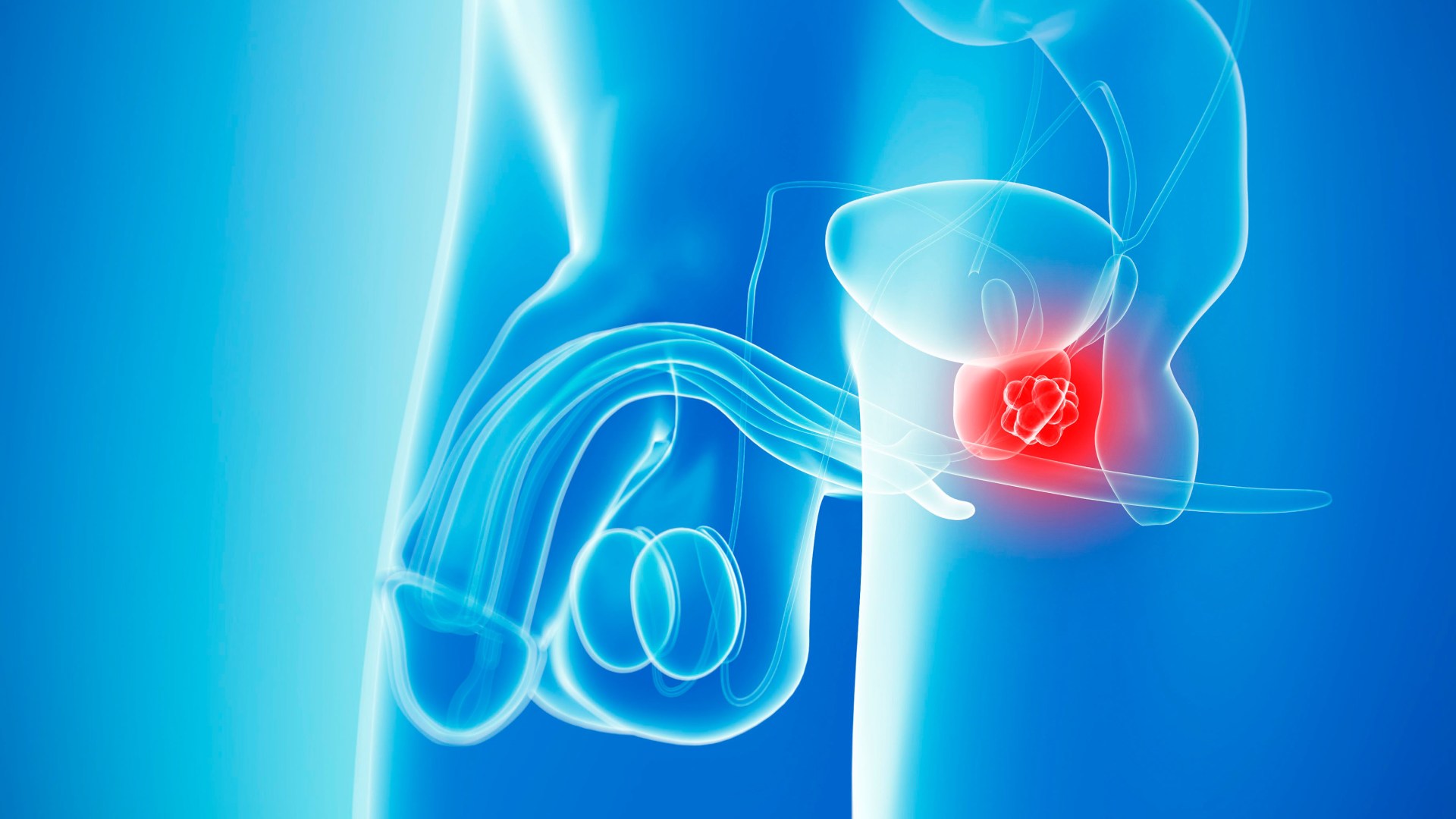
Prostate cancer affects a small, walnut shaped gland that sits underneath the bladder and surrounds the urethra – the tube carrying pee outside the body.
It usually grows bigger as you get older.
The prostate’s main job is to help make semen – the fluid that carries sperm.
Most men with early prostate cancer don’t have any signs or symptoms – that’s why it’s important to know about your risk.
Possible symptoms include:
- Difficulty starting to urinate or emptying your bladder
- A weak flow when you urinate
- A feeling that your bladder hasn’t emptied properly
- Dribbling urine after you finish urinating
- Needing to urinate more often than usual, especially at night
- A sudden need to urinate – you may sometimes leak urine before you get to the toilet
If you do notice changes in the way you urinate, this is more likely to be a sign of an enlarged prostate, which is very common and non-cancerous.
But it’s still a good idea to get it checked out.
In the UK, about one in eight men will be diagnosed with prostate cancer in their lifetime.
Some factors may mean you’re more likely to get it.
This includes:
- Getting older – it mainly affects men aged 50 or over
- Having a family history of prostate cancer
- Being Black
If you have any of these risk factors or if you have any symptoms, speak to your GP.
They can talk to you about your risk, and about the tests that are used to diagnose prostate cancer.
Source: Prostate Cancer UK