
Sports
Vikings 2026 Free Agency Plan Will Surprise People


Don’t expect fireworks from Minnesota Vikings’ free agency next week; they’ve already gone that route in the last two offseasons, and 2026 will be much quieter, according to interim general manager Rob Brzezinski.
The Vikings appear headed for a lower-cost plan, shifting the spotlight from splashy deals to roster discipline and draft improvement.
The club doesn’t have the funds to splash this go-round and is not interested in spending future salary caps to make 2026 more eventful.
A Quieter March Puts More Pressure on Minnesota’s Draft Table
With three days to go, Vikings free agency takes shape.

Brzezinski: We Have the Core in Place
Compared to the expectation from some casual fans, next week’s free agency period will be quiet for Minnesota.
Brzezinski told ESPN: “We’ve spent a lot of money the last two years in free agency. And so our goal is going to be to keep our core in place, and that’s going to involve making some difficult decisions on some players, which you deal with on a daily basis.”
“But I think for the most part, our goal is going to be to draft and develop and to retain our core, and supplement with free agency. It just makes logical sense that that bill’s coming due. We do have to navigate it, and navigate it responsibly.”
In theory, Minnesota could backload existing veterans’ contracts and mortgage the future. But that doesn’t seem to be a viable option this time.
Brzezinski continued, “A big part of that is balancing what we’re doing in 2026 versus the future. It’s just inherent in my role. I feel like that’s a critical part of when I talk about the guardrails and the vision and the philosophy.”
“To make sure maybe if we’re veering a little bit, to try to make a decision that maybe is not the best for the long term, maybe we can come back to what we talked about originally and say, ‘Hey, remember we talked about this is the way we’re going to do things? This is our philosophy.’ I think we can just lean on that and go from there.”
The Bonanza in 2025
One year ago, ex-general manager Kwesi Adofo-Mensah, who was fired five weeks ago, swung for the fences in free agency, signing guard Will Fries, cornerback Isaiah Rodgers, linebacker Eric Wilson, and defensive tackles Jonathan Allen and Javon Hargrave, among others.
Rodgers and Wilson emphatically worked out, but those were the affordable signings. The big-ticket acquisitions flopped, or in Fries’s case, the first year didn’t pan out so hot.
In fact, one year later, Allen and Hargrave are scheduled to be released. Minnesota signed up for mid-tier DT performance at a high price and is ready to end the experiment after one season. Per Brzezinski, the Vikings were permitted to spend big in the last two offseasons. This go-round is about scaling back — evidently.
Must Nail the Draft
The draft should be the cornerstone of roster building. It’s the only avenue in professional sports where teams can acquire high-caliber talent without paying market value. Free agency should play a supporting role, used to fill gaps, add veteran leadership, and bolster depth once a young core is established.
The previous regime in Minnesota strayed from this philosophy, sadly. Each offseason, there was a tacit understanding from fans that free agency would have to compensate for a draft that rarely produced any contributors, inverting the traditional team-building model. That’s not how it’s supposed to be.
This inversion manifested in decisions like the 2025 3rd-Round selection of wide receiver Tai Felton, a player whose primary value was on special teams. Special teams contributors can typically be found in undrafted free agency, while 3rd-Round picks should be reserved for players with the potential to develop into starters or impactful rotational players.
With Adofo-Mensah’s departure, the organization has an opportunity to reset. Vikings fans can now perhaps shift away from expecting draft-related disappointment, as Minnesota can reestablish the draft as the primary driver of roster construction.
Beginning with the 2025 class, Brzezinski and the front office must capitalize on productive drafts. Multiple successful draft classes are needed to replenish the roster and address the talent + age deficit.
There’s no better time to get back on track in the draft than a quiet free agency period.
Bargain-Bin Players?
Of course, free agency remains a key factor in Minnesota. It won’t be ignored or forgotten.
During the Kirk Cousins era (2018-2023), the Vikings routinely faced familiar financial constraints each offseason, needing to create cap space to acquire new players or retain key veterans. Each year, the front office successfully generated the necessary flexibility to maintain a competitive team.

Brzezinski is usually central to this process. The long-tenured executive, with 27 years of experience with the franchise, possesses extensive knowledge of navigating cap situations and identifies viable financial solutions when the roster requires reinforcements.
This approach will likely guide Minnesota’s strategy again. Rather than pursuing the most expensive players, the Vikings can seek value-based options that address specific roster needs. For example, you may not have the money for running back Kenneth Walker III, but how about Kenneth Gainwell from free agency and a mid-round halfback in the draft?
Free agency gets underway on Monday.


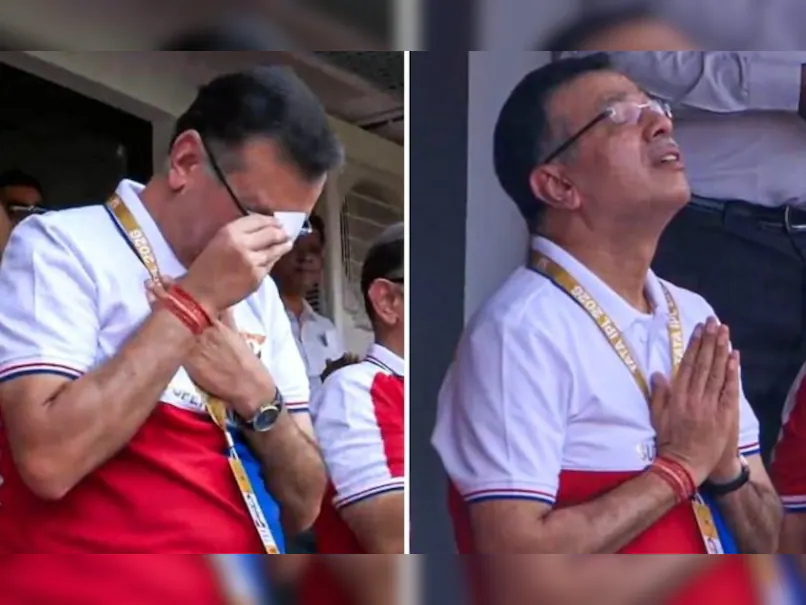
Lucknow Super Giants (LSG) made a spectacular start with the ball in their second IPL 2026 clash against Sunrisers Hyderabad (SRH) on Sunday, and their owner Sanjiv Goenka’s happiness was there for everyone to see. Veteran pacer Mohammed Shami dismissed the dangerous SRH opening duo of Abhishek Sharma and Travis Head cheaply, and Prince Yadav clean bowled Ishan Kishan to leave SRH tottering at 11/3. Sanjiv Goenka, watching on from the stands, appeared to thank the heavens as LSG made the perfect start.
LSG suffered defeat in their opening game of the season against Delhi Capitals. As a result, their sensational start against SRH must have been a relief for Goenka.
Fans on the internet were also quick to point out Goenka’s reaction, which came in the fourth over after Prince Yadav dismissed Ishan Kishan.
MOST HAPPIEST MAN LSG OWNER SANJIV GOENKA pic.twitter.com/CJB6N5R0Yk
— Ravi (@RaviWritess) April 5, 2026
Prayers worked
Sanjiv Goenka celebrates as Lucknow Super Giants rattle Sunrisers Hyderabad top order early! pic.twitter.com/ik7LWstW8Y
— (@imGauravsingh96) April 5, 2026
SRH vs LSG, IPL 2026: As it happened
Mohammed Shami’s figures of 2/9 and an unbeaten 68 by skipper Rishabh Pant led Lucknow Super Giants to a tense five-wicket win over Sunrisers Hyderabad in the IPL on Sunday.
Pace bowler Shami’s inspirational opening spell had Hyderabad tottering at 26/4 before the home team reached 156/9 at the Uppal stadium.
Lucknow started strongly but wobbled in the middle phase before the left-handed Pant kept calm to steer the team home with one ball to spare for their first win of the season in two matches.
Aiden Markram’s 45 off 27 balls set up the chase but Lucknow lost quick wickets including impact substitute Ayush Badoni, stumped for 12, and Nicholas Pooran, run out for one.
Needing nine off the final over, Pant, a wicketkeeper-batter, hit three fours including the winning boundary off Jaydev Unadkat.
Shami stood out after he took down Hyderabad’s dangerous openers Abhishek Sharma, for a duck, and Travis Head, for seven, on successive balls in his first two overs.
He had Sharma caught at short third off the last delivery of his opener and Head then taken at mid-off from the first ball of his second over.
With AFP inputs
Featured Video Of The Day
IPL 2026: One Trophy, Ten Teams – Who Writes History?
Topics mentioned in this article
J.J. Spaun had a dream season in 2025. But for the first few months of his follow-up campaign, things looked more like a nightmare.
Through seven starts entering this week, Spaun had made just three cuts, with a T24 finish standing as his high-water mark. His strokes-gained metrics had declined across the board, and his putting was so poor that he ranked among the 10 worst on Tour.
At TPC San Antonio, none of that mattered.
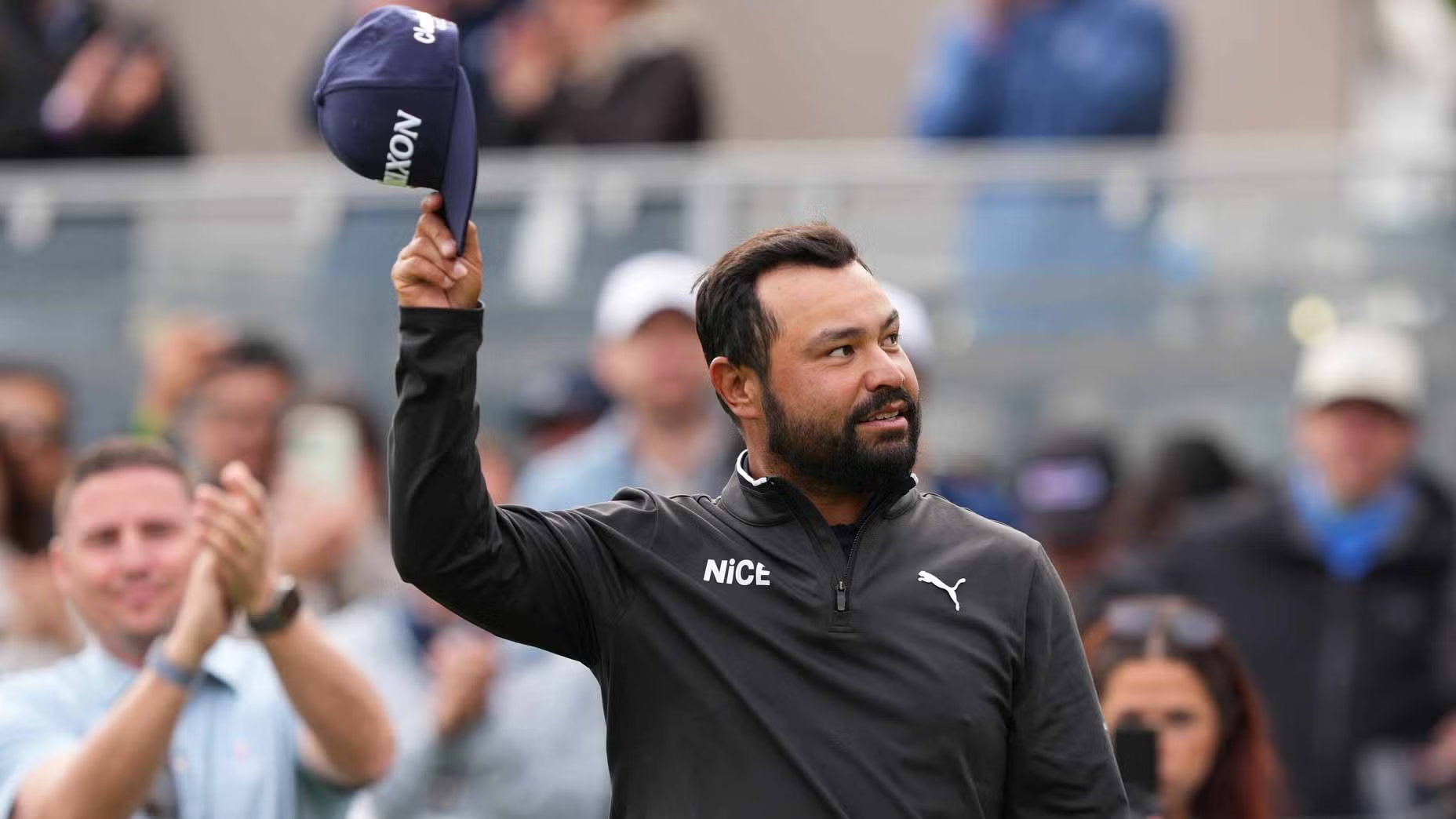
Spaun, playing this week as a final tune-up before the Masters, fired a final-round 67 to win the Valero Texas Open by one shot over Matt Wallace, Michael Kim and Robert MacIntyre. The victory marked Spaun’s second at the Texas Open (he also won in 2022) and the third of his PGA Tour career.
“I haven’t been in the form I wanted based on last season,” Spaun said. “It means a lot to come back and win here at a place that’s been so good to me.”
Returning to a course filled with positive memories proved to be the spark he needed. At the Players, Spaun recorded his best finish of the season to that point with a T24. He missed the cut the following week at the Valspar, but a return to the familiar setting of the Texas Hill Country seemed to bring something out of him.
After opening with back-to-back rounds of 69, Spaun surged over the weekend in soggy conditions. With play suspended midway through his third round on Saturday, he returned early Sunday morning to complete a six-under 66, putting himself firmly in contention. When the final round began, he kept the momentum rolling, carding four birdies and an eagle en route to a five-under 67 to claim the clubhouse lead. When none of the contenders on the course could track him down, the burden of his nightmare start had finally been lifted.
“I put a lot of pressure on myself at the start of the year, and a lot of expectations,” Spaun said. “It’s the complete opposite of the mantra I had all year last year that really helped me, so I tried to get back to that. Went into the last few weeks starting at The Players just trying to be freed up and put less pressure on myself. It’s been trying, but sticking to that mantra has really helped me.”
With the win, Spaun earns a custom pair of cowboy boots and a $1.76 million paycheck. More importantly, he heads to Augusta for the Masters in his best form of the season — and you can’t put a price tag on that.
Sports
Virat Kohli’s heartwarming gesture after Sarfaraz Khan’s dismissal goes viral – watch | Cricket News
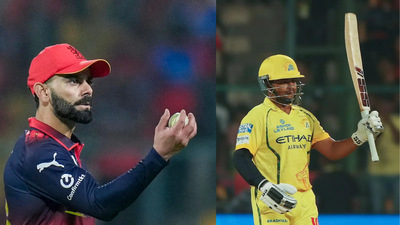
A small but telling moment involving Virat Kohli and Sarfaraz Khan caught the eye during Royal Challengers Bengaluru’s dominant win over Chennai Super Kings at the Chinnaswamy. As Sarfaraz walked back after a blazing knock, Kohli called out to him amid the noise of the crowd. When the CSK batter turned around, Kohli applauded and gave him a thumbs-up, acknowledging an innings that briefly brought life into an otherwise struggling chase. Sarfaraz had taken charge when CSK were in deep trouble. Reduced to 30 for 3 inside the first three overs while chasing 251, the visitors were staring at an early collapse. It was then that he counterattacked with intent, finding boundaries consistently and racing to a 25-ball fifty. His effort helped CSK reach 77 by the end of the powerplay, offering a glimmer of hope. However, the momentum did not last long. Sarfaraz was dismissed on the first ball after the powerplay, stumped off Krunal Pandya by Jitesh Sharma, ending a crucial stand just when CSK needed him to carry on. Earlier in the evening, RCB had set up the match with a commanding batting display. Kohli and Phil Salt gave them a steady start before Devdutt Padikkal took charge with a fluent half-century. The innings then exploded at the death, with skipper Rajat Patidar and Tim David unleashing a relentless assault, adding 99 runs in just 35 balls to propel RCB to 250 for 3. In response, CSK never fully recovered from the early blows delivered by Bhuvneshwar Kumar and Jacob Duffy. Contributions from Prashant Veer and Jamie Overton helped them cross 200, but the target remained well out of reach as they were bowled out for 207 in 19.4 overs, slumping to their third straight defeat. While RCB sealed a comprehensive 43-run win, it was Kohli’s gesture towards Sarfaraz that stood out, a moment of appreciation in the middle of a high-intensity contest.
Bernardo Silva’s glittering Manchester City career appears to have entered its final few weeks.
However, it could yet end with silverware after City were paired with Sky Bet Championship Southampton in the FA Cup semi-finals, with Leeds facing Chelsea in the other tie.
The Saints’ quarter-final victims Arsenal will look to ease their cup heartache when they return to Champions League action against Sporting Lisbon this week.
No Silva lining for Bernardo?
Bernardo Silva is set to leave Manchester City this summer, assistant manager Pep Lijnders has indicated.
The Portugal midfielder, who has won six Premier League titles, the Champions League, two FA Cups and five Carabao Cups in a 450-appearance City career, is in the final year of his contract and his future has been the subject of speculation throughout the current season.
Lijnders appeared to confirm the 31-year-old’s imminent departure while carrying out media duties on behalf of manager Pep Guardiola after Saturday’s FA Cup win over Liverpool.
The Dutchman, responding to a question about how City might replace him, said: “Every good story comes to an end and I hope he enjoys the last months – because there is only six weeks – and has a good farewell. He deserves all the attention as well.”
Saints get City draw
Southampton’s reward for dumping Premier League leaders Arsenal out of the FA Cup is a semi-final showdown with City.
The Championship promotion hopefuls, who beat the Gunners 2-1 on Saturday evening, were paired with Guardiola’s men in Sunday’s draw.
Leeds will face Chelsea in the other semi-final after a dramatic conclusion to their quarter-final clash with West Ham.
The West Yorkshire club led 2-0 at the London Stadium, but saw the hosts score twice in added time to take it to an extra 30 minutes, only for the visitors to eventually triumph 4-2 on penalties and claim a place in the last four for the first time since 1987.
The ties will be played on Saturday, April 25 and Sunday, April 26 at Wembley.
Arsenal gunning for Sporting Lisbon
Christian Norgaard has urged Arsenal not to dwell their shock FA Cup exit as the Premier League leaders look to bounce back in the Champions League.
Mikel Arteta’s men were dumped out by the Saints on Saturday evening as substitute Shea Charles’ late strike compounded their Carabao Cup final loss to Manchester City a fortnight ago.
The Gunners will attempt to get back to winning ways in Lisbon in Tuesday’s Champions League quarter-final first leg against Sporting, before the runaway league leaders host Bournemouth in a key game on Saturday.
Experienced midfielder Norgaard said: “The message is to have a positive body language, to talk with your team-mates, with the coaching staff.
“Now is not the time to go with our heads down for too long. It’s fine to be frustrated tonight and also tomorrow to analyse what went wrong, but then we also have to look forward because there are so many big games coming up for this club.”
What’s on today?
The focus is on the Sky Bet Championship on Easter Monday with leaders Coventry looking to defend their 11-point lead over Millwall when they head for play-off contenders Hull.
The Lions, who climbed into the automatic promotion places after their Good Friday victory at top-two rivals Middlesbrough, host Norwich, while Boro travel to Swansea and fourth-placed Ipswich are at home to Birmingham.
At the other end of the table, Leicester and Oxford will attempt to climb out of the bottom three with away games at Sheffield Wednesday and Portsmouth respectively.
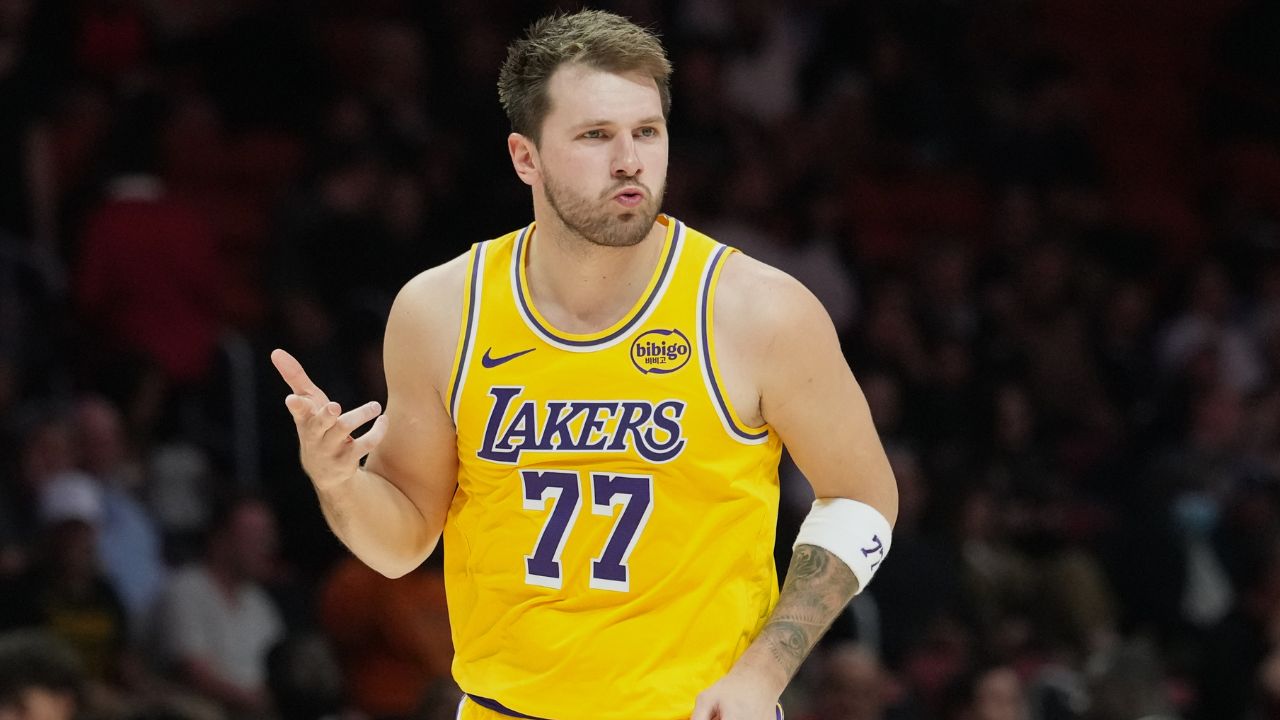
Dealing with a depleted backcourt and the playoffs drawing ever closer, Luka Doncic is doing everything he can to get back to the Los Angeles Lakers.
Doncic is heading to Europe to seek specialized medical treatment on his Grade 2 left hamstring strain in hopes of expediting his return to play, ESPN’s Shams Charania reported Sunday.
The supertar guard has been out since suffering an injury against the Oklahoma City Thunder on Thursday, and it was initially announced that he would miss the remainder of the regular season. His timeline to return was unclear and his status for the post-season was uncertain.
Grade 2 hamstring strains sometimes require several weeks of recovery, but Doncic also has prior experience with hamstring issues. He missed four games right before the All-Star break with another left hamstring strain, but returned to the lineup after the break.
Doncic is putting up spectacular numbers in his first full campaign with the Lakers, who acquired the Slovenian superstar from the Mavericks last season. He is averaging 33.5 points, 8.3 assists and 7.7 rebounds in 64 games for Los Angeles this season.
The decision to expedite his recovery process comes after the Lakers announced that fellow guard Austin Reaves would be out four to six weeks with an oblique injury, ruling him out for the remainder of the regular season into the playoffs.
Following Sunday’s loss to the Dallas Mavericks, the Lakers are 50-28 and are third in the Western Conference with four games to go.
— With files from the Associated Press

It was a dramatic weekend in the Nigeria Premier Football League as momentum swung across the table, with title contenders slipping and teams at the bottom finding renewed belief.
League leaders Rangers International failed to strengthen their grip at the top after being held to a goalless draw by Barau United in Enugu. Despite controlling much of the game, the hosts could not convert their chances, and a disallowed goal for offside summed up a frustrating outing.
Things went from bad to worse for Rivers United, whose poor away form continued. They suffered a 2-0 defeat to Warri Wolves, a result that further weakens their fading title ambitions.
Meanwhile, the fight for survival gathered pace. Remo Stars secured a hard-fought 1-0 victory over Shooting Stars, while Kano Pillars delivered one of the standout performances of the round, thrashing Bendel Insurance 4-0. The heavy defeat piles more pressure on the Benin side, who are still dealing with instability on the bench involving Kennedy Boboye.
The biggest surprise came in Lafia, where struggling Kun Khalifa FC pulled off a stunning 1-0 win against Nasarawa United. After soaking up intense pressure, the visitors snatched victory with a late goal deep into stoppage time.
Elsewhere, Kwara United boosted their chances of staying up with a convincing 3-0 win over El-Kanemi Warriors, while Katsina United edged Niger Tornadoes 1-0 to steady their campaign.
On the road, Enyimba FC showed character to earn a 2-2 draw against Wikki Tourists, a result that does little to ease the hosts’ struggles this season.
With the season entering a decisive phase, every result is proving crucial, as the race for the title and the battle to avoid relegation both intensify.
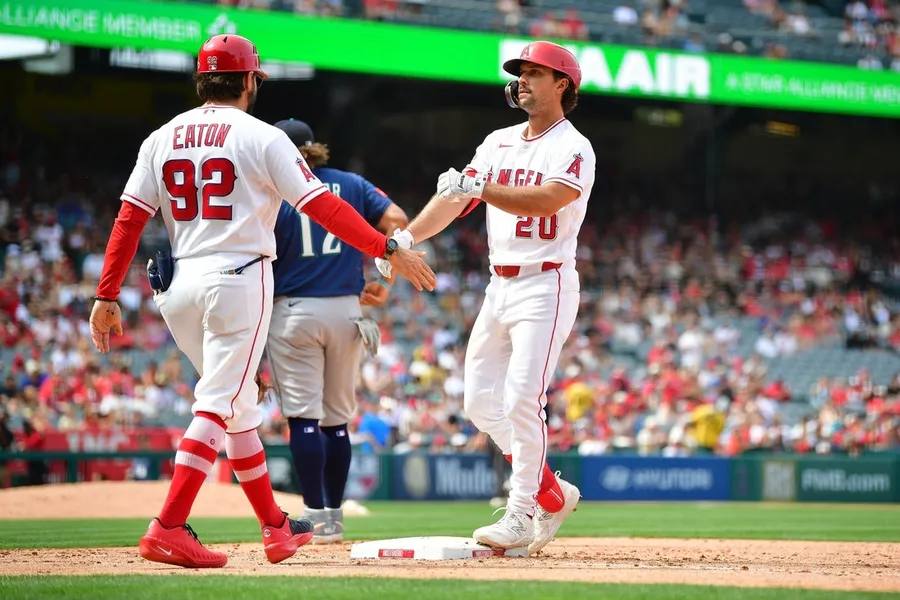
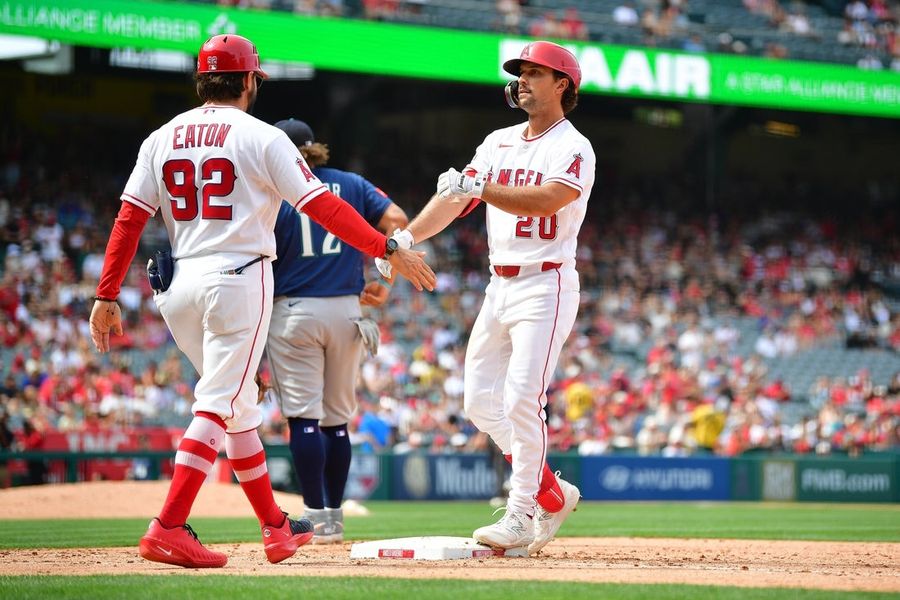 Apr 5, 2026; Anaheim, California, USA; Los Angeles Angels second baseman Adam Frazier (20) is greeted by first base/outfield coach Adam Eaton (92) after hitting an RBI single against the Seattle Mariners during the fifth inning at Angel Stadium. Mandatory Credit: Gary A. Vasquez-Imagn Images
 Nolan Schanuel’s sacrifice fly scored the winning run in the bottom of the 11th inning as the Los Angeles Angels defeated the Seattle Mariners 8-7 Sunday afternoon in Anaheim, Calif.
Shaun Anderson (1-0) struck out Cal Raleigh with the bases loaded in the top of the inning.
With Adam Frazier the automatic runner at second base, Gabe Speier (0-2) intentionally walked Zach Neto leading off the bottom of the inning. Both runners advanced on Oswald Peraza’s sacrifice bunt and Schanuel lifted a fly ball to left, with Frazier beating the throw home.
Both teams scored in the 10th. Randy Arozarena’s single to right gave the Mariners a 7-6 lead in the top of the inning. In the bottom half, automatic runner Jo Adell advanced to third on a sacrifice bunt by Bryce Teodosio and scored on Logan O’Hoppe’s sacrifice fly to center.
The Mariners tied the game with a two-out rally in the ninth. Raleigh doubled to left and chugged home on Julio Rodriguez’s broken-bat single to left on a 2-2 slider from Sam Bachman.
The Angels’ Mike Trout left the game in the bottom of the eighth after being hit on the left hand by a pitch from Casey Legumina.
The Angels took the lead in the first inning as Neto led off with a double and scored on Jorge Soler’s two-out single.
Seattle responded in the second, with Leo Rivas’ two-run single making it 2-1. The Angels tied it in the third as Trout led off with a double to left-center, took third on a groundout and scored on Soler’s single to right.
Los Angeles took a 4-2 lead on the fourth on a Rivas fielding error at third which allowed Josh Lowe to score and a Schanuel infield single with two outs.
The Mariners regained the lead in the fifth on Cole Young’s three-run homer to right.
The Angels wasted little time regaining the lead, scoring twice in the bottom of the inning. Jeimer Candelario led off with a line-drive double, scoring on an Adell single to level the score at 5. Adell came around to score the go-ahead run to make it 6-5 on a grounder which got under Rivas’ glove. Angels right-hander George Klassen, called up from Triple-A Salt Lake City to make his major league debut with scheduled starter Ryan Johnson scratched because of an illness, lasted just 2 2/3 innings. Klassen gave up two runs on three hits, with five walks and four strikeouts.
Mariners starter Luis Castillo didn’t go much longer, giving up four runs (three earned) on six hits over 3 2/3 innings. The righty walked one and fanned four.
–Field Level Media

The 2026 NFL Draft will arrive in about 2.5 weeks, and the Minnesota Vikings are anxious to know the outcome of the team’s first few picks, as interim general manager Rob Brzezinski has four selections in the Top 10. But what if he swerves? Always remember — the Atlanta Falcons drafted Michael Penix about six weeks after signing Kirk Cousins two years ago.
Minnesota has several sneaky draft paths that could catch fans and analysts off guard.
Here’s a look at the realistic curveballs Minnesota could throw at you in the draft.
A Few Unexpected Draft Moves Remain in Play for Minnesota
Ranked in no particular order, this is the sneaky stuff Minnesota might have up its sleeve.
1. Trading Up for RB Jeremiyah Love
Love would make the Vikings’ offense unstoppable; let’s get that out there. With Kyler Murray in the house, the sky is the limit for Kevin O’Connell’s scheme, and landing Love would change everything about the franchise. It’s O’Connell’s ticket to changing a pass-happy offense into a balanced killer.
The trade, however, won’t be cheap. To get Love, whether at pick No. 4, No. 6, or No. 10, the Vikings will have to surrender their 18th pick, a 2nd-Rounder, and perhaps a 3rd-Rounder. If they love Love, it might be worth it.
2. Drafting TE Kenyon Sadiq at No. 18
At 6’3″ and 245 pounds, Sadiq is still 21, allowing him ample time to develop compared to other prospects. Across 42 games at Oregon, he logged 80 receptions for 892 yards and 11 touchdowns. Highlighting his athleticism, Oregon also used him as a kick returner in ’23 and ’24.
Sadiq’s versatility sets him apart as a potential first-round pick. His capacity to catch passes and block for both runners and quarterbacks is a rare combination for a tight end his age.
TE1 T.J. Hockenson will be a free agent next offseason. There’s absolutely no reason the Vikings or the team’s fans should say, “We have Hockenson; we don’t need a tight end.”
Embracing the best player available mindet, Minnesota could take the plunge with Sadiq at No. 18. The coaching staff won’t regret it.
3. Trading Jonathan Greenard, Jordan Addison, or J.J. McCarthy
A Greenard trade has been rumored for over a month. If he wants a contract over $30 million per season, Minnesota might have to trade him for budgetary purposes. After all, Micah Parsons earns $46 million per year in Green Bay. Greenard’s at $19 million. Quite the variance. The Indianapolis Colts and Philadelphia Eagles have evidently been side-eyeing Greenard’s trade price for weeks.
Then, an Addison trade is unlikely after exercising his fifth-year option this week. But what if a team dangled a 1st-Rounder, which Minnesota could parley into Jordyn Tyson or Omar Cooper? Would you do it?
On McCarthy, teams like the New York Jets and Arizona Cardinals need long-term quarterback fixes, or at least plans in that direction. If Minnesota could pry loose a 2nd-Rounder or 3rd-Rounder for McCarthy, Brzezinski would have to listen.
4. Picking a WR at No. 18
Jalen Nailor now works for the Las Vegas Raiders. He was the Vikings’ WR3 in 2024 and 2025. On deck as his replacement? Tai Felton — who barely played at all on offense as a rookie last year.
On top of those factoids, Addison’s legal problems (the WR2) are troublesome. He could be arrested at any minute, sending the Vikings’ offensive planning into disarray. That’s just a fear the Vikings must live with by now.
Pretend Minnesota let Nailor walk because it planned to spend a 1st-Rounder on a new wide receiver. These players could be on the board at No. 18:
- Makai Lemon (USC)
- Jordyn Tyson (Arizona State)
- Omar Cooper Jr. (Indiana)
- KC Concepcion (Texas A&M)
- Denzel Boston (Washington)
The Vikings do one single thing really, really well throughout the last four decades: draft fantastic wide receivers. Maybe they’ll shock the world and do it again. After all, O’Connell is an offensively minded head coach (and now the default Team CEO).
5. Choosing an EDGE in Round 1
The deepest spot on the Vikings’ roster, less than three weeks from the draft? Outside linebacker. These men headline the group:
- Jonathan Greenard
- Andrew Van Ginkel
- Dallas Turner
Still, drafting an EDGE cannot be ruled out because Greenard is evidently on the trade block to some extent, and Van Ginkel will be a free agent next offseason.
These are the names to keep in mind:
- Keldric Faulk (Auburn)
- Akheem Mesidor (Miami)
- T.J. Parker (Clemson)
- Cashius Howell (Texas A&M)
- Zion Young (Missouri)
The Vikings have drafted one EDGE rusher in Round 1 in the last 20 years: the aforementioned Turner. Adding another isn’t the worst idea in the world; fans rarely complain about their favorite team having “too many good OLBs.”
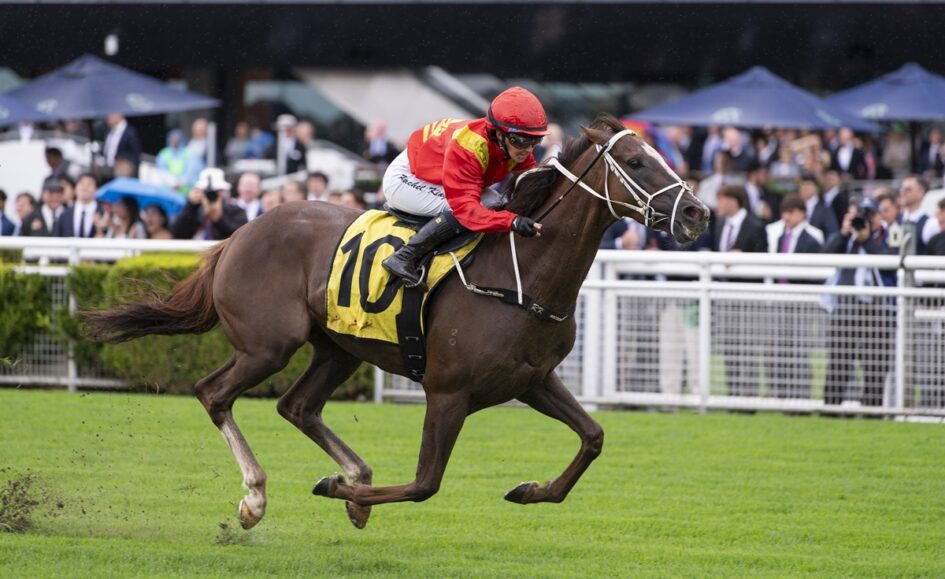
Newlook, the import from France, registered his first Australian triumph through a tenacious staying run, winning the Group 2 $300,000 Chairman’s Quality (2600m) at Royal Randwick on Saturday.
Trained by Trent Busuttin alongside Natalie Young, Newlook had posted no placings from five prior Australian appearances, but the soft track suited him to dominate.
His Chairman’s Quality score bolsters prospects in the upcoming Group 1 $2 million Sydney Cup (3200m) at Randwick next Saturday.
The Chairman’s spoils include Sydney Cup ballot exemption and no penalty, so Newlook enters on a plum 50kg mark.
A $8.50 chance with Rachel King aboard, Newlook powered home down the track’s centre, scoring by 1¼ lengths ahead of Campaldino ($7) who was the same clear of Juja Kibo ($3.70 equal favourite), from Travolta ($3.70 equal favourite) in fourth spot close up. King took heart from Newlook’s late surge to fifth last time in the Manion Cup.
“I was confident he would take good improvement from his last start, he was only second up there,” King said.
“He still probably blew out at the 50m, I thought I was going to win easy at the furlong but he just got a little bit tired.’
“But he’ll take good improvement again, I galloped him during the week and was confident he would run well over this distance.”
A Chairman’s Quality-Sydney Cup double would make Newlook the 10th such achiever, after Circle Of Fire (2024), The Offer (2014), Jessicabeel (2010), No Wine No Song (2008), Henderson Bay (2002), Linesman (1997), King Aussie (1990), Major Drive (1987) and Marooned (1986).
Last June’s Brisbane Cup conqueror Campaldino proved on song for the Sydney Cup courtesy of his determined second.
Campaldino conveniently drops to 52.5kg from 59kg for the 3200m Randwick feature next week.
Rider Tim Clark admired Campaldino’s recent Sydney Cup pipe-opener.
“He bounced back to form today,” Clark said.”Then next Saturday with a few kilos less he is going to be hard to beat.”
Craig Williams on Ciaron Maher’s Juja Kibo expects sharpening for the 2026 Sydney Cup.
“He has run really well again and ahead of his ‘Grand Final’ next week,” Williams said. “It is all part of Ciaron’s preparation with today’s run into the Cup in seven days.’”
Find the best racing betting markets ahead of the Sydney Cup.

Ruturaj Gaikwad admitted his own failure at the top hurt Chennai Super Kings as they slumped to a heavy loss against Royal Challengers Bengaluru, elaborating on key moments in the post-match press conference. CSK were rocked early in the chase of 250, collapsing to 30 for 3 after losing Ruturaj, Sanju Samson and Ayush Mhatre. That early damage proved decisive despite a spirited response later. Reflecting on the fightback, Ruturaj said in the post-match conference: “Well, even I was surprised, to be honest. Great fight by Sarfaraz, Prashant Veer, Jamie Overton, even to some extent Shivam Dube. So I think, maybe I would have, contributed more top of the order, you never know, we would have chased it down. So definitely it’s on me today.” He highlighted how the efforts of Sarfaraz Khan, Prashant Veer and Jamie Overton kept CSK in the contest briefly, but admitted the game had already slipped due to the poor start. Ruturaj also elaborated on a crucial moment in the field that could have shifted momentum. Virat Kohli was dropped early, and RCB capitalised fully. Speaking about that phase, he said: “We would have had, as you rightly said, if we would have taken early chance of Virat Kohli, I think that was, I mean, maybe we would have had momentum to ourselves. But I think, we still had the game in our hands till the 13th, 14th over, and that’s when the momentum really shifted.” That shift came dramatically at the death, when Tim David tore into the CSK attack. Ruturaj pointed out that they almost had an opportunity to dismiss him earlier. On that moment, he said in the press conference: “Well, you’re right, KP. I think, Anshul almost got a wicket of him. Unfortunate to be illegal delivery, but yeah, after that, he just smacked all around the park and, as you rightly said, hats off to him.” RCB’s late surge, powered by Devdutt Padikkal, Rajat Patidar and David, took the game away completely. For Ruturaj, the takeaway was clear. Missed chances, an underwhelming start with the bat, and a brutal finish from the opposition combined to seal CSK’s fate.

Michael Saylor Hints at Return to Weekly Bitcoin Purchases

Sanjiv Goenka’s Unmissable Reaction Viral As Mohammed Shami And LSG Tear SRH Apart

iCloud email goes down for some users in an Easter Sunday outage


-

 NewsBeat3 days ago
Steven Gerrard disagrees with Gary Neville over ‘shock’ Chelsea and Arsenal claim | Football
-

 Business3 days ago
No Jackpot Winner and $194 Million Prize Rolls Over
-

 Fashion2 days ago
Weekend Open Thread: Spanx – Corporette.com
-
Entertainment7 days ago
Fans slam 'heartbreaking' Barbie Dream Fest convention debacle with 'cardboard cutout' experience
-

 Crypto World4 days ago
Gold Price Prediction: Worst Month in 17 Years fo Save Haven Rock
-

 Business5 hours ago
Three Gulf funds agree to back Paramount’s $81 billion takeover of Warner, WSJ reports
-
Crypto World6 days ago
Dems press CFTC, ethics board on prediction-market insider trades
-

 Sports1 day ago
India men’s 4x400m and mixed 4x100m relay teams register big progress | Other Sports News
-

 Business4 days ago
Login and Checkout Issues Spark Merchant Frustration
-

 Tech6 days ago
EE TV is using AI to help you find something to watch
-

 Tech7 days ago
Apple will hide your email address from apps and websites, but not cops
-

 Sports6 days ago
Tallest college basketball player ever, standing at 7-foot-9, entering transfer portal
-

 Politics6 days ago
Should Trump Be Scared Strait?
-

 Tech6 days ago
Flipsnack and the shift toward motion-first business content with living visuals
-

 Fashion7 days ago
The Best Spring Trends of 2026
-
Tech6 days ago
Daily Deal: StackSkills Premium Annual Pass
-

 Crypto World6 days ago
U.S. rule change may open trillions in 401(k) funds to crypto
-

 Sports6 days ago
Women’s hockey camp eyes fitness boost, tactics ahead of WC 2026 campaign | Other Sports News
-

 Tech6 days ago
How to back up your iPhone & iPad to your Mac before something goes wrong
-

 Politics7 days ago
BBC slammed for ignoring author of The Fraud
You must be logged in to post a comment Login