



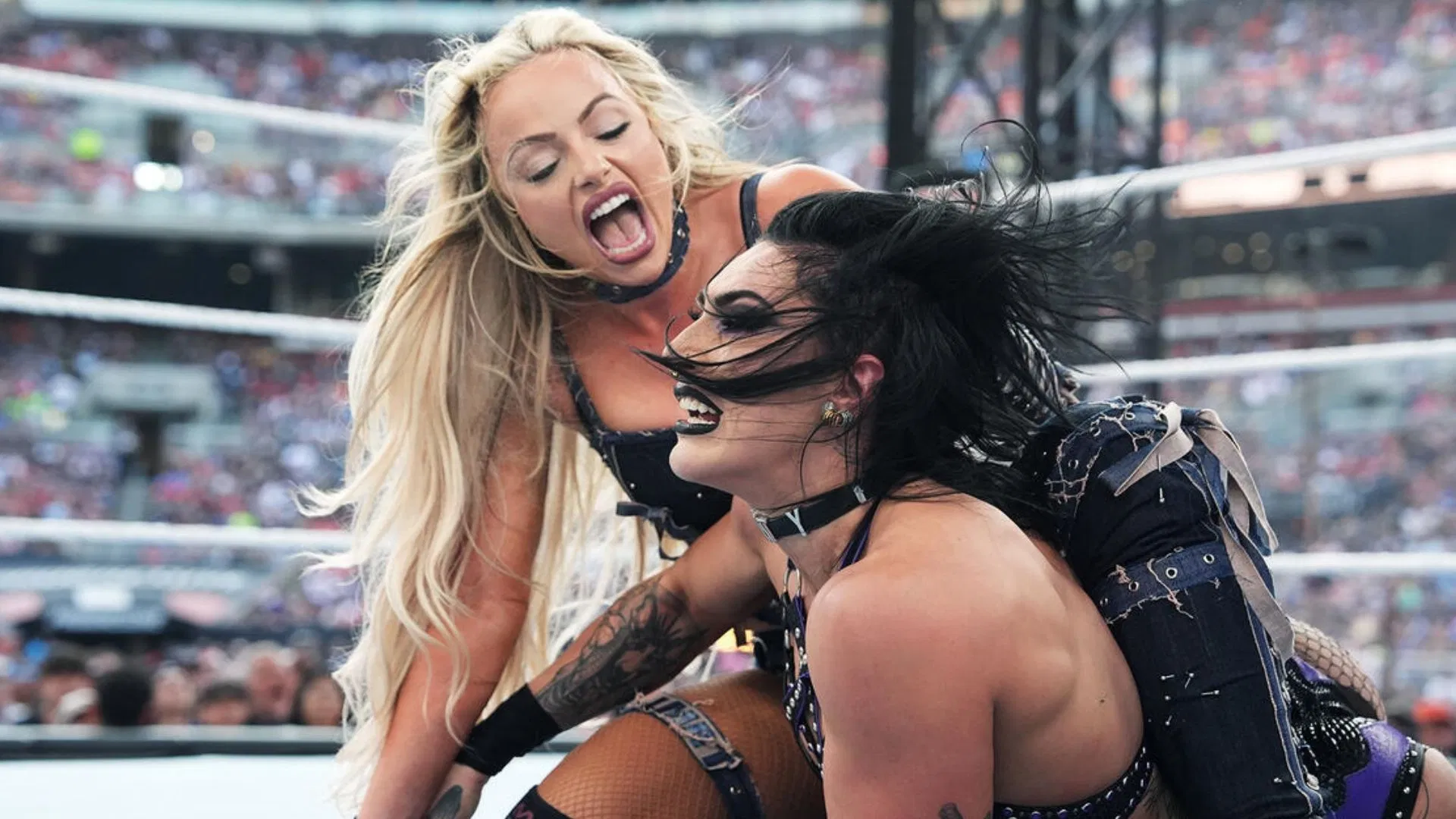

Liv Morgan broke character to comment on her relationship with WWE star Rhea Ripley. Both Ripley and Morgan will be challenging for major titles at WrestleMania 42.
In an interview with Esteban Ramirez, Liv Morgan broke character to comment on her relationship with Rhea Ripley. The Judgment Day star noted that she knew her former rival was going to be a star while they were in NXT together and left Ripley her locker when she got called up to the main roster.
Thanks for the submission!
“Rhea and I have quite a bit of lore. I remember back in the Performance Center when I saw her, I knew that she was gonna be a star. It was just very evident to me. So when I had gotten called up to the main roster, I had left Rhea my locker. I told her, ‘You can have my locker, you can move your stuff into my locker.’ She didn’t even have a locker yet,” said Morgan.
The Women’s Royal Rumble winner added that they will always be connected and compared their rivalry to Batman and The Joker.
“I came back on the Liv Morgan Revenge Tour and took everything that she loved including Dominik, the Judgment Day and the Women’s World Championship. So I feel like we are both the heroes and villains in each other’s stories. She is the Batman to my Joker, and I am the villain in her hero’s story, and she is the villain in my hero’s story,” she added. [H/T: WrestleTalk on X]
You can check out the interview in the video below:
Morgan will be challenging Stephanie Vaquer for the Women’s World Championship at WrestleMania 42.
Liv Morgan comments on recent WWE injury
WWE RAW star Liv Morgan recently discussed her injury last year that caused her to miss several months of WWE television.
In an interview with Brad Gilmore, the 31-year-old noted that the injury was devastating for her last year as she was on an upward trajectory. The WWE veteran added that she was upset about the situation during her hiatus last year.
“I do feel like in the moment that I got injured, I was on a very upward trajectory. And so the injury obviously devastated me. I was very, very angry the whole entire time I had off time,” she said.
Only time will tell if Liv Morgan can defeat Stephanie Vaquer to become champion once again at WWE WrestleMania.
Read all the hottest WWE news from Sportskeeda by choosing us as your preferred source. Click HERE.
Edited by Robert Lentini






































You must be logged in to post a comment Login