
News Beat
What is changing for British travellers to Europe in 2026?

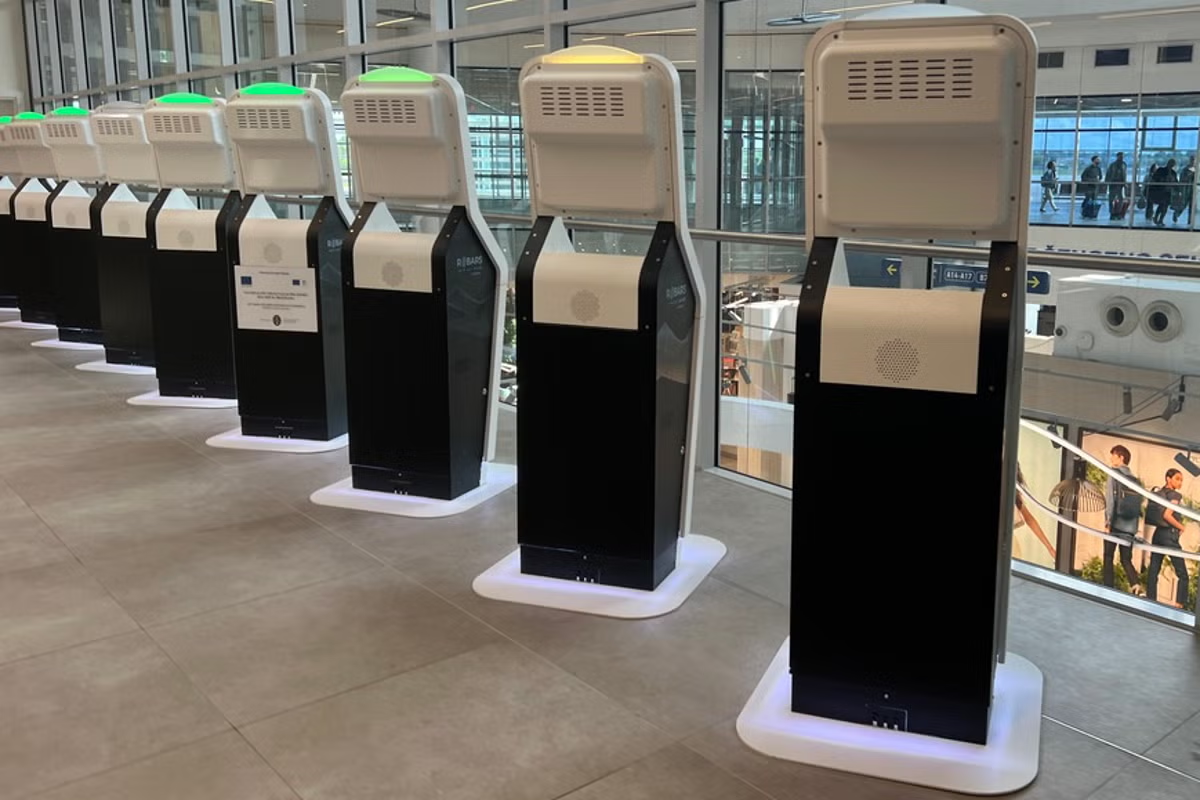
UK citizens travelling to and from Europe this year will encounter changes at borders. The European Union launched its much-delayed entry-exit system (EES) on 12 October 2025, although some countries are yet to fully make the switch.
Travellers will go through the formalities on both arrival and departure – at airports, land borders and ports in the Schengen area (comprising the EU except Ireland and Cyprus, plus Iceland, Norway and Switzerland).
The aims of the EES are:
- To identify suspected criminals
- To combat identity fraud
- To police the limit on stays of 90 days in any 180 days that applies to UK and other nationalities
British travellers to and from the Schengen area will go through a biometric check. On first encounter with the EES, they must provide the four fingerprints from their right hand (not required of children under 12) and a facial biometric.
The EU stipulated that by 10 January 2026 “member states should operate the entry-exit system – with biometric functionalities – at a minimum of half of their border crossing points”. But only 35 per cent of visitors must be EES-registered.
This means a country such as Spain, Italy or Greece, with many arrival points by air, need not activate the entry-exit system at the busiest airports – so long at a majority of crossing points are EES-enabled.
During and after the roll-out, border officers may ask you for proof of financial resources and evidence that you will leave after a short stay – just as they can do now. France is also demanding medical insurance.
By April 2026 the entry-exit system roll-out should be complete, transforming the border experience at all crossing points in and out of the Schengen area.
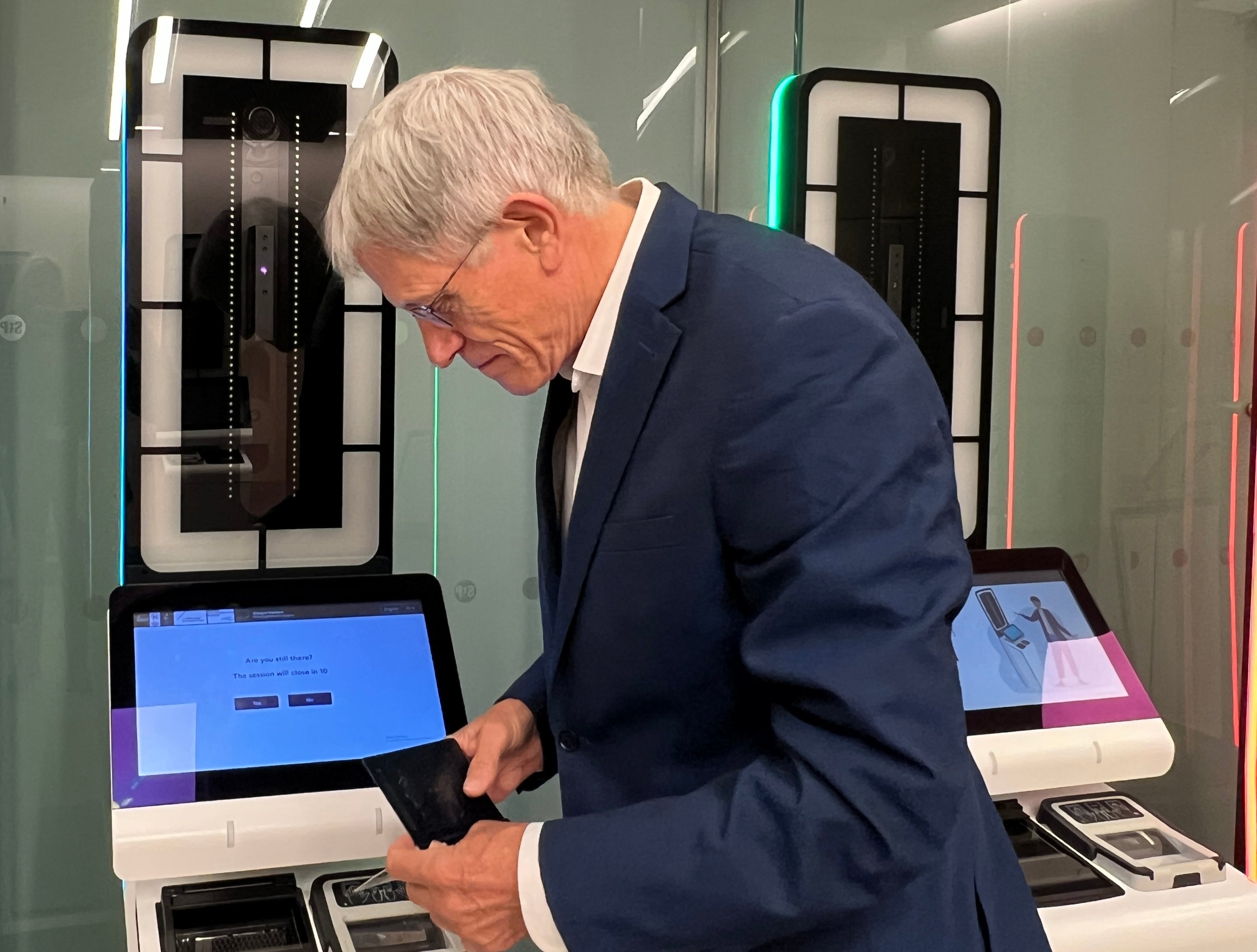
Once you have registered, on subsequent encounters with the entry-exit system you will need to supply only one biometric taken when entering and leaving the Schengen area; this is almost certain to be the face.
Be prepared to provide biometrics and expect longer border queues as a result of “double red tape” . Until the roll-out is completed, British travellers will need to go through analogue checks as normal, including having their passport stamped.
Six months after the entry-exit system roll-out is completed, if all goes according to plan the European Travel Information and Authorisation System (Etias) will be introduced.
Key dates
This is the calendar for changes so far and planned for the future.
11 March 2026
All borders must be biometric enabled and at least half the crossings must be registered on the central database.
31 March 2026
By now, every third-country national should be registered on the way in and out.
9 April 2026
Manual checking and stamping of passports must continue up to and including this date. Assuming that the EES is running flawlessly across Europe, the practice will end at midnight.
9 October 2026 (estimated date)
The European Travel Information and Authorisation System (Etias) will be launched, but will not be compulsory. This online permit, price €20 (£17), is similar to the US Esta scheme, but valid for longer: three years. While those under 18 or over 70 will still need to apply for and hold an Etias, it will be free.
Initially a six-month grace period will be granted to travellers who neglect to organise an Etias. But even though you won’t legally need one immediately, you might not be allowed on your plane if you fail to show an Etias..
What to do: Get an Etias if you are going to the Schengen area.
9 April 2027 (estimated date)
It will mandatory for prospective UK visitors to have an Etias.
This piece was first published in September 2025 and is kept updated with the latest information
Read more: All you ever wanted to know about the entry-exit system



