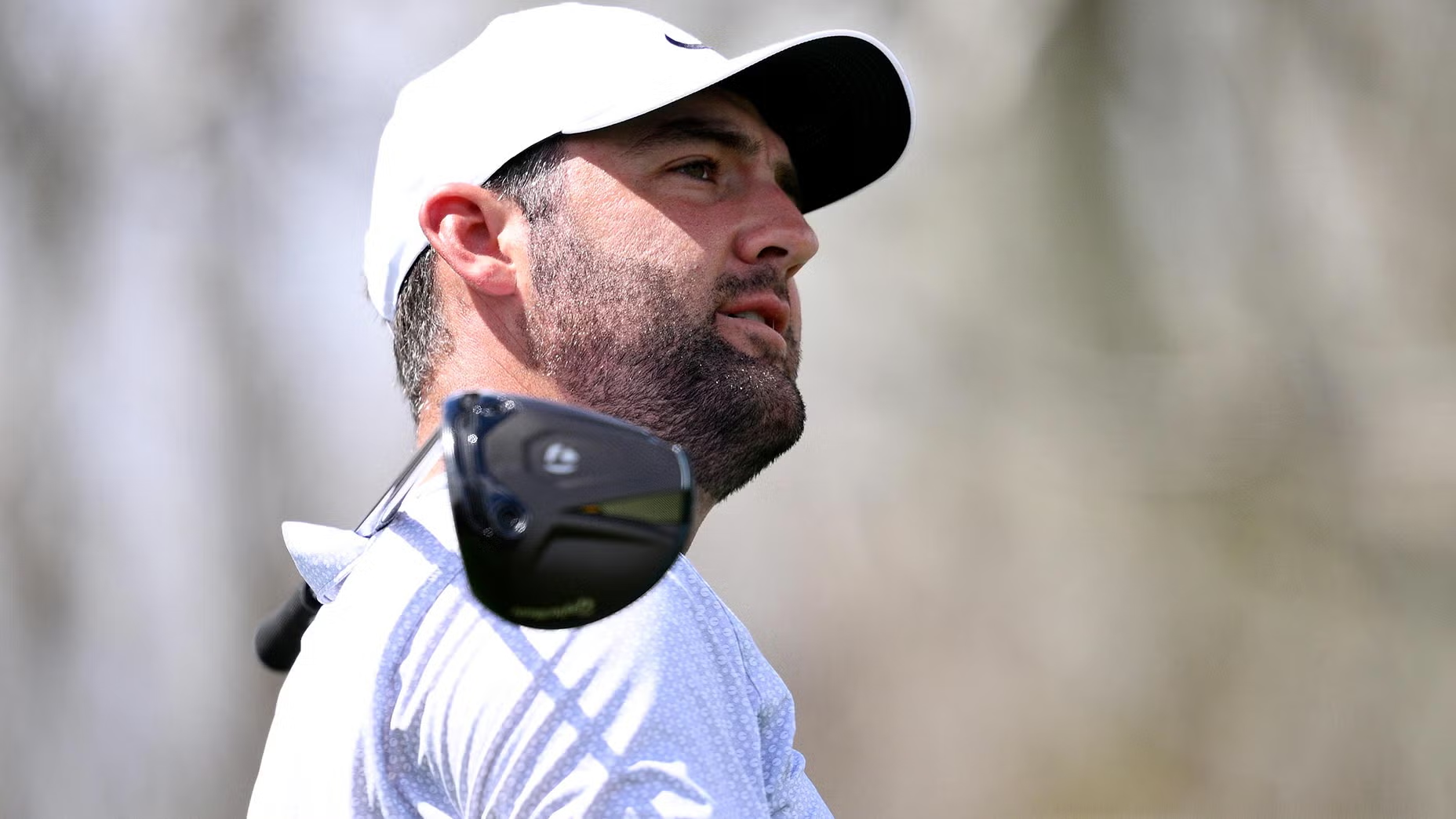
Maybe more than any week on the PGA Tour schedule, Bay Hill delights in kicking your teeth in.
And on a noticeably punchy Saturday afternoon at the Arnold Palmer Invitational, Scottie Scheffler wasted no time getting started.
The World No. 1 began a vexing third round at Bay Hill in particularly unusual fashion, recording three bogeys in his first five holes — and four in his first seven — to drop from the outskirts of the leaderboard to well out of contention. As he has for much of the week in Florida, the typically cool and collected Scheffler looked out of character with a club in his hands and out of patience without it, en route to a decidedly up-and-down 72. As if to emphasize the point, when his fourth bogey of the day dropped on the seventh hole, NBC cameras captured Scheffler crow-hopping his ball into the woods in disgust — his second frustrated ball-toss of the week.
By the time he made the turn, Scheffler had recorded his most bogeys on an opening nine in more than eleven months, since the second round of the Masters last April, and just one fewer black score than he recorded all week at the American Express in January. (Of course, another read of these stats emphasizes Scheffler’s brilliance in the 2020s, seeing as until the Genesis Invitational at the end of February, the World No. 1 had gone 11 months without a finish outside of the top 10.)
Advertisement
After it was over, Scheffler was blunt.
“Pretty up and down, I would say,” he said.
No kidding. But the ups were revealing, too. On a Saturday when Bay Hill pulled few punches, the 29-year-old responded with a few of his own. Just when it seemed he might fade from the competition entirely, Scheffler recorded four straight birdies between holes 11 and 14, and then added a fifth on the par-5 16th. He entered the 18th hole needing a birdie to get to six under for the tournament, seven shots out of the lead set by Daniel Berger and within striking distance for another Sunday charge.
Instead, he wiped his approach short and right, watching helplessly as it bounced on a lakebed and plunged into the water. Scheffler folded over in exasperation as the ball disappeared into the water. He tidied up from there, but the damage was done: A double on the last had ended the momentum he’d battled so hard to win back. He finished the day at even par for the round, and 3 under for the tournament, 10 shots off the lead set by Daniel Berger.
Advertisement
“Out here the margins are just so small,” Scheffler said. “I felt like the breaks, when they go against you, you make bogeys, and when they go with you, sometimes you make birdies.”
On Saturday at the Arnold Palmer Invitational, the story for Scheffler was in the margins. And at a golf tournament known for its snarl, the World No. 1 admitted that he left wounded.
Manchester City are bidding to reach a fourth successive FA Cup final and overcame Newcastle United in the fifth round last weekend
19:11, 09 Mar 2026Updated 19:28, 09 Mar 2026
Advertisement
Manchester City have been handed a home draw against Liverpool in the quarter-finals of the FA Cup.
City will host Liverpool after the draw was made on Monday night ahead of the final tie of the round between West Ham United and Brentford.
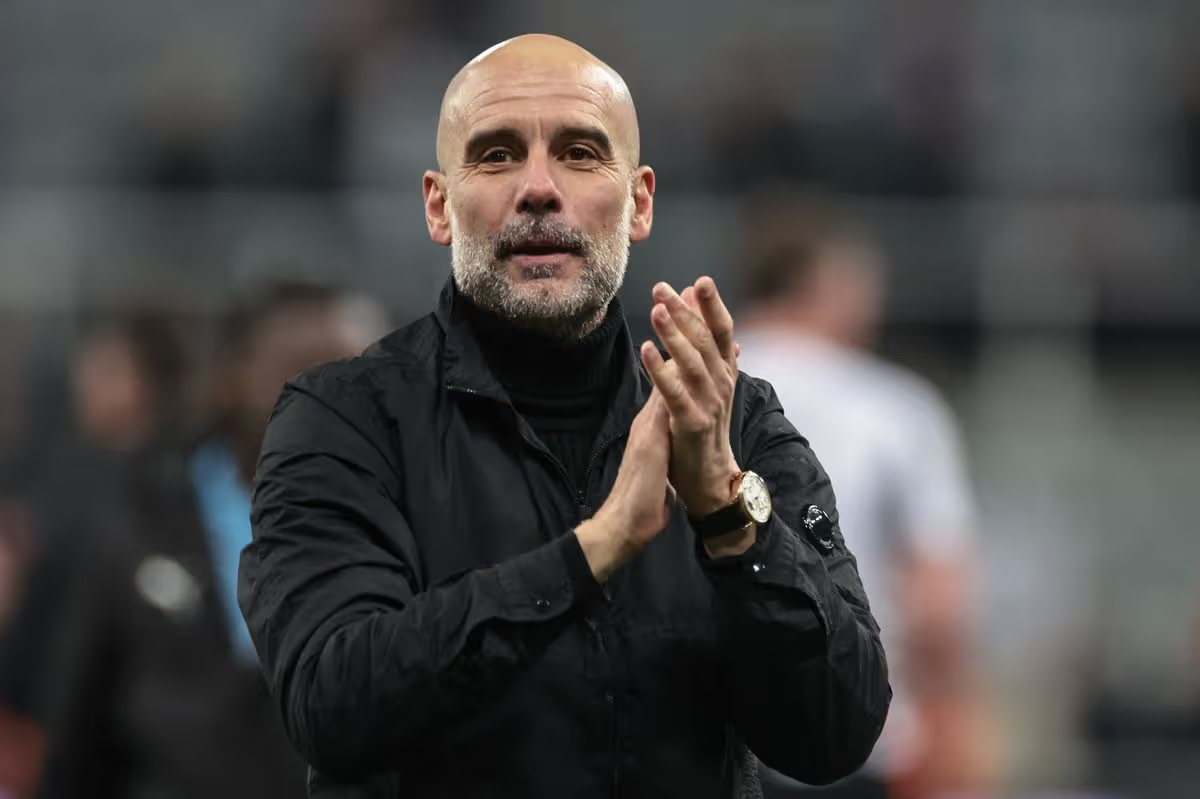
Pep Guardiola’s side booked their spot in the last eight with an impressive 3-1 victory over Newcastle United in the fifth round on Saturday. City fell behind when Harvey Barnes opened the scoring at St James’ Park but Savinho levelled before half time and Omar Marmoush then struck twice to complete the turnaround.
Get involved in our City WhatsApp group by clicking HERE. You can also join our City Facebook page by clicking HERE and don’t miss out on our brilliant selection of newsletters HERE.
Advertisement
City, who are still competing for silverware on four fronts, have a two-legged Champions League last-16 clash with Real Madrid on the horizon while they travel to Wembley for the Carabao Cup final against Arsenal later this month.
The FA Cup tie will take place over Easter weekend, with a date yet to be confirmed. The game will be broadcast live on TV with TNT Sports and the BBC having the rights to the competition.
Kick off times for the last eight ties will also be confirmed in due course. Matches will take place on the weekend of Saturday and Sunday April 4/5.
Find the best flights and hotels for Champions League games
Advertisement
This article contains affiliate links, we will receive a commission on any sales we generate from it. Learn more
Booking.com provides countless deals on flights and accommodation across Europe so Man City fans can follow the team on their Champions League campaign.
That weekend follows an international break and comes before a potential Champions League quarter final in midweek should City beat Real Madrid this month.
Should City progress to the last four of the FA Cup the semi-finals take place on April 25-26 with the final at Wembley Stadium on Saturday May 16. City are scheduled to visit Burnley on semi-final weekend while they are due to host Bournemouth on the final weekend. Both of those league fixtures could therefore require new dates.
Advertisement
City have already had one Premier League game postponed as a result of their cup run with the game against Crystal Palace on Carabao Cup final weekend being moved. A new date for that fixture has yet to be confirmed.
Content cannot be displayed without consent
Manchester United youth star Kai Rooney has seen a big decision on his future confirmed which sees him follow in the footsteps of father Wayne
19:40, 09 Mar 2026Updated 19:53, 09 Mar 2026
Advertisement
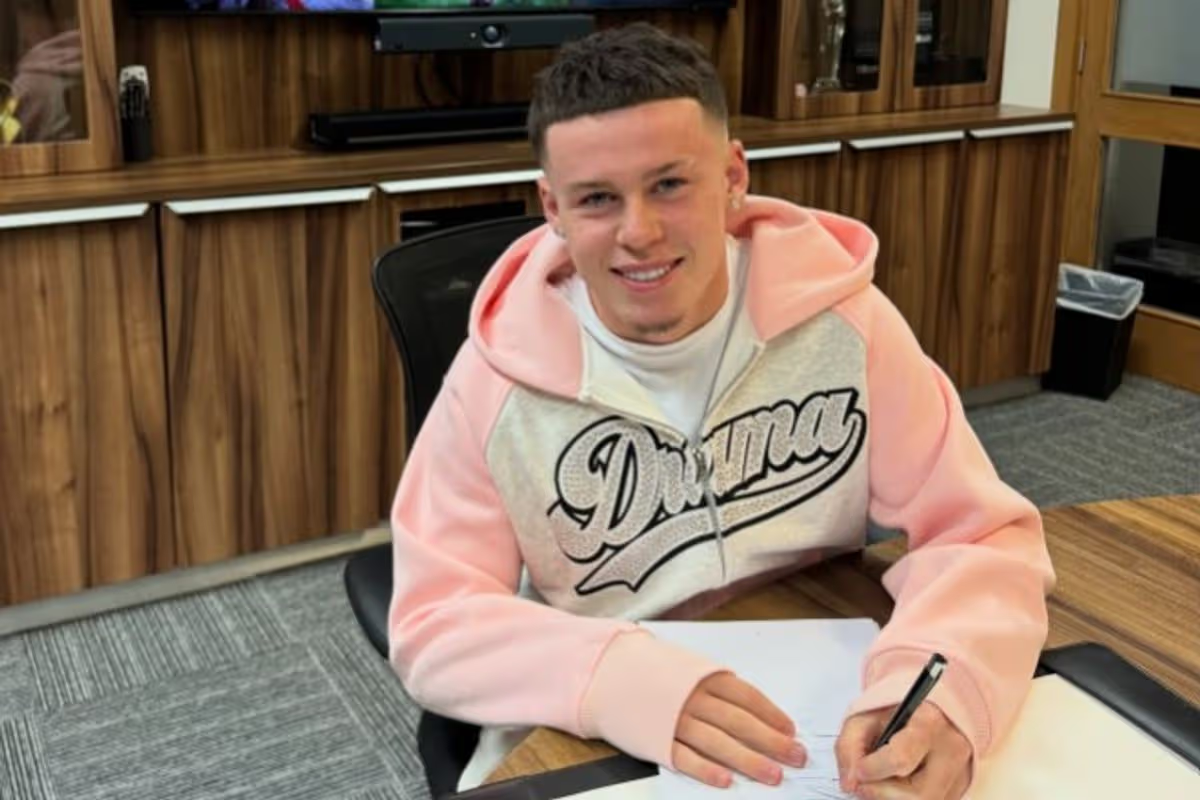
Manchester United youngster Kai Rooney has signed with Triple S Sports Management, the same agency dad Wayne was signed to. The global company is owned by his agent Paul Stretford with it clear the plans for Kai moving forward.
Confirming his addition, a post on Instagram read: “Delighted to announce the signing of @kairooney.10 to Triple S Sports!
“We’re excited to begin working with the Manchester United forward as he continues his journey in the game. A bright future ahead. Welcome to the team, Kai!”
The United legend had discussed his son’s future in the game and made it clear what he wants to see.
Speaking via the BBC last year, he said: “He has great coaches at Manchester United, so I take a stand off approach. I speak to him, but for me it’s all about his mentality and his mindset, to make sure he keeps enjoying it – that’s the main thing for me.”
Rooney’s words on those coaching his son, which includes former teammate Darren Fletcher, was further proven only recently by their progression to the under-18s Premier League Cup final.
Rooney was on the score sheet in the 3-1 semi-final victory over West Ham United with the battle for silverware set for next month at Selhurst Park against Crystal Palace.
Michael Carrick has also been at several academy matches since taking charge but he was busy preparing the first-team for a Premier League clash against Newcastle United.
She said to The Times: “He’s lived it from a young age. “When we used to go to matches when he was younger, he’d get a lot of people coming up saying, ‘Oh, are you Wayne Rooney’s son?’
“But he’s strong-minded, always has been. I’ve got no worries in the way he deals with it. “It’s nice that we know what to expect.
“And we can try to guide him. Obviously, it’s his life, his passion. He can decide what he wants to do. But I think it’s good we’ve got the knowledge.”
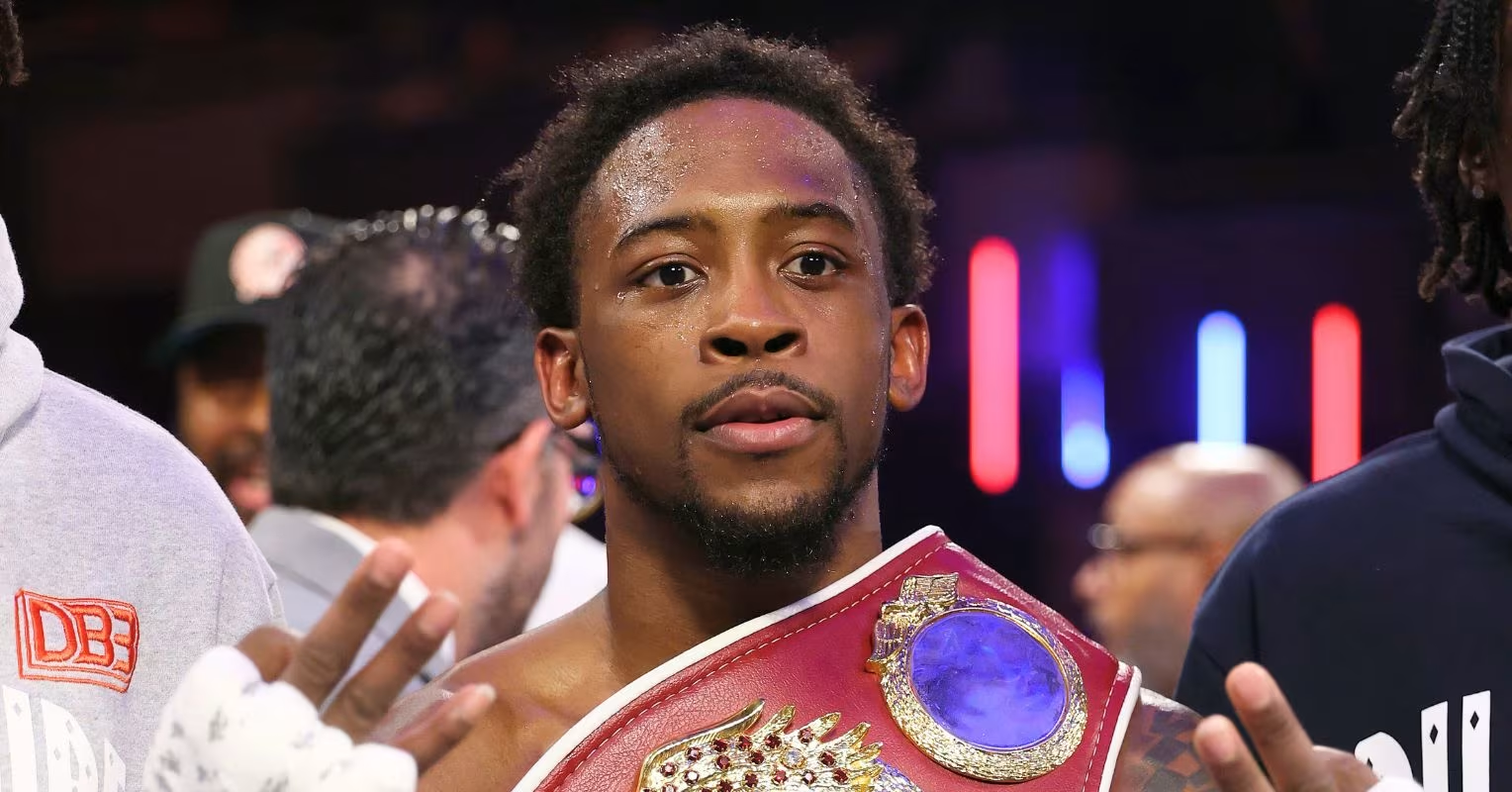
Keyshawn Davis has been linked to a move up to welterweight in recent weeks and it seems as though ‘The Businessman’ will soon make the jump, with a date for a ‘championship fight’ up at 147lbs supposedly set.
Davis was stripped of his WBO lightweight world title when he missed weight ahead of a planned first defence against Edwin De Los Santos last June. He then headed to super-lightweight and knocked out Jamaine Ortiz in the final round of their bout on the Teofimo Lopez vs. Shakur Stevenson undercard.
During the aftermath of that win, the Norfolk-born superstar called for a shot at reigning WBO welterweight world champion Devin Haney, who agreed to the contest originally, before negotiations stalled.
Advertisement
As a result, it seemed as though Davis could remain at 140lbs, but in an interview with FightHub, the 27-year-old revealed that he has a date for a ‘championship fight’ as he prepares for a debut at 147lbs.
“I definitely got a response [from the people I called out] and I definitely got a date too. I’m telling y’all that right now, and I’m definitely coming back sooner than y’all think. That is why you seen me doing a little politic in the gym.
“It’s politic, but I am staying sharp, for real. Don’t get that f***ed up, I am staying sharp. I got something coming up.
“I think that I am moving up [to 147lbs]. Yep, [for a championship fight].”
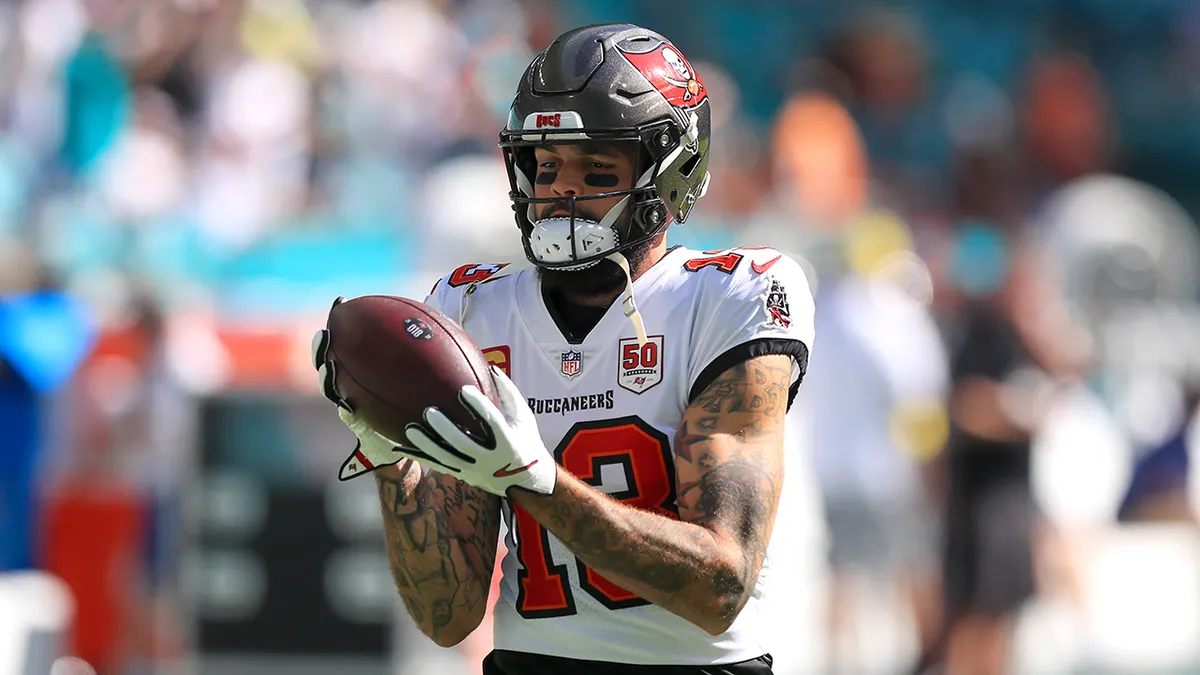
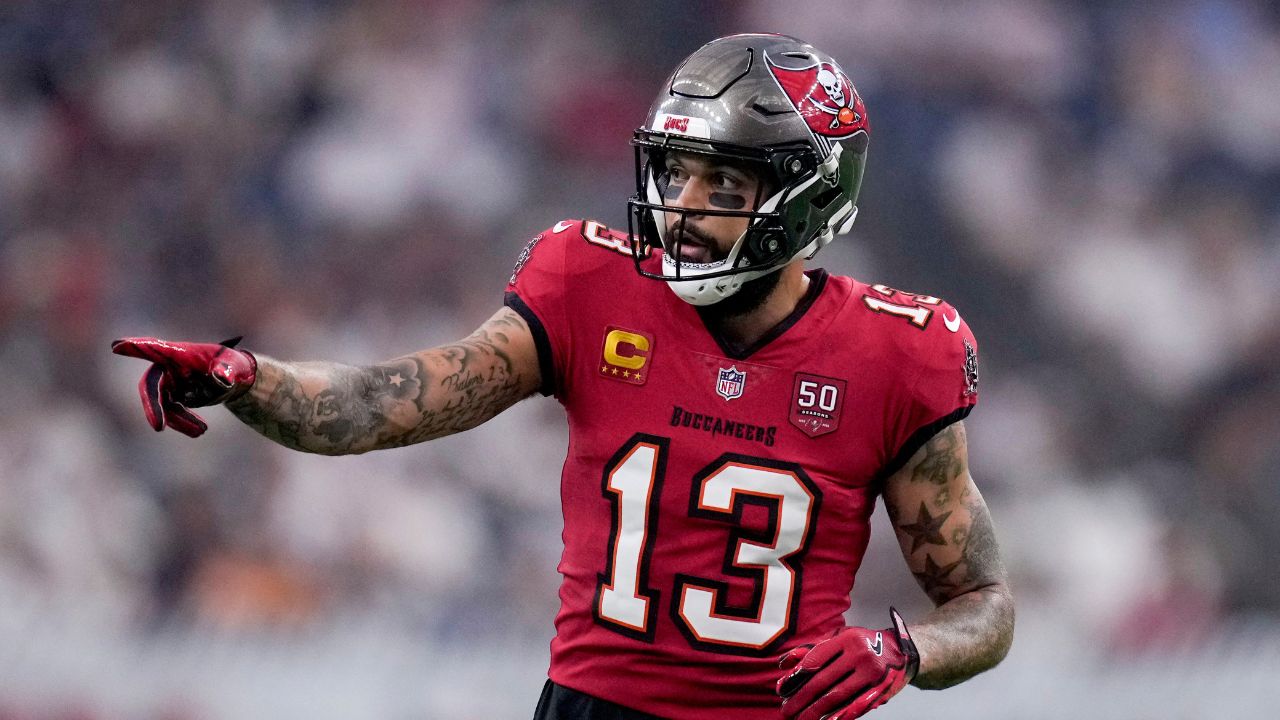
Mike Evans is leaving the Tampa Bay Buccaneers, the team he has built a Hall of Fame resume with for the past 12 NFL seasons, for the San Francisco 49ers.
Evans reportedly agreed to terms on a three-year deal with San Francisco worth $60.4 million, per ESPN.
The Glazer family, owners of the Buccaneers, released a statement after Evans’ decision to find a new challenge outside Tampa Bay.
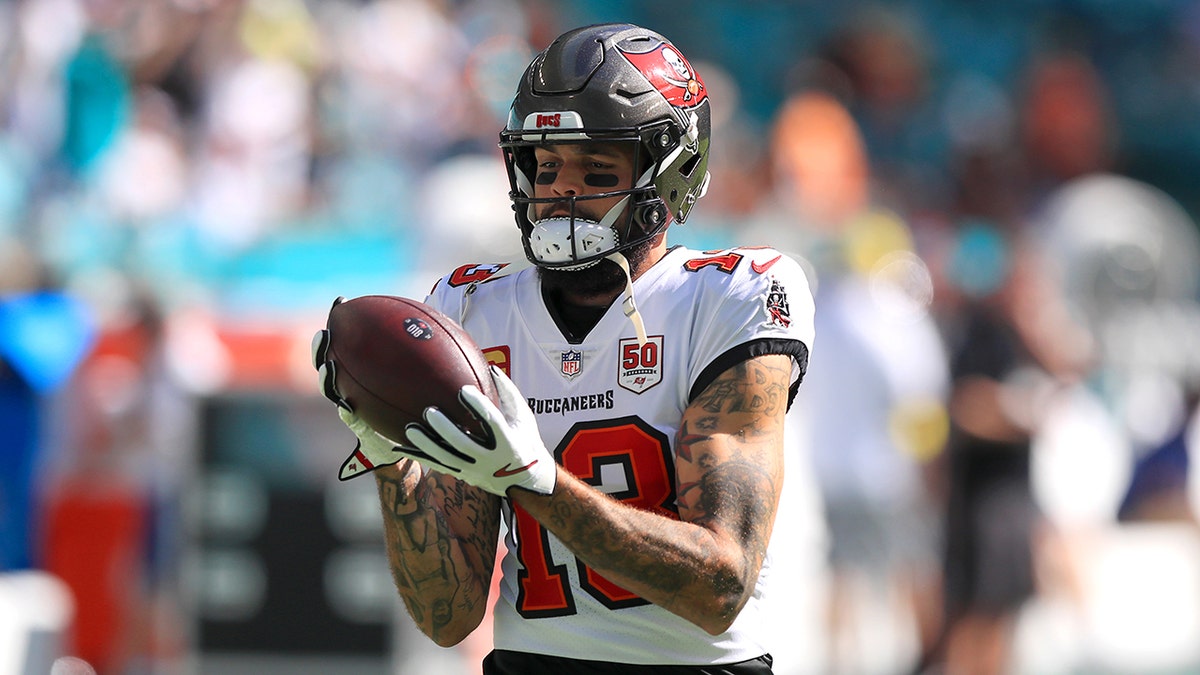
Tampa Bay Buccaneers wide receiver Mike Evans warms up before the game between the Tampa Bay Buccaneers and the Miami Dolphins on Dec. 28, 2025 at Hard Rock Stadium in Miami Gardens, FL(Cliff Welch/Icon Sportswire )
“Saying goodbye to a legend such as Mike Evans is never easy, but today we are filled with appreciation and gratitude for all that he did during his extraordinary 12-year career as a Buccaneer,” the statement read. “Our goal was always to ensure that Mike would play his entire career as a Buccaneer, but as we got further in the process it became clear he was looking for a new challenge.
“He leaves as the most accomplished offensive player in franchise history – a six-time Pro Bowler and a Super Bowl champion – but it was his dedication to making a difference off the field that will define his lasting legacy in our community. We wish Mike continued success in his next chapter and thank him for all that he has done for the Buccaneers and Tampa Bay.”
The statement concluded by saying the family and team look forward to honoring Evans to “celebrate his eventual Hall of Fame career.”
Evans’ agent, Deryk Gilmore, released a statement on his client’s behalf after making the decision.
“After twelve remarkable seasons in Tampa Bay, Mike Evans felt a desire to challenge himself with a new chapter in the final stage of his career,” Gilmore said, per ESPN. “Throughout his entire career he has pushed himself to grow, compete, and evolve as a player, and this decision reflects that same mindset.
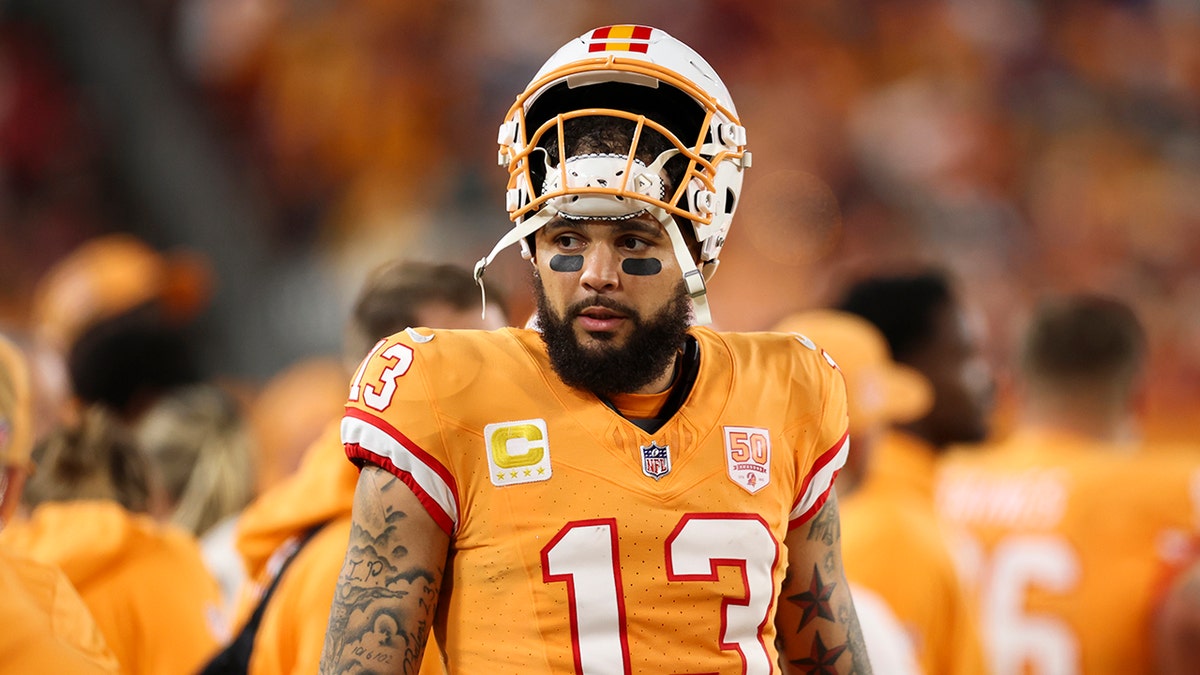
Mike Evans of the Tampa Bay Buccaneers exits the field at halftime during an NFL football game against the Atlanta Falcons at Raymond James Stadium on Dec. 11, 2025 in Tampa, Florida.(Cooper Neill/Getty Images)
“Mike has tremendous love and respect for the Buccaneers organization, the Glazer family, the coaches, his teammates, and especially the fans in Tampa Bay who have supported him since the day he was drafted. Tampa will always be home to him, and he is deeply proud of everything they accomplished together.”
Advertisement
Gilmore added that the Bucs “made it clear they would have loved for Mike to finish his career in Tampa,” where he would have been only the fourth player in franchise history to spend his entire career in Tampa Bay.
“Mike Evans’ decision to leave Tampa was never about money,” Gilmore added. “The Buccaneers were extremely aggressive in their pursuit and presented a very strong offer, demonstrating how much they value him and everything he has meant to the franchise.”
As the Glazers’ statement mentions, Evans reset Buccaneers records, tallying 13,052 receiving yards and 108 receiving touchdowns since he was taken seventh overall out of Texas A&M in the 2014 NFL Draft. He also had at least 1,000 yards in each of his first 11 seasons with the Bucs, with the streak ending last season due to several injuries that forced him to miss nine games.
Mike Evans of the Tampa Bay Buccaneers looks on during the second quarter of the NFL football game against the Atlanta Falcons at Raymond James Stadium on Dec. 11, 2025 in Tampa, Florida.(Logan Bowles/Getty Images)
Now, Evans joins a Kyle Shanahan-run offense, which was always expected to add a wide receiver this offseason. Evans immediately fills in as Brock Purdy’s top pass-catching option, and more moves could come with Jauan Jennings also in free agency.
For the Buccaneers, they made moves in recent seasons to shore up their wide receivers, including first-round pick Emeka Egbuka drafted out of Ohio State in 2025. He had a red-hot start to his rookie season before cooling off a bit. Jalen McMillan was a factor when he returned healthy last season, and veteran Chris Godwin is also a trusty target for quarterback Baker Mayfield.
Kenneth Gainwell has every reason to buy a new pair of sunglasses because the running back has left the Pittsburgh Steelers for the sunny Tampa Bay Buccaneers. Gainwell’s move has shaken up Tampa Bay’s backfield,
According to Ian Rapoport in a Monday report, Gainwell is set to earn $14 million over the next two years. The investment is significant for Tampa Bay, but how much should you commit to the back in the fantasy football draft later this year? Here’s an early idea of what to expect.
Thanks for the submission!
Advertisement
Should you draft Buccaneers RB Kenneth Gainwell in 2026?
•
Advertisement
Kenneth Gainwell is heading to a backfield with Bucky Irving and Rachaad White. As such, expect a committee situation, which is bad news for fantasy football. Still, Gainwell took part in a committee situation in 2025 and became a quality fantasy football back. This time around could be the same result. Put simply, a draft pick is worthy of Gainwell’s name in 2026.
Looking to predict NFL playoff Scenarios? Try our NFL Playoff Predictor for real-time simulations and stay ahead of the game!
Advertisement
Kenneth Gainwell fantasy outlook in 2026
The back nearly doubled his production from scrimmage in 2025 compared to any other year in his career. As such, with Bucky Irving’s production not looking anything like what it did in 2024, there’s a decent chance that Gainwell could steal the starting job from Irving at some point this season.
Expect somewhere shy of 1,000 yards if Irving stays healthy in 2026. However, if Irving’s injury troubles return, Gainwell could easily pass the 1,000-yard mark in 2026 with the ability to rush and catch the football.
Is Kenneth Gainwell a good pick in fantasy football this year?
The Buccaneers running back is a decent option this season as long as you don’t expect massive RB1-level production in September. He could be a set-and-forget option as the year drags on, but don’t expect instant success. Even if he wins the starting job, he is going to need to balance Rachaad White and Irving.
Where should you draft Kenneth Gainwell this year?
The new Tampa Bay Buccaneers back makes a ton of sense between the third and fifth round. He isn’t worth spending a top pick on, but thrifty managers could go a long way toward winning their leagues if they get Gainwell on the cheap.
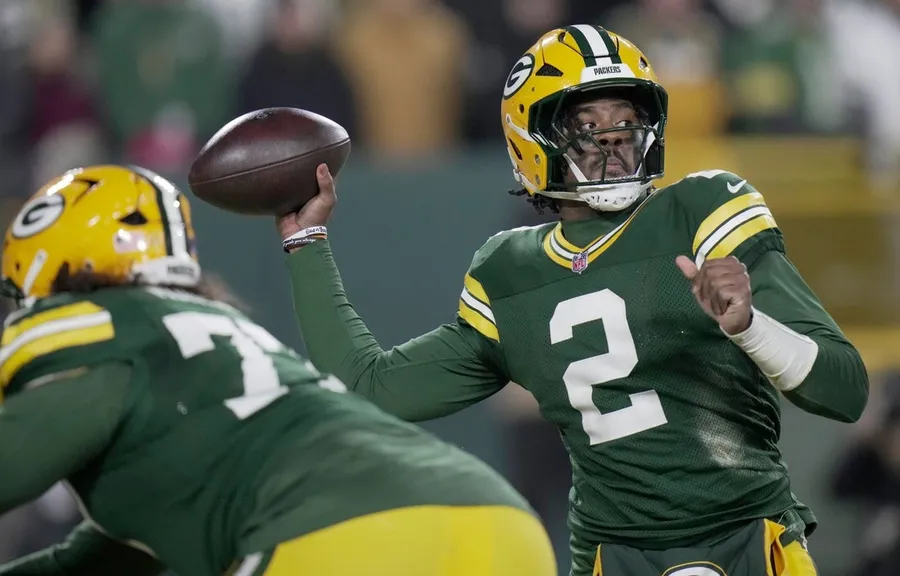
Green Bay Packers quarterback Malik Willis (2) throws during the third quarter of their game against the Baltimore Ravens Saturday, December 27, 2025 at Lambeau Field in Green Bay, Wisconsin.
The Miami Dolphins appear to have found their potential Tua Tagovailoa replacement, signing coveted free-agent quarterback Malik Willis to a three-year deal, according to multiple media reports.
The deal is worth $67.5 million with $45 million guaranteed, per NFL Network. It’s a reunion of sorts with new Dolphins coach Jeff Hafley, who has been the Packers’ defensive coordinator for the last two seasons while Willis was Green Bay’s backup quarterback.
Willis, who turns 27 in May, played in 22 games (six starts) over his rookie contract with the Tennessee Titans (2022-23) and Packers (2024-25). He was drafted in the third round by Tennessee in 2022 and traded to Green Bay ahead of the 2024 season for a seventh-round pick.
He played in four games (one start) last season, turning heads when he completed 18 of 21 passes for 288 yards and a touchdown with 60 rushing yards and two more scores in the Packers’ 41-24 loss to Baltimore on Dec. 27.
Advertisement
Willis finished the 2025 season with 422 passing yards, 123 rushing yards and five total touchdowns (three passing, two rushing).
For his career, he’s completed 67.7% of his passes for 1,322 yards, six touchdowns and three interceptions. He’s also amassed 405 rushing yards with four rushing touchdowns.
The Dolphins released Tagovailoa, their 2020 first-round pick, Monday morning, taking on an NFL-record $99.2 million in dead salary-cap space.
Super Eagles striker Victor Osimhen could face suspension when Galatasaray take on Liverpool in the UEFA Champions League on Tuesday night.
The Turkish club will host the English side at Rams Park in the first leg of their Round of 16 match, which kicks off at 8:45 pm.
Osimhen has already received two yellow cards in the competition this season during matches against Juventus and Atletico Madrid. If he gets another yellow card against Liverpool, he will miss the second leg of the tie in England next week.
Advertisement
Under UEFA rules, a player is suspended for one match after collecting three yellow cards in the Champions League, unless the cautions lead to a red card.
Galatasaray could suffer a big setback if Osimhen is suspended. The Nigerian striker has been one of the team’s key players in Europe this season and has already scored seven goals in the competition.
He is now just one goal away from matching the record for the most goals scored by a player from a Turkish club in a single Champions League season. The record was set by Burak Yilmaz, who scored eight goals for Galatasaray in the 2012–13 season.
Advertisement
Osimhen has also played at Liverpool’s Anfield stadium before. In 2022, he featured for Napoli in a Champions League match where the Italian side lost 2–0 to Liverpool. Earlier in that same season, Napoli had defeated Liverpool 4–1, with Osimhen winning a penalty during the match.
Despite the suspension concern, Galatasaray coach Okan Buruk has a fully fit squad available for the first leg in Istanbul.
However, Osimhen is not the only player close to suspension. Six other Galatasaray players are also one yellow card away from missing the return leg if they receive another booking.
Liverpool also have two players who could face suspension if they are booked during the match.
Advertisement
The two teams already met earlier in this season’s Champions League league stage, where Galatasaray secured a 1–0 win at home with Osimhen scoring the only goal from the penalty spot.
Galatasaray finished 20th in the league phase with three wins, one draw and four defeats. They later reached the Round of 16 after beating Juventus in the play-off round with a 7–5 aggregate score.
Liverpool had a stronger run in the league phase, winning six matches and losing two to finish third in the standings and qualify directly for the Round of 16.
The second leg will take place at Anfield on March 18, where both teams will fight for a place in the Champions League quarter-finals.
But Rahm did not make the biggest leap in the world rankings among the competitors at LIV Golf Hong Kong. That honor belonged to two other former PGA Tour players who jumped up the ranking with top-10 finishes.
Here’s what you need to know.
Advertisement
Matthew Wolff and Harold Varner III climb rankings after LIV Golf Hong Kong
Six players finished T8 in Hong Kong, which means a total of 13 LIV pros saw a significant boost in world ranking points.
Advertisement
None more so than Matthew Wolff. In his brief PGA Tour career, Wolff captured one victory and reached as high as 12th in the Official World Golf Ranking. He even finished runner-up at the 2020 U.S. Open.
But Wolff’s game fell apart toward the end of his time on the PGA Tour, and he left for LIV in 2022. His struggles have continued there, where he has failed to pick up a win. Last year, he finished 42nd in LIV’s individual standings.
Over that time, Wolff saw his world ranking plummet. Before LIV Golf Hong Kong, Wolff had dropped to 2,305th in the OWGR. But one good finish made a world of difference.
Thanks to finishing 5th in Hong Kong on Sunday, Wolff skyrocketed 1,531 spots up in the ranking. However, his new ranking won’t get him into any majors: 774th.
Another LIV pro, Harold Varner III, made a similarly massive leap up the world rankings after Hong Kong. Varner III never won a PGA Tour event before leaving for LIV in 2022, though he’s fared better than Wolff on LIV. Varner III captured a victory at LIV Golf Washington D.C. in 2023.
At LIV Hong Kong, Varner III finished at 18 under, five shots short of Rahm and one shot better than Wolff. His solo fourth also earned him a ton of world ranking points. To start the week, Varner III was ranked 1,385th in the OWGR. Thanks to his solo-fourth finish, he moved all the way up to 589th.
You can see a complete list of the top-10 finishers from the 2026 LIV Golf Hong Kong event, along with their world ranking movement, below.
Advertisement
LIV world ranking movement after LIV Hong Kong (top 10 finishers)
1. Jon Rahm: 54 to 36 in the Official World Golf Ranking
Nov 16, 2025; Pittsburgh, Pennsylvania, USA; Pittsburgh Steelers cornerback James Pierre (42) leaps into the end zone for a touchdown after recovering a fumble against the Cincinnati Bengals during the fourth quarter at Acrisure Stadium. Mandatory Credit: Barry Reeger-Imagn Images
The Minnesota Vikings are no longer “required” to select a cornerback in Round 1 of the 2026 NFL Draft. The club used its very first free-agent signing this week on a man named James Pierre from the Pittsburgh Steelers.
Gerald Alexander and Brian Flores Know the Player Well
Pierre brings an undercover stellar 2025 resume to Minnesota, so much so that fans can pencil him in as the CB3 as early as today.
Advertisement
Gerald Alexander and Brian Flores Know Pierre Well
Alas, the Vikings’ CB depth fears have vanished.
Pittsburgh Steelers cornerback James Pierre (42) celebrates after securing an interception against the Cleveland Browns during fourth-quarter action at Acrisure Stadium in Pittsburgh, with the play unfolding on Dec. 8, 2024 as the Steelers defense sealed momentum late in the AFC North matchup. Pierre reacts while teammates gather around the turnover. Mandatory Credit: Charles LeClaire-Imagn Images.
Pierre to MIN
Pierre to the purple team is basically official, barring a bizarre last-second change of heart.
NBC Sports‘ Josh Alper wrote Monday, “The Vikings have landed a new cornerback in the early stages of the free agent negotiating window. Cameron Wolfe of NFL Media reports that they have agreed to terms with James Pierre on a two-year deal. The contract is worth $8.5 million with $3.7 million in guaranteed money.”
Advertisement
“Pierre signed with the Steelers after going undrafted in 2020 and returned to the team after failing to make the Commanders in 2024. Pierre appeared in 95 games over his six seasons in Pittsburgh.”
Minnesota was in the market for a budget cornerback — one with upside — and absolutely nailed that mission with Pierre for $3.7 million guaranteed. It’s a steal of a deal.
The Stats for Pierre
Looking for the statistical skinny on Pierre? We’ve got it. Here’s his work since 2020:
Pierre is 6’2″ and 190 pounds, instantly making him the Vikings’ tallest cornerback who projects to receive playing time in 2026. He’s also Lamar Jackson’s cousin.
Advertisement
SI.com‘sJack Markowski on Pierre: “Pierre made a career-high five starts for Pittsburgh after re-signing with the organization on a one-year deal worth the veteran’s minimum last offseason. He did not allow a touchdown in coverage, per Pro Football Reference, while holding opposing quarterbacks to a completion percentage of just 42.9 on 35 targets across 376 coverage snaps.”
“Spotrac has Pierre’s market value currently set at a one-year contract for $1.873 million, which would mark a marginal raise from the $1.170 million salary he earned in 2025. Cornerback sticks out as one of Pittsburgh’s biggest needs, and the potential departure of Pierre is a main reason why.”
It’s also worth noting that Brian Flores stopped by the 2022 Steelers as a linebackers coach; he knows Pierre, too, as Pierre has worked for Pittsburgh his entire career.
Pittsburgh Steelers cornerback James Pierre (42) warms up on the field before kickoff against the Denver Broncos at Heinz Field in Pittsburgh, with the pregame scene captured on Sep. 20, 2020 as players prepared for the early-season matchup. The Steelers later earned a narrow 26–21 victory over Denver in the contest. Mandatory Credit: Charles LeClaire-USA TODAY Sports.
Markowski continued, “The team is in good shape with Joey Porter Jr. as its No. 1 option at the position following a stellar campaign that could very well earn him a top-of-the-market extension as he enters the final year of his rookie deal, but the depth is lacking.”
“Pierre blossomed into a true impact player for the Steelers in his fifth season with the organization last year, and while there are other enticing veterans in free agency, bringing him back is the easiest path forward. The issue, though, is that his market appears to be booming, complicating matters in the process.”
Advertisement
The Revised CB Room
With the Pierre addition, here’s a look at Minnesota’s updated CB room:
Byron Murphy Jr.
Isaiah Rodgers
James Pierre
Dwight McGlothern
Zemaiah Vaughn
One would think the group needs at least one more credible defender — perhaps Fabian Moreau, the club’s veteran CB3 for most of 2025 — but during the most recent offseason, the Vikings were content with minimal depth. We shall see if that changes in 2026.
The Gerald Alexander Connection
Minnesota employed a man named Daronte Jones as the defensive passing game coordinator from 2022 to 2025, and he left this offseason to take the Washington Commanders’ defensive coordinator job, a sweet promotion. To backfill Jones’s job, Kevin O’Connell and Brian Flores hired Gerald Alexander from the Steelers’ staff.
Advertisement
Miami Dolphins defensive backs coach Gerald Alexander smiles along the sideline during second-half action against the Chicago Bears at Soldier Field in Chicago, with the moment captured on Aug. 14, 2021 as Miami’s staff monitored preseason play. Alexander watches from the sideline while the Dolphins evaluate defensive personnel during the exhibition matchup. Mandatory Credit: Jon Durr-USA TODAY Sports.
His first order of business? Bringing Pierre with him in free agency.
If the pattern holds, the Vikings could, in theory, also sign Asante Samuel Jr., who also patrolled Alexander’s secondary in 2025.
Pierre will turn 30 in September, so he does not have youth on his side. He ran a 4.59 forty at the 2020 NFL Combine — not a speedster.









;)
;)