

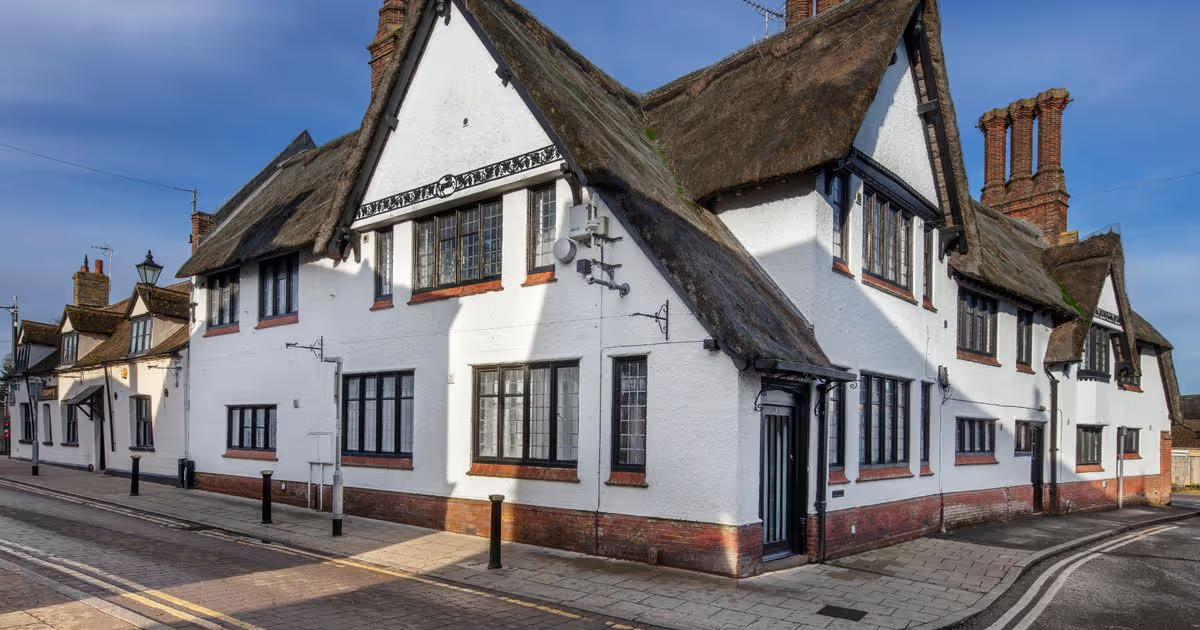
The building was built to be a Lloyds Bank.
A historic thatched bank in Littleport has been listed at a Grade II by Historic England. The former Lloyds Bank, located on Main Street, is described as “an extremely rare example of a purpose-built commercial bank built in the vernacular style”.
The building was built in 1931 and was designed to provide a banking hall and bank manager’s office as well as private accommodation for his family. The accommodation featured a dining room, pantry, kitchen, and coal store alongside five bedrooms, a drawing room, and a bathroom on the first floor.
The bank was described by architects Henry Munro Cautley and Leslie Barefoot to combine “practical banking facilities with vernacular East Anglian character”. The building has a decorative pargetting with a black horse for Lloyds Bank and grape vines.
Tony Calladine, East of England Regional Director, Historic England, said: “This distinctive and rare thatched commercial building is an important part of Littleport’s character and our national story. It is something for locals to be proud of, and we’d love to hear people’s memories of the bank through our Missing Pieces Project on our website.”
The architects also designed a range of other buildings for Lloyds Bank, including in Norwich, St Ives, Wisbech, and King’s Lynn. All of the buildings were designed in a Beaux Arts style with round-arched windows.
The former bank was adapted to be used as offices in the early 21st century, and the interior was converted into residential flats in 2016. The building can be found close to the Adams Heritage Centre, which was also recently given Grade II listed status.
Tom Neat, Director of Techneat Holdings, said: “‘The bank in the heart of Littleport was an important building when the rural farming economy was thriving. It is great to see that the design and architecture are now being recognised and that it will be preserved for future generations.”



