

Crypto World
How decentralized finance is revolutionizing the financial world



Blockchain technology continues to gain traction in both the private and the professional financial markets. Nowadays, one of the essential concepts in the blockchain environment is DeFi, which comes from Decentralized Finance. This
term is used for all the financial services that are not regulated by a central authority. For instance, estimates predict that the financial industry will reach $26 trillion by
2022, with DeFi contributing well over $142 billion to that number based on its
current worth. With such numbers and predictions, one may wonder how
decentralized finance will revolutionize the financial world more. Read on to find out!
An increasingly thriving market
Numbers are expected to increase substantially by 2022 because of how Defi transactions are conducted. Because Defi seeks to eliminate the centralized financial institution dependency. Individuals who have had hardships gaining loans and conducting other financial transactions now may have an alternative where traditional restrictions won’t be a problem anymore. This is because of the peer-to-peer nature, where protocols developed on decentralized blockchain networks do not require access rights for easy lending, borrowing, or trading of financial tools.
A securer means of financing
Now, it is essential to talk about the most relevant DeFi applications. In this case, the most relevant are:
Decentralized exchanges (DEXs): Online exchanges help users exchange currencies for other currencies, for example, change UST to ether, or in any case, the currency or token that you need. DEX is also structured in such a way as to eliminate market manipulations, wash trading, and p2p lending manipulation.
Stablecoins: is a type of cryptocurrency that attempts to offer price stability by being backed or supported by a reserve asset. For example, support by the US dollar.
Lending platforms: Through these platforms, users can access loans and lend their money, obtaining reasonable rates of return. It is important to mention that most cryptocurrency loans are backed by collateral. Thanks to smart contracts, the execution of loans is efficient and 100% secure.
More versatility in financial trading
Current trends in lending pose a strenuous process for lenders and clients. Credit scores, KYC, underwriters, loan officers, and more are part of the process. When the client is approved for a loan, they are usually required to put a large cash deposit down to secure the loan with the intermediary. Even though in most decentralized loan platforms, a collateral is requested to support the lending, much of the paperwork and traditional requirements are nullified. In a time where the global economy is struggling, having to go through such loopholes for borrowing and lending is unacceptable.
Defi takes away the intermediary and provides more versatility to financial trading. First, the defi allows for international trades without going through the transfer processes that centralized exchanges require. Second, as Defi is peer-to-peer based, trading can be done without central authorities. Finally, one of the most relevant characteristics, and that is a strength, is that the average interests for acquiring a loan are much lower than if you acquired a loan through a centralized financial service.
Critical situations where Defi takes advantage
–
Permissionless Operations: Thanks to smart contracts, operations in the decentralized finance ecosystem are autonomous if the conditions of both parties are met. This means that there are not as many waiting times in authorizations as there are in traditional finance
–
Accessibility: the processes are much more accessible thanks to the reduction of operational processes for the execution of financial services. Thanks to this, more attractive interest rates can be offered to lenders and borrowers.
–
Transparency: As these financial services are not regulated by a central authority, many frauds related to corruption or preferences are avoided that may exist in the case of centralized finance. Thanks to the attributes of the blockchain network, transparency is one of the most relevant advantages of Defi.
–
Human error and mismanagement:
Thanks to the automation of processes, errors are cancelled, and fraud cases have a lesser chance of appearing in the middle of the procedures
Conclusion
With the increase in popularity and great achievements of decentralized finance, its use becomes more and more common. It is now that challenges arise for both parties. On the one hand, for the DeFi environment, there are many latent challenges linked to scalability and operability to provide an efficient and usable service for its users. On the other hand, for the traditional financial market, there is latent concern about what actions they should take to avoid becoming irrelevant and here the phrase applies, if you cannot beat them, join them. And you, are you already part of decentralized finance?


TLDR
- Coinbase now offers stock and ETF trading to all U.S. customers through its platform.
- The company provides commission-free trading and supports fractional shares starting at one dollar.
- Users can fund their stock and ETF trades with U.S. dollars or USDC.
- Coinbase introduced this expansion to bring multiple asset classes together in one place.
- The platform now offers 24/5 access to U.S.-listed equities.
Coinbase introduced stock and ETF trading to all U.S. users, and the launch brings equities onto its platform. The company now lets customers trade multiple asset classes, and the move reshapes its broader product plan. The rollout also widens access to markets for users who prefer one combined interface.
Coinbase expands access to stocks and ETFs
Coinbase opened U.S.-listed stock and ETF trading to every U.S. customer, and the service supports 24/5 access. The platform includes commission-free trades, and it offers fractional shares starting at one dollar.
The company allows funding through U.S. dollars or USDC, and it maintains the same layout users already know. It confirmed the plan in December, and it framed the expansion as part of a broader multi-asset strategy.
Coinbase also introduced a predictions market earlier this month, and it lets users trade outcomes of real events. The firm stated that stock trading marks “another step” in its long-term roadmap.
The company aims to reduce its focus on one sector, and it wants steadier performance across cycles. It expects the mix of assets to diversify platform activity, and it continues updating user tools.
Robinhood and eToro respond in evolving market
Robinhood now pushes harder into crypto products, and its platform increases competition for users. Both companies widen their offerings, and they adjust tools as market interest shifts.
COIN and HOOD each lost around 35 percent this year, and both face a weak digital asset backdrop. eToro traded down about 13 percent, and its earnings report showed strong equities activity.
These trends outline a shifting landscape, and the platforms keep reshaping their services. Each provider now blends asset classes, and they adapt as user behavior changes.
The companies follow demand across sectors, and they attempt to maintain platform engagement. They highlight varied market access, and they refine features across trading categories.
Partnerships and infrastructure support rollout
Yahoo Finance will add a trading button, and it will route interested readers directly to Coinbase. It will also show real-time Coinbase data, and the feature links research with execution.
Coinbase works with Apex Fintech Solutions for clearing, custody, and execution, and the partnership supports operational flow. The company said it will expand 24/5 access to more stocks soon, and it will broaden coverage.
The firm also expressed interest in tokenized stocks, and it said tokenization could enable around-the-clock movement. It continues testing new formats, and it reviews blockchain applications for traditional assets.
Coinbase reported steady platform updates, and it is preparing to scale its next features. It also monitors user demand, and it builds tools that serve broader market access.

Payoneer, a global payments platform known for its cross-border capabilities, has taken a formal step toward regulated crypto services by filing with the Office of the Comptroller of the Currency (OCC) to form PAYO Digital Bank, a US national trust bank charter. The move would unlock a regulated pathway for the company to issue a GENIUS Act-compliant stablecoin and expand custody, settlement, and other crypto services for its nearly two million business-focused customers. The filing comes hot on the heels of a strategic partnership with Bridge, a stablecoin infrastructure provider, aimed at embedding stablecoin capabilities into Payoneer’s cross-border payment flows. Central to the plan is PAYO-USD, a stablecoin intended to act as the holding currency in Payoneer wallets and to enable customers to pay and receive stablecoins as part of daily transactions.
Key takeaways
- Payoneer has submitted an application to the OCC to create PAYO Digital Bank, a national trust charter that would enable regulated crypto services and stablecoin issuance.
- The proposed stablecoin PAYO-USD (CRYPTO: PAYO-USD) would anchor Payoneer wallets, allowing customers to hold, pay with, and convert stablecoins within the platform.
- Approval would empower Payoneer to manage PAYO-USD reserves, provide custodial services, and convert between PAYO-USD and local currencies for users and partners.
- The filing aligns with a broader regulatory expansion, as Crypto.com received conditional charter approval, joining a wave of crypto firms already granted or pursuing national bank charters (Circle, Ripple, Fidelity Digital Assets, BitGo, Paxos) in recent months.
- Other large players are pursuing similar routes (e.g., World Liberty Financial’s USD1 stablecoin, Laser Platform, and Coinbase’s ongoing review), signaling a shift toward regulated on-ramps for digital assets in mainstream finance.
Tickers mentioned:
Market context: The OCC’s evolving stance on national bank charters for crypto-related businesses reflects a regulatory approach that seeks to balance consumer protections with access to regulated crypto services, particularly for cross-border commerce and wholesale payments. The broader market backdrop—rising demand for stablecoins in trade, evolving custody models, and the ongoing integration of crypto rails into traditional financial infrastructure—frames Payoneer’s move as part of a wider industry trend.
Why it matters
The potential arrival of a fully regulated stablecoin and digital banking service within a trusted payments platform could alter the calculus for small and medium-sized businesses engaged in cross-border trade. Stablecoins, by design, aim to reduce settlement times and volatility when moving funds across borders. If PAYO-USD becomes the wallet’s native currency under a federally regulated umbrella, Payoneer could offer its users faster, more predictable settlement options with built-in compliance and reserve oversight, addressing common pain points in cross-border transactions.
For Payoneer, the OCC charter would extend its reach beyond a processor of international payments to a regulated crypto-enabled financial services provider. The company’s leadership, including CEO John Caplan, has signaled belief in stablecoins’ role in future global trade: “We believe stablecoins will play a meaningful role in the future of global trade.” The promise is not merely technological but regulatory—providing a trustworthy framework for reserve management, customer protections, and interoperability with traditional financial systems.
The regulatory arc surrounding stablecoins and charters has been accelerating. The OCC’s recent actions show a willingness to entertain crypto-enabled bank models, albeit within a cautious, risk-managed framework. This stance comes after a December wave of charter approvals for major crypto-focused players, underscoring a period of regulatory experimentation with centralized, compliant crypto rails. As fintechs and crypto-native firms seek scalable, regulated platforms to deliver cross-border value, Payoneer’s approach could set a precedent for how stablecoins are deployed within enterprise-grade payments ecosystems.
Beyond Payoneer, other market participants are testing the waters in the same regulatory waters. World Liberty Financial has applied for a charter to extend its USD1 stablecoin use, aiming to broaden the token’s adoption in payments. Meanwhile, Laser Platform has also submitted an application, and Coinbase has been awaiting a decision since late last year. Taken together, the sequence of filings highlights a broader industry push to convert stablecoins and crypto-backed services from niche offerings into regulated, bank-grade products that can scale with business demand.
What to watch next
- OCC decision timeline on Payoneer’s PAYO Digital Bank charter and any conditions tied to PAYO-USD issuance.
- Details of the reserve-custody framework for PAYO-USD and the governance structure governing the asset’s backing and conversions.
- Implementation milestones for the Bridge collaboration, including wallet integrations and cross-border settlement capabilities.
- Regulatory updates following Crypto.com’s conditional charter, and any additional charters granted or denied to other crypto-leaning firms.
- Rollout timing for PAYO-USD features within Payoneer’s platform, including wallet support, merchant onboarding, and fiat-on/off ramps.
Sources & verification
- Payoneer files application for US national trust bank charter with OCC (Payoneer press release).
- Payoneer announces stablecoin capabilities powered by Bridge integration (press release).
- Crypto.com receives conditional approval for national bank charter (Cointelegraph report).
- December charter approvals for Circle, Ripple, Fidelity Digital Assets, BitGo, and Paxos (Cointelegraph report).
- World Liberty Financial’s USD1 stablecoin charter application (Cointelegraph report).
Payoneer’s bid for a regulated stablecoin and digital bank: what changes for cross-border payments
Payoneer’s filing with the OCC marks a deliberate step toward integrating regulated crypto rails into a mainstream payments platform. By pursuing a national trust charter, the company aims to combine traditional banking discipline with digital asset functionality, enabling a stabilized, regulated environment for cross-border transactions. The centerpiece is PAYO-USD (CRYPTO: PAYO-USD), a stablecoin designed to operate as the platform’s holding currency, with the goal of reducing settlement frictions and smoothing currency conversions for Payoneer’s business clients. The plan envisions wallets where PAYO-USD can be used for both pay-ins and pay-outs, and where users can convert to their local currencies within a supervised framework.
The collaboration with Bridge, announced prior to the charter application, is a key accelerant. Bridge’s infrastructure is intended to support stablecoin issuance, redemption, and on-chain settlement within a regulated, enterprise-facing platform. If approved, Payoneer would gain a direct on-ramp for stablecoins into its cross-border payment network, potentially offering a more predictable cost structure for businesses shipping goods and services globally. The GENIUS Act-compliant design of PAYO-USD signals a compliance-driven approach to stablecoin issuance, aligning with a regulatory environment that increasingly calls for clear reserve custody, transparent governance, and user protections in crypto-enabled products.
Even as Payoneer advances this plan, the OCC’s broader policy stance is under scrutiny and evolution. Crypto firms eyeing national charters have seen both caution and momentum: Crypto.com received conditional approval, a sign that the agency is willing to greenlight regulated crypto banking models while maintaining rigorous oversight. The market context is further shaped by a string of December approvals granted to banks associated with the crypto space—Circle, Ripple, Fidelity Digital Assets, BitGo, and Paxos—broadening the example set for what a crypto-enabled bank charter can look like in practice.
In parallel, other entities are pursuing similar avenues to leverage stablecoins for business use cases. World Liberty Financial’s USD1 stablecoin aims to expand its footprint in cross-border workflows, while Coinbase and Laser Platform explore their own regulatory paths. Taken together, these developments illustrate a broader shift toward regulated, institution-grade deployments of crypto-enabled payments and stablecoins, moving beyond niche pilots toward scalable, enterprise-grade offerings that can participate in regulated financial rails.
The regulatory, technological, and market factors converge around a central question: can a conventional payments platform safely and effectively integrate a stablecoin into its core product stack under federal supervision? If Payoneer succeeds, it could demonstrate a replicable model for large-scale, compliant crypto-enabled payments that preserves user protections, ensures reserve adequacy, and delivers the speed and efficiency gains that stablecoins are intended to provide. Stakeholders—business customers, developers building cross-border payment solutions, and regulators—will be watching closely for how governance, reserve management, and customer protections are implemented in practice as the OCC deliberates on PAYO Digital Bank.
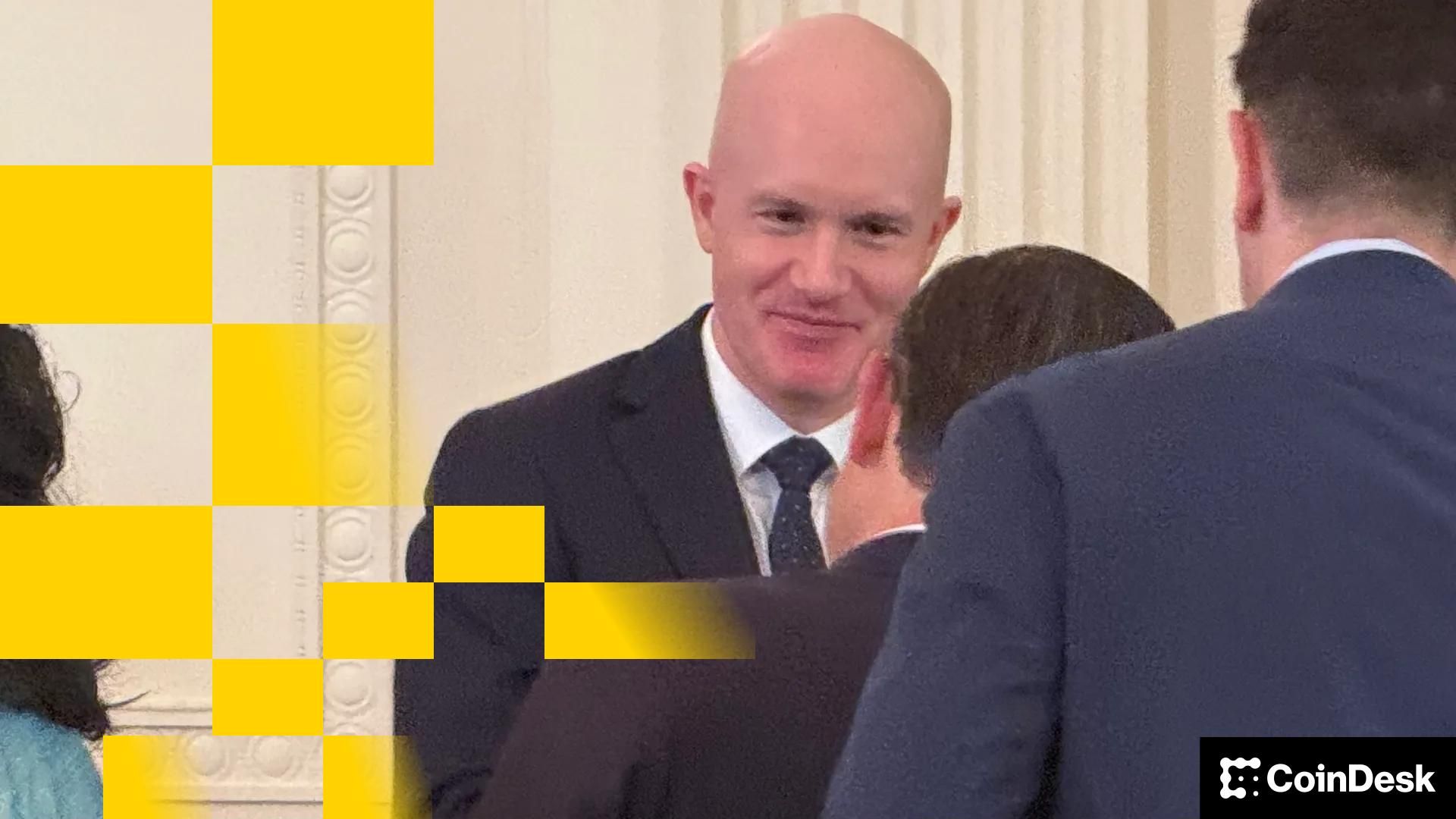
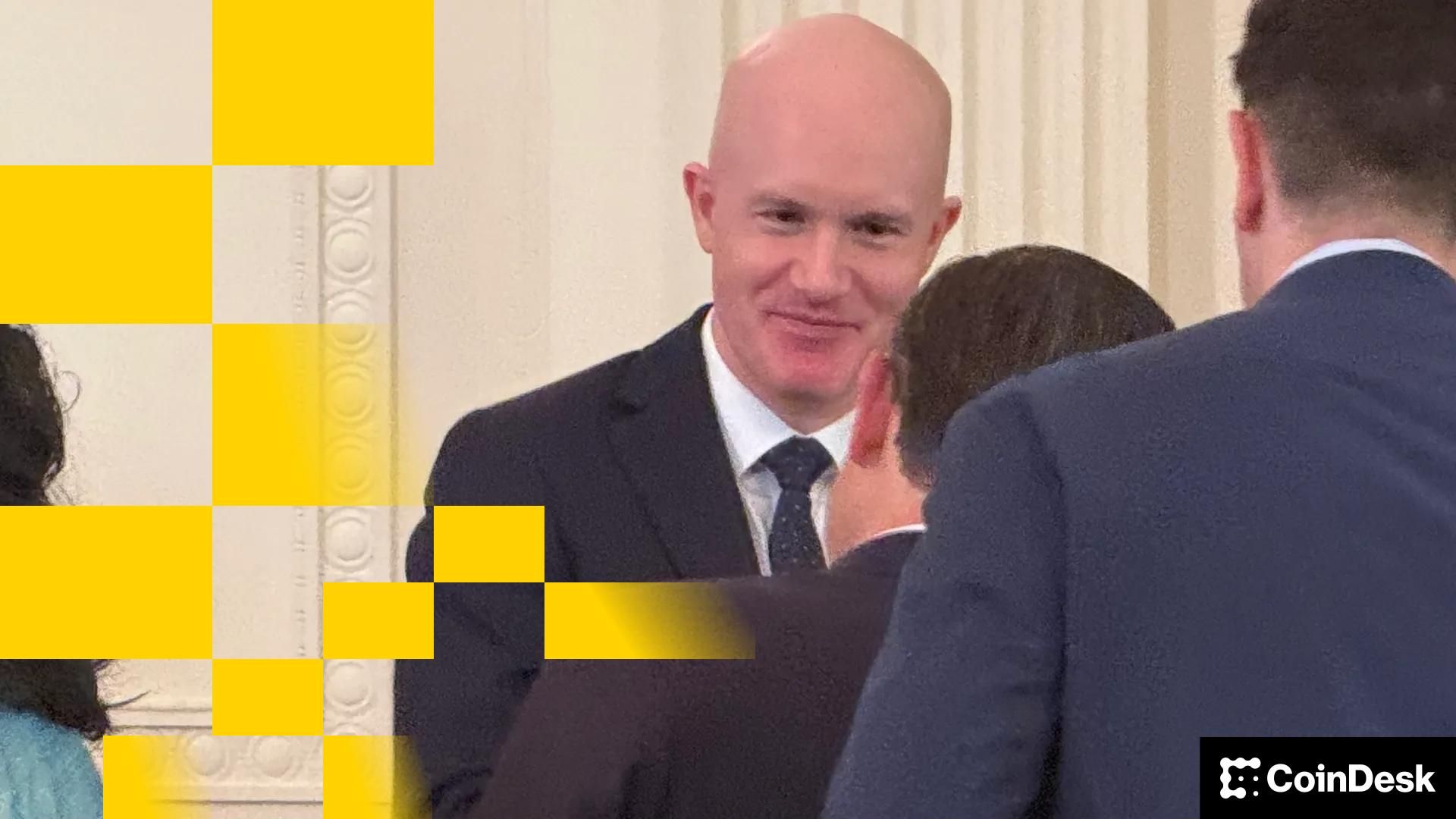
Coinbase (COIN) opened stock and exchange-traded fund (ETF) trading to all U.S. customers, expanding beyond digital assets as part of its plan to become an “everything exchange.”
The roll-out allows users to buy and sell U.S.-listed stocks and ETFs on the same platform they use for crypto. Trading runs 24 hours a day, five days a week, with no commission. Customers can fund trades with U.S. dollars or USDC and buy fractional shares starting at $1.
Coinbase outlined the expansion in December, when it said it intended to bring multiple asset classes under one roof. Earlier this month, it debuted a predictions market, enabling users to trade on the outcomes of real-world events. Stock trading marks another step in that strategy.
The move brings Coinbase into more direct competition with retail brokerages such as Robinhood (HOOD), which has been doubling down on its crypto product suite. It also reflects a push among crypto firms to blend the asset class with traditional financial products. Breaking away from a crypto-only business model could help Coinbase loosen the tie between its share price and bitcoin so it trades more like a diversified tech stock, offering some cushion during a crypto downturn.
Both COIN and HOOD have lost about 35% this year as digital assets struggle. EToro (ETOR) is 13% lower over the same period, with the company’s fourth-quarter earnings showing strong equities trading on the platform.
To support the introduction, Coinbase has an agreement with Yahoo Finance. The financial news site will feature a button that lets users move from researching a stock to executing a trade on the exchange. Yahoo Finance will also display real-time data from Coinbase within its interface.
Coinbase said it is working with Apex Fintech Solutions for clearing custody and execution.
The company plans to expand 24/5 trading to more stocks in the coming months. It has also signaled interest in offering tokenized stocks, which would allow equities to move on blockchain networks and potentially trade around the clock.


BTC kept 0% privacy gains to maximize decentralization, says Buterin at Chiang Mai event.
Summary
- Buterin says BTC’s early design made decentralization the primary constraint, leaving privacy under-optimized.
- Early crypto systems relied on centralized entities for privacy because tech couldn’t support both strong decentralization and privacy.
- Advances like zk-SNARK now let parts of ETH’s ecosystem experiment with on-chain privacy tools BTC never integrated.
Ethereum founder Vitalik Buterin stated that Bitcoin has prioritized decentralization over privacy features since its launch, according to remarks made at an event in Chiang Mai, Thailand.
Buterin explained that Bitcoin’s emphasis on decentralization has resulted in privacy features that are not fully optimized, according to reports from the event.
The Ethereum co-founder noted that early cryptographic technologies relied on centralized institutions for privacy protection because ensuring both decentralization and privacy simultaneously was not practically feasible at the time, according to his statements.
Buterin added that advancements in privacy technologies over the past decade, including zk-SNARK, have enabled parts of the Ethereum ecosystem to explore methods for integrating privacy features into on-chain systems, according to the remarks.
The comments represent Buterin’s latest public assessment of Bitcoin’s technical architecture and design trade-offs. No further details about the specific event or additional context were immediately available.
Binance delists 19 margin pairs on Feb 26, citing liquidity, volume, and risk controls.
Summary
- Binance will remove 10 cross and 9 isolated margin pairs at 02/26 06:00–09:00 UTC after a scheduled review.
- Criteria for removal include low liquidity, thin volume, and elevated risk metrics across affected pairs.
- Users must close or adjust positions before the deadline or face automatic liquidation and order cancellation.
Cryptocurrency exchange Binance announced plans to remove 19 margin trading pairs from its platform, effective February 26 at 09:00 UTC, according to a statement posted on the company’s official website.
The delisting will affect 10 cross margin trading pairs and nine isolated margin trading pairs, the exchange stated.
The decision follows periodic evaluations of criteria including liquidity, trading volume, and risk factors associated with the affected pairs, according to the announcement. Binance conducts regular listing reviews aimed at protecting user security and maintaining market stability in margin markets, the company said.
Users holding open positions in the affected trading pairs must close their positions or make necessary adjustments before the specified deadline, the exchange warned. Failure to do so may result in automatic liquidation processes being activated by the system, according to the announcement.
The statement did not provide information regarding any changes to spot markets. The exchange advised investors to monitor official announcements for updates.
Binance operates as one of the largest cryptocurrency exchanges globally by trading volume.
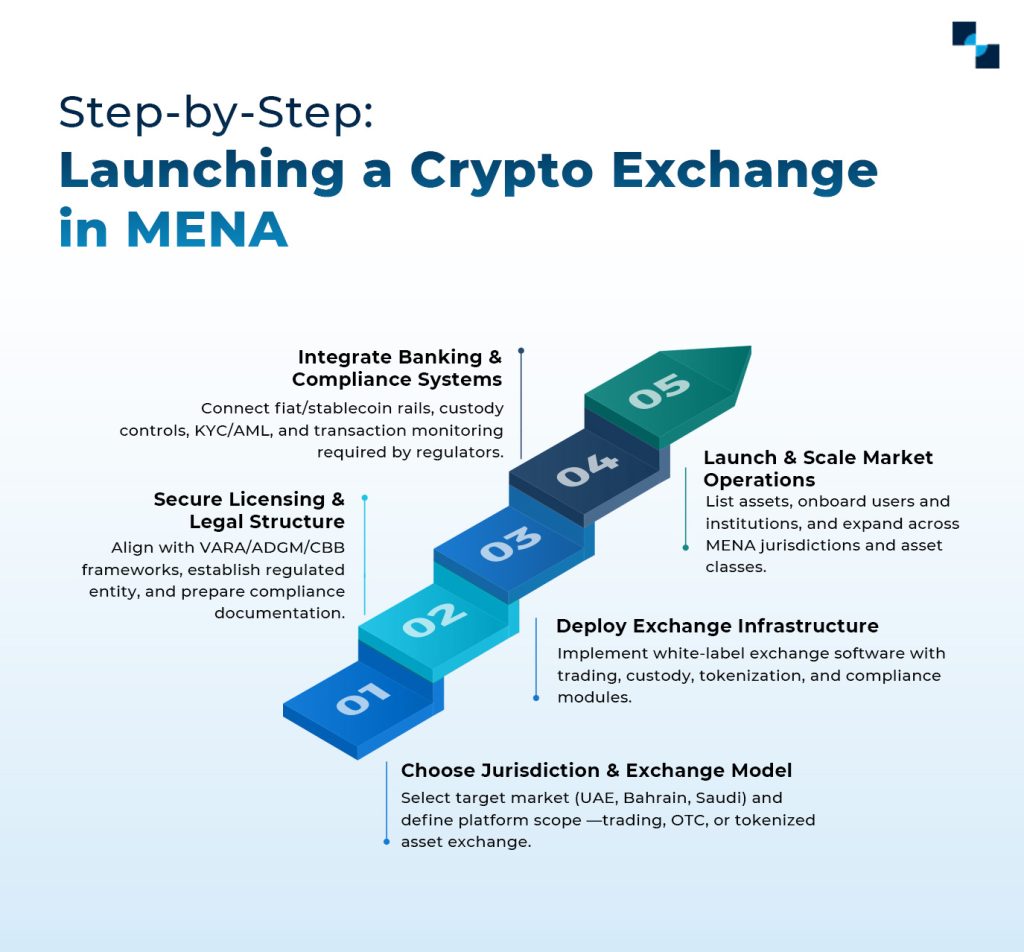
The Middle East and North Africa (MENA) region is rapidly emerging as one of the world’s most structured environments for regulated digital asset markets. Regulated hubs like the UAE, alongside fast-growing grassroots adoption across North Africa, create a $250B addressible market. According to the World Crypto Rankings 2025 report released by DL and Bybit, the UAE ranks #1 in MENA and 5th globally for crypto adoption. The country recorded $56 billion in crypto inflows between 2024-25, reflecting a 33% YoY growth, with institutional transfers accounting for roughly half of the activity. In December 2024, the MENA-wide digital asset transaction volumes also reached their monthly peak at $60B, indicating a robust regional demand beyond the Gulf hubs.
This rapid expansion of regulated digital asset activity is driving demand for compliant crypto exchange software development tailored to regional licensing, banking integrations, and asset-issuance requirements. Across the Gulf, crypto trading platforms are evolving beyond retail exchanges into regulated financial infrastructure supporting custody, brokerage, tokenized-asset issuance, and cross-border digital-asset settlement within unified venues.
For institutions, fintech operators, and market entrants, launching cryptocurrency exchange software in the MENA region, therefore, requires architecture and features aligned with both market demand and regulatory frameworks. The guide outlines the core architecture, essential features, regulatory requirements, and step-by-step process needed to deploy crypto exchange software across the MENA region.
Why the MENA Region Is Becoming a Global Crypto Exchange Hub?
- Regulatory clarity led by the UAE and Bahrain
VARA (UAE), ADGM (Abu Dhabi), CBB (Bahrain), and emerging Saudi regulatory frameworks provide licensing pathways for crypto exchange software, custodians, and brokers across the region.
- Rapid growth in regulated digital-asset activity
As stated earlier, the UAE processed tens of billions in crypto flows and ranks among the leading global adoption markets.
- Institutional and high-value transaction dominance
According to Chainanalysis, institutional and VIP-sized transfers accounted for a substantial share of regional crypto activity in 2024-2025, reinforcing demand for custody-integrated and OTC-capable exchange infrastructure.
- Expansion of tokenized real-world asset markets
GCC economies are advancing regulated tokenization initiatives, including national real-estate tokenization programs and large-scale asset-issuance pilots.
- High cross-border capital and remittance flows
GCC countries collectively processed over USD 131.5 billion in outbound remittances annually in 2023. Stablecoin settlement and digital-asset transfers have captured more than 10-20% of the remittance market globally over the past year.
- Adoption beyond regulated hubs
MENA crypto exchange development opportunity isn’t limited to the UAE or middle east. North African markets, such as Egypt and Morocco, rank among the world’s top crypto-adoption economies, despite having restrictive regimes, indicating latent exchange demand across the broader region.
- Institutional capital entering digital assets
Several banks, brokers, and investment firms are launching regulated crypto trading services. Over the past few years, the following regional banks and institutions in the UAE have embedded regulated digital asset offerings into their existing services.
| Entity Type | Institution | Service Launched | Year | Key Features |
|---|---|---|---|---|
| Bank | Standard Chartered (UAE) | Institutional Custody | 2024 | DFSA-licensed; services for institutional clients like hedge funds. |
| Bank | Emirates NBD (ENBD) | Partior Blockchain Rails | 2024 | Real-time cross-border settlement using blockchain technology. |
| Invest. Firm | CBB Licensed Firms | Stablecoin Issuance (SIO) | 2026 | First framework for BHD-pegged and USD-pegged stablecoins. |
| Central Bank | Saudi Central Bank (SAMA) | Bitcoin Holding/Sovereign Exposure | 2024/25 | Indirect exposure via micro-strategy style holdings ($68B+). |
| Broker | OKX Middle East | VASP Broker-Dealer | 2024 | Full retail/institutional license for spot, derivatives, and fiat. |
| Broker | Binance FZE | Full VASP License | 2024 | Migrated to a full operational license for trading and custody in Dubai. |
| Bank | Neom/Digital Banks | Blockchain Settlements | 2026 | Exploring CBDC and blockchain-based smart contracts. |
| Broker | IG UAE | Crypto CFDs | 2024/25 | Regulated crypto derivative trading without needing a digital wallet. |
| Bank | RAKBANK | Retail Trading (Bitpanda) | 2025 | First major local bank to offer direct AED-to-crypto in-app trading. |
| Broker | Binance Bahrain | VASP License / Banking Rails | 2024 | Full license to operate in the Kingdom’s “Crypto Hub.” |
| Bank | Liv Bank (ENBD) | Retail “Liv X” Trading | 2025 | Digital-native bank offering trading via Aquanow partnership. |
| Invest. Firm | Mashreq Capital | BITMAC Fund | 2025 | Regulated hybrid fund (BTC + Gold/Equity) with low entry barriers. |
| Invest. Firm | Blockchain Founders Fund | Web3 VC Operations | 2025/26 | Expanded Dubai presence for institutional Web3 equity & token deals. |
| Bank | Sygnum Bank (DIFC) | Crypto-Lending & Staking | 2026 | Lombard loans against crypto assets and 24/7 instant settlement. |
| Invest. Firm | QFC Digital Asset Lab | Tokenized Asset Trading | 2025 | Qatar Financial Centre legalized “Security Tokens.” |
| Bank | Comm. Bank of Dubai | Open Finance APIs | 2026 | First “Open Finance” bank connecting bank accounts to crypto VASPs. |
| Broker | Local VASPs | Regulated Trading License | 2025/26 | Shifted from a ban to licensing under Law No. 14 of 2025. |
| Broker | Bitunix / Deepcoin | Specialized Derivatives | 2026 | High-leverage futures trading for experienced local traders. |
| Bank | BBK (Bank of Bahrain & Kuwait) | Crypto-as-a-Service (MoU) | 2025 | First GCC bank to integrate Binance’s white-label API. |
Core Architecture & Essential Features for MENA-Ready Crypto Exchange Development
Launching crypto exchange software in the MENA region requires an architecture that supports regulated trading, tokenized asset issuance, compliance controls, and financial integration aligned with regional markets. Core infrastructure components and essential features must, therefore, include:
1. Multi-Asset Trading and OTC Execution Engine
As mentioned above, the MENA markets show significant demand for high-value, specific and institutional-size transactions. Cryptocurrency exchange software must therefore support spot, OTC and block-trade execution with configurable spreads, competitive pricing, and broker-assisted workflows.
2. RWA Tokenization and Listing Infrastructure
Observing the pace of regional tokenization initiatives, no crypto exchange software can afford to exclude asset issuance and listing. Crypto trading platforms must build infrastructure to onboard, list and support secondary trading of tokenized RWAs such as real estate, funds, and structured investments within the same venue as crypto assets.
3. Institutional Custody and Settlement Controls
Cryptocurrency exchange development requires custody controls such as segregated wallets, managed accounts, settlement approvals, and reporting suitable for regulated financial entities to support increasing institutional participation in MENA.
4. Stablecoin Transfer and Settlement Capability
Given the region’s massive remittance flows and stablecoin adoption, cryptocurrency exchanges should facilitate deposits, withdrawals, and on-platform cross-border value transfers alongside trading functionality.
5. GCC Banking and Fiat Integration
Cryptocurrency exchange software must connect to regional banking rails for deposits and withdrawals in local currencies and stablecoins redemptions, enabling compliant treasury and settlement operations.
6. Compliance, Surveillance, and Reporting Systems
For MENA-based cryptocurrency exchange development, businesses must integrate AML/KYC onboarding, transaction monitoring and regulatory reporting workflows required by VARA and other frameworks.
7. Sharia-Aligned Asset and Market Configuration
Islamic-finance-alligned markets require configurable screening of assets, trading rules and product structures to support Sharia-compliant digital-asset offerings. Cryptocurrency exchange software targeting middle east markets must integrate such controls to enhance authorities and peoples’ confidence in their platforms.
8. Privacy and Data Governance Controls
Apart from the Sharia regime, various regional data protection and AML frameworks govern crypto activity in the region. Crypto exchange software built for the MENA markets must, therefore, implement user-data governance, permissioned visibility and transaction monitoring controls to comply with such requirements.
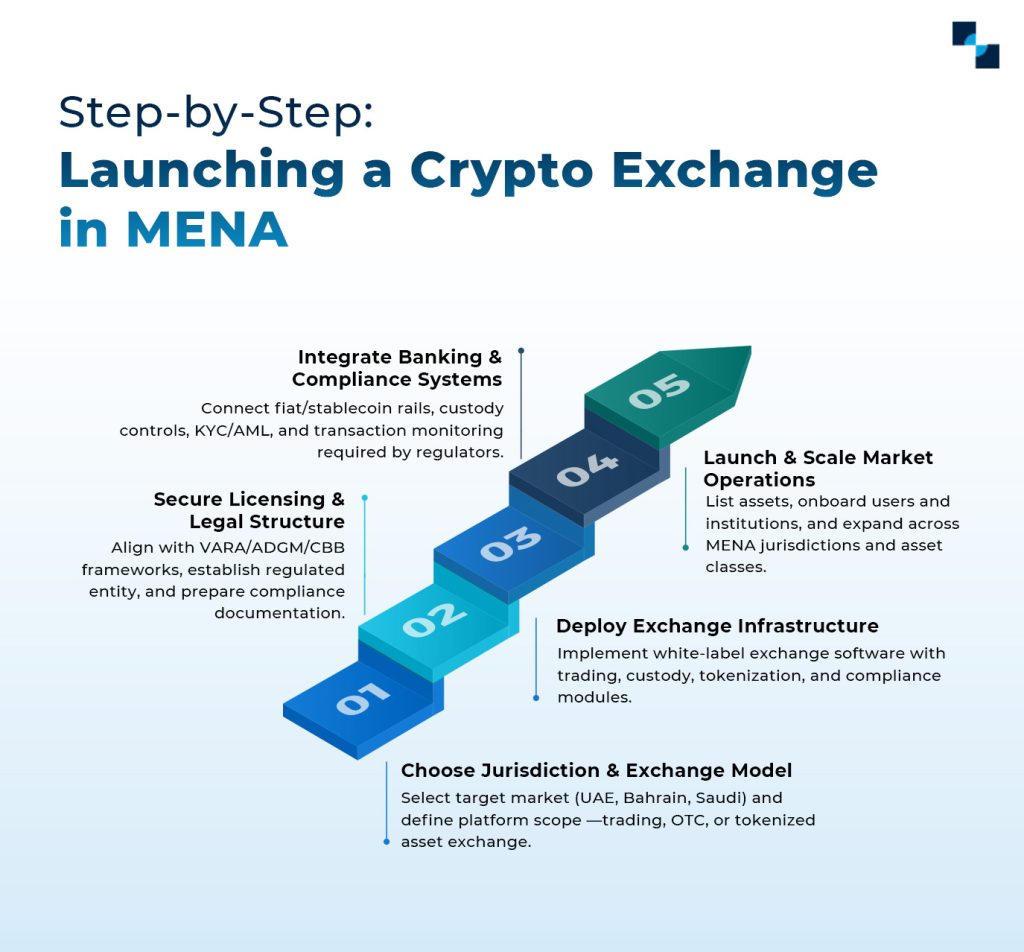
Antier recently introduced VARA-ready white label crypto exchange infrastructure for UAE and MENA markets, reflecting growing demand for regulated digital-asset venues capable of supporting both trading and compliant asset issuance within unified exchange environments. For institutions planning early entry into the region, it combines remittance, asset issuance, banking connectivity, robust custody and other region-relevant functionalities.
What are the Regulatory Requirements for Launching a Crypto Exchange in MENA?
| Regulatory Area | What Regulators Require | Operational Impact on Crypto Exchange Software |
|---|---|---|
| VASP / Exchange Licensing | Authorization from VARA (Dubai), ADGM (Abu Dhabi), CBB (Bahrain), or relevant authority | Defines permitted services (trading, brokerage, custody, issuance) and geographic scope |
| Custody & Asset Safeguarding | Segregation of client assets, secure wallet architecture, settlement controls | Requires institutional custody, segregated accounts, approval workflows |
| AML/KYC & Transaction Monitoring | Identity verification, sanctions screening, ongoing transaction surveillance | Onboarding, monitoring, and reporting modules embedded in vcrypto exchange software development |
| Market Surveillance & Reporting | Trade monitoring, abuse detection, regulator reporting | Crypto exchange software must implement surveillance and audit trails |
| Banking & Fiat Integration Approval | Licensed banking partnerships and approved fiat rails | Fiat deposits/withdrawals and stablecoin redemption tied to banking partners |
| Tokenization / Asset Issuance Authorization | Approval for listing or issuing tokenized assets under securities/asset frameworks | Cryptocurrency exchange software must support compliant asset onboarding and lifecycle controls |
| Data Protection & Privacy Compliance | User data storage, consent, and processing rules under regional laws | Data governance, access control, and auditability requirements |
| Sharia Compliance (where applicable) | Asset screening and product structuring aligned with Islamic finance | Cryptocurrency exchange must enable Sharia-aligned asset configuration and trading rules |
Since regulatory requirements differ across MENA jurisdictions, exchange operator must collaborate with legal council at cryptocurrency exchange development company to pursue country-specific licensing strategies while deploying adaptable exchange infrastructure.
How Antier Enables MENA Crypto Exchange Software Launches
It is clear that launching a regulated crypto exchange software in the MENA region requires fool-proof infrastructures embedded with regional-specific architecture and feature components. Those building crypto exchange software must now build crypto exchange superapps with features that resonate with the target region’s demand.
Antier’s VARA-ready white label crypto exchange infrastructure supports the regional evolution by combining regulated trading, RWA tokenization, institutional custody, banking connectivity, and compliance controls aligned with MENA regulatory frameworks. This enables financial institutions, fintech operators, and market entrants to deploy crypto exchange software tailored to regional licensing and market requirements without building from scratch.
For organizations planning entry into MENA digital-asset markets, adopting jurisdiction-aligned exchange architecture early provides a structural advantage in licensing readiness and banking integration. As the region continues to formalize regulated digital-asset ecosystems, cryptocurrency exchange software built on compliant and adaptable infrastructure will be best positioned to scale across multiple MENA jurisdictions.
Talk to our experts to get started with MENA-alligned crypto exchange development.
The Governance Exploit Nobody Is Pricing In. Bridges get hacked. That’s old news. We’ve seen the carnage: nine-figure exploits, drained liquidity, emergency shutdowns, Twitter threads filled with “funds are safu” copium.
From Ronin Network to Wormhole, bridge exploits have become a recurring tax on innovation. But here’s the uncomfortable truth. The next systemic risk in crypto probably won’t be a bridge exploit. It’ll be a governance exploit enabled by cross-chain voting power. And almost nobody is pricing it in.
The Shift: From Asset Bridges to Power Bridges
Cross-chain infrastructure has evolved.
We’re no longer just bridging tokens for yield. We’re bridging:
Protocols increasingly allow governance tokens to exist on multiple chains simultaneously — often via wrapped representations or omnichain token standards (like those enabled by LayerZero Labs).
This improves capital efficiency and participation.
But it also introduces a new attack surface:
The separation of voting power from finality.
The Core Problem: Governance Is Local. Voting Power Is Not.
Governance contracts typically live on a single “home” chain.
But voting power can be represented across multiple chains.
This creates a dangerous gap:
-
Tokens are locked on Chain A
-
Voting power is mirrored on Chain B
-
Governance decisions are executed on Chain A
If the system relies on cross-chain messaging to sync voting balances, any delay, exploit, or manipulation in that messaging layer becomes a governance vector.
You don’t need to drain liquidity.
You just need to distort voting power long enough.
And governance proposals often pass with shockingly low turnout.
The Attack Path Nobody Talks About
Let’s walk through a hypothetical.
Step 1: Acquire or Manipulate Voting Power Cross-Chain
An attacker:
-
Borrows governance tokens
-
Bridges them to a secondary chain
-
Exploits a delay in balance updates
-
Or abuses inconsistencies in wrapped token accounting
In poorly designed systems, the same underlying tokens may temporarily influence voting in multiple domains.
Even if briefly.
Even if “just a bug.”
Governance doesn’t need hours. It needs one block.
Step 2: Flash Governance
We’ve already seen governance flash-loan exploits in DeFi.
The most infamous example? The attack on Beanstalk in 2022.
The attacker used flash loans to acquire massive voting power, passed a malicious proposal, and drained ~$182M.
Now imagine that dynamic — but across chains.
Flash-loaned tokens → bridged representation → governance vote → malicious proposal executed → unwind.
All before the watchers even understand what happened.
Step 3: Proposal Payloads as Weapons
Governance proposals can:
If cross-chain voting power is compromised, the proposal payload becomes the exploit.
No bridge drain required.
Just governance “working as designed.”
Why Markets Aren’t Pricing This Risk
Three reasons.
1. Everyone Is Still Fighting the Last War
After major bridge hacks, teams hardened signature validation and multisig thresholds.
But governance-layer risk is subtler.
It doesn’t show up as “TVL at risk” on dashboards.
It shows up as “who controls protocol direction.”
That’s harder to quantify.
2. Voting Participation Is Low
Many DAOs struggle to get 10–20% participation.
Which means:
You don’t need 51%.
You need slightly more than apathy.
Cross-chain voting power distortions don’t need to be massive. They just need to be decisive.
3. Composability Multiplies Complexity
Modern governance stacks combine:
-
Delegation contracts
-
Token wrappers
-
Cross-chain messaging
-
Snapshot systems
-
Execution timelocks
Each layer introduces potential inconsistencies.
And composability means failures cascade.
Where the Real Risk Lives
This isn’t about one protocol.
It’s systemic.
The more governance tokens become:
The more fragile governance assumptions become.
If a governance token is:
You’ve built a multi-dimensional voting derivative.
And derivatives break under stress.
Ask TradFi. They have scars.
The Governance Exploit Nobody Is Pricing In
Markets price:
-
Smart contract risk
-
Bridge exploit risk
-
Oracle manipulation risk
But they do not price:
Cross-domain voting synchronization risk.
No dashboards are tracking:
-
Governance message latency
-
Cross-chain vote desync windows
-
Wrapped-token vote inflation
-
Double-counted delegation
Yet these variables may determine who controls billion-dollar treasuries.
What Builders Should Be Doing (Now)
If you’re designing cross-chain governance:
1. Separate Voting Power from Bridged Liquidity
Avoid naïve 1:1 mirroring without strict finality checks.
2. Introduce Vote Finality Windows
Require:
-
Cross-chain state verification
-
Message settlement delays
-
Proof-of-lock confirmations
Before votes are counted.
3. Use Decay or Cooldowns on Newly Bridged Tokens
Voting power shouldn’t activate instantly after bridging.
If tokens just moved chains 5 seconds ago, maybe they shouldn’t decide protocol destiny.
4. Simulate Governance Stress Scenarios
Run adversarial simulations:
If your governance model breaks under simulation, it will break in production.
What Investors Should Be Asking
Before allocating to a multi-chain DAO:
-
Where does governance live?
-
How is voting power mirrored?
-
Can voting power be double-counted during bridge latency?
-
What happens if the messaging layer stalls?
-
Is there a time lock between the vote and execution?
If the answers are vague, the risk is real.
And it’s not priced in.
The Inevitable Wake-Up Call
Crypto learns through catastrophe.
-
Smart contract exploits → audits became standard.
-
Oracle exploits → TWAP and redundancy
-
Bridge hacks → validator hardening
Governance-layer cross-chain exploits are likely next.
And when it happens, it won’t look like a hack.
It’ll look like a proposal that “passed.”
That’s the scary part.
Final Thought
Cross-chain infrastructure is powerful. It enables capital mobility, global participation, and modular design.
But it also decouples authority from location.
And when authority becomes fluid across chains, attackers don’t need to steal funds.
They just need to win a vote.
That’s the governance exploit nobody is pricing in.
And by the time the market does, it’ll already be too late.
REQUEST AN ARTICLE
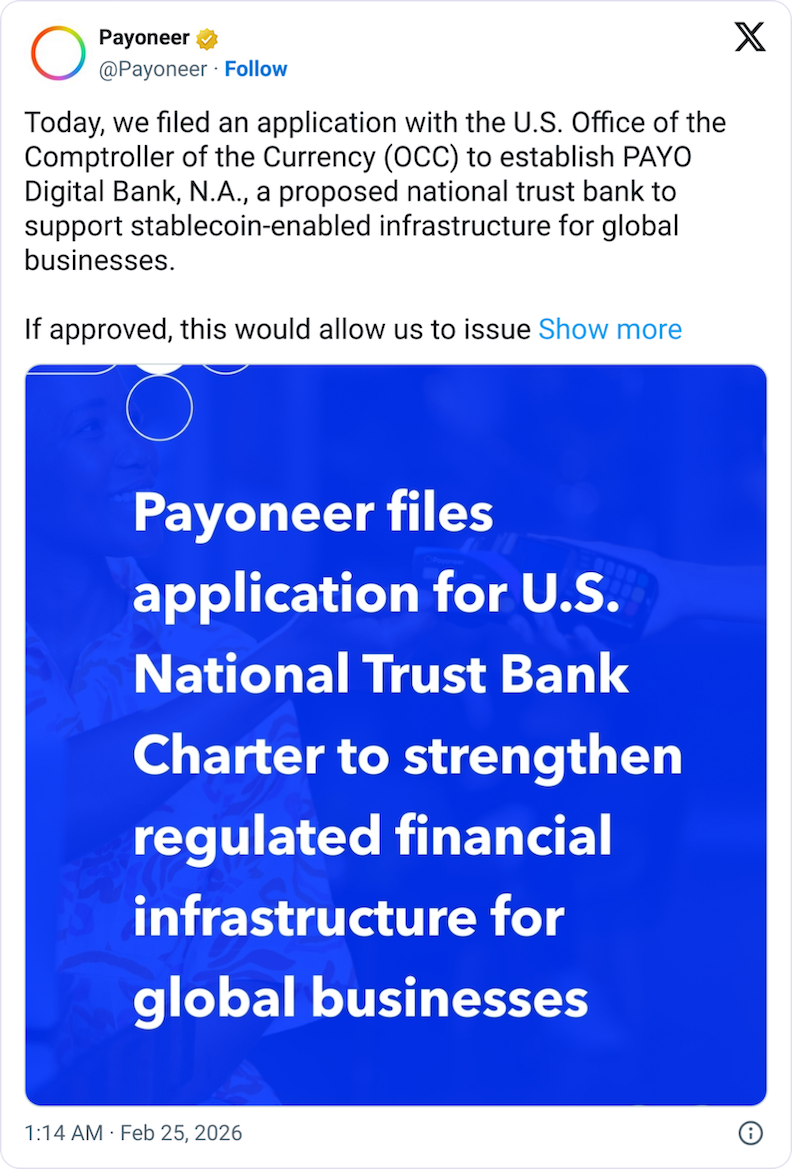
Global financial services firm Payoneer is the latest in a growing number of companies that have filed for a national trust banking charter in the US, which could enable it to issue a stablecoin and provide various crypto services.
Payoneer said on Tuesday it filed with the Office of the Comptroller of the Currency to form PAYO Digital Bank, a week after it partnered with stablecoin infrastructure firm Bridge to add stablecoin capabilities to its platform that is mainly focused on cross-border transactions.
Payoneer said that it is seeking to issue a GENIUS Act-compliant stablecoin, PAYO-USD, to serve as the holding currency in Payoneer wallets, in addition to allowing customers to pay and receive stablecoins.
OCC approval would also enable Payoneer to manage PAYO-USD reserves, offer custodial services and enable customers to convert between the stablecoins into their local currency.
“We believe stablecoins will play a meaningful role in the future of global trade,” said Payoneer CEO John Caplan.

The OCC gave conditional approval to Crypto.com for a charter on Monday, adding to the banking charters won by crypto companies Circle, Ripple, Fidelity Digital Assets, BitGo and Paxos in December.
Related: Better, Framework Ventures reach $500M stablecoin mortgage financing deal
The Trump family’s World Liberty Financial also applied for one in January to expand the use of its USD1 (USD1) stablecoin, but is still awaiting a decision.
Crypto trading platform Laser Platform also submitted an application in January, while Coinbase has been awaiting a decision on its application since October.
Stablecoins ideal for business cross-border transfers: Payoneer
Payoneer said OCC approval would allow it to offer its nearly two million customers, which are mostly small and medium-sized businesses, a regulated stablecoin solution to simplify cross-border trade.
“This offering will help advance the use of the USD in global trade, reduce barriers for American companies competing internationally, and expand the dollar’s presence across non-dollar payment corridors,” it said.
In December, Comptroller of the Currency Jonathan Gould said that new entrants to the federal banking sector was “good for consumers, the banking industry and the economy [as] they provide access to new products, services and sources of credit to consumers, and ensure a dynamic, competitive and diverse banking system.”
Magazine: Did a Hong Kong fund kill Bitcoin? Bithumb’s ‘phantom’ BTC: Asia Express
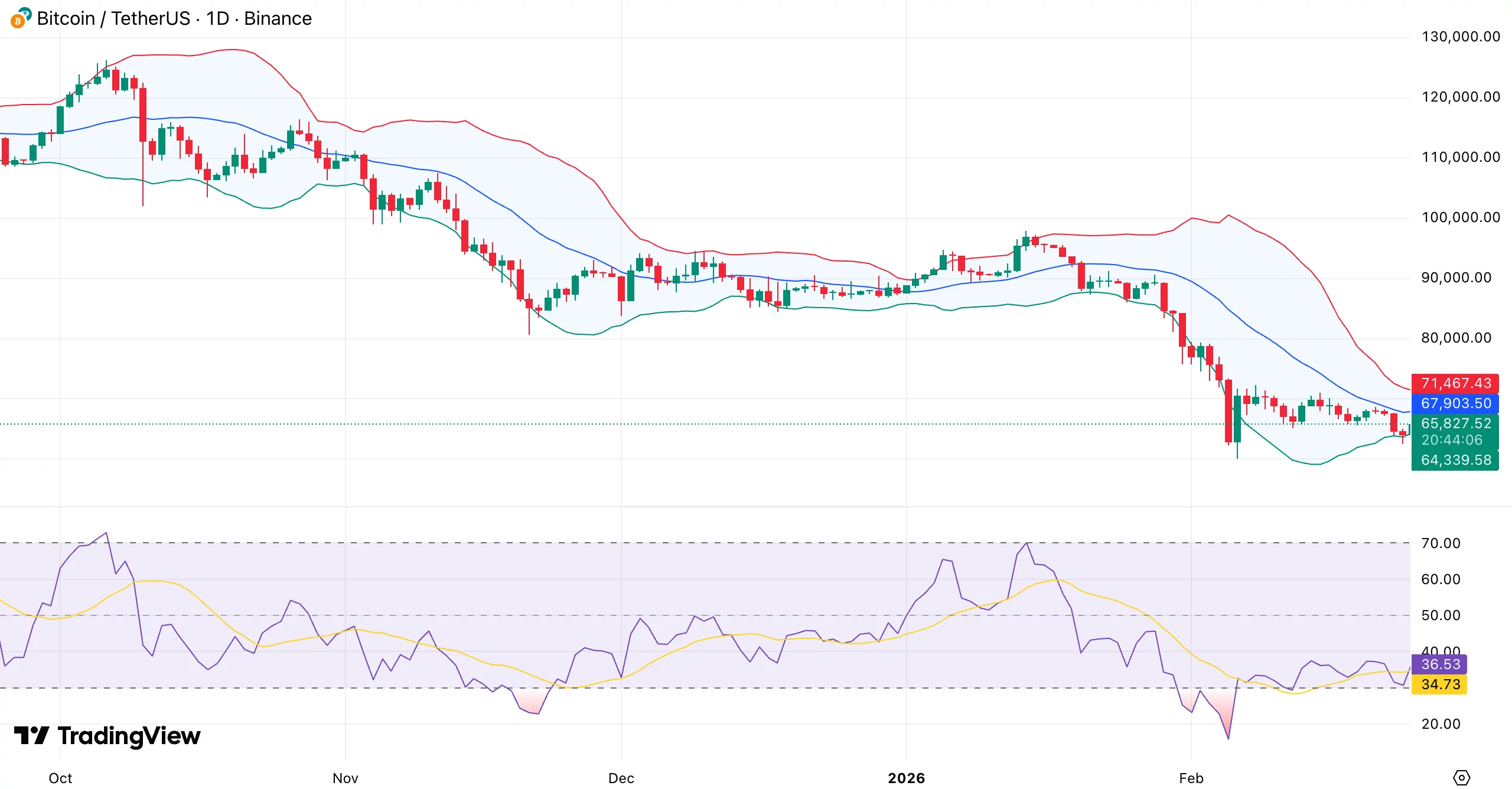
Bitcoin price is attempting a recovery near $65,000 as the Coinbase Premium turns positive despite recent exchange-traded fund outflows.
Summary
- Bitcoin price prediction leans towards trend reversal as the Coinbase Premium flips positive.
- The metric indicates strong U.S. demand returning after recent ETF outflows.
- Price must reclaim key resistance to confirm a stronger recovery.
Bitcoin was trading at $65,907 at press time, up 3.4% in the last 24 hours. The move follows a drop to $62,900 within the past week, where buyers stepped in.
Even with the bounce, Bitcoin (BTC) is still down 24% over the past month and about 50% below its October 2025 all-time high of $126,050.
Trading activity increased during the recovery. Spot volume reached $46 billion, up 22% day over day. In derivatives markets, CoinGlass data shows futures volume up 6.2% to $74.8 billion, while open interest slipped 0.1% to $43.9 billion.
This suggests some traders are closing positions rather than adding aggressive leverage.
Coinbase premium turns positive
On Feb. 25, the Coinbase Premium Index turned positive for the first time in 40 days, hitting 0.0525%, according to CoinGlass.
The index measures the price difference between Coinbase and global exchanges. A positive reading means Bitcoin trades slightly higher on Coinbase, which often reflects stronger U.S. demand.
This shift comes at a time when U.S. spot Bitcoin ETFs have recorded heavy outflows, with roughly $3.8 billion exiting recently. That contrast is important. While ETFs have seen capital leave, the premium suggests some U.S. buyers are stepping back in through exchange flows.
In past cycles, sustained positive premiums have aligned with accumulation phases and relief rallies. However, a single flip does not confirm a trend change. Traders will watch if the premium widens and holds over several sessions.
Bitcoin price prediction: Is the trend reversing?
Bitcoin is attempting to stabilize after a sharp corrective phase. On the daily chart, price is still trading below its short-term trend pivot near the mid-Bollinger band around the high -$67,000 area.
That zone now acts as the line that separates a relief bounce from a stronger recovery attempt.
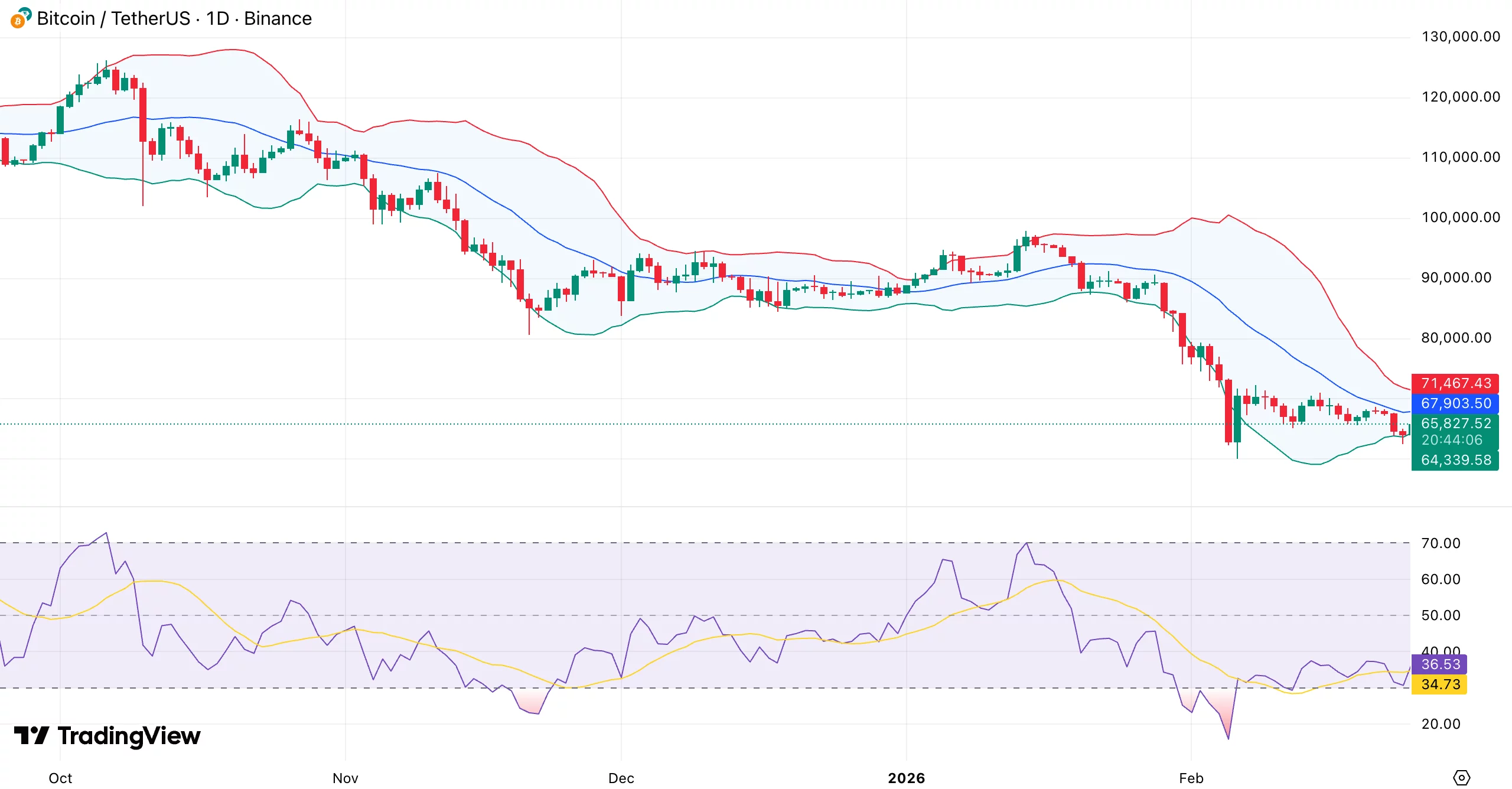
Momentum indicators show improvement from oversold conditions, with the relative strength index climbing from sub-30 levels earlier in February. Bulls have not yet completely taken back control, though, as the RSI is still below the midpoint.
The recovery might reach the low -$70,000 area if the Coinbase Premium holds positive and Bitcoin breaks through the mid-band resistance with growing spot volume. A move into that zone would shift short-term structure and increase confidence that the trend has reversed.
On the other hand, failure to reclaim resistance would keep the price vulnerable to another pullback toward the mid -$64,000 area. A break below that support would raise the risk of a deeper move toward $60,000.
TLDR
- Binance has relaunched tokenized stocks trading through a partnership with Ondo Finance on Binance Alpha.
- The platform lists 10 tokenized U.S. stocks, ETFs, and commodity-linked products.
- Users in the United States cannot access the new tokenized stock offerings.
- Binance previously halted a similar service in 2021 after regulatory scrutiny in Europe.
- Ondo Finance has recorded over $550 million in locked value and $11 billion in cumulative trading volume since September 2025.
Binance has relaunched tokenized stocks trading through a new partnership with Ondo Finance. The exchange will list 10 tokenized U.S. stocks, ETFs, and commodity-linked products on Binance Alpha. The move marks Binance’s return to this market nearly five years after halting a similar service.
Binance and Ondo Finance Launch Tokenized Equities on Alpha
Binance has partnered with Ondo Finance to introduce tokenized versions of major U.S. equities on Binance Alpha. The platform operates within Binance Wallet and targets early-stage digital asset offerings. Users can trade blockchain-based versions of Apple, Google, Tesla, and Nvidia shares.
The lineup also includes the Invesco QQQ ETF, which tracks the Nasdaq index. Binance confirmed that users in the United States cannot access these tokenized stocks. Jeff Li, Binance’s vice president of product, said, “Our users now have even more convenient ways to explore and trade tokenized stocks.”
Binance Alpha allows access to projects before they reach the centralized spot marketplace. The company positions the platform as a gateway for higher-risk digital assets. Through this structure, Binance expands product access while keeping trading within its wallet ecosystem.
Ondo Finance issues the tokenized equities listed on the platform. The company focuses on bridging traditional financial assets with blockchain networks. Binance integrates these tokens directly into its wallet infrastructure.
Binance previously launched tokenized stocks in April 2021, starting with Tesla shares. The exchange later added Coinbase, Strategy, Microsoft, and Apple to the offering. However, regulators in the United Kingdom and Germany raised compliance concerns.
The U.K.’s Financial Conduct Authority and Germany’s BaFin reviewed the product structure. Following regulatory scrutiny, Binance discontinued the service within months. The company has now resumed tokenized equities through its collaboration with Ondo Finance.
Last month, Binance stated that it was considering a renewed push into tokenized equities. The latest listings on Binance Alpha confirm that plan. The rollout follows growing activity in blockchain-based stock trading platforms.
Tokenized Stocks Market Expands Across Exchanges
Tokenized stocks have grown across crypto exchanges and traditional brokerages. The sector’s total value approaches $1 billion, according to recent market data. Ondo Finance reports more than $550 million in locked value.
The company also recorded $11 billion in cumulative trading volume since September 2025. Other exchanges, including Kraken, Bybit, and Gemini, have introduced similar products. Robinhood has also launched tokenized equity trading services.
Traditional exchanges have also outlined plans involving stock tokens. Nasdaq and the New York Stock Exchange have presented proposals tied to blockchain-based trading models. These developments align with Binance’s renewed entry into tokenized equities through Ondo Finance.

2026 Investor Guide (ROI + Taxes)

Coinbase Introduces Stock and ETF Trading in a Move to Widen Offerings

The Extreme, R-Rated Thriller That Destroyed Batman’s Body


![Lyn Alden: "This Changes Everything For Bitcoin & Crypto" [New 2026 Bitcoin and Crypto Prediction]](https://wordupnews.com/wp-content/uploads/2026/02/1771993640_maxresdefault-80x80.jpg)


-

 Video5 days ago
XRP News: XRP Just Entered a New Phase (Almost Nobody Noticed)
-

 Fashion4 days ago
Weekend Open Thread: Boden – Corporette.com
-

 Politics3 days ago
Baftas 2026: Awards Nominations, Presenters And Performers
-

 Entertainment7 days ago
Kunal Nayyar’s Secret Acts Of Kindness Sparks Online Discussion
-

 Sports1 day ago
Women’s college basketball rankings: Iowa reenters top 10, Auriemma makes history
-

 Politics1 day ago
Nick Reiner Enters Plea In Deaths Of Parents Rob And Michele
-

 Tech7 days ago
Retro Rover: LT6502 Laptop Packs 8-Bit Power On The Go
-
 Sports6 days ago
Clearing the boundary, crossing into history: J&K end 67-year wait, enter maiden Ranji Trophy final | Cricket News
-

 Business3 days ago
Mattel’s American Girl brand turns 40, dolls enter a new era
-

 Crypto World21 hours ago
XRP price enters “dead zone” as Binance leverage hits lows
-

 Business2 days ago
Law enforcement kills armed man seeking to enter Trump’s Mar-a-Lago resort, officials say
-

 Entertainment6 days ago
Dolores Catania Blasts Rob Rausch For Turning On ‘Housewives’ On ‘Traitors’
-

 Business7 days ago
Tesla avoids California suspension after ending ‘autopilot’ marketing
-

 Tech2 days ago
Anthropic-Backed Group Enters NY-12 AI PAC Fight
-
 NewsBeat2 days ago
‘Hourly’ method from gastroenterologist ‘helps reduce air travel bloating’
-

 NewsBeat2 days ago
Armed man killed after entering secure perimeter of Mar-a-Lago, Secret Service says
-

 Politics3 days ago
Maine has a long track record of electing moderates. Enter Graham Platner.
-

 Crypto World6 days ago
WLFI Crypto Surges Toward $0.12 as Whale Buys $2.75M Before Trump-Linked Forum
-

 Tech11 hours ago
Unsurprisingly, Apple's board gets what it wants in 2026 shareholder meeting
-
 NewsBeat6 hours ago
Police latest as search for missing woman enters day nine