Connect with us

NewsBeat

Mum died months after her own mum from same devastating illness

Published

on

Mum died months after her own mum from same devastating illness

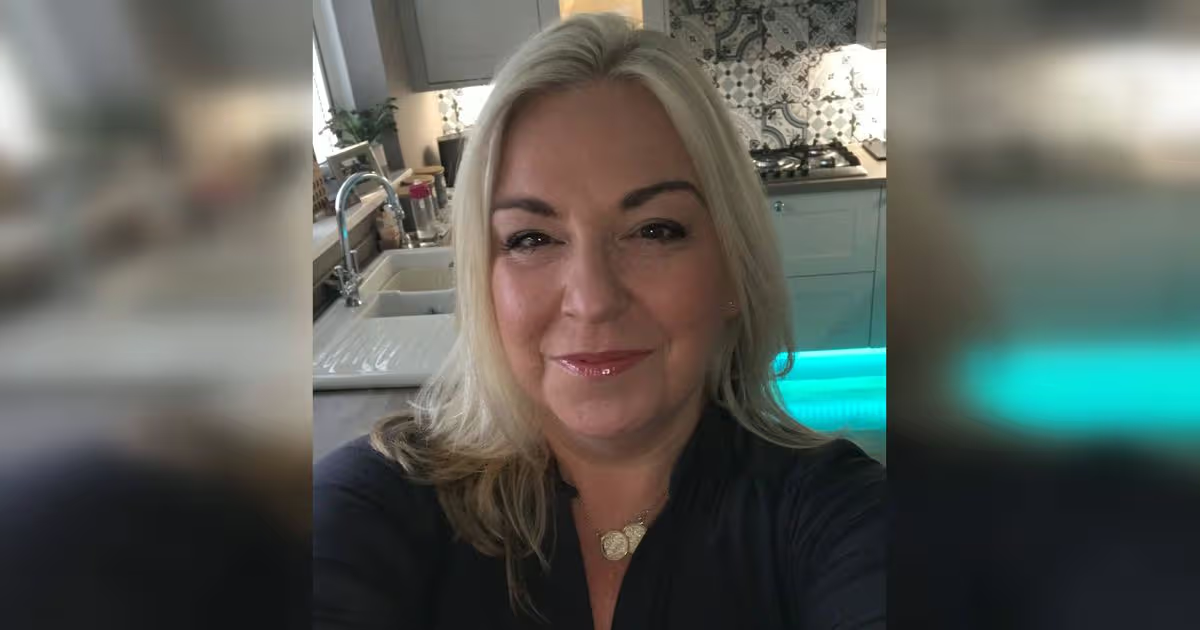
Julie Hatton, 51, was diagnosed with Motor Neurone Disease just weeks after her mum died from the same illness, and died seven months later. Her husband John has written a book about their journey

A woman tragically lost her life just months after her mother succumbed to the same cruel disease.

Advertisement

Julie Hatton, 51, received a Motor Neurone Disease (MND) diagnosis mere weeks following her mum’s death from the condition, and passed away seven months later as the illness took hold rapidly.

Her husband, John Hatton, from St Helens, described how their world was shattered when Julie started displaying alarming symptoms. In November 2023, whilst preparing one of her go-to dishes, she knew something was amiss when she abruptly lost power in her left arm and couldn’t manage to lift a pan off the cooker.

Before long, Julie’s left leg also weakened, and after undergoing examinations, the pair received the heartbreaking MND diagnosis. The condition advanced swiftly, forcing the family to confront the harsh truth about how precious little time remained.

READ MORE: Rihanna’s Beverly Hills home ‘targeted in shooting’ as police make arrestREAD MORE: Meghan shares sweet message for daughter Lilibet when she’s older on International Women’s Day

Ensure our latest headlines always appear at the top of your Google Search by making us a Preferred Source. Click here to activate or add us as your Preferred Source in your Google search settings.

Following her passing, John, who teaches A-level maths, has penned a book called ‘No Plan B’ chronicling their final months as a couple, drawing on diary entries he started keeping throughout Julie’s battle with the disease to honour her memory and shine a light on the condition.

Speaking to the ECHO, John shared: “When Julie’s mum was diagnosed, the words MND came as a massive shock. Julie’s mum died in July, and it was only in November when Julie noticed her own symptoms.”, reports the Liverpool Echo.

Advertisement

“She was concerned and I told her that her mum was in her 70s and Julie was only 51. I said, ‘let’s not think the worst just yet’. But she was convinced. From that day she always said she could feel it and knew what it was.”

Julie initially attempted to regain strength in her arms through gym sessions, but the weakness persisted and deteriorated further. Whilst on a weekend break to Leeds, her condition took a deeply concerning turn when her left leg abruptly collapsed beneath her.

John recalled: “She described it as being like a cardboard tube from a kitchen roll, as if it had kinked and bent in the middle. She cried the whole way home.”

Faced with neurology waiting lists extending for months, the pair opted to go private. Julie underwent examinations at Spire Hospital in Warrington before having an MRI scan at the Liverpool branch.

Advertisement

Subsequent nerve conduction tests ultimately confirmed the diagnosis after detecting widespread muscle fasciculations, especially in the muscles around Julie’s neck, and medics delivered the crushing blow that Julie had MND.

John remembered: “For Julie, it was kind of just confirming her suspicions. For me, it was one of those moments where you see it on adverts, in films but you never believe it will be you. But it was, and we just stood in the reception and hugged. It was like one of those time lapse videos; people were coming and going, and we were just stood stationary. It’s heartbreaking. It’s the worst news you can ever have.”

Julie passed away merely 212 days following her diagnosis, dying on August 17 after receiving the news on January 17. John said: “Watching your wife deteriorate before your eyes, slowly taking her bit by bit is just devastating. Every day, something gets worse. You sleep a little bit longer, your arms and legs are a little bit weaker.

Advertisement

“Eventually, you need a wheelchair to get from the living room to the kitchen, and the bedroom moves downstairs. Eventually you have to go to the hospice because it’s unbelievably difficult to look after somebody at home. I suppose the hardest part is that you want to enjoy what little time you have left together. There’s no cure; there’s never a moment where you think you’ll beat it. You know your fate from the minute you’re diagnosed.”

Through everything, John said Julie remained remarkably resilient: “Even in the toughest of circumstances, Julie was an absolute warrior who fought the disease head-on. She didn’t ever play the victim; she was always so strong and she was absolutely incredible. I still get strength from her, and she’s been gone two-and-a-half years.”

Whilst Julie was ill, John started keeping diary entries, chiefly to document their journey and keep mates informed, but also to make sense of his own feelings. He expressed: “I just wanted to capture as much of Julie as I could. She was so popular and had so many friends, and as time went on, it became a way of keeping everyone involved. She wasn’t hiding away from anything; Julie wanted people to know and understand about MND, because a lot of people don’t. And the longer she slept, the more I wrote.”

Following Julie’s passing, John dedicated half a year to transforming those diary entries into a book. He further stated: “The book is not about me; it’s a love story. It’s about celebrating what Julie had, our life together, and trying to promote the plight of those with MND.”

Advertisement

For those intrigued by John’s book, ‘No Plan B’, you can discover more here.

Source link

Continue Reading
Click to comment

Leave a Reply

Your email address will not be published. Required fields are marked *

NewsBeat

History podcast host becomes Durham Cathedral librarian

Published

on

History podcast host becomes Durham Cathedral librarian

He has taken up the newly created role of Bede Librarian, which aims to promote the cathedral’s archives and collections and foster greater engagement with the legacy of the Venerable Bede—scholar, theologian, and the “father of English history.”

Co-host of ‘The Rest is History’, a podcast under Gary Lineker’s Goalhanger umbrella, he was a winner of Apple Podcasts’ Global Show of the Year in 2025 – the first time a non-American show carried home the gong.

Mr Holland said: “Bede is the father of English history – so what greater honour could there possibly for an English historian than to be appointed the Bede Librarian in the cathedral where he lies buried.”

Advertisement

He will be formally inaugurated as Bede Librarian during the Festal Evensong for Bede on Monday, May 25, at 5.30pm.

The Very Revd Dr Philip Plyming, Dean of Durham, said: “I am thrilled that Tom Holland has accepted the role of Bede Librarian at Durham Cathedral and will be contributing to our life and mission in the years to come.

“Tom is not only an outstanding historian and communicator but also deeply committed to the North East, our saints, and our stories.

Advertisement

“It will be wonderful to have him speaking about such a vital topic as the renewal of our culture and what we can – and must – learn from the past.

“I am also delighted that he will be helping Durham Cathedral share our wonderful archives and collections with an even wider audience.”

Mr Holland will deliver his inaugural lecture in the role on Tuesday, May 26, at 7.30pm at Durham Cathedral.

Titled ‘Cuthbert, Bede and the Renewal of Culture,’ the talk will be a conversation with the Dean of Durham.

Advertisement

He will discuss the influence of Saxon saints Cuthbert and Bede on cultural renewal through leadership and scholarship, reflecting on their continuing relevance in today’s world, marked by “global insecurity, cultural tribalism, and political volatility.”

Mr Holland will be Anna Rowlands, St Hilda Professor of Catholic Social Thought and Practice at Durham University.

Source link

Advertisement
Continue Reading

NewsBeat

Oil prices latest: Energy boss fears ‘white knuckle ride’ ahead as Trump’s Iran strikes send fuel costs soaring

Published

on

Oil prices latest: Energy boss fears ‘white knuckle ride’ ahead as Trump’s Iran strikes send fuel costs soaring

Oil prices: What it means for your money as Brent crude surges past $100 a barrel

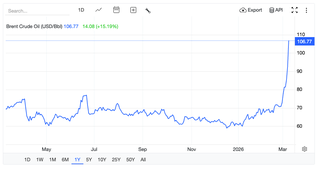
The price of oil has hurtled well past the $100 barrier and sits above $106 on Monday morning – a surge in price of well over a third (37 per cent) in the space of a week, something which promises a big impact on people’s finances.

What we refer to as oil is typically the contract price of Brent crude – a global benchmark for pricing of the commodity regardless of its origin. Brent crude comes from the North Sea. Its price rises and falls in line with supply and demand for oil as a whole, not just of its own type.

Rising oil costs will naturally push energy bills higher, but it’s far from just about turning the heating on – higher fuel costs impact manufacturing, transport, food and everything else.

Advertisement

Karl Matchett, business and money editor, reports:

Bryony Gooch9 March 2026 10:00

Starmer issues warning about Iran war’s impact on economy

The longer conflict with Iran goes on “the more likely the impact on our economy”, Sir Keir Starmer has warned while meeting members of the public.

Advertisement
Prime Minister Sir Keir Starmer said he will ‘always be guided by what is best for the British public’ (PA) (PA Wire)

Bryony Gooch9 March 2026 09:51

EV drivers could feel buffer from oil crisis, warns analyst

Brits who drive electric vehicles could be insulated from spikes in the international energy markets, an analyst from non-profit organisation Energy and Climate Intelligence Unit has said.

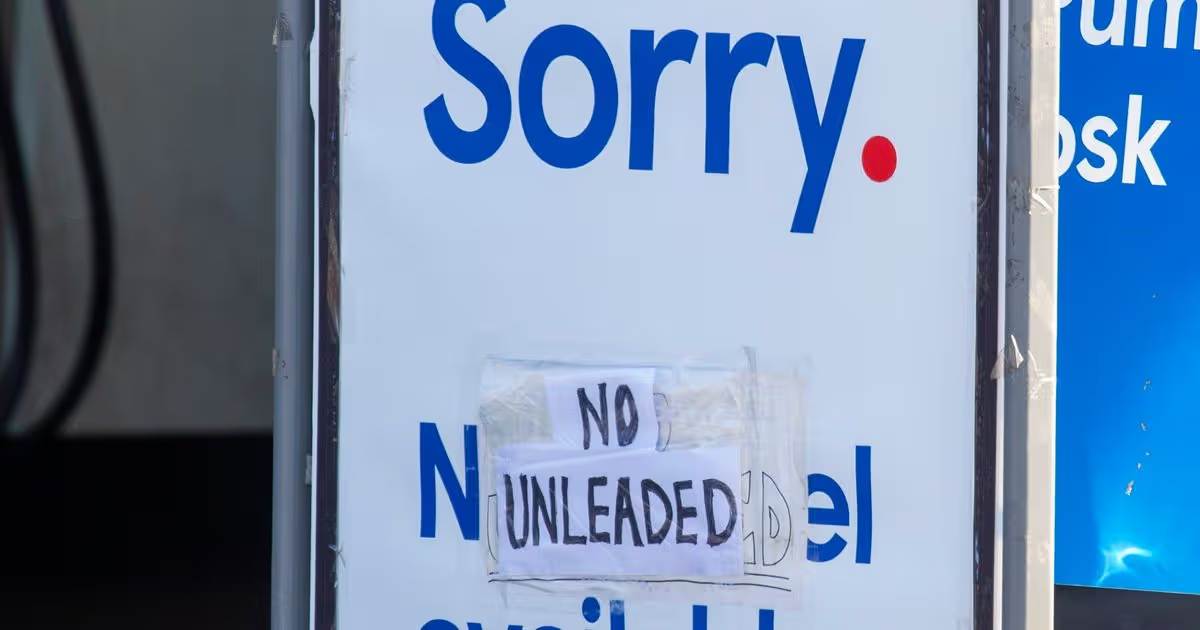
Colin Walker, Head of Transport at the Energy and Climate Intelligence Unit, said:”Such an increase in the price of oil could see a litre of petrol jumping to around £1.90 – a price last seen in 2022 after Russian’s invasion of Ukraine – adding over £500 to the average fuel bill of a British petrol car driver.

Advertisement

“But with 1.8m EVs now on the UK’s roads, an increasing number of British drivers are insulated from these spikes in international energy markets. Accelerating the transition to EVs – increasingly powered by electrons generated by British wind and solar farms – is one of the most effective things the UK can do to end its dependency on foreign oil and protect its drivers from volatile markets over which we have no control”.

Bryony Gooch9 March 2026 09:45

Energy boss warns of ‘white knuckle ride’ ahead

Political reporter Athena Stavrou reports:

Advertisement

The chair of Utilita has warned that there is a “white knuckle ride” ahead as energy bosses “just don’t know” how long the war could impact oil prices.

Derek Lickorish said he “cannot see how” the government will be able to keep its pledge to reduce energy bills, and said there is “big anxiety” about how high gas prices could go.

Speaking about the 2022 oil price increase, Mr Lockorish told Times Radio: “It’s clearly not at this point in time because at the moment, don’t forget the war doesn’t show any signs of coming to an end, there is big anxiety. How high will gas prices go? We just don’t know.”

He added: “It’s going to be a white knuckle ride and we need to be looking at what we can do to try and improve this for customers going forward because if you think back to 2022 we thought that was a one in 100 year event and now we’ve had the second one in four years.”

Advertisement

Bryony Gooch9 March 2026 09:30

£300 or £150 – What has Labour promised on energy costs?

Housing minister Steve Reed has attracted criticism today for refusing to commit to Labour’s promise to cut £300 from household energy bills by 2030.

The pledge was made by the party before the 2024 general election, with Ed Miliband giving the new decade deadline after being appointed energy secretary.

Advertisement

The outbreak of conflict between the US and Iran has cast doubt on this, as new pressure on global gas and oil trade causes wholesale energy costs to spike by around 50 per cent.

In better news for UK households, Ofgem’s energy price cap for April to June was set in February, meaning bills are effectively protected until July. The energy regulator announced a seven per cent, or £117, reduction to the figure, broadly in line with Labour’s pledge to cut energy bills by £150 from the start of the new financial year through scrapping an energy efficiency scheme.

Ofgem will announce its cap for July to September by 27 May. This could be a steep increase of as much as 10 per cent, or £160, increase if there is no de-escalation in the Middle East, experts have warned.

The rise threatens to effectively wipe out the savings Labour was looking to pass to households over the year, however energy bills in this scenario are still lower than they would have been had the government not made the change.

Advertisement

Bryony Gooch9 March 2026 09:25

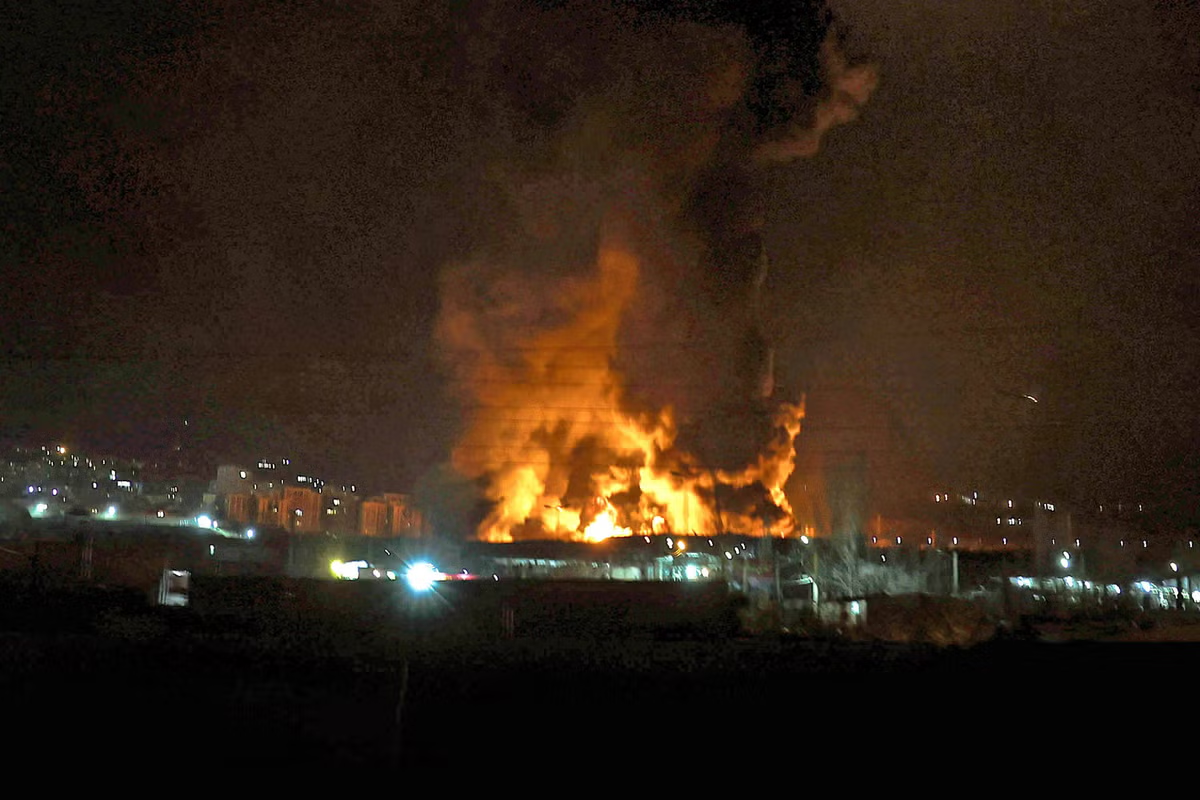
Watch: Huge fire and heavy smoke billows from Tehran fuel depot following Israel strike

Fire erupts in Tehran after Israeli strike hits oil depot

Bryony Gooch9 March 2026 09:17

Advertisement

In pictures: Brent Crude Oil soars as the markets open

(Screenshot/ Trading Economics)

Bryony Gooch9 March 2026 09:11

Economy strong enough to weather storm of Middle East conflict, says minister

Cabinet Minister Steve Reed said the economy was strong enough to weather the economic storm caused by the Middle East war.

The Communities Secretary told ITV’s Good Morning Britain: “Of course, the UK can’t control things that happen, crises that happen across the planet, that have an impact on us here at home.

“What we can control are our own circumstances.”

Advertisement

He said in last week’s spring statement Chancellor Rachel Reeves was able to “point to those benefits of a more stable economy thanks to her stewardship of the economy, that puts us in a better position to weather whatever storms might come our way”.

He added: “Now, when it comes to the cost of oil, and we’ve seen what’s happened overnight, we’re still only just over a week into this conflict, we don’t know how long it will go on, we don’t know what the long-term impact will be on energy prices.

“But, as I say, the fact that we have a more stable economy means we’re in a better position to weather those storms, and we will, of course, keep a very close eye as we monitor the situation.”

Bryony Gooch9 March 2026 09:05

Advertisement

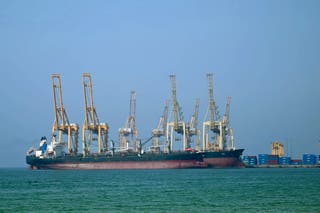
In pictures: Tankers seen at Khor Fakkan Container Terminal along the Strait of Hormuz

(AFP/Getty)

Bryony Gooch9 March 2026 08:52

Watch: Trump’s energy secretary says gas prices will be high for ‘weeks not months’

Trump’s energy secretary says gas prices will be high for ‘weeks not months’

Bryony Gooch9 March 2026 08:47

Source link

Advertisement
Continue Reading

NewsBeat

Kate Middleton’s four-word comment to William after Andrew chat spotted by lip reader

Published

on

Kate Middleton's four-word comment to William after Andrew chat spotted by lip reader

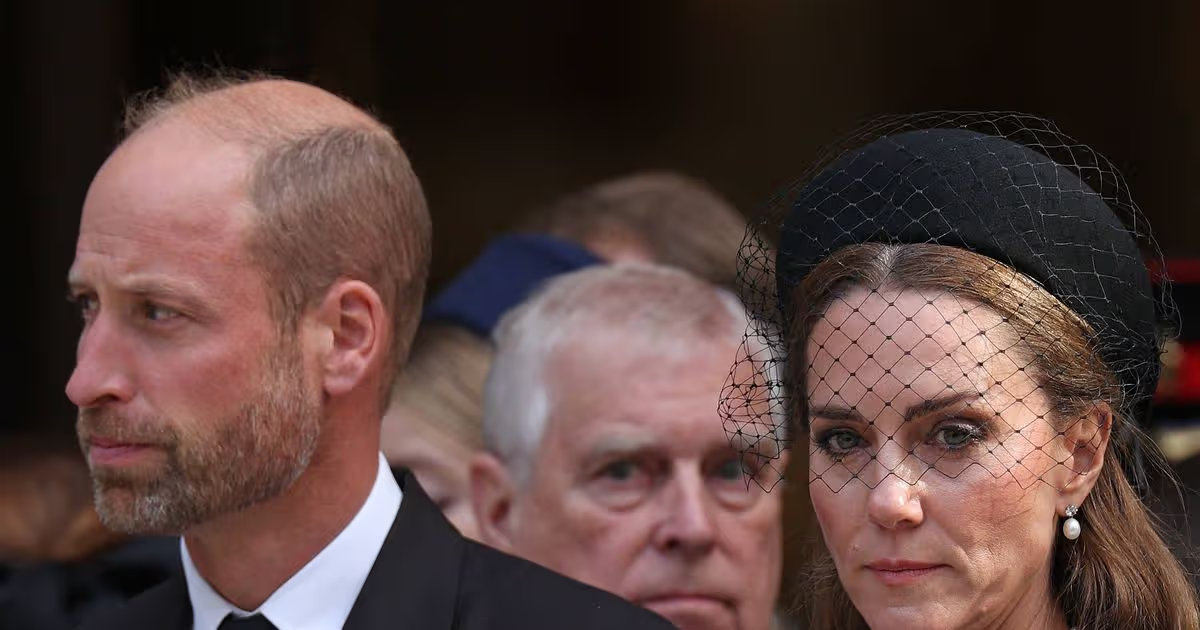
Princess Kate was seen approaching her husband Prince William after a tense exchange with Prince Andrew at the Duchess of Kent’s funeral, with her four-word comment caught by a lip reader

Princess Kate’s four-word remark to Prince William following a tense interaction with Andrew Mountbatten-Windsor has been disclosed by a lip-reader. The former Duke of York approached William whilst both attended the Duchess of Kent’s funeral on September 16.

The exchange occurred as senior royals departed the service whilst awaiting their vehicles. In a new Channel 5 documentary, lip-reader Nicola Hickling suggests Andrew seized the opportunity to seek his nephew’s forgiveness.

Advertisement

In Lip-Reading the Royals, Nicola claims Andrew stated: “I’ve learnt from what I’ve done but before I forget, and if I can, I’d like to ask you if you can forgive?”.

Body language expert Adrienne Carter suggests the question left William “extremely uncomfortable”. She continued: “I think his body language is screaming, ‘Get away from me, I don’t want to be photographed, particularly engaging with you’.”

Queen Elizabeth II’s former press secretary Dickie Arbitar observed: “William’s face said everything, ‘I don’t want to converse with you, push off’. And I think Andrew probably got the message.”

Following Andrew’s departure from the future king, the Princess of Wales is observed approaching her husband on Westminster Cathedral’s steps. According to Hickling, Kate then remarks: “He seems very sorry.”

William reportedly responded “Do you think I deserved that” before questioning “Is that what you mean?” The lip-reader claims Kate repeats her earlier observation to her husband. Royal commentator Christo Foufas was quick to emphasise that Andrew did not actually extend an apology to the Prince of Wales.

He stated: “He might have seemed sorry Princess Catherine but those words did not leave his mouth, he didn’t actually say sorry did he.”

Andrew was relieved of his royal titles a month following the Duchess of Kent’s funeral, amidst mounting scrutiny over his association with convicted sex offender Jeffrey Epstein. His elder brother also instructed him to vacate his 30-room Royal Lodge residence.

Advertisement

Subsequently, Andrew was arrested on suspicion of misconduct in public office, amid allegations he disclosed sensitive information to the paedophile during his tenure as UK trade envoy from 2001 to 2011. He was released under investigation and has yet to face charges.

The former Duke of York has consistently refuted any impropriety stemming from the friendship. This morning, the US Department of Justice unveiled a fresh batch of documents, part of the so-called Epstein files.

Included were low-resolution photos depicting a man who appears to be Andrew, seated with a woman on his lap. The Express suggests these were likely captured at Epstein’s residence.

Advertisement

In another photo, the man is seen with a woman positioned over his shoulders. There is no confirmation that this is the ex-prince, according to the Express. The identities of the women have been redacted in the files.

Meanwhile, Princess Eugenie has stepped down this week from her role as patron of the Anti-Slavery International charity. She received praise for her contributions “across the board with leaders in the fight against modern slavery” but her profile has since been taken down from the organisation’s website.

The charity issued a statement confirming the patronage had “come to an end”. Speaking to the Observer, it said: “After seven years, our patronage from HRH Princess Eugenie of York has come to an end. We thank the Princess very much for her support for Anti-Slavery International. We hope that she continues to work to end slavery.”

Advertisement

Anti-Slavery International holds the distinction of being the world’s oldest human rights organisation. Established in 1839 in London, it originally operated as the British and Foreign Anti-Slavery Society, campaigning for slavery’s abolition following the conclusion of the Transatlantic slave trade.

Its current mission centres on eliminating modern slavery. In 2017, Eugenie co-founded a separate organisation called the Anti-Slavery Collective alongside Julia de Boinville. According to the organisation’s website, she continues to serve as a trustee of the Anti-Slavery Collective.

Source link

Advertisement
Continue Reading

NewsBeat

Red Lion Hotel in Atherton to become nine apartments

Published

on

Red Lion Hotel in Atherton to become nine apartments

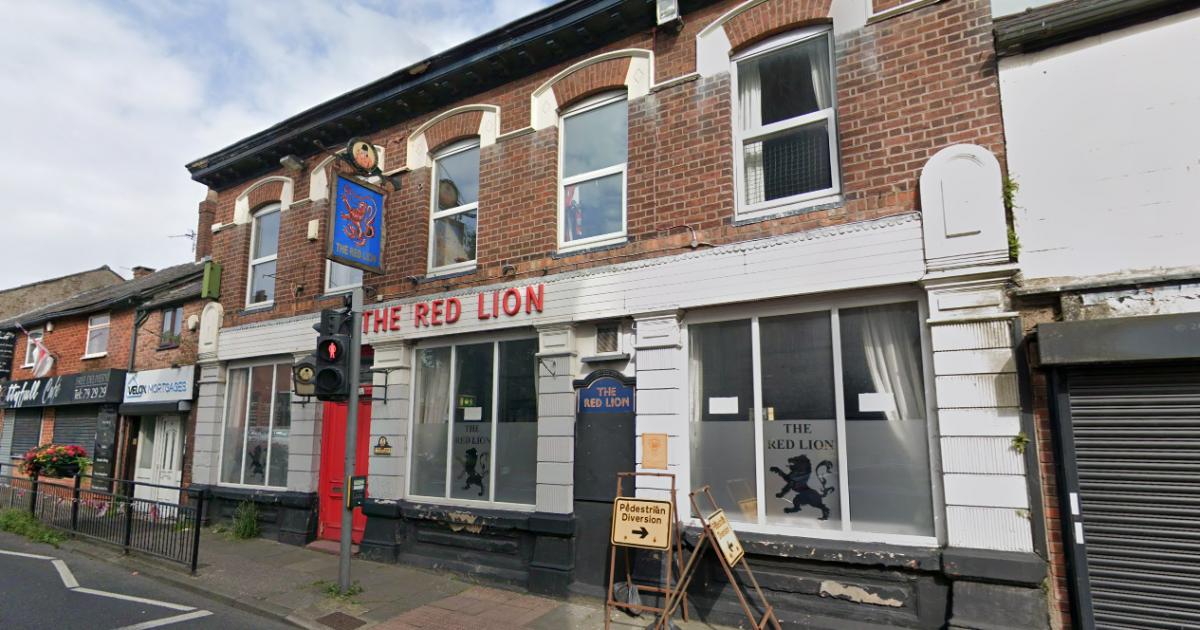
An application to repurpose Atherton‘s Red Lion Hotel into nine new apartments has been greenlit for Chris Garvey, ushering in change for the vacant property, which has stood on Church Street in the Market Place Conservation Area.

The approved plans will also see an outbuilding transformed into a self-contained duplex-style apartment, complementing the eight one-bedroom apartments planned for the two-storey former pub.

This decision was decided on Tuesday, March 3, following a series of considerations surrounding national, regional, and local planning frameworks aimed at bolstering the regeneration of the area.

Advertisement

The Red Lion Hotel has been vacant since 2023, with the council acknowledging the disused property will benefit from bringing it back into use.

The commission considered the impact of developing the space into residential use, acknowledging potential benefits to the area.

One key insight was how converting the building back into occupation will contribute to the street scene – leading to visual improvements, increased natural surveillance in the area, and ultimately supporting wider town centre regeneration ambitions.

In a town centre made up predominantly of commercial premises, including some that stand vacant, the decision underscores a shift towards developing brownfield, or ‘previously developed’ sites – an approach endorsed by the Places for Everyone Joint Development Plan.

Advertisement

This development not only aims to revive vacant properties in urban areas but also ensure the reuse of existing infrastructure and facilities to support wider sustainable growth objectives.

Another influential factor in considering the commercial building for residential conversion was the several similar establishments already present in the vicinity.

The Atherton Arms is located approximately 90 metres southeast of the site, the Jolly Nailor about 120 metres to the west, and an interactive sports club/drinking establishment is located 34 metres to the south of the site – offering similar services and diminishing the critical need for another public house in the area.

For residents, the new apartment development provides a sustainable urban living option, with the town centre location offering regular bus links to neighbouring local centres like Wigan, Leigh, and Tyldesley and the Leigh Guided Busway, connecting to Manchester City Centre.

Advertisement

The proposed residential use exceeds the density requirements set out within the relevant policy.

There were two representations received during the period of publicity, a proposal welcomed by one respondent who noted additional daytime custom to Atherton High Street, while objections raised concerns over the suitability of the access point and potential conflicts with vehicular traffic.

The proposed development is expected to have a low impact on the character and appearance of the Conservation Area, considering the minimal external changes planned and the existing state of the property.

The transformation requires modifications like the installation of replacement window frames, with some windows in the rear elevation enlarged.

Advertisement

Importantly, improvements are set to be made to safeguard greenery and biodiversity in the area, with the new development plan including a detailed landscape scheme.

This scheme includes retaining a group of three trees at the southern boundary of the site and plans to ensure the site, which still harbours play equipment from its public house days, features biodiversity enhancements like the integration of a bird and bat box.

With no objections from the Environmental Protection team subject to conditions relating to air quality, and noise assessments stated as satisfactory, the new Red Lion Hotel apartments are on course.

Advertisement

Source link

Continue Reading

NewsBeat

Tyldesley record store expands after six months of success

Published

on

Tyldesley record store expands after six months of success

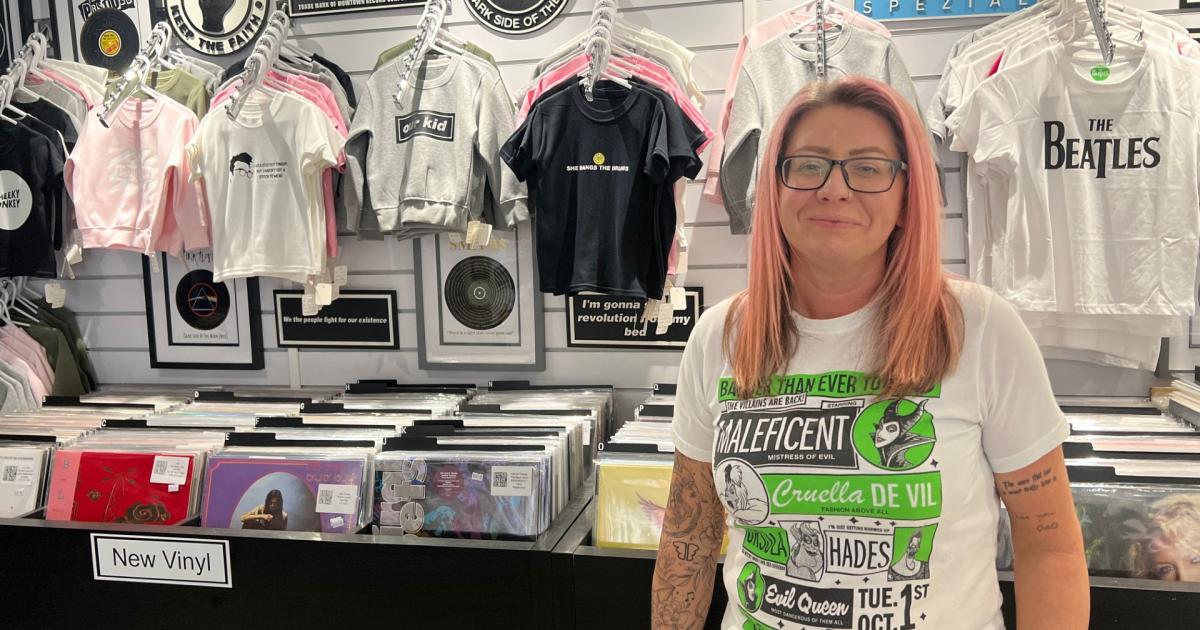
Resurrection Records on Elliott Street in Tyldesley opened its doors in October last year in the hopes of introducing younger residents to vinyl records.

Opened by Lynsey Boardman, 43 and partner, Mark, 55, the shop boasts vinyl records from classic artists such as the Rolling Stones to modern pop stars like Taylor Swift, including local performers such as The Lottery Winners.

The shop is expanding into the site next work (Image: Newsquest)

The shop is now expanding into a larger venue next door due to the ongoing success of the shop.

Lynsey said: “Mark has always worked as a DJ and it has always been his dream to open a record shop.

Advertisement

Resurrection Records on Elliott St, Tyldesley (Image: Newsquest)

“When we first opened in Tyldesley, people were saying that we wouldn’t last six months, but we’ve been really busy, and we have all types of people coming in each week.

“There are kids that come in as young as 14 and they’re listening to Marvin Gaye or the Rolling Stones because they’ve grown up hearing their parents play it. Then we have some older residents that come in to hear the songs they loved growing up.

“That’s why it’s really important because music brings people together.”

The expansion of the shop will see a larger range of records on sale, a collectors’ section, listening booths, arcade games, coffee and cake, as well as live music performances and album signings taking place in store, with an emphasis on amplifying local voices.

Advertisement

Resurrection Records on Elliott St, Tyldesley (Image: Newsquest)

“It’ll be a great place to relax and meet new people, even if someone comes in and doesn’t buy anything, we love that they can just look through and listen to the records”, Lynsey added.

Resurrection Records’ has done more than simply last six months, it has created a space for music lovers, of all ages from Tyldesley, to come together to share a common passion.

Source link

Advertisement
Continue Reading

NewsBeat

Officials respond to claims Britain has ‘two days worth of gas’ after Iran conflict

Published

on

Officials respond to claims Britain has 'two days worth of gas' after Iran conflict

According to National Gas, Britain had 6,999 gigawatt hours (GWh) of fossil gas stored this month

Officials have responded to claims that Great Britain’s energy could start running low since the Iran conflict. This follows reports that only ‘two days’ worth of gas is stored, as tankers carrying liquefied natural gas (LNG) are being diverted from their course from Europe towards Asia since the war.

According to National Gas, which owns and operates the gas national transmission system, Britain had 6,999 gigawatt hours (GWh) of fossil gas stored on March 7. This compares with 9,105 GWh in the previous year, Daily Star reports.

Advertisement

Maximum capacity is reportedly 12 days of gas and current storage levels equal to under two days of reserves, prompting concerns that Great Britain could dry up if the Iran crisis escalates further. However, National Gas said even when storage stocks are low, Great Britain continues to receive large volumes of gas from other sources, reports the Guardian.

A National Gas spokesperson said: “Britain’s gas storage levels are broadly in line with what we would expect at this point in the year and are comparable to this time last year. It’s important to remember that storage makes up only a small part of Britain’s diverse gas supply mix.

“Most of our gas comes from the UK continental shelf and Norway, complemented by LNG, interconnectors with continental Europe, and storage. Great Britain benefits from a wide range of supply sources that the market draws on every day.

“Together, these provide the flexibility needed to balance supply and demand reliably throughout the year.”

A spokesperson for the Department for Energy Security and Net Zero said: “It is categorically untrue that the UK only has access to two days of gas supply. We have a diverse energy mix and are confident in our security of supply. “Gas will continue to play a key role in our diverse and resilient energy system as we transition to more secure, clean homegrown energy. We are working with industry to ensure the gas system is fit for the future, including maintaining security of supply in the rarest scenarios.”

According to ship-tracking data compiled by Bloomberg, at least two tankers have redirected in the middle of the Atlantic from Europe to Asia since Friday. It comes after three similar diversions were reported last week.

Gas prices have steeply increased since the US and Israel began intense airstrikes on Iran 10 days ago. UK month-ahead gas prices rose last week to 137p a therm, up from 78.5p a therm before the Iran war began.

Advertisement

Ensure our latest stories always appear at the top of your Google Search by making us a Preferred Source. Click here to activate or add us as your Preferred Source in your Google search settings.

Source link

Continue Reading

NewsBeat

How to watch Cheltenham Festival 2026 for FREE: TV channel and live stream for every race

Published

on

How to watch Cheltenham Festival 2026 for FREE: TV channel and live stream for every race

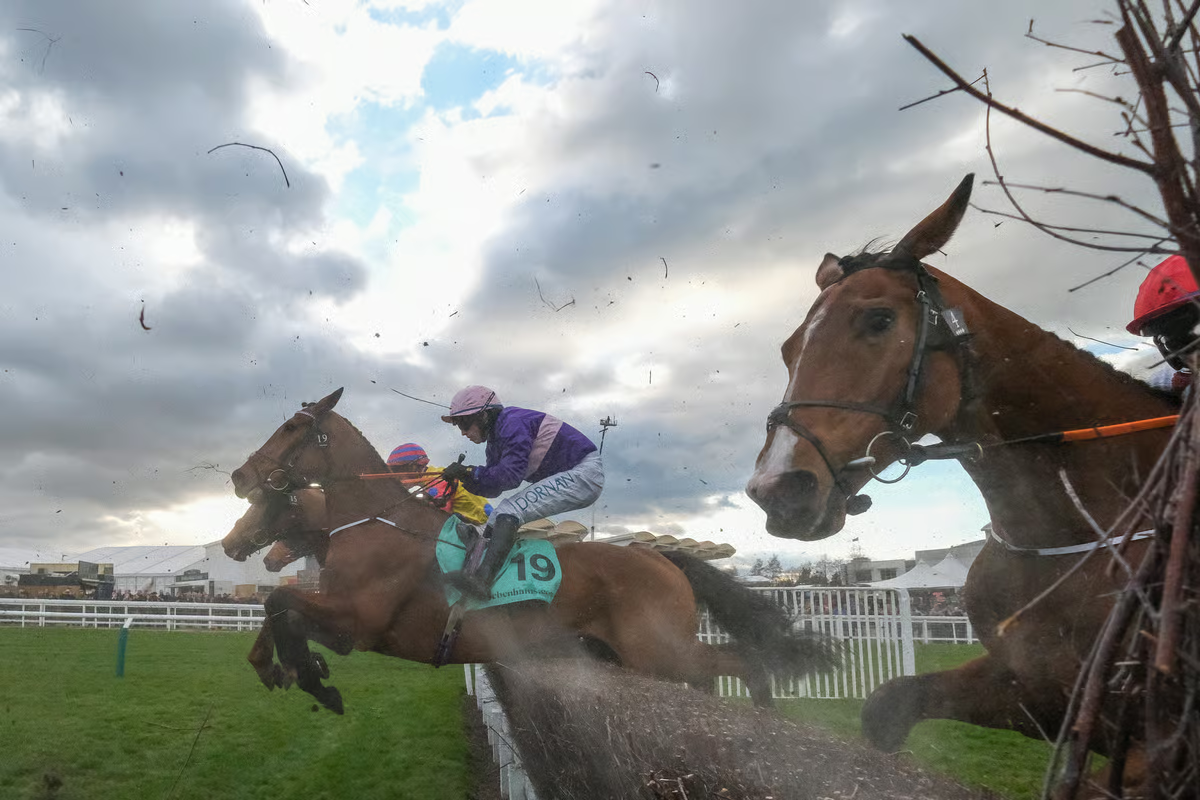
Cheltenham Festival is almost upon us as the ‘Greatest Show on Turf’ returns for another year.

One of the biggest meets of the entire sport, Prestbury Park is set to host 28 races across four days.

Source link

Continue Reading

NewsBeat

Winter Paralympics 2026: Varvara Voronchikhina wins Russia’s first gold since 2014

Published

on

Varvara Voronchikhina in action

Para-alpine skier Varvara Voronchikhina won the first Paralympic gold medal for Russia since 2014 with victory in the standing super G.

It comes two days after the 23-year-old won standing downhill bronze on Saturday to claim her nation’s first medal of the Games.

These Games mark the first appearance of the Russian flag at a Paralympics since staging the event in Sochi 12 years ago. Russia and its athletes had been banned following the state-sponsored doping scandal before further sanctions followed after its 2022 invasion of Ukraine.

Voronchikhina and her team-mates only returned to international competition in January after Russia won an appeal to the Court of Arbitration for Sport (Cas) against FIS, the international governing body for skiing and snowboarding.

Advertisement

FIS had initially refused to lift its ban on athletes from Russia and Belarus, despite the International Paralympic Committee ending its own suspension of the two nations in September.

That ban had been in place since the invasion of Ukraine on the eve of the Winter Paralympics four years ago, although it was softened the following year to allow athletes to compete as neutrals.

Voronchikhina crossed the finish line in a time of one minute 15.6 seconds on the iconic Olimpia delle Tofane piste, almost two seconds quicker than French silver medallist Aurelie Richard. Sweden’s Ebba Aarsjoe took bronze.

Her victory ceremony will take place later on Monday, after all of the day’s Para-alpine skiing events have finished, when the Russian national anthem will be played.

Advertisement

While she is competing at her first Paralympic Games, Voronchikhina is a two-time world champion – including in the super G – from 2021, and has four further chances of medals at these Games.

Source link

Continue Reading

NewsBeat

as human numbers fell, so did plant diversity

Published

on

as human numbers fell, so did plant diversity

Between 1347 and 1353, Europe was gripped by the most catastrophic pandemic in its history: the Black Death. Killing many millions, the plague wiped out between one-third and a half of Europe’s population.

In some cities, mortality rates were as high as 80%. In rural areas, Black Death mortality caused intense labour shortages. Entire villages were left empty as rural economies collapsed. In many places, cultivated fields were abandoned and reclaimed by woodland, scrub and deer.

Given the widely reported negative effects that people have had on nature over recent decades and centuries, we might expect this continental-scale “rewilding” to have enabled biodiversity to flourish. However, our new study in the journal Ecology Letters uncovers a potentially counterintuitive result: when Europe’s human population crashed, plant biodiversity also plummeted.

Fossilised pollen grains in sediment cores extracted from lakes and bogs contain information about plant communities that existed thousands of years ago. We used data from over 100 fossil pollen records from across Europe to explore how plant diversity changed before, during and after the Black Death.

Advertisement

The pollen data show that between 0BC and 1300, plant diversity in Europe increased. It grew through the rise and fall of the Western Roman Empire and continued through the early Middle Ages. By the High Middle Ages, biodiversity levels were at their peak.

However, in 1348, Europe was hit by plague and for about 150 years, plant biodiversity plummeted. It was only after a century and a half – as human populations recovered and farming resumed – that plant diversity began to rise again.

The plague of Florence in 1348, as described in Boccaccio’s Decameron. Etching by L. Sabatelli. Iconographic Collections.
Wellcome Collection gallery (2018-04-05), CC BY-NC-ND

We found that the biggest losses of plant diversity occurred in areas most affected by land abandonment. By plotting patterns of biodiversity changes from sites with different Black Death land use histories, we discovered that biodiversity collapsed in landscapes where crop (arable) production was abandoned, whereas landscapes with growing or stable arable farming became more biodiverse.

Advertisement

Our work suggests that over 2,000 years of increasing European biodiversity was generated because of – not in spite of – humans. But why? And what lessons can we learn from this for managing biodiversity now, when land being converted into farmland is driving biodiversity losses?

Population growth and technological innovations pushed agricultural activities into previously unused lands over the first 1,300 years of the common era. Unlike today – where crop monocultures are dominant – mixed agricultural systems were the norm over the majority of the last 2,000 years. Across Europe, a diverse lattice of farmlands and farming practices were typically separated by woods, rough grazing lands and uncultivated plots, often enclosed by hedgerows or trees.

wooded landscape with crops on farmland

A patchy landscape of woodland, farmland, grazing lands and unused areas creates a mixture of habitats for plants that raises biodiveristy.
Yuri Dondish/Shutterstock

The result was a patchy landscape where there were lots of opportunities for different plant species to survive, and biodiversity was high.

The Black Death disrupted this by reducing human disturbance. The result was a less patchy landscape and an overall loss in plant diversity. Diversity only recovered when extensive farming returned.

Advertisement

People can boost nature

These findings call into question conservation policies that advocate for removing or reducing human influence from Europe’s landscapes to protect biodiversity.

One such policy initiative is rewilding, which is seen by many as a route to achieving a biodiverse future where nature is given space to flourish. Yet, many of the most biodiverse locations in Europe are those with a long history of low-intensity, mixed agriculture. To rewild these human-formed landscapes may, paradoxically, risk eroding the biodiversity that conservationists seek to protect.

Our findings of long-term positive human–biodiversity relationships is not solely a European phenomenon. Multimillennial interactions between humans and the natural world have resulted in elevated biodiversity levels across planet. Examples of diverse, cultural ecosystems include the forest gardens of the Pacific North West (forests cultivated by Indigenous peoples), the satoyama of Japan (low intensity mixed systems of rice paddies and woodlands in mountainous foothills) and the ahupua’a of Hawaii (segments of diverse hillsides used to cultivate multiple crops).

Modern, intensive farming practices have caused substantial biodiversity losses across the globe. Yet, our Black Death findings, in combination with numerous other examples, show us that humans and nature do not always have to be kept separate to conserve and promote biodiversity. Indeed, recognising landscapes as cultural ecosystems may help us imagine futures where both nature and people can live together and thrive.

Advertisement

Traditional, low-intensity land management practices have generated diverse ecosystems for millennia. Today, where locally appropriate, they should be encouraged for the conservation of both biological and cultural diversity.

Source link

Advertisement
Continue Reading

NewsBeat

World Cup: Iraq coach wants play-off to be postponed amid US-Israeli war with Iran

Published

on

Aymen Hussein (L) raises his fist as he celebrates alongside Iraq head coach Graham Arnold (R) in Basra, Iraq, o

Iraq’s World Cup play-off decider later this month should be postponed amid the escalating US-Israeli war with Iran, says the team’s head coach Graham Arnold.

The Iraqis are set to face either Bolivia or Suriname in the Mexican city of Monterrey on 31 March, with the winner of the inter-continental play-off booking their place in the 2026 World Cup to be held in the United States, Mexico and Canada from 11 June.

But Iraq are concerned they might not be able to get their players and staff over to Mexico for the match because of the travel disruption in the Middle East, triggered by the conflict in neighbouring Iran.

Iraqi airspace has been closed since 28 February when the first US-Israeli strikes began and Iran responded by firing missiles and drones at Israel, Gulf states and other nearby countries.

Advertisement

Arnold, who became Iraq manager in May 2025, said putting together a team solely with players based outside Iraq would hinder the country’s chances of qualifying for their first World Cup since 1986.

“It wouldn’t be our best team and we need our best team for the country’s biggest game in 40 years,” the Australian said.

“The Iraqi people are so passionate about the game that it is insane. The fact that they haven’t qualified for 40 years is probably the main reason I took this job.

“But at this stage with the airport being shut down we are working hard to try and find another alternative.”

Advertisement

Source link

Continue Reading

Trending

Copyright © 2025