

Crypto World
U.S. isn’t really exposed to oil shocks and that might be helping bitcoin



The week-long war between Iran, the U.S., and Israel has pushed oil prices on both sides of the Atlantic past $100 a barrel, threatening to inject inflation into the global economy. Asian markets are taking a hit, bond yields are climbing, and yet bitcoin has barely budged, hovering around $67,000, where it was 24 hours ago.
A likely reason? Bitcoin’s strong links to Wall Street. Since the conflict started last week, U.S. stocks have held up relatively well compared to Asian and European equities, probably benefiting from America’s position as a net oil exporter. Bitcoin, which closely tracks U.S. tech and Nasdaq moves, seems to have caught some of that same resilience.
“The United States is not meaningfully exposed to oil from Iran, or, more broadly, the Middle East,” JP Morgan’s Executive Director Kriti Gupta and Global Investment Strategist Justin Beimann said in a note to clients Friday, noting the relative strength of the U.S. stocks.
They explained that the U.S. imports oil mostly from Canada and Mexico, and just 4% from Saudi Arabia, and that it is now the world’s largest net oil exporter. This means the U.S. is largely insulated from disruptions to oil flowing through the Strait of Hormuz, while China and other Asian countries, such as India and South Korea, are most affected.
Markets are pricing risks accordingly. Futures tied to the S&P 500 and tech-heavy index Nasdaq are down just over 3% since the conflict began on Feb. 28. Meanwhile, Asian equity indices have taken a beating. Japan’s Nikkei and India’s Nifty have dropped 10% and 5%, respectively. South Korea’s Kospi has declined by over 16%.
Though bitcoin is a decentralized asset, it has slowly evolved into a quasi–U.S. risk asset, increasingly moving in step with Wall Street, tech stocks, and even the U.S. dollar. This trend has accelerated since the debut of U.S. spot ETFs, which made it easier for institutional investors to access bitcoin directly.
The late-2024 election of Donald Trump also added to the shift, as markets reacted to his promises of looser regulations and a more crypto-friendly policy environment. Together, these developments have tethered bitcoin more closely to U.S. financial conditions, making it less of a purely global, borderless asset and more of a barometer for American risk appetite.
It shows that bitcoin is increasingly tied to U.S. financial conditions, making it less of a purely global, borderless asset and more of a barometer of Wall Street risk appetite.
Another factor likely helping bitcoin is its oversold status. The cryptocurrency had already dropped to nearly $60,000 well before the conflict began, following weeks of profit-taking and broader market jitters. That decline likely cleared out short-term sellers, leaving a relatively stable base for the digital asset.
Inflation could show up with lag
The oil price spike could hit U.S. consumers’ wallets with a lag, even though the U.S. is largely energy-independent.
“That doesn’t mean Americans are insulated from higher gasoline prices,” JPMorgan strategists Kriti Gupta and Justin Beimann noted. “Oil prices are still subject to global supply dynamics. But energy independence means there’s a lag before price increases show up at the pump, making it easier to weather short-term volatility.”
In other words, a prolonged conflict or sustained oil surge could eventually filter through to consumer prices. Still, for now, the U.S. market and bitcoin appear to be riding out the initial shock relatively unscathed.



The analyst who made that claim also laid out the most important support levels for ADA going forward.
Popular crypto market observer and commentator Ali Martinez took it to X to criticize the popular blockchain network, Cardano, for its failure to deliver on many of its promises.
Given the project’s popularity, many of the comments below the post lashed out at his harsh words, but there were some that agreed with his statements.
Most Useless Blockchain?
In a post titled “The Most Useless Network In The Crypto Market,” Martinez began by indicating that the Cardano DeFi ecosystem has never exceeded the coveted $1 billion mark. He added that it has “historically been only a fraction of what is locked on competing platforms like Ethereum.”
A quick double check on DeFiLlama confirms his words, as the Cardano TVL in DeFi peaked last year at roughly $700 million. However, the value has plummeted to $136 million as of press time. In comparison, the TVL on Ethereum is currently at a whopping $55 billion, down from almost $100 billion reached last year.
Solana’s TVL jumped to over $12 billion in September 2025, but it’s down to $6.6 billion as of now. Martinez also compared Cardano’s TVL with newer chains like SUI, which has already surpassed it with $568 million after peaking at $2.5 billion last year.
“Unlike Ethereum, which has built a dominant position in DeFi, or Solana, which has captured high-speed consumer applications, Cardano still lacks a clear use case that consistently attracts users, developers, and investors,” said Martinez.
He added that Cardano was officially launched nine years ago, but smart contracts were introduced in 2021, which allowed its competitors to “build stronger network effects with more developers, applications, and liquidity.”
He believes Cardano’s research-driven model, which prioritizes academic review and formal verification, slows down product rollouts compared to other blockchains.
You may also like:
As mentioned above, the community was split after his post, with some bringing out Cardano’s liquid staking capabilities, while others agreed to a large extent with his words.
ADA’s Survival
Martinez also explained that blockchains that reach scale early tend to attract more capital and talent as this is a market “driven by adoption and network activity.” This makes it “difficult for slower-growing networks to catch up once competitors establish a lead,” which could be the main reason behind ADA’s struggles.
The token peaked at over $3 in 2021, but it has fallen from grace since then, currently trading 91.7% away from those levels. Even the 2024/2025 bull rally managed to drive it to as high as $1.30, and it now sits at around $0.25.
Martinez weighed in on ADA’s performance as well, suggesting that if it breaks the $0.245 support, it could plunge to the next ones at $0.112 or $0.021, which would represent another 50% to 80% decline.
Binance Free $600 (CryptoPotato Exclusive): Use this link to register a new account and receive $600 exclusive welcome offer on Binance (full details).
LIMITED OFFER for CryptoPotato readers at Bybit: Use this link to register and open a $500 FREE position on any coin!
Disclaimer: Information found on CryptoPotato is those of writers quoted. It does not represent the opinions of CryptoPotato on whether to buy, sell, or hold any investments. You are advised to conduct your own research before making any investment decisions. Use provided information at your own risk. See Disclaimer for more information.
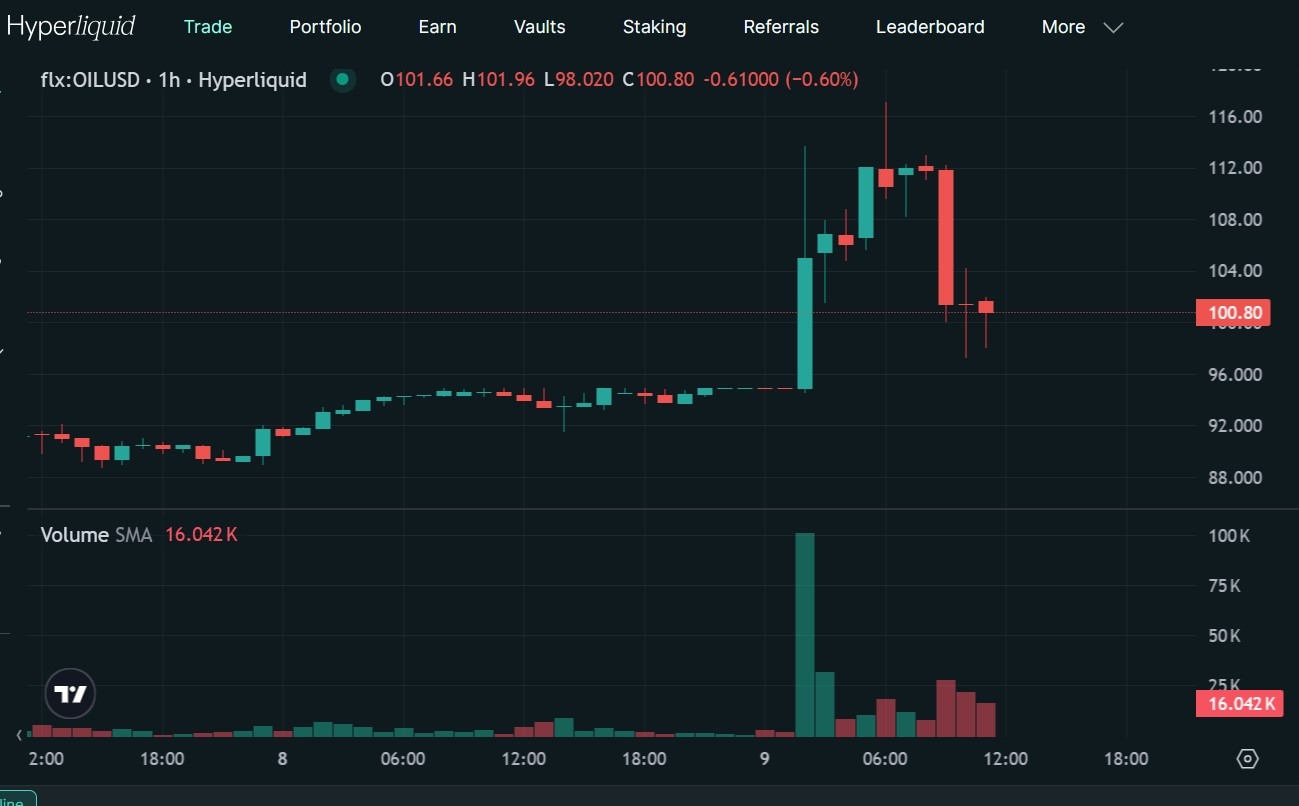
Oil prices pulled back sharply early Monday after reports that Group of Seven (G7) finance ministers planned an emergency call to discuss a coordinated release of strategic crude reserves, giving markets a possible policy response to the war-driven supply shock.
The Financial Times reported that G7 finance ministers planned an emergency call to discuss a possible coordinated release of 300 million to 400 million barrels from strategic oil reserves to calm markets after the war-driven spike in crude prices. The G7 countries consist of Canada, France, Germany, Italy, Japan, the United Kingdom and the United States, with the European Union as a non-enumerated member.
On Hyperliquid, crude oil futures rose nearly 25% to as high as about $117 overnight before falling by around 14.5% to roughly $100 after the G7 reports emerged. The reversal suggested traders were quickly repricing the risk of a coordinated reserve release even as the conflict continued to threaten supply.

Bitcoin rebounds after earlier drop
Bitcoin (BTC) also rebounded after an earlier drop during the oil spike. After falling to about $65,725, CoinGecko data shows BTC climbing as high as $67,992.88 at the time of writing, a gain of roughly 3.45% in a few hours.
CryptoQuant analyst Darkfost said in a market note that higher oil prices and Strait of Hormuz tensions could weigh on risk appetite and complicate the outlook for volatile assets such as Bitcoin.
“Historically, periods when oil prices regain strength often coincide with BTC end-of-cycle phases,” he wrote.

Hyperliquid HIP-3 hits record weekend volume on oil price surge
The episode also underscored how onchain venues can attract demand when traditional markets are closed.
Hyperliquid’s oil-linked contracts had already surged after the initial US-Israeli strike on Iran in late February, with traders turning to decentralized perpetuals for round-the-clock commodity exposure. Hyperliquid data shows that Tradexyz, a trading interface built on Hyperliquid, reached its highest weekend volume of over $610 million on Feb. 28.
Related: Iranian crypto outflows spike 700% after US-Israeli airstrikes
As the conflict escalates, oil prices have continued to rise, and Tradexyz has surpassed its previous weekend record with nearly $720 million in trading volume over the weekend, onchain analytics hub Pine Analytics said in an X post on Monday.
“These two waves of demand in the past month on Tradexyz show the platform is absorbing demand for traditional assets by people who don’t have TradFi access, or at points in time when these exchanges are offline,” Pine wrote.
Magazine: The debate over Bitcoin’s four-year cycle is over: Benjamin Cowen
AI Summary
- The blog post discusses the regulatory challenges and implications of tokenized securities.
- It highlights the recent regulatory clarity provided by the U.S.
- Securities and Exchange Commission, signaling a turning point for the sector.
- The post emphasizes the importance of a robust compliance strategy and legal framework for real-world asset tokenization.
- It addresses legal challenges, regulatory compliance, custody solutions, and governance mechanisms essential for successful tokenized asset platforms.
For a number of years, the promise of tokenized securities has been hindered by one major obstacle: the issue of regulatory ambiguity. While blockchain technology has continued to develop and advance, the institutions and organizations in the sector have remained hesitant due to the unclear interpretation of securities laws in the context of on-chain transactions. For tokenization platforms, asset issuers, and investors alike, the complex nature of the regulations has hindered the sector, with many projects remaining in the idea phase.
The most recent announcement by the U.S. Securities and Exchange Commission has marked a turning point in the tokenization sector. In providing a level of clarity on the application of existing SEC regulations on tokenized assets, the SEC has started to set boundaries on the legality of blockchain-based securities. For those in the sector looking to leverage blockchain-based securities, this is a positive indication of a more structured and compliant environment in the future.
While the SEC has provided a level of clarity, this does not remove the complexity; it changes it. For businesses, a robust compliance strategy, legal model, and technological model will be required in line with the emerging regulations on real world asset tokenization.
Regulatory Boundaries Clearly Defined
The U.S. Securities and Exchange Commission’s most recent regulatory clarification establishes a critical new framework for understanding blockchain-based financial assets under U.S. securities law. For companies that have been developing tokenized securities for years, operating in such an environment has been filled with uncertainty. Although many believed that tokenized assets would be covered by the existing regulations surrounding how traditional financial instruments are regulated, there was and still is very little clarity around how traditional legal principles apply to the issuance, transfer and/or trading of securities on blockchain.
With the most recent guidance, regulators have confirmed a key concept: digitized securities are subject to the same legal and compliance requirements as traditional financial instruments, regardless of how they are represented — by paper certificates on a centralized ledger, or a distributed ledger. The underlying regulatory expectations continue to be the same.
This clarification helps reduce the previously existing degree of ambiguity related to the SEC regulations for tokenized assets. Companies creating tokenized investment vehicles in an increasing variety of real-world asset types (real estate, private equity, commodities, and debt) will need to re-evaluate their operating structures against the changing actual product-specific regulations regarding tokenized investments.
Key implications include:
- Tokenized securities remain subject to federal securities laws, regardless of whether they are issued on blockchain platforms.
- Platforms facilitating trading or transfers of tokenized securities may need to register as broker-dealers, alternative trading systems (ATS), or exchanges.
- Compliance obligations around investor protection, disclosure, and custody continue to apply to blockchain-based securities structures.
- Firms must design tokenized asset platforms with regulatory oversight integrated from the beginning.
Addressing RWA Tokenization Legal Challenges
Tokenization changes how we see ownership of things but also makes things legally complicated which traditional finance wasn’t built for as it didn’t expect to be dealing with digital assets. When real-world assets are moved onto the blockchain they are not only digital tokens, but they also involve many different systems intersecting, like Property law, Securities law, Smart Contracts and Digital Custody Frameworks.
These overlapping domains create several RWA tokenization legal challenges that businesses must address before launching compliant tokenized asset ecosystems. One major issue lies in ensuring that the legal rights embedded in traditional asset agreements are accurately reflected and enforceable within blockchain-based token structures.
For instance, if a token represents a fractional ownership in a piece of real estate or a private fund, the investor’s rights will still have to be enforceable as per the legal agreements regardless of whether any transactions take place on-chain or off-chain. The blockchain also needs to include provisions in the underlying technology to ensure compliance with laws relating to investor onboarding, asset transfers and the settlement process.
In order to address these legal complexities, it will be necessary for there to be close collaboration by the legal professionals, technology architects and compliance professionals.
Common challenges include:
- Ensuring that token holders possess enforceable legal ownership rights tied to the underlying asset.
- Managing cross-jurisdictional regulatory requirements when tokenized assets are traded internationally.
- Aligning smart contract logic with legal agreements governing asset ownership and investor rights.
- Maintaining compliance with securities registration, disclosure, and custody obligations.
Organizations entering the tokenization space increasingly rely on specialized advisory partners to navigate these complexities and build legally resilient infrastructure.
How This Impacts Institutional RWA Adoption
For many years, institutional investors have realized that there are advantages to using tokenization; these advantages include better liquidity (the ease with which something can be sold or bought), fractional ownership, and a faster time frame when it comes to settling transactions. However, regulatory uncertainty has limited large institutions’ (such as banks or asset managers) ability to adopt tokenization on a large scale.
With its latest guidance, the SEC is providing a more clear understanding of the regulations that govern tokenized assets, which gives institutions more confidence in exploring potential ways to apply tokenization. By providing specific examples of how SEC regulations for tokenized assets will apply to the blockchain ecosystem, the SEC has removed a lot of the ambiguity that has previously kept large institutions from participating.
Regulatory clarity will allow institutional stakeholders to have better structured risk management practices in place. Now that compliance teams can evaluate potential tokenized assets based on clearly defined regulatory guidelines instead of hypothetically interpreting them, many organizations can move past research-based pilot projects to implementing scale and enterprise-level platforms that utilize tokenized assets.
As institutions increasingly explore digital asset strategies, the development of a robust RWA legal framework for blockchain assets becomes essential to ensure operational and regulatory alignment.
Key impacts for institutional adoption include:
- Greater regulatory certainty supporting long-term investment strategies in tokenized markets.
- Increased confidence among institutional investors and financial service providers.
- Accelerated development of regulated tokenized securities platforms.
- Improved integration between traditional financial infrastructure and blockchain networks.
Looking to Launch Compliant tokenized assets in a rapidly evolving regulatory environment? Connect with the Experts!
Building a Compliant RWA Legal Framework for Blockchain Assets
Regulatory frameworks need to be established by the private sector for tokenization to fully grow in the regulatory constraints of financial services. The SEC’s recent guidance implies that compliance must be an integral part of the design of a tokenized platform’s architecture rather than an afterthought and embedded through the entire lifecycle of the token.
A comprehensive RWA legal framework for blockchain assets is the means by which technology can be used to create new financial products while still adhering to existing regulation while providing transparency and protection for investors. Such a framework must be able to create a bridge between traditional means of creating financial documentation and executing them using blockchain technology.
Identifying a comprehensive framework for RWAs built on blockchain technology will require all organizations involved in the development of such a framework to focus on multiple areas of foundational concern, including the structure and function of the asset, onboarding procedures for investors, custody of the asset, and regulatory reporting obligations. Additionally, all participants in the development of tokenized platforms must also establish governance mechanisms that define the roles and responsibilities of the issuers, custodians, exchanges, and service providers.
Structuring tokenized assets in accordance with securities laws and investor protection requirements
A tokenization initiative’s legal structuring can significantly impact whether or not it’s compliant with regulations. This means that when you get a token, it needs to show you have legally enforceable rights to the underlying asset. Examples of the underlying assets could be either equity, debt instruments, real estate, commodities, etc. Proper structuring means that you, as a token holder, would have the same rights, protections and access to disclosures as a traditional investor would have in a conventional securities offering.
In order for an issuer to comply with the SEC regulations for tokenized assets, they need to define how each token relates to ownership, dividends, voting rights and claims to the underlying assets. Legal documentation related to the tokens (such as offering memoranda, shareholder agreements, and asset contracts) need to be consistent with the structure of the tokens created and retained on the blockchain. This will allow for on-chain transactions to reflect the underlying legal rights and obligations of the asset.
Implementing robust compliance protocols for investor identity verification and regulatory reporting
Transaction monitoring and onboarding investors are both essential to remain in compliance with regulations when using tokenized financial ecosystems. In order for a blockchain-based platform to allow eligible users access to trade in tokenized securities markets that must comply with regulatory requirements, all platforms will need to incorporate robust procedures for verifying the identities of their users.
This includes implementing Know Your Customer (KYC) and Anti-Money Laundering (AML) processes, verifying accredited investor status when required, and maintaining ongoing compliance reporting systems. These mechanisms are essential to ensure that tokenized asset platforms operate within the boundaries of SEC regulations for tokenized assets and broader financial oversight requirements.
In addition to the initial verification process, platforms will also need to develop reporting capabilities that are transparent to both regulatory authorities and other interested stakeholders. This can be accomplished through developing automated compliance tools and/or building smart contract logic into the platforms’ tokenization processes to enforce transaction restrictions ensuring that the transfer of tokens follows regulatory limitations and the eligibility of each investor.
Ensuring secure custody solutions for digital asset representations of traditional securities
Custody is a key component of the operational aspects associated with a tokenized asset infrastructure. When a real-world asset is digitized into a token that operates on a blockchain, then the way the token will be stored and protected must comply with security and regulatory standards as applicable to that asset class.
A tokenized security typically will require a regulated custodian that can securely hold the representation of the digital asset while still retaining its legal relationship to the underlying asset. The custodian will also have strong safeguards to prevent the unauthorized transfer of digital assets and from cyber threats and operational risks that could result in the loss of investor’s assets.
Custody frameworks provide for the protection of tokenized assets when they are in trade across decentralized or distributed systems. Institutional investors rely heavily upon the custodial mechanism both to ensure secure custody of the asset and to operate within the broader RWA legal framework for blockchain assets.
Establishing transparent governance mechanisms to manage tokenized asset platforms
The way that governance is structured will dictate how decisions are made, distributed responsibilities are assigned, and how any disputes are settled in the ecosystem of tokenized assets. Without established governance frameworks, a tokenized platform is subject to operational disarray, regulatory uncertainty, and investor unpredictability.
Governance mechanisms will help establish the rights and roles of issuers, custodians, operators of the platform, and compliance officials; as well as define processes for managing upgrades of smart contracts, resolution of investor disputes, and response to regulatory inquiries.
Transparent governance not only strengthens investor trust but also ensures that tokenized platforms maintain accountability within regulated financial environments. As tokenized asset ecosystems expand, governance models must evolve to support scalable operations while maintaining compliance with emerging real world asset tokenization regulation standards.
Strategic Role of an RWA Compliance Consulting Firm
With the ongoing changes in the way regulations are being developed concerning tokenized assets, more companies are starting to realize that they need access to specialized expertise that bridges together innovations in blockchain with financial regulation. Legal teams traditionally have expertise and experience with securities law but often do not have much experience related to the infrastructure and platform involved in blockchain-based systems; on the flip side, technology developers typically use their time developing systems functionality without appropriately considering how those systems relate to regulatory implications.
Utilizing a qualified RWA legal consulting company can assist a business throughout every phase of developing a tokenized asset–starting from the initial legal structuring of the tokenized asset through a comprehensive compliance strategy, through engaging regulators in the regulatory approval process, and finally launching the tokenized asset on the developers’ blockchain platform.
Among the various advisory services that will typically be provided by a RWA Legal Consulting Company are:
- Conducting regulatory risk assessments for tokenized asset projects.
- Structuring tokenized securities offerings to comply with U.S. regulatory requirements.
- Creating governance and compliance frameworks for blockchain-based financial systems.
- Supporting regulatory filings and communicating with regulatory authorities.
By utilizing the services of an RWA legal consulting firm, companies are provided the ability to minimize their legal risks associated with developing and launching tokenized assets and can accelerate innovation in compliance with regulatory requirements for tokenized assets.
What This Means for the Future of On-Chain Assets
The SEC’s latest guidance signals a broader transition in how regulators view blockchain-based financial infrastructure. Rather than treating tokenization as an experimental or fringe concept, regulatory authorities are increasingly integrating it into established financial oversight frameworks.
This shift indicates that tokenization is moving from a niche innovation to a core component of the evolving digital financial system. As SEC regulations for tokenized assets become more defined, market participants will gain the confidence required to develop larger and more sophisticated tokenized asset ecosystems.
Clear regulatory expectations also encourage standardization across platforms, improving interoperability and strengthening investor protection. Over time, this regulatory clarity is expected to accelerate the development of global markets built around compliant real world asset tokenization regulation.
- Expansion of regulated tokenized securities markets.
- Increased institutional investment in tokenized real-world assets.
- Development of standardized legal and technological frameworks for tokenization.
- Stronger collaboration between regulators, financial institutions, and blockchain innovators.
In this evolving regulatory environment, partnering with an experienced RWA legal consulting company becomes critical for organizations seeking to navigate tokenization with confidence. We support enterprises with end-to-end blockchain advisory and compliance-driven strategies to help build secure, regulation-ready tokenized asset ecosystems.
Crypto World
Coinbase Futures Go Live in Europe: Regulated Crypto Derivatives Now Available in 26 Countries

TLDR:
-
- Coinbase has rolled out regulated futures trading across 26 European countries through Coinbase Advanced.
- Traders can access up to 10x leverage on BTC, ETH, and equity index futures contracts on Coinbase.
- Two contract types are available: perpetual-style futures with 5-year expiries and dated contracts.
- Coinbase offers fees as low as 0.02% per contract, making derivatives more accessible in Europe.
Coinbase futures are now available to European traders for the first time. The crypto exchange has rolled out regulated futures contracts across 26 countries in Europe.
Available through Coinbase Advanced, the offering covers Bitcoin, Solana, and equity index products. Germany, France, and the Netherlands are among the eligible markets.
The launch gives European traders access to a regulated alternative to the unregulated platforms many have historically relied on for crypto derivatives.
Two Contract Types With Flexible Leverage Options
Coinbase futures come in two primary forms: perpetual-style contracts and dated contracts. Perpetual-style futures carry five-year expiries and use an hourly funding mechanism.
They are cash-settled once per day to keep prices aligned with underlying assets. Dated contracts, by contrast, expire on specific monthly or quarterly dates.
Dated contracts are marked to market daily using official exchange settlement prices. If held until expiry, these contracts are also cash-settled.
Together, both contract types offer traders flexibility in managing their positions. This dual structure caters to both short-term and longer-term trading strategies.
Traders can access up to 10x leverage on select contracts, including BTC, ETH, and equity indices. Other products carry leverage ranging from 4x to 5x.
Coinbase noted it is “making derivatives trading more accessible with fees as low as 0.02% per contract.” These rates exclude NFA, exchange, and clearing fees.
The product range also covers equity index futures, including the Mag7 + Crypto Equity Index Futures. This moves Coinbase futures beyond crypto and into broader financial markets.
European traders now have access to multi-asset derivatives on a single regulated platform. The exchange has positioned itself as a one-stop shop for multiple asset classes.
How European Traders Can Access and Begin Trading
Eligible Coinbase users can find the new offering under the derivatives tab on Coinbase Advanced. This tab is available on both the web and mobile versions of the platform.
Traders must complete eligibility checks, including assessments of their trading experience. Know-your-customer verification is also required before trading can begin.
Accounts can be funded using EUR or USDC. Once set up, users gain access to the full range of Coinbase futures products.
The process is designed to be straightforward for existing Coinbase Advanced users. New users may need to complete additional onboarding steps before proceeding.
The rollout follows growing regulatory clarity across Europe for crypto derivatives. Coinbase offers these contracts through its MiFID-regulated entity.
In a statement, the company described the launch as “a major step in our push to build an exchange for everything.” It added that it is looking “to expand beyond crypto all within the trusted Coinbase app.”
Coinbase futures represent a step toward the exchange’s goal of becoming a full-service financial platform. The company stated it is “looking forward to continuing to introduce new and expanded services” as regulations mature globally.
European traders now have a regulated, multi-asset derivatives option available to them. Additional product launches are expected as the regulatory landscape continues to develop.
The crypto markets witnessed a shift today as oil prices underwent one of their most significant intraday reversals in history. Following an initial surge of nearly 30% that saw Brent crude flirting with $120 per barrel due to the escalating conflict in the Middle East and the effective closure of the Strait of Hormuz, the market plunged back toward the $100 mark.
Summary
- Oil prices reversed sharply after reports that G7 nations may release up to 400 million barrels of crude from reserves, easing inflation concerns.
- XRP is consolidating between $1.34 and $1.40 after rejecting the $1.47 local high earlier this month.
- Technical indicators show neutral momentum and steady accumulation, suggesting selling pressure may be fading near the $1.30 support level.
This sudden correction followed an exclusive report from the Financial Times stating that G7 finance ministers, in coordination with the International Energy Agency (IEA), are weighing the largest-ever emergency intervention: a release of up to 400 million barrels of crude oil from strategic reserves.
For the cryptocurrency sector, and specifically for XRP, this cooling of energy-driven inflation fears has provided a much-needed window of stability.
XRP price analysis
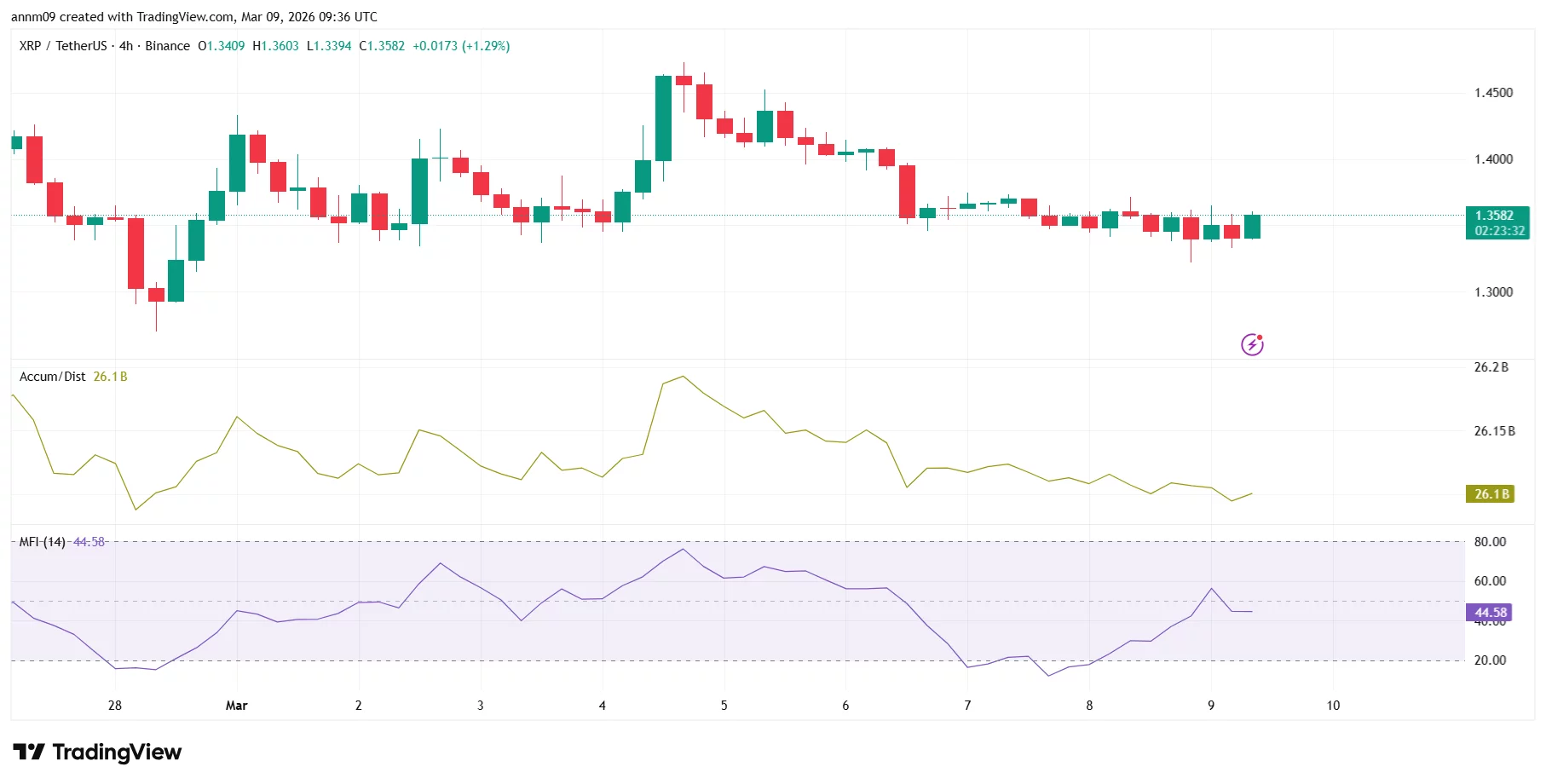
The current price action on the XRP/USDT (XRP) 4-hour chart illustrates a period of high-tension consolidation following a significant rejection from the $1.47 local high.
After peaking on March 4th, the asset entered a steady downtrend characterized by a series of lower highs and lower lows. However, a vital defensive effort by bulls is now visible around the $1.34 to $1.35 range, where price has begun to trade sideways in a narrow cluster.
The most immediate support is firmly established at the $1.30 level, which served as a major floor during the late February sell-off.
Conversely, overhead resistance is concentrated at $1.40, a psychological barrier that has repeatedly stifled recovery attempts. If bulls can successfully leverage the current macro stabilization to push back above $1.40, the next significant resistance target lies at the recent swing high of $1.47.
Technical indicators suggest that while the immediate trend is cautious, the selling pressure may be nearing exhaustion. The Money Flow Index (MFI-14) is currently positioned at 44.58, indicating a neutral momentum that has recovered from an oversold dip below 20 seen on March 7th.
This suggests that capital is slowly re-entering the asset at these lower price points.
Additionally, the Accumulation/Distribution line remains relatively flat at 26.1 billion, showing that despite the price drop from $1.47, there hasn’t been a massive exodus of volume, pointing toward “strong hands” holding through the volatility.
For a definitive bullish reversal, traders are looking for a break out of the current tight range, specifically a close above the $1.36 level seen in the most recent candle.
Failure to defend the $1.34 immediate floor could lead to a retest of the $1.30 primary support, while a breakout could pave the way for a run back toward $1.50 if global energy fears continue to subside.

Quick Summary
- Oracle’s Q3 FY26 financial results arrive March 10 following market close
- Analysts project earnings per share of $1.71 (+16.3% YoY) with revenue around $16.92 billion (+20% YoY)
- Cloud infrastructure revenue surged 68% in Q2 FY26, with full-year FY26 target of 77% expansion
- Remaining performance obligations reached $523 billion in Q2, representing 438% annual increase
- ORCL shares have declined over 20% this year; Deutsche Bank reduced target from $375 to $300
Oracle approaches Tuesday’s Q3 FY26 financial disclosure under considerable pressure. Shares have tumbled more than 20% since the year began, trading approximately 50% beneath the September 2024 high. As the company prepares to release results after trading hours on March 10, market participants are zeroing in on three critical data points.
The Street anticipates adjusted earnings per share of $1.71, marking a 16.3% year-over-year increase. Revenue projections hover near $16.92 billion, translating to approximately 20% growth. During the previous quarter, Oracle fell short of revenue expectations with $16.06 billion — a 14.2% annual gain that nonetheless missed analyst estimates.
Notably, Oracle leads the pack as the initial major data and analytics software provider reporting results this earnings cycle. Without peer comparisons available, investors are navigating this report in relative isolation.
Cloud Infrastructure Revenue: The Primary Growth Driver
OCI represents the powerhouse behind Oracle’s expansion narrative currently. Revenue acceleration has maintained momentum across multiple consecutive quarters — climbing from 49% in Q3 FY25 to 52% in Q4, then 55% in Q1 FY26, and most recently 68% in Q2 FY26.
Executives have set expectations for OCI to expand approximately 77% throughout the complete fiscal year, generating roughly $18 billion in revenue. Looking further ahead, Oracle has established ambitious targets of $144 billion in aggregate cloud revenue by fiscal year 2030.
This represents a substantial objective. It’s the primary rationale behind most analysts maintaining confidence in the stock despite this year’s downturn.
Oracle’s remaining performance obligations — effectively representing future contracted revenue — totaled $523 billion during Q2 FY26, marking a remarkable 438% year-over-year surge. This substantial backlog demonstrates robust appetite for cloud and artificial intelligence infrastructure agreements.
The Q3 RPO metric will draw intense scrutiny. Any deceleration in this figure could trigger investor concern.
Infrastructure Investment Sparks Questions
The flip side of Oracle’s expansion trajectory involves the financial commitment. Oracle anticipates deploying approximately $50 billion in capital expenditures throughout fiscal 2026.
Future operating lease obligations have also ballooned to roughly $248 billion as of last November — substantially exceeding cloud competitors Microsoft and Amazon. This represents considerable financial exposure for an enterprise still expanding its infrastructure foundation.
Consequently, Oracle’s trailing free cash flow has dipped into negative territory, despite operating cash flow remaining above $22 billion. Market participants will examine capex guidance meticulously for indications of either moderation — or further acceleration.
Deutsche Bank analyst Brad Zelnick lowered his price objective on ORCL from $375 to $300 this Monday, while maintaining his Buy rating. He expressed concerns regarding cash consumption tied to Oracle’s AI infrastructure expansion, but highlighted two encouraging developments: Oracle’s successful unsecured investment grade bond issuance in February, and OpenAI securing a $110 billion private funding round.
Aggregate Wall Street sentiment maintains a Strong Buy rating — with 25 Buy recommendations and 6 Hold ratings issued over the past three months. The consensus price target stands at $270.14, suggesting approximately 76.6% potential upside from present trading levels.
Oracle releases earnings following market close on March 10.
TLDR
- Both Brent crude and WTI peaked at $119.50 per barrel during Monday trading before retreating from their highest prices since mid-2022.
- Israeli forces targeted Iranian oil infrastructure this weekend, while Tehran retaliated with strikes on Gulf state oil facilities.
- Tehran has implemented a blockade of the Strait of Hormuz, disrupting approximately 20% of global oil shipments.
- Finance ministers from G7 nations are convening Monday to evaluate a coordinated emergency oil reserve deployment.
- Gasoline futures in the United States jumped more than 10%, approaching four-year peak levels above $3.00 per gallon.
Crude oil markets experienced dramatic volatility Monday following unprecedented Israeli military action against Iranian petroleum infrastructure. The escalation, marking the first such strikes since hostilities commenced in early March, drove both Brent crude and West Texas Intermediate futures to an intraday peak of $119.50 per barrel—price levels unseen since mid-2022.
BREAKING: US oil prices are currently attempting one of their biggest reversals in history.
At 10:30 PM ET, US oil prices were up as much as +30% on the day.
Then, FT reported that G7 countries are considering releasing 400 million barrels of crude oil from reserves.
Less than… pic.twitter.com/G1uRHvkFxX
— The Kobeissi Letter (@KobeissiLetter) March 9, 2026
Market prices moderated by midday, with Brent settling at $106.80 per barrel and WTI trading at $102.79, retreating from overnight highs. The decline followed a Financial Times exclusive reporting that G7 finance ministers scheduled an emergency Monday session to evaluate releasing strategic petroleum reserves.
The planned discussions are anticipated to include coordination efforts with the International Energy Agency. At least three G7 member states, the United States among them, have publicly indicated willingness to participate in a collaborative reserve deployment.
Oil markets have experienced gains exceeding 25% since the Iran-Israel conflict erupted in early March. Weekend developments intensified the rally as trading resumed Sunday evening.
Israeli military operations targeted petroleum storage infrastructure in Tehran on Saturday. Tehran’s response included drone strikes against a Bahraini oil refinery, the Wall Street Journal confirmed.
Strait of Hormuz Now Effectively Blocked
Iranian forces have also initiated attacks on vessels transiting the Strait of Hormuz. This critical chokepoint, responsible for transporting roughly 20% of worldwide oil demand, now sees virtually no commercial traffic.
OCBC analysts noted that “tail risks from a sustained Hormuz stoppage remain in play,” drawing parallels to the magnitude of the 2022 Russia-Ukraine energy crisis.
Deutsche Bank’s Jim Reid acknowledged the G7 reserve release could provide relief, though he emphasized “the duration and intensity of the conflict will still be far and away the most important driver.”
Both Kuwait and the United Arab Emirates announced production cuts over the weekend, following similar moves by Iraq in recent days. Storage capacity limitations stemming from supply chain disruptions are compelling producers to reduce output.
In an unusual development, Saudi Arabia has begun offering crude on spot markets—a signal Riyadh is attempting to address supply shortfalls created by the regional conflict.
Trump Warns Prices Will Stay High Short-Term
President Donald Trump addressed the oil price spike Sunday evening. He indicated prices would likely maintain elevated levels temporarily but predicted they would “drop rapidly” following resolution of the Iranian conflict.
Trump has consistently minimized concerns about rising domestic fuel costs, stating to Reuters that the Iranian military campaign remains his administration’s top priority.
Gasoline futures in the United States surged over 10% Monday, breaching $3.00 per gallon and approaching their highest valuation since mid-2022.
Jefferies economist Mohit Kumar characterized the Iranian infrastructure bombing as evidence of “a shift in war strategy,” cautioning that targeting essential infrastructure elevates both humanitarian and economic consequences.
In OCBC’s moderately severe projection, assuming partial shipping resumes under naval protection, Brent crude could sustain pricing near $100 per barrel through the middle of the year.
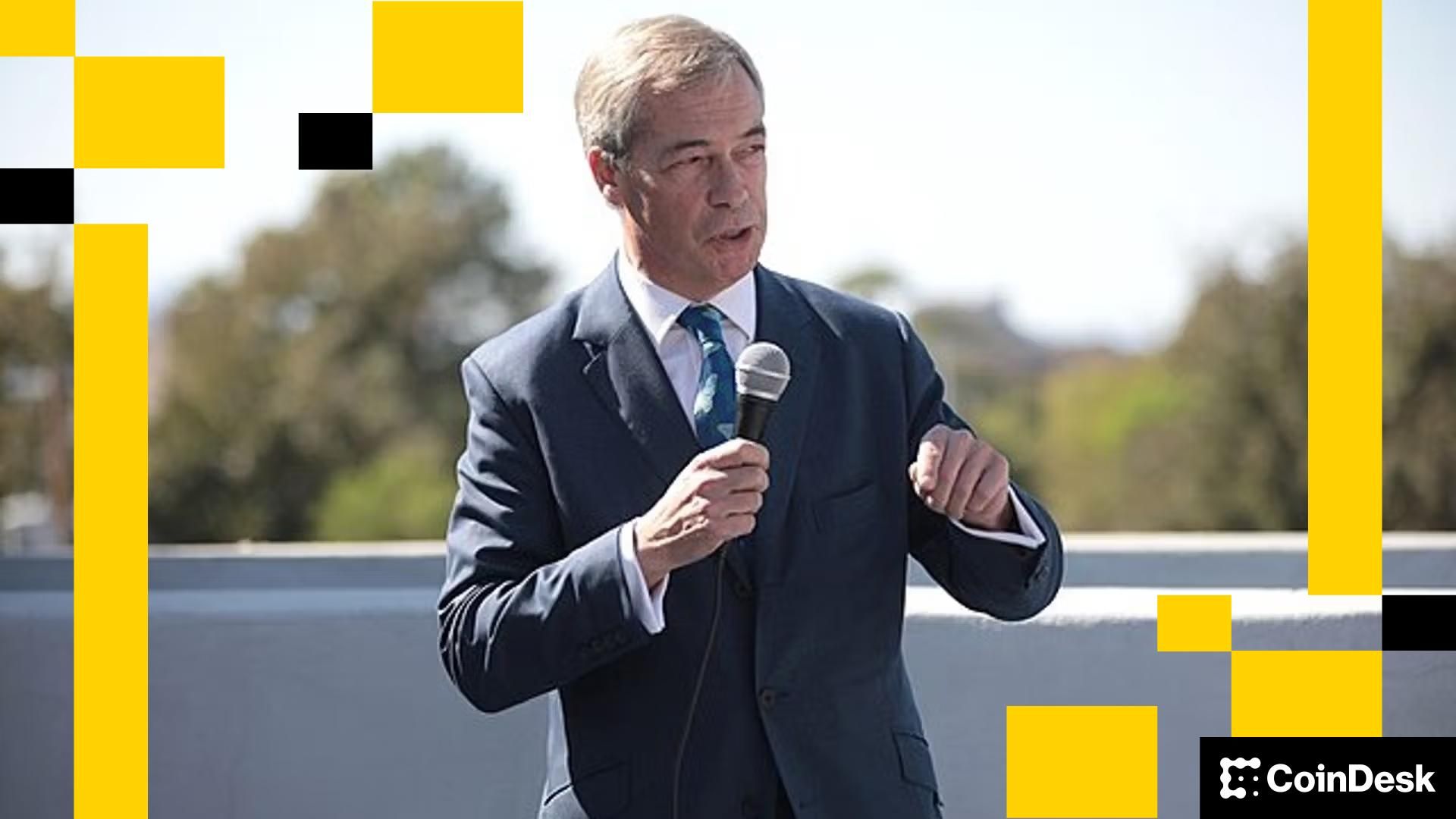
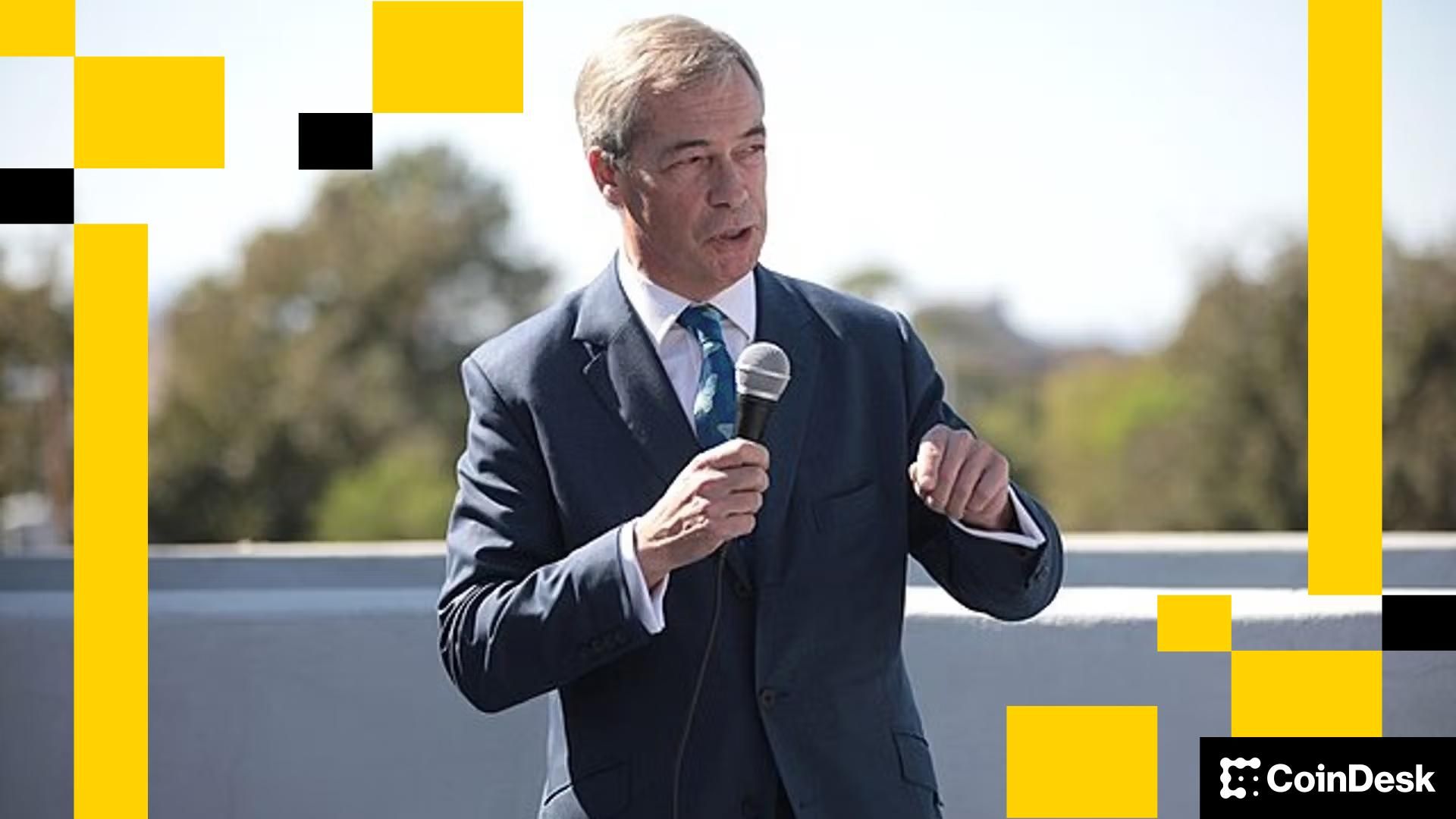
Nigel Farage, leader of the Reform UK party, invested 215,000 pounds ($286,000) in Stack BTC (STAK), a U.K.-listed bitcoin treasury company, in a fundraising round that also involved Blockchain.com.
In total, the company raised 260,000 by selling 5.2 million new shares at 5 pence each, it said on Monday. The new shares are expected to begin trading on the Aquis Growth Market on March 12.
Farage invested through his Thorn In The Side Ltd. company and will hold 6.31% of Stack following admission of the new shares. Farage said he has long supported bitcoin and believes the U.K. should position itself as a global hub for the crypto industry. Reform is leading in the polls, and has attempted to court the crypto vote by accepting donations in cryptocurrency.
“I have long been one of the UK’s few political advocates for Bitcoin,” he said in the statement, adding that London should continue to strengthen its role as a center for financial innovation.
Stack BTC is chaired by former Chancellor Kwasi Kwarteng, who said the investment aligns with the company’s goal of building a portfolio of cash-generative U.K. businesses while accumulating bitcoin as a treasury asset. It currently holds 21 BTC.
Blockchain.com will work with the company to develop its bitcoin treasury infrastructure and institutional-grade custody services.
Stack BTC shares rose 12% to 6.875 pence as of 9:30 a.m. in London.
TLDR:
- BTC exchange reserves have fallen to roughly 2.7 million BTC, matching levels last recorded in 2019.
- The FTX collapse in November 2022 triggered a loss of over 325,000 BTC from exchanges in one month.
- Spot Bitcoin ETFs launched in January 2024 and have since accumulated around 1.3 million BTC total.
- Corporate treasury firms now collectively hold approximately 1.1 million BTC, near 5% of total supply.
BTC exchange reserves have fallen to their lowest point since 2019, now sitting at around 2.7 million BTC. This marks a sustained decline that started in 2022, following the collapse of FTX.
Two major forces have since accelerated this drawdown considerably. These include the arrival of spot Bitcoin ETFs in January 2024 and the rise of corporate treasury adoption.
Together, they are reshaping how Bitcoin is held and accessed across global markets.
Exchange Reserve Decline Traces Back to the FTX Collapse
In November 2022, over 325,000 BTC left centralized exchanges within a single month. The FTX collapse triggered widespread concern about the safety of exchange-held assets.
Many investors moved their holdings into private wallets as a direct response. This marked the beginning of a sustained decline in BTC exchange reserves.
Crypto analyst Darkfost shared the data on X, noting that reserves have returned to 2019 levels. According to the post, Binance holds roughly 20% of the 2.7 million BTC across retail-accessible exchanges.
Coinbase Advanced leads among platforms serving professional investors, holding around 800,000 BTC. However, that figure is already down approximately 200,000 BTC compared to July 2025.
The shift away from exchanges reflects a broader change in how market participants store Bitcoin. Self-custody became the preferred choice for many retail holders after 2022.
This move reduced the amount of BTC on trading platforms. As a result, exchange-side liquidity has continued to tighten.
The decline is not driven by reduced interest in Bitcoin. Rather, it points to a structural change in how BTC is being distributed across the market.
Investors began treating Bitcoin less as a trading asset and more as a long-term store of value. This behavioral shift played a direct role in pulling exchange reserves lower.
ETFs and Corporate Treasuries Are Locking Up Bitcoin Supply
Spot Bitcoin ETFs launched in January 2024, adding another layer to the ongoing reserve decline. At the time of their launch, exchange reserves still stood above 3.2 million BTC.
Since then, ETFs have accumulated around 1.3 million BTC. That figure represents roughly 6.7% of Bitcoin’s entire circulating supply.
Corporate treasury adoption has also contributed to tightening the available supply. Companies holding BTC as a reserve asset now collectively own approximately 1.1 million BTC.
That amount equals close to 5% of the total supply. Both ETFs and corporate treasuries consistently remove BTC from active exchange circulation.
These institutional and corporate holdings differ in nature from typical retail exchange balances. They tend to remain static and are rarely liquidated for short-term trading purposes. Over time, this removes a layer of sell-side pressure from the broader market.
Together, these forces — alongside the self-custody movement — explain the structural drop in BTC exchange reserves. The data shows that Bitcoin’s ownership model is evolving.
An increasing share of supply is now held within formal financial or corporate structures. This gradual transformation may shape Bitcoin’s market behavior well into the future.
TLDR
- Veteran analyst Ed Yardeni increased U.S. stock market crash probability from 20% to 35%
- Crude oil surpassing $100 per barrel drives inflation concerns and growth slowdown fears
- Bitcoin (BTC) maintains support around $67,000, showing resilience against declining equity markets
- NYDIG data reveals only 25% of Bitcoin price action correlates with traditional stock movements
- Leadership transition in Iran amplifies geopolitical tensions and market volatility
Prominent Wall Street analyst Ed Yardeni has dramatically increased his forecast for a potential U.S. stock market crash, raising the probability to 35% for the remainder of 2025 from his previous 20% estimate. Simultaneously, his outlook for a sustained market rally plummeted to merely 5%, down from 20%.
This revised forecast emerges as crude oil prices breached the $100 per barrel threshold. Elevated energy costs present a dual threat: amplifying inflationary pressures while simultaneously hampering economic expansion, creating headwinds for both equity and cryptocurrency markets.
Yardeni articulated the situation bluntly: “The U.S. economy and stock market are stuck between Iran and a hard place. So is the Fed.”
Tensions between Washington and Tehran continue intensifying. Following Iran’s refusal to de-escalate, President Trump has warned of additional military action. The Islamic Republic recently appointed Mojtaba Khamenei, son of the late Ali Khamenei who perished in a U.S. operation, as its new supreme leader. Senior Iranian security officials have declared that Trump “must pay the price” for the ongoing conflict.
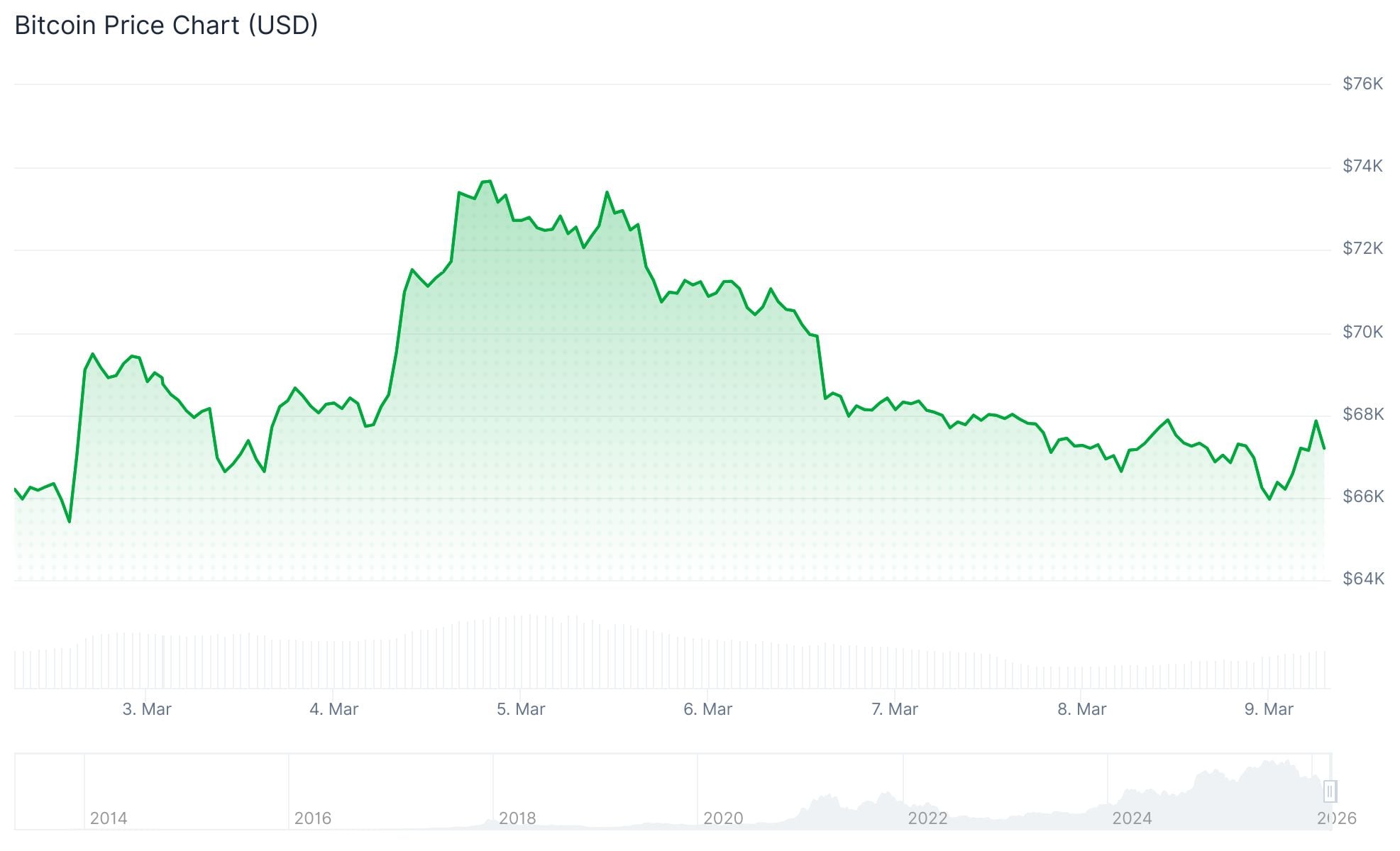
Bitcoin hovered around $67,378 during Monday’s trading session, registering a modest 1% gain over the preceding 24-hour period. This represents notable stability considering the volatility gripping conventional financial markets.
S&P 500 futures plummeted over 2% during Asian market hours. The VIX volatility index, commonly referred to as Wall Street’s fear gauge, reached levels not witnessed since the tariff-induced turbulence of April 2024. Meanwhile, the U.S. dollar recorded its strongest weekly performance in twelve months.
International markets experienced severe disruption. The MSCI global equity index tumbled 3.7% during the prior week. South Korean markets continue struggling to recover from their historic two-day collapse. Hedge funds have substantially increased short exposure across U.S. equity exchange-traded funds.
Market participants have also adjusted Federal Reserve rate cut expectations, now anticipating the next reduction in September. Prior to the conflict eruption in late February, traders had completely priced in a July rate cut.
Bitcoin’s Price Is Not Fully Tied to Stocks
Analysis conducted by NYDIG indicates that approximately 25% of Bitcoin’s price fluctuations can be attributed to correlation with U.S. equity markets. The remaining 75% stems from cryptocurrency-specific market dynamics.
Greg Cipolaro, NYDIG’s research director, explained that Bitcoin’s recent parallel movement with software sector stocks reflects mutual sensitivity to prevailing economic conditions rather than fundamental structural linkage.
Nevertheless, Bitcoin has consistently declined alongside equities throughout every significant risk-aversion episode since 2020.
Crypto-Linked Stocks Also Feel the Pressure
Equities connected to the cryptocurrency sector have experienced substantial volatility as investor caution intensifies. Bitcoin mining operation Core Scientific liquidated portions of its Bitcoin reserves while transitioning toward an artificial intelligence-centric business model. Share prices declined around the divestment period.
Ether gained 2.3% to approximately $1,981. Solana advanced 1.8% to $83.69 but remains the poorest performer among major cryptocurrencies on a seven-day basis, still registering a 1.5% weekly decline.
Ten-year Treasury yields surged six basis points as bond markets incorporated higher inflation expectations stemming from elevated petroleum costs.
The S&P 500 declined 2% during the previous week, demonstrating relative outperformance compared to international counterparts, partially due to America’s substantial domestic energy production capacity.
Remember: Preserve all tokens like [[EMBED_0]], [[IMG_0]], [[LINK_START_0]], [[LINK_END_0]], [[SCRIPT_0]], [[FIGURE_0]] etc. exactly as they appear. These are placeholders for embeds, images, and links that must not be changed.

Hackers abuse .arpa DNS and ipv6 to evade phishing defenses

‘In Romania now, you don’t see a bottle anywhere’

Cardano Called the ‘Most Useless Network in Crypto’ as ADA Down 92% From ATH


-

 Politics6 days ago
Alan Cumming Brands Baftas Ceremony A ‘Triggering S**tshow’
-
Business3 days ago
Form 8K Entergy Mississippi LLC For: 6 March
-

 Fashion3 days ago
Weekend Open Thread: Ann Taylor
-

 Tech4 days ago
Bitwarden adds support for passkey login on Windows 11
-
 Sports4 days ago
499 runs and 34 sixes later, India beat England to enter T20 World Cup final | Cricket News
-

 NewsBeat7 days ago
Is it acceptable to comment on the appearance of strangers in public? Readers discuss
-

 Sports2 days ago
Three share 2-shot lead entering final round in Hong Kong
-

 Sports1 day ago
Braveheart Lakshya downs Lai in epic battle to enter All England Open final | Other Sports News
-

 Business5 days ago
Guthrie Disappearance Enters Fifth Week as Family Visits Memorial
-

 Crypto World7 days ago
Why Nexo Is Reentering the US After the 2023 Crypto Lending Crackdown
-

 NewsBeat4 days ago
Piccadilly Circus just unveiled ‘London’s newest tourist attraction’ and it only costs 80p to enter
-

 Business17 hours ago
Search for Nancy Guthrie Enters 37th Day as FBI Probes Wi-Fi Jammer Theory
-

 Tech7 days ago
Cynus Chess Robot: A Chess Board With A Robotic Arm
-

 Entertainment2 days ago
Hailey Bieber Poses For Sexy Selfies In New Luscious Lip Thirst Traps
-

 Politics3 days ago
Top Mamdani aide takes progressive project to the UK
-
 NewsBeat7 days ago
Handcuffed presenter Jonathan Ross’ sweet admission about marriage to wife of 38 years
-
 Sports6 days ago
Jack Grealish posts new injury update as Man City star enters crucial period
-

 Crypto World4 days ago
New Crypto Mutuum Finance (MUTM) Reports V1 Protocol Progress as Roadmap Enters Phase 3
-

 Tech4 days ago
ACIP To Discuss COVID ‘Vaccine Injuries’ Next Month, Despite That Not Being In Its Purview
-
Entertainment4 days ago
Harry Styles Has ‘Struggled’ to Discuss Liam Payne’s Death