

Politics
Politics Home | Lockheed Martin’s investment in space in the UK will bring coveted jobs and economic growth



With frequent reports of Russian interference in several countries’ satellites, including the UK’s, it is more important than ever that we have robust military space capabilities
Lockheed Martin may have its roots in the US, but it has long maintained a deep commitment to the UK. The company has supported the UK since the Second World War and continues to invest, share expertise and make commitments to strengthen the country’s economic growth and national security.
Bringing technology to space and economic benefit to the UK
The space operating environment has changed enormously in recent years, making it imperative that new satellites can survive in what is now considered a contested domain. Lockheed Martin has unmatched experience developing and fielding space-based technologies needed to operate effectively and successfully in this domain, and this knowledge will play a vital role in helping counter the ever-increasing threats from sophisticated adversaries.
A number of projects across the UK are already about to benefit from Lockheed Martin’s exceptional experience, knowledge and expertise, which, as well as benefiting national security, will also bring a whole host of economic opportunities.
Lockheed Martin is looking at opportunities for investment of what could be more than £100m in the North East space sector. Combined with broader satellite manufacturing activity, this is expected to deliver about £1.2bn* in GVA (gross value added) over 20 years and support roughly 500 high-skill jobs a year for the region.
With other space-related activities, this could generate approximately £3.7bn* in total GVA for the UK and around 2,000 jobs. It would create access to a $15bn set of global programmes and export markets for British workers and businesses, build resilience in UK sovereign supply chains and skills base, and facilitate the entry of market-adjacent companies into space and defence.
That £100m North East investment includes the possible creation of an £85m satellite manufacturing facility in County Durham, based on a newly developed phase of the NETPark estate. This leading UK science park at Sedgefield near Durham is already home to a number of fast-growing businesses within the sector, and the creation of phase three of the park would see the building of a space manufacturing facility by Lockheed Martin.

Lockheed Martin’s investment also includes £15m on NESST – the North East Space Skills and Technology Centre – at Northumbria University. This £50m initiative between Lockheed Martin, Northumbria University and the UK Space Agency will provide a unique facility bringing together world-class academics and businesses, and create a pipeline for talent and world-leading research and space technology. Building on Northumbria’s established expertise in optical satellite communications, space weather and space-based energy, NESST will enable the UK to be at the forefront of research and innovation in these critical fields.
Investing in the future workforce. Today.
Recognising the need to upskill people from the earliest age, Lockheed Martin’s plans include an educational programme covering primary schools to T-level placements and A-level internships, through to apprenticeships and degrees to develop a pipeline of talented space employees.
Companies with transferable products and services will be able to tap into a planned accelerator programme designed to help them enter the space market. Plans also include creating an innovation fund to encourage entrepreneurship and support the next wave of breakthrough space technologies.
Lockheed Martin has continued to demonstrate its confidence in the UK space sector, which has, in turn, accelerated the growth of the North East space cluster. Putting the North East at the forefront of space industry growth in the UK helps address the years of under-investment in the region by both the defence and space sectors.
The North East Combined Authority (NECA) and other local organisations in the area recognise the importance of these facilities – not just for the economic growth of the region but also for the contribution they will make to the future defence of the country.
Director of Economic Growth and Innovation at NECA, Phil Witcherley, recognises the important role Lockheed Martin is playing in the future economic growth of the region. “The presence of a prime like Lockheed Martin in the North East is fundamental to the ambition of our Local Growth Plan and our intention to invest in space and security to drive regional growth,” he said.
“Lockheed Martin investments, including in the North East Space Skills and Technology Centre, are already acting as a catalyst for further private investment in the region.
“Although defence spending patterns have changed over time, the North East has maintained a strong record of delivering high-value space and defence capability and having a skilled workforce that continues to support national needs.”
He added that the proposed Lockheed Martin Assembly Integration & Test facility at NETPark in County Durham “will reinforce economic growth and accelerate skills uptake for the wider space ecosystem.”
“Establishing satellite manufacturing here represents a strategic opportunity to reposition our defence profile, placing the region at the forefront of future space delivery while strengthening UK capabilities,” he said.
Paul Livingston, Chief Executive UK & Nato at Lockheed Martin, believes that the value the company can bring – and is bringing – to the country is incalculable.
“The addition of Lockheed Martin as a UK space prime contractor would address many of the challenges that the space sector has,” he said.
“A declining share of the global space market; limited diversity in the supply base; concentration in the South East of the country; and access to the US space market are issues which would be addressed.
“I’ll also emphasise that Lockheed Martin as a prime contractor will provide access to Space Control and Security technology and expertise that the MOD and other parts of government will need to deliver space effects.”
Although the North East is a prime focus for Lockheed Martin, it is by no means the only part of the UK that is benefiting.
Lockheed Martin is investing in a Software Integration Lab at its Havant facility, which will design and develop sovereign ground segment software products for UK and international export markets. These products are focused on Mission Planning, Command and Control, satellite networking, ground network planning and intelligent AI initiatives to ensure current and future satellite utility is maximised in this war-fighting domain.
“The ability to command, control and manoeuvre satellite assets using the latest in cutting-edge technology in a coordinated and timely manner will be vital to the war fighter and military planning,” continued Livingston.
“This investment will ensure the UK is central to the next generation of ground software products in this growing market.”
*Data from independent economic impact assessment carried out on behalf of Lockheed Martin



1996, Tracey Emin: ‘Exorcism of the last painting I ever made’ | Image © Tracey Emin

4 min read
Full of contradictions and ambiguities, find the time to see this Tate Modern exhibition of the varied work of Margate’s most famous daughter
As I started to walk around the new Tracey Emin exhibition, Tracey Emin: A Second Life at Tate Modern, curiously my first thought (and one that kept coming back) was about framing.
Emin is an artist (and a very self-conscious one) who has mined her life and the things her life consists of, for art, as art. She will frame anything and everything if it fits into one of the many ‘stories’ that make up the totality of her work.

A trip to the dentist inspires her piece My Future (1993) in which she frames an old passport (a past identity), a tooth and the dentist’s card (both in the same frame) and separately a hand-written lyrical text that ends with the line “That’s the last dead thing that leaves my body” – a reference to her abortions.
Everything is framed, one way or another: the large, impressive and beautifully composed appliqué blankets are mounted in thick white frames. Even the famous My Bed is framed twice: by what is left out around the bed and the bedside rug, turning the bed into a lonely ‘oasis’ of being, as well as the line you as the viewer cannot cross. That and her studio installation feel, then, a little like crime scenes, though less perhaps about the crime, more about the potential loss of the fragile evidence.
But perhaps the most interesting framing is that of the paintings which, in an exhibition of varied media, are the dominant medium – and clearly the work Emin has most thrown herself into in recent years.
The newest largescale paintings have metal frames leaving just a slight gap between painting and frame. This interesting aesthetic choice adds to the sense of the severe physical limitation placed on the ideals and emotions you sense in the painting: freedom, ecstasy, joy and sexual desire in the face of anger and latterly the fight against death. The paintings that work best – such as Rape (2018) and You Keep Fucking Me (2024) – do so when the face-off between freedom and obstruction (or erasure) feels most acute.

Emin’s work is full of such contradictions and ambiguities. Her embroidered cotton Why (2009) contains the phrase “Why Be Afraid”, which may start out as consolation but, when persistently repeated, turns into a cry of fear itself – as well as the cold analysis of the fact.
 Her brilliant Super 8 film Why I Never Became a Dancer (1995), rightly given a room of its own, lingers nostalgically over a timeless Margate, with its beach and seaside attractions, even as her voiceover tells us the town is too small and it is time to leave.
She never became a dancer because she was called a “slag” on the dancefloor, but she also never became a dancer because she became an artist, even as much of the film is devoted to her dancing. The artist returned to Margate, but on her own terms.
This is a hugely emotional exhibition. If there is one fault, it is nothing to do with the artist but the stupid trigger warnings. They should all be gathered up, framed and put in a room by themselves. Almost Tracey Emin.
Earl of Clancarty is a Crossbench peer
Tracey Emin: A Second Life
Curated by: Maria Balshaw, Alvin Li and Jess Baxter
Venue: Tate Modern until 31 August 2026


Credit: The Crown Estate/Ben Barden Photography Ltd
The Crown Estate sets out what offshore wind means for coastal communities – from jobs and bills to investment in ports – and invites parliamentary stakeholders to engage with its Marine Delivery Routemap
In just 25 years the United Kingdom has turned offshore wind from an idea into an industry – from a nascent technology into national infrastructure. It is already powering communities, cutting bills and supporting jobs in constituencies across the country. And it has the potential to deliver far more for jobs, growth and energy security.
The case for offshore wind is practical and measurable. Every additional gigawatt delivers an estimated £2-3bn boost to the economy.1 Between 2010 and 2023, UK consumers are estimated to have saved around £104bn2 as wind generation helped shield families from volatile gas prices. Today, the UK operates nearly 3,000 offshore wind turbines3 with a total capacity of 16.1GW – enough clean power for over 16 million homes.
“Offshore wind may be offshore – but its jobs, skills and supply chains are firmly onshore, in your coastal constituencies”
And the momentum continues. The latest Contracts for Difference auction backed a further 8GW of capacity – reinforcing the UK’s clean energy leadership and unlocking billions more in investment and thousands of new jobs across the country.
That scale translates directly to constituencies. Offshore wind already supports close to 40,000 jobs across the UK, and this could rise to 94,000 by 2030.4 Many of those roles – from component manufacturing to engineering to port services, are rooted onshore, well beyond the coast. Even where turbines cannot be seen – the impact is felt locally.
This is also a clear energy security test. The UK still imports around 42 per cent of its energy,5 leaving households and businesses exposed to global gas price shocks driven by geopolitics, supply disruption and extreme weather. Reducing reliance on imported fossil fuels is one of the most effective ways to protect families from future price spikes and strengthen national resilience.
A key reason the UK has made such progress is the strong institutional model underpinning offshore wind. At the centre is the stewardship of the seabed. Created by an Act of Parliament, The Crown Estate has a clear mandate to act independently and commercially to deliver long‑term value for the nation and returns all our profits to HM Treasury for the benefit of public spending.
This enables us to take a strategic approach: working with government and industry, investing in data and evidence to reduce risk, and running transparent leasing rounds that give developers the certainty to invest for decades.
Scaling back ambition now would be a profound mistake. It would jeopardise energy security, slow the clean energy transition, and limit economic opportunities for constituencies nationwide. Sustained growth depends on grid readiness, stable policy signals and long-term investment confidence – all areas where Parliament’s role is decisive.
Meeting the UK’s clean power and energy security ambitions requires a step change in deployment, supported by the right onshore conditions. Cutting-edge offshore wind needs larger ports, heavier-lift quaysides and strong pathways into secure, well-paid technical jobs.
We therefore ask parliamentarians to continue prioritising R&D investment and policy that supports innovation from research to deployment.
Government departments and devolved nations must work together on a co-ordinated strategy that gives communities, industry and investors the certainty required to deliver at pace.
The Crown Estate is committed to ensuring the seabed continues to drive investment for the benefit of people onshore. Through The Crown Estate Act 2025, Parliament granted us the flexibility to invest more widely across priority areas. We are already using these powers to support the next phase of offshore wind.
First, we will provide long-term visibility through a new Marine Delivery Routemap – or a “sat nav for the seabed” – a unique mapping and planning tool that can help identify how marine industries and nature can grow together. Our seabed is becoming increasingly crowded. Offshore wind must co-exist alongside cables and pipelines, shipping lanes, fisheries, defence activity and marine protected areas. As demands on our seabed grow, clear mapping is essential to support decision making, avoid conflict, protect nature and give investors confidence.
Second, we will stimulate growth through a £50m Supply Chain Accelerator to unlock early-stage projects where capacity is needed most.
Third, we will invest directly, committing an additional £350m through our Supply Chain Investment Programme to support offshore wind ports and supply chains, working alongside co-investors including Great British Energy.
Over time the Routemap will become a shared national resource – helping local communities and their representatives to engage with the seabed as a vital strategic asset.
To support that engagement, The Crown Estate will offer parliamentary stakeholders the opportunity to explore a working demonstration of the Marine Delivery Routemap following its operational launch.
Our aim is a common endeavour: long-term, cross-sector planning that strengthens the UK’s energy security and delivers lasting benefits for communities, nature and the nation.
Click here to find out more about The Crown Estate.
References
- https://www.renewableuk.com/media/rqvlqzu0/ offshore-wind-industrial-growth-plan.pdf, p.1
- https://www.ucl.ac.uk/news/2025/oct/ wind-power-delivers-ps104-billion-net-benefit-uk-consumers
- https://www.datocms-assets.com/136653/1747814298- osw-report-2024.pdf, p.8
- https://www.renewableuk.com/news-and-resources/ publications/wind-industry-skills-intelligence-report-2025/
- https://oeuk.org.uk/wp-content/uploads/ woocommerce_uploads/2025/09/Economic- Report-2025-OEUK-becfs5.pdf, p.16

I have terrible sleep, and have tried everything from reading before bed to drinking passionflower tea, and addressing my vitamin D deficiency to tackle my sleep maintenance insomnia.
Should I add magnesium to that list?
After all, I’ve heard it’s a science-backed way to help you get (and stay) asleep. Here’s what we know for sure, and what we’re a little foggier about:
Why do people think magnesium will help sleep?
Magnesium is somewhat helpful to the production of the sleep hormone melatonin, which helps to regulate your body clock.
It also helps with the balance of your brain’s neurotransmitters, or the “messengers” your body uses to keep your mind and body in contact.
And because these can either calm you down or race your thoughts up, the balancing effect magnesium can have on neurotransmitters means it could help to lower your risk of racing thoughts at night.
Does magnesium definitely help sleep?
In a systematic review of nine studies, magnesium appeared to help with sleep quality (specifically, it seemed to improve snoring, sleepiness, sleep duration, and reduce participants’ likelihood of falling asleep in the day).
But this was only the case in observational studies. That meant we couldn’t prove for sure that the magnesium itself was responsible for the connection; they only proved a correlation, and not causation.
However, in the randomised controlled trials – sometimes called the “gold standard” of effectiveness research, and are designed to tell whether the material researchers are studying directly creates an effect – the results were less impressive and less consistent.
This “uncertain association” has led the authors of the review to call for more randomised controlled trials with more participants and longer follow-up periods.
So, while some people have reported better sleep on an individual level, the science isn’t definitive yet.
Is magnesium right for me?
Whether you have sleep issues or not, all of us need magnesium to help turn our food into energy and maintain our bone health. But we can get enough from our food.
Some medications may interact with magnesium supplementation, including some antibiotics, some diabetes medications, and some blood pressure medications.
If you’re on any of these, it might be worth asking an expert whether magnesium is right for you.
People with kidney disorders, those with heart disease, and individuals with gastrointestinal disorders might be at higher risk of magnesium overdose, too.
That is sometimes the case because those with kidney issues often take medications which are already high in magnesium, like laxatives and/or antacids.
What is the right dose of magnesium?
Healthy adults, aged 19-64, should have:
- 300mg a day for men
- 270mg a day for women.
Per the NHS, taking over 4,000 mg of magnesium a day can lead to diarrhoea.
We don’t know what happens in the longer term.
And, the health service added, “You should be able to get all the magnesium you need by eating a varied and balanced diet”.
What are some natural sources of magnesium?
Magnesium is naturally present in lots of foods, including:
- spinach,
- nuts,
- wholemeal bread,
- green leafy vegetables,
- legumes,
- nuts,
- seeds,
- whole grains,
- enriched cereals.
Generally speaking, our bodies absorb about 30-40% of the magnesium available in food, the National Institutes of Health added.
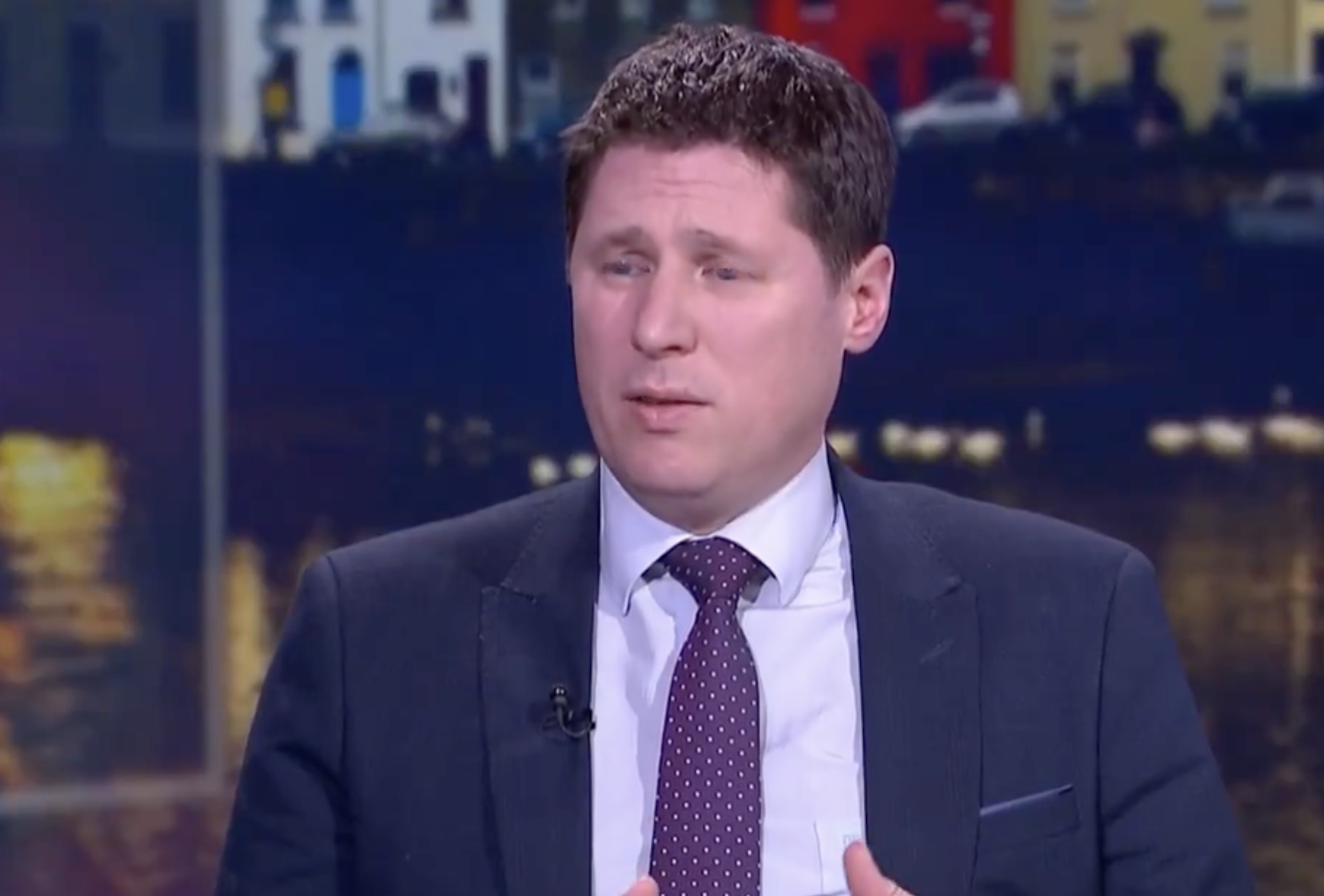
Dr Stephen Goss is a freelance historian, lectures in history and politics in London, and is a Conservative councillor in Reading.
According to the Just War Theory, the use of force must be for a morally defensible cause – typically self-defence or the protection of innocent life. It must be fought by legitimate authorities. It must be a last resort. Its expected benefits must outweigh the harm it causes. Combatants must distinguish between military targets and civilians, and the harm caused must be proportionate to the military objective being pursued.
Modern international law largely mirrors these principles. The Geneva Conventions and their additional protocols require armed forces to distinguish between non-combatants and combatants, to minimise civilian harm, and to avoid disproportionate attacks.
While the weight of benefits against harm caused is subjective, the ethical and legal standards for hostilities are not. A last resort; declared by legitimate authorities; proportionate; and directed at military targets – not civilians.
Last week we learnt that bombing is justified when Sinn Féin think it is. In an interview, Sinn Féin’s Matt Carthy TD insisted that ‘there isn’t an instance where bombing a country ended up resulting in a better situation’. This is blatantly not true. NATO’s intervention in the Balkans during the 1990s involved air strikes which halted ethnic cleansing in Bosnia and Kosovo and contributed to establishing peace. The situation was complex, but the idea that military force can never produce a better outcome is simply not borne out by history.
Carthy’s comment might have passed unnoticed as a banal soundbite was it not for the fact that he represents a party whose political history is intertwined with one of the most sustained bombing campaigns ever conducted in Western Europe.
For the three decades of the Troubles, the Provisional IRA made bombing a central instrument of its strategy. Bombs were detonated across Northern Ireland and Great Britain in an attempt to exert pressure on the British state and advance the republican cause. The human cost was immense. Town centres were devastated. Civilians were killed and injured. On Bloody Friday in July 1972 the IRA detonated 22 bombs in bus and train stations, hotels, and shopping areas killing nine and seriously injuring 130 innocent people. On Remembrance Sunday in 1987 an IRA bomb at the War Memorial in Enniskillen killed 11 and injured 63. These are but two of many possible examples.
Sinn Féin leader Mary Lou McDonald has complained that her party should not have to answer for the IRA as its violence is now in the past. Yet Sinn Féin has repeatedly refused to condemn the IRA’s campaign in unequivocal terms. Three current Sinn Féin members of the Northern Ireland Assembly have served prison sentences for bombing offences (Pat Sheehan, Gerry Kelly and Carál Ní Chuilín). Northern Ireland’s First Minister Michelle O’Neill stated in a 2022 interview that there had been ‘no alternative’ to IRA violence. Last year former Sinn Féin MP Michelle Gildernew asserted that murder was justified during the Troubles.
Indeed, Carthy himself has paid tribute to Hunger Striker Kieran Doherty who was arrested while on a bombing mission. Carthy also defended Tommy McMahon canvassing for him. McMahon was the only person convicted for the assassination of Lord Mountbatten in 1979. The bomb onboard Mountbatten’s fishing boat killed four, including two children.
Republican leaders argue that the IRA campaign, combined with Sinn Féin’s political strategy – the so-called ‘Armalite and ballot box’ approach – helped create the pressure that eventually led to negotiations and the Agreement in 1998.
If bombing can never produce a better situation, then the strategic logic behind the IRA’s campaign collapses. Either the campaign was both morally and strategically wrong, or Carthy’s statement is not a universal principle at all but a selectively applied one.
What makes Sinn Féin’s position all the more inconsistent is that the party regularly pronounces on international conflicts while failing to apply the same moral standards to its own past. Responding to the US and Israeli strikes on Iran, Ms McDonald demanded that the Irish Government condemn the action ‘without qualification’, declaring that the attacks were in breach of international law and warning they risked destabilising the region.
The principles Sinn Féin now invoke internationally: proportionality, restraint, and the protection of civilians sit uneasily alongside the record of the movement from which the party’s electoral strength emerged. The IRA campaign was built around bombing as a political instrument. Many attacks were directed not at military targets but at civilians. Measured against the standards Sinn Féin now demands others observe, many of those attacks would plainly fail.
As the situation in Iran and the wider Middle East has deteriorated, political leaders across the UK have been receiving security briefings on developments and their potential implications. These briefings are not academic exercises. They exist so that those responsible for governing can understand the risks, the intelligence picture, and the strategic choices moving forward. First Minister Michelle O’Neill has repeatedly refused to attend. For a party that frequently offers sweeping moral pronouncements about conflicts abroad: condemning Western military action, criticising NATO, and presenting itself as a voice for peace and international law, this is a notable decision.
It matters because serious discussion about the use of force requires more than rhetorical certainty. It requires an understanding of the intelligence, the risks, and the consequences that governments must weigh before acting. That is precisely why such briefings exist. Choosing not to attend them while simultaneously offering absolute judgements about the legitimacy of military action reinforces the Students’ Union-esque politics Sinn Féin prefers – debating international conflicts in the abstract rather than engaging with the difficult realities behind them.
That detachment from reality was illustrated by scenes in Belfast itself recently. Following the assassination of Iran’s Supreme Leader, Ayatollah Khamenei, Iranians gathered in front of Belfast City Hall to celebrate. Men and women waved Iranian flags, cheered, and literally danced in the street. For them, the decapitation of a regime synonymous with brutal repression, imprisonment, and executions represented the possibility – however uncertain – of liberation. People who had actually lived under the Iranian regime were openly rejoicing at its seeming demise.
Sometimes military force is abused, mis-used, or disastrously misjudged. However, history also shows that it can halt aggression, stop atrocities, and bring down regimes that brutalise their own people. Just War theory does not claim that violence is never justified. On the contrary, it exists precisely because the use of force sometimes may be morally defensible. It places strict conditions on when and how it may be used.
Measured against those criteria, the IRA campaign was not justifiable. Many of its most notorious and deadly attacks were directed at civilians as the primary victims. The same ethical framework Sinn Féin now invokes to condemn the actions of others would render much of the IRA campaign indefensible. To claim that bombing can never produce a better situation is therefore not a serious moral position. Coming from a movement that once defended one of Europe’s most prolonged bombing campaigns, it is something else entirely: selective amnesia masquerading as principle.
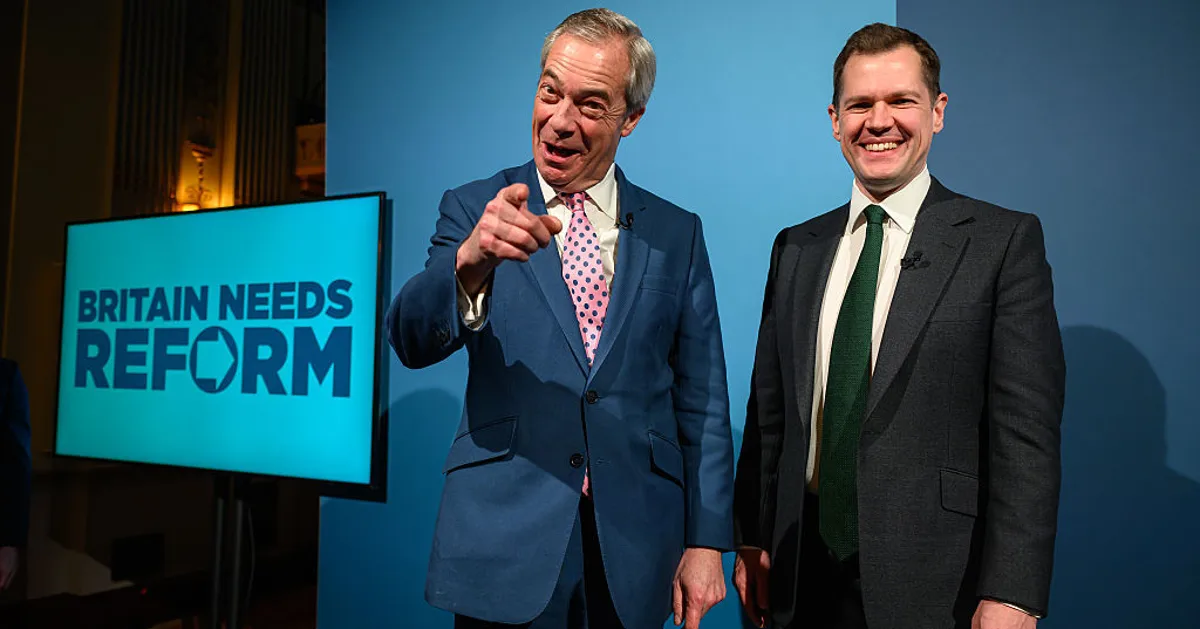
Labour have accused Reform UK of being “in an almighty mess” over the party’s shifting position on the war in Iran.
Nigel Farage said a week ago that the UK “should do all we can” to support the US and Israeli bombing of the country.
Deputy leader Richard Tice said that if Reform were in power “we would be helping the Americans and the Israelis in any way they saw appropriate”.
“If requests were made, we would have been saying ‘yes, we are pleased to help’,” he added.
He said: “If you’re asking me the question, do I think that it is in the interests of the British people, and at the end of the day that is what matters to Reform, for us to be deploying British airmen in bombing raids over Iran right now, when our allies have not asked us to do that, then, no, I don’t think that’s necessary.
“We will be very cautious before deploying British troops overseas into offensive action.”
A YouGov poll published last week showed that just 8% of the country believe the UK should be “actively joining the US and Israel” in bombing Iran.
A Labour source told HuffPost UK: “Reform spent the past week saying they’d bomb Iran.
“Now they’ve seen the polls and panicked, leaving them in an almighty mess. That’s not serious leadership.”
A Reform UK spokesperson said: “Reform has never said we want to deploy troops overseas nor involve ourselves in the bombing of Iran.
“Unlike Labour, we would have defended our base in Cyprus and ensured our armed forces are rebuilt.”

Welcome back to Canary Catch Up! I’m gonna be honest with you all, most of my tv time this week has been taken up by reading the Game Changer series. These, if you don’t know, are the books that Heated Rivalry comes from. These queer hockey boys have got a death grip on my heart, which is precarious enough considering I’m recovering from pericarditis. But when I wasn’t swooning over these incredible books, I was watching lots of great TV.
We Might Regret This tackles disabled marriage inequality
One show that I’m so glad is back for a second series is We Might Regret This. The sharp comedy nails that, whilst being disabled is rubbish, the shittest part is the way you’re treated by the government, society and media.
The show doesn’t shy away from problems disabled people face that they really fucking shouldn’t anymore. Whilst Freya is excited to be engaged, she’s brought down to earth with a bump when she finds out that by getting married, she could have her care allowance cut by half. In the UK, if you move in with a partner, you can lose means-tested benefits as their income is included in the assessment. This effectively means disabled people don’t have marriage equality and it puts some at risk of prolonged abuse. It meant so much to me that a show of WMRT’s popularity is opening people’s eyes about something that disabled people live in fear of.
Someone’s House of Games?
I’m a huuuuge quiz show fan. So much so, I was on Pointless and have the trophy to prove it. Since Richard Osman left Pointless, he’s had runaway success fronting Richard Osman’s House of Games. The show is now in its ninth series and Osman even met his wife on the show. So for some baffling reason, he announced this week that he’s leaving the show, and in time, someone else will be taking over.
This just seems like an absolutely bizarre move to me, away from the show’s success. How do you even continue a show with someones name in without that person? Will it be Richard Osman’s House of Games Hosted by some annoying prick from Reality TV? Or will it be Some Annoying Prick from Reality TV’s House of Games? Either way, it sounds like bollocks.
Penny Mordaunt gets her arse handed to her on The Last Leg
Tory Ghoul Penny Mordaunt was on The Last Leg this week to flog her wares; thankfully, she wasn’t given an easy ride. Irish comedian Vittorio Angelone laid into her support for the arms trade, saying:
Penny’s always been such a supporter of disabled people, you’re very supportive of the prosthetics industry, you were promoting on Twitter an arms fair in Saudi Arabia recently.
The audience responded with shocked laughter and applause. Mordaunt attempted to justify her actions by spaffing on about how important defence is, which Angelone responded to with:
I think it’s brilliant, warmongering has always been a male dominated industry and you’ve really smashed the glass ceiling.
Mordaunt was understandably fuming, but if you don’t wanna be called a warmonger on live TV, then maybe don’t be a warmonger
And finally…possibly the bizarrest lip-sync ever
I had an arthritis flare at the end of the week, which meant it was prime time to lie in bed and catch up on Rupaul’s Drag Race UK vs The World. And I’m glad I did because it meant I got to witness possibly the best and weirdest lip sync ever.
On Drag Race the bottom two battle it out for the final place in the competition by lip syncing for their lives. In the past we’ve had many iconic lip syncs but this one feels like they might finally be running out of songs. Because instead of a pop banger, Fontana and Serena had to lip sync to fucking Crazy Frog. If this sounds batshit enough, nothing will prepare you for the video
WTH just happened? They made me lip sync to crazy frog 🐸😭😂 #DragRaceUK #teamfontana pic.twitter.com/6N266xDqRk
— FONTANA (@itsfontana) February 24, 2026
Until next week!
Featured image via the Canary

March is internationally recognised as Colorectal Cancer Awareness Month, highlighting the importance of early detection and timely diagnosis of one of the most common cancers worldwide. When patients undergo imaging tests such as CT or MRI scans, they often ask an important question: How can I be sure the results have been interpreted correctly?
In many cases, patients and clinicians may seek a second opinion on MRI or CT scans to gain additional insight into imaging findings. Access to a fast MRI or CT report can also help patients receive timely clarification of results and support further medical consultations.
Why patients sometimes seek a second opinion on CT or MRI scans
Receiving imaging results can raise many questions. Patients may want to better understand their diagnosis or confirm that the findings from a scan have been interpreted accurately.
Some of the most common reasons patients seek a second opinion on CT or MRI scans include:
• persistent symptoms despite previous examinations
• uncertainty about imaging results
• complex or unclear findings on a scan
• preparation for further treatment decisions
A second review by an experienced radiologist can provide additional reassurance and help ensure that important details visible on the scan have been carefully evaluated.
The role of CT and MRI imaging in colorectal cancer diagnosis
Colorectal cancer develops in the colon or rectum and often begins as small growths known as polyps. Because the disease may progress slowly, early detection significantly improves treatment outcomes.
Medical imaging plays an important role in assessing the condition. For example:
• CT scans can help evaluate the abdomen and determine whether cancer has spread beyond the colon.
• MRI scans are particularly useful in assessing rectal cancer and visualising pelvic structures in detail.
These imaging techniques provide clinicians with valuable information that supports diagnosis and treatment planning.
Fast MRI or CT report: why timing can matter
When patients undergo diagnostic imaging, they often want to receive clear information about the results as quickly as possible. Waiting for a report can be stressful, especially when further medical decisions depend on imaging findings.
A fast MRI or CT report may help patients obtain timely clarification of scan results. Rapid access to expert interpretation can support discussions with healthcare providers and help guide the next steps in the diagnostic process.
In some cases, patients may also request a radiology second opinion to confirm findings or gain additional confidence in the interpretation of their imaging studies.
Access to specialist radiology expertise
Medical imaging produces complex diagnostic data that requires careful analysis by experienced radiologists. The radiology report summarises the findings visible on the scan and provides clinicians with important information for further evaluation.
Advances in digital healthcare now make it possible for imaging studies to be securely shared and reviewed by specialist radiologists regardless of location. Patients may seek an independent radiology second opinion or a fast MRI or CT report through specialised services such as Eurodiagnosis, where imaging studies are interpreted by experienced radiologists.
Because medical imaging contains sensitive health information, secure data handling is essential. Modern radiology platforms use encrypted systems and strict data protection standards to ensure that patient images and medical information are processed safely and confidentially.
Improving awareness and diagnostic confidence
Colorectal Cancer Awareness Month encourages greater understanding of cancer prevention, screening and early diagnosis. Access to modern diagnostic imaging and expert radiology interpretation can help patients and clinicians better understand complex medical findings.
Clear imaging reports and access to specialist expertise support more informed medical discussions and may help patients feel more confident about their diagnostic journey.
FAQ
What is a radiology second opinion?
A radiology second opinion means having MRI or CT scan images reviewed by another specialist radiologist to confirm or clarify the findings of the original report.
Why might someone request a fast MRI or CT report?
Patients may seek a faster radiology report when they need quicker clarification of imaging findings, particularly when further medical consultations or treatment decisions depend on the results.
Can CT or MRI scans detect colorectal cancer?
CT and MRI scans are often used to evaluate abnormalities and assess the extent of disease. However, colonoscopy remains the primary diagnostic test for detecting colorectal cancer.
How can I obtain a professional radiology second opinion or fast report?
Patients can request a radiology second opinion or a fast MRI or CT report entirely online by securely uploading their imaging studies. After submission, the images are reviewed by experienced radiologists, and the report can typically be delivered within up to 5 days. This remote process allows patients to obtain expert interpretation regardless of their location.

A BBC expert has delivered a brutal reality check to Donald Trump over his claim that America has “already won” the war in Iran.
Referring to British plans to send two Royal Navy ships to the region, Trump said: “We don’t need people that join wars after we’ve already won.”
But on Radio 4′s Today programme this morning, BBC international affairs editor Jeremy Bowen said Trump was obviously wrong.
He said: “Trump oscillates wildly in the kinds of things that he’s said. He even said over the course of the weekend regarding the British aircraft carrier proposal, he said we’ve won the war already. Well clearly, that hasn’t happened.”
He said: “What we’re seeing is a continuation of their strategy, which is essentially to spread the pain.
“They know they can’t take on the Americans and the Israelis in terms of firepower, but what they can do is create second and third order consequences, like a big hike in oil prices, which they might be hoping will press Donald Trump into thinking ‘right, time to declare victory and go home’.”

Strictly Come Dancing fans are in shock following reports in the tabloid press that four of the show’s resident professionals will not be returning for this year’s series.
On Saturday, The Sun claimed that Gorka Márquez’s contract would not be renewed ahead of the next season of Strictly, citing a “source” who claimed that “bosses want a fresh start” ahead of the next run.
Luba Mushtuk and Michelle Tsiakkas were also among the pros rumoured not to be back for the upcoming season, with the tabloid alleging a day later that Nadiya Bychkova was the fourth to be dropped.
At the time of writing, none of the four has addressed the speculation, but the news has sparked a big reaction among Strictly devotees…
A BBC representative told The Sun: “Plans for Strictly Come Dancing 2026 will be confirmed in due course.”
HuffPost UK has also contacted Strictly Come Dancing for comment.
Gorka – who has made the Strictly final three times during his 10 years as a professional – sat out most of last year’s season due to his commitments as a judge on the Spanish version of the show.
Nadiya and Luba joined in 2017 and 2018, respectively.
During their time on the show, Nadiya has gone without a celebrity partner twice, while Luba has been benched four times.
Michelle, meanwhile, became a Strictly pro in 2022, and has only been paired with a celebrity once during her four-season stint.

Fans already knew that Strictly would be getting something of a refresh in 2026, following the much-publicised departures of its long-time hosts Tess Daly and Claudia Winkleman.
Replacement presenters are yet to be confirmed, with a number of famous faces rumoured to be in consideration for the coveted gig.
Strictly Come Dancing will return to BBC One for its 24th season in the autumn.

An ally of Donald Trump has blamed the US president for his ongoing spat with Keir Starmer over Britain’s role in the the Iran war.
Trump has repeatedly lashed out at the prime minister for initially refusing America’s request to use UK military bases to launch attacks on Iran.
Starmer has since granted the US permission after Iranians began bombing other Middle East countries, putting 300,000 British citizens in the region at risk.
However, the UK says American jets can only carry out “defensive” missions targeting missile launch sites from British bases.
Trump said last week that Starmer was “not Winston Churchill” and on Saturday night claimed Britain was trying to “join a war after we’ve already won”.
Despite this tension, the president’s friend Chris Ruddy insisted the “special relationship” between the UK and the US is still not “broken”.
The founder and chief executive of conservative media outlet Newsmax told the BBC the recent friction could be described as a “bump in the road”.
“The president has great respect for Britain and the prime minister,” he said, speaking to Radio 4′s Today programme. “I think there was probably some miscommunication early on but that’s been smoothed over.”
Starmer suggested last week that Trump’s war may be unlawful and that the president evidently had no clear objective for the war.
But Ruddy said that America usually engages its allies months ahead of time when it comes to operations like this.
He said: “In this case, as I understand it, the United States notified the British literally on the eve of the attack or as the attack on Iran was underway and said we would like to use your bases.
“Starmer’s response was not that he was not going to do it but that he was going to review it, get the buy-in of the cabinet.
“Within 24 hours he came back, and said it was approved.
“I don’t think it was a real effort to stymie the Americans on his part. Britain came behind the United States quicker than any other ally in Europe, was far better than the French, and stood very strong with us.”
French president Emmanuel Macron and Spanish prime minister Pedro Sanchez have both claimed the strikes are outside of international law.
“I believe the US did not engage early enough the allies,” Ruddy said. “We’re seeing poll numbers here where Americans do not fully support the Iran attack and the reason I believe is that the administration did not fully communicate the importance of this attack and why a strike on Iran on its nuclear facilities was critically important at this time.”
Ruddy added that every day the Iran war drags on, the worse it gets for the US.
“Over time, the public perception around the world becomes ‘Iran is the victim, not the perpetrator of heinous crimes over many decades’,” the Trump ally said.
He said he would suggest the president comes up with a clear marker of what he wants to achieve, and once that is reached, “declare victory”.

Luke Littler explains why he wants to meet Carlos Alcaraz at ‘Oscars of Sport’ awards ceremony

10th Algebra | Financial Planning | Question Bank Solution | Board Exam 2026

Best Guinness merchandise: unique memorabilia for St. Patrick’s Day


-

 Politics6 days ago
Alan Cumming Brands Baftas Ceremony A ‘Triggering S**tshow’
-
Business3 days ago
Form 8K Entergy Mississippi LLC For: 6 March
-

 Fashion3 days ago
Weekend Open Thread: Ann Taylor
-

 Tech4 days ago
Bitwarden adds support for passkey login on Windows 11
-
 Sports4 days ago
499 runs and 34 sixes later, India beat England to enter T20 World Cup final | Cricket News
-

 NewsBeat7 days ago
Is it acceptable to comment on the appearance of strangers in public? Readers discuss
-

 Sports2 days ago
Three share 2-shot lead entering final round in Hong Kong
-

 Sports1 day ago
Braveheart Lakshya downs Lai in epic battle to enter All England Open final | Other Sports News
-

 Business5 days ago
Guthrie Disappearance Enters Fifth Week as Family Visits Memorial
-

 Crypto World7 days ago
Why Nexo Is Reentering the US After the 2023 Crypto Lending Crackdown
-

 NewsBeat4 days ago
Piccadilly Circus just unveiled ‘London’s newest tourist attraction’ and it only costs 80p to enter
-

 Business18 hours ago
Search for Nancy Guthrie Enters 37th Day as FBI Probes Wi-Fi Jammer Theory
-

 Tech7 days ago
Cynus Chess Robot: A Chess Board With A Robotic Arm
-

 Entertainment2 days ago
Hailey Bieber Poses For Sexy Selfies In New Luscious Lip Thirst Traps
-

 Politics3 days ago
Top Mamdani aide takes progressive project to the UK
-
 NewsBeat7 days ago
Handcuffed presenter Jonathan Ross’ sweet admission about marriage to wife of 38 years
-
 Sports6 days ago
Jack Grealish posts new injury update as Man City star enters crucial period
-

 Crypto World5 days ago
New Crypto Mutuum Finance (MUTM) Reports V1 Protocol Progress as Roadmap Enters Phase 3
-

 Tech4 days ago
ACIP To Discuss COVID ‘Vaccine Injuries’ Next Month, Despite That Not Being In Its Purview
-
Entertainment4 days ago
Harry Styles Has ‘Struggled’ to Discuss Liam Payne’s Death