
Business
A new Gulf order? What December’s Bahrain summit tells us about the future of the GCC

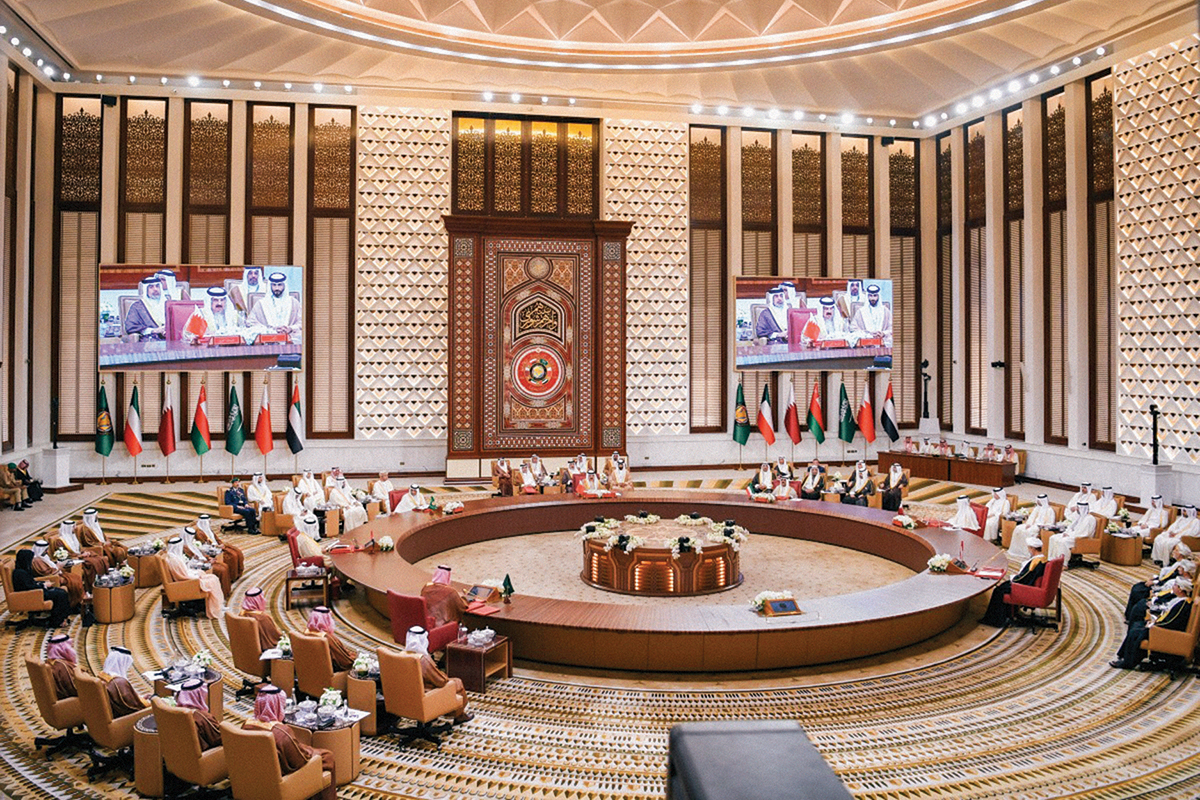
For the first time in years, all the moving parts of Gulf integration – customs, aviation, rail, security, even real estate regulation – were pulled in one direction and given deadlines. Piece by piece, the summit revealed a bloc finding its full rhythm – not by proclamation, but through the steady, technical discipline of shared systems.
The Supreme Council’s statement on December 3 was unequivocal on one point. The security of the GCC states is “indivisible” and “any aggression against any one of them is an aggression against all of them.”
It explicitly linked this to the joint defence agreement and King Salman’s long-running vision to move the bloc from loose cooperation towards something closer to a union. It also pushed ministers to complete the remaining steps of economic unity, from the customs union to a common market for services, and to report back on a “defined timetable”.
In a region that has grown accustomed to ad-hoc coalitions and improvised crisis management, the Bahrain summit felt like an attempt to make Gulf solidarity the foundational platform upon which all progress is now achieved.
A region ‘reawakened’ by war
Over the past year the Gulf has watched a long-range war between Iran and Israel, drone and missile strikes on Qatar, and a grinding conflict in Gaza that has forced every capital to reassess its assumptions about deterrence. The same communiqué that created a civil aviation authority and a customs data platform also described Israeli actions in Gaza as genocide, called for international protection for Palestinians and endorsed a United States peace plan that envisages a transitional “Peace Council” for the Strip.
For geopolitical strategist and founder of The Geopolitical Business Inc. Abishur Prakash, this is precisely the kind of environment in which regional blocs either harden or hollow out.
“Regional groups are being sprung to action by geopolitics,” he says. “Global uncertainty, tariffs and global shocks like war are pushing governments to rely on regional blocs more than ever for stability. The GCC in particular has been ‘reawakened’ by events in the Middle East, particularly the rapprochement with Syria and the Israeli strike on Doha. Arab states are turning to each other to ride the new, disruptive waves.”
In his view, the era of outsourcing security to distant patrons is fading. “Regions are the new bulwark against global uncertainty and instability. Few can rely on the old stewards for long-term security. The onus on solving problems and navigating global storms hinges on how well regions can work together, not foreign stakeholders.”
The Bahrain summit was the Gulf’s answer to this new age.
From coordination to near-union
Dr Elie Al Hindy, who chairs the Department of Security and Strategic Studies at the American University in the Emirates, cautions against calling Bahrain a sharp pivot. To him it is more like a decisive stride in a long march that began years ago with King Salman’s integration vision.
“I think it is not much of a shift,” he says, “but a major step forward in the same process that has been established for a while now. We have had several plans to move the GCC forward and develop its coordination, and develop the cooperation between them. The whole aim is to move from coordination and cooperation towards unity. And I think today, the GCC has taken a major step forward in that direction.”
What’s changed is that the strategic arguments that once divided Gulf capitals have largely been settled. For years, he notes, the unspoken debate was who is the main threat: Iran, radicalism or Israel.
“This has been the constant conflict between the GCC countries and the foreign policy that led to different clashes,” he says. “Now it is obvious that all three are equal threats. But it is clear that none of these could be a significant threat if the GCC moves in the direction that we are mentioning, which is stronger unity, stronger interconnectivity and stronger interdependence, plus very important strategic defence cooperation.”
That last phrase, “strategic defence cooperation”, matters. The summit framed Gulf security as collective, not transactional. It reaffirmed the GCC’s role as “a fundamental pillar in maintaining regional and global peace and security” and poured unusually strong language into the sections on Gaza, Iran’s ambitions in the region, Yemen and Lebanon. Unity as an insurance policy.
One aviation market, one customs backbone
If the politics provided the logic, the economy supplied the tools. The most striking aspect of the communiqué was the sheer volume of integration files that moved from aspiration into implementation.
The leaders approved the establishment of a GCC Civil Aviation Authority, headquartered in the UAE, with a mandate that sector specialists are already treating as a serious attempt to harmonise regulation across the bloc rather than merely coordinate. They signed off a general agreement for the long-discussed GCC railway and greenlit a “Customs Data Exchange Platform” to be gradually introduced from the second half of 2026. They ordered mechanisms to govern cross-border trade in services and mutual recognition of professional qualifications. They even agreed unified rules for owners of jointly owned real estate to standardise how shared communities are run.
According to Prakash, these steps are less about bureaucratic tidiness and more about repositioning the Gulf economy for a post-hydrocarbon world.
“It is an attempt to shift the GCC beyond energy and into new arenas and economic growth areas,” he says. “This is also about aligning the GCC with the economic blueprints of Arab states, such as the UAE and Saudi Arabia, both placing historic emphasis on AI.
“Behind all this, the GCC wants to drive new regional connectivity that places the economy ahead of geopolitics. The reverse is occurring today.”
Of course, symbolism still matters in the Gulf, and this summit had plenty of it. For Mahdi Ghuloom, a junior fellow in geopolitics at ORF Middle East, one detail cut through the noise.
“The level of representation, obviously, with the Omani Sultan being there in person and the Emir of Kuwait, was very important,” he says. The Sultan of Oman had not attended in person for roughly a decade – perhaps a statement in itself.
On diplomacy, he is more cautious. Mediation over Sudan, Gaza or Lebanon has largely been driven by individual capitals, not the GCC as an institution. Yet even here, Ghuloom detects a next phase taking shape, particularly around security cooperation with Washington. “The next step for the GCC in terms of security integration will be done in coordination with the US, which is significant,” he explains.
No longer in anyone’s pocket
If the GCC is growing more confident internally, it is also loosening its dependence on any single external patron. For Al Hindy, this is one of the most important shifts behind the Bahrain summit.
“Today, the US is no longer so interested in the Gulf oil and no longer dependent on the Gulf oil,” he says. “But also the Gulf countries are no longer dependent on American protection. Of course, they all have excellent cooperation with the USA. But today, the GCC is moving beyond this dependence into opening all doors and opening all connection.”
He lists excellent relations with China and Russia and “very strategic economic cooperation with Europe”. The key point is not a pivot away from Washington so much as a deliberate diversification of options. “The GCC is no longer in the pocket of the USA, if we may call it,” he says. “It is today balancing all its options and opening all its choices and all its doors to ensure the best positioning in the changing world order.”
Ghuloom’s reading of external ties is more granular. The GCC’s formal relationship with the European Union, he notes, remains tangled in unresolved trade negotiations and disputes over sustainability and due diligence rules. Brussels will likely continue to advance via one-to-one deals with Gulf states, particularly the UAE, rather than through a bloc-to-bloc agreement. Italy, however, is emerging as the partner of choice inside Europe, symbolised by the Italian prime minister’s appearance as guest of honour at the summit.
China and ASEAN matter, too. Yet, as he puts it, “none of these come close to how the GCC is developing its relations with the US”. The most meaningful security integration still carries an American accent.
The Gulf as laboratory of the new economy
If geopolitics is one driver of unity, economics is another. Al Hindy is unusually bullish on the Gulf’s place in the global innovation map.
“This is where the wealth is in the sense that this is the region that is attracting the latest innovation, the latest businesses,” he says. He points to a model first developed in Kuwait, Bahrain, Qatar and the UAE and now being “strongly followed and with a big transformation in Saudi Arabia”. The Gulf, in his view, has become “this huge land of opportunities” that attracts talent, capital and technology.
“It is able to do so due to the wealth that it has in terms of funding, but also the wealth in terms of being the space where all the minds from the world can come and work together and connect together and have the ability to create something new,” he argues.
“This is no longer the USA under Trump. This cannot be China. And of course, Europe has fallen in the sense of being a leader in innovation and technology and so on. No one in the world today can play this role except the GCC.”
It is a provocative claim, and one that many in Silicon Valley or Shenzhen would contest. Yet the underlying observation rings true. Few regions today offer the same blend of capital, infrastructure and appetite for experimentation as the Gulf. From AI to clean energy, the GCC has become a kind of open-air laboratory for technologies that older economies have grown too politically or fiscally constrained to test at scale.
That is also why the Bahrain summit spent time on the unglamorous business of AI legislation, disaster management and economic integration, adopting outputs from its advisory commission and aligning them with national strategies such as Saudi Arabia’s Vision 2030 and the UAE’s AI-heavy development path.
The European Union represents the high watermark of formal integration. It has a single market, a court, a common currency for most members and a highly intrusive regulatory apparatus. It also has a long trail of crises and bitter debates about sovereignty and identity. ASEAN has gone the other way. It has prized consensus and non-interference, moving slowly on economic integration and even more slowly on security.
The GCC is carving out a third path. Prakash is not convinced that the GCC has already become a global “agenda-setter”. “For now, it does not feel that way,” he says. “It seems that the GCC is evolving into a driver of regional connectivity that can weave Middle Eastern states together in ways that keep geopolitics at bay. Whether the GCC globalises its new ideas depends on how well they can be rolled out and function.”
A new year, a harder kind of unity
So what, in the end, did the Bahrain summit achieve? It did not create a federation or resolve every tension between member states, and it did not magically turn the GCC into a fully-fledged diplomatic actor.
What it did do was more practical, and arguably more consequential. It embedded the language of indivisible security in a document that also created the institutional hardware to make that security plausible.
“The GCC has a great potential in the world economy to be that space that creates all these new ideas,” Al Hindy says. “I think that all the leaders are now very aware of that, and this is what made them really take this bold step forward towards creating this future vision of the GCC.”
As 2025 bleeds into 2026, the Gulf finds itself at an unusual juncture. Its neighbourhood is aflame. The old security guarantees are softer. Yet its own capacities – financial, technological, diplomatic – have never been stronger.
Bahrain will not be remembered as the summit where the GCC suddenly became a union. It may, however, be remembered as the moment the Gulf truly started behaving like a bloc settling into its stride.
If that momentum holds, the image we will recall from this winter will not be the family photograph, but the realisation that a new Gulf order, painstaking and technical, was already being assembled in Bahrain long before anyone chose to name it.
This piece was originally published as the cover story of Arabian Business magazine’s January 2026 issue.



