
Business
Aditya Vaidya on Why Leadership, Systems, and Standards Will Define the Next Phase of India’s Hospitality Growth

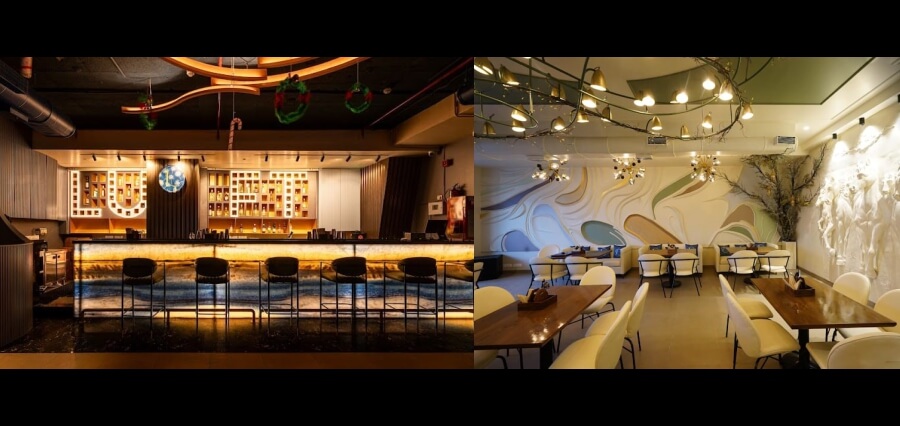
India’s Food & Beverage (F&B) and hospitality industry is entering a decisive phase of evolution. After years of rapid expansion driven by demand growth, digital platforms, and investor capital, the sector is now confronting a more complex reality—one where leadership maturity, operational discipline, and governance will determine long-term success.
The next chapter of growth will not be led by speed alone. It will be shaped by the ability to build resilient systems, enforce consistent standards, and develop people who can sustain performance across scale.
From Rapid Expansion to Sustainable Scale
Over the past decade, India’s hospitality sector has expanded aggressively across formats—restaurants, cloud kitchens, QSR chains, premium dining, and beverage-led concepts. While this expansion unlocked access and variety, it also exposed structural weaknesses.
Margin pressure, service inconsistency, regulatory scrutiny, and high attrition have become persistent challenges. In many cases, businesses expanded faster than their operating frameworks could support.
Industry practitioners increasingly agree that the sector is transitioning from a “growth-first” phase to a “systems-first” phase—where scalability depends less on capital and more on execution capability.
Leadership as an Operating Advantage
In this environment, leadership is emerging as a decisive operating advantage. Effective hospitality leadership today extends beyond concept creation or expansion strategy—it requires the ability to design organisations that can perform consistently under pressure.
Mumbai-based hospitality professional Aditya Vaidya, with over two decades of experience across hospitality and catering management, views leadership as a function of structure rather than personality.
His management philosophy is anchored in clarity of goals, accountability with autonomy, and purpose-driven execution. “People perform best when expectations are clear and systems are strong,” he notes, emphasizing that empowerment must be supported by discipline.
This perspective has gained relevance as hospitality organisations scale across multiple locations, formats, and geographies.
Operational Discipline Over Short-Term Fixes
A recurring issue across the sector is the reliance on short-term interventions—discounting, aggressive rollouts, or reactive cost-cutting—to address deeper operational inefficiencies.
Experienced operators argue that sustainable performance comes from strengthening operating frameworks: standard operating procedures, governance mechanisms, training systems, and performance metrics.
Aditya’s exposure across diverse food service formats has reinforced a core belief: scale without discipline increases risk. Organisations that invest early in operational maturity are better positioned to manage growth cycles, investor expectations, and brand reputation.
This shift is particularly critical as hospitality businesses pursue franchising, cloud kitchen networks, and multi-city operations.
Compliance and Food Safety as Strategic Assets
As food businesses grow in complexity and geographic reach, compliance and food safety have moved from backend functions to boardroom priorities. Aditya’s professional foundation reflects this systems-led approach. He holds an MBA in Shipping and Logistics Management, complemented by formal qualifications in operations management and hospitality administration. His grounding in hotel management, combined with logistics and operations education, enables a holistic view of supply chains, service delivery, and risk management.
He is a certified Lead Auditor for ISO 9001:2015 Quality Management Systems (BSI – Royal Charter, UK) and ISO 22000:2018 Food Safety Management Systems (TÜV NORD, Germany), and is also recognised as a Food Safety Auditor with the Quality Council of India. This combination places compliance, traceability, and process integrity at the centre of operational strategy.
In an era of heightened consumer awareness and regulatory oversight, consistency and food safety are no longer hygiene factors—they are brand-defining assets. Structured quality systems reduce operational risk, protect reputation, and enhance investor confidence.
The Broader Industry Shift: Experience, Wellness, and Technology
These leadership and operational shifts mirror broader changes underway in India’s F&B landscape.
Consumer expectations have evolved rapidly. Dining is increasingly experience-driven, with premiumisation of regional cuisines, chef-led concepts, and immersive formats gaining traction. At the same time, cloud kitchens and delivery-first models continue to expand, albeit with a sharper focus on unit economics and repeat behaviour.
Health and wellness have moved from niche positioning to mainstream expectation. Demand for clean-label foods, functional beverages, and high-protein offerings reflects a more informed and discerning consumer base.
Technology underpins all of these changes—enabling demand forecasting, inventory optimisation, customer relationship management, and performance analytics. Cloud-based tools have also levelled the playing field, allowing smaller operators to adopt enterprise-grade systems without disproportionate cost.
Sustainability Moves from Narrative to Measurement
Another defining shift is sustainability. Once positioned primarily as a branding narrative, sustainability is now evaluated through measurable outcomes—waste reduction, responsible sourcing, packaging innovation, and energy efficiency.
From an operational standpoint, sustainability aligns closely with efficiency. Reduced waste and improved resource utilisation directly impact margins while strengthening brand credibility.
As practitioners like Aditya emphasise, sustainability initiatives deliver real value only when embedded into operating systems rather than treated as standalone campaigns.
The Challenges That Will Define Winners
Despite strong demand fundamentals, hospitality remains one of the most operationally demanding sectors. Rising rentals, labour shortages, volatile input costs, and regulatory complexity continue to pressure margins.
The businesses that endure will not necessarily be the most creative, but the most disciplined. Cash-flow management, people development, compliance, and system maturity will separate resilient organisations from those driven purely by momentum.
The era of “growth at any cost” is giving way to renewed emphasis on profitability, governance, and long-term value creation.
Looking Ahead: A Maturing Industry
India’s hospitality and F&B sector is no longer in its infancy. It is maturing—and with maturity comes accountability.
The next phase of growth will favour:
- Experience-led dine-in concepts with operational depth
- Cloud kitchen ecosystems built on strong unit economics
- Health-forward food and beverage brands with credibility
- Regional Indian cuisine positioned for scale and export
- Organisations anchored in systems, standards, and leadership capability
For professionals like Aditya Vaidya, the opportunity lies not just in participating in this growth, but in shaping how it unfolds—advocating a model of hospitality that values people, process discipline, and long-term thinking.
In an industry where outcomes are visible but processes often remain invisible, the future will belong to those who invest in what happens behind the scenes.
About the Author
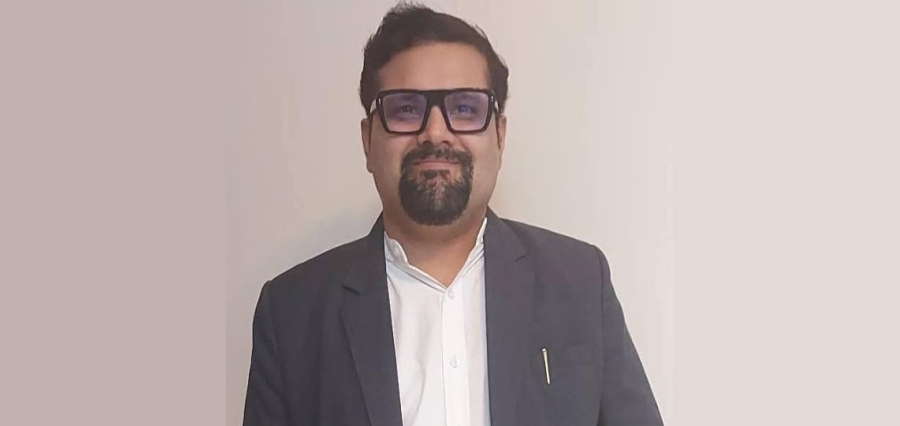
Aditya Vaidya is a Mumbai-based hospitality professional with over 20 years of experience across hospitality and catering management. He is a certified Lead Auditor for ISO 9001 and ISO 22000 systems, a Food Safety Auditor with the Quality Council of India, and the author of Cloud Kitchens: Rise in India with Global Cuisine. https://www.linkedin.com/in/aditya-vaidya-86059026
Disclaimer –
This article is a work of original content created for public relations and informational purposes only. It may be published across multiple digital platforms with the full knowledge and consent of the author/publisher. All images, logos, and referenced names are the property of their respective owners and used here solely for illustrative or informational purposes. Unauthorized reproduction, distribution, or modification of this article without prior written permission from the original publisher is strictly prohibited. Any resemblance to other content is purely coincidental or used under fair use policy with proper attribution.



