Connect with us

Business

Advanced care options available locally

Published

on

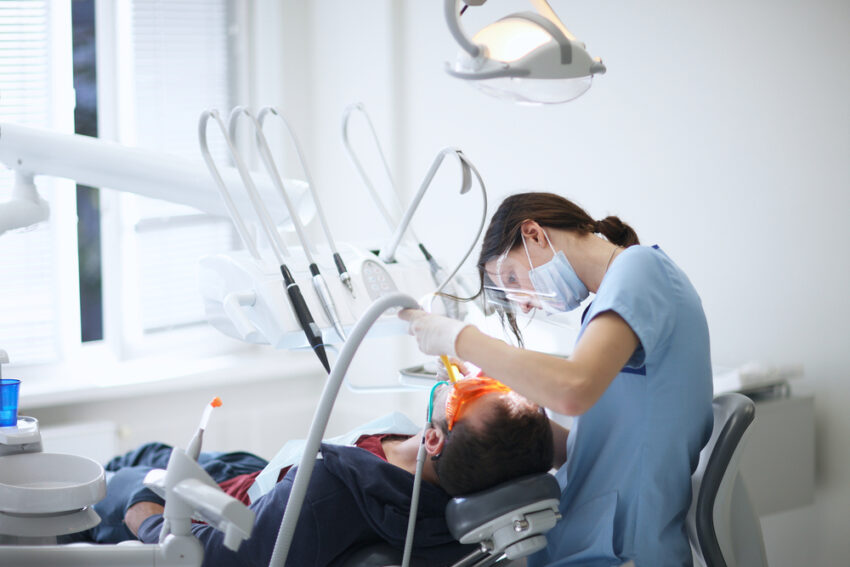
Family dentistry is vital in maintaining oral health and overall well-being for individuals of all ages.

Dental care has changed noticeably over recent years. Appointments often feel calmer, treatments are more carefully planned, and patients have access to a wider range of options than ever before.

Much of this progress comes from advances in dental techniques and technology, which now support safer, more comfortable care at every stage.

Modern dental practices like Foxley Lane Dental use advanced tools alongside clinical experience to support personalised treatment. Understanding how these approaches work can help you feel more informed and confident when making decisions about your oral health. Patients often worry about treatment costs, and understanding information around treatments such as cavity filling cost or root canal treatment can help support open, informed conversations with your dentist.

How dental care has evolved in local communities

Dentistry has gradually moved away from a reactive approach towards one focused on early assessment, careful planning, and prevention. Digital systems now support diagnosis, record keeping, and treatment discussions, helping appointments run smoothly and allowing patients to better understand their oral health.

High-quality imaging and scanning tools give dentists clearer views of teeth and supporting structures. This often means problems can be identified earlier, when treatment is simpler and less invasive. Technology does not replace clinical judgement, but supports dentists in making considered decisions tailored to each patient.

Advertisement

Restorative dental treatments explained

Replacing missing teeth with dental implants

Dental implants are one option used to replace missing teeth. They involve placing a small titanium fixture into the jaw, which can support a crown, bridge, or denture once healed.

Implant treatment requires careful assessment and planning, often supported by detailed imaging. Your dentist will always consider overall oral health, bone levels, and individual circumstances before recommending whether implants are suitable for you.

Root canal treatment with modern techniques

Root canal treatment is used to manage infection inside a tooth and preserve the natural structure where possible. Modern methods and equipment allow dentists to clean and seal the tooth more accurately, helping reduce discomfort during and after treatment.

Local anaesthetic is used to support comfort, and your dentist will talk you through each stage so you know what to expect. The aim is always to relieve pain, protect the tooth, and restore normal function.

Advertisement

Crowns and bridges using digital planning

Crowns and bridges are commonly used to restore damaged or missing teeth. Digital scanning and planning tools now allow restorations to be designed with a high level of accuracy, helping them fit comfortably and blend naturally with surrounding teeth.

In some cases, same-day crown systems are available. Your dentist will advise whether this approach is appropriate based on the tooth being treated and your overall dental health.

Cosmetic dentistry and smile improvements

Teeth whitening under professional supervision

Professional teeth whitening is a popular option for patients looking to refresh their smile. Treatment is planned and monitored by a dentist to support safety and even results.

Your dentist will assess your teeth and gums first, explain realistic outcomes, and help you decide whether whitening is suitable for you.

Advertisement

Veneers and smile design options

Veneers are thin coverings placed over the front of teeth to address concerns such as chips, discolouration, or uneven edges. Digital planning tools may be used to help visualise potential changes and guide careful treatment decisions.

As with all cosmetic treatments, suitability varies from person to person and should be discussed fully with your dentist.

Clear aligners for discreet tooth straightening

Clear aligner systems are used to gently guide teeth into a new position over time. Aligners are custom-made and reviewed regularly to ensure progress remains on track.

Your dentist or orthodontic provider will advise whether aligners are appropriate for your needs and explain the expected commitment involved.

Advertisement

Preventive care supported by modern tools

Preventive dentistry remains the foundation of long-term oral health. Digital X-rays, intraoral cameras, and detailed examinations help dentists monitor changes over time and spot concerns early.

Professional hygiene treatments may use ultrasonic instruments and tailored advice to support gum health and reduce plaque build-up. Personalised care plans are often based on lifestyle, medical history, and individual risk factors.

Emergency dental care and urgent appointments

When dental problems arise unexpectedly, prompt assessment helps reduce discomfort and prevent complications. Many modern practices aim to offer timely appointments for urgent concerns, supported by efficient diagnostics and clear treatment planning.

Pain relief and treatment options are always discussed carefully, with your comfort and safety at the centre of care.

Advertisement

Choosing a local dental practice for modern care

A modern dental practice combines up-to-date equipment with experienced clinicians and a patient-focused approach. Clear communication, thoughtful use of technology, and honest discussions about options all support positive experiences.

If you are exploring dental care locally, it is reasonable to ask how technology is used to support diagnosis and treatment, and how decisions are tailored to individual needs.

Dental treatments continue to evolve, but the focus remains the same: providing safe, comfortable care that supports long-term oral health and confidence.

Advertisement

Continue Reading
Click to comment

Leave a Reply

Your email address will not be published. Required fields are marked *

Business

Vale Dennis Cometti

Published

on

Vale Dennis Cometti

Respected Australian sports broadcaster Dennis Cometti has died age 76.

Continue Reading

Business

Fidelity Profit Soared Last Year Amid Bull Market for Stocks

Published

on

Fidelity Profit Soared Last Year Amid Bull Market for Stocks

Fidelity Profit Soared Last Year Amid Bull Market for Stocks

Continue Reading

Business

BE Semiconductor Industries: Fundamentals Tracking In The Right Direction

Published

on

Amazon's Dip Is A Long-Term AWS Opportunity (Rating Upgrade)

BE Semiconductor Industries: Fundamentals Tracking In The Right Direction

Continue Reading

Business

NACC Returns 1.5 Billion Baht Worth of Seized Gold from Tax Fraud to Ministry of Finance

Published

on

NACC Returns 1.5 Billion Baht Worth of Seized Gold from Tax Fraud to Ministry of Finance

The NACC handed over gold bars worth 1.5 billion baht, equivalent to 20,976 baht in weight, to the Ministry of Finance after a Supreme Court ruling related to tax fraud.


Key Points

  • On February 27, 2026, Surapong Intharathaworn, Secretary-General of Thailand’s National Anti-Corruption Commission, transferred gold bars valued at 1.5 billion baht to the Ministry of Finance, following a Supreme Court ruling confirming the gold belonged to a former Revenue Department chief involved in tax fraud.
  • The NACC found that Satit Rungkasiri improperly accumulated wealth through gold purchases from Hua Seng Heng Commodities Co., Ltd. The gold was ruled as the state’s property due to its ill-gotten nature.
  • This case is linked to a 4-billion-baht tax fraud investigation implicating at least 10 individuals, including civil servants. Satit Rungkasiri was sentenced to prison, and the gold bars are now officially part of the nation’s assets, concluding the high-profile investigation.

Handing Over of Gold Bars

On February 27, 2026, Surapong Intharathaworn, Secretary-General of Thailand’s National Anti-Corruption Commission (NACC), presented 20,976 baht of gold bars worth 1.5 billion baht to the Ministry of Finance. This handover was mandated by a Supreme Court ruling in case 1256/2567, which confirmed that the gold belonged to the former chief of the Revenue Department. The bars were seized as a result of a major tax fraud investigation, demonstrating the government’s commitment to combat corruption and uphold lawful conduct in public service.

Background on the Tax Fraud Case

The NACC’s previous investigation revealed that Satit Rungkasiri, while serving as director-general of the Revenue Department, had amassed wealth through improper means, particularly through the purchase of gold bars from Hua Seng Heng Commodities Co., Ltd. These assets were classified as ill-gotten gains and were ultimately ruled by the court to belong to the state. This case is part of a broader 4-billion-baht tax fraud investigation implicating at least 10 individuals, including both civil servants and private sector members. Previously, Rungkasiri had been sentenced to prison for his involvement in the fraudulent activities.

Closure of the Case

With the formal transfer of the gold bars, this high-profile case reaches its conclusion, officially adding the bars to the nation’s assets. This event signifies a critical step in demonstrating the government’s efforts to address corruption within its ranks and reaffirms the judicial system’s role in holding individuals accountable. The NACC’s actions reflect a robust approach to ensuring public trust and fostering integrity across governmental operations, illustrating Thailand’s commitment to tackling corruption proactively.

Source : NACC returns 1.5 billion baht in gold seized from tax fraud case to Ministry of Finance

Advertisement

Continue Reading

Business

Advancing a Fair and Sustainable Energy Transition in ASEAN

Published

on

Advancing a Fair and Sustainable Energy Transition in ASEAN

Overview The ASEAN region is currently undertaking a massive overhaul of its energy systems to balance rapid economic growth and rising energy demand with the urgent need for deep decarbonization. To achieve a just and responsible energy transition, Southeast Asian nations must address a significant investment gap and the “energy trilemma” of security, affordability, and sustainability.

Key Points

  • ASEAN is the world’s fourth-largest energy consumer, with energy demand and carbon emissions both growing at an annual rate of 3%, which is significantly higher than the global average.
  • The region faces a massive investment gap, requiring an estimated $150 billion annually in clean energy funding by 2030, while currently attracting only about $30 billion per year.
  • Geographical and economic vulnerabilities, such as exposure to rising sea levels and agricultural dependence, make the transition to resilient, low-carbon power systems an urgent necessity.
  • The transition is complicated by “young” coal fleets and a grid infrastructure originally designed for conventional thermal power rather than intermittent renewable energy.
  • Targeted funding and concessional finance mechanisms, such as the Just Energy Transition Partnership (JETP), are needed to de-risk unattractive investment areas like the early retirement of coal plants.
  • Regional policy alignment regarding carbon taxes and sustainable activity taxonomies is essential to create a stable environment for international investors.
  • Technology transfer in areas such as carbon capture (CCUS), green hydrogen, and smart grids is critical for modernization.
  • A “just” transition must include workforce reskilling and community engagement to ensure that those dependent on the coal economy are not left behind during the shift.
  • The “ASEAN Leaders for Just Energy Transition” community, facilitated by the World Economic Forum, has issued a Shared Aspirations Statement to provide a unified voice for the region’s specific challenges and priorities.

ASEAN faces a critical energy transition, aiming for deep decarbonization despite surging demand and significant funding gaps. The region, a major energy consumer, is highly vulnerable to climate change, necessitating an urgent overhaul of its power sector. Key challenges include economic development goals, a young coal fleet, and infrastructure limitations. To succeed, ASEAN requires an estimated $150 billion annually in clean energy investment. Success hinges on mobilizing funds, fostering extensive regional and global collaboration, and aligning policies. A just transition also involves reskilling the workforce and ensuring community buy-in for long-term benefits.

Source link

Advertisement

Continue Reading

Business

Stocks Recover From Opening Lows

Published

on

Stocks Little Changed After Fed Decision

Stocks are recovering from early lows as losses moderate, even as crude maintains its geopolitical risk premium following the weekend’s events.

In morning trading, the S&P 500 was down 0.3%. The Dow was down 136 points, or 0.3%. The Nasdaq fell 0.2%. All three indexes were down by more than a percent at the open.

Brent crude prices are hovering around $78.30 a barrel, largely unchanged from prior highs.

Continue Reading

Business

Form 4 ATI Inc For: 3 March

Published

on


Form 4 ATI Inc For: 3 March

Continue Reading

Business

Acumen Pharma chief legal officer Meisner sells $28k in shares

Published

on


Acumen Pharma chief legal officer Meisner sells $28k in shares

Continue Reading

Business

Cricut, Inc. (CRCT) Q4 2025 Earnings Call Transcript

Published

on

OneWater Marine Inc. (ONEW) Q1 2026 Earnings Call Transcript

Operator

Good day, everyone, and welcome to Cricut Fourth Quarter 2025 Earnings Conference Call. [Operator Instructions] Please note, this conference is being recorded.

Now, it’s my pleasure to turn the call over to the Senior Vice President and Head of Investor Relations, Jim Suva. Please proceed.

Advertisement

Jim Suva
Senior Vice President of Finance, Treasurer & Investor Relations

Thank you, operator, and good afternoon, everyone. Thank you for joining us on Cricut’s Fourth Quarter 2025 Earnings Call.

Please note that today’s call is being webcast and recorded on the Investor Relations section of the company’s website. A replay of the webcast will also be available following today’s call. For your reference, accompanying slides used on today’s call, along with a supplemental data sheet, have been posted to the Investor Relations section of the company’s website, investor.cricut.com.

Joining me on the call today are Ashish Arora, Chief Executive Officer; and Kimball Shill, Chief Financial Officer. Today’s prepared remarks have been recorded, after which Ashish and Kimball will host live Q&A.

Advertisement

Before we begin, we would like to remind everyone that our prepared remarks contain forward-looking statements, and management may make additional forward-looking statements, including statements regarding our strategies, business, expenses, tariffs, capital allocation and results of operations in response to your questions. These statements do not guarantee future performance, and therefore, undue reliance should not be placed upon them.

These statements are based on current expectations

Advertisement
Continue Reading

Business

Asia stocks fall for third day, oil edges up as markets track Iran war

Published

on

Asia stocks fall for third day, oil edges up as markets track Iran war

The conflict in the Middle East has rattled financial markets and global energy prices have soared.

Continue Reading

Trending

Copyright © 2025