
Business
After Supreme Court ruling, industries still face higher rates

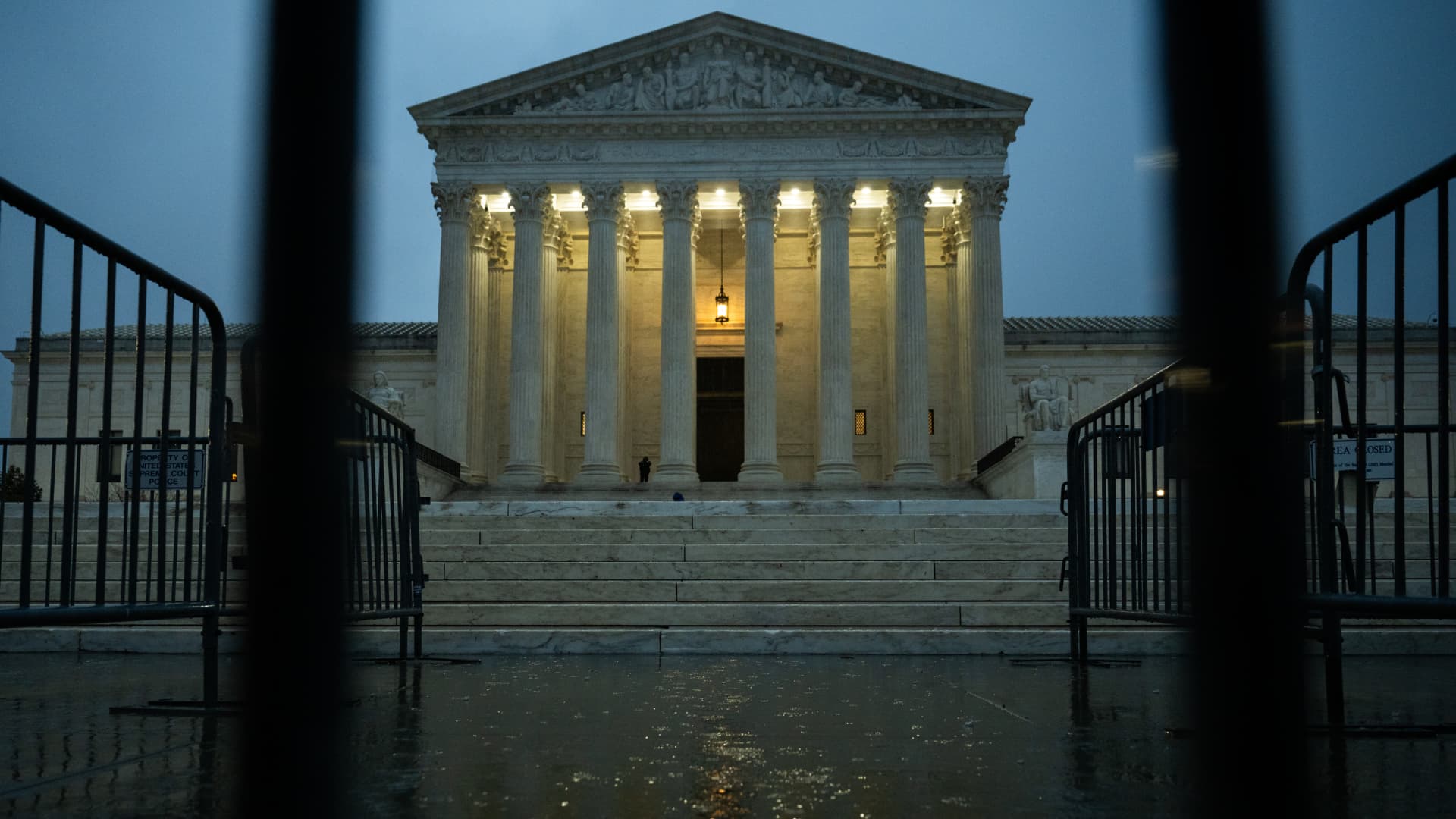
The Supreme Court during a rain storm in Washington, Feb. 20, 2026.
Annabelle Gordon | Bloomberg | Getty Images
The Supreme Court on Friday ruled that President Donald Trump’s country-specific “reciprocal” tariffs are unconstitutional, delivering a win for many consumer companies facing higher import costs.
But the ruling doesn’t cover all sectors.
The Supreme Court reviewed tariffs enacted under the International Emergency Economic Powers Act of 1977, or IEEPA, which the Trump administration used to justify the sweeping tariff agenda. The act had never before been used by a president to impose tariffs.
In a 6-3 decision, the Supreme Court ruled that IEEPA “does not authorize the President to impose tariffs.”
Still, the Supreme Court’s ruling does not cover tariffs enacted under Section 232 of the Trade Expansion Act of 1962. Those duties are intended to target specific products that threaten national security, and they remain in effect after Friday’s ruling.
Separate from his country-specific rates, Trump has raised tariffs on imports of steel, semiconductors, aluminum and other products deemed to impair national security.
Here are the sectors still facing higher levies even after the Supreme Court decision.
Autos
It’s not immediately clear how much the decision will impact the U.S. and global automotive industry. The industry continues to face billions of dollars in tariff costs, depending on where an imported auto part or vehicle originates.
The Trump administration last year broadly implemented 25% tariffs on vehicles and certain auto parts imported into the U.S., citing national security risks. It has since struck independent deals to lower the levies to 10% to 15% with countries such as the United Kingdom and Japan. Others, such as South Korea, have also struck deals for lower rates, but it’s unclear if those changes have actually taken effect.
“This is not a moment to ease up. The auto industry must stay nimble and ready to adapt, as further developments could quickly shift the operating environment,” said Lenny LaRocca, U.S. automotive lead for consulting firm KPMG. “Automakers should continue planning for multiple scenarios and keep supply chain considerations top of mind as the trade and tariff landscape continues to evolve.”
America’s largest automaker, General Motors, last month said it expects between $3 billion and $4 billion in tariff costs this year, and Ford Motor earlier this month said its net tariff impact is expected to be roughly flat year over year at $2 billion in 2026.
Neither Ford nor GM immediately responded to a request for comment on the Supreme Court decision and whether it changes those forecasts.
Pharmaceuticals
The pharmaceutical industry is facing a lot of uncertainty over tariffs. Trump has repeatedly threatened tariffs on pharmaceutical imports, though they haven’t yet taken effect, in part because of negotiated multiyear deals between the administration and drugmakers.
If that were to change, however, pharmaceutical tariffs would still be covered under Section 232.
The administration has floated imposing tariffs on the industry that could eventually reach up to 250%. Last July, Trump threatened 200% tariffs on pharmaceuticals, and the administration has already opened a Section 232 investigation into pharmaceuticals to investigate the impact of imports on national security.
The tariff threats are a move to push drug companies to manufacture in the U.S. instead of abroad.
In December, multiple companies inked a deal with Trump to voluntarily lower their prices in exchange for a three-year exemption from any pharma tariffs — as long as they invest further in U.S. manufacturing. That deal included major players like Merck, Bristol Myers Squibb, Novartis and more.
Furniture
The furniture industry found little relief from Friday’s Supreme Court ruling.
Last fall, items like couches, kitchen cabinets, vanities and more were hit with higher tariffs under Section 232. The roughly 25% duties will remain in place even now that the IEEPA tariffs have been deemed unconstitutional.
The furniture industry is already facing greater uncertainty, with the 25% tariff expected to rise to 50% in 2027, and more broad pressures from higher interest rates and inflation.
Smaller companies are getting hit the hardest, with fewer resources to work with, while larger companies are facing bankruptcy, like Value City Furniture’s parent company, American Signature Furniture, which went out of business late last year.
Food and consumer packaged goods
Under Section 232, steel and aluminum imports into the U.S. are still carry tariffs.
With higher aluminum tariffs, companies like Coca-Cola, PepsiCo, Keurig Dr Pepper and Reynolds will continue to face higher costs associated with manufacturing their products.
Trump hiked aluminum tariffs to 50% last year.
Still, some of the key tariffs for the sector have been rolled back, even before Friday’s ruling.
In November, Trump issued an executive order exempting several hundred agricultural products, including bananas, coffee and spices, from tariffs. And in September, he similarly rescinded a 10% tariff on Brazilian pulp, a key component of paper towels, diapers and toilet paper.
— CNBC’s Mike Wayland, Annika Kim Constantino, Gabrielle Fonrouge and Amelia Lucas contributed to this report.


EGGY: Explaining Its Ins And Outs

SYDNEY — As the Iran war enters its second month with the Strait of Hormuz largely closed and global oil prices hovering above $100 a barrel, economists are warning that supply-chain shocks will deliver a triple blow to Australia’s economy this year — driving inflation higher, squeezing key industries and raising recession risks.

Treasurer Jim Chalmers has acknowledged the government’s fuel-reserve assurances are under severe strain, while Oxford Economics and major banks forecast prolonged disruptions could subtract up to 0.7 percentage points from GDP growth and add as much as 3 percentage points to headline inflation in a worst-case scenario.
Here are three key predictions for how the conflict’s supply-chain fallout will reshape Australia’s economy through 2026, based on the latest Treasury modeling, bank forecasts and industry data as of early April.
Prediction 1: Fuel shortages and soaring energy prices will fuel persistent inflation and erode household spending.
Australia imports more than 80 percent of its refined fuels from Asia, and with crude flows through the Strait of Hormuz — which normally carries one-fifth of global oil — effectively halted, local petrol and diesel prices have already spiked sharply. Hundreds of service stations, especially in New South Wales, have run dry, prompting the government to suspend national fuel-quality standards and allow higher-sulphur blends to boost domestic supply by an extra 100 million litres per month.
Westpac and Westpac economists project a one-month disruption could lift the consumer price index by around 1 percentage point, while a three-month closure might push the peak CPI increase to 1.5-3 percentage points. Petrol prices could rise by as much as A$1 a litre in extreme cases, feeding directly into transport and freight costs that ripple through groceries, construction materials and consumer goods.
The Reserve Bank of Australia is closely watching the pass-through. Higher energy costs are already compounding existing cost-of-living pressures, with trimmed-mean inflation risks staying “higher for longer.” Oxford Economics warns that in a prolonged-war scenario with oil above $150 a barrel, Australia could face quarterly GDP contractions of 0.3-0.8 percent — the sharpest outside the pandemic era — as households cut back on discretionary spending.
Farmers and manufacturers are already feeling the pinch. Diesel-dependent trucking and agricultural operations face higher operating costs, while fertiliser prices — heavily tied to energy inputs — have climbed, threatening the autumn planting season.
Prediction 2: Global shipping rerouting and freight-cost surges will disrupt imports, exports and manufacturing.
Beyond oil, the Iran war is forcing container ships and bulk carriers to avoid chokepoints linked to Houthi activity in the Red Sea and broader Middle East tensions, driving up freight rates and extending delivery times. Australia’s manufacturers posted their first contraction in five months in March, with the S&P Global manufacturing PMI falling to 49.8 as demand weakened and cost pressures mounted.
Supply chains for critical inputs — from petrochemicals used in plastics and packaging to components for vehicles and electronics — are tightening. Australian industry group leaders note that Asia’s refinery disruptions are already lifting fuel prices and tightening supply for the 90 percent of refined liquid fuels Australia imports.
Export sectors are not immune. Agricultural exporters face higher freight costs and congestion risks for grain, beef and live-animal shipments to Europe and the Middle East. Mining and resources, while benefiting from any LNG price spikes as an exporter, still rely on imported equipment and parts whose delivery is now delayed.
Industrial-property analysts in Western Australia report that fuel shortages and diesel-price pressure are already translating into higher warehousing demand and supply-chain uncertainty, with construction projects facing material-cost volatility.
The Australian dollar has weakened against the greenback as markets price in the energy shock, further raising the cost of imported goods and adding another layer of imported inflation.
Prediction 3: A broader economic slowdown or outright recession becomes more likely, with uneven sectoral pain.
Oxford Economics’ prolonged-war scenario paints a stark picture: world GDP growth slows by 1.2 percentage points in 2026, and Australia suffers a sharp recession as fuel rationing and capacity constraints bite. Transport, manufacturing and mining — the sectors most reliant on diesel and global supply chains — would bear the heaviest burden.
Treasury’s own modeling, updated in mid-March, shows the war could subtract 0.2-0.6 percentage points from GDP growth while adding 0.5-1.25 percentage points to headline inflation, depending on how long oil stays elevated at $100 or spikes to $120.
Prime Minister Anthony Albanese has warned of a potential fuel crisis, and economists note Australia’s low fuel reserves — around 30 days for diesel and 36 days for petrol — leave the economy exposed compared with the International Energy Agency’s 90-day benchmark.
The pain will not be uniform. Energy exporters may see some offset from higher global LNG and coal prices, but domestic gas users and households will face higher power bills. Retail and hospitality sectors, already navigating cost-of-living strains, could see further weakness as consumers tighten belts.
Longer-term, the disruptions underscore Australia’s vulnerability as an island trading nation dependent on open sea lanes. Calls are growing for improved fuel-security measures, diversified supply chains and accelerated investment in domestic refining or alternative energy sources.
As of early April, the government insists fuel deliveries remain assured until mid-April, but analysts caution that panic buying and distribution bottlenecks could accelerate shortages. Markets continue to underprice the risk of a drawn-out conflict, according to State Street Global Advisors strategists.
For Australian businesses and households, the coming months will test resilience. While a swift ceasefire remains the base-case assumption for many forecasters, the longer the Strait of Hormuz stays closed, the deeper the supply-chain scars — and the greater the drag on growth, jobs and living standards.
Economists will watch April inflation data and the next Reserve Bank board meeting closely for signals on how aggressively policymakers respond to the energy-driven price shock. In the meantime, the Iran war’s distant battles are delivering a very real economic hit at home.

Apex Legends players across the globe are asking the familiar question: Is Apex Legends down right now? As of early April 2026, the free-to-play battle royale title from Respawn Entertainment and Electronic Arts is largely operational, though sporadic user reports of matchmaking issues and regional disruptions continue to surface on monitoring sites and social platforms.

Downdetector and similar outage trackers show fluctuating player complaints in the past 24 hours, with some spikes tied to login, matchmaking and server connection errors. However, official status pages from EA and independent monitors like ApexLegendsStatus.com indicate that core systems — including lobby/matchmaking servers in major regions such as US East, US West, EU West and Asia — are running at or near full capacity with low latency readings.
The latest widespread disruptions appear to have peaked around April 2-3, 2026, when thousands of reports flooded in. One monitoring site logged nearly 5,000 reports on April 3 alone, following over 10,000 the previous day. Players described symptoms including “no servers found,” extended matchmaking queues, connection errors to EA servers and occasional crashes during lobby selection. Some attributed the problems to broader infrastructure hiccups possibly linked to Easy Anti-Cheat (EAC) or cloud services, echoing similar brief outages reported earlier in the week.
As of Saturday morning KST, major status checkers report “all systems operational” or “mostly operational.” EA’s official server status page lists Apex Legends without active widespread alerts for the game itself, though players are always advised to verify their own platform — PC via Steam or EA App, PlayStation, Xbox or Nintendo Switch — as individual network or account issues can mimic server-wide problems.
Respawn has not issued a fresh public statement on ongoing minor issues in the past day, but the studio and EA typically communicate via the official @PlayApex X account or in-game notices when significant maintenance or fixes are underway. Community-run accounts like @_ApexStatus have noted recent “widespread server issues” but followed up by encouraging players to retry connections once resolutions roll out.
Apex Legends, which launched in 2019, remains one of the most played battle royale games, blending fast-paced hero shooter mechanics with seasonal updates, ranked play and limited-time events. The current Season 28, “Breach,” features new legends, weapon balances and crossover content that have kept the player base engaged despite periodic technical hiccups common to live-service titles.
Historically, Apex has faced criticism for server stability, especially during peak hours or after major patches. Outages often stem from high concurrent player loads, anti-cheat updates or backend infrastructure shared with other EA titles. In early April 2026, some Reddit users in the r/apexlegends community speculated about AWS-related disruptions affecting multiple games, though no official confirmation tied a large-scale cloud outage directly to Apex at press time.
For players still encountering problems:
- Check EA’s server status page directly for real-time updates on Apex Legends, the EA App and platform-specific services.
- Restart the game client, console or router to rule out local network glitches.
- Verify game files through the platform launcher if on PC.
- Monitor Downdetector or ApexLegendsStatus.com for crowd-sourced reports.
- Ensure your anti-cheat software and drivers are up to date.
Developers have improved infrastructure over the years, including better regional server distribution and cross-play enhancements, but live-service games inevitably experience intermittent downtime. Brief outages on April 1 and 2, some lasting 30-60 minutes, resolved relatively quickly without long-term impact on progression or ranked resets.
The game’s dedicated fan base continues to grow, bolstered by competitive scenes like the Apex Legends Global Series and influencer streams. Recent anti-cheat updates have also aimed to clean up lobbies, though they occasionally contribute to temporary compatibility issues during deployment.
As the second split of Season 28 progresses, Respawn has shared ban statistics and teased future content, signaling ongoing investment in the title’s longevity. Players concerned about persistent lag, packet loss or “dead sliding” — common complaints even when servers are green — are encouraged to report specifics on EA’s official forums under the Apex Legends Technical Issues section.
In the fast-moving world of online gaming, server status can shift rapidly. What appears as a full outage for one player may be isolated matchmaking queues for another, especially across different data centers. At the time of this reporting, the majority of global regions show green status with response times under 100 ms in most cases.
Gamers are urged to stay tuned to official channels for any emergency maintenance announcements. If widespread problems re-emerge, Respawn typically acknowledges them promptly and provides estimated resolution times.
For now, the verdict for most Apex Legends enthusiasts is positive: the servers are up and running. Jump back into the arena, drop hot and chase that victory royale — but keep one eye on your ping and another on status trackers just in case.

Freehold Royalties: An Easy Way To Gain Exposure To Oil Prices

Barbie is more than just a toy—she is a global business success story. Over the years, the iconic doll has grown into a billion-dollar brand, earning massive sales and staying popular across generations.
Owned by Mattel, Barbie has consistently brought in over $1 billion in annual sales in recent years, proving her lasting power in a fast-changing world.
Today, Barbie is not just found in toy stores. She is in movies, fashion, digital platforms, and even real-life experiences.
This expansion shows how a simple idea can grow into a huge empire when it keeps evolving.
As Mattel CEO Ynon Kreiz explained, “Barbie’s not just a toy… She’s a source for inspiration.” That idea has guided the brand’s success.
How Barbie Started: A Simple but Smart Idea
Barbie began in 1959, created by Ruth Handler. She noticed that young girls liked to imagine their future as adults, not just play as children.
This led to a new kind of doll—one that looked like a grown-up and allowed kids to dream big. From the start, Barbie was different. She wasn’t just a toy; she was a way for children to imagine their future.
1. Strong Sales Built the Foundation
Barbie quickly became a hit. Over time, the brand grew into a reliable money-maker.
In recent years:
- Barbie has earned over $1 billion annually
- Sales reached as high as nearly $1.7 billion in a single year
- Millions of dolls are sold worldwide
In fact, more than 100 Barbie dolls are bought every minute. These strong numbers show how powerful the brand has become.
2. Constant Reinvention Keeps Barbie Relevant
One of the biggest reasons for Barbie’s success is change. Instead of staying the same, Barbie keeps evolving.
In 2016, Mattel introduced new body types like tall, petite, and curvy. The brand also added more skin tones, hairstyles, and features.
Today, Barbie includes:
- Dozens of skin tones
- Many hairstyles
- Dolls with disabilities, like hearing aids
These updates helped Barbie connect with more people. It showed that everyone can see themselves in the brand.
3. Barbie Became More Than a Doll
Barbie didn’t stop at toys. She became a full lifestyle brand.
The company expanded into:
- Clothing and accessories
- Home items and collaborations
- Digital games and content
There are now over 50 product categories linked to Barbie. This helped grow the brand far beyond toy shelves, FoxBusinessreported.
4. A Career Role Model for Kids
Barbie is known for her many careers. She has had over 250 jobs, including doctor, astronaut, teacher, and even president.
This variety sends a simple message: you can be anything.
This idea has helped Barbie stay meaningful for decades, especially for young girls dreaming about their future.
5. Big Media Moves Boosted the Brand
According to Forbes, Barbie entered entertainment years ago, but her biggest moment came with the live-action movie starring Margot Robbie and Ryan Gosling.
The film created huge excitement around the world. It brought Barbie back into the spotlight and introduced her to a new generation.
Mattel used this moment to expand even more through partnerships, products, and experiences. The movie was not just entertainment—it was a smart business move.
6. Smart Partnerships Created ‘Barbie Mania’
Barbie teamed up with many brands to stay trendy. From fashion to beauty products, collaborations helped keep the brand fresh.
Fans could buy:
- Barbie-themed clothing
- Accessories and toys
- Even themed homes and experiences
This wide reach made Barbie part of everyday life, not just playtime.
7. Learning From Challenges
Barbie’s journey was not always smooth. At one point, sales dropped, and people questioned if the brand was still relevant.
But instead of giving up, Mattel made changes. They updated Barbie’s image, improved diversity, and focused on what modern audiences wanted.
This comeback shows an important lesson: strong brands listen, learn, and adapt.
The Bottom Line
Barbie’s billion-dollar success did not happen by accident. It came from smart ideas, constant change, and understanding what people want.
From a single doll in 1959 to a global empire today, Barbie has proven that staying relevant is key. She is not just a toy—she is a brand that grows with time.
Originally published on vcpost.com
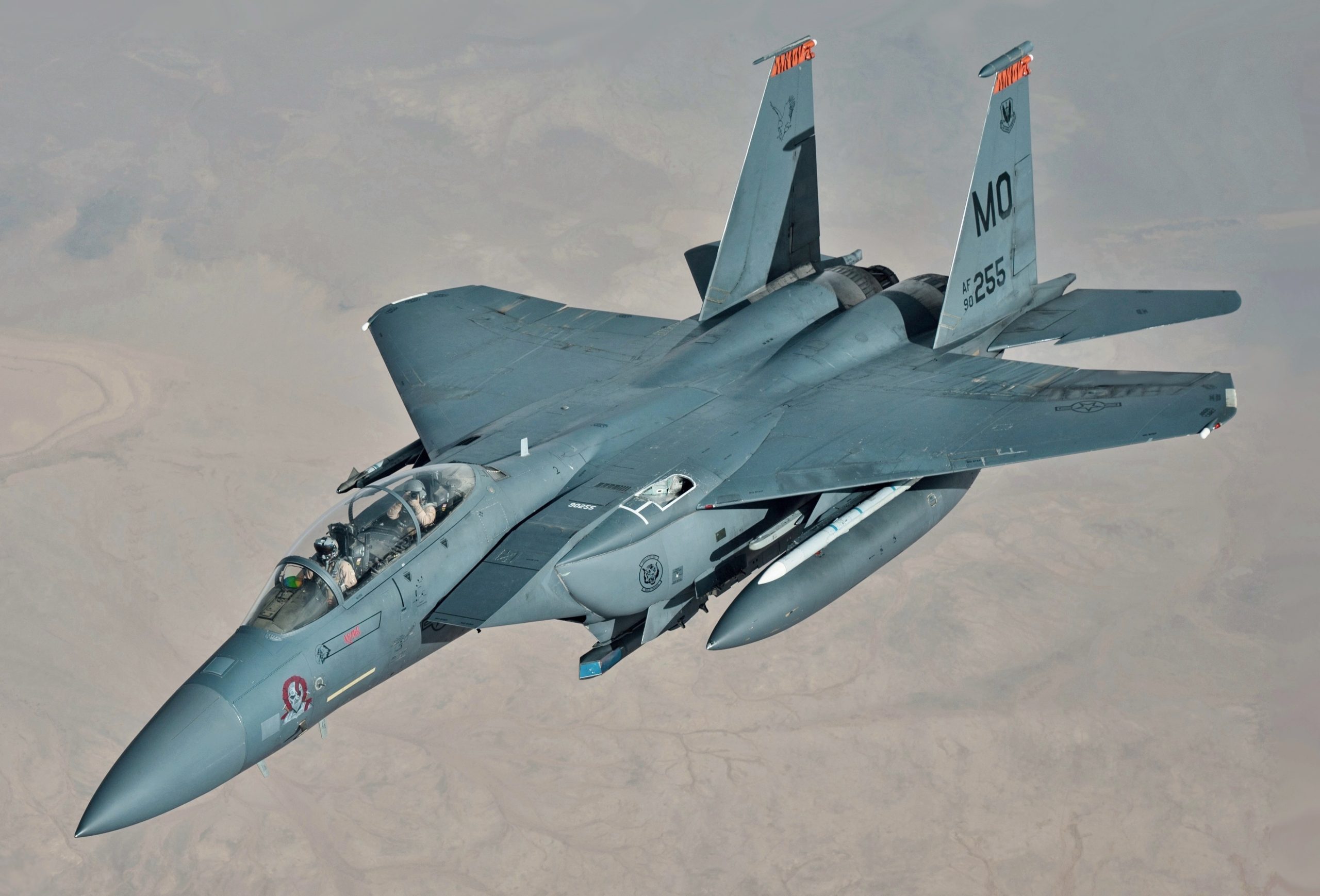
A U.S. Air Force F-15E Strike Eagle fighter jet was shot down over Iran on Friday, marking the first confirmed loss of an American manned combat aircraft since the outbreak of direct hostilities between the United States and Iran in late February 2026, U.S. officials and multiple news outlets reported.

The incident, confirmed by U.S. sources to CNN and CBS News, triggered an immediate combat search-and-rescue operation for the jet’s two crew members. Iranian state media claimed responsibility, releasing photos of wreckage that analysts identified as consistent with an F-15E rather than the F-35 initially touted by Tehran. One crew member has reportedly been rescued, while efforts continue for the second, according to CBS News citing U.S. officials.
Here are 10 key facts about the aircraft, the incident and its broader context as the U.S.-Iran conflict enters a dangerous new phase.
- The Aircraft: A Proven Workhorse Now Lost in Combat The F-15E Strike Eagle is a two-seat, all-weather strike fighter derived from the original F-15 Eagle air superiority jet. Built by Boeing (formerly McDonnell Douglas), it entered service in 1988 and is renowned for its twin Pratt & Whitney F100 engines, allowing speeds over Mach 2.5 and a combat radius exceeding 1,000 nautical miles with external tanks. The “E” model adds conformal fuel tanks, advanced radar and weapons systems for deep interdiction and close air support missions. Prior to Friday, the F-15 family had never been lost in air-to-air combat, a record that made the jet symbolically “undefeated” until this reported engagement.
- First Confirmed U.S. Manned Aircraft Loss in the Current Conflict U.S. officials described the downing as the initial verified combat loss of a manned U.S. aircraft since Operation Epic Fury commenced in late February. Earlier Iranian claims of F-15 shootdowns near Hormuz Island in March were repeatedly denied by U.S. Central Command (CENTCOM), which stated that more than 8,000 combat sorties had been flown without loss to Iranian fire. Friday’s incident changes that calculus, escalating the stakes in a war that has already involved widespread airstrikes on Iranian targets.
- Iranian Claim vs. Initial Reporting Iran’s Islamic Revolutionary Guard Corps (IRGC) and state media initially asserted they had downed a stealthy F-35 using advanced air defenses. Photos and video released by Iranian outlets, however, showed debris — including tail sections and fuselage components — matching the non-stealth F-15E configuration, according to CNN analysis and aviation experts. The discrepancy highlights ongoing information warfare, with Tehran seeking to portray a major technological victory.
- Location and Mission Context The jet came down over Iranian territory, with some reports pointing to southwestern or central regions amid active U.S. strike operations. The F-15E was likely conducting a deep-strike or suppression-of-enemy-air-defenses mission when hit, possibly by a surface-to-air missile. Exact details remain classified, but the loss occurred during intensified operations against Iranian military and nuclear-related sites.
- Crew Status: Partial Rescue Underway The F-15E carries a pilot and weapons systems officer (WSO). U.S. forces launched an urgent search-and-rescue effort involving UH-60 Black Hawk helicopters and HC-130J Combat King II tankers, with footage circulating of low-level operations near or inside Iranian airspace. One crew member was rescued by American forces as of Friday afternoon, per CBS reports; the second remains missing, prompting continued operations and Iranian appeals for civilians to assist in a possible capture.
- Iran’s Air Defense Systems in Play Iran credits its integrated air defense network, including Russian-supplied S-300 systems and domestically developed variants such as the Bavar-373, for the successful engagement. Whether the F-15E was struck by a long-range missile or shorter-range system has not been publicly detailed. The incident raises questions about the effectiveness of U.S. electronic warfare and stealth tactics against Iran’s layered defenses in a high-threat environment.
- Broader Conflict Timeline The U.S.-Iran war escalated after joint U.S.-Israeli strikes targeting Iranian facilities. Previous F-15E losses occurred in a friendly-fire incident over Kuwait in early March, when three Strike Eagles were mistakenly downed by allied defenses — all crews ejected safely. Friday’s event marks the first direct enemy-action loss inside Iran, shifting the narrative from operational mishaps to combat vulnerability.
- Strategic and Symbolic Impact Losing an F-15E does not alter overall U.S. air superiority, given the large numbers deployed and advanced capabilities of accompanying F-22s, F-35s and support aircraft. However, it provides Iran with propaganda value and could embolden its proxies while forcing U.S. planners to reassess risk profiles for manned missions over heavily defended territory. Pentagon officials have not yet commented publicly on adjustments to tactics.
- Human and Operational Costs Both crew members are trained in survival, evasion, resistance and escape (SERE) techniques. If the second airman remains in Iranian hands, the situation could evolve into a hostage crisis with significant diplomatic and political ramifications in Washington. Rescue operations themselves carry risk, as evidenced by videos showing U.S. helicopters operating in contested airspace. No fatalities have been reported, but the psychological toll on aircrews flying subsequent missions is expected to be notable.
- Ongoing Information Battle and Geopolitical Ripple Effects The incident has ignited a fresh round of competing narratives. Iranian television broadcast images of wreckage and ejection seats while offering rewards for information on the crew. U.S. sources confirmed the loss but provided limited details, consistent with operational security during active conflict. The downing comes as global oil markets react nervously to threats against shipping in the Strait of Hormuz, and as allies monitor potential escalation involving other regional actors. Analysts warn that such losses could prolong the conflict or push both sides toward riskier decisions.
The F-15E’s loss underscores the dangers inherent in sustained air operations against a determined adversary equipped with modern air defenses. While the U.S. maintains overwhelming technological and numerical advantages in the theater, the event serves as a reminder that no platform is invulnerable.
As rescue efforts continue and investigations into the exact circumstances begin, the Pentagon and White House face mounting pressure to balance aggressive campaign objectives with force protection. Iranian claims of further successes will likely proliferate, requiring careful verification amid the fog of war.
Military experts note that the F-15E remains a highly capable platform with decades of upgrades, including the latest APG-82 radar and advanced targeting pods. Its downing does not signal a collapse of U.S. air dominance but highlights the need for continued adaptation in electronic attack, standoff weapons and unmanned systems to minimize future risks to pilots.
The incident also revives debate over the role of manned fighters versus stealthier, unmanned alternatives in peer-level conflicts. For now, however, the focus remains on recovering the missing crew member and supporting the family of those involved.
This developing story has implications far beyond the cockpit. With tensions high and diplomacy stalled, the loss of the F-15E could influence congressional oversight of the conflict, public opinion and long-term U.S. posture in the Middle East.
U.S. Central Command has not released an official statement detailing the cause or full circumstances as of early Saturday. Pentagon spokespeople declined immediate comment beyond confirming search-and-rescue activities.
As Easter weekend observances unfolded in the United States, the news added a somber note to an already volatile global landscape. Further updates are expected as more information emerges from the field and from official channels.


Dem senators query gov’t watchdogs over well-timed Wall Street bets

March Jobs Report: Payroll Strength Offsets Weakness In Participation
Business
Trump Adviser Paula White Urges Christians to Tithe 10% of Gross Income to Support Israel Projects

Paula White Cain, President Donald Trump’s longtime spiritual adviser and head of the White House Faith Office, has called on Christians to honor God by tithing the first 10% of their gross income to her ministry, which directs part of the funds toward humanitarian and reconstruction projects in Israel.

In a YouTube video released Sunday during Holy Week, White Cain framed the appeal as a biblical obligation rather than a voluntary offering. “I believe that it’s so important to honor God with his tithe. An offering, that’s free will,” she said, according to footage reviewed by multiple news outlets.
White Cain, also known as Paula White, highlighted her ministry’s work rebuilding a moshav — a small farming community — near the Gaza border devastated by Hamas’ Oct. 7, 2023, attacks. She has long positioned support for Israel as a scriptural imperative, citing the Jewish people as “God’s chosen people” and urging believers to “stand with Israel” in what she described as a pivotal moment in history.
“This isn’t about politics; this is about living in harmony with the WORD of God!” she has said in past messages tied to the Israel-Hamas war.
The video has sparked widespread debate and criticism online and among faith leaders, with some accusing White Cain of blending religious teaching with fundraising that benefits her organization while leveraging geopolitical tensions. Others defend it as consistent with evangelical support for Israel and traditional tithing principles.
White Cain’s ministry, Paula White Ministries, promotes the tithe as the “first tenth of your gross income” given to God through the organization. Funds support various causes, including aid for single mothers, victims of human trafficking, prisoners and the hungry — as well as Israeli relief efforts, according to her statements.
Critics, including Baptist News Global, noted that most Christian churches teach tithing as support for a local congregation, not a televangelist’s international ministry. Some social media users and commentators labeled the appeal a “grift,” pointing to White Cain’s history of high-profile fundraising, such as a previous offer of “seven Easter blessings” for a $1,000 gift.
The ministry’s most recent IRS filings reported relatively modest income of about $166,810 for 2024, with a significant portion going toward White Cain’s compensation, according to reports. White Cain has not publicly responded to the latest wave of criticism as of Thursday.
Supporters view the message as an extension of Christian Zionism, a belief held by many evangelicals that backing Israel fulfills biblical prophecy. White Cain has served as a key faith figure for Trump since his first presidential campaign, praying at his inaugurations and events. She played a role in the administration’s faith initiatives and recently was involved in decisions on Trump’s Religious Liberty Commission, including the removal of a member who reportedly called Israel’s actions in Gaza “genocide.”
The timing of the video — amid ongoing regional conflicts, including tensions with Iran, rising U.S. gas prices above $4 a gallon in some areas and shifting American public opinion on Israel — has amplified the backlash. Polls cited in recent coverage show unfavorable views of Israel among Americans rising to 53% from 42% in 2022.
White Cain’s appeal distinguishes between the mandatory tithe and free-will offerings. She has tied donor contributions directly to tangible aid, such as rebuilding efforts in communities hit on Oct. 7, when militants killed about 1,200 people in Israel and took more than 250 hostages. The ensuing war in Gaza has resulted in tens of thousands of Palestinian deaths, according to health authorities there, and drawn international scrutiny.
Evangelical leaders have long advocated for strong U.S.-Israel ties, with figures like the Rev. John Hagee and organizations such as Christians United for Israel emphasizing Genesis 12:3: “I will bless those who bless you.” White Cain echoes this theology but directs giving specifically through her nonprofit rather than Israeli government channels or established charities.
Theology professors and ethicists have weighed in on the broader debate over tithing in modern Christianity. While the Old Testament prescribes a 10% tithe, New Testament teachings often emphasize cheerful, generous giving without a strict percentage mandate. Critics argue that prosperity gospel influences — with which White Cain has been associated — can pressure followers, especially lower-income believers, by linking financial obedience to divine favor or protection from “disobeying God.”
One X user summarized the viral sentiment: “Imagine your spiritual adviser telling you to Venmo another country 10% of your paycheck or you’re disobeying God.” Others clarified that donations go to the ministry, not directly to Israel, but acknowledged the framing links the two closely.
White Cain rose to prominence as a televangelist with a megachurch background in Florida before moving to national influence. She has authored books on faith and prosperity and maintains a large online following. Her close association with Trump includes leading prayers at the Jan. 6, 2021, rally and serving in advisory roles during his presidency and campaign.
The White House did not immediately respond to requests for comment on White Cain’s video or her dual role as presidential adviser and ministry leader. Trump has consistently voiced strong support for Israel, moving the U.S. Embassy to Jerusalem during his first term and brokering the Abraham Accords normalizing relations between Israel and several Arab nations.
As the video circulates, reactions split along familiar lines. Conservative Christian voices praised the call to biblical fidelity and solidarity with Israel amid threats from groups like Hamas and Hezbollah. Progressive Christians and secular commentators questioned the ethics of a White House faith official soliciting significant personal donations framed around foreign policy and divine mandate.
Country singer Stella Parton previously called out a similar fundraising effort by White Cain as a “grifter scam.” Online forums like Reddit’s r/Christianity hosted threads debating whether the statement accurately represents Christian doctrine or exploits followers.
Financial experts advise potential donors to review nonprofit filings, evaluate transparency and consider tax implications before committing to large recurring gifts. Tithing 10% of gross income can represent thousands of dollars annually for middle-class households, particularly in an economy facing inflation pressures.
White Cain’s message concludes with thanks to “generous and liberal givers” and a blessing for continued divine favor. Her ministry accepts donations via multiple platforms, including online giving portals.
The controversy arrives as Trump navigates his second term, with faith outreach remaining a cornerstone of his political base. White Cain’s influence underscores the intersection of religion, politics and philanthropy in American public life.
Whether the appeal boosts her ministry’s coffers or further polarizes public discourse remains to be seen. For now, it has reignited debates over the proper role of spiritual advisers in government, the boundaries of religious fundraising and Christian responsibilities toward Israel in a complex global landscape.

US Interior Department to reduce staff through deferred resignation, early retirement

Indian-origin Bodhana Sivanandan becomes England’s top female chess player | World News

Tech Moves: Microsoft execs depart; TerraClear, UserTesting, EchoMark and Read AI add leaders

Michael Saylor on new STRC stock: Creates an on-ramp for bitcoin believers without the volatility

Smart energy pays enters the US market, targeting scalable financial infrastructure

Why Israel is blocking foreign journalists from entering

Bitcoin: We’re Entering The Most Dangerous Phase
Michael Saylor on new STRC stock: Creates an on-ramp for bitcoin believers without the volatility

BITCOIN TO $50K?! Oil Surges as the S&P 500 Hits Make-Or-Break Support

THIS IS XRP’S BIGGEST MOMENT EVER!!! (MASSIVE ANNOUNCEMENT JUST WENT LIVE!!!)
-

 NewsBeat7 days ago
The Story hosts event on Durham’s historic registers
-

 NewsBeat22 hours ago
Steven Gerrard disagrees with Gary Neville over ‘shock’ Chelsea and Arsenal claim | Football
-

 Sports7 days ago
Sweet Sixteen Game Thread: Tide vs Michigan
-
Entertainment4 days ago
Fans slam 'heartbreaking' Barbie Dream Fest convention debacle with 'cardboard cutout' experience
-

 Business17 hours ago
No Jackpot Winner and $194 Million Prize Rolls Over
-

 Crypto World2 days ago
Gold Price Prediction: Worst Month in 17 Years fo Save Haven Rock
-
 Entertainment6 days ago
Lana Del Rey Celebrates Her Husband’s 51st Birthday In New Post
-

 Tech5 days ago
The Pixel 10a doesn’t have a camera bump, and it’s great
-
Crypto World3 days ago
Dems press CFTC, ethics board on prediction-market insider trades
-

 Tech5 days ago
Avatar Legends: The Fighting Game comes out in July and it looks pretty slick
-

 Sports3 days ago
Tallest college basketball player ever, standing at 7-foot-9, entering transfer portal
-

 Tech3 days ago
EE TV is using AI to help you find something to watch
-

 Fashion6 days ago
Amazon Sundays: Soft Spring Layers
-

 Business2 days ago
Login and Checkout Issues Spark Merchant Frustration
-

 Fashion7 days ago
When Evening Dressing Gets Colorful for Spring
-

 Tech5 days ago
Elon Musk’s last co-founder reportedly leaves xAI
-

 Tech3 days ago
How to back up your iPhone & iPad to your Mac before something goes wrong
-

 Tech4 days ago
Apple will hide your email address from apps and websites, but not cops
-

 Politics4 days ago
Should Trump Be Scared Strait?
-

 Crypto World4 days ago
U.S. rule change may open trillions in 401(k) funds to crypto
You must be logged in to post a comment Login