
Business
AI Stocks: How Megatrend Sent Hyperscalers On A Wild Ride

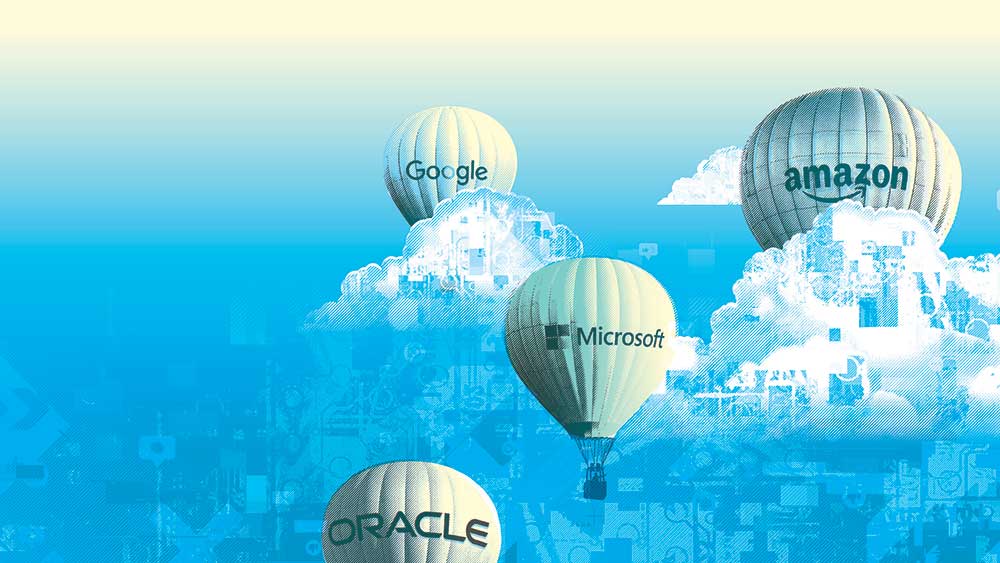
Higher and higher they went, with shares of tech giants Amazon (AMZN), Microsoft (MSFT), Google-parent Alphabet (GOOGL), Meta Platforms (META) and Oracle (ORCL) riding the excitement over artificial intelligence. But a rocky month for AI stocks spooked by fears of a bubble has triggered a shakeout among the hyperscalers.
Google is surging and Amazon is bouncing back. But Microsoft stock has stumbled from October highs and Meta has slumped. Oracle has tumbled more than 20% this month.
“Once the Street smells blood, they continue to punish names,” Nancy Tengler, chief executive of Laffer Tengler Investments, told Investor’s Business Daily.
The dizzying cycles became more pronounced last week, with even Nvidia‘s (NVDA) earnings report failing to restart excitement. The strong results from the chipmaker triggered an AI stock rally that quickly reversed into a sell-off, leaving some analysts wondering, What happened? Then came another twist: a report that Meta is considering using Google’s Tensor AI chips added to Google stock’s rally, while Nvidia fell.
AI Stocks: Bubble Fears
The debate over AI-powered growth will again be in focus when Amazon, the biggest cloud giant, makes the case for its AI push at its closely watched re:Invent Amazon Web Services conference on Monday. Not long after that, Oracle will publish quarterly results, a sequel to blockbuster results in September that put the enterprise tech company’s shares in the middle of the AI debate.
The events will cap what has been an unpredictable and tumultuous year for AI stocks and the debate that has dominated the markets since November 2022. That was when OpenAI launched ChatGPT, which set off the spare-no-expense race to build the infrastructure required to train and operate AI models.
News about Google’s growing momentum with its Tensor Processing Unit AI chip underlines how the AI battle isn’t just about having powerful data centers. The brawl is also about whose AI offering can stand out, whether through serving the top AI model, fastest speeds or developing custom chips.
Streamline Your Hunt For The Best Stocks
A Technology Battle
Nvidia has played a central role in the AI buildout that fueled the excitement about the technology’s economic potential. As maker of the graphics processing units used to train top AI models, Nvidia has been the star AI stock. But the so-called cloud hyperscalers have been vital supporting players. They are building the massive data centers that allow AI startups and enterprises to tap into those AI chips — taking on risks of that investment to meet what they say is sky-high demand.
And reports that Google and Meta are in talks show how some hyperscalers are going a step further and seeking to offer an alternative to Nvidia’s dominant AI chips.
Still, Bernstein Research analyst Stacy Rasgon said Nvidia will remain a critical player. What Meta’s interest in Google’s chips really underscores, he said, is that the scramble for more computing firepower continues.
“Right now the overarching theme is of compute scarcity, and if anything this feels like an effort to secure more,” he said in a client note.
AI Stocks: End Of The ‘Trust Me Story’
To that point, the five hyperscalers — Amazon, Microsoft, Google, Meta and Oracle — will spend $441 billion this year alone in capital expenditures, focused on building new data centers, according to estimates from Jefferies. That’s up 184% from the 2023 total.
Wall Street had previously cheered on that spending. But the sentiment has shifted in recent weeks. Many investors are now moving past the “trust me story” phase of AI, Harding Loevner Portfolio Manager Uday Cheruvu told IBD.
“The market was wowed by big growth numbers and estimates, but now there are far more questions about ‘Is it profitable growth?’ (and) ‘Is this sustainable growth?’ ” Cheruvu said.
There are also concerns about the level of debt companies are adding to build data centers, particularly in the case of Oracle, which is the smallest hyperscaler by revenue.
Other analysts have questions about the profit impact of serving AI cloud demand compared to more traditional cloud server rentals. The massive buildout of data centers has driven higher costs for everything from energy to computing component prices like memory chips.

Supply-Chain Pressure
“This is a cycle we have never seen before,” Baird technology strategist Ted Mortonson told IBD. “The amount of spend is putting tremendous pressure on the supply chain.”
Wall Street is also not particularly comfortable with the so-called circularity of the AI ecosystem. Nvidia, for instance, is an investor and supplier for OpenAI. OpenAI is committed to spending more than $1 trillion on computing power over the next eight years, buying from Microsoft, Oracle, Google, Amazon and smaller providers such as CoreWeave (CRWV). Those cloud providers are all customers for Nvidia chips.
OpenAI, meanwhile, has about $20 billion in annualized revenue, Chief Executive Sam Altman recently detailed on X. So it will have to continue growing at an unprecedented pace to fund its ambitions.
AI Stocks: Fading Excitement
Even Nvidia’s blowout earnings and guidance on Nov. 19 weren’t enough to restart excitement for AI. Nvidia itself is down 11.5% in November and 15% off late October highs.
Amazon stock has bounced back from with a 5% gain this week but is down 11% from a Nov. 3 high of 258.60. Microsoft has pulled back 6% in November and is down 12% from a recent high of 483.06 in late October. Meta has lost 16% since it reported third-quarter earnings on Oct. 29. Oracle has been hit hardest and has the most prolonged slump, down 22% in November and 40% off a record high 345.72 in September.
Only Google is poised to end November on a high note. Shares have rallied 13.5% this month,
“The story is changing from ‘what are you going to spend?’ to ‘what have you done for me lately?’” Jay Woods, chief market strategist at Freedom Capital Markets, told IBD. “Right now, we are in at least a holding pattern.”
‘Once In A Lifetime’ Chance Sparks Fierce Battle
Tech giants have defended their spending as being driven by demand. Under-spending on AI could risk missing out on what they view as a generational technology shift.
Oracle Chairman Larry Ellison earlier this year said AI is a “a much bigger deal than the Industrial Revolution, electricity and everything that’s come before.”
Last month, Meta CEO Mark Zuckerberg told analysts, “We keep on seeing this pattern where we build some amount of infrastructure to what we think is an aggressive assumption and then we keep on having more demand. My view is that rather than continuing to be constrained on capex … the right thing to do is to try to accelerate this.”
Amazon CEO Andy Jassy called AI a “once in a lifetime” opportunity, in a letter to investors this spring.
Fierce Competition
The competition is particularly critical for Amazon as it tries to remain the dominant cloud infrastructure provider. Amazon Web Services captured 29% of global enterprise cloud infrastructure spending in the third quarter, followed by Microsoft Azure at 20% and Google Cloud at 13%, according to estimates from Synergy Research Group. Oracle Cloud Infrastructure captured slightly less than 5%, by those estimates, but is growing fastest.
For AI, Amazon has embraced the strategy that turned it into an e-commerce powerhouse seeking to become an everything store for generative AI services. Like Google, Amazon has custom chips but is also stocking up on processors from Nvidia and AMD. Amazon is also developing its own large language models. But its bigger priority is allowing AWS customers to tap into AI models from Anthropic, Meta and others.
“Amazon understands that they are not going to be the frontier LLM providers,” Harding Loevner’s Cheruvu told IBD. “But they want to be where everyone else — who are already situated on Amazon — can access any of the other LLMs.”
Meanwhile, Microsoft is building on its partnership with OpenAI and a massive enterprise customer base using its software, through which it can offer tools like its AI Copilot.
Oracle, for its part, is the trusted database provider for many of the largest enterprises. Ellison has consistently argued that Oracle Cloud Infrastructure is most efficient at running the heavy workloads required for AI.
Meta is a different case in that it is not seeking to rent out cloud computing power. Its huge data center buildout powers its social media apps, and is central to Zuckerberg’s vision to make Meta the leading AI model developer.
Google’s Cloud Momentum
Of late, however, Google has generated the most excitement among the hyperscalers. In addition to news about its AI chip, the tech giant got a lift from rave reviews about its Gemini 3 large language model. Salesforce (CRM) Chief Executive Marc Benioff praised the new Gemini as better than ChatGPT.
Its AI strengths could allow Google to make a unique pitch to enterprise customers, said Crawford Del Prete, president of market research firm International Data Corp.
“They can make the argument of basically, ‘Hey, come on over here, we’ve got a differentiated stack all the way down to the silicon, and we can potentially have differentiated models for enterprises to build on and take advantage of,’ ” Del Prete told IBD.
Google’s chip news, which was reported by The Information, sent Nvidia shares falling on Tuesday. Oracle shares slid as well, while Microsoft started the day lower but recovered.
Google’s AI gains could represent a broader risk to the AI rally, as Melius Research analyst Ben Reitzes argued in a client note.
“If Google wins and OpenAI loses, a lot of spending goes away from Nvidia, AMD, Microsoft, CoreWeave, Oracle and even Broadcom (AVGO),” Reitzes wrote.
Broadcom is partnered with Google to develop its TPUs and rallied 13% this week. But, longer-term, Reitzes cautioned, the company “needs more than just Google.”
AI Stocks: Spotlight On AWS Conference
The spotlight turns to Amazon next week at its Las Vegas show.
Earlier this year, Amazon stock languished as AWS revenue failed to accelerate to the same level as Microsoft Azure and Google Cloud for several quarters. But shares rallied on Amazon’s Q3 results, which featured AWS growth above 20% for the first time since 2022. Amazon shares hit a record high of 258.60 on Nov. 3, on news that OpenAI had signed a cloud-computing contract with AWS.
Analysts expect Amazon to tout the growth of its custom AI chips at next week’s event. Jassy told analysts in late October that its Trainium chip is a “multibillion-dollar business” growing 150% quarter over quarter. It is partnered with chipmaker Marvell (MRVL) in developing the chips.
“AWS and Google Cloud are the only cloud players running custom silicon at scale,” Holger Mueller, analyst at Constellation Research, wrote recently in a blog post. “Why? They have unique scalability and cost performance needs in their core business. Amazon has razor thin retail margins. Google has its freemium offerings.”
Oracle Report: AI In Focus
Meanwhile, Oracle’s November quarter earnings report will cover a particularly tumultuous three months.
Oracle stock soared 36% in early September after reporting a $455 billion in revenue backlog, powered by cloud demand. At a customer conference in October, Oracle said it expects revenue to reach $225 billion by fiscal 2030, representing 31% annual growth. Shortly before the conference, the company also named two new CEOs, Clay Magouyrk and Mike Sicilia. Former CEO Safra Catz moved to an executive vice chair role.
But the euphoria over Oracle’s cloud offensive turned into a harsh sell-off.
Some analysts cited fears about the costs of delivering on those contracts. Oracle’s capital expenditures tripled for its May-ended fiscal 2025, to $21.2 billion, and are expected to grow further. Analysts are projecting Oracle’s free-cash-flow will be negative for at least its next three fiscal years, according to FactSet.
Analysts also cited another worry: that Oracle’s growth relies too much on a single customer in OpenAI. The companies entered a partnership related to the $500 billion Stargate data center initiative.
Meanwhile, Oracle turned to the bond market to raise $18 billion last month and is expected to soon complete another debt sale worth $38 billion, according to Bloomberg.
To be sure other hyperscalers have embraced that strategy. Amazon, Google and Meta all recently issued bonds as well.
AI Stocks: Changing The Narrative
Harding Loevner’s Cheruvu suggested that investors should temper their expectations for next week’s Amazon event, saying it will be “difficult for any product announcements at the event to be narrative-changing for the stock.”
Meanwhile, analysts are looking for Oracle to provide more details on its financing plans for its AI push when it reports results. The company is also likely to tout its growth with AI cloud customers outside of OpenAI. It already began doing so last month, when Oracle’s leadership touted cloud deals with Meta and other firms during its AI World conference.
“I know some people are questioning sometimes, ‘Hey, is it just OpenAI?’ ” Oracle co-CEO Magouyrk said at the conference. “The reality is, we think OpenAI is a great customer, but we have many customers.”
Tengler’s Laffer Tengler Investments named Oracle its top pick last month and said she remains confident. The company is seeing a “mix shift” toward AI cloud infrastructure that could weigh on Oracle margins. But the huge potential of that market can’t be overlooked.
“If I have a company growing that quickly, do I expect for the margins to decline? Yes, if they are investing in the business,” Tengler told IBD.
And, she added, she views Ellison’s excitement about AI as an advantage for Oracle. “He doesn’t like to lose,” Tengler said.
AI Stocks: An Unfolding Story
At this point, many in the tech world still view AI as at an early stage. Del Prete of IDC said the megatrend currently focuses on a fairly small number of players. But that will expand out as more enterprises find ways to incorporate the technology into their operations.
“We’re kind of pouring the foundation of this new industry now,” he said. “And as we build on top of it, we’re going to see sustained growth up through the application stack. But it’ll never be more concentrated than it is right now.”
Given that, some analysts are hesitant to call out or losers or winners.
“The question right now is not who is winning or losing,” Rasgon of Bernstein Research told CNBC. “It is, ‘Is the opportunity in front of us still big or is it not? Is it sustainable or is not? … If the opportunity is still big, they’re fine. If it is not big, they are all screwed.”
YOU MAY ALSO LIKE
Why Google’s Challenge To Nvidia Is ‘Intriguing’ For Amazon’s AI Chip Push
Wall Street Weighs New AI Stock Fear: Why Google Winning Could Be ‘Risk To Watch’
These Are The 5 Best Stocks To Buy Now Or Watch
Learn How To Time The Market With IBD’s ETF Market Strategy
Find The Best Long-Term Investments With IBD Long-Term Leaders



