Alphabet has unveiled plans to spend between $175bn and $185bn this year, sharply exceeding Wall Street expectations as it intensifies its push in the global artificial intelligence race.
The capital expenditure target is well above analysts’ average forecast of about $115bn, according to LSEG data, and marks another escalation in spending among the world’s technology hyperscalers.
The announcement came alongside strong fourth-quarter results. Revenue rose 18 per cent year-on-year to $113.8bn, narrowly ahead of forecasts of $111.3bn. Net income climbed 30 per cent to $34.5bn, comfortably beating expectations of $31.9bn.
Despite the earnings beat, Alphabet shares slipped 1.4 per cent in after-hours trading, reflecting investor unease over the scale of spending commitments.
Google’s Gemini model has become a central pillar of its strategy, with the Gemini AI assistant app exceeding 650 million monthly users in November. Its AI Overviews feature within search has reached more than 2 billion monthly users.
The company is also investing heavily in custom AI chips and data centre infrastructure, which investors hope will drive future growth.
Last month, Google secured a high-profile partnership with Apple to power an upgraded version of Siri with Gemini models, opening access to Apple’s installed base of more than 2.5 billion devices.
Nikhil Lai, principal analyst at Forrester, said the results demonstrated resilience in Alphabet’s core advertising business. “Record ad revenue signals sustained momentum in search and solid performance from YouTube,” he said, noting that YouTube’s scale now exceeds that of Netflix.
Advertisement
Alphabet’s shares have surged over the past year, rising more than 64 per cent and pushing its market capitalisation above $4tn — second only to Nvidia, valued at around $4.3tn.
However, wider market sentiment towards AI stocks has turned more cautious. Last week, Microsoft reported slower cloud growth, prompting a sell-off amid concerns about the sustainability of heavy AI investment. While Meta reassured investors with upbeat revenue guidance, other names struggled.
The S&P 500 and Nasdaq both declined as investors reassessed lofty valuations. Shares in Advanced Micro Devices fell sharply after a weak revenue outlook, while Palantir also dropped on AI spending concerns.
Jed Ellerbroek, portfolio manager at Argent Capital, said the scale of AI infrastructure build-out was unprecedented. “The market is having a hard time knowing where to price these stocks and what the future looks like,” he said. “There’s growing scepticism about whether the rally has peaked.”
Advertisement
For Alphabet, the strategy is clear: double down on infrastructure to secure long-term AI leadership. Whether investors remain willing to fund that ambition at such scale will depend on how quickly those vast capital commitments translate into durable returns.
Amy Ingham
Amy is a newly qualified journalist specialising in business journalism at Business Matters with responsibility for news content for what is now the UK’s largest print and online source of current business news.
Police HQ demolition a ‘major milestone’ for development plans
Hannah Richardson and Local Democracy Reporter
04:00, 02 Apr 2026
Artist’s impression of what the development on the former Talbot Road police site could look like (Image: Trafford council)
Work to tear down a former Greater Manchester Police base has begun.
Advertisement
The Old Trafford site is at the heart of a huge development plan which will see up to 1,200 homes there. A 55-bed hotel, new public park, shops and café are also on the cards for the land, off Talbot Road, White City Way and Chester Road.
The site previously housed the Chester House GMP headquarters. However, it has stood empty since the force relocated to Newton Heath in 2012.
More than a decade on, Trafford council has announced that demolition work has now started. The moment has been lauded by the authority as a ‘major milestone’ for the plans to regenerate the land.
Final details for the project are still to be submitted by the authority, with a planning application expected this summer. A public consultation to help shape the proposals closes on Monday, April 6.
Advertisement
Previous public engagement has revealed a number of local priorities for the scheme. The ‘clearest message’ from respondents was the need for ‘better access to green spaces’ in the borough, developer Far East Consortium previously said.
A new public park now forms part of the plan, proposed to be located at the heart of the space.
Traffic is ‘already a challenge’ locally, particularly on matchdays, the developer added. As such, the new neighbourhood is expected to be ‘predominantly car‐free’ in a bid to not add to those pressures. Some 700 bicycle spaces are suggested to be included, as well as a ‘cycle rental hub’ and ‘safe’ walking and cycling routes.
Residents raised access to ‘good health services’ as a priority for them. Far East Consortium said it would be ‘working closely with the NHS’ to ‘understand what health provision the community may need, both now and in the future’.
Advertisement
‘Flexible’ space is proposed within the development where services like a GP surgery could be set up, ‘if required’. This space could also be used for cafés, shops and other business opportunities. Around 25,000sq ft of commercial space is included in the masterplan.
Also in the plan is an ‘up to’ 255-bed hotel to ‘welcome visitors’ to Old Trafford. Some 25pc of the 1,200 new homes would be classed as ‘affordable’ under current intentions. The homes would be a mix of one-, two- and three-bed properties.
The Ellis Llwyd Jones Hall on the land, as well as the historic gateposts from the blind school formerly based there, will both be spared during the demolition phase.
The hall is expected to be converted into a leisure space under current thinking. The site was previously home to women studying deaf education at the University of Manchester, and is considered a key heritage asset in the area.
Advertisement
The development is expected to create around 500 construction jobs, Trafford council has said.
Liz Patel, executive member for economy and regeneration, added: “I am delighted that demolition work has started on this important site. This scheme, if awarded planning permission, will result in 1,200 homes including affordable on a brownfield site.
“It supports Trafford council’s priorities regarding new and affordable housing for the borough.”
A JetBlue Airways Airbus A321 airplane departs from Los Angeles International Airport en route to New York on Oct. 17, 2025.
Kevin Carter | Getty Images
JetBlue Airways is raising bag fees at least $4 as jet fuel prices soar amid the Iran war.
Advertisement
Airfare has climbed for routes around the world since the U.S. and Israel attacked Iran on Feb. 28. The higher fees for checked bags are the most recent sign of airlines passing steeper fuel costs down to U.S. consumers. Jet fuel is airlines’ biggest expense after labor.
JetBlue now lists the price to check a first piece of luggage for domestic, Caribbean and Latin America flights as $39 for off-peak periods for most economy passengers, up from $35. For peak periods, like much of the summer and major holidays, the fee will go up to $49 from $40.
If paying less than 24 hours before departure, such as at the airport, travelers will pay $10 more. Airlines have charged customers less for prepaying for their checked baggage in recent years.
There are exemptions to the bag fees entirely, however, such as travelers with a co-branded credit card and frequent flyers with elite status.
Advertisement
“As we experience rising operating costs, we regularly evaluate how to manage those costs while keeping base fares competitive and continuing to invest in the experience our customers value,” JetBlue said in a statement to CNBC.
Fuel prices for Chicago, Houston, Los Angeles and New York averaged $4.57 a gallon last Friday, up nearly 83% since the day before the war began, according to data from Argus published by industry group Airlines for America.
“Adjusting fees for optional services used by select customers, such as checked baggage, allows us to continue offering more competitive fares while delivering the onboard experience our customers love, including complimentary snacks and drinks, unlimited, high-speed Wi-Fi and seatback entertainment screens,” JetBlue said. “While we recognize that fee increases are never ideal, we take careful consideration to ensure these changes are implemented only when necessary.”
Spectrum Internet service experienced widespread disruptions Thursday, April 2, 2026, with thousands of customers across the United States reporting outages starting in the early morning hours, according to real-time tracking sites and social media complaints.
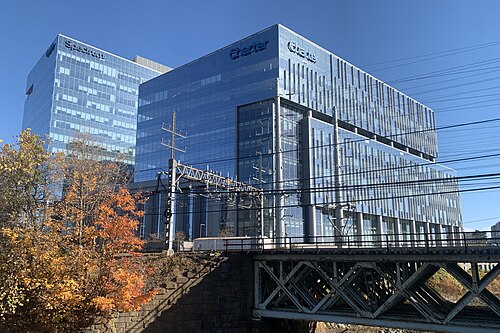
Spectrum HQ
DownDetector, a popular outage monitoring platform, recorded a sharp spike in user reports beginning around 1:50 a.m. Eastern Time, with the majority of complaints centered on broadband internet and Wi-Fi connectivity issues. By mid-morning, the site showed hundreds of reports per hour, far exceeding typical baseline levels for the Charter Communications-owned provider.
The outage appeared to affect residential and business subscribers in multiple regions, though no single national epicenter was immediately confirmed by Spectrum. Users in states including New York, California, Texas, Florida and the Midwest flooded social media platforms and forums with complaints of complete loss of internet access, slow speeds or intermittent connections. Some reported that television and phone services remained operational in areas where bundled packages are common, suggesting the issue was isolated to the broadband network.
Spectrum, which serves more than 32 million residential customers across 41 states under the Spectrum brand, has not issued a formal public statement on the cause or expected resolution time as of early afternoon Thursday. The company’s official support pages directed users to check for outages via the My Spectrum app or website, but many customers said those tools were also unresponsive or showed no active alerts.
One user in the DesignTAXI community forum, which first highlighted the issue shortly after 5 a.m. Eastern, wrote: “Spectrum Internet is reportedly down for some subscribers right now. Are you one of them?” The post quickly gained traction as hundreds echoed similar experiences. Similar threads appeared on Reddit’s r/Spectrum and local Facebook groups, with customers sharing screenshots of error messages and router lights indicating no connection.
Advertisement
The timing of the outage — occurring during peak morning hours when many remote workers and students rely on stable internet — amplified frustration. Parents reported children unable to join virtual classes, while small business owners described lost productivity and revenue. In some areas, cellular hotspots provided temporary relief, but Spectrum mobile customers in affected households often faced the same broadband-related problems.
This is not the first time Spectrum has faced significant service interruptions in 2026. Earlier in the year, the provider dealt with several notable outages linked to network maintenance, weather events and technical glitches. A January outage affected nodes in New York, Washington, D.C., and Houston, lasting over an hour and impacting downstream partners internationally. February and March saw additional regional disruptions, prompting criticism from consumer advocacy groups about reliability in an era when high-speed internet is considered essential infrastructure.
Industry analysts noted that Spectrum’s vast hybrid fiber-coaxial network, while expansive, can be vulnerable to cascading failures when core routing or backbone issues arise. Possible causes for Thursday’s event include routine overnight maintenance that encountered unexpected problems, fiber cuts, or a broader software configuration error — though without official confirmation, speculation remains rampant on tech forums.
Spectrum customers experiencing issues were advised to follow standard troubleshooting steps: power cycling modems and routers, checking cables, and testing connections on multiple devices. However, many reported that even these basic steps failed to restore service, pointing to a provider-side problem rather than individual equipment failure.
Advertisement
Consumer advocates urged affected users to document the outage for potential compensation claims. Under Spectrum’s service agreement, prolonged disruptions may qualify for bill credits, though the company typically requires customers to contact support directly once service resumes. The Federal Communications Commission encourages reporting major outages, especially those affecting public safety or emergency communications, though no widespread 911 or emergency service impacts were reported Thursday.
The outage highlights broader concerns about internet reliability in the United States, where millions depend on a handful of large providers. Spectrum, as the second-largest cable internet provider behind Comcast’s Xfinity, has faced repeated scrutiny over service quality, pricing and customer service response times. Consumer Reports and other watchdogs have consistently ranked Spectrum lower in satisfaction surveys compared with fiber-based competitors like Verizon Fios or Google Fiber.
In response to similar past incidents, Spectrum has emphasized investments in network upgrades, including the rollout of DOCSIS 4.0 technology for multi-gigabit speeds in select markets. Company executives have touted these improvements as part of a broader modernization effort, yet recurring outages continue to frustrate subscribers.
As of midday Thursday, DownDetector’s heatmap showed concentrated reports in major metropolitan areas, though rural and suburban customers also reported problems. Some users noted partial restoration in certain neighborhoods, suggesting the issue might be resolving in waves as technicians address localized problems.
Advertisement
Spectrum’s automated support chat and phone lines were reportedly overwhelmed, with long wait times or generic outage messages. The company’s official X (formerly Twitter) account had not posted an update on the situation by early afternoon, though it frequently directs users to the My Spectrum app for real-time status.
For families and remote workers, the disruption served as a stark reminder of digital dependence. One New York resident told local media that the outage forced her to drive to a coffee shop with public Wi-Fi to complete work deadlines. In Florida, retirees described frustration over lost streaming access during morning routines.
Telehealth providers and online educators advised users to switch to mobile data or alternative networks when possible. Schools in affected districts activated contingency plans, including paper-based assignments or delayed virtual sessions.
The event also sparked renewed calls from lawmakers for stronger oversight of broadband providers. Some consumer groups renewed pushes for stricter service-level agreements and automatic credits during outages lasting more than a few hours.
Advertisement
As investigations continue, Spectrum customers are encouraged to monitor the company’s official channels and third-party trackers like DownDetector for updates. Restoration timelines remain unclear, but historical patterns suggest many outages of this scale are resolved within several hours to a full day.
In the meantime, affected users can explore workarounds such as using public Wi-Fi hotspots, mobile hotspots from other carriers, or wired Ethernet connections where available. Spectrum has previously offered goodwill credits following major disruptions, and customers should retain records of the outage duration and impact.
This latest incident underscores the fragility of even major internet providers in an increasingly connected world. While Spectrum continues to expand its fiber and advanced cable infrastructure, events like Thursday’s outage remind subscribers of the need for backup connectivity options and realistic expectations around uptime.
Spectrum, formerly known as Charter Spectrum after the 2016 merger, operates one of the largest cable networks in the country. Its services include high-speed internet, cable television and home phone, often bundled for residential and small business users. The company has faced class-action lawsuits and regulatory scrutiny in the past over billing practices and service reliability.
Advertisement
As the day progressed, some users began reporting gradual restoration, while others continued to experience full outages. The situation remains fluid, with no official root cause or estimated full resolution time released by Spectrum executives.
For the latest developments, customers should check Spectrum’s outage map, the My Spectrum app or trusted third-party monitors. Authorities have not indicated any connection to broader cybersecurity threats or natural disasters, suggesting a technical network issue.
The outage serves as a timely reminder for all internet users to maintain backup communication plans, especially in an era when remote work, education and essential services increasingly rely on stable broadband connections.
Supplement brand Thorne is on pace to reach $650 million in annual revenue this year, fueled by Gen Z and millennial shoppers who are increasingly focused on improving their health, CNBC has learned.
The 42-year-old supplement brand, which L Catterton took private in 2023, has sustained a compound annual growth rate of over 30% since the acquisition, according to the company. Between 2022 and 2025, its revenue more than doubled from $229 million to over $500 million, according to filings and the company.
Meanwhile, the number of consumers who shop with the brand directly has grown to about 7 million, up from around 4 million at the end of 2023, fueling a 63% surge in direct-to-consumer sales, the company said.
“A lot of what we’ve done in the last few years has been streamlining and focusing and in some ways, simplifying our go-to-market, being really clear about who is our consumer that we’re serving, what are they looking for from brands as you move forward, and looking back at our heritage,” said CEO Colin Watts, the former CEO of The Vitamin Shoppe. “… Our expectation is this is going to be a billion-dollar brand over the next few years.”
Advertisement
Thorne’s growth comes as the market for vitamins, minerals and supplements balloons in the U.S. — buoyed in part by the “Make America Healthy Again” movement and by health-conscious young shoppers who are looking to optimize their health and improve things like sleep and nutrition. The vitamins, minerals and supplements market reached $125 billion in the U.S. in 2025 and is projected to grow 11% by 2027, according to data collected by consulting firm AlixPartners.
“As the science has gotten better and as, frankly, the consumer has taken more control over their health, there’s been a shift in spending and a shift in focus towards ‘what can I do proactively to manage my health in the future?’” Watts said.
Thorne’s Magnesium Glycinate and Ginseng Plus supplements.
Courtesy: Thorne
Advertisement
The surge in interest in dietary supplements, which was a popular gifting category over the recent holiday season, has created an opportunity for major retailers like Walmart, Target and Amazon, consumer product companies like Nestlé and smaller brands like Thorne. It also reflects a broader generational shift reshaping the industry. Once dominated by older consumers focused on preventative health, today the category is increasingly driven by younger shoppers interested in performance, personalization and daily wellness routines.
“When I started looking and working in this market 25 years ago, this was a boomer-driven market; you basically focused on servicing the boomers, that’s how you won in the market. So the reality is, today’s market is a Gen Z, millennial market,” Watts said. “One of the big Gen Z millennial trends is, they don’t think about supplementation as prevention. They think about it as performance. It’s like, ‘I want to sleep better. I want to have more energy. I want to deal with my anxiety. I want to work out better.’ These are the kinds of things that they’re very, very focused on.”
About 60% of Thorne’s total revenue comes from shoppers under the age of 40, who are spending about 1.5 times more than their parents did on wellness, Watts said. He estimated about half of those shoppers under 40 are subscribers, despite a broader hesitation among some younger consumers to commit to recurring subscription plans.
“One of the reasons that Gen Z hates subscriptions is because it drives them crazy — drives me crazy, frankly — to put something on a subscription and then see it cheaper somewhere else,” Watts said. “We are very disciplined about our pricing .… We don’t, you know, high, low, promote the brand. It is fairly consistent.”
Advertisement
To entice shoppers to subscribe and offer a break on high pricing, Thorne offers free shipping and a 10% discount on each refill order. Subscriptions can come as often as every two weeks or as far apart as four months. When shoppers subscribe to three or more products, they can save 20%.
As the supplement industry grows, so does scrutiny surrounding ingredients, claims and manufacturing, especially among younger shoppers who often want to know how products are produced. Supplements are not regulated by the FDA for safety or effectiveness, putting pressure on brands to conduct their own testing that they can integrate into marketing campaigns.
“We spend a lot of time trying to make sure that we can demonstrate the science, that we can demonstrate the efficacy. We’re one of the few brands, for example, that has worked with the Mayo Clinic now for over 14 years,” Watts said. “We’ve also worked with a lot of top sports teams. We’re the official supplement of the UFC. We’re working with various different tennis associations … all of this basically forces us to raise our game, because these are folks that are even more discerning than the average consumer.”
When asked if the company has ambitions to go public again, Watts said there’s “no rush” to do so. He called an IPO one potential route, along with a potential strategic acquisition by a larger firm.
Advertisement
“Like any private equity firm, I think [L] Catterton will look for the right opportunity, for the right exit, at the right time,” Watts said. “Right now, as we look at where we’re going to grow — through bricks-and-mortar retail, through international expansion, through larger expansion moving forward — there’s also a lot of strategic companies that are out there that might see a brand like Thorne as a very powerful asset within their overall portfolio.”
NEWARK, N.J. — Security wait times at Newark Liberty International Airport remained short and manageable on Thursday, April 2, 2026, with most TSA checkpoints reporting waits of 1 to 4 minutes for both general and TSA PreCheck lanes, according to the airport’s official real-time data.
IBTimes US
Newark Liberty, one of the busiest airports in the New York metropolitan area, handles millions of passengers annually and serves as a major hub for United Airlines. On a typical day, security lines can fluctuate significantly based on flight schedules, passenger volume and TSA staffing levels. As of mid-morning Thursday, however, travelers encountered unusually quick processing times across all three terminals.
According to the airport’s website, general security lines showed the following approximate waits:
Terminal A (all gates): 1 minute general line, no wait for TSA PreCheck.
Terminal B (Gates 40-49): 1-2 minutes general, 1 minute PreCheck.
Terminal B (Gates 51-57): 1 minute general.
Terminal B (Gates 60-68): 1-4 minutes general.
Terminal C (all gates): 2 minutes general, 2 minutes PreCheck.
These figures represent estimates and can change rapidly. Airport officials noted that posted times are approximate and advised passengers to allow extra time, especially during peak morning and evening rushes when waits can stretch to 15-45 minutes or more under normal conditions.
The relatively light lines Thursday morning likely resulted from a moderate flight schedule combined with efficient staffing. Newark has faced criticism in the past for long security delays, particularly during holiday periods or after weather disruptions, but recent data shows improvement when passenger volumes align with available resources.
Travelers with TSA PreCheck, CLEAR or Global Entry enjoyed even faster processing. In several checkpoints, PreCheck lanes reported no wait or waits under 2 minutes, highlighting the value of these expedited programs for frequent flyers.
Advertisement
Newark Liberty offers multiple security checkpoints in Terminals B and C, allowing passengers to choose lines based on their gate location. Terminal A, primarily used for some international and domestic flights, typically sees lighter traffic. Walk times from security to gates are also displayed on the airport site, helping passengers gauge total time needed after clearing screening.
Airport authorities recommend arriving at least two hours before domestic flights and three hours for international departures. With current short waits, many passengers cleared security quickly and had time to relax in lounges or grab meals before boarding.
The TSA continues to emphasize the 3-1-1 rule for liquids in carry-on bags, removal of laptops and large electronics, and proper masking or health protocols if still in effect. Passengers are encouraged to download the MyTSA app for general guidance, though the official Newark Airport website provides the most accurate terminal-specific wait times.
Factors influencing wait times at EWR include the number of open lanes, TSA staffing levels, passenger volume, and the proportion of travelers with PreCheck or other expedited screening. During peak hours — typically early mornings (5-8 a.m.) and late afternoons (3-7 p.m.) — lines can build quickly even with efficient operations.
Advertisement
Newark has invested in technology upgrades, including more automated screening lanes and better queue management, to reduce congestion. The airport also partners with airlines to promote TSA PreCheck enrollment, which has helped ease pressure on standard lines.
For international travelers, customs and border protection processing after arrival can add significant time, though departure security remains the primary concern for most. United Airlines, the dominant carrier at Newark, operates from Terminal C and has its own lounges for premium passengers that can provide a more comfortable pre-security experience.
Travelers facing longer-than-expected waits are advised to stay hydrated, wear comfortable shoes, and follow TSA officers’ instructions to keep lines moving. Families with young children or passengers needing assistance should request help from airport staff early.
The short waits reported Thursday contrast with occasional spikes seen in previous months, when government funding issues or high travel volumes caused delays of 20-40 minutes or more at some checkpoints. Officials have stressed that posted times may not always reflect real-time conditions due to sudden changes in passenger flow.
Advertisement
Passengers can check live updates on the Newark Airport website (newarkairport.com), the MyTSA app, or third-party trackers like takeofftimer.com and airlineairport.com. These tools provide estimates based on airport data and user reports, though official airport figures remain the most authoritative.
For those connecting through Newark, short security waits are particularly beneficial, as the airport’s layout requires moving between terminals in some cases. The AirTrain monorail system connects all terminals efficiently, but travelers should factor in walking and train time after security.
Newark Liberty continues to rank among the busiest U.S. airports, with strong recovery in both domestic and international traffic post-pandemic. Its proximity to Manhattan makes it a popular choice for business and leisure travelers despite occasional congestion.
Airport management works closely with the TSA and Port Authority of New York and New Jersey to optimize operations. During busy periods, additional lanes are opened when possible, and staff are redeployed to high-traffic checkpoints.
Advertisement
Travelers are reminded that security screening is a critical safety measure. While short waits are welcome, patience and compliance help maintain smooth flow and high security standards.
As of Thursday afternoon, April 2, 2026, conditions at Newark Liberty remained favorable for quick security processing. However, afternoon and evening flights could see increased volume, so passengers are urged to monitor updates and plan accordingly.
With efficient screening times reported across terminals, many travelers cleared security faster than expected, allowing more time for dining, shopping or relaxing before departure. Newark offers a variety of dining options post-security, including local favorites and national chains.
For the best experience, frequent flyers recommend enrolling in TSA PreCheck or CLEAR if eligible, arriving early during peak seasons, and packing carry-ons strategically to minimize time at the screening tables.
Advertisement
Newark Liberty International Airport serves as a vital gateway to the New York region. Its security operations directly impact thousands of daily passengers, making real-time wait time information essential for smooth travel planning.
As the day progresses, conditions may evolve with changing flight schedules and passenger arrivals. Travelers should continue checking official sources for the most current data before heading to the airport.
In summary, TSA security wait times at Newark Liberty International Airport on April 2, 2026, were notably short across most checkpoints, offering a smoother experience for passengers compared with busier periods. Staying informed through official channels remains the best strategy for any airport journey.
Global energy markets are under pressure again. A new conflict involving the United States, Israel, and Iran has pushed oil prices close to record highs and disrupted one of the world’s most important shipping routes.
Experts warn that this is not just a short-term spike. It could reshape economies for years.
The price of Brent crude oil has surged to around $120 per barrel, reminding many people of past crises. But this time, the situation is different.
The disruption is not just about politics or trade rules—it is about physical supply being cut off.
Advertisement
The Strait of Hormuz, a narrow waterway where a large share of the world’s oil passes, has seen major slowdowns in tanker traffic. This has reduced the amount of oil and gas reaching global markets.
One energy analyst explained the seriousness of the situation, saying, “This is the largest supply disruption in the history of the global oil market.” That statement captures why experts believe the economic effects could last longer than before.
Why This Crisis Is Different
In past energy shocks, like the 2022 crisis after Russia invaded Ukraine, supply chains adjusted.
Oil and gas were rerouted, and countries released reserves to calm prices. Over time, markets stabilized.
Advertisement
Today’s disruption is harder to fix. The problem is not just who sells energy—it is how that energy moves. When a key route like the Strait of Hormuz is blocked or limited, there are very few alternatives.
Pipelines that bypass the area can only carry a small portion of the usual supply. Ships also face delays and risks, making transport slower and more expensive.
Even when countries release oil from emergency reserves, it does not solve everything. The oil still needs to be shipped to where it is needed. With fewer tankers available and unsafe routes, delivery becomes a challenge.
How High Energy Prices Affect Everyday Life
When oil and gas prices rise, the effects spread quickly. Businesses that rely on energy—like factories, airlines, and shipping companies—face higher costs. These costs are often passed on to consumers.
Advertisement
This means higher prices for goods, plane tickets, and even food. Farmers, for example, depend on fuel and fertilizers, both tied to energy markets. When those costs go up, food prices can rise too.
At home, families feel the impact through higher electricity bills and fuel costs. Over time, people may spend less on other things because more of their money goes to energy. This slows down the overall economy.
Industries Under Pressure
Some industries are hit harder than others. Energy-heavy sectors like steel, cement, and chemicals depend on steady and affordable fuel supplies.
When prices stay high, these industries may reduce production or raise prices.
Advertisement
According to Aljareeza, transportation is also affected. Airlines pay more for fuel, shipping costs increase, and public transport may become more expensive.
While people still need to travel, long-term high prices can lead to fewer trips and changes in habits.
A Chain Reaction in the Global Economy
The longer the disruption lasts, the more serious the impact becomes. Countries that rely heavily on imported energy may struggle the most. Slower production, higher costs, and reduced spending can lead to weaker economic growth.
For energy-producing countries, the situation is also risky. If they cannot export their resources due to blocked routes or damaged infrastructure, they lose income and reliability. This can affect their role in the global market.
Advertisement
What Happens Next?
Markets may eventually stabilize, but not without consequences. Unlike past crises, this disruption highlights a major weakness: too much of the world’s energy passes through a few critical points.
As one expert noted, “The longer the disruption continues, the longer prices will remain high.”
This means the global economy may face a period of adjustment, with changes in energy use, trade routes, and investment.
In the long run, countries may look for new ways to secure energy—such as building alternative routes, increasing local production, or investing in renewable sources. But these solutions take time.
Mumbai: Valuations of Indian IT stocks have fallen to their cheapest levels since July 2020 after the recent selloff, opening up an opportunity for gradual accumulation over the next two years, said fund managers.
The Nifty IT index is currently trading at a price-to-earnings multiple of 20.6 times, well below its five-year average of 29.16 and ten-year average of 24.4, making it the lowest valuation for the sector since the post-Covid period of July 2020.
“The Indian IT sector is passing through a phase of weak sentiment, slower growth expectation, valuation compression, sell-off by foreign investors and reduced index weight,” says Parth Shah, product manager and market strategist, DSP Mutual Fund.
Investors have baulked at software services companies recently amid concerns over the fallout of AI advancements on the software services sector. The eruption of the West Asia conflict in the past month shifted the spotlight from the debate over the sector’s prospects, but concerns linger in the background. In 2026, the Nifty IT index shed 2.4% compared with the Nifty’s losses of 14.5%, but over longer periods, the sector benchmark has seen sharper cuts.
Advertisement
Since October 1, 2024 the Nifty IT index has lost 31.5% compared with the 13.4% dip in the Nifty. Over the last one year it, has lost 19.2%, compared with the 3.6% decline in broad Nifty 50 loss of 3.6%,
Live Events
The diminished appetite for these stocks has reduced the sector’s weight in the Nifty to an all-time low of 8.85%, underscoring the extent of the risk-off mood in technology shares. The peak of the IT sector weight was 19.8% in January 2022.
Agencies
OPPORTUNITY IN SELLOFF Stock valuations down to cheapest levels since July 2020
The extreme pessimism may be flashing an opportunity for value buyers. “Though AI is a structural tailwind, the revenue model is evolving and the total addressable market (TAM) is expanding, and the deal momentum is improving,” says Manish Bhandari, CEO and Portfolio Mamager of Vallum Capital Advisors. Following the drop, the Nifty IT index offers a dividend yield of 3.5%, an earnings yield of 5%, giving investors an opportunity to take exposure to the sector, he said.
A study by DSP Mutual Fund shows that on a rolling three-year basis, Indian IT stocks have underperformed the Nasdaq by 57%.
Investors need to rush to buy these stocks, though.
Advertisement
“Investors wanting to allocate to IT must use a balanced investment approach combining a lump sum allocation now and a staggered approach using SIP,” said Shah.
Mumbai: Bank economists have told the Reserve Bank of India (RBI) at a pre-policy meeting that there is no immediate need to either raise the repo rate or change the stance, provided inflation remains within the central bank’s tolerance band, multiple participants in the discussions told ET.
They also added that RBI has alternative tools to manage currency pressures and is unlikely to resort to a rate hike, unless the impact becomes visible in inflation, one economist said.
Discussions at the meeting were largely centred on the war, the risk of a pick-up in inflation, and the expectation of a global growth slowdown, another economist who attended the meeting told ET.
“Inflation forecasts by participants ranged from 3.5% to 5%, depending on where they see oil prices to average,” said an economist who participated in the discussions. “No one in the meetings suggested a rate hike or even a change in stance, as there is little clarity on how the situation in West Asia will evolve.”
Advertisement
The central bank’s monetary policy committee (MPC) is scheduled to announce its first rate decision of FY27 on April 8.
Live Events
The meeting with economists comes in the backdrop of the West Asia war, rising crude oil prices and inflationary pressures. Brent crude prices saw a record surge in March, rising by roughly 60-64% compared with February levels, according to Reuters, and have traded between $110 and $120 per barrel since the war broke out.
Agencies
Last Resort “To the extent the ongoing energy shock does not translate into CPI inflation breaching the target durably, we believe the RBI MPC is unlikely to resort to rate hikes,” said a Barclays report. RBI in its February 2026 policy held a status quo on repo rate at 5.25%. The central bank has reduced the repo rate by 125 basis points since February 2025.
Calls for a status quo are also emerging amid deep uncertainty over the duration of the US-Israel war on Iran.
Economists say the impact will largely depend on how long the war lasts, making it difficult for market participants to assess the scale of the shock or frame appropriate policy responses.
“More than the current inflation print, it is the outlook on how the situation would evolve in West Asia which would determine the policy decision on rates,” ICICI Bank said in a report early March.
Advertisement
“Liquidity will remain the most important variable in the interim before we have much more clarity on energy markets and thus, we should see an extended pause for now.” Retail inflation stood at 2.75% in January, while GDP in Q2FY26 climbed 8.2%. RBI in its February policy projected inflation in Q1 and Q2 of FY27 at 4% and 4.2%, while GDP of Q1 and Q2 FY27 is projected at 6.9% and 7%, respectively.
Maven Capital Partners has successfully exited Manchester-based fintech AccessPay following its acquisition by US investment firm Accel-KKR, delivering a 2.5x return for investors in the Northern Powerhouse Investment Fund I.
The transaction marks a significant milestone for both AccessPay and the wider Northern fintech ecosystem, underscoring the growing strength of technology businesses outside London and the role of regional investment funds in scaling high-growth companies.
Maven first backed AccessPay in 2018 through the Northern Powerhouse Investment Fund (NPIF), investing £1 million to support the company’s expansion. The funding enabled the business to scale operations, invest in talent and accelerate revenue growth at a critical stage in its development.
Since then, AccessPay has grown into a leading provider of bank integration software, connecting corporate finance systems directly to banking networks and enabling automated, structured payment and reconciliation processes.
The platform is now used by more than 1,000 organisations globally, reflecting strong demand for solutions that streamline financial operations and improve data accuracy.
Advertisement
The acquisition by Accel-KKR is expected to support AccessPay’s next phase of growth, including the development of new products and an accelerated acquisition strategy.
The US-based investor specialises in technology businesses and is likely to bring both capital and operational expertise to help expand AccessPay’s presence in international markets and strengthen its enterprise offering.
Anish Kapoor, (pictured) chief executive of AccessPay, said Maven’s early backing had been instrumental in the company’s growth.
“Maven supported us at a key point when we were scaling our market presence, and that foundation has helped us reach over 1,000 customers globally,” he said.
Advertisement
AccessPay’s growth highlights the increasing importance of regional fintech hubs, particularly in Greater Manchester, which contributes more than £1 billion annually to the UK economy.
The company has established itself as one of the fastest-growing fintech businesses outside London, gaining recognition for its innovation in bank connectivity and enterprise payments infrastructure.
Jeremy Thompson, partner at Maven, said the exit reflects the strength of the business built during the investment period.
“This transaction is a testament to the company’s leadership and the solid financial foundation established over the years,” he said.
Advertisement
The deal also illustrates the impact of public-private investment partnerships in supporting early-stage companies.
The Northern Powerhouse Investment Fund, backed by the British Business Bank, has played a key role in providing growth capital to businesses across the North of England.
Debbie Sorby of the British Business Bank said the exit demonstrates the value of equity finance in helping companies scale and succeed.
“This is a testament to AccessPay’s success and highlights the strength of the Northern fintech ecosystem,” she said, noting that further support will continue through the next phase of the fund.
Advertisement
For AccessPay, the acquisition represents a transition from scale-up to global expansion, with increased resources to compete in a rapidly evolving financial technology market.
For Maven and its investors, the 2.5x return reinforces the case for backing high-potential regional businesses early and supporting them through to exit.
As demand for digital financial infrastructure continues to grow, deals such as this are likely to become more common, reflecting both the maturity of the UK fintech sector and the increasing global appetite for scalable technology platforms.
Jamie Young
Jamie is Senior Reporter at Business Matters, bringing over a decade of experience in UK SME business reporting.
Jamie holds a degree in Business Administration and regularly participates in industry conferences and workshops.
When not reporting on the latest business developments, Jamie is passionate about mentoring up-and-coming journalists and entrepreneurs to inspire the next generation of business leaders.



























































You must be logged in to post a comment Login