Connect with us
DAPA Banner

Business

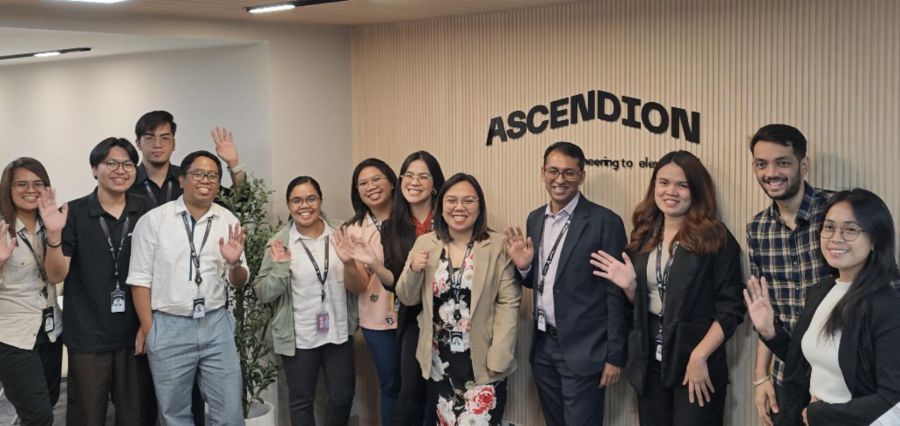
Ascendion’s Human-First Approach to Exceptional Candidate Experiences

Published

on

Ascendion's Human-First Approach to Exceptional Candidate Experiences

Never have the stakes been higher for organizations when it comes to attracting and recruiting top talent. As enterprises accelerate AI adoption, organizations are competing for highly specialized, niche capabilities that can unlock real business value and are increasingly relying on people to provide a key competitive advantage. Up to 90% of organizations will face IT talent shortages by 2026, with projected $5.5 trillion in losses from skills gaps.

At the same time, the on-demand, consumer centric economy is raising job seekers’ expectations. These highly qualified candidates aren’t just looking to work for financially successful organizations. They are demanding purpose-driven work, access to leaders, diverse teams, knowledge ecosystems, and stimulating environments. They go beyond simply seeking roles and are looking for employers that treat them as partners from the first interaction, with clear visibility into how their skills will be used, how they will grow, and how they will be valued.

Against this backdrop, recruiting practices are increasingly scrutinized, as striking the right balance between securing niche talent and meeting the candidates’ rising expectations is critical. Organizations that succeed will be those that rethink not just how they hire, but how they position talent as a long-term strategic advantage.

Shaped by strategic clarity, Ascendion has taken a different route; emerging as an engineering powerhouse at the intersection of technology and talent. This wasn’t a reaction to market volatility, but a forward-looking alignment to the digital explosion that prioritizes client continuity, tailored services, and seamless transitions. The result is a recruiting model that scales globally without losing human touch, treating hiring as the beginning of a long-term partnership rather than a transactional exchange.

Advertisement

Strengthening and Building a Wider Talent Pipeline

Talent acquisition is not linear anymore. Companies tap into multiple channels like university partnerships, online networks, referral ecosystems, digital platforms, etc., creating a talent discovery environment that is both dynamic and competitive.

According to Gio Lara, Associate Director, Talent Acquisitions, Philippines, “Ascendion supports sourcing with its proprietary AI-enabled talent platform METal™ which has access to over 4 million candidate profiles. The platform offers AI-assisted sourcing and shortlisting capabilities; helps in rediscovering previously engaged candidates and gives a unified pipeline visibility across regions.”

He further adds, “Given that Ascendion’s talent acquisition teams operate across North America, LATAM, APAC, and India, this centralized platform aligns the geographically distributed recruiters on candidate status, evaluation criteria, and past engagement history.”

Advertisement

With its multi-channel reach and shared data repository, Ascendion has tackled two key factors in talent acquisition: speed and precision and is redefining its competitive advantage in global tech hirings.

Structured Workflows with Defined Milestones

At Ascendion this starts with reimagining the Career Lattice, redesigning transparent growth journeys for an AI-augmented world. This framework blends deep technical expertise, fosters holistic well-being, and opens new channels for growth and professional development. And this transcends directly into how the organization approaches talent acquisition, candidate experience, and onboarding.

Ascendion’s recruiting model is built around complete process visibility. As Gio confirms, “The candidates are provided structured communication at each stage right from initial outreach to interview feedback and onboarding timelines.”

Advertisement

Rather than relying on decentralized recruiter workflows, Ascendion has adopted a centralized talent intelligence platform that focuses on three critical aspects of talent acquisition; skills, potential, and career trajectory. Powered by deep learning models and agentic AI workflows, the platform autonomously handles complex tasks, streamlining sourcing, screening, talent insights, and analytics into one integrated system.

The objective is straightforward: reduce ambiguity.

Proactive Clarity with Standardized Communication

Ambiguity is a common side effect in complex hiring environments considering multiple roles, stakeholders, and geographies. At Ascendion communication during the entire talent acquisition cycle is treated as a structured system rather than a series of informal exchanges.

Advertisement

“We set a clear expectation of the project alignment and are precise in defining the role scope. After each interview stage we share detailed next steps with the candidate. Our documentation and verification process guidelines are clear and leave no room for errors. We also follow a structured onboarding timeline once the offer is extended.” Gio explains. He further adds, “With these communication checkpoints, Ascendion ensures consistency across talent acquisition and regions. And the result is clear alignment between hiring team, stakeholders, and candidates”.

Disciplined communication extends beyond simple courtesy in high-stakes, high-volume technical recruitment, when it is treated as a process of control that supports professionalism, efficiency, and trust.

Beyond the Offer Letter

High and early attrition (within the first six months) is a common challenge across the technology sector. At Ascendion employee onboarding is a structured extension of recruitment and not an administrative afterthought.

Advertisement

“For us professionalism is a cornerstone of candidate experience, one that extends beyond the offer letter. All new hires participate in structured orientation sessions; they are paired with mentors to accelerate integration into existing process and have immediate access to learning resources.” Gio explains.

In its first year of inception, Ascendion introduced a symbolic tree plantation initiative, in which it celebrated every new hire by planting a fruit-bearing tree through the Ascendion Afforestation Project. The initiative symbolized shared growth; as the tree flourishes, so does the new employee’s career; a quiet yet meaningful reminder that talent acquisition is about long-term growth rather than short-term staffing.

Supporting Emotional Resilience and Strategic Advancement

 Beyond hiring workflows, workforce strategies balance career progression, upskilling and personal development reinforces employee retention, organizational growth, and continuity.

Advertisement

Ascendion has successfully established a talent ecosystem that supports employee growth and well-being. Org-wide programs provide continuous upskilling in cutting-edge AI and engineering practices through global communities of practice- Circles, hands-on innovation events, pet projects, mentorship, and collaborative learning environments. Complementing this technical development, dedicated behavioral training initiatives that cultivate essential “heart skills” such as empathy, authentic communication, emotional regulation, deep listening, gratitude, and reflective decision-making; thereby fostering a culture of openness, mutual respect, and psychological safety.

Other leadership initiatives create defined pathways for professional advancement. Continuous upskilling is supported through digital learning platforms and technical academies like Ascendion Learning Lab, ensuring employees remain aligned with evolving industry demands. Complementing these are diversity, wellness, and recognition programs that prioritize inclusion, resilience, and achievement across regions. Corporate social responsibility initiatives integrate purpose and community service into employee experience.

Talent acquisition today is defined by scarcity, scrutiny, and rising expectations; recruitment can no longer be transactional. Ascendion’s structured, technology-enabled, and people-centered model demonstrates that scale and personalization are a strategic advantage.

Advertisement
Continue Reading
Click to comment

You must be logged in to post a comment Login

Leave a Reply

Business

ETMarkets Smart Talk| Healthcare, infra, financials look attractive after recent market fall: Sachin Bajaj, CIO, Axis Max Life Insurance

Published

on

ETMarkets Smart Talk| Healthcare, infra, financials look attractive after recent market fall: Sachin Bajaj, CIO, Axis Max Life Insurance
Amid heightened volatility driven by geopolitical tensions and a sharp rise in crude oil prices, markets have seen a broad-based correction, opening up pockets of opportunity for long-term investors.

In this edition of ETMarkets Smart Talk, Sachin Bajaj, Chief Investment Officer at Axis Max Life Insurance, highlights that sectors such as healthcare, infrastructure, and financials are now trading at more reasonable valuations after the recent fall.

While near-term uncertainties linked to energy prices and global cues may keep markets on edge, Bajaj remains constructive on India’s structural growth story and advises investors to stay invested and focus on quality opportunities emerging from the correction. Edited Excerpts –

Q) March has been an absolute roller coaster for equity markets not just for India but across the globe. How are you reading into markets?

A) Markets have been very volatile due to the recent geopolitical events. The world is going through geopolitical events for past few years, but markets reacted sharply negatively when geopolitics is coupled with energy shocks.
The recent war has pushed crude higher and disrupted gas availability, which directly impacts input costs for many industries and compresses margins in the near-term.


While this creates sharp volatility, we view it more as a short-term macro event and not a structural breakdown. India’s growth story remains intact with domestic demand, policy reforms, and domestic flows, but in the short-term markets will likely trade nervously until energy prices stabilize.
Q) IT sector seems to be the worst hit thanks to the AI commentary but with geopolitical tensions rising other sectors have also started to see some rub-off effect. Any sector(s) that are now available at attractive levels?
A) IT sector stocks corrected due to lower relative growth and AI related risks with year-to-date underperformance of 13% versus Nifty50.
However, post the recent geopolitical developments, the correction has broadened beyond IT as the spike in crude and gas supply disruptions are beginning to affect several sectors through higher input costs and margin pressure.

India, being a large oil importer, typically sees market volatility when crude moves above $80-90 per barrel. If oil prices sustain at these levels, then it will impact inflation, CAD, fiscal situation, and corporate earnings.

Advertisement

So far, FY26 saw single digit earnings growth and FY27 is expected to have mid to high teens growth in earnings. However, elevated commodity prices, gas shortage could impact corporate margins leading to some earnings cut for FY27 versus earlier expectations.

With the recent fall, many stocks and sectors have started to look reasonable from a valuation perspective. We see opportunities emerge in Healthcare, Pharma, select consumer discretionary, Infrastructure, Financials and select Autos.

Q) What could be the good, bad and ugly for Indian markets in the near term?
A) These scenarios depend on how this war unfolds and its impact on global crude prices, supply disruption of gas and other commodities.

A swift resolution and ceasefire would benefit our markets and economy as it would mean lower commodity prices and lesser macro-economic impact. Conversely, sustained oil prices remain above $100 per barrel and ongoing disruption in global energy supply could put pressure on corporate margins and earnings.

Advertisement

In case this conflict prolongs, we could see sustained outflows from FPIs, pressure on corporate earnings especially for energy intensive sectors and companies and may also impact domestic flows which could intensify market volatility.

Q) FPIs have been net sellers in 2025, and the story continues in 2026 may be for a different reason now. The story seems to be changing around the FDI route as India opens up channels for Chinese investment to land into several industries. What are your views?
A) The FPI and FDI have divergent narratives. FPIs have been net sellers in the past due to various factors – capital rotation towards AI themes, relatively higher valuation for Indian markets, earnings slowdown and most recently on account of higher oil prices and geopolitical developments.

On the FDI, we expect FDI to improve in the coming year due to strong macroeconomic fundamentals, policy reforms and strong domestic demand. The recent India-US trade deal also lifts a key overhang, boosting prospects for FDI inflows.

Q) Rupee seems to be hitting fresh lows every week – where do you see the currency headed and how will it impact Indian markets/economy?
A) As a large oil-importing country, any change in global oil prices impact the currency. The recent rupee weakness is largely on account of the current global backdrop of higher crude prices, FPI outflows and a stronger dollar.

Advertisement

In the near-term, INR could be volatile with weakness bias if crude remains elevated. From markets and economy perspective, a weaker rupee helps export oriented sectors such as IT, Pharma and Gems and Jewelry etc while it has negative impact for many sectors as it raises imported inflation and increases input costs for the broader economy.

Q) Will Crude @ $100/bbl and above hurt Indian markets and macros? We have been making an investment pitch to the world about our macro stability which could be challenged in the near future. What are your views?

A) Global oil prices have moved up from $65-70 per barrel range to around $ 100 per barrel. A crude above $100 per barrel is clearly a macro headwind for India given our heavy import dependence. A sharp rise in oil if sustains could impact inflation, current account deficit, and growth.

That said, India’s macroeconomic framework is now markedly stronger than during past oil shocks, with ample forex reserves (11 months of import cover), ongoing fiscal consolidation, and resilient domestic demand.

While high crude prices may spark short-term market volatility and briefly strain the macro narrative, they are unlikely to impact India’s long-term investment appeal.

Q) Your advice to investors of things which one must avoid doing in the current environment? We have already seen drop in SIP flows by over 3% on a MoM basis.
A) India’s long-term growth story remains firmly intact. Policy reforms, accelerating credit growth, government initiatives such as GST rate cuts, Income tax cuts, interest rate cuts likely to boost consumption in the coming year.

Advertisement

After two years of single digit growth, corporate earnings growth is set to rebound in FY27. Investors should avoid selling in fear amid short-term volatility from oil shocks and stay invested in quality assets to capture the upside over the long-term.

(Disclaimer: Recommendations, suggestions, views, and opinions given by experts are their own. These do not represent the views of the Economic Times)

Continue Reading

Business

Australian shares slip as markets mull Iran situation

Published

on

Australian shares slip as markets mull Iran situation

Australia’s share market has handed back its early gains with interest as investors weigh clashing statements from the US and Iran on a potential path to de-escalation.

Continue Reading

Business

Top 5 mutual funds which are better than fixed deposits in 1 year. Check details

Published

on

The Economic Times

Five debt mutual funds, primarily from the credit risk category, have delivered higher returns than traditional fixed deposits over the past year. However, these funds come with higher risk. Investors should assess risk appetite carefully before considering such short-term alternatives to conventional bank deposits.

Continue Reading

Business

Perth to host two FIBA Asia WC men's qualifiers

Published

on

Perth to host two FIBA Asia WC men's qualifiers

Sport and recreation minister Rita Saffioti says Perth securing two FIBA Asian World Cup qualifiers in July is a boost for basketball in WA.

Continue Reading

Business

Germany’s Henkel in $1.4 billion deal to acquire hair care brand Olaplex

Published

on


Germany’s Henkel in $1.4 billion deal to acquire hair care brand Olaplex

Continue Reading

Business

Citizens downgrades Terns Pharmaceuticals stock on Merck deal

Published

on


Citizens downgrades Terns Pharmaceuticals stock on Merck deal

Continue Reading

Business

At Close of Business podcast March 26 2026

Published

on

At Close of Business podcast March 26 2026

Ella Loneragan and Claire Tyrrell discuss what property developers are doing to make their properties greener.

Continue Reading

Business

Burlington Stores: The Next Leg Of Upside Is From Earnings Growth (NYSE:BURL)

Published

on

Burlington Stores: The Next Leg Of Upside Is From Earnings Growth (NYSE:BURL)

This article was written by

I’m a fundamental, valuation-driven investor with a strong focus on identifying businesses that have the potential to scale over time and unlock massive terminal value. My investment approach centers around understanding the core economics of a business—its competitive moat, unit economics, reinvestment runway, and management quality—and how those factors translate into long-term free cash flow generation and shareholder value creation. I focus on fundamental research, and I tend to focus on sectors with strong secular tailwinds. Professionally, I am a self-educated investor that started this journey 10 years ago. Currently, I am managing my own funds, seeded from friends and family. My motivation for writing on Seeking Alpha is to share investment insights, and also at the same garner feedback from fellow investors in this site. My aim is to help readers focus on what truly drives long-term equity value. I believe good analysis should be both analytical and accessible, and I hope my work adds value to readers looking for high-quality, long-term investment opportunities.

Analyst’s Disclosure: I/we have no stock, option or similar derivative position in any of the companies mentioned, and no plans to initiate any such positions within the next 72 hours. I wrote this article myself, and it expresses my own opinions. I am not receiving compensation for it (other than from Seeking Alpha). I have no business relationship with any company whose stock is mentioned in this article.

Seeking Alpha’s Disclosure: Past performance is no guarantee of future results. No recommendation or advice is being given as to whether any investment is suitable for a particular investor. Any views or opinions expressed above may not reflect those of Seeking Alpha as a whole. Seeking Alpha is not a licensed securities dealer, broker or US investment adviser or investment bank. Our analysts are third party authors that include both professional investors and individual investors who may not be licensed or certified by any institute or regulatory body.

Advertisement
Continue Reading

Business

Devon flapjack maker to open permanent shop in Bath

Published

on

Business Live

The bakery chain makes flapjacks in a wide range of flavours – from mini egg rocky road to clotted cream fudge

Flapjackery is opening a permanent shop in Bath

Flapjackery is opening a permanent shop in Bath(Image: Flapjackery)

A Devon-based flapjack business is opening a permanent shop in Bath. Flapjackery’s new store on Pulteney Bridge follows a successful period trading as a pop-up in the city.

Co-founder Ms Myott said the Bath branch would benefit from its “prominent setting” and proximity to Bath Rugby, attracting regular matchday footfall.

She said: “Pulteney Bridge brings together a wide mix of customers from across the UK and overseas. Many are new to flapjacks, so we take the time to introduce them properly. It is always encouraging to see people return shortly afterwards to take more home with them.”

Shop manager Janine Pickett, who has worked for the company for three years, added: “It’s so exciting for us to be here permanently. The shop looks fantastic and I can’t wait to welcome everyone in.

Advertisement

“We have a really loyal local following here. People walk past and pop in to say hello, and the neighbouring shopkeepers are always coming in too. There’s a lovely community feel on the bridge.”

Flapjackery was founded a decade ago by Ms Myott and Sally Jenkin and already has branches in Tavistock, Falmouth, Dartmouth, Minehead, Wells, Plymouth, St Ives, Lymington, Fowey and Sidmouth.

The bakery makes a range of flapjacks – from the traditional to salted caramel brownie, apple and blackcurrant and clotted cream fudge.

Flapjackery’s new Bath branch opens on Saturday, March 28, at 9am.

Advertisement
Continue Reading

Business

Baltimore/Washington International Airport TSA Wait Times Stabilize Near Normal Levels

Published

on

Baltimore/Washington International Airport

Travelers at Baltimore/Washington International Thurgood Marshall Airport (BWI) are experiencing relatively normal TSA checkpoint wait times averaging 10 to 30 minutes as of late March 2026, a marked improvement from chaotic scenes over the weekend when some lines stretched up to two or three hours amid staffing shortages caused by the partial government shutdown.

Baltimore/Washington International Airport

The airport, a major hub for Southwest Airlines serving the Baltimore-Washington region, issued repeated advisories urging passengers to arrive at least three hours before scheduled departures after unusually long security lines developed on Sunday, March 22 and 23. On that Sunday, high TSA officer call-out rates — reported at 38.1% at BWI compared to a national average around 11-12% — forced closures of checkpoints and led to significant backups, with some passengers waiting over an hour even in CLEAR lanes.

By Monday and into mid-week, conditions eased as remaining TSA staff maintained operations at open checkpoints. Airport officials reported that while checkpoints A and B were temporarily closed on March 25, wait times at the remaining checkpoints (primarily C and D/E) stayed “close to normal,” though subject to rapid change. Real-time trackers and third-party sources showed average general security waits fluctuating between 15 and 30 minutes during peak periods, with some hourly estimates reaching 32-40 minutes in the early afternoon.

BWI does not use a private screening partnership like some airports, leaving it fully reliant on federal TSA officers. The shutdown, now stretching into its fifth week or more, has left roughly 50,000 TSA employees working without pay, prompting call-outs, resignations and morale challenges nationwide. More than 400 TSA agents have reportedly quit since the funding lapse began, exacerbating staffing pressures during the busy spring break travel period.

Airport spokesperson statements and Maryland Gov. Wes Moore emphasized that lines were moving through open checkpoints and that no Immigration and Customs Enforcement (ICE) agents were deployed at BWI, despite national discussions about potential federal support at airports. Moore stated the situation was being closely monitored, with emphasis on keeping operations functional without additional federal personnel inside the terminal.

Advertisement

For travelers, expedited options remain the best defense against delays. TSA PreCheck lanes, when open, typically clear in 5 minutes or less. CLEAR biometric verification is available and has helped some passengers bypass longer general lines, though availability can vary with staffing. BWI’s website and digital signage inside the terminal provide updates, though real-time wait time displays were temporarily unavailable or inconsistent on some days due to the funding issues affecting federal systems.

The airport’s main terminal features multiple security checkpoints serving its concourses, with Southwest dominating operations alongside other carriers. Peak congestion often occurs during morning and afternoon flight banks, particularly in the 5-8 a.m. and 4-7 p.m. windows when many domestic departures cluster. Third-party data from sources like OnAirParking and Takeoff Timer indicated average waits around 20-30 minutes under normal conditions, with potential spikes to 30-40 minutes during busy periods even before the shutdown intensified pressures.

BWI officials continue to recommend two hours for domestic flights and three hours for international departures as a baseline, with the current advisory leaning toward the longer window to account for variability. Passengers are encouraged to use the MyTSA app for general guidance and the official BWI site for checkpoint-specific alerts, though some travelers reported discrepancies between posted times and actual experiences during peak disruption days.

The situation at BWI mirrors challenges at other East Coast hubs but has not reached the extreme multi-hour delays seen at some larger airports. Travelers shared mixed feedback: some praised dedicated TSA staff still showing up despite unpaid work, while others expressed frustration over closed lanes and the need for extra buffer time. Local media captured scenes of lines snaking through terminals on Sunday, prompting comparisons to post-9/11 security measures.

Advertisement

Beyond security, BWI continues normal operations in other areas, including baggage claim and ground transportation. The airport serves millions of passengers annually as a convenient alternative to Reagan National (DCA) and Dulles (IAD), with strong low-cost carrier presence.

As the shutdown persists without immediate resolution, uncertainty lingers. Airport leaders and TSA supervisors are working to maintain service levels, but sustained high call-out rates or further resignations could reverse recent stabilization. No major flight cancellations directly attributed to security delays were widely reported at BWI in recent days, though individual passengers have missed connections due to longer-than-expected processing.

Tips for minimizing delays include enrolling in TSA PreCheck or CLEAR if frequent travel is planned, packing efficiently to comply with the 3-1-1 liquids rule, and monitoring the BWI website or app before heading to the airport. Removing laptops, large electronics and outer layers early in line can also speed individual processing.

The partial government shutdown has spotlighted the critical role of frontline TSA workers and the vulnerabilities in federal funding for essential travel infrastructure. At BWI, a combination of proactive advisories, remaining staff dedication and strategic checkpoint management has helped prevent total gridlock, but the message to travelers remains clear: plan extra time and stay flexible.

Advertisement

For the latest information, passengers should check bwiairport.com directly, as wait time displays can be temporarily unavailable. With spring travel continuing and the funding impasse unresolved, BWI’s security experience serves as a real-time case study in resilience amid fiscal uncertainty — one where dedicated officers continue screening passengers while the broader system strains under pressure.

Continue Reading

Trending

Copyright © 2025