Connect with us

Business

Asif Choudhury MD on Mindset, Resilience, and Navigating Life’s Toughest Challenges

Published

on

Asif Choudhury MD on Mindset, Resilience, and Navigating Life’s Toughest Challenges

Evolving Beyond Clinical Practice in Uncertain Times

For many physicians, identity is inseparable from the clinic, the hospital ward, the daily rhythm of patient care. Years of training shape not only professional expertise but also personal purpose. When that chapter closes, whether by choice or circumstance, the transition can be disorienting. Yet for some, stepping beyond clinical practice opens a different kind of reckoning, one centered less on procedures and outcomes and more on mindset, resilience, and how a life of service adapts under pressure.

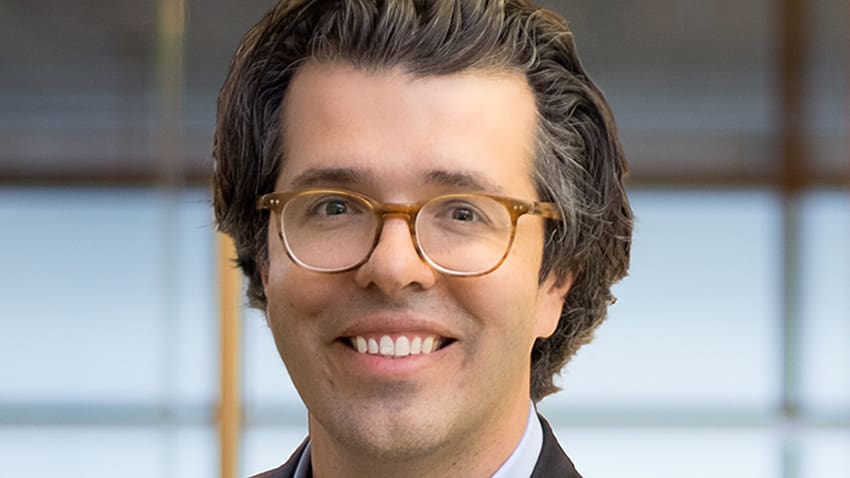
The story of Asif Choudhury, MD offers a lens into this quieter evolution. Known for decades as an interventional gastroenterologist and clinical leader, Choudhury’s life beyond medicine reflects the realities many professionals face when their careers shift abruptly. It is a narrative grounded in endurance rather than reinvention, shaped by family responsibility, faith, and a persistent commitment to helping others even when personal certainty is hard to find.

When Professional Identity Shifts

Medicine trains physicians to think in terms of solutions. Symptoms lead to diagnoses, diagnoses to interventions. Outside the exam room, life rarely follows that logic. When a physician steps away from practice, the absence of structure can feel as demanding as the most complex clinical case.

For Choudhury, years spent at the forefront of advanced gastrointestinal procedures instilled discipline and accountability. Yet those same traits were tested most sharply not in the hospital but at home. Caring for a parent with progressive illness while managing an intense medical career forced him to confront limits no training manual prepares physicians for. Responsibility extended beyond professional duty into deeply personal terrain, where outcomes could not be controlled and effort did not always yield improvement.

Advertisement

These experiences reshaped his understanding of success. Achievement became less about volume, recognition, or technical mastery and more about presence, patience, and the ability to remain steady when answers were unclear.

The Weight of Personal Responsibility

Few challenges rival caring for a seriously ill family member while maintaining professional demands. For Choudhury, this period coincided with the early years of private practice, a time when many physicians are building reputations and shouldering growing workloads. The emotional labor of caregiving did not pause at the clinic door. It followed him home, reshaping evenings, routines, and priorities.

This kind of responsibility strips away abstraction. Illness is no longer a case study but a daily reality. The experience deepened Choudhury’s empathy for families navigating chronic disease and loss, reinforcing a belief that suffering is not confined to any one role. Physicians, patients, and caregivers often occupy all three identities at different moments in life.

Such insight carries forward long after clinical practice ends. It informs how challenges are met, how others are supported, and how resilience is defined.

Advertisement

Redefining Resilience Beyond Medicine

Resilience is often framed as endurance, the ability to push through adversity without faltering. Yet lived experience suggests a more nuanced definition. True resilience may involve recognizing vulnerability, accepting help, and adjusting expectations rather than simply persisting unchanged.

After stepping away from medicine, Choudhury’s days took on a different rhythm. Time once dictated by hospital schedules shifted toward family responsibilities, community involvement, and personal reflection. Maintaining structure required intention. Physical activity, daily routines, and spiritual practices became anchors, offering stability when professional identity no longer set the pace.

This period underscored a reality many professionals face but rarely discuss. When a defining career chapter closes, the absence of external validation can feel unsettling. Rebuilding internal measures of worth takes patience and humility. For Choudhury, grounding those measures in service and faith helped restore balance.

The Role of Faith and Mindset

Across cultures and professions, faith often emerges as a quiet constant during periods of upheaval. For Choudhury, spirituality provided a framework for interpreting hardship not as failure but as part of a broader moral and human journey. Prayer and meditation were not escapes from difficulty but tools for facing it with clarity.

Advertisement

Mindset, in this sense, is not optimism divorced from reality. It is the discipline of choosing constructive responses when circumstances resist control. This perspective shaped how Choudhury approached stress, disappointment, and uncertainty. Instead of measuring life solely by external markers, he emphasized intention, ethical conduct, and the effort to do good even when outcomes were imperfect.

Such an outlook resonates beyond medicine. In an era marked by professional volatility and personal strain, many readers recognize the need for inner frameworks that endure when careers shift or plans unravel.

Community as a Source of Continuity

Stepping away from clinical practice did not sever Choudhury’s connection to service. Community remained a central thread. Long before leaving medicine, he devoted time to uninsured patients, free consultations, and informal guidance within religious and cultural networks. That commitment did not depend on a hospital badge.

Outside formal practice, these interactions continued in different forms. Friends, neighbors, and extended networks still sought his perspective on health, life decisions, and coping with stress. While the setting changed, the underlying impulse remained the same. To listen, to advise when appropriate, and to offer reassurance during difficult moments.

Advertisement

Community involvement also provided a sense of continuity. When professional roles shift, belonging becomes essential. Shared meals, cultural gatherings, and regular contact with friends helped sustain purpose and social connection, countering the isolation that can accompany major life transitions.

Lessons in Second Chances and Growth

One theme that recurs in Choudhury’s reflections is the importance of second chances. Years in medicine revealed how often human behavior is shaped by past trauma, limited opportunity, or flawed guidance. Mistakes, whether small or profound, are rarely isolated events. They emerge from complex personal histories.

Extending compassion does not mean excusing harm, but it does require recognizing the potential for growth. Counseling, mentorship, and community support can redirect lives that might otherwise remain defined by past errors. This belief extends inward as well. Personal setbacks, when acknowledged honestly, can become catalysts for reflection rather than permanent verdicts.

In a professional culture that often prizes perfection, this perspective challenges rigid narratives of success and failure. It suggests that worth is not erased by missteps and that growth often begins in moments of reckoning.

Advertisement

Passing Wisdom to the Next Generation

As professional focus shifts, many individuals turn toward legacy. For Asif Choudhury MD, legacy is measured less by titles or publications and more by the paths his children and community members are able to pursue. Supporting younger generations through guidance, encouragement, and example has become a primary source of fulfillment.

Advice offered is practical rather than abstract. Work hard, remain patient, prioritize health, and avoid unnecessary conflict. Failure, when met with reflection, can inform future success. These lessons reflect a life shaped by both achievement and adversity, grounded in realism rather than idealism.

Such counsel resonates with readers navigating uncertain career landscapes, reminding them that progress is rarely linear and that steadiness often matters more than speed.

Living with Ambiguity and Purpose

Modern professional life offers few guarantees. Careers evolve, institutions change, and personal circumstances intervene without warning. Navigating this uncertainty requires more than technical skill. It calls for adaptability, ethical grounding, and the willingness to redefine purpose as circumstances shift.

Advertisement

Choudhury’s journey illustrates that evolving beyond clinical practice does not mean abandoning identity. It means allowing that identity to expand. Physician becomes mentor, community member, parent, and student of life. Service continues, though its form adapts.

In this evolution, meaning is not found in replicating past roles but in responding thoughtfully to present realities. Purpose emerges through daily choices rather than singular achievements.

Finding Balance in an Unfinished Story

There is no neat conclusion to a life still unfolding. The challenges faced by professionals who step away from long held careers continue to evolve. New uncertainties arise even as others recede. Balance remains a moving target rather than a fixed destination.

Yet within this unfinished story lies a quiet reassurance. Resilience does not demand certainty. It asks only for engagement, reflection, and a willingness to keep contributing where possible. For readers confronting their own transitions, the example offered here is not a prescription but a perspective. Growth can occur even when paths diverge from expectation.

Advertisement

In the end, evolving beyond clinical practice is less about leaving something behind and more about carrying forward what mattered most. Compassion, discipline, and service remain relevant long after the white coat is folded away.

Continue Reading
Click to comment

Leave a Reply

Your email address will not be published. Required fields are marked *

Business

NIO Inc. (NIO) Stock Trades Near $5.30 Amid Record Battery Swaps, Profit Turnaround Signals

Published

on

NIO Inc

NIO Inc.’s stock has shown modest gains in late February 2026, hovering around $5.30 after a volatile period, as the Chinese electric vehicle maker highlighted record battery-swap activity during the Lunar New Year holiday and reiterated expectations for its first adjusted quarterly operating profit in Q4 2025.

NIO Inc
NIO Inc

As of February 24, 2026, NIO (NYSE: NIO) closed at $5.30, up 0.19% on the day with volume of about 35 million shares. The shares have climbed roughly 8-11% over the past month but remain down significantly year-to-date and from 2025 peaks near $8. The 52-week range spans a low of $3.02 to a high of $8.02, reflecting ongoing pressures in the competitive EV sector amid subsidy phase-outs, pricing wars, and macroeconomic headwinds in China.

The recent uptick stems from operational highlights during the Spring Festival travel rush (Feb. 15-23, 2026). NIO reported completing 1 million battery swaps in less than a week—a new milestone—surpassing 100 million cumulative swaps overall. Daily records peaked at 177,627 on one day, marking the sixth single-day high in February alone. The feat underscores the scale of NIO’s proprietary battery-swap network, which now supports subscription-based models and differentiates it from pure charging competitors.

CEO William Li emphasized plans to add 1,000 new swap stations in 2026 while accelerating fifth-generation station construction. Management views the power business as a path to profitability, with the network driving recurring service revenue and customer loyalty amid high holiday travel demand.

Financial momentum builds on a February 5, 2026, profit alert. NIO projected adjusted operating profit (non-GAAP, excluding share-based compensation) of RMB 700 million to RMB 1.2 billion (about $100 million to $172 million) for Q4 2025—the company’s first quarterly adjusted profit. GAAP operating profit is expected at RMB 200 million to RMB 700 million ($29 million to $100 million). This contrasts sharply with a RMB 5.54 billion adjusted loss in Q4 2024.

Advertisement

The preliminary guidance reflects improved gross margins from cost controls, higher deliveries, and contributions from sub-brands Onvo and Firefly. January 2026 deliveries surged 96.1% year-over-year, though full Q4 2025 figures await final results. Management targets full-year breakeven in 2026, supported by new large SUVs launching across brands.

Product momentum includes upcoming SUV launches. The flagship ES9 (premium brand) and Onvo L80 are set for official unveilings around April-May 2026, with deliveries starting in May-June. The ES9 incorporates ET9 sedan technology in SUV form to compete in the luxury segment, while the L80 slots between Onvo’s L60 and L90 to broaden market reach. A dedicated product showcase is planned around April 10, coinciding with the Beijing Auto Show for Onvo.

Despite positives, challenges persist. Intense competition from BYD, Tesla, and domestic rivals has compressed margins, with government subsidy reductions impacting certain models. NIO’s cash burn and capital needs remain concerns, though the profit alert has eased some fears.

Analyst views are mixed but lean cautious. Consensus among 9-14 firms rates NIO a Hold, with average 12-month price targets ranging from $6.05 to $6.83—implying 14-29% upside from current levels. High targets reach $8.50-$9.01, low ends around $4.00. Firms like Morgan Stanley maintain Overweight ratings citing growth potential, while others note execution risks and volume guidance adjustments.

Advertisement

The next catalyst arrives around March 19-20, 2026, with Q4 and full-year 2025 earnings. Investors will scrutinize audited results, margin trends, delivery updates, and refined 2026 guidance. Strong execution on profitability and new model ramps could fuel further gains; shortfalls might renew downside pressure.

NIO navigates a pivotal phase in China’s EV landscape. Its battery-swap ecosystem, premium branding, and multi-brand strategy position it for differentiation, while the profit milestone signals maturing operations. As the sector consolidates, NIO’s ability to sustain momentum amid pricing and demand challenges will determine whether recent stability evolves into sustained recovery.

Continue Reading

Business

Cipher Mining (CIFR) Stock Surges 12% Post-Earnings on HPC Pivot, $9.3 Billion Contracts Fuel Rebrand

Published

on

Cipher Mining

Cipher Mining Inc. shares jumped more than 12% on February 24, 2026, closing at $17.12 after the company reported fourth-quarter 2025 results and detailed a major strategic shift from Bitcoin mining to high-performance computing (HPC) infrastructure, complete with a rebrand to Cipher Digital and $9.3 billion in long-term hyperscaler contracts.

Cipher Mining
Cipher Mining

The rally followed the February 24 earnings release and business update, where Cipher announced revenue of $60 million for Q4—below analyst estimates of around $84 million—and an adjusted net loss of $55 million, or $0.14 per share, wider than the forecasted $0.06 loss. Despite the miss, investors focused on the forward-looking transformation: Cipher has secured two major HPC data center leases totaling 600 MW of gross capacity and approximately $9.3 billion in contracted revenue over initial 10- to 15-year terms, with extension options.

The flagship deals include a 15-year lease with Amazon Web Services for 300 MW at the Black Pearl facility in Texas, generating about $5.5 billion in revenue at nearly 100% net operating income (NOI) margin, backed by Amazon’s guarantee on base rent and expenses. A separate 10-year modified gross lease with Fluidstack for 300 MW at Barber Lake carries roughly $3.8 billion in revenue at an 86% NOI margin, with Google providing a backstop guarantee up to $1.73 billion. Management projects average annualized NOI of $669 million from October 2026 through September 2036 from these contracts alone, rising to about $754 million annually by 2035.

CEO Tyler Page described 2025 as a “defining year,” marking the completion of Cipher’s evolution from a Bitcoin miner to a digital infrastructure platform. The company has contracted for HPC on about 74% of its pro forma 807 MW capacity, with the remaining 26% tied to Bitcoin self-mining at the Odessa site (approximately 207 MW at a power cost of roughly $0.028/kWh). Cipher plans to exit Bitcoin mining by the end of 2026, holding about 1,166 BTC as of February 20 and intending to monetize opportunistically without further mining capex.

To fund the pivot, Cipher raised substantial capital through senior secured high-yield bonds: $2.0 billion at 6.125% for Black Pearl (fully funding completion by October 2026), $1.4 billion at 7.125% for Barber Lake (also fully financed), and additional project-level debt. Liquidity stood strong at around $860 million as of mid-February, including cash and Bitcoin holdings.

Advertisement

Recent expansions bolster the pipeline. Cipher acquired the 200 MW Ulysses site in Ohio for future HPC development, diversifying beyond Texas. Near-term energization targets include Stingray (100 MW, Q4 2026) and Reveille (70 MW, Q3 2027). The company also divested its 49% stake in joint ventures (Alborz, Bear, and Chief Mountain) to Canaan Inc. in a non-cash transaction that included 6,840 mining rigs, streamlining operations.

Analysts have responded positively to the HPC focus amid surging AI demand. Consensus among 14-16 firms rates Cipher a Moderate Buy to Strong Buy, with average 12-month price targets around $25.11 to $27.00—implying 45-58% upside from the February 24 close. High-end targets reach $38 from Morgan Stanley, citing the bitcoin-to-datacenter conversion trend, while others like Northland Securities ($27.50), Needham ($26), Rosenblatt ($33), and BTIG ($25) maintain Buy ratings. The pivot aligns with broader industry shifts toward AI infrastructure, where power-rich sites offer stable, high-margin leases compared to volatile crypto mining.

Challenges remain. The Q4 miss stemmed from a tough Bitcoin environment and hashrate reductions (from 23.6 EH/s to 11.6 EH/s), contributing to ongoing losses. Execution risks include construction timelines, power sourcing, and integration of HPC operations. Regulatory and energy market dynamics could impact costs.

Upcoming catalysts include progress on Barber Lake and Black Pearl commencements in October 2026, potential additional leases, and Q1 2026 results expected in May. Management emphasized scaling construction, engineering, and operations teams with HPC expertise to originate and operate at scale.

Advertisement

Cipher Digital’s trajectory reflects the evolving digital infrastructure landscape. By leveraging its Texas power advantages and securing tier-1 tenants like AWS and Google-backed deals, the company positions itself for predictable, long-term cash flows in the AI era. Investors see the rebrand and contracts as validating the pivot, with the stock’s post-earnings surge underscoring optimism that execution could drive significant value creation through the decade.

Continue Reading

Business

Can Omnitech IPO deliver long-term growth for investors?

Published

on

Can Omnitech IPO deliver long-term growth for investors?
ET Intelligence Group: Omnitech Engineering, a high precision engineered components manufacturer, plans to raise Rs 418 crore through a fresh issue to fund new facilities and to repay debt. It will also raise Rs 165 crore through an offer for sale.

The promoter group’s stake will fall to 74.2% after the IPO from 94.1%. The company has a loyal customer base with 97% of revenue coming from repeat business. With about 79% of its revenue coming from exports, including 58% from the US, the company faces geographical and tariff related risks. Additionally, It exhibited a longer working capital cycle and had negative cash flow from operations in FY25. Given these factors, investors may wait to see clarity in financials.

Business
Incorporated in 2006, Omnitech caters to customers across sectors such as energy, motion control and automation, industrial equipment systems, metal forming and others. It has three manufacturing units, all in Gujarat thereby creating geographic concentration risks. For instance, flooding from excessive rainfall in FY25 disrupted operations. It has a leased warehouse in Houston, USA. The company imports about 37% of its materials and uses hedging techniques to reduce currency risks.

Omnitech has Most Parts in Place, Cash Flow a ConcernAgencies

World Matters Biz is growing at high-precision components maker, but co is exposed to tariff shifts and has longer working capital cycle

Financials
Between FY23 and FY25, revenue grew by 39.1% annually to ‘342.9 crore and net profit rose 16.5% to ‘43.9 crore. Around 30% revenue comes from top three customers. The company has a longer working capital cycle – net working capital days at 256 in the six months to September. This may increase working capital needs thereby raising interest outgo.

Advertisement


Cash flow from operating activities was ‘11.8 crore in the first half of FY26, but the company faced operating cash flow deficit of ’69 crore in FY25, dropping from positive cash flow of ‘39.4 crore in FY23. Though return on equity (ROE) dropped sharply to 21.6% in FY25 from 53.9% in FY23, it remains well above peer range of 6-13%. For the six months ended September 2025, the company’s revenue and net profit was ‘228.2 crore and ‘27.8 crore, respectively.
Valuation
Considering the post-IPO equity and annualised profit for FY26, the price-earnings (P/E) multiple is 50 compared with above 66 for peers including Azad Engineering, Unimech Aerospace and Manufacturing, and PTC Industries.

Continue Reading

Business

Vedanta share price rise 5% as BofA upgrades stock to Buy, raises target price by 75%. Here’s why

Published

on

Vedanta share price rise 5% as BofA upgrades stock to Buy, raises target price by 75%. Here’s why
Shares of Anil Agarwal-led Vedanta Ltd rallied as much as 5% to their intraday high of Rs 727.40 on the BSE on Wednesday after BofA Securities upgraded the stock to “Buy” from “Neutral” and sharply raised its target price to Rs 840 from Rs 480 — an increase of 75%.

The international brokerage cited a more constructive outlook for aluminium prices, supportive silver prices and an attractive dividend yield of over 6% estimated for FY27. It also highlighted that significant deleveraging at the parent level reduces the risk of any increase in brand-fee rates or inter-corporate loans.

BofA has raised its FY26E–FY28E EBITDA estimates for Vedanta by 16–21%, factoring in higher aluminium price assumptions, an increased fair value for Hindustan Zinc, depreciation in the USD-INR rate and a lower holding-company discount of 5%, compared with 15% earlier.

Vedanta Q3 snapshot

Vedanta reported a 61% year-on-year jump in consolidated profit to Rs 5,710 crore for the third quarter, with revenue rising 19% to Rs 45,899 crore. EBITDA climbed 34% year-on-year and 31% sequentially to a record Rs 15,171 crore, while margins expanded sharply to 41%, supported by higher metal prices, stronger premiums, improved volumes and cost efficiencies.

Advertisement

The aluminium business stood out operationally, with alumina production rising 57% year-on-year to a record 794 kilo tonnes, while aluminium cost of production declined 11% year-on-year to $1,674 per tonne, aiding margin expansion. Zinc India and international zinc operations also delivered strong growth on the back of favourable commodity prices and improved volumes.
The stronger operating performance translated into better capital efficiency, with return on capital employed improving to 27%, up nearly 300 basis points from a year ago.

Vedanta share price performance

Vedanta share price has been off to a strong start in 2026, rallying 20% on a year-to-date basis. The stock is up 60% in the last six months.

(Disclaimer: Recommendations, suggestions, views and opinions given by the experts are their own. These do not represent the views of The Economic Times)

Continue Reading

Business

Form 144 AUTOLIV INC For: 25 February

Published

on


Form 144 AUTOLIV INC For: 25 February

Continue Reading

Business

Cognex head of corporate M&A sells $3.46 million in stock

Published

on


Cognex head of corporate M&A sells $3.46 million in stock

Continue Reading

Business

Piyush Pandey sees buying opportunity in IT stocks despite AI fears

Published

on

Piyush Pandey sees buying opportunity in IT stocks despite AI fears
Indian IT stocks may have faced a bout of market jitters over artificial intelligence (AI) disruption, but industry expert Piyush Pandey from Centrum sees long-term opportunities despite short-term volatility.

According to Pandey, current valuations are “extremely comfortable” and most stocks are trading below their five-year averages. “As of now, it looks like most of the stocks are in oversold zone and I would say, the fears from the AI are overblown. And as most of these management we also believe that AI would provide more opportunities in the medium to long term. In fact, there can be some price deflation for certain legacy projects, but that should be more than compensated with increasing volume of IT projects,” he explained in an interview to ET Now.

Pandey emphasized that while the near-term impact might be temporary, IT companies are well-positioned for growth over the next one to two years.

When asked whether the AI disruption is materially different from previous technology shifts such as cloud and internet adoption, Pandey noted, “Even with this disruption, it is more about improvement in productivity. Revenue per employee would increase, headcount addition would be more measured, and some routine tasks can get automated. IT services companies are well entrenched in the entire IT ecosystem where they understand the client’s context and their tech journey over decades.”

Advertisement

He added that this productivity boost could make previously unviable legacy transformation projects feasible. “Near term we might see some disruption, but I remain positive and it looks like even for FY27 performance would be slightly better compared to what we had in FY26,” Pandey said.


Concerns over AI reducing man-hours and impacting revenue models were addressed as well. “In this AI age I believe it would shift from man-hour base to fixed price or outcome-based projects. There has been significant increase in productivity, especially in coding hours, but for clients who were previously unable to implement IT projects, now it becomes easier and more affordable,” he said.
On margin pressure, Pandey commented, “There would be some margin compression for legacy projects. But as IT companies move towards outcome-based billing, margins would be broadly protected. For global tech companies in the US, if they cannot monetize AI properly, their margins can take a hit. There is more of a bubble case in AI for US tech companies, but for Indian companies, the opportunities are just too huge.”From an investor’s perspective, Pandey recommends patience. “Let the price stabilise, maybe it can take a month or so. But at the current valuations, if somebody has a long-term horizon… and even Q4 would be reasonably good. So, if somebody has a longer term, one can add; otherwise, they can wait for the prices to stabilise.”

He advises a balanced approach between largecap and midcap IT names. “I would say mix of a largecap and Infosys and Coforge one can have 50-50,” he said, highlighting them as top picks.

Pandey also flagged key metrics to monitor in the AI-driven IT cycle: “Companies will start reporting on deal TCV, especially AI-led deal TCV, and one needs to track the pace at which AI-led deal TCV grows. Even Infosys reported around 5.5% revenue from AI-led services and TCS had a similar number at around 5.8%, that $1.8 billion. AI-led revenue, AI-led deal TCV, and how the mix is changing quarter to quarter needs to be tracked. Plus, headcount addition is still important to keep their employee pyramid intact.”

With measured optimism, Pandey believes the Indian IT sector is poised to navigate AI disruption while delivering value to long-term investors.

Advertisement
Continue Reading

Business

HSBC ADR earnings beat by $0.03, revenue topped estimates

Published

on


HSBC ADR earnings beat by $0.03, revenue topped estimates

Continue Reading

Business

RealReal chief product officer sells $210k in stock

Published

on


RealReal chief product officer sells $210k in stock

Continue Reading

Business

Mortgage Rates Dip Under 6%. 3 Things Weighing on Housing Stocks.

Published

on

Mortgage Rates Dip Under 6%. 3 Things Weighing on Housing Stocks.

Mortgage Rates Dip Under 6%. 3 Things Weighing on Housing Stocks.

Continue Reading

Trending

Copyright © 2025