Connect with us
DAPA Banner

Business

Berkshire Hathaway Resumes Buybacks, Partners with Tokio Marine, and Sits on Record $373B Cash

Published

on

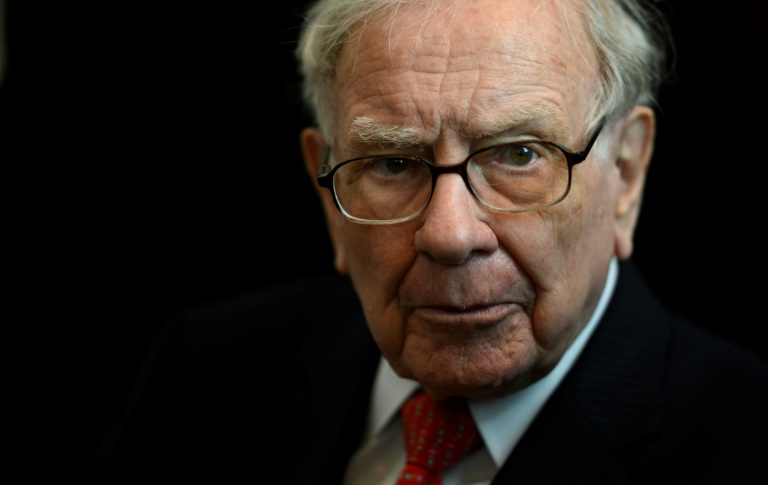
Billionaire investor Warren Buffett, CEO of Berkshire Hathaway, earned his massive fortune with savvy choices and personal frugality

OMAHA, Neb. — Warren Buffett, the legendary investor who stepped down as CEO of Berkshire Hathaway Inc. at the end of 2025, remains a central figure in financial news as his successor navigates the conglomerate’s transition. As of March 23, 2026, Berkshire’s record $373 billion cash hoard — built during Buffett’s final years as CEO — continues to dominate discussions, signaling caution on valuations while new CEO Greg Abel pursues strategic moves like resumed share repurchases and international partnerships.

Billionaire investor Warren Buffett, CEO of Berkshire Hathaway, earned his massive fortune with savvy choices and personal frugality
AFP

Berkshire Hathaway, the Omaha-based holding company Buffett transformed from a textile firm into a $1 trillion-plus empire, reported operating earnings of $10.2 billion for the fourth quarter of 2025 in early March filings — a nearly 30% drop from the prior year, driven by weakness in insurance underwriting and investment income. Shares fell as much as 5.3% on the news, the largest decline since Buffett announced his retirement plans in May 2025.

Despite the earnings miss, Abel’s first annual shareholder letter, released late February, reaffirmed Buffett’s disciplined approach: prioritizing high-quality businesses, avoiding overpayment, and maintaining financial strength. Abel highlighted pressures in insurance from pricing competition and customer retention challenges at Geico, but emphasized continuity in culture and strategy.

A key development came March 4, when Berkshire resumed repurchasing its own shares — the first buybacks since May 2024. The company acquired the equivalent of 309 Class A shares (about $226 million worth) that day, per a March 14 proxy filing. Abel told CNBC on March 5 he plans to invest his full after-tax annual salary in Berkshire stock annually “as long as I’m the CEO,” underscoring alignment with shareholders. He also confirmed consulting Buffett on major decisions, including buyback timing, to ensure smooth handover.

Buffett, now chairman, has stayed involved behind the scenes. Abel noted daily check-ins with the 95-year-old icon, who praised the transition in interviews. The cash pile — $373 billion in cash and Treasuries at year-end 2025, up from $321 billion in 2024 — has fueled speculation about future deployments. Analysts interpret it as a “warning” on elevated valuations, with the Buffett Indicator (market cap to GDP) hovering near 219%, far above historical norms.

Advertisement

In a March 21 CNBC piece, Buffett defended the Giving Pledge — his 2010 initiative with Bill Gates urging billionaires to donate half their wealth — amid reported backlash, including from pro-Trump tech figures. He dismissed criticism, emphasizing philanthropy’s long-term impact.

On the business front, Berkshire announced a strategic partnership with Japan’s Tokio Marine Holdings on March 23. Tokio Marine will sell a 2.49% stake to Berkshire via third-party allotment, granting National Indemnity (Berkshire’s reinsurance arm) access to Tokio Marine’s global portfolio. The deal enhances risk capacity and growth opportunities for both, reflecting Buffett’s longstanding affinity for Japanese businesses.

Portfolio updates from the latest 13F filing (for Q4 2025, disclosed February 17, 2026) show continuity with tweaks. Berkshire’s equity holdings totaled around $270-280 billion, concentrated in high-quality names. Top positions included Apple (still the largest despite prior trims), American Express, Bank of America, Coca-Cola, and Chevron. Recent activity featured additions to Chubb (insurance) and Chevron (energy), plus a small new stake in The New York Times (about $352 million, 0.13% of the portfolio). Media holdings saw some exits, indicating simplification.

Buffett trimmed Apple significantly in prior quarters — down about 75% from peaks — and reduced Amazon exposure, moves interpreted as profit-taking amid high valuations. No major new buys emerged in early 2026 data, consistent with the cash buildup.

Advertisement

Abel’s leadership has drawn praise for steady execution. In a March 7 CNBC interview, he addressed dividend policy (Berkshire remains unlikely to pay one, favoring reinvestment), crypto skepticism (echoing Buffett’s views), and market trends. He stressed Berkshire’s culture of patience, avoiding speculative bets.

The transition has sparked broader reflection on Buffett’s legacy. Videos and analyses in March 2026 dissected his “recession portfolio” positioning — heavy cash, core holdings in resilient sectors — amid concerns over AI hype, overvalued markets, and economic softening. Some speculate opportunities ahead if valuations correct, given Berkshire’s dry powder.

Berkshire’s annual meeting, set for May 2 in Omaha, will mark Abel’s first as CEO, with Buffett likely attending as chairman. Investors anticipate insights on capital deployment amid the cash mountain.

As Buffett enjoys semi-retirement — still consulting and chairing — his influence endures through Berkshire’s structure and Abel’s adherence to value principles. The conglomerate’s performance in 2026 will test the post-Buffett era, but early signs point to measured continuity rather than dramatic shifts.

Advertisement

With global markets volatile and valuations stretched, Buffett’s final “warning” via the cash hoard resonates: patience and discipline remain key. As one analyst noted, history suggests corrections create buying opportunities — precisely the scenario Berkshire appears primed to exploit.

Continue Reading
Click to comment

You must be logged in to post a comment Login

Leave a Reply

Business

Danone adding meal solution provider to portfolio

Published

on

Danone adding meal solution provider to portfolio

Huel has raised approximately $59 million in venture capital funding. 

Continue Reading

Business

Hormel highlights five pizza trends

Published

on

Hormel highlights five pizza trends

Trends include meat and specialty crusts.

Continue Reading

Business

Welch’s hits goal to remove artificial dyes from snacks

Published

on

Welch’s hits goal to remove artificial dyes from snacks

The fruit snacks no longer contain colors such as Red No. 40 or Blue No. 1.

Continue Reading

Business

The Best House Buying Companies in the UK (2026): A Business Perspective

Published

on

The UK housing market is set for a subdued year, as both Savills and Rightmove cut their forecasts for house price growth in 2025, reflecting a combination of weak buyer activity, rising property supply, and lingering geopolitical uncertainty.

The UK property market continues to evolve, with increasing demand for speed, certainty and flexibility driving growth in the fast house sale sector.

House buying companies — often referred to as cash property buyers — have become a significant part of the market, offering homeowners an alternative to traditional estate agent sales. For many sellers, particularly those facing time pressure, these companies provide a streamlined route to completion.

However, the sector is far from uniform. Business models vary widely, from direct cash purchasers to hybrid platforms reliant on investor networks. As a result, understanding which companies deliver consistently is key.

Below is a business-focused overview of some of the leading house buying companies operating in the UK in 2026, based on scale, structure and market presence.

1. Springbok Properties

A scaled operator with structured sales models

Springbok Properties

Advertisement

is one of the most established and recognisable companies in the UK fast-sale property sector.

From a business standpoint, what differentiates Springbok is its multi-route sales model. Rather than relying on a single acquisition method, the company offers a range of structured solutions designed to align with different seller priorities — including speed, price and certainty.

This operational flexibility allows Springbok to handle higher volumes of transactions while maintaining relatively consistent completion timelines.

The company has also built significant brand equity, supported by a large volume of customer reviews and a strong digital presence.

Advertisement

Business strengths

  • Nationwide operational scale
  • Structured, multi-channel sales model
  • Strong brand recognition and review footprint
  • Ability to process high transaction volumes

For sellers and investors alike, Springbok represents one of the more mature and systemised operators within the sector.

2. The Property Buying Company

Direct acquisition model with strong market visibility

The Property Buying Company operates primarily as a direct purchaser, which simplifies the transaction process and reduces reliance on third-party buyers.

From a business perspective, this model offers clarity and speed, making it attractive to sellers seeking straightforward transactions.

The company has invested heavily in marketing, giving it strong visibility within the UK property sector.

Business strengths

  • Direct buying model
  • Clear and simple transaction structure
  • Strong brand awareness

However, as with most direct buyers, pricing is closely tied to valuation models and risk assessment.

3. Good Move

Compliance-led positioning in a lightly regulated sector

Good Move has positioned itself as a regulated house buying company, emphasising transparency and adherence to industry standards.

Advertisement

In a sector where regulation is still evolving, this approach provides a degree of differentiation and appeals to sellers seeking reassurance.

From a business standpoint, Good Move’s focus on compliance reflects a broader trend toward professionalisation within the fast-sale market.

Business strengths

  • Compliance-focused positioning
  • Transparent communication processes
  • Alignment with industry bodies

4. Property Solvers

Hybrid model with investor integration

Property Solvers operates using a hybrid approach, combining direct purchasing with access to an investor network.

This model allows the company to offer flexibility, matching sellers with different types of buyers depending on the property and circumstances.

From a business perspective, hybrid models can increase deal flow but may introduce variability in timelines and pricing.

Advertisement

Business strengths

  • Flexible acquisition strategy
  • Access to investor capital
  • Nationwide coverage

5. WeBuyAnyHome

Brand-led growth within the fast-sale sector

WeBuyAnyHome is one of the most recognisable brands in the UK quick-sale property market, driven largely by its marketing strategy and national reach.

The company focuses on generating high volumes of enquiries through a simplified onboarding process.

While brand strength is a clear advantage, the underlying transaction model often depends on investor participation.

Business strengths

  • Strong national brand presence
  • High lead generation capacity
  • Streamlined enquiry process

Sector Insights: A Market in Transition

The growth of house buying companies reflects broader structural changes within the UK property market.

Key trends include:

  • Increased demand for chain-free transactions
  • Rising adoption of PropTech and digital workflows
  • Greater awareness of alternative selling routes
  • A shift toward speed and certainty over maximum price

As a result, the sector is becoming more competitive, with companies refining their models to improve efficiency and conversion rates.

Key Considerations for Sellers

From a business and consumer perspective, due diligence remains essential.

Advertisement

Sellers should assess:

  • Whether the company is a direct buyer or intermediary
  • The transparency of the valuation process
  • Evidence of completed transactions and reviews
  • Membership of recognised industry bodies

Understanding these factors can help mitigate risk and ensure a smoother transaction.

Conclusion

House buying companies have established themselves as a viable and growing segment of the UK property market.

While the sector includes a wide range of operators, companies such as Springbok Properties, The Property Buying Company and Good Move demonstrate how scale, structure and transparency can differentiate businesses in an increasingly competitive landscape.

As market conditions continue to evolve, the demand for fast, reliable property transactions is likely to remain strong — ensuring that house buying companies play an increasingly important role in the future of UK real estate.

Advertisement

Continue Reading

Business

Celldex Therapeutics stock hits 52-week high at 32.8 USD

Published

on


Celldex Therapeutics stock hits 52-week high at 32.8 USD

Continue Reading

Business

Wales needs to deliver more than 10,000 a year to hit government target

Published

on

Business Live

Lichfields has published comparative figures to the previous Welsh Government measure including the backlog in unbuilt homes.

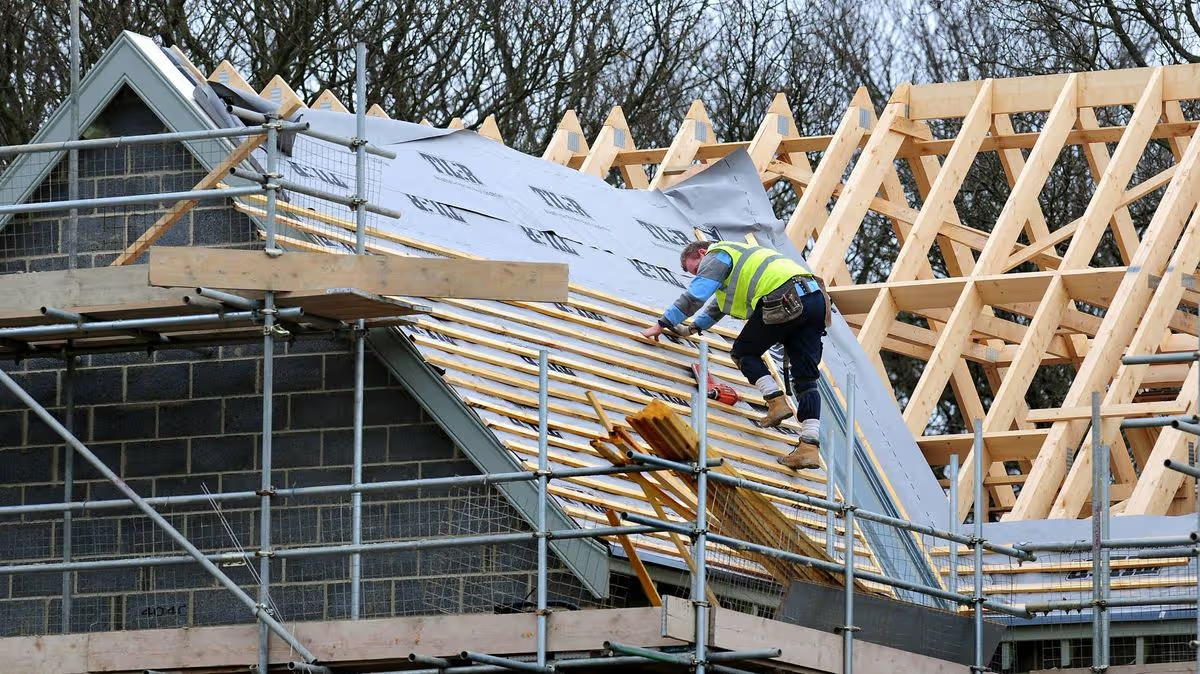
Builder working on roof of a partially constructed house.

House building.(Image: Rui Vieira/PA Wire)

Wales may need to deliver more than 10,600 homes a year over the next five years if it match the Welsh Government’s latest housing need figures on a comparable basis, according to new analysis from planning and development consultancy Lichfields.

The Welsh Government’s updated estimates of housing need, published in February, identify a central requirement of around 8,700 homes per year between 2025 and 2030. That is already well above recent delivery levels, with housing completions averaging around 5,000 homes a year and 4,631 delivered in 2024/25.

READ MORE: The latest appointments in Welsh business

However, Lichfields’ review shows that the way the new figures are presented differs from the approach taken in 2019. The latest estimates separate newly arising need from the existing backlog of unmet need, currently identified as 9,400 households.

Advertisement

In 2019, that backlog was factored into the first five years of the plan period. If the same method were applied to the new dataset, the annual requirement for 2025–2030 would equate to 10,620 homes per year – a 43% increase on a like-for-like basis.

The updated figures also suggest a shift in the balance of housing required. For the next five years, the central estimate indicates around 65% market housing and 35% affordable housing.

Gareth Williams, senior Director at Lichfields, said: “Even the central estimate of 8,700 homes a year represents a significant uplift on recent delivery. On a comparable basis with the previous methodology, the annual requirement would exceed 10,600 homes.

“That gap between identified need and actual delivery is substantial. There is an urgent need for planning policy reform to ensure continuity of housing delivery where Local Development Plans are failing to progress. In our view, this should be a priority for whichever party forms the next Welsh Government after the May elections.”

Advertisement

The analysis also explains that the published estimates should be viewed as a minimum, given the way they have been calculated.

Arwel Evans, planning director at Lichfields’ Cardiff office, added: “The latest household projections will form a key part of the evidence base for regional and local development plans. Authorities bringing forward new or revised plans will need to consider these figures carefully.

“If Wales is to move closer to meeting identified need, there will need to be confidence in land supply, up-to-date plans and a consistent policy framework to support delivery.”

Advertisement
Continue Reading

Business

Walmart – All-Weather Status Ironically Creates Risk For Investors (NASDAQ:WMT)

Published

on

Walmart - All-Weather Status Ironically Creates Risk For Investors (NASDAQ:WMT)

This article was written by

The Value Investor has a Master of Science with specialization in financial markets and a decade of experience tracking companies via catalytic company events.
As the leader of the investing group Value In Corporate Events they provide members with opportunities to capitalize on IPOs, mergers & acquisitions, earnings reports and changes in corporate capital allocation. Coverage includes 10 major events a month with an eye towards finding the best opportunities. Learn more.

Analyst’s Disclosure: I/we have no stock, option or similar derivative position in any of the companies mentioned, and no plans to initiate any such positions within the next 72 hours. I wrote this article myself, and it expresses my own opinions. I am not receiving compensation for it (other than from Seeking Alpha). I have no business relationship with any company whose stock is mentioned in this article.

Seeking Alpha’s Disclosure: Past performance is no guarantee of future results. No recommendation or advice is being given as to whether any investment is suitable for a particular investor. Any views or opinions expressed above may not reflect those of Seeking Alpha as a whole. Seeking Alpha is not a licensed securities dealer, broker or US investment adviser or investment bank. Our analysts are third party authors that include both professional investors and individual investors who may not be licensed or certified by any institute or regulatory body.

Advertisement
Continue Reading

Business

Functional Fullness for the GLP-1 Lifestyle

Published

on

Functional Fullness for the GLP-1 Lifestyle

Fulfill consumer demand with satiety-promoting Fibersol® prebiotic dietary fiber. 

Continue Reading

Business

Bill Gates Accelerates Philanthropic Push Amid Global Health Challenges and Ongoing Epstein Scrutiny

Published

on

Bill Gates said his Breakthrough Energy company would spend $1.5 billion over the course of three years with the goal of eliminating greenhouse gas emissions contributing to climate change, according to US media reports

Billionaire philanthropist Bill Gates is intensifying his commitment to global health and innovation as the Gates Foundation ramps up spending toward a planned closure in 2045, even as he navigates renewed controversy over past associations with Jeffrey Epstein.

Bill Gates said his Breakthrough Energy company would spend $1.5 billion over the course of three years with the goal of eliminating greenhouse gas emissions contributing to climate change, according to US media reports

In early 2026, Gates outlined an optimistic yet cautious vision for the future in his annual letter titled “The Year Ahead 2026: Optimism with Footnotes,” published on his Gates Notes blog in January. The Microsoft co-founder emphasized that innovation—particularly in artificial intelligence, health care and clean energy—could drive unprecedented progress over the next decade, but only if the world addresses key challenges like funding cuts to global aid, AI disruptions and the need for greater generosity from wealthy nations and individuals.

“I have always been an optimist,” Gates wrote. “But as we start 2026, my optimism comes with footnotes.” He highlighted breakthroughs in global health, such as mobile technology improving maternal care in low-resource settings and AI’s potential to transform health systems worldwide. Gates stressed that choices made in 2026 would shape outcomes for decades, urging scaled innovation and minimized AI-related disruptions.

The Gates Foundation amplified this momentum in February with its 2026 Annual Letter, “The Road to 2045,” released by CEO Mark Suzman. The document warned of a rare reversal in global health progress, noting that child mortality is projected to rise for the first time this century due to aid reductions and other factors. To counter this, the foundation committed to a 20-year agenda focused on three core goals: saving and improving lives through health advancements, reducing inequities, and accelerating innovation.

Building on Gates’ May 2025 pledge to donate the bulk of his fortune—totaling around $200 billion over two decades—the foundation announced a record $9 billion budget for 2026. This historic payout, the largest in its 25-year history, aims to accelerate impact ahead of the planned wind-down. The move includes workforce adjustments, with plans to cut up to 500 jobs over five years to streamline operations while maintaining high spending levels.

Advertisement

Gates has long advocated for increased U.S. investment in vaccines and global health, recently calling for renewed federal funding amid concerns over declining support. His writings and posts on X (formerly Twitter) have focused on topics like diarrheal diseases, tribute to mentors in public health, and the urgency of combating antimicrobial resistance through new research consortia.

The foundation’s recent initiatives include partnerships to expand AI access in African primary health care systems and a global consortium launched in January to transform antibiotic discovery against the growing AMR crisis. Gates has also expressed interest in making weight-loss drugs accessible in lower-income countries through collaborations like those with the Pan American Health Organization.

Despite these forward-looking efforts, Gates faced significant backlash in early 2026 related to his past ties to Epstein, the convicted sex offender who died in 2019. Newly released U.S. Department of Justice documents, including draft emails attributed to Epstein, alleged connections involving Gates, prompting scrutiny.

In February, Gates canceled a keynote address at India’s AI Impact Summit just hours before it was scheduled, with the Gates Foundation citing the need to keep the event’s focus on priorities amid the controversy. The decision followed similar pullouts by other tech figures and came after reports of Gates apologizing to foundation staff in a meeting, where he reportedly took responsibility for the associations while denying any illicit activity. “I did nothing illicit. I saw nothing illicit,” he was quoted as saying in accounts of the session.

Advertisement

Melinda French Gates, his ex-wife, publicly commented that Gates should “answer to those things” regarding the Epstein links. The foundation has repeatedly denied any financial payments to Epstein or employment of him. In March, Gates was among several high-profile individuals summoned to testify before a House committee investigating possible Epstein connections, alongside figures from Goldman Sachs and others.

Gates has maintained that his interactions with Epstein began in 2011 and ended by 2014, primarily in pursuit of philanthropic discussions, though he has acknowledged poor judgment in the association. The foundation issued statements affirming transparency and no wrongdoing.

Beyond philanthropy, Gates continues to pare down personal assets, including listing additional properties from his lakeside compound near Seattle. His net worth has fluctuated amid massive planned donations, with reports noting sharp drops tied to transfers to the foundation.

As 2026 progresses, Gates remains a vocal proponent of using technology for good, from AI in health care to clean energy innovations in places like Texas. His annual letter and foundation activities underscore a race against time to reverse health setbacks and achieve ambitious goals before the foundation’s 2045 sunset.

Advertisement

Critics and supporters alike watch closely as Gates seeks to transform his wealth into lasting global impact while addressing lingering personal controversies. With child deaths on the rise and innovation accelerating, the coming months will test whether his “optimism with footnotes” translates into tangible gains for the world’s most vulnerable.

Continue Reading

Business

UK holiday tax could cost 33,000 jobs and cut tourism spending, warns Oxford Economics

Published

on

removal of VAT-free shopping has caused tourist spending to shift towards other European countries

Proposed plans to introduce a “holiday tax” in England could put up to 33,000 tourism jobs at risk and reduce Treasury revenues by nearly £700 million, according to new analysis that has intensified opposition from the hospitality sector.

Research by Oxford Economics, commissioned by UKHospitality, suggests that giving regional mayors the power to impose visitor levies would have a materially negative impact on tourism demand, spending and wider economic activity.

Under the government’s proposals, mayors would be able to introduce local taxes on overnight stays in hotels, guesthouses, hostels and holiday lets, with revenues earmarked for transport and infrastructure projects. The level of the levy would be determined locally, and implementation would be optional.

The most severe scenario modelled, a 5 per cent levy on accommodation, could result in a £1.8 billion decline in tourism spending by 2030 and the loss of 33,000 jobs across the sector. The same scenario is also expected to reduce overall tax receipts by £688 million, reflecting lower economic activity.

Alternative models also point to significant impacts. A flat £2 per person per night charge could reduce spending by £846 million and lead to 16,000 job losses, while a £2 per room levy would still result in around 7,000 fewer jobs and a £400 million drop in tourism expenditure.

Advertisement

Matthew Dass of Oxford Economics said the policy risks weakening the UK’s competitive position as a destination, particularly given the existing 20 per cent VAT rate applied to hospitality services.

“An additional tax would further weaken the country’s competitiveness,” he said, warning of broader negative consequences for the economy.

Leaders across the hospitality and tourism sector have reacted strongly to the proposals, arguing that additional costs would deter both domestic and international visitors at a time when the industry is already under pressure.

Allen Simpson, chief executive of UKHospitality, said the levy would “hike costs for Brits, make staycations more expensive and decimate tourism”.

Advertisement

Operators warn that reduced visitor numbers would not only affect hotels and accommodation providers, but also have knock-on effects across local economies, particularly in regions heavily reliant on tourism for employment and investment.

Simon Palethorpe, chief executive of Haven Holidays, said the tax could discourage domestic travel and reduce economic activity in areas with limited alternative employment opportunities.

Meanwhile, Fiona Eastwood, head of Merlin Entertainments, said the proposals risk making short breaks unaffordable for many working families, while Hilton executive Simon Vincent warned the move could make the UK less attractive compared with competing destinations.

The government has framed the policy as a way to give local leaders greater control over funding for infrastructure and public services, particularly in high-traffic tourist areas. However, critics argue that the economic trade-offs may outweigh the potential benefits.

Advertisement

The consultation on the proposals, which explored different levy structures and rates, concluded last month, with the government yet to confirm its final position.

The debate comes at a time when the hospitality sector is already facing a challenging operating environment, including rising employment costs, higher business rates and fragile consumer confidence.

For policymakers, the challenge lies in balancing the desire to generate additional local revenue with the need to maintain the UK’s competitiveness as a tourism destination.

Industry leaders are urging the government to focus instead on measures that stimulate growth, increase visitor numbers and support investment, rather than introducing additional costs that could suppress demand.

Advertisement

With tourism playing a critical role in regional economies and employment, the outcome of the policy debate is likely to have far-reaching implications, not just for the sector itself, but for the broader UK economy.


Amy Ingham

Amy is a newly qualified journalist specialising in business journalism at Business Matters with responsibility for news content for what is now the UK’s largest print and online source of current business news.

Advertisement
Continue Reading

Trending

Copyright © 2025