Business
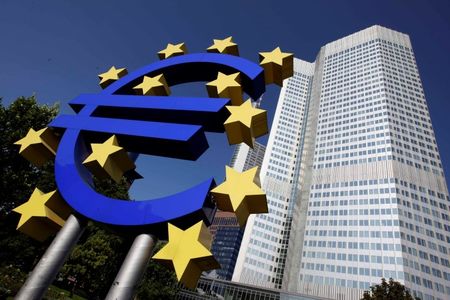
BofA sees a number of AI-related risks that could challenge rally in EU stocks
Business
Best Dividend Aristocrats As Of March 20, 2026
I have a masters degree in Analytics from Northwestern University and a bachelors degree in Accounting. I have worked in the investment arena for over 10 years starting as an analyst and working my way up to a management role. Dividend investing is a personal hobby and I look forward to sharing my thoughts with the Seeking Alpha community.
Analyst’s Disclosure: I/we have a beneficial long position in the shares of JNJ, O, ADP, CTAS, FDS, HRL, LOW, MKC, PEP, SHW, SPGI, TROW, WST either through stock ownership, options, or other derivatives. I wrote this article myself, and it expresses my own opinions. I am not receiving compensation for it (other than from Seeking Alpha). I have no business relationship with any company whose stock is mentioned in this article.
Seeking Alpha’s Disclosure: Past performance is no guarantee of future results. No recommendation or advice is being given as to whether any investment is suitable for a particular investor. Any views or opinions expressed above may not reflect those of Seeking Alpha as a whole. Seeking Alpha is not a licensed securities dealer, broker or US investment adviser or investment bank. Our analysts are third party authors that include both professional investors and individual investors who may not be licensed or certified by any institute or regulatory body.
Business
U.S. IPO Weekly Recap: REIT Carve-Out Sees Solid Demand While Drone Micro-Cap Soars 500%+
Business
Philadelphia Fed Manufacturing Index: Activity Continued To Expand In March
Sean Anthony Eddy/iStock via Getty Images

By Jennifer Nash
The Philly Fed’s Manufacturing Business Outlook Survey is a monthly survey of about 250 manufacturers in the Third Federal Reserve District, which covers eastern Pennsylvania, southern New Jersey, and Delaware. Participants of the survey
Business
FPIs dump Rs 31,831 crore in financials as total outflows hit Rs 52,703 crore in a fortnight
The selling has been broad-based across sectors, with rate-sensitive and heavyweight segments witnessing the sharpest outflows, while only a handful of sectors managed to attract selective buying.
The rate-sensitive automotive sector, whose prospects are closely tied to energy and metal prices, is the next in line with outflows of Rs 4,807 crore in the period between March 1 and March 15.
Telecommunications, construction and oil & gas witnessed outflows of Rs 3,856 crore, Rs 2,975 crore and Rs 2,932 crore, respectively.
Defensive and consumption-oriented pockets were not spared either, with healthcare recording a sell-off worth Rs 2,436 crore, followed by Rs 2,403 crore and Rs 2,133 crore in FMCG and realty, respectively.
Additionally, sectors such as consumer durables, construction materials, services and IT also saw notable outflows, indicating a broad-based withdrawal of foreign capital. Even smaller segments like media, utilities and textiles witnessed marginal selling.
Read more: Nifty Bank logs 3rd-worst March fall since the global financial crisis. HDFC Bank, SBI among top culprits
Sectoral inflows
The scale of outflows from financials highlights their heavy FPI ownership and sensitivity to global risk aversion, making them the primary target during periods of uncertainty.
Amid the widespread sell-off, select sectors managed to attract FPI inflows, led by capital goods, which cornered investments to the tune of Rs 3,897 crore. The metals & mining vertical received Rs 876 crore of flows. The next in line were power, consumer services and chemicals, which received Rs 602 crore, Rs 531 crore and Rs 225 crore, respectively.
The buying in capital goods and metals suggests continued interest in domestic capex and infrastructure themes, even as broader market sentiment remains weak.
After a February pause, FII continued their selling trend in March, with month-to-date equity outflows at Rs 88,180 crore. They have already offloaded domestic shares worth Rs 1,01,527 crore in 2026. In February, inflows of Rs 22,615 crore were reported, along with a sell-off of Rs 35,962 crore in January.
Markets in March
Seasonally a strong month, March this time was hit by the Iran-Israel war that started on February 28. The impact is evident, with the Nifty down by over 8% or 2,064 points in the last three weeks.
As energy prices spike, global markets now fear inflation returning. Brent, which is up by over 40% this year, is hovering near the $109 a barrel mark and may surge to $150-200 a barrel if the war continues and the Strait of Hormuz remains shut.
The March sell-off has been broad-based, dragging down most sectoral indices. But financials have turned out to be the biggest underperformer. The Nifty PSU Bank index has been the worst hit, tumbling 14.36%, followed by the Nifty Auto index and Nifty Bank, which have declined 12% each.
The Nifty Bank index is headed for its third-worst March performance in two decades, underscoring the intensity of the ongoing market correction, with banking stocks emerging as one of the biggest casualties. As of March 19, the index was down around 12% for the month, placing it among the steepest declines for the banking gauge, surpassed only by the pandemic-driven crash of 2020 (-34%) and the global financial crisis period in 2008 (-23%).
Defensive and consumption-oriented segments have also come under pressure, with the Nifty FMCG, Nifty Metals and Nifty Consumer indices declining around 8% each. Meanwhile, the Nifty IT and Nifty Media indices have slipped 7%, while relatively resilient pockets such as the Nifty Healthcare, Nifty Pharma and Nifty India Defence have contained losses to 4-5%, indicating some stability amid the broader risk-off mood.
FII/FPI outlook
“The weakness in global equity markets following the war in West Asia, the steady depreciation of the rupee and concerns surrounding the impact of high crude prices on India’s growth and corporate earnings contributed to the concern of FPIs,” Dr V K Vijayakumar, Chief Investment Strategist, Geojit Investments, said.
The poor market returns from India vis-à-vis other markets (both developed and emerging) during the last eighteen months is the principal reason for FPIs’ indifference towards India, he said, adding that if their sustained selling strategy is to change, there should be clear indications of earnings recovery in India.
The Geojit analyst said FPIs now regard South Korea, Taiwan and China as better markets to invest in since they are relatively cheaper than India even after the recent correction. “Also, the corporate earnings prospects in these markets appear better than that of India. Therefore, further selling by FPIs in India is likely in the short term. In the present uncertain context, this will take time,” the analyst said.
(Disclaimer: The recommendations, suggestions, views, and opinions given by the experts are their own. These do not represent the views of The Economic Times.)
Business
Cuba refuses to negotiate president’s term in talks with United States

Cuba refuses to negotiate president’s term in talks with United States
Business
Israel attacks Tehran, Beirut as US sends Marines to Middle East

Israel attacks Tehran, Beirut as US sends Marines to Middle East
Business
Geopolitical tensions rising; diversify globally and rebalance toward defensives, says LGT Wealth’s Nikhil Advani
Nikhil Advani, Managing Director, International Business at LGT Wealth India, believes this is a time to focus on resilience rather than chase short-term returns.
In an interaction with Kshitij Anand, he underscores the importance of global diversification and strategic rebalancing toward defensive sectors such as utilities, healthcare, and dividend-yielding stocks.
He also highlights the need for phased investing and exposure to long-term themes like infrastructure and AI, as investors navigate a rapidly evolving global landscape. Edited excerpts:
Q) Thanks for taking the time out. Geopolitical tensions seem to be escalating across regions. How should global investors interpret these developments from a macro and market perspective?
A) These are testing times for investors. Markets are facing a new war, AI stress, and credit cracks all at once. The US-Israel conflict with Iran has resulted in a sharp surge in oil prices, with Brent crude frequently testing the $100-$120 range.
In many ways, the energy market is the one that matters most right now, as the price of oil is baked into the cost of almost everything. As per a Bloomberg report, there is US$8.27 trillion lying in US money market funds, an all-time high.
So clearly, investors are being cautious in the current environment. However, a lot of this capital will flow back into global financial assets when there are signs of easing in geopolitical tensions.
Q) Historically, markets tend to react sharply to geopolitical shocks but recover quickly. Is it time to diversify globally and which markets are looking attractive?
A) We at LGT have always encouraged clients to diversify globally to reduce concentration risk to a single economy and currency. It is impossible to time the markets, so our approach with clients has been to build resilient multi-asset global portfolios, as diversification can reduce volatility without necessarily compromising returns.
Currently, we see a stronger need to diversify traditional long-only equity exposure with less correlated strategies such as long-short and market-neutral. High-quality dividend yield strategies focused on companies with strong balance sheets and sustainable cash flows also remain a useful way to balance valuation risk and income needs.
Keeping inflation in mind, infrastructure is a core theme for us in 2026, with a focus on investments in global data centres, renewables, power grids, and storage facilities. Our approach to investing in the current environment is to look at quality assets and deploy capital in a phased manner.
Q) How could rising crude oil prices and commodity volatility reshape the global investment landscape?
A) The effective closure of the Strait of Hormuz, which controls over 20% of global oil and natural gas supplies, is causing the most significant disruption to energy supply since the 1970s.
Even the record-breaking 400-million-barrel release by the International Energy Agency (IEA) can only cover the supply gap for a few weeks if the strait remains closed.
Countries in Europe and Asia have opened talks with Iran to negotiate deals to guarantee safe passage for their ships. As a result, the global landscape is shifting from globalisation to fragmentation. The winners of the next five years will be the nations and companies that can secure and control their own supply chains.
Q) What role does rebalancing play during volatile periods when asset prices move sharply due to geopolitical shocks?
A) Given the uncertain outlook, we advocate rebalancing toward defensive exposures such as utilities, healthcare, and quality dividend stocks, while retaining long-term exposure to resilient secular growth themes including AI-linked memory, semiconductor equipment, and power infrastructure. In 2026, we are not just looking for growth; we are looking for “resilient growth.”
Q) How can investors use ETFs to achieve better asset allocation across equities, debt, gold, and international markets?
A) Globally, mutual funds continue to see net outflows, while ETFs draw strong inflows, underscoring the structural shift toward passive and broad market exposures.
Year after year, statistics show that the vast majority of active managers fail to outperform their benchmarks, especially over five- and ten-year horizons. ETFs allow investors to capture market returns reliably across asset classes, at a fraction of the cost.
Q) Which global ETF themes such as technology, semiconductors, or global indices do you believe investors should track in the current environment?
A) In my opinion, one of the best ways to access the global equity market is via an ETF that tracks the MSCI All-Country World Index. This index has a 65% exposure to the US, and the balance 35% exposure to developed and emerging markets in Asia and Europe, across sectors such as technology, healthcare, and financials. It also gives currency diversification as a third of the investment is in non-US dollar securities.
It is a benchmark for equity long-only fund managers and gives investors access to the global equity market in a single investment. To ensure that the index remains a current reflection of the market, MSCI undertakes a rebalancing exercise by doing a disciplined review on a regular basis to add or remove constituents.
Q) Ideally, what percentage of capital should be diversified globally for someone who is 30-40 years old? And if someone wants to deploy fresh capital, what would you advise?
A) Someone who is between the age of 30 and 40 should think about long-term compounding and inflation protection. Investments should be made keeping in mind global megatrends over the next ten years.
Most of the innovation in artificial intelligence, healthcare, and the space economy is happening outside India, so investors should target having an exposure of 20%-25% globally over time.
Diversification beyond traditional asset classes with an allocation to private markets and infrastructure assets should also be considered. There should be some exposure to gold as a hedge against fiscal expansion and confidence shocks.
(Disclaimer: Recommendations, suggestions, views and opinions given by the experts are their own. These do not represent the views of The Economic Times.)
Business
Itochu: A Great Collection, But Expecting Logistic Cost Impacts And JPY Risks
Business
Angola and Nigeria best positioned to benefit from high oil price cycle – BofA

Angola and Nigeria best positioned to benefit from high oil price cycle – BofA
Business
Strategically Positioned Along High-Risk Trade Routes
In February 2026, Panama seized two Canal ports from a Hong Kong firm, amid rising U.S.-China trade tensions, spotlighting China’s growing global port investments and geopolitical implications.
Key Points
- In February 2026, Panama took control of two Canal ports from a Hong Kong firm amid escalating U.S.-China tensions over global trade and Chinese port investments.
- This decision followed a legal battle, as Panama’s high court voided the company’s contracts after 20 years of operation.
- China’s port investments have sparked debate on their strategic significance, revealing patterns in global trade routes that may impact the world economy.
In February 2026, the Panamanian government asserted its sovereignty over two ports in the Panama Canal previously managed by a Hong Kong conglomerate, ending a two-decade-long relationship. This takeover culminated from escalating U.S.-China tensions concerning international trade, particularly surrounding the influence of Chinese investments in global ports. The legal dispute reached a critical point when Panama’s high court annulled the company’s contracts, prompting government action to reassert control over these vital maritime assets.
This incident is emblematic of broader geopolitical rivalries, reflecting a complex interplay between U.S. and Chinese interests in critical trade routes, especially the strategically significant Panama Canal. The growing presence of Chinese firms in global port operations—over 90 terminals worldwide—has invited scrutiny and concern from Washington, particularly during the Trump administration, which took a strong stance against perceived foreign encroachments on American interests.
Central to this debate is whether China’s extensive port investments represent purely commercial endeavors or align with broader geopolitical ambitions. This question transcends mere speculation, as the ramifications of disrupted shipping lanes could have significant implications for the global economy. Notably, disruptions could lead to staggering economic losses, emphasizing the importance of understanding the strategic motivations underlying these investments.
In a recent study, researchers focused on identifying patterns of Chinese port investments across 133 coastal nations, creating the first global database of ports affiliated with China. Their analysis aimed to discern what factors determine why some countries are receptive to Chinese port development while others are not. The findings contribute to a nuanced understanding of geopolitical dynamics and the clustering of Chinese port investments near some of the world’s most critical trade routes.
This situation highlights the intricate relationship between national security, global trade, and maritime infrastructure, as nations grapple with the implications of foreign investments on their sovereignty and economic stability.
Read the original article : Far from random, China’s global port network is clustering near the world’s riskiest trade routes
Other People are Reading
-
Tech5 days agoYour Legally Registered ‘Motorcycle’ Might Not Count Under Proposed US Law
-
Politics11 hours agoJenni Murray, Long-Serving Woman’s Hour Presenter, Dies Aged 75
-
Tech4 days agoAre Split Spacebars the Next Big Gaming Keyboard Trend?
-
Sports7 days ago
Why Duke and Michigan Are Dead Even Entering Selection Sunday
-
Fashion12 hours agoWeekend Open Thread: Adidas – Corporette.com
-
Business5 days agoSearch for Savannah Guthrie’s Mother Enters Seventh Week with No Arrests
-
Business7 days agoUS Airports Launch Donation Drives for Unpaid TSA Workers as Partial Government Shutdown Enters Fifth Week
-
Crypto World7 days agoCoinbase and Bybit in Investment Talks: Could Bybit Finally Enter the US Crypto Market?
-
Crypto World7 hours ago
NIO (NIO) Stock Plunges 6.5% as Shelf Registration Sparks Dilution Worries
-
Business5 days agoAustralian shares drop as Iran war enters third week
-
Business7 days agoCountry star Brantley Gilbert enters growing non-alcoholic beer market
-
Politics3 days agoThe House | The new register to protect children from their abusers shows Parliament at its best
-
Crypto World5 days agoCrypto Lender BlockFills Enters Chapter 11 with Up to $500M in Liabilities
-
News Videos3 days agoRBA board divided on rate cut, unusually buoyant share market | Finance Report | ABC NEWS
-
Fashion5 days ago25 Celebrities with Curly Hair That Are Naturally Beautiful
-
Tech1 day agoinKONBINI Lets You Spend Summer Days Behind the Register
-
Crypto World3 days agoCanada’s FINTRAC revokes registrations of 23 crypto MSBs in AML crackdown
-
Politics4 days agoReal-time pollution monitoring calls after boy nearly dies
-
Crypto World6 days agoCrypto Losses Drop 87% in February, But Hackers Are Now Targeting People, Not Code
-
NewsBeat2 days agoResidents in North Lanarkshire reminded to register to vote in Scottish Parliament Election


You must be logged in to post a comment Login