
Business
Burlington Stores: The Next Leg Of Upside Is From Earnings Growth (NYSE:BURL)



I’m a fundamental, valuation-driven investor with a strong focus on identifying businesses that have the potential to scale over time and unlock massive terminal value. My investment approach centers around understanding the core economics of a business—its competitive moat, unit economics, reinvestment runway, and management quality—and how those factors translate into long-term free cash flow generation and shareholder value creation. I focus on fundamental research, and I tend to focus on sectors with strong secular tailwinds. Professionally, I am a self-educated investor that started this journey 10 years ago. Currently, I am managing my own funds, seeded from friends and family. My motivation for writing on Seeking Alpha is to share investment insights, and also at the same garner feedback from fellow investors in this site. My aim is to help readers focus on what truly drives long-term equity value. I believe good analysis should be both analytical and accessible, and I hope my work adds value to readers looking for high-quality, long-term investment opportunities.
Analyst’s Disclosure: I/we have no stock, option or similar derivative position in any of the companies mentioned, and no plans to initiate any such positions within the next 72 hours. I wrote this article myself, and it expresses my own opinions. I am not receiving compensation for it (other than from Seeking Alpha). I have no business relationship with any company whose stock is mentioned in this article.
Seeking Alpha’s Disclosure: Past performance is no guarantee of future results. No recommendation or advice is being given as to whether any investment is suitable for a particular investor. Any views or opinions expressed above may not reflect those of Seeking Alpha as a whole. Seeking Alpha is not a licensed securities dealer, broker or US investment adviser or investment bank. Our analysts are third party authors that include both professional investors and individual investors who may not be licensed or certified by any institute or regulatory body.



I am a high-conviction investor and independent analyst focused on accumulating quality compounders at a discount. My investment philosophy is rooted in the belief that sustainable wealth is built through steady, long-term compounding rather than speculative gambling. I specifically seek out companies with decades of growth runway, shareholder-friendly capital allocation (buybacks/dividends), and low dilution, all underpinned by strong secular tailwinds. My primary sector focus includes Technology, Autonomous Vehicles (AVs), Logistics, Fintech, and more. I do not view stock tickers as mere, but as partial ownership in the world’s best assets. Consequently, my methodology involves deep fundamental analysis to identify asymmetric risk opportunities, situations where the market fundamentally misunderstands a company’s moat or future prospects. A prime example of this was Google in early 2025, which traded at a teens multiple despite supercharging its core business with AI. I approach the markets with a rigorous, quantitative mindset, leveraging data-driven models to stress-test valuations against various bear and bull scenarios. My top high-conviction holdings currently include Uber, Google, and Brookfield. My goal is to compound my portfolio at an annualized rate of 15% or higher by capitalizing on market dislocations. I write on Seeking Alpha to document my due diligence with rigor and transparency. Writing publicly forces me to remain honest in my analysis and allows me to stress-test my investment theses against the feedback of a knowledgeable community. I hope my research adds tangible value to your own due diligence process.
Analyst’s Disclosure: I/we have a beneficial long position in the shares of MELI either through stock ownership, options, or other derivatives. I wrote this article myself, and it expresses my own opinions. I am not receiving compensation for it (other than from Seeking Alpha). I have no business relationship with any company whose stock is mentioned in this article.
Seeking Alpha’s Disclosure: Past performance is no guarantee of future results. No recommendation or advice is being given as to whether any investment is suitable for a particular investor. Any views or opinions expressed above may not reflect those of Seeking Alpha as a whole. Seeking Alpha is not a licensed securities dealer, broker or US investment adviser or investment bank. Our analysts are third party authors that include both professional investors and individual investors who may not be licensed or certified by any institute or regulatory body.
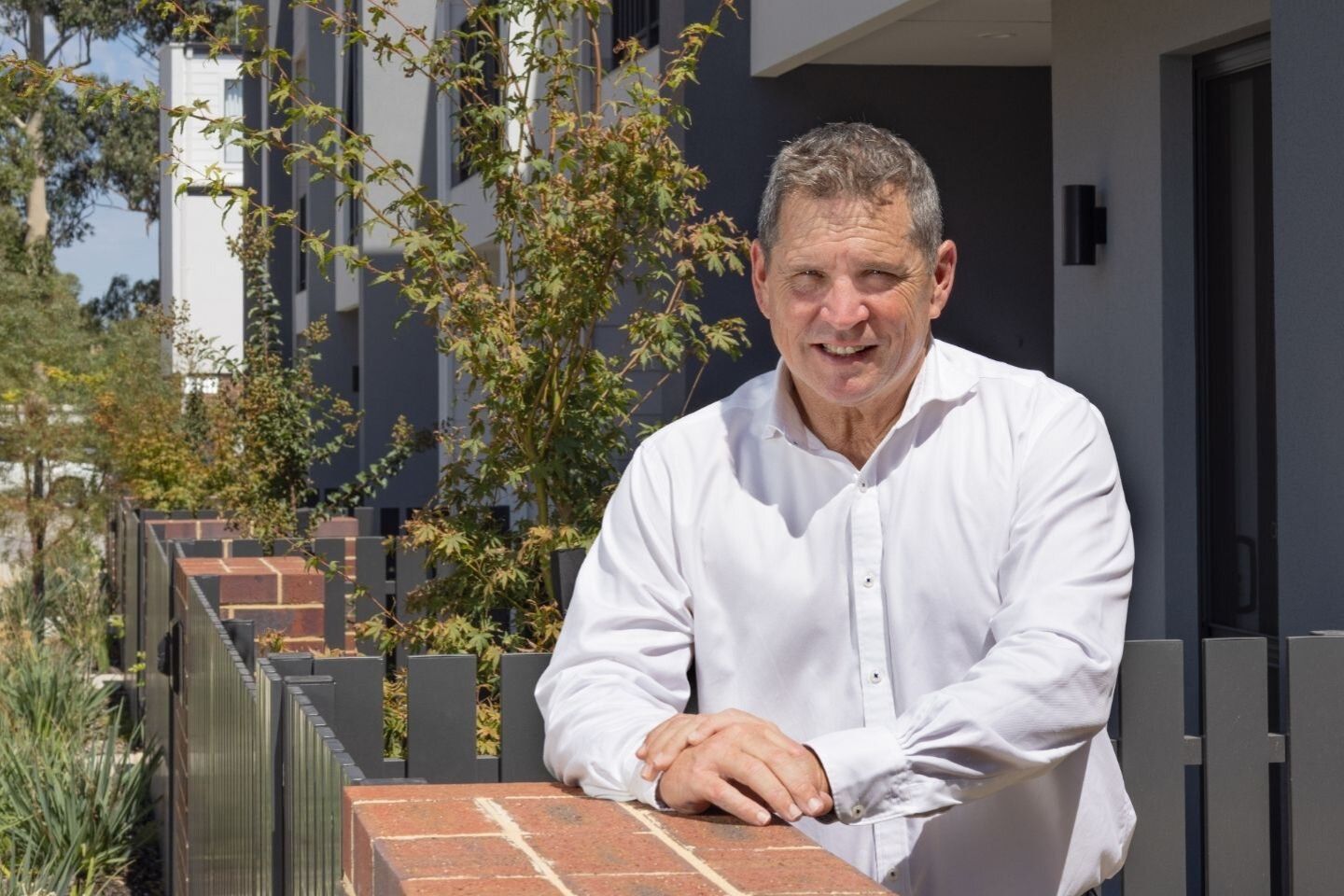
Land developers are changing their approach to tree retention within estates.
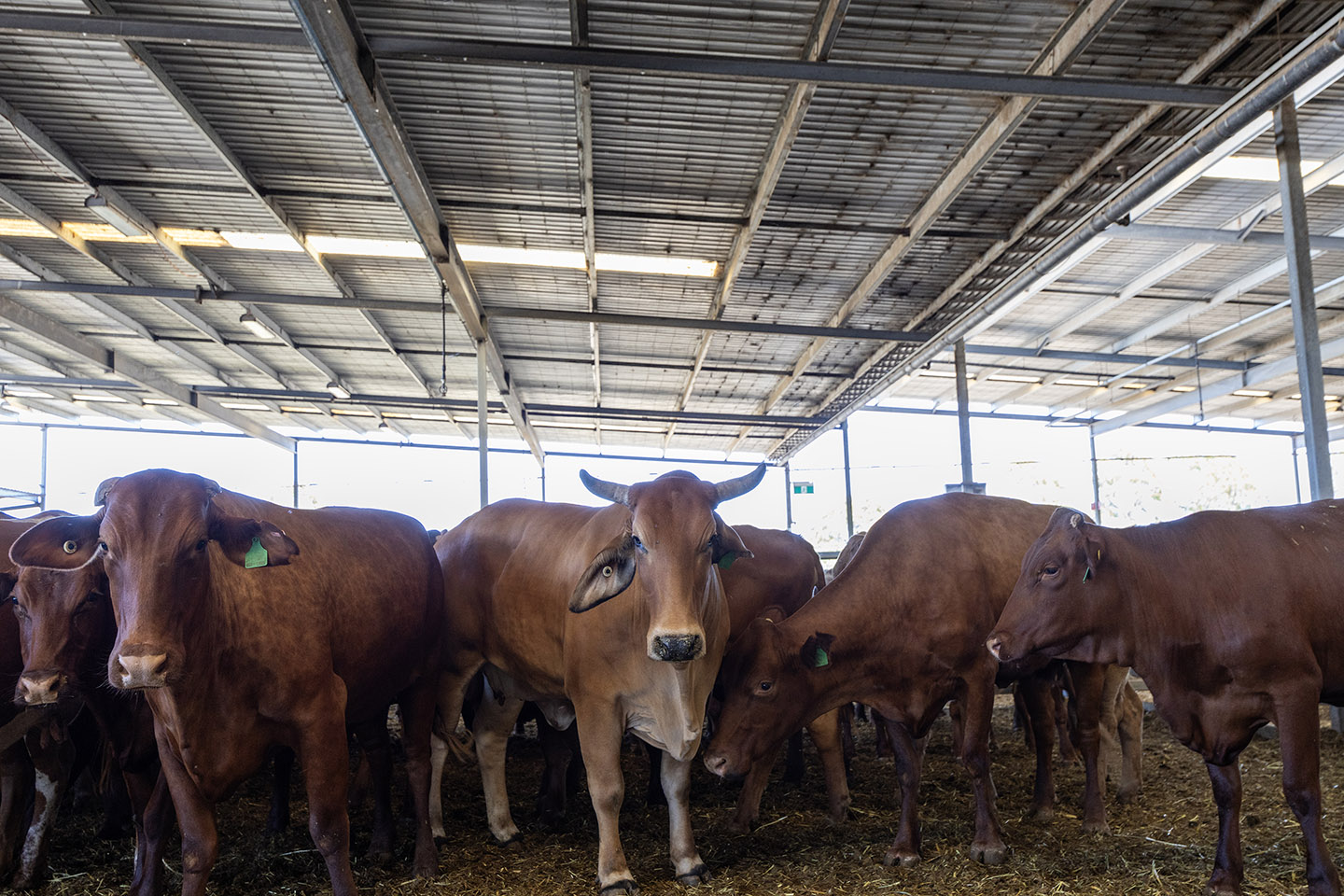
A Perth startup backed by Andrew Forrest and Bill Gates, which is developing a cattle feed additive which reduces methane emissions, has added a New Zealand investor to its books as it expands to the shaky isles.

Two multi-million-dollar developments in the western suburbs received the green light, including a four-storey Dalkeith build that had been refused twice by an assessment panel.
Business
ETMarkets Smart Talk| Healthcare, infra, financials look attractive after recent market fall: Sachin Bajaj, CIO, Axis Max Life Insurance

In this edition of ETMarkets Smart Talk, Sachin Bajaj, Chief Investment Officer at Axis Max Life Insurance, highlights that sectors such as healthcare, infrastructure, and financials are now trading at more reasonable valuations after the recent fall.
While near-term uncertainties linked to energy prices and global cues may keep markets on edge, Bajaj remains constructive on India’s structural growth story and advises investors to stay invested and focus on quality opportunities emerging from the correction. Edited Excerpts –
Q) March has been an absolute roller coaster for equity markets not just for India but across the globe. How are you reading into markets?
A) Markets have been very volatile due to the recent geopolitical events. The world is going through geopolitical events for past few years, but markets reacted sharply negatively when geopolitics is coupled with energy shocks.
The recent war has pushed crude higher and disrupted gas availability, which directly impacts input costs for many industries and compresses margins in the near-term.

While this creates sharp volatility, we view it more as a short-term macro event and not a structural breakdown. India’s growth story remains intact with domestic demand, policy reforms, and domestic flows, but in the short-term markets will likely trade nervously until energy prices stabilize.
Q) IT sector seems to be the worst hit thanks to the AI commentary but with geopolitical tensions rising other sectors have also started to see some rub-off effect. Any sector(s) that are now available at attractive levels?
A) IT sector stocks corrected due to lower relative growth and AI related risks with year-to-date underperformance of 13% versus Nifty50.
However, post the recent geopolitical developments, the correction has broadened beyond IT as the spike in crude and gas supply disruptions are beginning to affect several sectors through higher input costs and margin pressure.
India, being a large oil importer, typically sees market volatility when crude moves above $80-90 per barrel. If oil prices sustain at these levels, then it will impact inflation, CAD, fiscal situation, and corporate earnings.
So far, FY26 saw single digit earnings growth and FY27 is expected to have mid to high teens growth in earnings. However, elevated commodity prices, gas shortage could impact corporate margins leading to some earnings cut for FY27 versus earlier expectations.
With the recent fall, many stocks and sectors have started to look reasonable from a valuation perspective. We see opportunities emerge in Healthcare, Pharma, select consumer discretionary, Infrastructure, Financials and select Autos.
Q) What could be the good, bad and ugly for Indian markets in the near term?
A) These scenarios depend on how this war unfolds and its impact on global crude prices, supply disruption of gas and other commodities.
A swift resolution and ceasefire would benefit our markets and economy as it would mean lower commodity prices and lesser macro-economic impact. Conversely, sustained oil prices remain above $100 per barrel and ongoing disruption in global energy supply could put pressure on corporate margins and earnings.
In case this conflict prolongs, we could see sustained outflows from FPIs, pressure on corporate earnings especially for energy intensive sectors and companies and may also impact domestic flows which could intensify market volatility.
Q) FPIs have been net sellers in 2025, and the story continues in 2026 may be for a different reason now. The story seems to be changing around the FDI route as India opens up channels for Chinese investment to land into several industries. What are your views?
A) The FPI and FDI have divergent narratives. FPIs have been net sellers in the past due to various factors – capital rotation towards AI themes, relatively higher valuation for Indian markets, earnings slowdown and most recently on account of higher oil prices and geopolitical developments.
On the FDI, we expect FDI to improve in the coming year due to strong macroeconomic fundamentals, policy reforms and strong domestic demand. The recent India-US trade deal also lifts a key overhang, boosting prospects for FDI inflows.
Q) Rupee seems to be hitting fresh lows every week – where do you see the currency headed and how will it impact Indian markets/economy?
A) As a large oil-importing country, any change in global oil prices impact the currency. The recent rupee weakness is largely on account of the current global backdrop of higher crude prices, FPI outflows and a stronger dollar.
In the near-term, INR could be volatile with weakness bias if crude remains elevated. From markets and economy perspective, a weaker rupee helps export oriented sectors such as IT, Pharma and Gems and Jewelry etc while it has negative impact for many sectors as it raises imported inflation and increases input costs for the broader economy.
Q) Will Crude @ $100/bbl and above hurt Indian markets and macros? We have been making an investment pitch to the world about our macro stability which could be challenged in the near future. What are your views?
A) Global oil prices have moved up from $65-70 per barrel range to around $ 100 per barrel. A crude above $100 per barrel is clearly a macro headwind for India given our heavy import dependence. A sharp rise in oil if sustains could impact inflation, current account deficit, and growth.
That said, India’s macroeconomic framework is now markedly stronger than during past oil shocks, with ample forex reserves (11 months of import cover), ongoing fiscal consolidation, and resilient domestic demand.
While high crude prices may spark short-term market volatility and briefly strain the macro narrative, they are unlikely to impact India’s long-term investment appeal.
Q) Your advice to investors of things which one must avoid doing in the current environment? We have already seen drop in SIP flows by over 3% on a MoM basis.
A) India’s long-term growth story remains firmly intact. Policy reforms, accelerating credit growth, government initiatives such as GST rate cuts, Income tax cuts, interest rate cuts likely to boost consumption in the coming year.
After two years of single digit growth, corporate earnings growth is set to rebound in FY27. Investors should avoid selling in fear amid short-term volatility from oil shocks and stay invested in quality assets to capture the upside over the long-term.
(Disclaimer: Recommendations, suggestions, views, and opinions given by experts are their own. These do not represent the views of the Economic Times)
Australia’s share market has handed back its early gains with interest as investors weigh clashing statements from the US and Iran on a potential path to de-escalation.

Five debt mutual funds, primarily from the credit risk category, have delivered higher returns than traditional fixed deposits over the past year. However, these funds come with higher risk. Investors should assess risk appetite carefully before considering such short-term alternatives to conventional bank deposits.

Sport and recreation minister Rita Saffioti says Perth securing two FIBA Asian World Cup qualifiers in July is a boost for basketball in WA.

Germany’s Henkel in $1.4 billion deal to acquire hair care brand Olaplex

Citizens downgrades Terns Pharmaceuticals stock on Merck deal

UK tourists warned of ‘chaos’ at popular airport due to ‘world’s longest queues’

MercadoLibre: Buy Latin America’s Leading E-Commerce And Fintech Compounder (MELI)

Reflection AI Seeks $25B Valuation: Nvidia’s (NVDA) Major AI Investment Explained


-
 Crypto World5 days ago
NIO (NIO) Stock Plunges 6.5% as Shelf Registration Sparks Dilution Worries
-

 Fashion6 days ago
Weekend Open Thread: Adidas – Corporette.com
-
 NewsBeat1 day ago
Manchester United reach agreement with Casemiro over contract clause amid transfer speculation
-

 Politics6 days ago
Jenni Murray, Long-Serving Woman’s Hour Presenter, Dies Aged 75
-

 Crypto World4 days ago
Best Crypto to Buy Now: Strategy Just Spent $1.57 Billion on Bitcoin During Fear While Early Investors Quietly Enter Pepeto for 150x Potential
-

 Crypto World4 days ago
Bitcoin Price News: Bhutan Sells $72 Million in BTC Under Fiscal Pressure, but the Smart Money Entering Pepeto Sees What the Market Does Not
-

 Tech6 days ago
inKONBINI Lets You Spend Summer Days Behind the Register
-

 News Videos7 hours ago
Parliament publishes latest register of MPs’ financial interests
-

 Sports3 days ago
Remo Stars and Kano Pillars Strengthen Survival Hopes in NPFL
-

 Politics7 days ago
Gender equality discussions at UN face pushbacks and US resistance
-

 Business4 days ago
No Winner in March 21 Drawing as Prize Rolls to $133 Million for Next
-

 Sports3 days ago
Gary Kirsten Accuses Pakistan Cricket Board Of ‘Interference’, Mohsin Naqvi Responds
-

 Tech4 days ago
Give Your Phone a Huge (and Free) Upgrade by Switching to Another Keyboard
-

 Sports6 days ago
2026 Kentucky Derby horses, odds, futures, preview, date: Expert who nailed 12 Derby-Oaks Doubles enters picks
-

 Tech3 days ago
AI enters the chat: New Seattle dating app relies on tech to facilitate meaningful human connections
-

 Politics7 days ago
Scotland’s rejection of assisted dying is a victory for humanity
-

 Business6 days ago
DLocal: Entering 2026 At Escape Velocity
-
Business5 days ago
Columbia Sportswear enters $500 million credit agreement with JPMorgan Chase
-

 NewsBeat7 days ago
Missile lands next to presenter during live report
-

 Tech4 days ago
Today’s NYT Connections Hints, Answers for March 22 #1015
You must be logged in to post a comment Login