
Business
CapEx Supercycle: The Megaproject Wave Rewiring U.S. Infrastructure




The United States has warned that Sir Keir Starmer’s push to realign the UK more closely with European Union rules risks undermining transatlantic trade, in a rare public intervention that highlights growing tensions over Britain’s post-Brexit strategy.
Warren Stephens said Washington views the UK government’s plan to reintroduce elements of EU regulation, particularly in agriculture and food standards, as a potential obstacle to trade with the US.
“To the extent that that affects US trade and requirements, that’s going to be a problem,” he told a business audience in London, adding that such a move “will not be favourably received in Washington”.
The warning comes as Keir Starmer and Chancellor Rachel Reeves seek closer economic ties with Brussels, including plans to reintroduce an initial tranche of 76 EU directives into UK law.
The proposed alignment, largely focused on farming and food standards, is intended to smooth trade relations with the EU and reduce friction for exporters. However, US officials fear it could complicate market access for American goods, particularly where regulatory standards diverge.
Stephens suggested that the UK’s attempt to balance its relationships with both Brussels and Washington could create competing pressures.
“I know the EU is important to the UK, and you’ve got to do what’s best for you,” he said. “But it does have implications for our trade relationship.”
The comments also reflect broader frustration in Washington over the pace of progress on the UK-US trade deal agreed last year under Donald Trump.
While the agreement came into force in mid-2025, Stephens indicated that the US is keen to see faster implementation and deeper integration.
“We’re excited by these deals and ready to act,” he said. “We want to see the same urgency from our partners.”
Among the proposals under discussion is a framework that would allow companies to raise capital across UK and US markets using domestic regulatory filings, a move aimed at strengthening financial ties between the two economies.
The US ambassador contrasted Washington’s relatively smooth dealings with the UK against what he described as a more difficult relationship with the EU, despite a trade agreement signed last year.
Delays in ratifying that agreement, partly linked to geopolitical tensions, have underscored the complexity of EU negotiations and may be influencing US concerns about the UK moving closer to European regulatory frameworks.
Beyond trade, Stephens also weighed in on broader economic policy, urging the UK to make greater use of domestic energy resources, including North Sea oil and gas, to support competitiveness and reduce costs.
At the same time, he adopted a more measured tone on the UK’s engagement with China, acknowledging the importance of the market while warning of the need to protect sensitive technologies and intellectual property.
The intervention highlights the increasingly delicate position facing the UK as it seeks to recalibrate its global relationships in the post-Brexit era.
Efforts to rebuild ties with the EU are seen by the government as essential to boosting trade and economic growth. However, the US remains one of the UK’s most important economic partners, and any perceived shift towards European alignment risks creating friction.
For businesses, the potential divergence in regulatory standards raises questions about market access, compliance costs and long-term strategy.
As the UK pursues a more pragmatic approach to international trade, balancing relationships with both the EU and the US will be critical.
The latest warning from Washington suggests that alignment with Brussels may come with trade-offs, and that the path to maximising economic opportunity may be more complex than anticipated.
For policymakers, the challenge will be navigating these competing priorities without undermining the UK’s position in either of its most important trading relationships.

Amy Ingham
Amy is a newly qualified journalist specialising in business journalism at Business Matters with responsibility for news content for what is now the UK’s largest print and online source of current business news.

The UK’s competition watchdog says it is looking at five firms in its investigation into misleading online reviews.

Investigators are probing the cause of a fire that burned a section of a large automotive glass plant near Dayton, Ohio, that supplies components to several major automakers.
The roof of the Fuyao Glass America plant, said to be one of the largest automotive-glass manufacturing plants in the world, caught fire around 8:30 p.m. Sunday, according to city officials in Moraine, Ohio.
Copyright ©2026 Dow Jones & Company, Inc. All Rights Reserved. 87990cbe856818d5eddac44c7b1cdeb8

Heard on the Street Recap: Looking for the Exit Sign

This Depressed Fund Owns a Stake in SpaceX. An IPO Could Give It a Big Lift.
Business
H & M Hennes & Mauritz AB (publ) 2026 Q1 – Results – Earnings Call Presentation (OTCMKTS:HNNMY) 2026-03-27


Seeking Alpha’s transcripts team is responsible for the development of all of our transcript-related projects. We currently publish thousands of quarterly earnings calls per quarter on our site and are continuing to grow and expand our coverage. The purpose of this profile is to allow us to share with our readers new transcript-related developments. Thanks, SA Transcripts Team

Octopus Investments is set to cut around a fifth of its workforce as it accelerates the adoption of artificial intelligence, in a move that reflects the rapid transformation underway across the asset management industry.
The City-based firm, which manages close to £15 billion in assets, is understood to be placing around 130 roles at risk of redundancy, primarily in back-office functions. With just over 600 employees, the restructuring represents a significant shift in how the business operates, as it seeks to streamline processes and modernise its infrastructure.
The cuts form part of a broader strategy to invest more heavily in technology, particularly AI, which is increasingly being used to automate routine tasks, improve efficiency and reduce operational costs across financial services.
The move underscores how quickly AI is reshaping the financial sector, particularly in areas such as administration, compliance and reporting, where repetitive processes are well suited to automation.
Asset managers have been among the fastest adopters of the technology, using AI tools to handle data processing, client onboarding and portfolio analytics. As a result, roles that were once labour-intensive are being reduced or redefined.
Octopus Investments said the decision was necessary to ensure the business remains competitive in a rapidly changing environment.
“We’ve made the difficult but necessary decision to ensure we are a simpler business that can respond to the pace of change,” a spokesperson said, adding that affected employees would be supported in finding new roles both within the wider group and externally.
The restructuring is not an isolated case. Across the City and globally, financial institutions are reassessing their workforce structures as AI capabilities expand.
HSBC, for example, is reportedly considering up to 20,000 job cuts over the coming years, partly driven by the efficiency gains offered by AI.
The shift reflects a broader recalibration of the industry, where firms are balancing cost pressures with the need to invest in new technologies that can enhance performance and client service.
Despite the job cuts, Octopus Investments remains financially robust. The firm reported a 10.3 per cent increase in net profit to £76.7 million in 2024, with revenues rising to £225.7 million.
It is one of the most profitable divisions within the wider Octopus Group, which also includes businesses such as Octopus Energy and Octopus Money.
The decision to reduce headcount is therefore not driven by financial distress, but by a strategic effort to adapt to technological change and maintain long-term competitiveness.
The firm has faced some criticism in recent years over the fees charged on certain investment products.
Its flagship venture capital trust, Octopus Titan VCT, agreed to reduce management fees by 17 per cent last year, while the company has also earned substantial fees from managing private investment vehicles, even in periods where those funds reported losses.
These issues have added to the pressure on the business to demonstrate efficiency and value for investors, a factor that may also be influencing its push towards automation.
For employees, the restructuring highlights the growing impact of AI on white-collar roles, particularly in financial services.
While front-office and client-facing positions are less immediately affected, back-office functions are increasingly being automated, reducing the need for large operational teams.
At the same time, new roles are emerging in areas such as data science, AI development and digital strategy, suggesting a shift in the types of skills required across the industry.
As AI continues to evolve, asset managers are likely to face further pressure to adapt their business models, balancing efficiency gains with the need to retain expertise and maintain client trust.
For Octopus Investments, the current restructuring represents a significant step in that transition, one that reflects both the opportunities and challenges posed by technological change.
Across the City, similar moves are expected to follow, as firms seek to position themselves for a future where automation plays an increasingly central role in financial decision-making and operations.
Amy Ingham
Amy is a newly qualified journalist specialising in business journalism at Business Matters with responsibility for news content for what is now the UK’s largest print and online source of current business news.

By Aseem Goyal
“Resilience is the new ROI.”
For more than two decades, China was the undisputed “Factory of the World.” Following its accession to the WTO in the early 2000s, it combined scale, cost efficiency, and ecosystem depth in ways few economies could replicate. Between 2000 and 2010, GDP growth averaged above 10 percent annually.
I saw this transformation firsthand when I arrived in Shanghai in 2005. Construction cranes dominated the skyline. Consumer demand seemed insatiable. Growth regularly exceeded 11% and peaked at 14.2% in 2007. The momentum felt historic – and it was. This was an era where “efficiency” was the only metric that mattered, and China delivered it at a scale the world had never seen.
But by the early 2010s, structural pressures were emerging. Labor costs were rising. Demographics were shifting. China was deliberately moving up the value chain toward higher-tech manufacturing. Geopolitical tensions intensified, intellectual property concerns grew, and trade frictions expanded into full-scale tariffs. Then, the pandemic exposed a hard truth: highly concentrated supply networks, however efficient, were fragile. Meanwhile, the new normal for China’s GDP is now 4-5%.
What followed was an architectural redesign of global production. “China plus One” became embedded in corporate strategy – not as a replacement for China, but as a mandatory insurance policy. Today, China still commands close to 30% of global manufacturing capacity and will continue to dominate for the foreseeable future. The race is not to substitute China; it is to become an indispensable node in an integrated global system.

The Geopolitical Layer: Friend-shoring as Strategy
Beyond logistics, the “Plus One” architecture is increasingly defined by security and alignment. In 2026, supply chain resilience is inseparable from geopolitical “friend-shoring.” Success for these emerging hubs is often tied to their Free Trade Agreements (FTAs) and membership in blocs like the CPTPP or IPEF. For the global CEO, a “Plus One” node is only viable if it sits within a regulatory “green zone” that mitigates the risk of sudden sanctions or trade barriers. The race for indispensability is as much about diplomatic alignment as it is about factory floors.
Redefining Success: From Arbitrage to Architecture
In the early days of China plus One, success was defined narrowly: labor arbitrage. That definition is now obsolete. Success is now also defined by structural resilience – the ability of a country to anchor long-term, higher-value investment within an integrated ecosystem.
Today’s competitive advantage rests on five interlocking drivers:
- Ecosystem Depth and Speed: Competitive locations offer dense networks of tier-two and tier-three suppliers within efficient logistics corridors.
- Digital and Green Readiness: Renewable energy compliance (ESG) and digital-first infrastructure are now procurement prerequisites.
- Regulatory Harmonization and De-risking: Long-term capital flows towards countries that align with G7 or “friend-shoring” standards (e.g., GDPR-like data privacy or carbon border taxes).
- Labor, Skills, and Demographics: Countries that combine technical capability with favorable demographic trends gain structural leverage.
- Market Scale and Trade Connectivity: The most powerful model is “manufacture where you sell.” provide natural de-risking for global firms.
The Strategic Landscape: A Multi-Node Model
| Country | Strategic Role | Primary Advantage | The “Catch” (Risk) |
| Vietnam | The Speed Champion | Proximity to China; Agility | Labor/Land saturation; Wage inflation |
| India | The Scale Bet | 1.4 billion market; Young Talent | Execution & Regulatory complexity |
| Malaysia | The Specialist | Semiconductor/ATP leadership | Smaller labor pool; High-tech niche |
| Indonesia | The Resource Power | Nickel dominance; EV potential | Policy friction; Infrastructure gaps; Resource Nationalism |
| Thailand | The Reliable Hub | Automotive & Electronics base | Aging population; Middle Income trap |
Regional Deep Dives:
Vietnam: The Speed Champion
Vietnam has rapidly integrated into global electronics and consumer goods supply chains, attracting giants like Samsung and Apple.
Its structural advantages are competitive labor costs, extensive trade agreements, and geographic proximity to Southern China, enabling seamless component flows. However, agility alone is no longer a sustainable moat. As manufacturing wages have risen by 7-9% annually over the last few years, the country is aggressively adopting AI-driven logistics to bridge infrastructure gaps. The government’s National Digital Transformation Program targets wide-scale automation by 2030, racing to automate before rising costs erode its competitive edge.
India: The Scale Bet
India is the only contender capable of offering a China-sized alternative. India combines internal scale with external integration through FTAs, bolstered by a median age of 29 (compared to China’s 39), adding 12 million people to its workforce annually
India’s Production Linked Incentive (PLI) programs have catalyzed growth in semiconductors and automotive manufacturing. Crucially, India is positioning itself as a leader in Sovereign AI. Initiatives like the “India AI Mission” and the 2026 AI Impact Summit show a nation leapfrogging traditional manufacturing hurdles by integrating “Physical AI” into industrial environments. Its constraint remains execution and regulatory hurdles.
Malaysia: The Semiconductor Specialist
Malaysia competes on technical depth rather than scale. With decades of experience in semiconductors, it commands a significant share of global assembly, testing, and packaging (ATP). This ecosystem is mature and difficult to replicate.
Malaysia is also moving upstream into IC design and R&D by integrating automated precision manufacturing, thus ensuring its smaller labor pool doesn’t hinder its output. It is the indispensable node for the high-tech heart of the global supply chain.
Indonesia: The Resource Power
Indonesia controls over half of the world’s supply. Its “downstream” policies require raw materials to be processed locally, effectively forcing the creation of a domestic EV battery ecosystem.
Its opportunity lies in sectoral dominance. The country is aiming to be a regional AI innovation hub, using data-driven insights to manage complex resource extraction and processing. Its success depends on maintaining policy consistency and avoid spooking investors with resource nationalism.
Thailand: The Middle-Income Test Case
The “Detroit of the East” remains a reliable production hub. However, it is too advanced for low-cost labor, yet squeezed by high-tech specialists. Thailand is responding by driving Industry 5.0 adoption, using smart manufacturing systems and robotics to maintain its edge in the automotive and electronics sectors. It serves as a reminder: standing still is equivalent to moving backward.
The Hard Truth: There is No Single Winner
So who is winning the China plus One sweepstakes? The answer is not a single country. It is a multi-node model.
- Vietnam is winning on speed.
- India is winning on long-term scale.
- Malaysia is winning on technical specialization.
- Indonesia is winning the resource-driven energy transition.
- Thailand is the reliability benchmark for middle-income hubs.
The Role of AI: The Energy-AI Paradox
In 2026, “Plus One” is also about technology parity. Companies are moving factories to build “Smart Factories using predictive maintenance, digital twins, and autonomous quality control. However, this introduces a new bottleneck: Energy Infrastructure. The question for CEOs has shifted from “Where is the labor?” to “Where is the digital infrastructure and stable power grid to support my automated fleet?” A hub’s ability to provide 24/7 green energy to power AI-integrated assembly lines is now a powerful competitive differentiator.
Designing the Future
Diversification is no longer a hedge; it is architecture. The companies that thrive over the next decade will design multi-country production systems that treat supply chains as strategic networks rather than linear pipelines.
No single country can replace China for the foreseeable future. But some will become indispensable complements. In the next phase of globalization, indispensability – not cost – will determine who wins.
Resilience is the new ROI.
The China plus One Checklist: Is Your Architecture Ready?
- Technical Parity: Can this location support the same level of AI-integrated automation used in our primary hubs?
- The Energy Moat: Does the local grid offer the 24/7 reliability and renewable energy mix required to meet our 2030 ESG mandates?
- Ecosystem Density: Are there tier-two and tier-three suppliers within a 100km radius?
- Geopolitical “Green Zone”: Is this nation a signatory to trade blocs (CPTPP, IPEF, etc.) that align with our primary consumer markets?
- Talent Pipeline: Does the local vocational system support “Industry 5.0” skills, or will we face a critical shortage?
Aseem Goyal is a global financial services executive and advisor with 35 years of experience across eight international markets, including a formative tenure in Shanghai (2005–2007). He currently advises organizations on Southeast Asia expansion and is the author of an upcoming global leadership memoir.
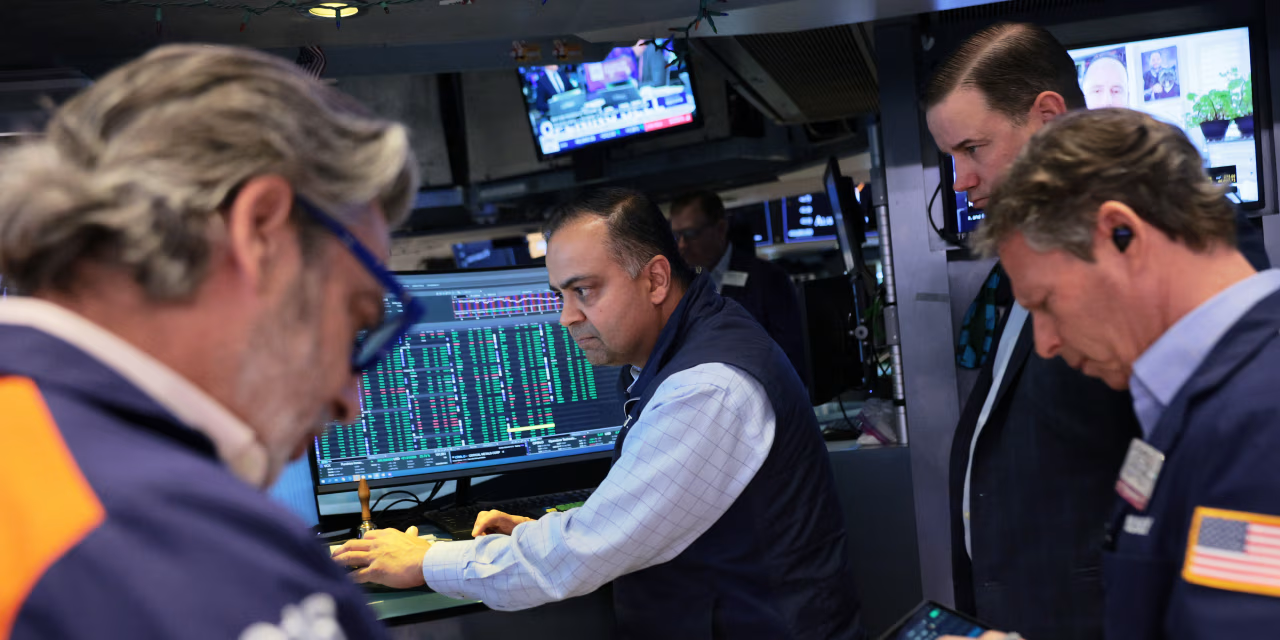
A jump in technology shares powered markets higher, outweighing losses in energy stocks.
The S&P 500 added 0.5%, while the Nasdaq composite gained 0.8%. The Dow Jones Industrial Average advanced 0.7%.
Copyright ©2026 Dow Jones & Company, Inc. All Rights Reserved. 87990cbe856818d5eddac44c7b1cdeb8
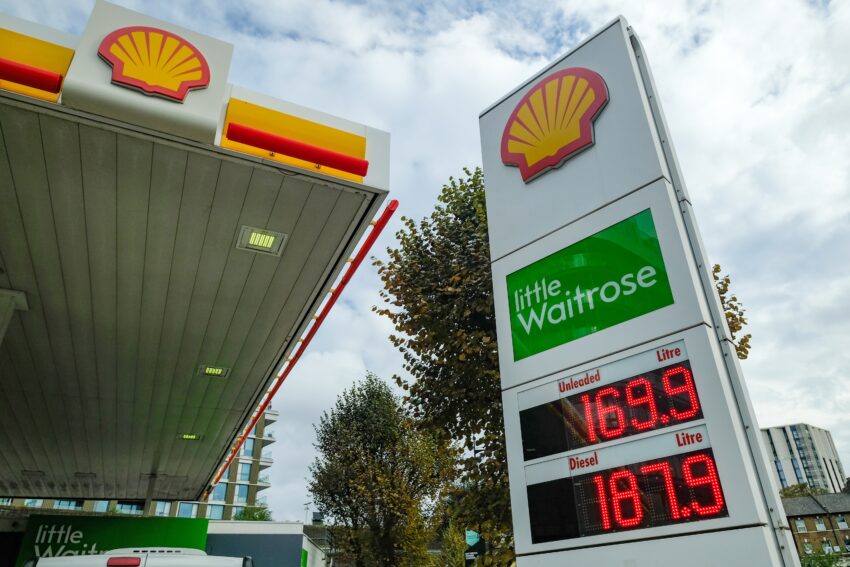
UK drivers are bracing for a sharp rise in fuel costs, with petrol prices expected to exceed £1.50 per litre for the first time in nearly two years as the fallout from the Middle East conflict continues to ripple through energy markets.
According to RAC, the average price of petrol has already climbed to 149.82p per litre and is likely to break through the 150p threshold imminently. Diesel prices have risen even more steeply, reaching an average of 176.66p per litre, an increase of more than 34p since strikes on Iran began.
The surge marks the highest diesel prices since the energy crisis triggered by Russia’s invasion of Ukraine in late 2022, underscoring the sensitivity of fuel markets to geopolitical shocks.
The primary driver of the increase is the sharp rise in global oil prices. Brent crude is currently trading at around $107 per barrel, having surged from roughly $70 a month ago and briefly approaching $120 earlier in June.
Simon Williams of the RAC said wholesale fuel data suggests further increases are likely in the short term, with petrol potentially reaching 152p per litre and diesel climbing towards 185p.
“While soaring costs at the pumps are putting a strain on drivers, as long as oil remains around $100, prices should begin to stabilise,” he said, though he cautioned that further volatility remains possible depending on developments in the conflict.
Fuel prices continue to vary significantly across the UK, with drivers in rural areas and at motorway service stations often paying the highest rates.
Petrol prices at motorway forecourts have already exceeded 171p per litre, while some locations are charging more than 190p for diesel, with a handful exceeding 200p. By contrast, drivers in certain parts of Lancashire are paying closer to 143p for petrol, highlighting a growing regional disparity.
The rise in fuel costs is expected to feed through into broader inflation, affecting transport costs, supply chains and the price of goods and services.
For households, higher petrol and diesel prices are an immediate hit to disposable income, particularly for those reliant on cars for commuting or living in areas with limited public transport.
Businesses, especially those in logistics and transport, are also facing increased operating costs, which may ultimately be passed on to consumers.
While drivers face rising costs, the government is set to benefit from increased tax receipts. Fuel prices in the UK are subject to 20% VAT, which is applied on top of fuel duty, effectively creating a “tax on a tax”.
The RAC Foundation estimates that UK motorists consumed nearly 47 billion litres of fuel last year. Based on pre-conflict prices, this would have generated around £13 billion in VAT revenue.
With petrol and diesel prices rising sharply, that figure is now expected to increase to approximately £15.5 billion, delivering an estimated £2.5 billion windfall to the Treasury.
The government has accused fuel retailers of profiteering from the price surge, although forecourt operators have rejected the claims, arguing that higher wholesale costs are being passed through to consumers.
The debate highlights ongoing tensions over fuel pricing transparency and the distribution of costs across the supply chain.
Much will depend on the trajectory of oil prices in the coming weeks. If geopolitical tensions ease and supply stabilises, prices could plateau or begin to fall. However, a prolonged disruption to global energy markets could push costs higher still.
For now, drivers face a renewed period of volatility at the pumps, a reminder of how quickly global events can translate into everyday economic pressures.

Jamie Young
Jamie is Senior Reporter at Business Matters, bringing over a decade of experience in UK SME business reporting.
Jamie holds a degree in Business Administration and regularly participates in industry conferences and workshops.
When not reporting on the latest business developments, Jamie is passionate about mentoring up-and-coming journalists and entrepreneurs to inspire the next generation of business leaders.

Dogecoin (DOGE) Price Drops 5% as Large Holders Accumulate During Correction

‘Hocus Pocus 3’ Gets a Disappointing Update From the Original Cast After Disney’s CEO Shake-Up [Exclusive]

Ireland fans demand investigation after World Cup heartbreak – ‘Disgraceful’

Smart energy pays enters the US market, targeting scalable financial infrastructure

Why Israel is blocking foreign journalists from entering

Bitcoin: We’re Entering The Most Dangerous Phase

XRP I CAN’T BELIEVE WHAT I AM SEEING! (It All Makes Sense Now!)

“Unlock Financial Freedom: Transform Your Savings with This EPIC House-Shaped Coin Bank!”(AC-1408)

PROOF XRP WAS NEVER MEANT FOR RETAIL! – THEY WILL SEIZE YOUR XRP? – XRP MARKETCAP PREVENTS $10+?
-
 Crypto World6 days ago
NIO (NIO) Stock Plunges 6.5% as Shelf Registration Sparks Dilution Worries
-
 NewsBeat2 days ago
Manchester United reach agreement with Casemiro over contract clause amid transfer speculation
-

 Fashion7 days ago
Weekend Open Thread: Adidas – Corporette.com
-

 Politics7 days ago
Jenni Murray, Long-Serving Woman’s Hour Presenter, Dies Aged 75
-

 Crypto World5 days ago
Best Crypto to Buy Now: Strategy Just Spent $1.57 Billion on Bitcoin During Fear While Early Investors Quietly Enter Pepeto for 150x Potential
-

 Crypto World5 days ago
Bitcoin Price News: Bhutan Sells $72 Million in BTC Under Fiscal Pressure, but the Smart Money Entering Pepeto Sees What the Market Does Not
-

 News Videos1 day ago
Parliament publishes latest register of MPs’ financial interests
-

 Sports4 days ago
Remo Stars and Kano Pillars Strengthen Survival Hopes in NPFL
-

 Sports4 days ago
Gary Kirsten Accuses Pakistan Cricket Board Of ‘Interference’, Mohsin Naqvi Responds
-

 Tech5 days ago
Give Your Phone a Huge (and Free) Upgrade by Switching to Another Keyboard
-

 Business5 days ago
No Winner in March 21 Drawing as Prize Rolls to $133 Million for Next
-

 Sports7 days ago
2026 Kentucky Derby horses, odds, futures, preview, date: Expert who nailed 12 Derby-Oaks Doubles enters picks
-

 Tech4 days ago
AI enters the chat: New Seattle dating app relies on tech to facilitate meaningful human connections
-
Business6 days ago
Columbia Sportswear enters $500 million credit agreement with JPMorgan Chase
-

 News Videos4 days ago
Ch 9 Financial Management Part 1 | Detailed One Shot | Class 12 Business Studies Boards 2026
-

 Tech5 days ago
Today’s NYT Connections Hints, Answers for March 22 #1015
-

 Business13 hours ago
Instagram, YouTube Found Responsible for Teen’s Mental Health Struggle in Historic Ruling
-
 Crypto World7 days ago
Small-cap Russell 2000 enters correction territory
-

 Business5 days ago
Will Duke Basketball Win It All? Duke Basketball Enters Second Round as Third Favorite to Claim NCAA Title
-

 Sports4 days ago
2026 Kentucky Derby horses, odds, futures, preview, date: Expert who hit 12 Derby-Oaks Doubles enters picks
You must be logged in to post a comment Login