Mr Rhodes who hails for Neath will confirm a new role in the private sector shortly
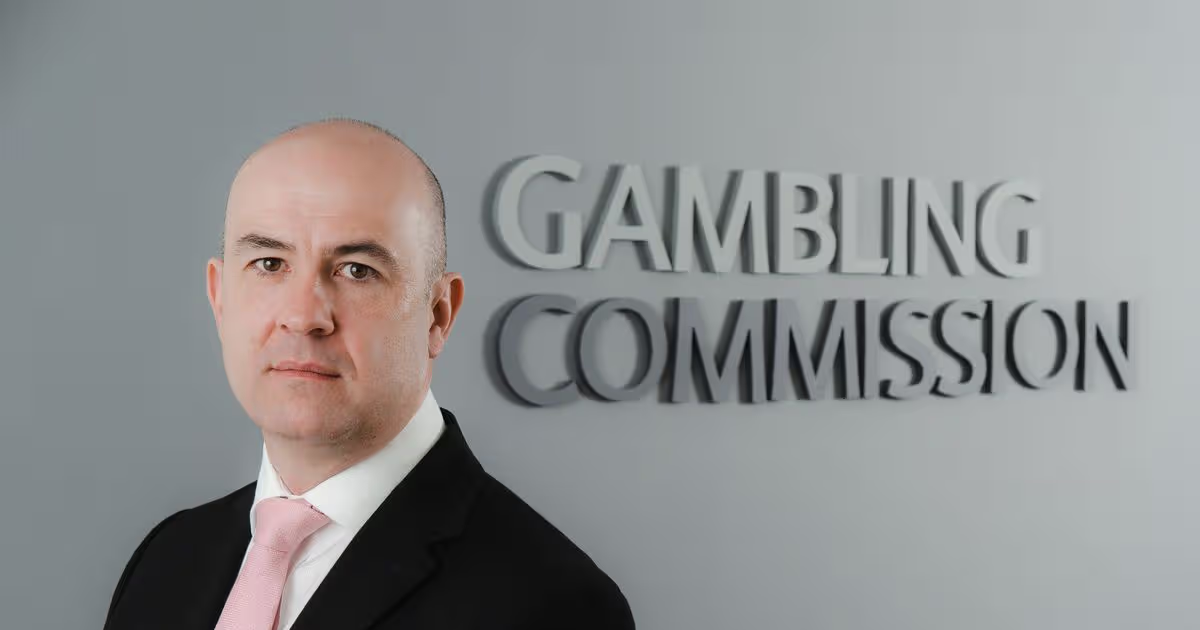
Andrew Rhodes.(Image: Richard Stonehouse)
Chief executive of regulator the Gambling Commission, Welshman Andrew Rhodes, is standing down from the role. Mr Rhodes, who hails from Neath and is a former registrar at Swansea University, will formally step down at the end of April after nearly five years in the role.
He is taking up a new position in the private sector that will be confirmed shortly.
During his tenure Mr Rhodes led work for the commission implementing the Gambling Act Review, with a strong focus on consumer safeguards. This has included the introduction of financial vulnerability checks, reducing the intensity of online games, and banning potentially harmful marketing offers. He also oversaw the introduction of the Gambling Survey for Great Britain, now one of the largest surveys of gambling behaviour in the world, and implementation of the fourth National Lottery licence.
Mr Rhodes, said:“It has been a privilege to lead the Gambling Commission through such an important period of change. I am proud of the progress we have made to strengthen regulation, improve consumer protections, and ensure gambling is safer and fairer. I leave with confidence in the organisation, its people, and the work still to come.”
Charles Counsell, interim chair of the Gambling Commission, said “Andrew has provided outstanding leadership for nearly five years and leaves a strong legacy. He has led the commission through major reform, strengthened our regulatory approach, and ensured consumer protection has remained at the heart of our work. On behalf of the board, I would like to thank Andrew for his dedication and wish him every success in the future.”
The commission will shortly begin the process of recruiting a chief executive for an interim period. Deputy chief executive Sarah Gardner will step up as acting chief executive to cover the areas of work that Andrew will step back from during this transitional period.
Treasury Secretary Scott Bessent joins ‘Mornings with Maria’ to discuss the Iran war, surging oil prices, market volatility, Fed uncertainty, Powell’s future and the U.S. strategy to stabilize the global economy.
Treasury Secretary Scott Bessent said the U.S. government will not intervene in oil futures markets even as the administration moves to offset supply disruptions tied to the Iran conflict, arguing that Washington’s response will focus on boosting physical crude availability instead.
“We’re absolutely not doing that,” Bessent told FOX Business’ “Mornings With Maria” on Thursday, when asked about possible Treasury intervention in the futures market. “We’re not intervening in the financial markets. We are supplying the physical markets.”
Advertisement
In an interview with Maria Bartiromo, Bessent said the administration has prepared a coordinated supply response designed to cushion the impact of any temporary disruption around the Strait of Hormuz. He said the U.S. had already moved to “unsanction” Russian oil cargoes already on the water, estimated at about 130 million barrels, and could do the same with roughly 140 million barrels of Iranian oil in floating storage.
“In essence, by the time we unsanctioned the floating Iranian oil, we would have intervened and we would have created about 260 million excess barrels of energy,” Bessent said, calling that a “physical intervention” rather than a financial one.
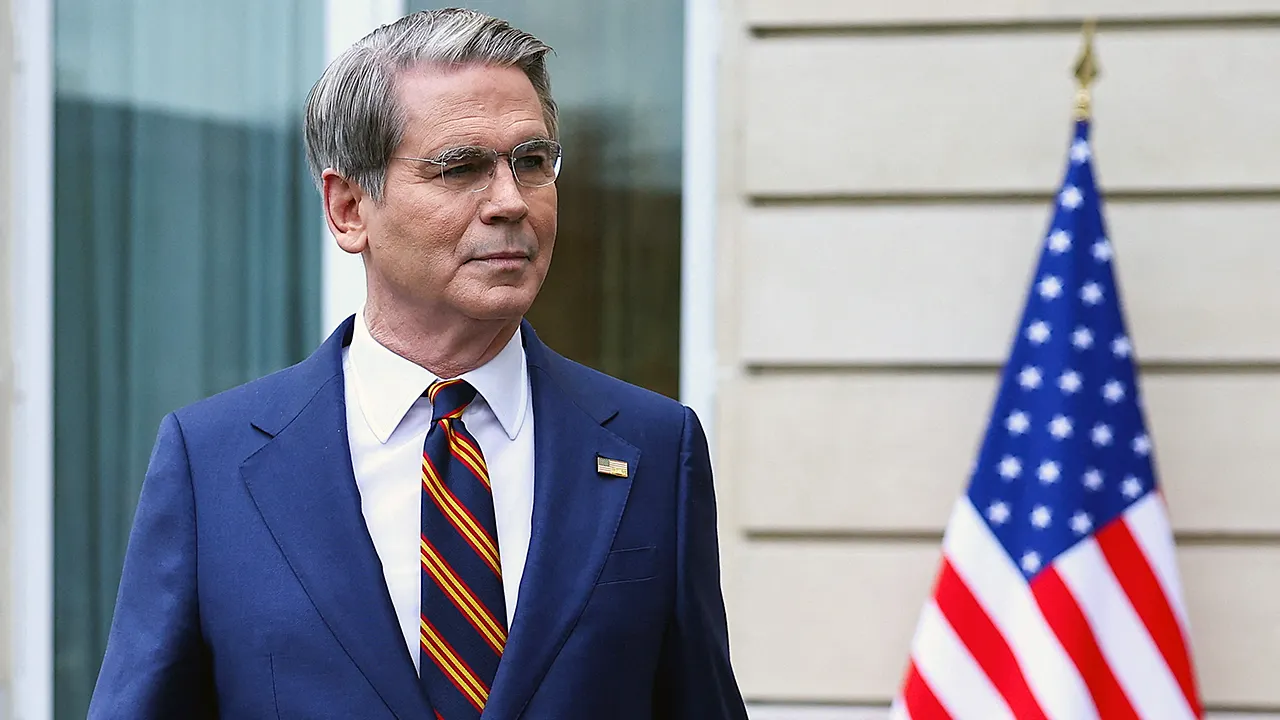
Secretary of Treasury Scott Bessent said the key to keeping oil prices in America down is to boost the oil supply for the rest of the world. (Nathan Posner/Anadolu via Getty Images / Getty Images)
Bessent said that volume could help cover what he described as a temporary deficit of 10 million to 14 million barrels per day if shipping through the strait is interrupted, providing roughly three weeks of market stabilization. He also pointed to a 400 million-barrel coordinated Strategic Petroleum Reserve release approved last week and said the U.S. could act again unilaterally if needed.
“The largest coordinated SPR release in history, 400 million barrels, was approved last week,” he said. “The U.S. could unilaterally do another SPR release to keep the price down.”
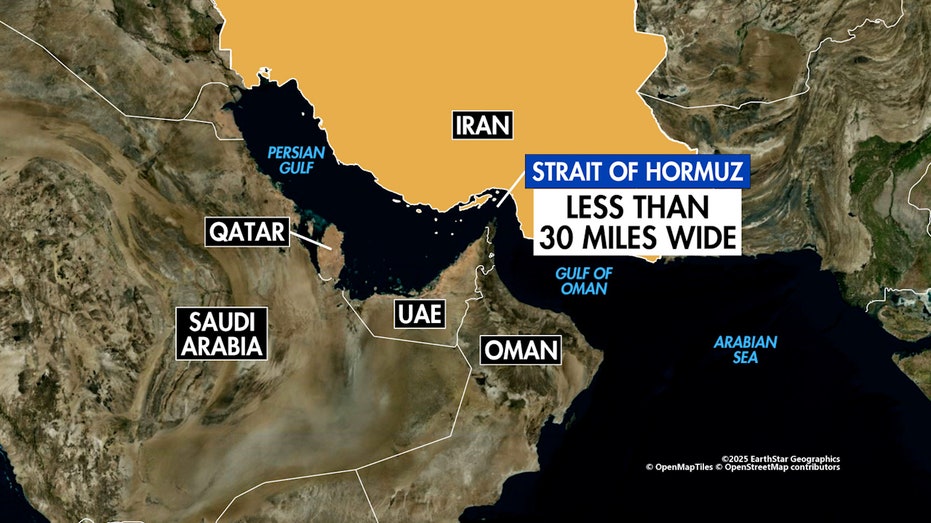
About 20% of the world’s oil supply crosses the Strait of Hormuz off the coast of Iran. The Iranian Regime is threatening to attack any vessels that cross the strait without permission. (Fox News / Fox News)
Bessent framed the strategy as part of a broader effort to balance pressure on Iran with energy market stability. He said the U.S. has avoided striking Iranian energy infrastructure even while escalating military operations, arguing the goal is to preserve supply while keeping pressure on Tehran.
“We have lots of levers,” Bessent said. “We’ve got plenty more that we can do.”
Dan Brouillette, former Energy Secretary under Trump, discusses whether NATO should aid in securing the Strait of Hormuz, oil prices, Cuba’s nationwide blackout and more on ‘Varney & Co.’
Supplying the world more oil from Iran is going to ultimately bring down prices in America, according to Bessent, who noted the U.S. does not rely on Middle East oil but the chokepoint on oil through the Strait of Hormuz has indirectly strained supply and spooked crude futures markets.
With the 2026 lineup freshly announced featuring headliners like Charli XCX, Lorde, Jennie and The Smashing Pumpkins, demand for Lollapalooza Chicago tickets is surging. The festival’s one-hour exclusive presale window for the lowest-priced four-day passes opens Thursday, March 19, at 10 a.m. CT, and organizers warn that these Tier 1 deals vanish quickly as thousands of fans compete for limited inventory.
Lollapalooza
Lollapalooza returns to Grant Park July 30 through Aug. 2, 2026, promising four days of music across eight stages with more than 170 acts. But snagging tickets at face value — especially the cheapest tiers — requires precise preparation during the brief presale period before the public on-sale at 11 a.m. CT, when prices automatically increase and higher tiers activate.
Festival officials emphasize that the first hour of presale guarantees the lowest four-day ticket prices available all year. General admission four-day passes start at $399 in Tier 1, with GA+ at $735, VIP at $1,599, Platinum at higher levels and ultra-premium Lolla Insider packages reaching $29,000. Single-day tickets are not yet on sale but are expected later, often at steeper prices.
To access the presale, fans must register in advance on the official site. Visit lollapalooza.com/signup and enter an email address or phone number for notifications. Registered users receive a direct link or access code via email or text shortly before or at the 10 a.m. CT start time. Without registration, buyers miss the window entirely and face higher costs or sold-out options.
Veteran attendees and ticketing experts offer these key strategies to maximize chances during the critical one-hour period:
Advertisement
Prepare your account early. Create or log into a Front Gate Tickets profile — the official ticketing platform at lollapalooza.frontgatetickets.com — well ahead of time. Add payment information, shipping details (for wristbands) and any promo codes if applicable. Double-check that your browser is updated and cookies are enabled to avoid login glitches.
Use multiple devices and connections. Open the presale page on a computer, phone and tablet simultaneously. A stable, high-speed internet connection is essential; switch to wired Ethernet if possible or use mobile hotspot as backup. Avoid public Wi-Fi, which can be slow or drop during peak traffic.
Log in 10-15 minutes before 10 a.m. CT. The site often experiences heavy load right at open. Being pre-logged reduces wait times in virtual queues. Refresh the page strategically — too aggressively can trigger anti-bot measures.
Monitor official channels. Follow @lollapalooza on X, Instagram and Facebook for real-time updates. The festival posts countdowns and reminders. Join Reddit’s r/Lollapalooza community for live threads where users share queue positions and tips as the window unfolds.
If the lowest tier sells out mid-presale, higher tiers remain available until 11 a.m. CT, when the general public joins and dynamic pricing kicks in. Past years show four-day passes often last into public sale but at increased rates, sometimes jumping $50-$100 per tier.
Festival organizers urge buying only through official channels or trusted partners. Wristbands ship months ahead and include RFID tech for entry; lost or damaged ones can be replaced at will-call with proof.
Advertisement
Demand drivers include the stacked lineup and Chicago’s summer appeal. Headliners span pop, hip-hop, rock and electronic genres, drawing international crowds. Grant Park’s lakefront setting adds to the allure, but capacity remains finite.
Experts note that presale success often hinges on speed and readiness rather than luck. “The one-hour window is designed to reward prepared fans with the best deals,” a Lollapalooza representative said. “Once it’s over, prices rise progressively as tiers deplete.”
Single-day tickets, when released, typically follow similar patterns but sell faster due to targeted artist interest. Fans eyeing specific headliners should monitor for one-day announcements.
As March 19 approaches, registration remains open at lollapalooza.com. Organizers advise acting now to secure access. With tickets historically selling out or escalating rapidly, preparation during this brief presale offers the clearest path to attending Lollapalooza 2026 at the lowest cost.
Advertisement
For the latest, check lollapalooza.com/tickets or the support hub at support.lollapalooza.com. Whether aiming for GA entry or VIP perks, the key is readiness when the clock hits 10 a.m. CT.
Disclosure: This post contains affiliate links. We may receive a commission for purchases made through these links at no additional cost to you.
Innovate UK is set to overhaul its funding strategy, shifting away from broad-based support for hundreds of thousands of “innovators” each year to concentrate its £1.1 billion budget on a smaller pool of high-potential companies.
The government’s innovation agency said the move is designed to accelerate the growth of early-stage technology firms capable of scaling into globally competitive businesses, with ambitions to create more UK success stories on the scale of chip designer Arm.
The strategic pivot marks a significant departure from Innovate UK’s previous ambition to support “a million innovators” annually. While the agency reached around 450,000 individuals in 2024, only a small proportion received direct financial backing, prompting concerns that resources were being spread too thinly to deliver meaningful economic impact.
Tom Adeyoola, who took over as executive chair last year, said the shift reflects a more targeted approach focused on outcomes rather than volume.
“It is a shift from a focus on quantity and funding projects to supporting companies and ensuring that they realise their potential,” he said. “We want to help businesses move from breakthrough ideas to becoming industry leaders that drive economic growth.”
Advertisement
Under the new strategy, Innovate UK will scale back or eliminate several longstanding grant schemes, including the widely used Smart Grants programme, which Adeyoola described as too broad due to its “stage agnostic” and “sector agnostic” design.
In its place, the agency will introduce more tightly defined funding streams aligned to specific sectors and stages of business growth. Programmes such as Women in Innovation will also be refocused to support female-led firms with high-growth potential rather than providing generalised support.
The agency has identified six priority sectors from the government’s industrial strategy where it believes the UK has a “genuine right to win”. These include advanced manufacturing, life sciences and digital technologies — spanning areas such as artificial intelligence, semiconductors and quantum computing.
At the same time, Innovate UK is launching a new concierge-style support service, “Velocity”, aimed at helping selected companies navigate funding, regulation and commercialisation challenges more effectively.
Advertisement
A key pillar of the revised approach will be the expansion of targeted funding initiatives such as the £100 million Growth Catalyst scheme, which provides grants covering up to 70 per cent of early-stage project costs and up to 45 per cent for larger research and development programmes.
The agency will also refocus its Business Growth advisory service and more closely align its network of Catapult centres, applied innovation hubs, with the needs of specific companies rather than broader sector engagement.
Adeyoola said Innovate UK would play a more active role in identifying market demand and matching it with emerging technologies, effectively acting as a bridge between research, entrepreneurship and commercial opportunity.
“We will spend more time identifying where demand exists and then supporting the entrepreneurs and academics best placed to meet that demand,” he said.
Advertisement
Central to the strategy is a renewed emphasis on leveraging private investment. Innovate UK believes that its technical validation and endorsement can act as a signal to investors, reducing risk and unlocking additional capital for high-growth firms.
“A key measure of success over my four-year period will be the amount of private capital flowing into companies coming through our system,” Adeyoola said.
To support this, the agency plans to strengthen links with major public finance institutions including the British Business Bank and the National Wealth Fund, while continuing to deliver approximately £1 billion of innovation programmes on behalf of other government departments.
While the new approach is designed to create globally competitive businesses, it raises questions about access to support for smaller or earlier-stage innovators who may fall outside the new criteria.
Advertisement
Innovate UK argues that concentrating resources will ultimately deliver greater economic returns, helping the UK compete more effectively in critical technologies and strengthen its position in an increasingly competitive global innovation landscape.
The strategy signals a clear shift in government thinking, from fostering widespread participation in innovation to backing fewer, more scalable companies capable of delivering outsized growth and long-term economic impact.
Amy Ingham
Amy is a newly qualified journalist specialising in business journalism at Business Matters with responsibility for news content for what is now the UK’s largest print and online source of current business news.
The retailer produced half year profit of £30m despite recording lower shop footfall
Felix Armstrong www.cityam.com
14:05, 19 Mar 2026
DFS has issued interim results
Furniture retailer DFS nearly doubled its half-year profit despite experiencing reduced shop footfall as wet weather dampened sales throughout the retail sector. The London-listed business posted a £30m profit during the first half of this year, nearly double the £16m achieved the previous year, whilst revenue increased by 9% to £548m.
Advertisement
The adverse weather has been impacting sales across retail and hospitality businesses nationwide, as footfall to shopping centres declined by more than five per cent in February owing to exceptionally heavy rainfall. DFS achieved £735m in gross sales, up nine per cent from the previous year.
This half-year profit represents a remarkable recovery for the 57 year old business after it tumbled to a loss in 2024, highlighting an “extremely challenging” consumer environment as it struggled with disruption to Red Sea shipping, as reported by City AM. The business is rewarding shareholders with a 1p dividend, having not proposed one in its full-year results last September.
DFS stated it is reducing supply costs and adopting AI to enhance the customer experience and streamline its internal operations. The business revealed it is relying on exclusive partnerships with prominent brands, having unveiled a new collection with Britain’s Got Talent’sAmanda Holden in December.
The furniture seller intends to continue its recovery by investing in new Sofology stores – the sofa brand it operates – and growing in the home decoration sector. DFS thrives in ‘market stress’ Analysts at Panmure Liberum stated: “Despite a more uncertain macro backdrop, DFS now has more levers to drive share gains.
Advertisement
“Historically, the group has accelerated during periods of market stress, reinforcing confidence in its positioning.”
The broker anticipates DFS will generate £46m in pre-tax profit this year, increasing to £57m by 2028. The company maintained its £1.4bn full-year revenue goal despite acknowledging reduced footfall and “delicately balanced” consumer confidence.
These targets hinge on the firm experiencing no supply-term disruption due to the conflict in the Middle East, DFS noted – although it did not evaluate whether this is probable. DFS is listed on the All-Share market with its shares currently priced at 149.5p, representing a nearly 15 per cent decrease so far this year.
Like this story? For more news from the retail sector, visit our dedicated page for the latest news and analysis here.




















































You must be logged in to post a comment Login