

Connect with us

Business

Continuous Controls vs. Point-in-Time Snapshots

Published

on

Continuous Controls vs. Point-in-Time Snapshots

For years, security programs have relied on point-in-time snapshots to prove control effectiveness. They’ll run a quarterly audit here, a monthly scan there.

They’ll rely on spreadsheets frozen at the moment it’s exported. That approach might satisfy an auditor, but it fails the reality of modern infrastructure.

Cloud environments change by the hour, identities sprawl, and controls drift quietly between checks. By the time a snapshot tells you something is wrong, the risk has already existed for weeks or months. Security leaders need more than static evidence. They need continuous controls monitoring (CCM) to surface drift as it happens, while it still matters, and while teams can act with confidence rather than hindsight.

What Is Configuration Drift?

Configuration drift

accumulates quietly, one well-intentioned decision at a time, until the environment no longer resembles the design leaders believe they’re governing. Here are some of the core sources of configuration drift:

Advertisement
  • Manual fixes in production: Engineers apply direct changes to restore availability or resolve incidents, bypassing change management and leaving no durable record in policy or code.
  • Inconsistent policy rollout: Controls are deployed unevenly across environments, regions, or accounts, creating gaps where standards exist in theory but not in execution.
  • Drift between infrastructure-as-code and live resources: IaC templates declare one state while real-world resources evolve independently, eroding the assumption that code reflects reality.
  • Shadow changes in cloud consoles: Permissions, network rules, or configurations are modified interactively during investigations or troubleshooting, often labeled as temporary and rarely reverted.

The Impact of Configuration Drift

The impact of configuration drift shows up where it hurts most: risk exposure, detection reliability, and credibility with auditors.

  • An expanded attack surface: As configurations diverge from their intended state, permissions sprawl, network boundaries loosen, and previously protected assets become exposed. Risk increases not through deliberate change, but through unchecked accumulation.
  • Broken detections and logging: Security tools rely on consistent configurations to function correctly. Drift disables logging, drops agents out of scope, and fractures detections, creating blind spots that undermine monitoring and incident response.
  • Failed audits and unreliable evidence: Point-in-time evidence no longer matches live environments. Screenshots become irreproducible, reports contradict reality, and controls that once appeared compliant fail under scrutiny, eroding trust with auditors and leadership.

Together, these impacts turn drift from a technical nuisance into a strategic liability for security programs.

The Limitations of Point-in-Time Snapshots

Most security programs still anchor control validation to fixed moments: a quarterly audit, an annual certification, a compliance push treated as a discrete project with a clear start and end. These moments create the illusion of control by freezing the environment long enough to document it, even as the underlying systems continue to change.

Security becomes episodic, defined by milestones rather than reality. Teams export CSV files from cloud consoles and security tools, capturing data that begins aging immediately. Screenshots stand in for evidence, flattening dynamic configurations into static images that cannot be queried, reproduced, or validated later. One-time scripts run against an environment that looks compliant for a day, then quietly drifts as new resources appear and policies evolve. Each artifact tells a narrow truth about a specific instant, stripped of context and continuity.

Point-in-time snapshots answer the wrong question. They ask whether a control existed once, not whether it is enforced now. In modern, continuously changing environments, that distinction makes static checks obsolete the moment they’re complete.

Here’s why point-in-time methods consistently miss configuration drift:

Advertisement
  • Drift can appear and disappear between assessments: Controls often fail temporarily and get fixed before the next audit window. For example, multi-factor authentication (MFA) may be disabled for 48 hours during troubleshooting, then re-enabled. The next snapshot shows MFA enabled and implies continuous enforcement, erasing meaningful risk exposure and operational behavior from the record.
  • Snapshots reduce controls to a single-day pass or fail: A control that fails repeatedly but happens to pass on audit day looks identical to one that never failed at all. This binary outcome hides frequency, duration, and patterns of failure that matter far more than a momentary state.
  • There is no historical timeline when issues surface: When a control finally fails an assessment, teams have no reliable way to determine when the problem started, how long it persisted, or what changed upstream. Root cause analysis turns into guesswork instead of an evidence-based investigation.

Together, these gaps turn assessments into hindsight artifacts rather than tools for understanding real risk.

How Does CCM Work?

Continuous controls monitoring works by shifting control validation from an event to a system. Instead of checking whether a control passes at a single moment, CCM runs automated, recurring tests against live environments and treats evidence as a stream of events over time. Controls are evaluated continuously as infrastructure, identities, and policies change, without waiting for an audit window or manual trigger.

Each execution of a control test produces a discrete result with a timestamp. On its own, that result answers a simple question. Over time, those results accumulate into a timeline that shows how a control actually behaves in production. Pass and fail states become data points. That history forms a trend line for every control, revealing patterns that static checks can never surface.

This longitudinal view exposes the real shape of configuration drift. Spikes in failure appear immediately after a deployment or policy change. Gradual increases in exceptions or ignored alerts become visible before they harden into accepted risk. Controls that toggle between pass and fail stand out as unstable or poorly designed. CCM replaces assumptions with evidence, showing not just whether controls exist, but whether they hold under continuous change.

Here are several core features that make continuous controls monitoring effective at scale:

Advertisement
  • High-frequency control checks: Controls are evaluated on a recurring cadence measured in minutes or hours, not quarters. This cadence aligns with the pace of cloud change and surfaces drift while it is still actionable.
  • Native, direct integrations: CCM connects directly to cloud platforms, identity providers, logging systems, endpoint tools, and GRC platforms. Evidence is pulled from the source of truth rather than assembled manually, preserving accuracy and context.
  • Centralized visibility across environments: Control status is unified across accounts, regions, and environments, giving security leaders a single view of posture without reconciling fragmented reports.

While CCM does not replace frameworks or audits, it makes them more accurate, timely, and actionable.

Outcomes Achieved with CCM

Continuous controls monitoring delivers clear technical gains by tightening the gap between intended policy and production reality. As controls are evaluated continuously, configuration-related vulnerabilities surface early, often before they can be exploited or operationalized by an attacker.  This consistency also changes the dynamic of audits and penetration tests. Findings become far less surprising because internal monitoring already reflects what external assessors will see. When issues do arise, time-stamped control histories provide a precise trail, making root cause analysis faster and remediation more targeted.

The business outcomes are equally material. Security leaders gain confidence in their compliance posture because it is supported by continuous evidence rather than episodic validation. Instead of defending a snapshot, they can demonstrate how controls perform over time and how quickly failures are addressed. Just as importantly, CCM produces a more complete picture of organizational risk. It reveals not only whether controls exist, but how reliably they hold under real operational pressure, enabling better prioritization and more informed decision-making across the business.

Avoid Configuration Drift with CCM

Static snapshots are a single page out of a book, while CCM is the whole story. And while drift is unavoidable, being blind to it doesn’t have to be. By identifying your top three drift-prone controls and instrumenting them with CCM, you can create a clear picture of production to prevent business risks. Explore how a graph-based CCM platform can visualize and analyze controls across the environment.

Advertisement

Continue Reading
Click to comment

Leave a Reply

Your email address will not be published. Required fields are marked *

Business

EuroDry Ltd. (EDRY) Q4 2025 Earnings Call Transcript

Published

on

OneWater Marine Inc. (ONEW) Q1 2026 Earnings Call Transcript

Q4: 2026-02-19 Earnings Summary

EPS of $0.88 beats by $0.13

 | Revenue of $18.49M (20.12% Y/Y) beats by $723.19K

EuroDry Ltd. (EDRY) Q4 2025 Earnings Call February 20, 2026 8:00 AM EST

Company Participants

Aristides Pittas – Chairman, President & CEO
Anastasios Aslidis – CFO, Treasurer & Director

Advertisement

Conference Call Participants

Tate Sullivan – Maxim Group LLC, Research Division
Hans Baldau – NOBLE Capital Markets, Inc., Research Division
Charles Fratt – Alliance Global Partners, Research Division

Advertisement

Presentation

Operator

Thank you for standing by, ladies and gentlemen, and welcome to EuroDry Limited Conference Call for the Fourth Quarter 2025 Financial Results. We have with us today Mr. Aristides Pittas, Chairman and Chief Executive Officer; and Mr. Anastasios Aslidis, Chief Financial Officer of the company. [Operator Instructions] I must advise you that this conference is being recorded today. Please be reminded that the company announced its results with a press release that has been publicly distributed.

Before passing the floor to Mr. Pittas, I would like to remind everybody that in today’s presentation and conference call, EuroDry will be making forward-looking statements. These statements are within the meaning of the federal securities laws. Matters discussed may be forward-looking statements, which are based on current management expectations that involve risks and uncertainties that may result in such expectations not being realized. I kindly draw your attention to Slide #2 on the webcast presentation, which has the full forward-looking statement, and the same statement was also included in the press release. Please take a moment to go through the whole statement and read it. I would now like to turn the floor over to Mr. Pittas. Please go ahead, sir.

Advertisement

Aristides Pittas
Chairman, President & CEO

Good morning, ladies and gentlemen, and thank you all for joining us today for our scheduled conference call. Together with me is Tasos Aslidis, our Chief Financial Officer. The purpose of today’s call is to discuss our financial results for the 3- and 12-month


Advertisement
Continue Reading

Business

Form 13F Verus Advisory For: 20 February

Published

on


Form 13F Verus Advisory For: 20 February

Continue Reading

Business

Ford Ranger Leads Australia’s Top 10 Most Popular Cars in Early 2026 as Utes and SUVs Dominate Sales

Published

on

Ford Ranger

The Ford Ranger has reclaimed its position as Australia’s best-selling vehicle in the opening month of 2026, underscoring the enduring popularity of utes and SUVs amid a market showing modest growth and shifting preferences toward electrified options and Chinese brands.

According to VFACTS data released by the Federal Chamber of Automotive Industries, new vehicle sales totaled 87,753 in January 2026, a slight 0.1% increase from the previous year despite comparisons complicated by 2025 port strikes and biosecurity delays. SUVs commanded 61.2% of the market, light commercials held 20.5%, passenger cars 15.5% and heavy commercials the remainder.

The top 10 models for January 2026 reflect a blend of traditional favorites and rising challengers:

Ford Ranger
Ford Ranger
  1. Ford Ranger — 3,403 units (down 20% year-on-year) Australia’s perennial ute king reclaimed the crown despite a dip, buoyed by its rugged capability, towing prowess and widespread appeal for work and leisure. The Ranger accounted for over half of Ford’s January sales, highlighting its dominance in the light commercial segment.
  2. Toyota HiLux — 2,800 units (down 15.2%) The iconic HiLux trailed closely, impacted by the gradual rollout of its new generation. It remains a staple for tradies and rural buyers, though competition from the Ranger and emerging Chinese utes pressures its long-held status.
  3. Mazda CX-5 — 2,289 units (up 22.3%) A surprise podium finisher and the top SUV, the CX-5 delivered its strongest January performance in years. The outgoing model benefits from strong demand ahead of its refresh later in 2026, appealing with refined handling, premium interior and fuel efficiency.
  4. Chery Tiggo 4 — 2,234 units (up 119.4%) Chinese brands surged, with Chery’s compact SUV hitting an all-time high ranking. Aggressive pricing, generous features and growing dealer networks propelled the Tiggo 4 into the top five, signaling accelerating acceptance of Chinese vehicles.
  5. Mitsubishi Outlander — 1,975 units (down 5.5%) The PHEV-equipped Outlander maintained solid momentum in the electrified space, benefiting from Australia’s rising interest in plug-in hybrids, which soared 170.5% to 5,161 units market-wide.
  6. Ford Everest — 1,913 units (up 13.9%) The body-on-frame SUV outsold rivals like the Toyota Prado, offering family-friendly seating, off-road ability and diesel efficiency that resonate with Australian buyers.
  7. Hyundai Kona — 1,839 units (up 41.4%) The compact crossover climbed sharply, fueled by its stylish design, tech features and hybrid/EV variants appealing to urban drivers.
  8. Isuzu D-Max — 1,798 units (down 13.8%) The dependable ute held firm in the commercial segment, favored for its durability and value in fleet and rural applications.
  9. GWM Haval Jolion — 1,789 units (up 39.1%) Another Chinese success story, the Jolion’s affordability and equipment levels continued to drive strong gains for GWM.
  10. Toyota RAV4 — 1,757 units (down 65.4%) The former bestseller suffered as outgoing stock dwindled ahead of the new model’s March arrival, a transitional dip expected to reverse later in the year.

The list highlights key trends: utes and SUVs dominate, comprising eight of the top 10 spots. Chinese manufacturers like Chery and GWM posted explosive growth, with China-origin vehicles jumping 62.9% to claim 23.8% market share. Toyota, the overall brand leader with 14,310 sales (16.4% share), saw a 22.3% decline — its weakest in nearly three years — as models like the RAV4 transitioned.

Electrification accelerated: Battery electric vehicles rose 93.3% to 8.4% share, plug-in hybrids exploded and hybrids held steady at 17.4%. Brands like BYD surged dramatically (up 640.9% year-on-year, though from a low base affected by prior delays), climbing to sixth overall.

Advertisement

State variations showed resilience in Victoria (+6.3%) and New South Wales (+2.3%), while Western Australia (-12.7%) and the Northern Territory (-18.1%) lagged. Private sales edged up modestly, but short-term rentals jumped 47%, inflating the headline figure.

Analysts note the market’s resilience despite economic pressures, with SUVs’ 61% share reflecting lifestyle shifts toward versatile, family-oriented vehicles. Chinese brands’ momentum challenges established players, potentially reshaping the top 10 as more models arrive and incentives evolve.

As 2026 unfolds, expect battles in key segments: the refreshed RAV4 challenging for SUV supremacy, new HiLux variants bolstering Toyota, and continued Chinese inroads. For now, the Ford Ranger’s lead affirms Australia’s love for capable utes, while diverse powertrains signal a market in transition.

Advertisement
Continue Reading

Business

Uncertainty for UK firms after US tariff ruling, experts say

Published

on

Uncertainty for UK firms after US tariff ruling, experts say

UK firms are left in limbo after a court overrules many US tariffs but Donald Trump says he will reintroduce them

Continue Reading

Business

Sumitomo Heavy Industries, Ltd. 2025 Q4 – Results – Earnings Call Presentation (OTCMKTS:SOHVY) 2026-02-20

Published

on

OneWater Marine Inc. (ONEW) Q1 2026 Earnings Call Transcript

This article was written by

Seeking Alpha’s transcripts team is responsible for the development of all of our transcript-related projects. We currently publish thousands of quarterly earnings calls per quarter on our site and are continuing to grow and expand our coverage. The purpose of this profile is to allow us to share with our readers new transcript-related developments. Thanks, SA Transcripts Team

Continue Reading

Business

Form 13D/A Royalty Pharma plc For: 20 February

Published

on


Form 13D/A Royalty Pharma plc For: 20 February

Continue Reading

Business

(VIDEO) NORAD Intercepts Russian Bombers and Fighters Near Alaska in Routine ADIZ Encounter

Published

on

Andrew Mountbatten-Windsor

The North American Aerospace Defense Command (NORAD) scrambled U.S. fighter jets Thursday to intercept and escort five Russian military aircraft operating in the Alaskan Air Defense Identification Zone (ADIZ), a standard buffer area outside U.S. and Canadian sovereign airspace.

North American Aerospace Defense Command

NORAD detected and tracked two Tu-95 Bear long-range strategic bombers, two Su-35 Flanker fighter jets and one A-50 Mainstay airborne early warning and control aircraft in the Alaskan ADIZ on Feb. 19, according to a statement released late Thursday local time, which corresponds to Friday morning in some time zones. The Russian formation remained in international airspace and did not enter American or Canadian territory.

In response, NORAD launched two F-16 Fighting Falcons, two F-35 Lightning IIs, one E-3 Sentry airborne warning and control aircraft, and four KC-135 Stratotanker refueling planes to positively identify the intruders and escort them until they departed the zone. The mission unfolded without incident, and officials emphasized that such activity is routine.

“This Russian activity in the Alaskan ADIZ occurs regularly and is not seen as a threat,” NORAD stated. The command, a binational U.S.-Canadian organization headquartered at Peterson Space Force Base in Colorado, maintains constant vigilance over North American skies and is prepared to employ various response options to defend the continent.

The Alaskan ADIZ extends hundreds of miles beyond territorial boundaries, requiring aircraft to identify themselves for security monitoring. Russian long-range aviation patrols in the Bering Sea region — separating Siberia from Alaska — have been common for decades, often coinciding with exercises or routine flights. Similar intercepts occurred multiple times in 2025, including in September when four Russian aircraft were tracked and escorted, and in April when six planes including Tu-95s, Tu-142s, Su-35s and an A-50 were intercepted.

Advertisement

Thursday’s encounter involved a mix of bombers capable of carrying nuclear payloads, agile fighters for escort and an A-50 for surveillance, reflecting a coordinated formation typical of Russian strategic aviation operations. The Tu-95, a propeller-driven turboprop bomber nicknamed “Bear” by NATO, dates to the Cold War era but remains a mainstay of Russia’s long-range strike capability. The supersonic Su-35 provides air superiority protection, while the A-50 serves as an airborne radar platform akin to the U.S. E-3.

U.S. aircraft involved represent a blend of legacy and fifth-generation platforms. The F-16, a multirole fighter, and the stealthy F-35, both operated by the Alaska Air National Guard’s 354th Fighter Wing at Eielson Air Force Base, handled the close escort duties. The E-3 provided command and control from aloft, and KC-135s ensured extended endurance for the interceptors.

No aggressive maneuvers or communications issues were reported, and the Russian planes departed the ADIZ as expected. NORAD did not disclose exact locations beyond the general Alaskan ADIZ, which covers vast expanses over the Bering Sea and Arctic approaches.

The incident drew quick media attention amid heightened global tensions, though military officials downplayed any provocative intent. Russian Defense Ministry spokespeople had not commented publicly as of Friday morning. Similar episodes rarely escalate, serving more as demonstrations of presence and capability testing than direct challenges.

Advertisement

This latest intercept aligns with patterns observed since Russia’s full-scale invasion of Ukraine in 2022, when NORAD noted increased Russian activity in the Arctic and near North American shores. In 2025 alone, multiple releases detailed intercepts of Tu-95/Su-35 pairs and larger formations, often in international airspace west of Alaska.

Experts view these flights as part of Russia’s effort to maintain operational readiness, project power in the Arctic — a region of growing strategic importance due to melting ice opening new shipping routes and resource opportunities — and signal resolve amid strained relations with the West.

NORAD’s response underscores the binational command’s effectiveness in aerospace warning and control. Established in 1957 during the Cold War, it integrates radar networks, fighter squadrons and command structures to detect and respond to aerial threats, from ballistic missiles to unauthorized aircraft.

Alaska’s strategic position makes it a frontline for such monitoring, with bases like Joint Base Elmendorf-Richardson and Eielson hosting advanced fighters and surveillance assets. The state’s proximity to Russia — less than 55 miles separate Big Diomede Island (Russia) from Little Diomede (U.S.) in the Bering Strait — amplifies the need for vigilant patrols.
Public reaction on social platforms included a mix of concern and reassurance, with some users noting the routine nature while others highlighted geopolitical implications. NORAD’s X account posted updates emphasizing readiness without alarm.

Advertisement

As Arctic militarization continues — with Russia expanding bases and the U.S. bolstering presence through exercises like Arctic Edge — such encounters are likely to persist. Thursday’s event, while unremarkable in military terms, serves as a reminder of the delicate balance in polar airspace.

NORAD reiterated its commitment to sovereignty protection while characterizing the Russian activity as non-threatening and expected. No further details on flight paths or durations were released, consistent with operational security practices.

Advertisement
Continue Reading

Business

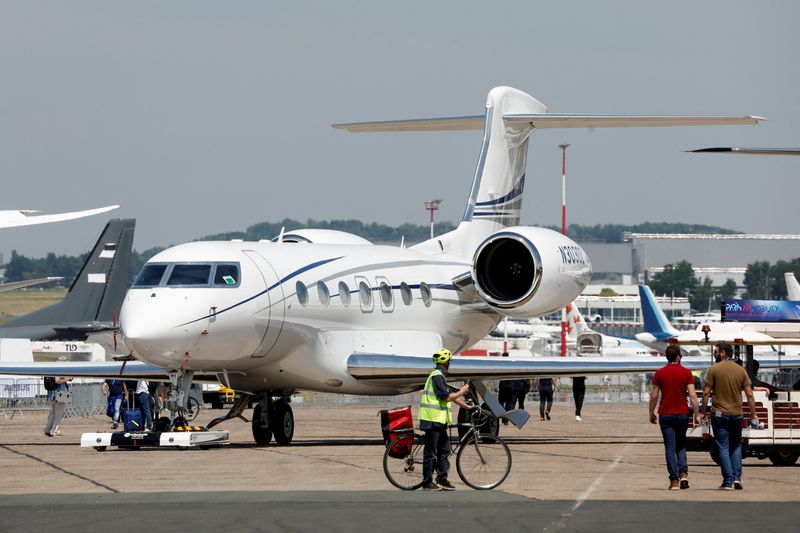
Transport Canada has certified Gulfstream G500 and G600 jets, document says

Published

on

Transport Canada has certified Gulfstream G500 and G600 jets, document says


Transport Canada has certified Gulfstream G500 and G600 jets, document says

Continue Reading

Business

Market launches programme to support new traders and help people into self-employment

Published

on

Business Live

Scheme includes incubator‐style environment with reduced stall rates and access to experienced business mentors

Rebekah Morris outside the New Leash of Life stall at Fleetwood Market

Rebekah Morris was selected from multiple applicants to run the new pet-themed stall, New Leash of Life, in the main hall at Fleetwood Market(Image: Local Democracy Reporting Service)

A unique training programme at Fleetwood Market is giving aspiring entrepreneurs in Wyre the opportunity to develop real-world business skills. The programme offers priceless hands-on experience in running, marketing, and managing a market stall, key factors in helping a business thrive.

Advertisement

The initiative, supported by the UK Shared Prosperity Fund (UKSPF), forms part of wider investment allocated to Wyre Council, which, alongside other projects, has helped establish the scheme.

Julian Brent, market manager, said: “This was an idea I’ve carried for many years, and seeing it finally come to fruition is incredibly rewarding.

” With the support of UKSPF funding, we’ve been able to successfully establish and grow the scheme, something I’ve envisioned for many years creating real opportunities for people.

“To now see it operating, supporting individuals into self-employment and bringing new life into Fleetwood Market, is something I’m genuinely proud of.

Advertisement

“The whole market team have helped to grow this idea and turn it into a reality and I’m excited to see what the future holds.”

The programme is delivered in partnership with Wyre Council and offers recipients the opportunity to run their own business within Fleetwood Market.

Participants receive support through an incubator‐style environment that includes reduced stall rates, access to experienced business mentors, and structured guidance designed to build skills and confidence.

This development initiative helps unemployed individuals gain the practical experience, knowledge, and self‐belief needed to become self‐employed market traders.

Advertisement

Through hands‐on training in a live retail setting, participants work toward the opportunity to take over a fully stocked market unit at Fleetwood Market.

Among the latest to join is Rebekah Morris, who was selected from multiple applicants to run the new pet-themed stall, New Leash of Life, located in the main hall at Fleetwood Market.

Animal lover Rebekah, 31, who moved to Fleetwood from Blackburn nearly four years ago, said: “This opportunity has really given me the chance to build my experience and create a career for myself. I’m excited to see how the future looks for me now.

“I’ve had loads of pets over the years, including dogs, a horse and even lizards, so it’s right up my street.”

Advertisement
Inside Fleetwood's market hall

Inside Fleetwood’s market hall(Image: James Maloney/LancsLive)

Councillor Lynne Bowen, portfolio holder for leisure, health and community engagement, added: “Fleetwood Market has always been a vital part of our community, and this programme is a fantastic way to help local people turn their ideas into real businesses.

“By giving aspiring entrepreneurs, the support, space and confidence to grow, we’re investing not only in their future but in the future of our town centres. I’m delighted to see Rebekah take this opportunity, and I look forward to watching her business flourish.”

At the end of her probationary period Rebekah will have the opportunity to continue operating her stall on a permanent basis. The project reflects Wyre Council’s ongoing commitment to supporting local people, strengthening business skills, and revitalising town centre markets as thriving community spaces.

Advertisement
Continue Reading

Business

Three Mile Island signals nuclear energy renaissance with 2027 revival

Published

on

Three Mile Island signals nuclear energy renaissance with 2027 revival

Three Mile Island is preparing for a return to service, underscoring how America’s fast-growing digital economy is reshaping the nation’s energy priorities.

FOX Business’ Darren Botelho joined Maria Bartiromo on “Mornings with Maria” to report on the planned restart of Three Mile Island and what it signals for America’s energy future.

Advertisement

Constellation Energy’s agreement with Microsoft to purchase power from the Pennsylvania facility marks a notable shift in how major technology companies are securing long-term electricity supply. As artificial intelligence and cloud computing expand, demand for always-on, carbon-free power has intensified, pushing nuclear energy back into the spotlight after years of stagnation.

TRUMP ADMIN PROVIDES $1B FEDERAL LOAN TO RESTART THREE MILE ISLAND NUCLEAR REACTOR

Constellation Energy’s senior vice president of Finance and Data Economy, Dan Eggers, pointed to federal support as a catalyst for the plant’s revival.

Advertisement

“Secretary Wright, Secretary Burgum, incredible supporters of nuclear — we really appreciate the relationship we’ve been able to build with them. The president has been a vocal advocate and I think that’s opened up opportunities through government support and really strong advocacy for bringing new megawatts on, which is going to help lead to the nuclear renaissance we’re all really excited about,” Eggers said.

The reopening also reflects broader concerns about grid reliability as extreme weather and surging electricity use test infrastructure nationwide. Nuclear plants, designed to operate continuously at high output, are increasingly viewed as a stabilizing force in that equation.

TRUMP ADMIN RAMPS UP EFFORT TO REVIVE COAL INDUSTRY AS POWER DEMAND SURGES

Advertisement

Energy Secretary Christopher Wright emphasized the stakes for grid design.

“When you design an electricity grid, there’s two major criteria.. You must keep the lights on… Heat running, or people die. Hospitals shut down, factories close. This is an enormous asset of a modern society to have an electricity grid. You must design it for peak demand,” Wright said.

Aerial view of nuclear power plant

Aerial view of Three Mile Island nuclear power plant in Middletown, Pennsylvania (Chip Somodevilla/Getty Images / Getty Images)

Three Mile Island’s planned 2027 restart would restore nuclear generation capacity to Pennsylvania’s grid as electricity demand increases.

GET FOX BUSINESS ON THE GO BY CLICKING HERE

Advertisement
Continue Reading

Trending

Copyright © 2025