
Business
Corporate DEI index sees 65% drop in participation from Fortune 500


People hold flags outside the US Supreme Court on December 4, 2024 in Washington, DC, during oral argument on whether states can ban certain gender transition medical treatments for young people.
Roberto Schmidt | AFP | Getty Images
New research from the LGBTQ+ group Human Rights Campaign showed a drastic drop in Fortune 500 companies willing to publicly disclose their diversity, equity and inclusion practices.
The HRC’s 2026 Corporate Equality Index saw a 65% drop in participation this year, falling from 377 Fortune 500 companies in 2025 to just 131 companies in 2026. HRC noted many of the companies that dropped out hold federal contracts.
“Our research shows the strength and the strain of this moment on LGBTQ+ workers, consumers and the companies that count on us,” HRC President Kelley Robinson said in a statement.
Of the 1,450 companies that participated, 534 earned a score of 100, representing nearly 6 million U.S. employees, according to HRC.
HRC’s index launched in 2002 and rates companies based on their social responsibility and equity in the workplace.
Over the past two years, the anti-DEI movement, championed by the White House, began to reframe the index, making it a conservative target.
The Corporate Equality Index has increasingly seen more companies exiting its orbit, beginning with Tractor Supply and including big names like Walmart, Ford and Lowe’s. Walmart, the largest U.S. retailer and grocer, said it had conversations with conservative activist Robby Starbuck, who has publicly advocated for a shift away from DEI, before the company pulled out.
It was a significant change from years prior, when companies like Ford and Walmart issued public statements supporting DEI and touting their achievements in their workplaces.


Global K-pop phenomenon BTS is on the cusp of one of the most anticipated returns in music history, with their fifth studio album *Arirang* set for release on March 20, 2026, followed by a landmark live performance streamed worldwide on March 21. The septet — RM, Jin, Suga, J-Hope, Jimin, V and Jungkook — ends a nearly four-year group hiatus triggered by mandatory military service, marking their first full-album drop since 2020’s *Be* and their first collective activities since reuniting post-discharge.

BigHit Music (HYBE) confirmed the March 20 comeback date in early January, with the announcement igniting a frenzy among ARMY, the band’s devoted fanbase. “March 20th comeback confirmed,” the label posted on X, translating the Korean message that sent pre-order demands soaring and resale markets for merchandise surging. The album, titled *Arirang* after Korea’s traditional folk song symbolizing resilience and longing, reflects the members’ journey through service, solo ventures and rediscovery as a unit.
Lead single “Swim” teases have already surfaced, with the first music video snippet showing nautical themes and high-energy choreography. Fans on social media praised the visual as a nod to BTS’s signature blend of introspection and dynamism. Pre-orders opened in mid-January, with physical editions featuring member-specific concepts and photobooks selling out rapidly across platforms.
The comeback culminates in *BTS THE COMEBACK LIVE | ARIRANG*, a special outdoor concert at Seoul’s historic Gwanghwamun Square on March 21 at 8 p.m. KST. Broadcast live exclusively on Netflix for all subscribers, the event celebrates the album’s release and BTS’s return to the stage after three years and nine months. Countdown events have unfolded daily in Seoul, with D-5 to D-4 activations drawing crowds and generating viral footage of fan light-stick oceans and choreo practices.
A Netflix documentary, *BTS: THE RETURN*, premieres March 27, offering behind-the-scenes access to the recording process in Los Angeles and Seoul. Directed by Bao Nguyen and produced by HYBE and This Machine, the film captures moments of doubt, laughter and creative breakthroughs as the members reconvened post-service. Trailer footage shows RM leading discussions, Jungkook in vocal booths and Jin cracking jokes, underscoring their unbreakable bond.
All seven members completed mandatory military service by mid-2025. Jin discharged first in June 2024, followed by J-Hope in October 2024. RM and V finished in June 2025, with Jimin and Jungkook shortly after. Suga, serving alternative social work duty due to health considerations, wrapped up last in June 2025. No public discharge events occurred for most to avoid overcrowding, but private reunions fueled speculation about group plans.
The hiatus allowed prolific solo output: RM’s introspective albums, Suga’s Agust D tours, J-Hope’s *Jack in the Box*, Jimin’s *Face* and *Muse*, V’s *Layover*, Jungkook’s *Golden* and Jin’s upbeat tracks. These projects kept BTS culturally dominant, with members topping charts and earning Grammy nods individually. The group reconvened in summer 2025 for recording, with Jimin confirming completion in November.
A massive world tour, *BTS WORLD TOUR ARIRANG*, launches April 9, 2026, in Goyang, South Korea, spanning Asia, North America, Europe, Latin America and Australia through March 2027. Initial dates sold out instantly, with additional shows expected. The 82-date itinerary positions BTS to shatter attendance records set by their pre-hiatus *Love Yourself* and *Map of the Soul* tours.
Security concerns loom large for the Seoul concert, with authorities raising terror alerts to “caution” in Jongno and Jung-gu districts. Enhanced measures include crowd control and surveillance around Gwanghwamun Square, a site of historic protests and cultural events. Officials urge fans to follow guidelines for safe attendance.
Merchandise demand has spiked, with official light sticks reselling at premiums ahead of the live event. Original versions hover around 50,000 won, but scarcity drives secondary prices higher. ARMY worldwide express eagerness, with hashtags like #BTS_ARIRANG and #BTSisBack trending globally.
Industry observers hail the comeback as a pivotal moment for K-pop’s global dominance. BTS’s influence extends beyond music, boosting tourism, language learning and Korean culture exports. The return coincides with HYBE’s expansion, positioning the group as central to the conglomerate’s strategy.
In a rare joint interview with GQ, RM emphasized reunion joy: “The most important thing is just that we are here back together again. We’re going to see the fans all over the world.” Members described *Arirang* as a “culmination” of their evolution, blending signature hip-hop roots, pop anthems and mature reflections on identity and perseverance.
As March 20 approaches, anticipation builds to fever pitch. With the album, live stream, documentary and tour, 2026 marks BTS’s bold new chapter. ARMY’s purple light sticks will illuminate screens and stadiums, signaling the kings’ triumphant return.
The comeback not only reunites one of music’s most influential acts but reaffirms BTS’s commitment to authenticity amid unprecedented fame. From military barracks to global stages, their story inspires millions, proving resilience and connection transcend borders and time.

Sims Metal trading update surpasses consensus forecasts

Calamos Investments is a diversified global investment firm offering innovative investment strategies including U.S. growth equity, global equity, convertible, multi-asset and alternatives. The firm offers strategies through separately managed portfolios, mutual funds, closed-end funds, private funds, an exchange traded fund and UCITS funds. Clients include major corporations, pension funds, endowments, foundations and individuals, as well as the financial advisors and consultants who serve them. Headquartered in the Chicago metropolitan area, the firm also has offices in London, New York and San Francisco. For more information, please visit www.calamos.com.

US hosts critical minerals event in Brazil amid diplomatic strains

Asian refiners are moving earlier than usual to secure crude oil from Russia’s Far East, as hopes for a swift resolution to Middle Eastern supply disruptions fade and the expiration of a U.S. temporary waiver on Russian oil looms.
Cargoes of Eastern Siberia-Pacific Ocean blended crude oil—a light, sweet Russian grade exported from the Kozmino terminal in the Far East to Asia-Pacific markets—are normally traded one month before loading. But with the Strait of Hormuz effectively closed, trading has kicked off early as refiners rush to plug supply gaps, according to Kpler.
Copyright ©2026 Dow Jones & Company, Inc. All Rights Reserved. 87990cbe856818d5eddac44c7b1cdeb8

Zomedica partners with Boehringer Ingelheim on equine testing

The conflict in the Middle East has significantly disrupted Thailand’s aviation sector, leading to the cancellation of over 1,000 flights and a downward revision of 2026 growth projections to a maximum of 3%.
According to Aeronautical Radio of Thailand Ltd (AEROTHAI), the combination of geopolitical instability, airspace closures, and surging fuel costs is straining air traffic management and increasing operating expenses for airlines, ultimately slowing the industry’s recovery and long-term expansion.
Key Points
- Over 1,000 flights operated by Middle Eastern airlines to Thailand have been cancelled since the conflict began on February 28, 2026, accounting for approximately 3% of total flight volumes.
- Suvarnabhumi Airport has been the most affected with over 600 cancellations, followed by Phuket Airport with 400, while Krabi, Chiang Mai, and Don Mueang have also experienced disruptions.
- The conflict is impacting critical flight corridors connecting Europe, the Middle East, and Asia, requiring AEROTHAI to monitor route changes and potential airspace closures closely.
- Rising global oil prices and an associated energy crisis have increased operating costs for airlines, leading to higher passenger fares.
Volatility in global oil prices has increased operational costs for airlines, leading to higher airfares and potentially weakening long-term passenger demand. Projected flight growth for 2026 has been adjusted downward to no more than 3% over 2025 levels due to the severity of the conflict and economic pressures.
Other People are Reading

The community grocery store in Crewe aims to bridge the gap between food banks and supermarkets.
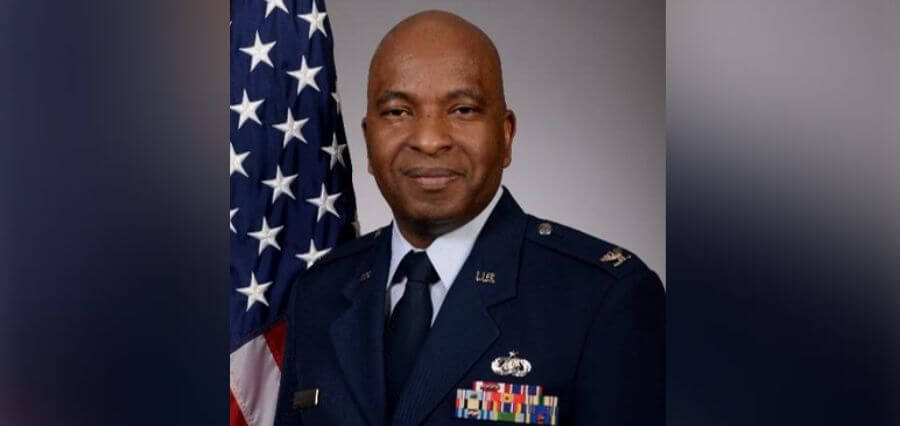
Colonel Nashid Salahuddin has spent more than three decades in uniform preparing for a challenge that defines modern military leadership: developing leaders who can operate confidently in ambiguity while delivering measurable readiness today.
Now serving as Director of Human Resources for the Air National Guard at Joint Base Andrews, Colonel Nashid Salahuddin oversees the human capital strategy supporting roughly 1,800 military and civilian personnel at headquarters. His mandate is clear and strategic . He ensures the right people are in the right positions at the right time, maintains a fully trained and ready workforce, and deliberately develops leaders for both current missions and future conflict environments.
That mission reflects a straightforward belief: readiness is built through people long before it is tested in operations.
Leadership for Ambiguity, Not Just Compliance
The Air National Guard operates at both a state and national level in order to respond to domestic events while also being able to ensure power is projected globally for US interests. In order to properly fulfill both of these duties, leaders must think much further than simply using checklists or doctrine when performing their daily duties.
Colonel Nashid Salahuddin has developed his own philosophy of leading through the use of adaptability and situational awareness. His experiences include starting out as an airman at 18 in 1990 to being a commissioned officer at the age of 24 in 1996 before completing various operational commands and assignments with the Office of The Secretary of War(Pentagon). This plethora of experiences has taught him that no two teams are identical and any crisis is different from others.
For example, during one of Colonel Salahuddin’s most significant moments for developing leadership, he was deployed to Iraq, where he served for six months as a Senior Advisor to the MoI (Ministry of Interior). He led through influence (without authority) so that he could align Coalition and Sovereign Partners’ objectives with no one being subordinate to him. In order to be successful in this effort, he relied heavily on his credibility and cultural understanding, along with disciplined listening. From this experience, the guiding principle of Colonel Salahuddin is to develop future-ready leaders capable of leading without authority.
Additionally, Colonel Salahuddin applies this philosophy of developing future-ready leaders by embedding their professional development in the execution of the organization’s mission. Decreasing the gap between performance and development was achieved by tracking professional development for individuals, in relation to the mission. Assignments create an opportunity to challenge an individual’s judgment versus just their technical skill. Feedback is both intentional and continuous. Coaching is an expectation.
Ultimately, the goal of Colonel Salahuddin is to create an organization that can adapt to complex situations; rather than just being trained.
Development as a Readiness Strategy
In his current role, Colonel Nashid Salahuddin treats human capital strategy as a readiness function, not an administrative requirement. That perspective has produced measurable results.
After examining the headquarters hiring process through the lens of his Six Sigma Black Belt training, he led a process overhaul that reduced time-to-fill vacancies by approximately 50 percent, cutting timelines from six months to roughly three. The result was not efficient for its own sake. Faster placement of qualified personnel into mission-critical positions directly strengthened operational readiness.
These efforts reflect a consistent view: leadership development and mission execution are interdependent.
Senior leaders often feel tension between immediate readiness requirements and long-term talent cultivation. Colonel Nashid Salahuddin does not see these as competing priorities. Organizations that neglect development in pursuit of short-term output eventually undermine their own capacity. For that reason, he integrates mentorship, stretch assignments, and succession planning directly into operational workflows.
Data-Informed, Human-Centered Leadership
Modern military personnel management generates vast amounts of data. Retention patterns, assignment timelines, performance metrics, and demographic trends provide valuable insight into workforce health. Colonel Nashid Salahuddin views data as essential, but incomplete on its own.
Data establishes baselines and exposes trends. It highlights retention challenges, recruiting pressures, and uneven developmental pathways. It strengthens transparency in promotion and assignment decisions. However, data does not fully explain morale, motivation, or trust.
For that, leaders must engage directly.
He combines quantitative analysis with sustained dialogue. Conversations with Airmen and civilians, 360-degree feedback, and structured forums provide context that dashboards cannot. The combination of evidence and engagement allows policy adjustments that are both measurable and human.
This approach also reinforces fairness. Transparent criteria and documented performance data reduce bias and build confidence in the system. In an institution that depends on trust, that legitimacy is essential.
His leadership philosophy balances disciplined process improvement with genuine concern for the people inside those processes.
Succession Planning and Bench Strength
Preparing future-ready leaders requires more than strong individual performance. It demands deliberate succession planning and institutional depth.
Colonel Nashid Salahuddin evaluates human capital effectiveness across several dimensions: readiness indicators, retention quality, engagement levels, and succession strength. The central question is not simply whether a vacancy can be filled today, but whether qualified successors are being prepared for critical roles five and ten years from now.
He encourages developmental breadth. Junior officers and enlisted personnel are urged to pursue cross-functional assignments that broaden perspective beyond a single specialty. Exposure to operational, strategic, and administrative domains builds leaders capable of systems thinking, a necessary skill in complex environments.
His own career illustrates that philosophy. From serving as Inspector General and Mission Support Group Commander to holding senior strategist roles at the Pentagon, he has operated at both field and enterprise levels. That experience informs his insistence that future leaders must understand both tactical execution and institutional design.
Bench strength is not accidental. It is built intentionally.
Cross-Generational Insight with Institutional Discipline
While his work focuses primarily on institutional systems, one enduring influence shapes his leadership philosophy: the example of his father, whose 87-year life journey is documented in the book Sacred Journey. The reference is contextual rather than promotional. It reflects lessons about resilience, integrity, and steady leadership through societal change.
From that example, Colonel Nashid Salahuddin internalized the importance of ethical steadiness in shifting environments.
Ethical leadership, in his practice, is operational. It requires clarity of standards, consistency in accountability, and the willingness to enforce consequences fairly. It means doing what is right even when oversight is limited. In high-complexity environments where supervision cannot reach every decision, character becomes the control mechanism.
Cross-generational insight also informs how he approaches workforce modernization. Younger Airmen contribute technological fluency and fresh perspective. Senior leaders provide institutional memory and contextual depth. He creates forums where these perspectives intersect, accelerating innovation while preserving experience.
Change is constant. Principles endure.
Institutional Leadership Over Personal Recognition
Colonel Nashid Salahuddin does not frame advancement as personal achievement. Recognition, in his view, reflects collective accomplishment. Leaders who focus primarily on individual recognition weaken trust. Leaders who elevate teams strengthen performance.
This perspective shapes how he measures impact. He looks for organizations that are stronger at the end of his tenure than at the beginning. He looks for leaders who have grown, systems that function more effectively, and policies that align more tightly with mission demands.
He does not emphasize legacy. He emphasizes stewardship.
That mindset is particularly relevant as the Air National Guard adapts to evolving strategic realities, including domestic response requirements and great-power competition. The environment demands leaders who can integrate strategic thinking with disciplined human capital management, modernize systems without losing sight of people, and sustain ethical clarity under pressure.
Colonel Nashid Salahuddin’s career progression, from enlisted Airman to colonel and from field commander to headquarters director, reflects a consistent focus on building capacity in others.
Preparing Leaders for What Cannot Be Predicted
The core challenge in military leadership development is not predicting specific threats. It is preparing leaders to operate effectively in uncertainty.
Colonel Nashid Salahuddin cultivates intellectual flexibility by encouraging leaders to question assumptions and seek diverse perspectives. He builds resilience by allowing emerging leaders to confront difficult assignments with appropriate mentorship and support. He reinforces ethical grounding by maintaining that integrity is non-negotiable, regardless of operational tempo.
He does not promise certainty. He prepares for volatility.
As Director of Air National Guard Human Resources, his mission remains direct: place the right people in the right positions at the right time, ensure they are fully trained and ready, and deliberately develop leaders who can meet today’s demands and tomorrow’s challenges.
Aircraft, technology, and strategy remain essential. Yet without leaders capable of thinking clearly, adapting quickly, and acting with integrity, none of those assets achieve their full potential.
Colonel Nashid Salahuddin has built his career on a disciplined conviction. Readiness begins long before deployment orders are issued. It begins with people who are prepared not only to execute, but to think, adapt, and lead.

The Office of the Small Business Commissioner (OSBC) has appointed two new advisory board members as it steps up efforts to tackle the UK’s persistent late payment crisis and prepares for potential new regulatory powers.
Abigail Whittaker, Chief of Staff at Funding Circle, and Ryan Shorthouse, Founder and Executive Chair of think tank Bright Blue, will formally join the board in April following a public appointments process. Both bring extensive experience across finance, communications and public policy at a time when the role of the Small Business Commissioner is expected to expand.
The appointments come as the Government considers strengthening the powers of the Commissioner, Emma Jones (pictured), as part of a broader package of reforms outlined in its Small Business Plan. The move reflects mounting concern over the scale of late payments across the UK economy, which are estimated to cost businesses £11 billion annually and contribute to the closure of around 38 firms every day.
Whittaker joins with a strong background in financial services and corporate communications, having held senior roles at Funding Circle, Vanquis Banking Group, Metro Bank and TSB. Her experience is expected to support the OSBC’s increasing focus on digital tools and data-driven approaches to improving payment practices, as well as strengthening engagement with SMEs and lenders.
Shorthouse, meanwhile, brings deep expertise in public policy and economic reform. As founder of Bright Blue and a commissioner at the Commonwealth Scholarship Commission, he has played a prominent role in shaping UK policy debates. His experience across think tanks and advisory bodies is expected to be particularly valuable as the Commissioner navigates potential legislative changes and seeks to influence payment behaviour across large corporates.
The OSBC was established under the Enterprise Act 2016 to address late payments and unfair payment practices in the private sector. Its remit includes supporting small businesses in resolving payment disputes, promoting the Fair Payment Code, and encouraging larger firms to improve supplier payment terms.
Emma Jones said the new appointments would strengthen the organisation’s ability to deliver on its core mission. She described the additions as bringing “deep experience of running businesses, national media and communications expertise, and digital know-how” at a critical juncture for the office.
Both appointees emphasised the economic importance of addressing late payments. Whittaker highlighted the central role small businesses play in the UK economy and the pressures they face, noting that improving payment practices can directly support growth and resilience. Shorthouse, drawing on his own experience of running a business, described late payments as “stressful and crippling” and argued that improving cash flow across the economy is an “underappreciated” driver of productivity and investment.
The advisory board will provide strategic input on the OSBC’s operations, including its dispute resolution services, governance, and initiatives such as the Fair Payment Code. Members are expected to attend quarterly meetings and contribute to broader policy and operational discussions, with appointments set for a three-year term.
The timing of the appointments signals a renewed focus on enforcement and systemic change in payment culture. While the OSBC has historically relied on guidance and voluntary codes, the Government’s recent consultation on enhanced powers suggests a shift towards a more interventionist approach.
For SMEs, which often operate on tight margins and limited cash reserves, faster and more reliable payment cycles remain a critical issue. As policymakers look to unlock growth across the UK economy, improving how quickly money moves between businesses is increasingly being viewed as a foundational reform.
With new expertise on its advisory board and the prospect of expanded powers on the horizon, the Small Business Commissioner is positioning itself at the centre of that agenda.

Jamie Young
Jamie is Senior Reporter at Business Matters, bringing over a decade of experience in UK SME business reporting.
Jamie holds a degree in Business Administration and regularly participates in industry conferences and workshops.
When not reporting on the latest business developments, Jamie is passionate about mentoring up-and-coming journalists and entrepreneurs to inspire the next generation of business leaders.

Kasper Schmeichel: Celtic goalkeeper ‘could’ve played last game’ with two operations needed

‘Arirang’ Album Drops March 20, Live Concert March 21 in Seoul

Ethereum ETFs hit three-week high inflows, will ETH price break $2,400?


-
 Crypto World4 days ago
HYPE Token Enters Net Deflation as HyperCore Buybacks Outpace Staking Rewards
-

 Fashion5 days ago
Weekend Open Thread: Addict Lip Glow
-

 Tech3 days ago
Your Legally Registered ‘Motorcycle’ Might Not Count Under Proposed US Law
-
Sports4 days ago
Why Duke and Michigan Are Dead Even Entering Selection Sunday
-

 NewsBeat7 days ago
Residents reaction as Shildon murder probe enters second day
-

 Sports7 days ago
PWHL, Senators discussing plan to keep Charge in Ottawa
-

 Business3 days ago
Search for Savannah Guthrie’s Mother Enters Seventh Week with No Arrests
-

 Business4 days ago
US Airports Launch Donation Drives for Unpaid TSA Workers as Partial Government Shutdown Enters Fifth Week
-
 Tech17 hours ago
Are Split Spacebars the Next Big Gaming Keyboard Trend?
-
Crypto World4 days ago
Coinbase and Bybit in Investment Talks: Could Bybit Finally Enter the US Crypto Market?
-

 NewsBeat7 days ago
I Entered The Manosphere. Nothing Could Prepare Me For What I Found.
-

 Business4 days ago
Country star Brantley Gilbert enters growing non-alcoholic beer market
-

 Business2 days ago
Australian shares drop as Iran war enters third week
-

 Crypto World2 days ago
Crypto Lender BlockFills Enters Chapter 11 with Up to $500M in Liabilities
-

 Sports5 days ago
College Basketball Best Bets: Conference Tournament Semifinal Picks
-
 Crypto World6 days ago
Three Binance Charts May Be Hinting at Bitcoin’s Next Move
-

 Business6 days ago
Trump demands Powell cut rates as Iran conflict raises energy prices
-

 Crypto World6 days ago
Senate Votes to Include CBDC Ban in Bipartisan Housing Bill
-

 Fashion2 days ago
25 Celebrities with Curly Hair That Are Naturally Beautiful
-

 NewsBeat7 days ago
What to know about Erika Kirk after her Air Force board appointment | News US


You must be logged in to post a comment Login