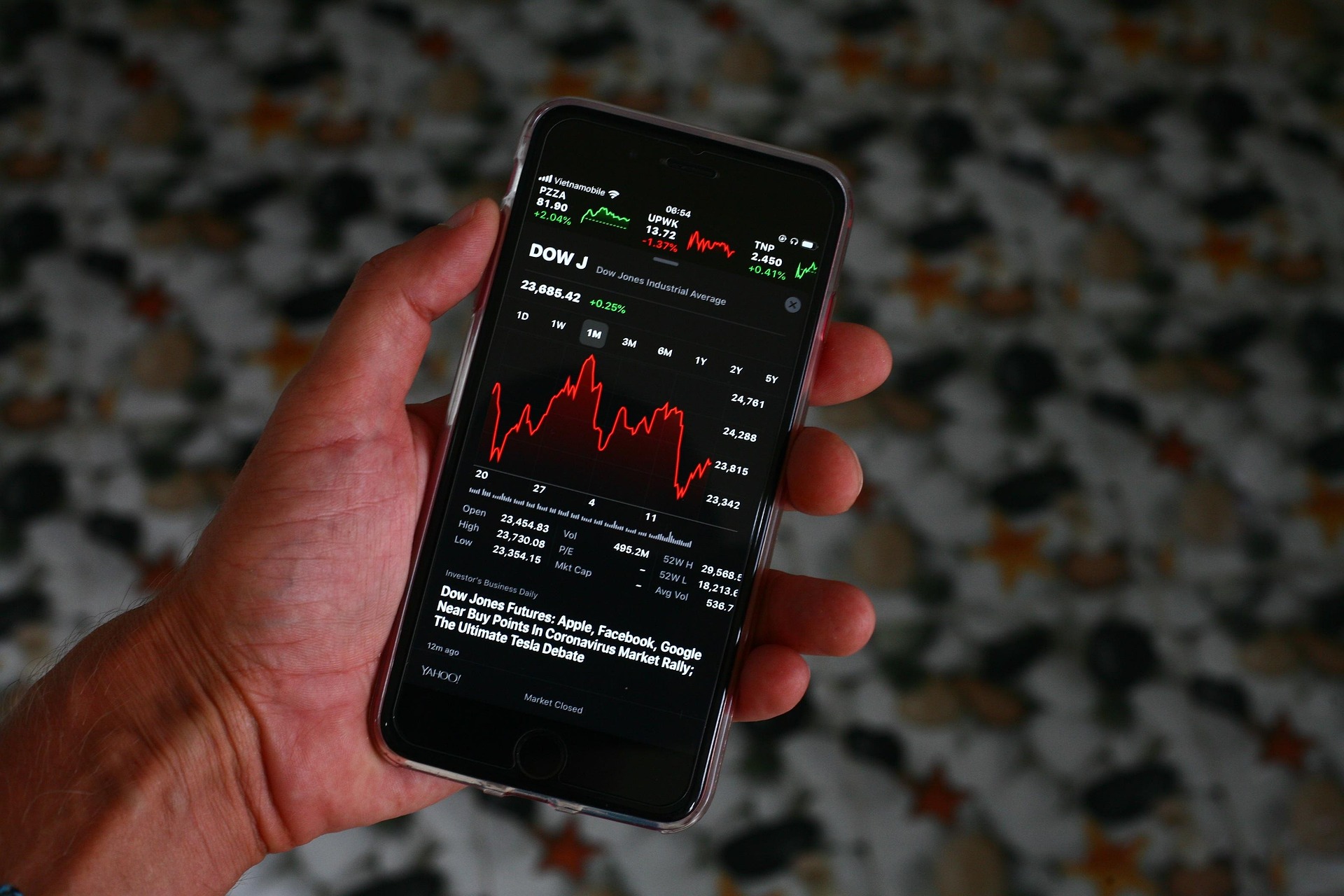
NEW YORK — The Dow Jones Industrial Average closed lower Tuesday, shedding more than 400 points amid persistent volatility driven by the escalating conflict involving Israel, the United States, and Iran. Investors grappled with fears of prolonged supply disruptions in global oil markets, though a late-session rebound trimmed earlier steep losses.
The blue-chip index ended at 48,501.27, down 403.51 points or 0.83% from Monday’s close of 48,904.78. Intraday trading saw dramatic swings: the Dow plunged as much as 1,250 points early in the session before recovering significantly as reports emerged of indirect U.S.-Iran contacts aimed at de-escalation and President Donald Trump’s assurances that the U.S. Navy would escort tankers through the Strait of Hormuz.
Dow Jones
The broader market mirrored the unease. The S&P 500 slipped 0.94% to around 6,847, while the tech-heavy Nasdaq Composite fell 1.02%. Volume reached 533 million shares on the Dow components, reflecting heightened trading activity.
The sell-off stemmed primarily from geopolitical developments. Fresh Israeli and U.S. strikes on Iranian targets, including infrastructure and security apparatus in Tehran, intensified concerns about a wider regional war. Oil prices extended their rally, with Brent crude climbing more than 2% to near $84 per barrel at one point — levels not seen since early 2025 — before easing slightly on hopes for diplomatic progress. Higher energy costs threaten to fuel inflation and pressure consumer spending, key vulnerabilities for an economy already navigating post-pandemic recovery challenges.
President Trump addressed the situation overnight, stating the U.S. stands ready to protect shipping lanes despite Iran’s threats. This provided some reassurance, contributing to the intraday rebound. Analysts noted that markets have historically shaken off geopolitical shocks relatively quickly if supply disruptions prove temporary, though sustained conflict could alter that dynamic.
Advertisement
Key Dow components showed mixed performance amid the turmoil. Energy-related names like Chevron gained on rising crude prices, while industrials such as Caterpillar and Boeing faced heavier selling pressure tied to broader economic fears. Tech and consumer stocks lagged, with declines in names like Nike and UnitedHealth contributing to the index’s drop.
Broader market sentiment reflected caution. The conflict has overshadowed other economic data, including upcoming ADP private payrolls figures expected later in the week. Treasury yields ticked higher as investors weighed inflation risks from energy costs against potential growth slowdowns.
Wall Street’s reaction aligns with global trends. Asian markets, including South Korea’s Kospi, reversed earlier gains amid the uncertainty, while European indexes also traded lower. Gold futures advanced as a safe-haven play, underscoring risk aversion.
Despite the decline, the Dow remains up about 12-14% over the past year, with a 52-week range from roughly 36,600 to over 50,500. The index has hovered near record highs in recent months before the latest volatility. Year-to-date performance has been positive, though the war has introduced new uncertainties.
Advertisement
Analysts offered varied outlooks. Some viewed the pullback as an overreaction to headlines, pointing to resilient corporate earnings and consumer strength. Others warned that prolonged Middle East instability could disrupt global supply chains, raise borrowing costs, and complicate Federal Reserve policy. The central bank has been monitoring energy price impacts closely, with higher oil potentially delaying rate adjustments.
The rebound from session lows highlighted dip-buying interest. Reports of possible indirect negotiations between the U.S. and Iran boosted hopes for containment, helping stocks claw back ground. Futures trading early Wednesday suggested a tentative recovery, with Dow futures up modestly around 0.1-0.3% in pre-market action as of March 4.
Looking ahead, market participants will watch for any de-escalation signals, oil price stabilization, and economic indicators. The conflict’s trajectory remains the dominant driver, with potential for continued swings if developments shift rapidly.
The Dow’s performance Tuesday underscores the market’s sensitivity to geopolitical risks, even as underlying fundamentals show resilience. Investors remain focused on balancing short-term volatility against longer-term growth prospects in an uncertain global environment.
Retail investors trimmed stakes in 96 Nifty Midcap 150 stocks amid weak performance, with many declining sharply over six months, signaling fading confidence and cautious sentiment toward select midcap companies.
Naturgy Energy Group, S.A. (GASNY) Shareholder/Analyst Call March 24, 2026 5:00 AM EDT
Company Participants
Francisco Reynés Massanet – CEO & Executive Chairman Manuel García Cobaleda – Secretary of the Company and the Board
Conference Call Participants
Advertisement
Fernando de la Camara Garcia
Presentation
Francisco Reynés Massanet CEO & Executive Chairman
Advertisement
Good morning, ladies and gentlemen. Thank you. Thank you so much for being here. If you allow me, before I officially start this AGM, I would like to share with you a video that summarizes joint and in-depth work that we have done this year and after being shared and approved by the AGM has to do with our corporate purpose. Our corporate purpose has been defined as a goal that aims to facilitate the relationship that we all have with energy on a daily basis. By trying to improve the relationship with our employees, collaborators, public authorities, regulators, suppliers and especially so with the over 20 million customers that we have distributed through our geographies. So without further ado and before we officially start, allow me to show you this video that summarizes our commitment.
[Presentation]
Francisco Reynés Massanet CEO & Executive Chairman
Advertisement
Ladies and gentlemen, shareholders, just like in previous years, I’m honored as the Chairman of the Board of Directors to welcome you to this ordinary AGM that the company holds, as we have in the past, both remotely and in person simultaneously. I would especially like to thank the presence of the members of the Board of Directors who are here present and also the representatives of the most significant shareholders. Especially this year, I have the honor of welcoming the representatives of Sonatrach, Mr. Eddine Daoudi and Mr. [ Atallah ] who are also with us here today. One more proof of that commitment and the fruitful relationship and long-lasting relationship we’ve had for over 40 years. Therefore, we officially open this
Ladies and gentlemen, thank you for standing by, and welcome to PDD Holdings Inc. Fourth Quarter and Fiscal Year 2025 Earnings Conference Call. [Operator Instructions] Please be advised that today’s conference call is being recorded. I would now like to hand the conference over to your host today. Sir, please go ahead.
Unknown Executive
Advertisement
Thank you, operator, and hello, everyone, and thank you for joining us today. PDD Holdings earnings release was distributed earlier and is available on our website at investor.pddholdings.com as well as through the Globe Newswire services. Before we begin, I would like to refer you to our safe harbor statement in the earnings press release, which applies to this call as we will make certain forward-looking statements. This call also includes discussions of certain non-GAAP financial measures. Please refer to our earnings release, which contains a reconciliation of non-GAAP measures to GAAP measures.
Joining us today are Mr. Chen Lei, our Co-Chairman and Co-Chief Executive Officer; and Mr. Zhao Jiazhen, our Co-Chairman and Co-Chief Executive Officer.
Our VP of Finance, Ms. Liu Jun, is unfortunately on medical leave. Delivering the prepared remarks today will be Mr. Li Jiong, our Finance Director. Jiazhen and Lei will make some general remarks on our performance for the past quarter and our strategic focus. Jiong will then walk us through our financial results for the fourth quarter and fiscal year ended December 31, 2025.
Shares of RPSG Ventures surged as much as 20% to their day’s high of Rs 721 on the BSE on Wednesday after United Spirits announced the sale of its wholly owned subsidiary Royal Challengers Bengaluru (RCB) for over Rs 16,600 crore.
The RCB deal is being viewed as a key valuation benchmark for the IPL ecosystem, effectively resetting the valuation framework for other franchises. The ripple effect was visible in stocks such as RPSG Ventures and Sun TV, which own Lucknow Super Giants and Sunrisers Hyderabad, respectively.
According to Nuvama Institutional Equities, the $1.8 billion RCB transaction sets a new high-water mark for IPL franchise valuations. It implies a more than twofold jump over the $900 million valuation of the Gujarat Titans and is also higher than the Rajasthan Royals’ recent $1.6 billion valuation.
The brokerage noted that this reflects a sharp re-rating of IPL assets, with franchise valuations rising nearly 25 times since inception in 2008, driven by strong global investor interest, including private equity funds and US-based sports owners. Nuvama added that the deal establishes a strong benchmark for the sector and points to potential upside for other listed franchise owners such as Sun TV and RPSG Ventures.
Advertisement
RPSG Ventures is in focus as its 51% stake in Lucknow SuperGiants is valued at nearly 250% of the company’s own market cap, even after a holding-company discount.
Live Events
The RCB franchise has been acquired by a consortium that includes the Aditya Birla Group, The Times of India Group, Bolt Ventures led by David Blitzer, and a Blackstone fund. The transaction, valued at about $1.8 billion, sets a fresh benchmark for IPL franchise valuations and highlights the growing appeal of T20 cricket assets. Also read: Buy on the cannons, sell on the trumpets? How stock market investors can deal with Iran war stressFor United Spirits Limited, a subsidiary of Diageo plc, the deal marks nearly a 16-fold return compared to its original bid in 2008. The transaction is subject to customary closing conditions, including approvals from the Board of Control for Cricket in India, the IPL Governing Council and other regulatory authorities. The BCCI will receive 5% of the deal value as a transfer fee.
The bidding process attracted strong interest from multiple groups. The winning consortium outbid a rival offer from Adar Poonawala of Serum Institute and Aditya Mittal of ArcelorMittal.
Other participants included Premji Invest alongside EQT, as well as a separate group comprising Ranjan Pai of Manipal Group, KKR and Temasek, which were involved in the early stages of bidding.
Financially, RCB reported revenue of Rs 504 crore and EBITDA of Rs 186 crore for FY25, according to United Spirits’ annual report. The franchise has already nearly matched those figures in the first half of FY26, posting revenue of Rs 478 crore and EBITDA of Rs 225 crore, surpassing the full-year FY25 EBITDA.
The Times of India Group is the publisher of The Economic Times.
(Disclaimer: Recommendations, suggestions, views and opinions given by the experts are their own. These do not represent the views of The Economic Times)
Smallcap counter Sammaan Capital – which was in news today after the Reserve Bank of India (RBI) cleared decks for Abu Dhabi-based International Holding Company (IHC) to acquire a controlling stake – witnessed a bulk deal where French multinational bank Societe Generale bought shares worth Rs 76 crore. In another major deal, ace investor Mukul Agrawal sold shares worth Rs 8 crore in a microcap Siyaram Recycling Industries, which had fallen 72%.
Sammaan Capital
Societe Generale bought 50.6 lakh shares in Sammaan Capital at a price of Rs 149.92 per share. It was a premium of 8% over the Tuesday closing price of Rs 138.51 on the NSE. Today, its shares settled nearly 6% higher at Rs 146.30. The stock has been a market outperformer with 23% returns over a 1-year period and is currently trading above its 50-day and 200-day simple moving averages (SMAs) of Rs 145 and Rs 144, respectively, according to Trendlyne data.
The acquisition of a 66.65% controlling stake will be made via Avenir Investment RSC, which is owned and controlled by IHC.
Avenir Investment RSC proposed to invest nearly Rs 8,850 crore by the way of preferential issue. This is one of the largest investments by a Middle Eastern entity in India’s financial services sector.
Advertisement
Live Events
After the completion of the preferential issue, Avenir Investment will hold nearly a 41.23% stake in the company, while the rest will be acquired through an open offer, Sammaan Capital, formerly called Indiabulls Housing Finance, said in an exchange filing.
Siyaram Recycling Industries
Mukul Agrawal sold 21 lakh shares via a separate bulk deal where the buyer was Param Value Investments. The shares were purchased at a price of Rs 38.20 apiece, a 4.3% premium over the Tuesday closing price of Rs 36.64.Today, its shares settled at Rs 38.28, up by Rs 1.64 or 4.5% over the last closing price.
Agrawal held 22 lakh shares representing 10.10% stake in the company according the September shareholding data on the BSE.
The stock price has seen a 72% erosion in the past year.
(Disclaimer: The recommendations, suggestions, views, and opinions given by the experts are their own. These do not represent the views of The Economic Times.)
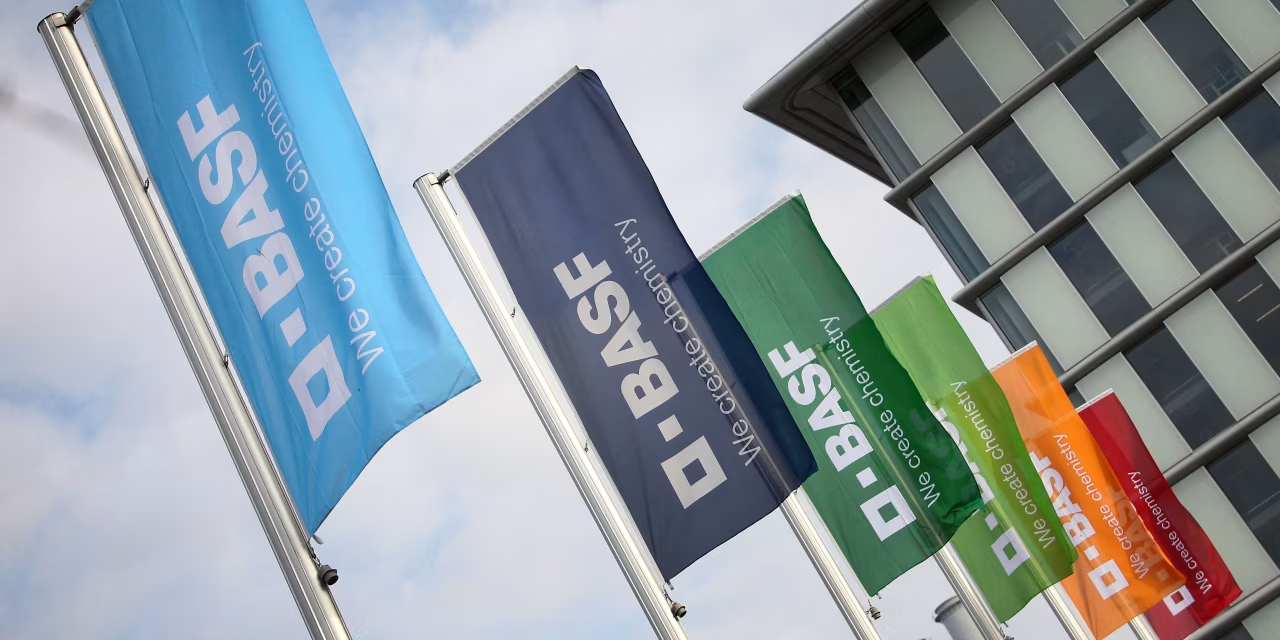
BASFBAS 2.40%increase; green up pointing triangle said it is raising prices sharply for more of its products, adding to a rash of price hikes among chemical makers as raw-materials costs soar due to the U.S. and Israel’s war with Iran.
The German group said Wednesday it would lift prices of commodity amines in Europe by up to 30%, with some price tags rising even more markedly. Amines are used as solvents and catalysts in an array of industries, from pharmaceuticals to personal care and agrochemicals.
Rep. Lisa McClain, R-Mich., joins ‘Mornings with Maria’ to discuss President Donald Trump’s Iran talks, the Strait of Hormuz deadline and GOP support for a $200 billion Pentagon funding push.
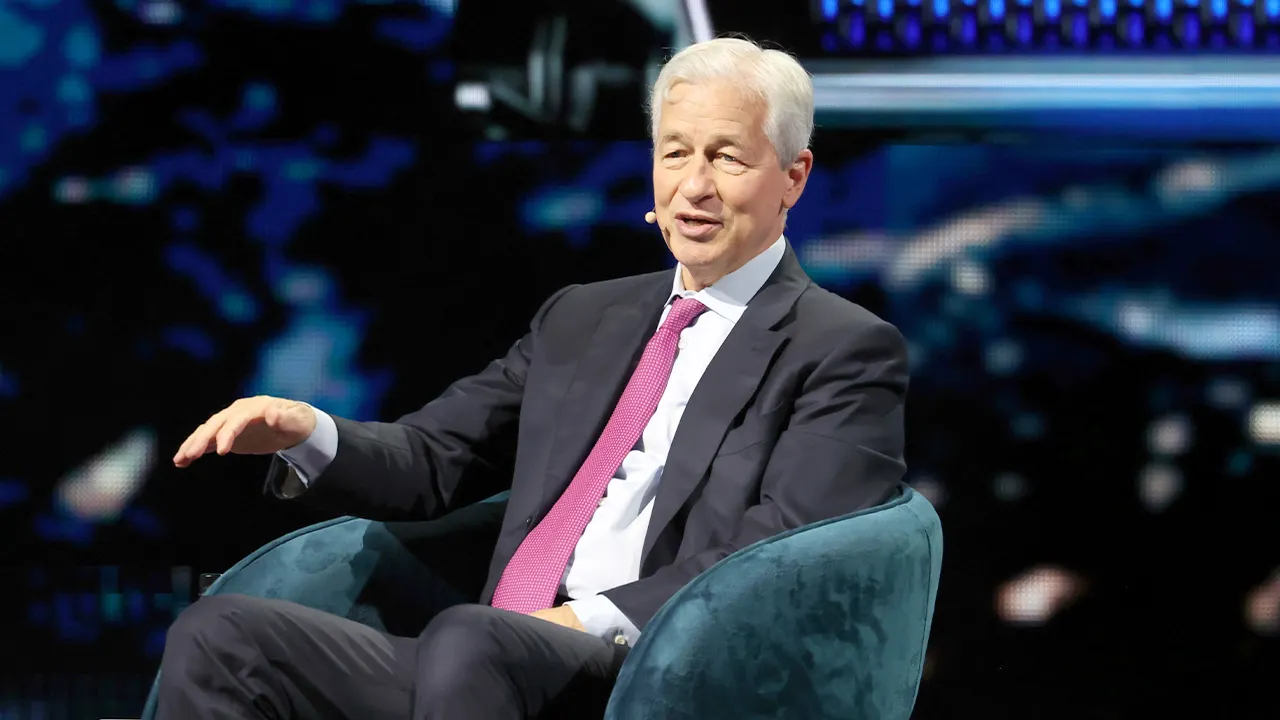
JPMorgan Chase CEO Jamie Dimon said on Tuesday that the U.S. is becoming more like Europe in terms of defense procurement, and it’s holding the country back.
Dimon spoke at the Hill & Valley Forum, which is an annual meeting that brings together policymakers, defense leaders, tech builders and investors to discuss national security, emerging technology and U.S. competitiveness.
Advertisement
He said he was “deeply frustrated” by what he sees as excessive bureaucracy in the defense procurement process at the Department of War that inhibits its ability to respond quickly and adapt during a conflict.
“We’ve become like Europe, we’re unable to move and change – change budgeting, change procurement. You know, let people do what they need to do,” Dimon said.
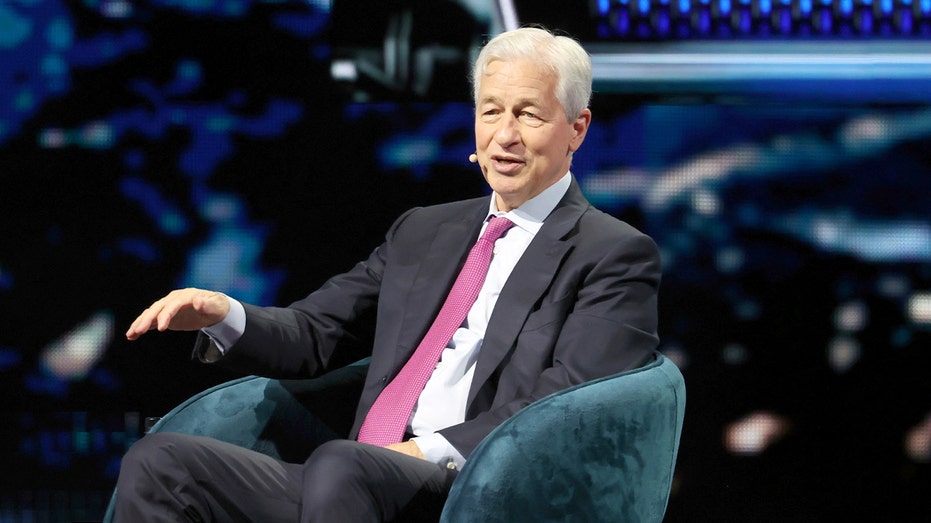
JPMorgan Chase CEO Jamie Dimon expressed frustration with what he sees as a lack of adaptability in the defense procurement process. (Alexander Tamargo/Getty Images for America Business Forum)
Dimon added that the bureaucracy’s rules and compliance processes as well as Congress’ involvement create barriers to the ability of defense contractors to deliver on time and on budget.
Advertisement
He added that the defense industrial base and policymakers need to be more adaptable as he sees a need to increase defense spending given threats around the world.
“Of course, you also know that there’s going to be a lot more spent on the military, which we really need to do,” he said. “We just want to be part of helping their supply chain.”
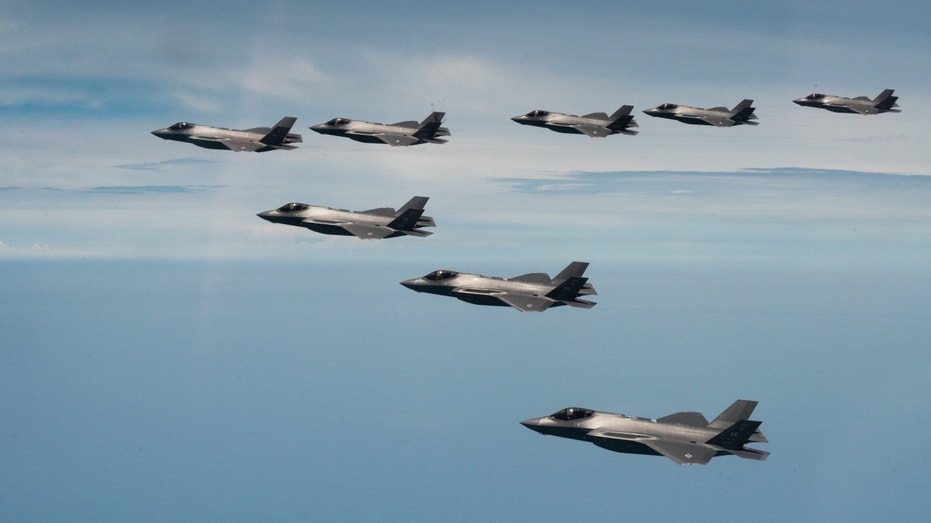
Dimon said the U.S. will likely need to spend more on defense in the years ahead given geopolitical threats. (U.S. Air Force/Senior Airman Trevor Gordnier/51st Fighter Wing/DVIDS)
Dimon added that he thinks the involvement of more private companies in the defense industrial base could foster more rapid development and deployment of new technologies. Some private companies like Anduril and SpaceX are emerging as significant defense contractors in their areas of expertise.
Advertisement
As the competition between the U.S. and China intensifies and the threat of conflict over Taiwan grows, Dimon said that the dependencies that the U.S. government and American corporations developed for components from China were harmful over the long-term.
Dimon said the U.S. defense industrial base has been too slow to adapt to changes and is becoming like Europe’s. (Christopher Furlong/Getty Images)
However, that experience could be informative for the U.S. if a conflict with China ever arises, as it could attempt to emulate aspects of what China has done in terms of critical industries.
“We should acknowledge [China has] done some things magnificently well,” Dimon said, noting the country’s manufacturing of cars, drones, ships and batteries. “We should look at our own shortcomings and then be prepared, if they ever become an adversary, to face off against them.”
President Donald Trump said he’s considering sending the National Guard to U.S. airports, two days after the administration sent Immigration and Customs Enforcement agents to several major U.S. airports following hourslong waits for travelers because of the partial government shutdown.
In a Truth Social post on Wednesday, Trump blamed Democrats for the shutdown, which began Feb. 14.
“Thank you to our great ICE Patriots for helping. It makes a big difference,” he wrote in his post. “I may call up the National Guard for more help.”
Travelers wait in line at a Transportation Security Administration (TSA) checkpoint at Hartsfield-Jackson Atlanta International Airport (ATL) in Atlanta, Georgia, US, on Monday, March 23, 2026.
Advertisement
Elijah Nouvelage | Bloomberg | Getty Images
More than 11% of TSA officers called out on Wednesday and more than 450 have quit since the shutdown started, the Department of Homeland Security said.
Elevated absences of Transportation Security Administration officers, who are required to work though they’re not getting paid during the shutdown, have contributed to long lines at major U.S. airports, including in Atlanta, Houston and New York.
Read more about the impact on air travel
DHS, which oversees both ICE and and TSA, said the ICE agents will “support airports facing the greatest strain” but the department didn’t respond to requests for comment on what the ICE agents’ duties are. ICE agents are getting paid in the shutdown.
Advertisement
Airlines have been warning customers about potentially long security lines, while executives grow increasingly frustrated with lawmakers about the impasse. On Tuesday, Delta Air Lines said it suspended its airport escorts and other special services for members of Congress and their staff because of the ongoing partial shutdown of the DHS.
The shutdown comes as Democrats in Congress have demanded changes to how federal immigration enforcement operates in exchange for releasing DHS funding after two U.S. citizens were shot and killed by ICE officers in Minneapolis.
A Los Angeles jury on Wednesday found Meta and Google liable in a closely watched trial accusing social media platforms of designing their products to get young users addicted, awarding the plaintiff $3 million in damages.
The verdict came after nine days, roughly 43 hours of deliberations.
Advertisement
The case centered on a now 20-year-old California woman identified as K.G.M., who said social media platforms encouraged addictive use when she was a minor and contributed to depression and suicidal thoughts.
Her lawsuit alleged that companies behind several major platforms designed their products in ways that encouraged compulsive use among young people.
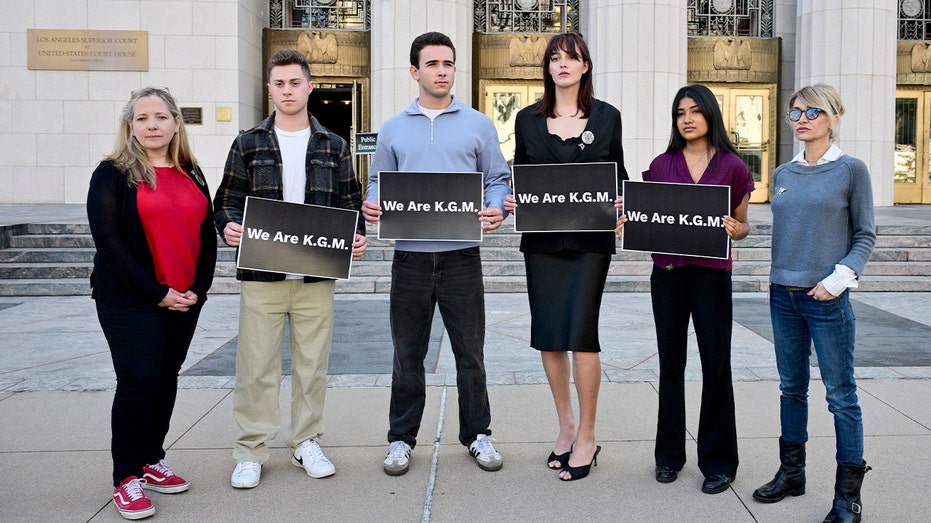
Supporters of “K.G.M.” pose with signs outside the Los Angeles Superior Court during a social media trial over whether platforms were deliberately designed to be addictive to children in Los Angeles, Feb. 25, 2026. (Frederic J. Brown/AFP Via Getty Images / Getty Images)
TikTok and Snap, the parent company of Snapchat, were originally named as defendants but settled ahead of trial, leaving Meta and Google-owned YouTube as the remaining companies in the case.
The trial had been closely watched as one of the first to test in front of a jury whether social media companies can be held legally responsible for alleged harms tied to youth use of their platforms.
Jurors were asked to determine whether Meta or YouTube should have known their platforms posed a danger to children, whether the companies were negligent in designing their products, and if so, whether their services were a “substantial factor” in causing the plaintiff’s mental health issues.
On Monday, jurors told the judge that they were having difficulty coming to a verdict with one of the two defendants and asked how to move forward. They were given their previous instructions, with the judge suggesting they read the details out loud before they were sent back for more deliberations.
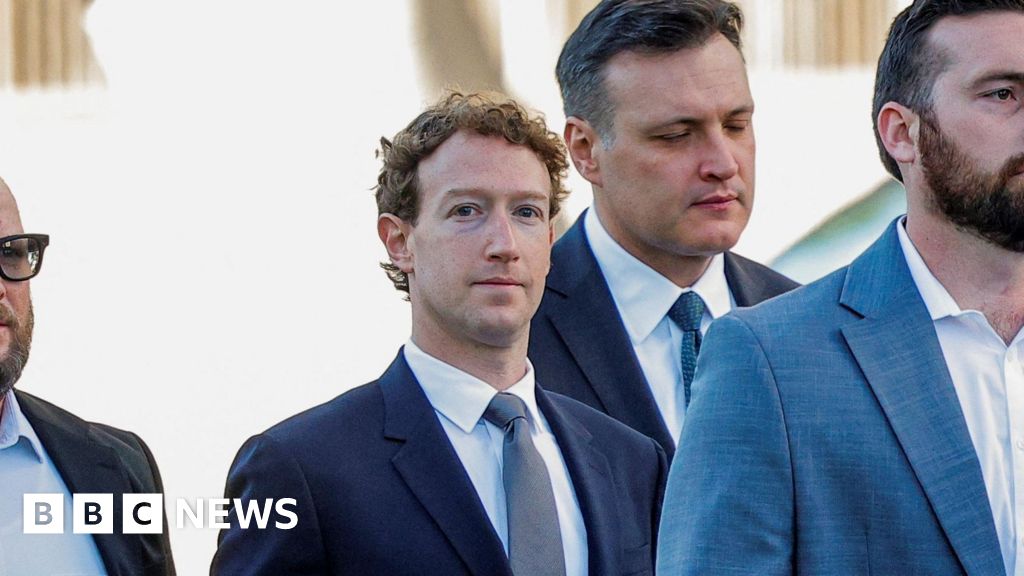
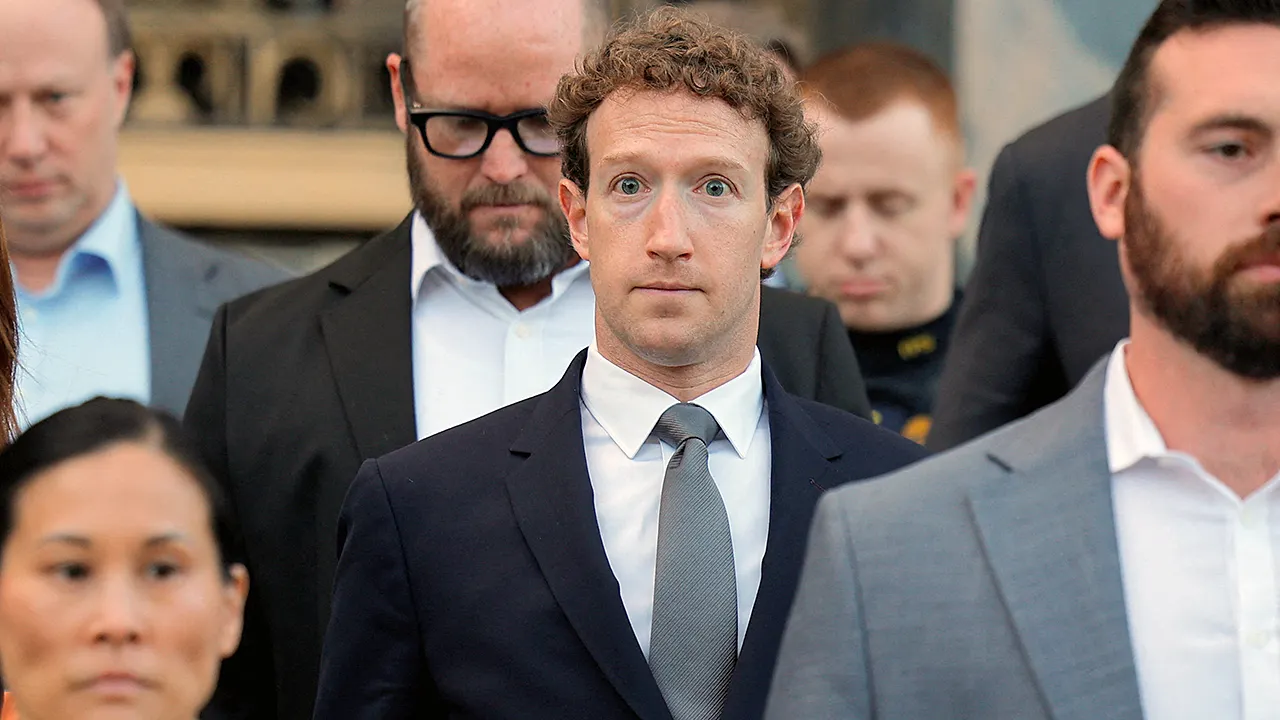
Meta Platforms CEO Mark Zuckerberg departs the court after taking the stand at a trial in a key test case accusing Meta and Google’s YouTube of harming kids’ mental health through addictive platforms, in Los Angeles, Feb. 18, 2026. (REUTERS/Mike Blake / Reuters Photos)
The verdict came a day after a jury in New Mexico ordered Meta to pay $375 million after finding the company misled users about the safety of its platforms and allegedly enabled child sexual exploitation.
Advertisement
This is a breaking news story; check back for updates.
FOX Business’ Kelly Saberi contributed to this report.














![After 12 Years, I'm Leaving Crypto. [Not Clickbait]](https://wordupnews.com/wp-content/uploads/2026/03/1774463833_maxresdefault-80x80.jpg)




































You must be logged in to post a comment Login