
Business
Eric Dane Has Passed Away at 53 Following a Courageous Battle With ALS



“Grey’s Anatomy” star Eric Dane has passed away. He was 53 years old.
His passing comes just 10 months after he announced his amyotrophic lateral sclerosis (ALS) diagnosis.
Eric Dane Passes Away
Dane, who passed away on Thursday, was surrounded by his family and friends in his final days, according to a statement released to PEOPLE.
“With heavy hearts, we share that Eric Dane passed on Thursday afternoon following a courageous battle with ALS,” his family said in the statement. “He spent his final days surrounded by dear friends, his devoted wife, and his two beautiful daughters, Billie and Georgia, who were the center of his world.”
The family touched on his ALS diagnosis, saying “Throughout his journey with ALS, Eric became a passionate advocate for awareness and research, determined to make a difference for others facing the same fight. He will be deeply missed and lovingly remembered always.”
“Eric adored his fans and is forever grateful for the outpouring of love and support he’s received,” the statement adds. “The family has asked for privacy as they navigate this impossible time.”
What is ALS?
Otherwise known as Lou Gehrig’s Disease, amyotrophic lateral sclerosis is defined by Cleveland Clinic as “a neurodegenerative condition that affects how nerve cells communicate with your muscles.”
Symptoms of ALS include the following:
- Muscle weakness, particularly in the arms, legs, and neck
- Muscle cramps
- Twitching in your hands, feet, shoulders and/or tongue
- Stiff muscles (spasticity)
- Speech challenges (slurring words, trouble forming words)
- Drooling
- Unintentional emotional expressions (like laughing or crying)
- Fatigue
- Trouble swallowing (dysphagia)
As of writing, it still not known what causes ALS. There is also no treatment that can reverse the damage caused by this disease.


Form 13D/A ON24 INC. For: 3 April

“Price rises since the conflict began have been modest, driven mainly by higher oil prices and cushioned by ample global cereal supplies,” FAO Chief Economist Maximo Torero said in a statement.
But if the conflict lasts over 40 days and input costs remain high, farmers may reduce inputs, plant less, or switch crops to less intensive fertiliser crops, he said. “Those choices will hit future yields and shape our food supply and commodity prices for the rest of this year and all of the next,” he added. The FAO Food Price Index, which measures changes in a basket of globally traded food commodities, rose by 2.4% from its revised February level. It is 1% above its value a year ago, although nearly 20% below its March 2022 peak, reached after the start of the war in Ukraine.
FERTILISER COSTS COULD LEAD TO REDUCED PLANTING
The cereal price index increased by 1.5% from the previous month, led by a 4.3% increase in international wheat prices due to worsening crop prospects in the U.S. and expectations of lower plantings in Australia due to higher fertiliser costs.

Global maize prices edged up as ample global supply offset concerns over fertiliser costs, and indirect support from greater ethanol demand prospects linked to higher energy prices. Rice prices dropped 3.0% due to harvest timing and weaker import demand.

In a war against a country led by Shia Muslim clerics, the US-which has a constitutional separation between church and state-is also invoking religion, with some Trump officials casting it as almost a divine mission.
At the event for Holy Week, when Christians mark the last days of Jesus Christ before the resurrection on Easter, the Reverend Franklin Graham told Trump of the Bible’s Book of Esther in which he said “the Iranians”-a Persian king of contested historical accuracy-ordered the killing of all Jews.
“Today the Iranians, the wicked regime of this government, wants to kill every Jew and destroy them with an atomic fire. But you have raised up President Trump. You’ve raised him up for such a time as this. And Father, we pray that you’ll give him victory,” said Graham, son of famed late evangelist Billy Graham.
Unmentioned, the Persian emperor Cyrus the Great, still revered by Iranians, was the first world leader to grant freedom to the Jews, liberating them from captivity in Babylon.
The story of the Book of Esther has also been repeatedly cited by Israeli Prime Minister Benjamin Netanyahu, who used the occasion of Passover to compare his war alongside Trump to the emancipation of the Jews from Egyptian captivity.
Iran’s government since 1979 has been explicitly rooted in religion, with a top Shia cleric serving as supreme leader.Iran’s military has drawn parallels between their defenses and the Battle of Karbala, the 680 CE battle in which the Prophet Mohammed’s grandson Hussein was killed, an event commemorated by Shia as an act of martyrdom and self-sacrifice in the face of tyranny.
Crusades are back
When George W Bush went to war against Afghanistan’s Taliban after the September 11, 2001 attacks, he called his campaign a “crusade” but quickly backtracked, aware of the historical baggage in the Islamic world of a term often used loosely as a metaphor in the West.
Trump’s defence secretary, Pete Hegseth, has shown no such compunctions. In a 2020 book, he called “American Crusade” in which he called for a “holy war” to rid America of the left.
Among his tattoos are a Jerusalem Cross, a Crusader-era emblem embraced by the far-right, along with the Latin inscription “Deus Vult,” or “God wills it,” a motto for the Crusaders.
If there was any doubt on his views on Muslims, he also has a tattoo that reads “kafir,” or “infidel,” in Arabic. AFP
Business
Cristiano Ronaldo Gives Major Injury Update As 2026 World Cup Hopes Boosted For Al Nassr Star

Cristiano Ronaldo has delivered a reassuring update on his recovery from a hamstring injury, posting on social media that he is “getting better every day” as he steps up rehabilitation and edges closer to a return with Al Nassr.

The 41-year-old Portuguese superstar sustained the right hamstring muscle injury on Feb. 28 during Al Nassr’s Saudi Pro League match against Al Fayha, forcing him to limp off in the 81st minute of a 3-1 victory. The club initially described the issue as requiring daily evaluation, with Ronaldo beginning a tailored rehabilitation program that included time in Madrid for specialized treatment.
Ronaldo has been sidelined for more than a month, missing several league fixtures and Portugal’s March international friendlies against Mexico and the United States. His absence sparked concern among fans about his fitness ahead of the 2026 FIFA World Cup, where he is widely expected to lead the national team in what could be his final major tournament appearance.
In a social media post shared in late March, Ronaldo posted images and videos of himself performing targeted leg exercises and gym work, accompanied by the message “Getting better every day.” The positive tone helped calm speculation about a prolonged layoff or potential threat to his World Cup participation.
Portugal coach Roberto Martinez moved quickly to downplay any long-term worries. “No, he’s not in danger. It’s a minor muscle injury, and we think he can return in a week or two,” Martinez told reporters when announcing the squad for the March friendlies. “Everything Cristiano has done physically this season shows that he’s in great shape.” Martinez emphasized that Ronaldo’s place in the Portugal setup remains secure and that the injury would not jeopardize his availability for the 2026 World Cup in North America.
Recent updates from Al Nassr indicate steady progress. The club has released images and videos showing Ronaldo back at training facilities in Riyadh, initially completing individual sessions before transitioning toward full group integration. Reports suggest he has already participated in some collective drills, positioning him as a potential option for Al Nassr’s upcoming Saudi Pro League match against bottom-placed Al Najma on or around April 3.
Al Nassr manager Jorge Jesus has confirmed that both Ronaldo and teammate Sadio Mane, who has been dealing with his own minor fitness concerns, are expected to return after the international break. The club’s schedule adjustments in the 2025-26 season have provided additional recovery time, which medical staff have used to ensure a cautious but effective return.
At 41, Ronaldo continues to defy typical age-related decline, maintaining elite physical conditioning that has allowed him to score prolifically even in the demanding Saudi Pro League. This latest hamstring issue echoes previous muscle problems throughout his career, but the current prognosis remains optimistic given the minor classification and his disciplined rehabilitation approach.
Medical experts note that hamstring strains in veteran athletes require careful management to prevent recurrence, especially with the high-intensity demands of modern football. Ronaldo’s recovery has involved a combination of rest, targeted strength work, mobility exercises and gradual reintroduction to football-specific movements. His history of successful comebacks from more severe injuries, including multiple knee and ankle issues, adds confidence that he can return to full match fitness without long-term complications.
The injury forced Ronaldo to miss Portugal’s March window, but the national team navigated the friendlies without him, maintaining focus on squad depth ahead of World Cup qualifiers and preparations. Martinez has consistently praised Ronaldo’s leadership and professionalism, stating that the captain’s experience remains invaluable regardless of short-term fitness setbacks.
For Al Nassr, Ronaldo’s absence has been felt in attack, though the team has managed to stay competitive in the league standings under Jesus. The Saudi Pro League title race remains tight, and Ronaldo’s potential return could provide a timely boost as the campaign enters its decisive phase. Speculation about an April 3 comeback against Al Najma has grown, though the club has not confirmed an exact date to avoid rushing the player.
Ronaldo’s social media activity has played a key role in managing public perception. By sharing glimpses of his gym sessions and expressing a positive mindset, he has reassured millions of fans worldwide while maintaining focus on the recovery process. The five-time Ballon d’Or winner has long emphasized mental resilience alongside physical training, a philosophy that appears central to his current rehabilitation.
Broader discussions have centered on Ronaldo’s longevity and ambitions for the 2026 World Cup. At an age when most players have retired, Ronaldo continues to chase records and silverware, including his first major trophy with Al Nassr. The hamstring setback, while inconvenient, has not altered his stated goal of representing Portugal at the expanded 48-team tournament co-hosted by the United States, Canada and Mexico.
Portugal’s path to the World Cup remains strong, and Ronaldo’s place as captain and all-time leading scorer for the national team is undisputed. Analysts suggest that even a limited return in April would allow sufficient time for him to regain sharpness before the tournament, provided no further setbacks occur.
As recovery continues, Ronaldo has been spotted training with high intensity in controlled environments. Reports from Saudi media indicate he has completed the final stages of rehabilitation and could be available for selection sooner rather than later, subject to medical clearance and coaching decisions.
The football world watches closely. Ronaldo’s influence extends far beyond the pitch, with his work ethic inspiring younger players and his commercial appeal remaining unmatched. Sponsors and fans alike hope for a swift and complete recovery that allows him to continue performing at the highest level.
Al Nassr faces a busy fixture list in April, and Jesus must balance Ronaldo’s reintegration with the need to protect him from re-injury. A gradual return — perhaps as a substitute initially — would align with best medical practices for hamstring issues.
For now, the narrative around Ronaldo has shifted from concern to cautious optimism. His “getting better every day” message, combined with Martinez’s assurances and visible training progress, suggests the setback will prove temporary. Whether he features against Al Najma or in subsequent matches remains to be confirmed, but signs point to a mid-to-late April availability if all goes according to plan.
Ronaldo’s career has been defined by remarkable resilience, from early breakthroughs at Sporting CP and Manchester United to dominance at Real Madrid and Juventus, and now his chapter in Saudi Arabia. This latest chapter in injury management reinforces his reputation as one of football’s most dedicated professionals.
As April begins and the 2026 World Cup draws nearer, Ronaldo’s focus remains clear: recover fully, return strongly and continue chasing greatness. Fans, teammates and coaches share the same hope — that the hamstring strain becomes nothing more than a brief interruption in an extraordinary journey.

Prae_Studio/iStock via Getty Images

By James Knightley, Chief International Economist, US
Strong growth, but with a lack of breadth
The headlines from the March US jobs report are good. Non-farm payrolls were up 178,000, well ahead of the 65,000 consensus estimate


Analysis-Private credit sector stresses could be catastrophic, but not just yet

Workplace culture is not just a trendy phrase—it’s one of the biggest reasons people enjoy their jobs or decide to quit.
Recent insights from Gallup show that many employees leave not because of salary, but because they feel disconnected, unsupported, or unheard at work.
As leadership expert Jennifer Dulski explained, “Even in the age of AI, teams are still made up of humans who need to feel deeply connected, supported and seen. When people don’t have that, they leave.”
Her statement highlights a simple truth: people don’t just work for money—they work for meaning and respect.
What Workplace Culture Really Means
At its simplest, workplace culture is how a job feels every day. It’s how people talk, how leaders act, and how problems get solved. It is not just what a company says online—it’s what employees experience in real life.
According to USA Today, career coach Patrice Williams-Lindo made this clear when she said, “workplace culture isn’t what companies have in their mission statements. It’s the pattern of decisions — what leaders reward, tolerate or ignore.”
That means culture shows up in small moments:
- How your boss responds when you make a mistake
- Whether your ideas are heard
- If teamwork is encouraged or ignored
These daily experiences shape whether people feel happy—or stressed—at work.
4 Big Things That Shape Workplace Culture
1. Leadership Behavior
Leaders set the tone. When things go wrong, employees watch closely. Do leaders stay calm and fair, or do they blame others?
Williams-Lindo explains that the best way to understand a company is to watch what happens during tough times. That’s when real values show.
2. Rules and Flexibility
Policies matter more than people think. Rules about remote work, schedules, or time off tell employees what the company truly values.
Clear and fair rules build trust. Confusing or changing rules create stress.
3. Communication and Honesty
Open communication builds strong teams. When leaders share information clearly, employees feel included.
But when decisions happen behind closed doors, trust breaks. Workers may start to feel left out or unimportant.
4. Rewards and Recognition
What gets rewarded gets repeated. If teamwork is praised, people will help each other. If only individual success is rewarded, collaboration may suffer.
Recognition—big or small—helps employees feel valued.
Different Types of Workplace Culture
Not all workplaces feel the same. Here are a few common types:
Fast-Paced Startups
Startups move quickly and change often. According to Leigh Henderson, these environments reward creativity and flexibility. Some people love the freedom, while others may find it stressful.
Structured Corporate Jobs
Large companies often have clear rules and systems. This can bring stability, but sudden changes—like layoffs—can feel shocking if they don’t match the company’s values.
Mission-Driven Organizations
Nonprofits focus on helping others. This can give employees a strong sense of purpose. But it can also lead to burnout if people feel they must always give more.
Remote-First Workplaces
Remote jobs offer flexibility, but they require strong communication. Without face-to-face time, employees must find ways to stay visible and connected.
Why Culture Affects More Than Just Work
Workplace culture shapes more than tasks—it shapes people’s lives.
A healthy culture can:
- Improve mental health
- Build strong relationships
- Increase motivation
An unhealthy culture can:
- Cause stress and burnout
- Lower confidence
- Make employees feel stuck
Williams-Lindo described workplace relationships as something deeper, saying they create “trust” and a system of support. When that trust is missing, work becomes harder and less enjoyable.
How to Spot a Good Workplace Culture
If you’re looking for a job, here are simple ways to check a company’s culture:
Do Your Research
Look at company websites and reviews. Compare what they say with what employees report.
Ask Real Questions
During interviews, ask why people enjoy working there—and what challenges they face. Honest answers reveal the truth.
Watch How People Act
Notice how employees speak to each other. Are they respectful? Friendly? Open?
Pay Attention to Leaders
Do managers listen carefully? Do they show interest in you as a person?
These small signs can tell you a lot.
The Bottom Line
Workplace culture is not just a “nice-to-have.” It affects how people feel, perform, and grow. It can turn a simple job into a meaningful experience—or a daily struggle.
As companies change and technology grows, one thing stays the same: people need connection, respect, and purpose. That’s why culture matters now more than ever.
Originally published on vcpost.com
Business
Phoenix Sky Harbor TSA Wait Times Remain Manageable On Easter Weekend 2026 Despite Staffing Challenges
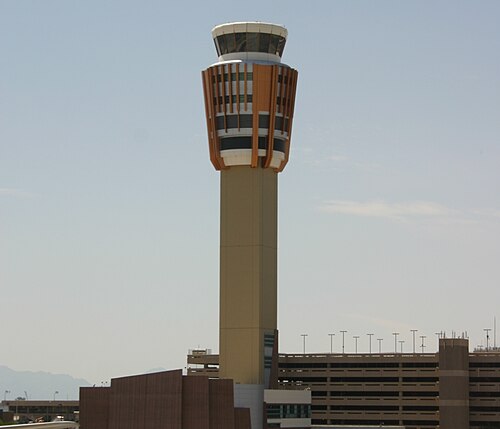
PHOENIX — Travelers passing through Phoenix Sky Harbor International Airport on Good Friday encountered generally short TSA security wait times, with most checkpoints reporting waits under 15 minutes as of midday on April 3, 2026, offering some relief during the busy Easter travel period.

The airport’s official website showed real-time security wait times fluctuating between 5 and 11 minutes across active checkpoints around 12:16 p.m. local time. Terminal 3 listed a 9-minute wait, while Terminal 4 checkpoints reported: A at 10 minutes, B at 5 minutes, C at 7 minutes and D at 7 minutes. All gates in Terminal 4 remain accessible through any checkpoint, allowing passengers to switch lines if one appears longer.
Phoenix Sky Harbor, one of the busiest airports in the country and a major hub for American Airlines and Southwest Airlines, typically sees average TSA wait times between 5 and 20 minutes under normal conditions. During peak morning hours or holiday rushes, waits can occasionally climb toward 30 minutes, though recent data indicates relatively smooth operations compared with some other major U.S. airports.
The modest wait times come amid ongoing challenges for the Transportation Security Administration. A partial government shutdown has led to staffing shortages at checkpoints nationwide, with some officers working without pay and occasional absences contributing to longer lines at certain airports. At Sky Harbor, occasional checkpoint closures have been reported in recent weeks, forcing passengers to use alternative lanes, yet the airport’s multiple checkpoints in Terminal 4 have helped distribute crowds effectively.
Airport officials and TSA representatives recommend that passengers check real-time wait times before heading to the airport. The most reliable method is visiting the official Sky Harbor website at skyharbor.com, where a dedicated “Security Wait Times” section updates throughout the day by terminal and checkpoint. Flight information screens inside the terminals also display current estimates.
Travelers can use the MyTSA mobile app for additional guidance, including the “Can I Bring My…” tool for prohibited items and general wait-time information, although some users note that airport-specific data is most accurate on the Sky Harbor site itself. The airport also offers PHXRESERVE, a program allowing passengers to reserve a security screening time slot in advance to further reduce uncertainty.
On Easter weekend, with many families traveling for holiday gatherings, Sky Harbor expects elevated passenger volumes. Terminal 4, which handles the majority of flights, typically sees the heaviest traffic in the early morning and late afternoon. Passengers are advised to arrive at the airport at least two hours before domestic flights and three hours for international departures, even with current short wait times.
Recent traveler reports on social media and local news have been largely positive. Some passengers described clearing security in under 10 minutes, including through TSA PreCheck lanes, which often move even faster. Others noted that assistance from additional personnel, including ICE agents helping at checkpoints during the staffing crunch, has improved flow despite occasional confusion with procedures.
For those without TSA PreCheck or Clear, standard lanes have remained manageable. Historical averages suggest that early morning (5-8 a.m.) and early evening (4-7 p.m.) are the busiest periods, when waits can stretch toward 20-30 minutes or more if multiple flights depart simultaneously. Midday and late evening hours tend to be quieter.
Sky Harbor processed millions of passengers in 2025, and 2026 projections indicate continued growth as air travel demand remains strong post-pandemic. The airport has invested in technology upgrades, including more automated screening lanes and improved signage, to enhance throughput and passenger experience.
Tips for minimizing wait times at Phoenix Sky Harbor include:
– Enroll in TSA PreCheck or Clear if eligible for expedited screening.
– Pack liquids in a quart-sized bag and remove laptops and large electronics in advance.
– Wear easily removable shoes and avoid bulky outer layers.
– Use the airport’s chat function on skyharbor.com or ask staff for real-time advice if lines appear uneven.
– Consider off-peak travel times when possible.
Despite the staffing pressures from the ongoing partial government shutdown, TSA officers continue to operate as essential workers. Airport spokesperson Deanna Brodie has encouraged patience and preparation, noting that Sky Harbor’s layout with multiple parallel checkpoints helps prevent extreme backups that have plagued single-checkpoint facilities elsewhere.
International travelers should factor in additional time for customs and border processing upon arrival, though departure security screening follows the same TSA protocols. Phoenix Sky Harbor serves numerous nonstop domestic routes and several international destinations, primarily to Mexico and Canada.
For families traveling with children or passengers requiring special assistance, Sky Harbor provides dedicated support. Families can request assistance at checkpoints, and the airport offers wheelchair services and other accommodations through airlines or third-party providers.
As the Easter long weekend continues through Monday, April 6, wait times are expected to remain variable but generally reasonable based on current patterns. Travelers returning after the holiday may encounter slightly higher volumes on Sunday and Monday as flights converge.
In the broader context of U.S. air travel, Phoenix Sky Harbor has fared better than some peers during periods of staffing strain. While some airports have reported waits exceeding one hour, Sky Harbor’s multi-checkpoint design and proactive communication have helped maintain shorter lines.
Passengers are reminded that wait times can change rapidly with flight schedules, so checking within a few hours of departure provides the best snapshot. Those with tight connections should build in extra buffer time.
Sky Harbor continues to promote contactless options where available and encourages downloading the MyTSA app for quick reference on security rules. The airport also maintains robust cleaning and safety protocols to ensure a comfortable environment.
For the latest updates, visitors should rely on official sources: the Sky Harbor website, in-terminal displays, or airline apps. Unofficial third-party trackers may not reflect real-time conditions as accurately.
Overall, current data suggests that most travelers at Phoenix Sky Harbor on Good Friday experienced efficient security screening, with waits well below the 30-minute threshold that often triggers traveler frustration. With proper preparation and real-time checks, passengers can navigate the process smoothly even during a busy holiday weekend.
As air travel demand stays robust in 2026, Sky Harbor officials continue working with TSA to optimize staffing and technology. For now, the message to flyers is clear: check wait times online, arrive prepared, and enjoy smoother-than-expected security at one of America’s busiest desert gateways.
Check out what’s clicking on FoxBusiness.com.
The parent company of luxury retailer Saks announced Thursday that it entered into a restructuring agreement with its capital partners who committed to provide $500 million in financing when the company emerges from bankruptcy.
Saks Global Enterprises filed for Chapter 11 bankruptcy protection in January after it missed a $100 million interest payment in December because the company was burdened with $3.4 billion in debt after its $2.7 billion acquisition of Neiman Marcus.
The company now expects to exit bankruptcy this summer amid its ongoing restructuring effort.
“Achieving this important milestone underscores the progress we are making on our transformation and reflects our capital partners’ confidence in our go-forward vision, guided by our relentless devotion to the luxury customer,” said Geoffroy van Raemdonck, CEO of Saks Global.
SAKS GLOBAL FILES FOR BANKRUPTCY AFTER $2.7B NEIMAN MARCUS ACQUISITION DEAL
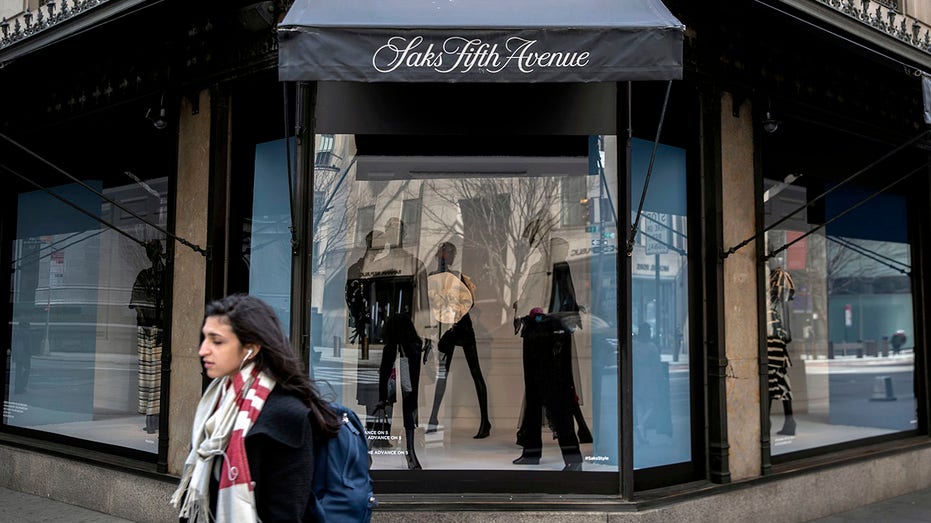
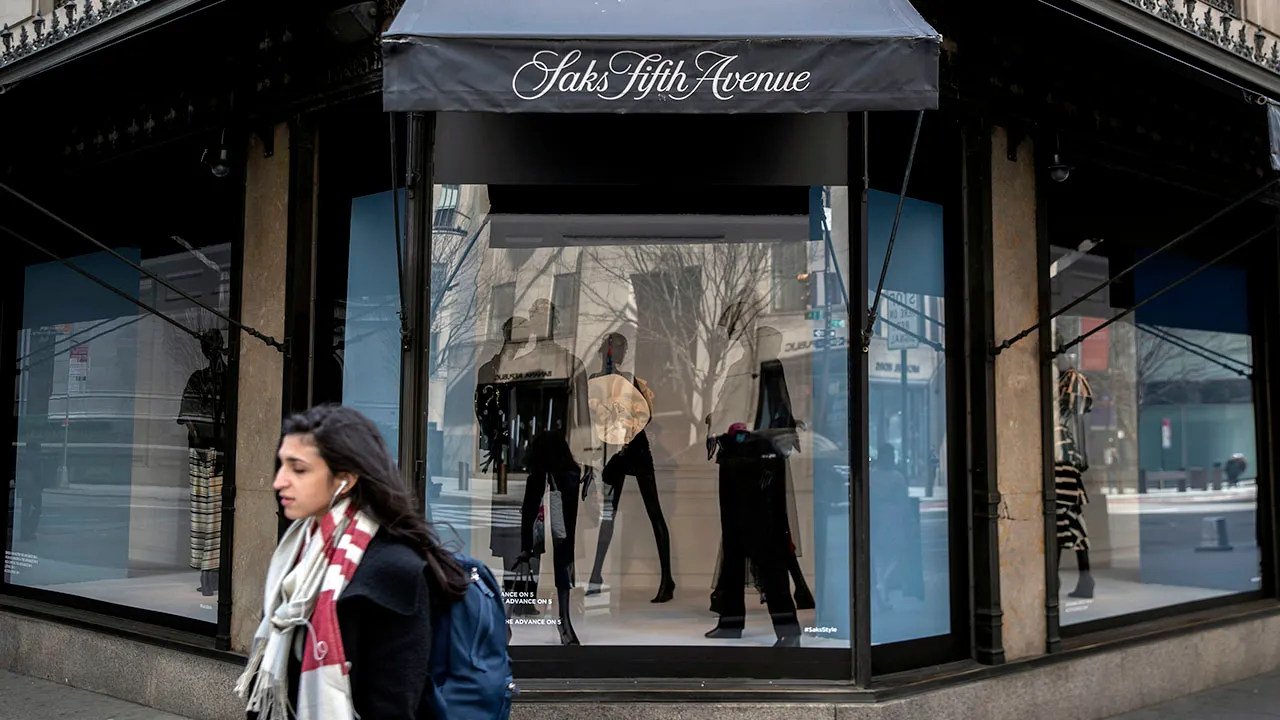
Saks Global, the parent company of Saks Fifth Avenue, signaled plans to exit bankruptcy this summer. (Victor J. Blue/Getty Images)
“As we advance the restructuring process and position Saks Global for the future, our focus remains on strengthening our brand partner relationships and delivering an expertly curated product assortment and personalized service for our luxury customers across Saks Fifth Avenue, Neiman Marcus and Bergdorf Goodman,” van Raemdonck added.
Saks Global’s announcement indicated that the company is continuing to work with its financial stakeholders on its reorganization plan and anticipates its filing in the coming weeks.
LUXURY RETAIL GIANT SAKS WEIGHS BANKRUPTCY FILING, REPORT
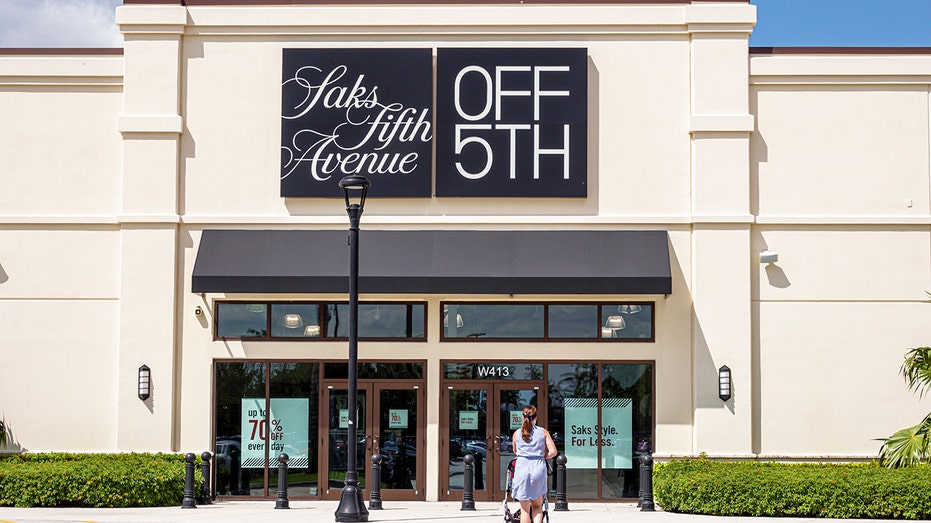
Saks Global has offloaded some of its discount locations, including a dozen Saks Off 5th locations. (Jeff Greenberg/Education Images/Universal Images Group via Getty Images)
Additionally, the retailer’s announcement on Thursday said its inventory has improved after more than 650 of its brand partners resumed shipping, which has helped lift customer engagement.
The company aims to unlock the potential of its three luxury banners and drive sustainable growth.
SPIRIT AIRLINES REACHES DEAL TO EXIT BANKRUPTCY PROCEEDINGS BY EARLY SUMMER

Neiman Marcus is one of Saks Global’s brands. (Getty Images)
Saks Global announced last month that it obtained access to an additional $300 million of its $1.75 billion bankruptcy funding package, which gave it sufficient liquidity to support operations. A group of its bondholders also approved its five-year business plan.
The retailer said in March it would close 12 Saks Fifth Avenue stores and three Neiman Marcus locations amid the restructuring.
GET FOX BUSINESS ON THE GO BY CLICKING HERE
In January, the company announced it would close 62 of its off-price operations, including Saks Off 5th and the remaining Neiman Marcus Last Call stores.
Reuters contributed to this report.

March Jobs Report: A Muddled Picture

The Raunchy 80s Comedy Slasher That George Clooney Wants You To Forget

XRP Just Got HUGE Confirmation *Woah*

Caravan crash on major Scots road as cops close off area


-

 NewsBeat1 day ago
Steven Gerrard disagrees with Gary Neville over ‘shock’ Chelsea and Arsenal claim | Football
-

 Sports7 days ago
Sweet Sixteen Game Thread: Tide vs Michigan
-
Entertainment4 days ago
Fans slam 'heartbreaking' Barbie Dream Fest convention debacle with 'cardboard cutout' experience
-

 Business21 hours ago
No Jackpot Winner and $194 Million Prize Rolls Over
-

 Crypto World2 days ago
Gold Price Prediction: Worst Month in 17 Years fo Save Haven Rock
-
 Entertainment6 days ago
Lana Del Rey Celebrates Her Husband’s 51st Birthday In New Post
-

 Tech5 days ago
The Pixel 10a doesn’t have a camera bump, and it’s great
-
Crypto World3 days ago
Dems press CFTC, ethics board on prediction-market insider trades
-

 Tech5 days ago
Avatar Legends: The Fighting Game comes out in July and it looks pretty slick
-

 Sports3 days ago
Tallest college basketball player ever, standing at 7-foot-9, entering transfer portal
-

 Tech4 days ago
EE TV is using AI to help you find something to watch
-

 Fashion6 days ago
Amazon Sundays: Soft Spring Layers
-

 Business2 days ago
Login and Checkout Issues Spark Merchant Frustration
-

 Fashion7 days ago
When Evening Dressing Gets Colorful for Spring
-

 Tech5 days ago
Elon Musk’s last co-founder reportedly leaves xAI
-

 Tech3 days ago
How to back up your iPhone & iPad to your Mac before something goes wrong
-

 Tech4 days ago
Apple will hide your email address from apps and websites, but not cops
-

 Politics4 days ago
Should Trump Be Scared Strait?
-

 Crypto World4 days ago
U.S. rule change may open trillions in 401(k) funds to crypto
-

 Tech4 days ago
Flipsnack and the shift toward motion-first business content with living visuals
You must be logged in to post a comment Login