Business
ETMarkets Smart Talk | Why silver could stay volatile while gold turns stable in 2026, says Ajit Banerjee

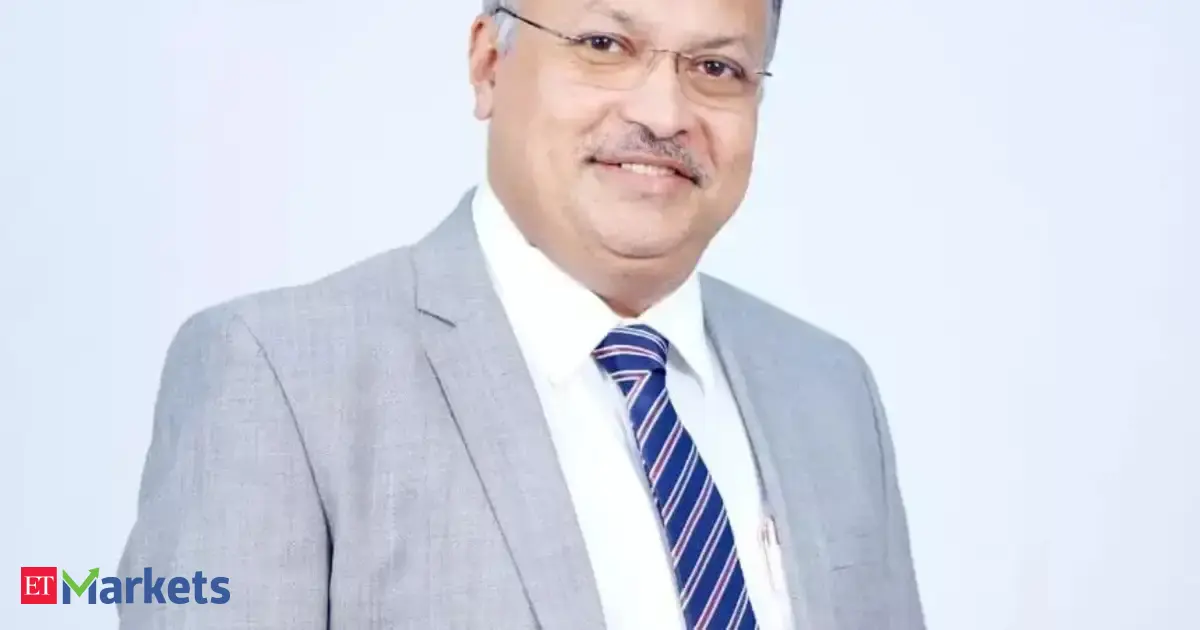
In this edition of ETMarkets Smart Talk, Ajit Banerjee, President and Chief Investment Officer at Shriram Life Insurance, explains why the outlook for the two metals may start to diverge in 2026.
While gold is likely to regain its role as a relatively stable strategic hedge amid evolving macro and policy conditions, silver could remain far more volatile, driven by shifts in industrial demand, global growth expectations, and China’s recovery trajectory.
Speaking to Kshitij Anand of ETMarkets, Banerjee also outlines the key triggers investors should track as they recalibrate their allocation to precious metals in a changing global environment. Edited Excerpts –
Q) Thanks for taking the time out. We have hit fresh record highs in November, with a 10% gain so far this year. How are we placed for 2026?
A) 2026 is shaping up to be a pivotal year for Indian equities with much stronger macro factors at play namely benign inflation levels with lower probability of inflation levels shooting up soon. Stronger GDP growth reported both in Q1 and Q2 which may even out a bit during 2026 but still should remain in northwards of 6.5% levels. Domestic consumption is picking up, private capex showing some early green shoots, softer interest rates regime and bank credit is seeing an uptick. The Government’s fiscal condition is well within control. The urban consumption has picked up after a long pause though discretionary spending still dominates over broad-based consumption. However, there is a bit of worry on the rural economy side as there has been unprecedented deflation in food prices in CY 25 which drags the farmers’ cultivation income with the potential of dropping the strong rural demand going forward. There has been limited impact of the punitive tariffs getting imposed on India by USA as of now. Trade agreements with alternate trading nations are getting concluded. There is a possibility of the trade agreement with USA and India to take some mutually agreeable shape which should bolster our economy further.
After several quarters of single-digit earnings growth for the Nifty, a rebound in consumption and corporate earnings is expected, which should provide a stronger fundamental base for markets. While volatility may persist, the overall market bias remains upward, supported by improving earnings visibility.
That said, valuation sustenance will be closely linked to the pace of earnings recovery. Markets will continue to track macro variables such as crude oil prices, INR–USD movement, CPI inflation, further rate cuts and central bank commentary globally. Several important state elections scheduled during 2026 will also influence the market sentiments.

In summary, while near-term volatility cannot be ruled out, earnings growth will be the key driver, and supported by favorable macros and liquidity, Indian equity markets should be able to sustain a positive performance in 2026.
Q) Gold and silver outperformed by a wide margin in 2025. How will precious metals play out in 2026? Any triggers to watch out for?
A) Gold and Silver returns were entirely an outliers in 2025 as a result of which there were some FOMO-types of buying as well which fueled this rally further.
There was almost a one- way rally barring a brief period after Diwali when the Gold and Silver prices took a pause. The primary attributes of the continued rally in these two precious metals are as follows :-
• Continued De-dollarisation trend,
• Aggressive buying by central banks to diversify their reserves
• Continued geo-political issues, trade and tariff related uncertainties
• Investors’ interest in investments into Gold and Silver ETFs have picked up significantly is likely to continue in 2026 which would therefore lead to continuity in the Gold and Silver rally into 2026.
However, if the bond yields pick up or there is a broad-based equity rally coming back then the focus of the investors may shift partially from Gold and Silver to these asset classes to a certain extent. Gold remains a strategic hedge, but returns are likely to be more measured versus 2025. Silver could remain more volatile, tracking industrial demand and China’s recovery.
Q) Rupee hit a fresh low against the USD surpassing the 90 mark. Are we on our way to breach the 100 mark against the USD. What is causing the fall?
A) I would not be able to comment if Rupee will be breaching the 100 mark against the USD but we can certainly try to understand what’s leading to this persisting depreciation of the INR.
Delays in securing a trade deal with the US, high trade deficits in the past months, and continued withdrawals by foreign institutional investors out of India have been weighing on the rupee in the foreign exchange market.
To add to these, increase in the import of Gold and silver at such high prices have added to this fall of INR against USD. The export trade volumes to USA have also dropped in view of the tariffs getting levied which is adding pressure to the INR-USD pair.
RBI has initially adopted a slightly more hands-off FX intervention strategy as opposed to a heavy intervention which it used to do a year ago. The fragile sentiments amid delays to the US-India trade deal extended into last week sending INR to fresh record lows of 91.08 levels against the US Dollar.
However, the aggressive unexpected RBI intervention capped the losses in INR, helping Rupee close the week 0.9% higher at 89.29 – being the best performing currency amongst EM peers after months of being a laggard.
Further, to partially recoup the disadvantageous tariff rates being levied upon India compared to its peers, a depreciating currency helps to a certain extent. So, these are some of the factors which is possibly leading to depreciation in INR in recent times
Q) Which sectors are likely to hog the limelight in 2026? Sectors that are likely to lead a rally.
A) In 2026, market leadership is likely to be earnings-driven and more broad-based, supported by a recovery in consumption demand, a possible capex up-cycle and favorable policy tailwinds. Key sectors likely to lead the rally might include:
Banking & Financial Services: Well-capitalised banks, improving asset quality, stable credit growth and operating leverage position the sector as a core beneficiary of an earnings recovery and rate cuts.
Automobiles & Auto Ancillaries: Recent GST rate cuts and rationalisation have already meaningfully supported the sector by improving affordability and reducing the total cost of ownership. This has translated into better demand traction, improved capacity utilisation and healthier operating leverage across auto OEMs and ancillary manufacturers. The benefits are expected to continue playing out over the coming quarters, supporting sustained volume growth and earnings momentum for the sector in 2026.
Defence & Manufacturing: Strong government focus & policy support, indigenisation and export opportunities under the ‘Make in India’ and PLI frameworks continue to provide long-term growth visibility. Additionally, order books across key defence players remain robust, offering high revenue and earnings visibility over the medium term. The sector appears better placed for the next leg of growth, supported by execution-led earnings delivery.
Cement: The cement sector stands to benefit from GST rate cuts, which have improved affordability and supported demand. At the same time, industry consolidation over the past few years has led to a more disciplined market structure. With balance sheets stronger and capacities largely in place, the focus is now shifting towards volume growth and pricing discipline, which should support margin stability and earnings improvement going forward.
Q) Any themes or sectors that have already run up in 2025, and investors will be better off paring stake in those themes?
A) Themes like PSUs, Metals and pockets of mid/small caps have seen sharp re-rating in 2025. While long-term stories remain intact, investors may be better off paring exposure where valuations have run ahead of earnings and reallocating to under-owned quality names.
Q) Mainboard initial public offerings (IPOs) have hit the 100-mark milestone (including SME) for the first time since 2007, raising nearly Rs 2 lakh cr mark. What are your expectations of 2026?
A) IPO momentum should continue into 2026, though with greater scrutiny and differentiation. Quality issuers with clear profitability and governance will attract capital, while speculative listings may struggle. Investors should be highly selective, focusing on business quality and valuations, rather than listing-day gains.
Q) What were your big learnings from the year 2025 you would want to share with readers?
A) Valuations matter – irrespective of market cycles
B) Earnings visibility needs to accorded more priority over narratives
C) Liquidity-driven rallies don’t last forever
D) Asset allocation and risk management are as important as stock picking
2025 nforced the importance of discipline over momentum chasing.
Q) What will be the big triggers for equity markets in 2026?
A) Key triggers include global rate-cut cycles and Central Banks Monetary policy and directions, US-India trade pact, India’s earnings trajectory, crude oil prices, Direction of FII flows, Results of US mid-term elections and policy direction towards end of 2026 and geopolitical developments. Union Budget 2026-27 and Fiscal Policy Directions, Domestic policy continuity and capex momentum will remain crucial anchors.
Q) If someone plans to invest, say Rs 10 lakh in 2026 – what should be the ideal asset allocation for someone who is in the age bracket of 30-40 years?
A) Whilst age bracket of the investor is an important aspect in determining ideal asset allocation of an investor, but other factors which also considered are the existing financial liabilities, risk appetite, family composition, family responsibilities, health conditions etc and assuming that all of these points are duly considered then investor may consider the following asset allocation
• Equities: 65-75% (India-focused, diversified across market caps)
• Debt: 15-25% (for stability and liquidity)
• Gold: 10-15% (via ETFs for diversification)
(Disclaimer: Recommendations, suggestions, views and opinions given by the experts are their own. These do not represent the views of Economic Times)