
Business
EXCLUSIVE: Dubai’s Dr. Hoda Makkawi says global healthcare has ‘failed’ by treating disease instead of preventing it

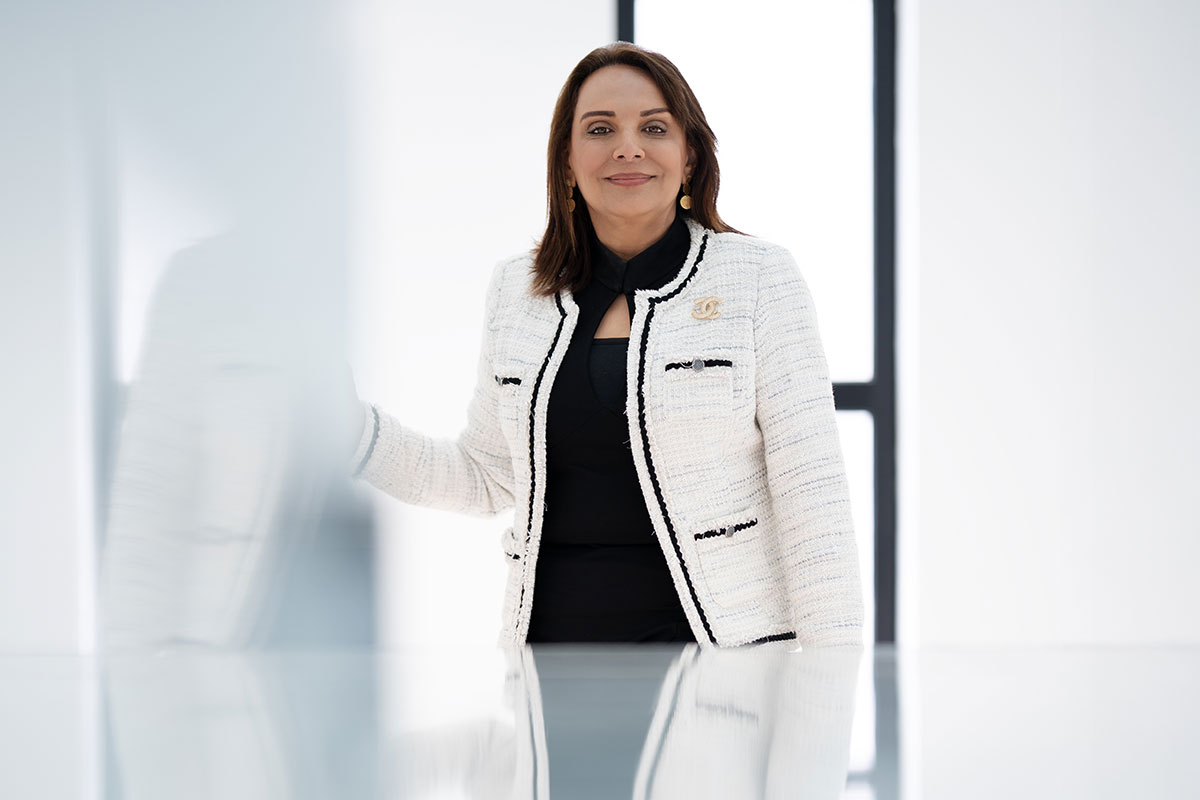
It is a philosophy Dubai-based holistic wellness doctor Dr. Hoda Makkawi has made the foundation of her practice, and one she believes challenges the core of modern global healthcare systems.
Sitting across from her in her Jumeirah office, it is clear that Dr. Makkawi is not a typical family physician. Her passion for holistic and integrative medicine comes from witnessing what she describes as the failure of conventional healthcare, a system designed to treat disease rather than prevent it.
“If you have a fire, you try to put water on the fire, remove the ashes, remove everything else,” she told Arabian Business, gesturing emphatically. “But in our current system, we just keep throwing water while the root cause continues to burn.”
Dr. Makkawi’s journey into medicine began when she left Lebanon for the United States with a clear vision. While most aspiring doctors gravitated toward internal medicine and other specialties, she chose family medicine, a decision few understood at the time.
“We maintain anything, for example cars and homes. So why don’t we maintain health too?” she says.
She established her own clinic in the Washington, D.C. metropolitan area, serving a diverse population that would ultimately inform her practice in Dubai. But the fear of lawsuits, rigid protocols and a system focused more on disease codes than patient care eventually pushed her toward a more radical medical approach.
“I wanted to see the family as a whole. I wanted continuity of care,” she recalled. “Not one very sick patient in a hospital, but a relationship, from grandmother to daughter to granddaughter. Helping them through infertility, then seeing the child after birth, that success, that happiness.”
Her pivot came unexpectedly. A flyer about integrative and holistic medicine kept arriving at her clinic – one she ignored several times before finally paying attention.
Already practicing acupuncture and herbal therapy, Dr. Makkawi pursued board certification in integrative holistic medicine. The approach astonished her. “You don’t look at just one thing. Your background, your childhood, your trauma, all of it affects your body, your symptoms, your thinking. Your whole approach to life.”
Traditional family medicine, she realised, ignored those dimensions. “We didn’t learn nutrition. We didn’t learn supplements. We didn’t know there were ways to help the body without medication,” she said.
When she later moved to Dubai, she faced a new challenge. Despite both the US and UAE being cultural melting pots, she found Dubai significantly different.
“In the US, everyone follows the same protocols and boundaries. Here, people bring strong cultural practices with them,” she said. “I had to shift my mindset while maintaining my values, confidentiality, dedication, passion and most importantly, ethics from my American training.”
Again, she returns to the theme she believes healthcare often lacks: relationships.
“When I see patients, many say: ‘We’ve never heard that from another doctor.’ There’s a relationship. It’s more than just ‘take this medicine’.”
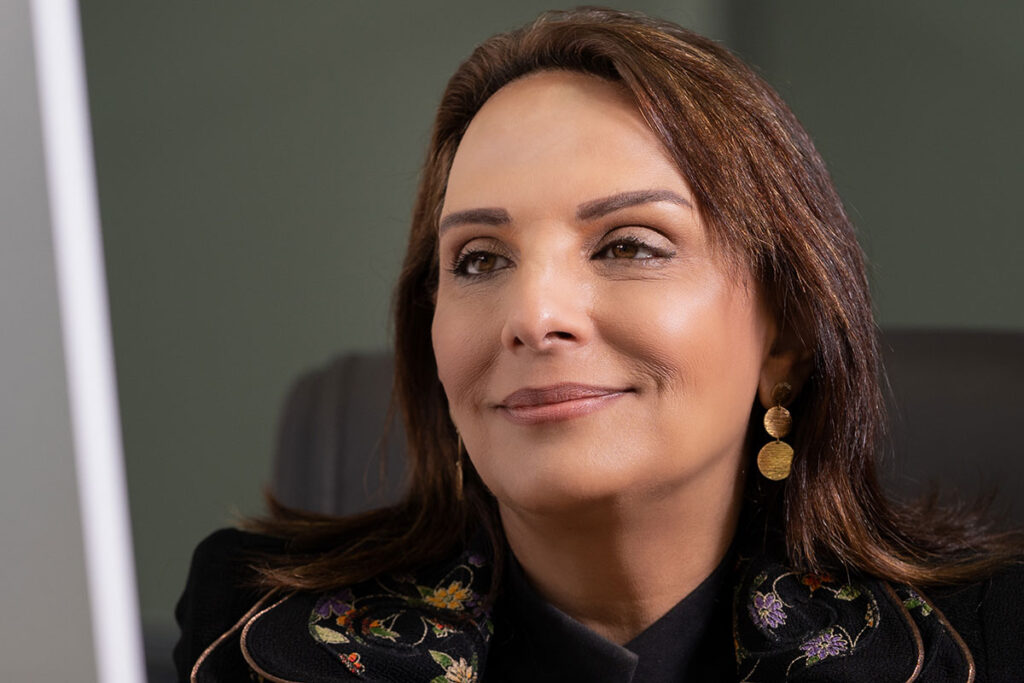
The result is patient continuity extending for more than a decade, something she views as almost unheard of in Dubai’s healthcare landscape.
The most misunderstood aspect of her work, she admitted, is her belief in the mind–body connection, a concept that makes many conventional physicians uncomfortable. But her conviction comes from patterns she has witnessed for more than 20 years.
“I’ve found resentment and anger to have a lot to do with cancers,” she said, citing Steve Jobs as an example. “His father abandoned him. He spent his life trying to prove himself, getting to the top, and then boom, pancreatic cancer. Resentment. Anger.”
She recounts the story of an adopted friend in the US who developed breast cancer with no family history. “She visualised the entire journey, from the moment cancer could grow, to the hospital, to treatment. Then she got it.”
Here, Dr. Makkawi’s training in Chinese medicine meets emerging Western research on stress, inflammation and disease. “Chronic stress harms the gut. The body becomes inflamed. I’ve seen it repeatedly in patients with major trauma. There’s often a breaking point before autoimmune disease,” she said.
She underscores the gut–brain connection with science. “Ninety percent of serotonin is made in the gut. A depressed patient might actually have a gut issue. Patients with irritable bowel syndrome? Often, it’s anxiety and stress manifesting physically.”
If one failure frustrates her more than any other, it is what she calls “organ medicine.”
“Every specialty treats one organ. Heart? You go to the cardiologist. Lungs? The pulmonologist. Bones? The orthopedist. But the body is connected. It’s one unit. Everything interacts with everything, and the backbone is the hormones feeding into everything.”
This siloed approach, she argued, explains why elderly patients end up on multiple medications prescribed by different specialists, a pattern she saw constantly in the US.
“I met families who could no longer care for aging parents. And I thought: prevention. If we focused on helping people live not just long lives, but healthy lives, this wouldn’t be the norm.”
But she is candid about why prevention rarely takes priority. Globally, she said, healthcare economics reward disease treatment, not prevention.
“When you go through insurance, the focus is disease. ICD codes. Protocols. No one looks at the whole patient or the root cause,” she explained.
That’s why she stepped away from insurance-based practice in Dubai. “Insurance will not cover preventive care. When I stopped taking it, I was one of the first. It wasn’t popular, but it was necessary.”
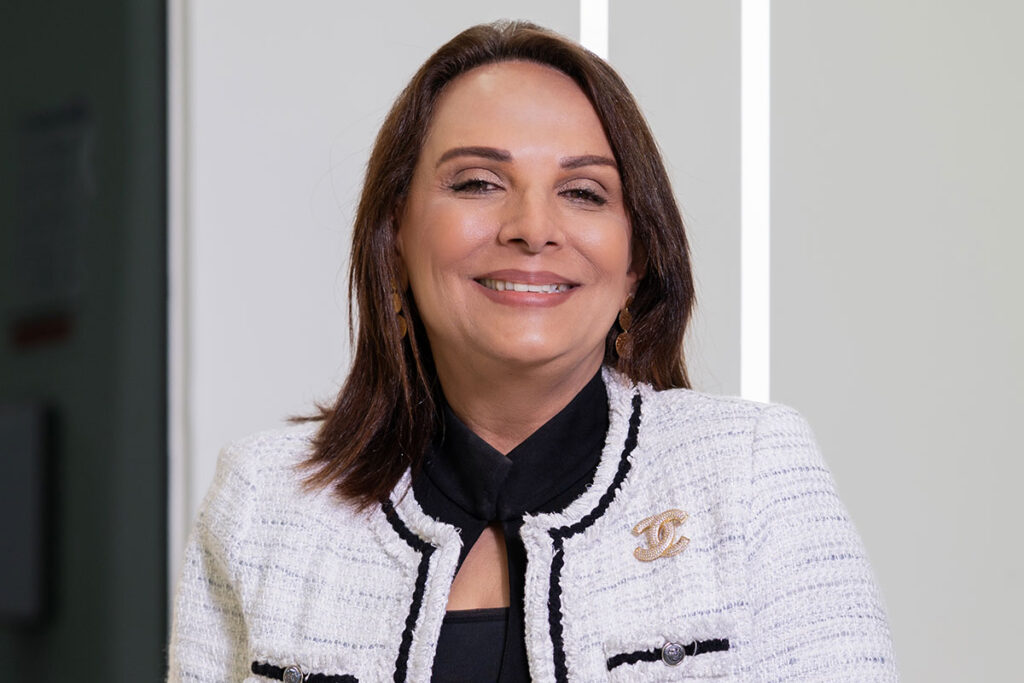
The financial incentives of modern healthcare, she argued, can work against patient outcomes. “I won’t prescribe something that costs thousands if it won’t benefit the patient. My conscience comes first. Then my reputation. Why would I hurt the patient?”
Dr. Makkawi’s impact extends beyond her clinic. She helped introduce bioidentical hormone therapy to the UAE and later advocated for IV nutrition therapy before it was approved. “I wrote to the Dubai Health Authority and Ministry of Health explaining why we needed it. They approved it.”
She also brought specialised laboratory testing from the US, Spain and the UK. “We needed deeper tests to help reverse disease, not just diagnose it.”
Today, her passion is stem cell therapy, not yet approved in the US, but available in the UAE. “This is the ultimate treatment. Disease reversal, cellular rejuvenation, longevity.”
She is also implementing comprehensive genetic testing. “The test shows exactly what medications you can take or not, what your metabolic system needs, what foods you can eat, what hereditary diseases you have. It allows us to prevent certain diseases because genes are just predisposition, epigenetics is about how they’re expressed.”
After years of pushing boundaries, Dr. Makkawi is now receiving formal recognition. Following her inclusion in Arabian Business’s Top 100 Smartest People in the UAE in 2017, she is being honoured again for her contributions to integrative medicine.
The recognition, she says, carries weight, especially as a woman in a traditionally male, conventional field. “I’m not a feminist, but it matters. Women physicians in the US still aren’t paid equally. Being recognised makes a difference.”
But for her, the honour is bigger than personal achievement. “When I started holistic medicine here, few people were in the wellness field. Now there’s competition, and that’s good. It means people are waking up.”
Looking ahead, Dr. Makkawi focuses on one annual question: What will I introduce this year to help my patients more?
Stem cells remain central, but she is watching new frontiers. “With AI, we may discover new modalities. Anything in longevity and reversing aging. If it can help, I want to explore it.”
Her conclusion is simple. “We need to focus more on human beings.”



