
Business
Fanatics apologizes over Super Bowl jersey quality, stock issues

Fanatics Betting & Gaming CEO Matt King discusses Superbowl bets, a commercial collaboration with Kendall Jenner and more on ‘The Claman Countdown.’
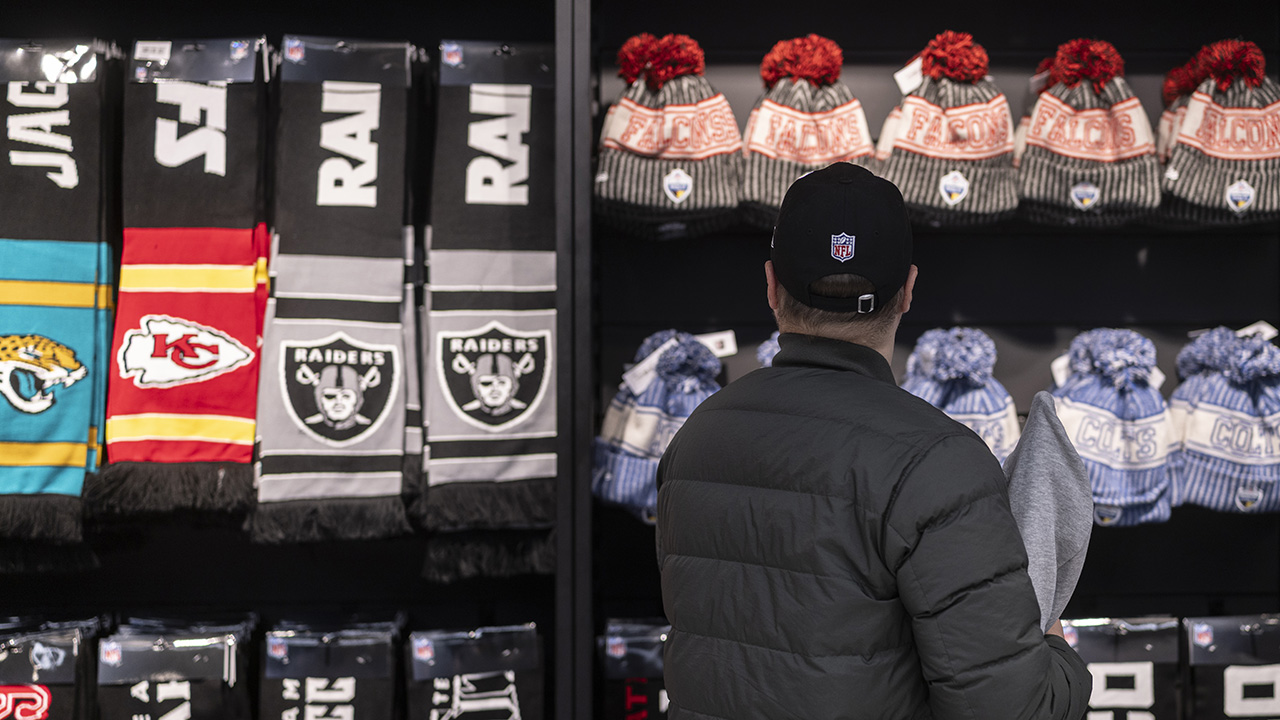
Football fans were left furious after a major sports apparel brand came under fire for multiple Super Bowl merchandising issues ahead of the big game this weekend.
Fanatics released a statement on Tuesday responding to recent backlash on social media over low stock and complaints about the quality of its Super Bowl LX jerseys for the New England Patriots and Seattle Seahawks.
“NFL fans, we’ve seen your jersey feedback, and we take it very seriously,” the company’s official X statement read. “We’ve let Patriots and Seahawks fans down with product availability, we own that, and we are sorry.”
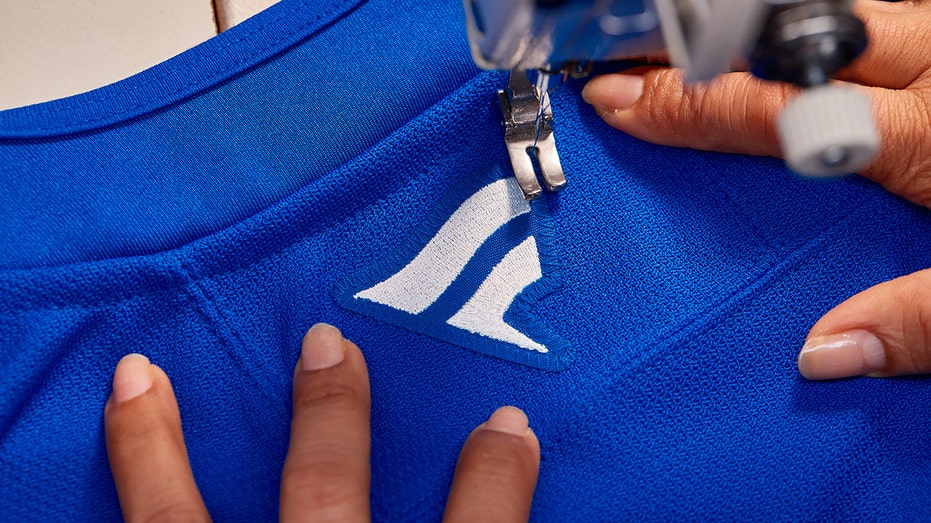
Fanatics logo embroidered on an NHL Buffalo Sabres jersey. (Fanatics)
“This Super Bowl matchup has created unprecedented challenges for us because of the massive surge in demand we saw from Patriots and Seahawks fans,” the message continued. “Both teams went from missing the playoffs last season to being in the Super Bowl, an incredibly rare occurrence that led to these two fanbases buying nearly 400% more jerseys since Thanksgiving vs. last year.”
SUPER BOWL SCAMS SURGE IN FEBRUARY AND TARGET YOUR DATA
“Even though we ordered substantially more jerseys for these teams than ever before, we’ve struggled to meet the overwhelming demand to keep team color jerseys in stock, which we know is your expectation. As sports fans, we understand your frustration, and we will work tirelessly to be better.”
People online also criticized the quality of alternate team jersey options being offered by the company, with some using colorful language to voice their displeasure.
“The Fanatics merch slop monopoly must be annihilated,” one X user posted. Another said, “It cannot be overstated enough just how much Fanatics has destroyed sports merchandise…”
SEAHAWKS EARN TRIP TO SUPER BOWL LX WITH THRILLING VICTORY OVER RAMS IN NFC CHAMPIONSHIP GAME
One user argued that NFL jerseys were better before Fanatics’ domination of the sports merchandising market. The user wrote, “Insane that the only Patriots Super Bowl uniform you can get at the team store is a design the team doesn’t wear on the field and sells for $160. You used to be able to buy Reebok uniforms with painted numbers for $30 at Marshall’s… what happens when Fanatics has a monopoly.”
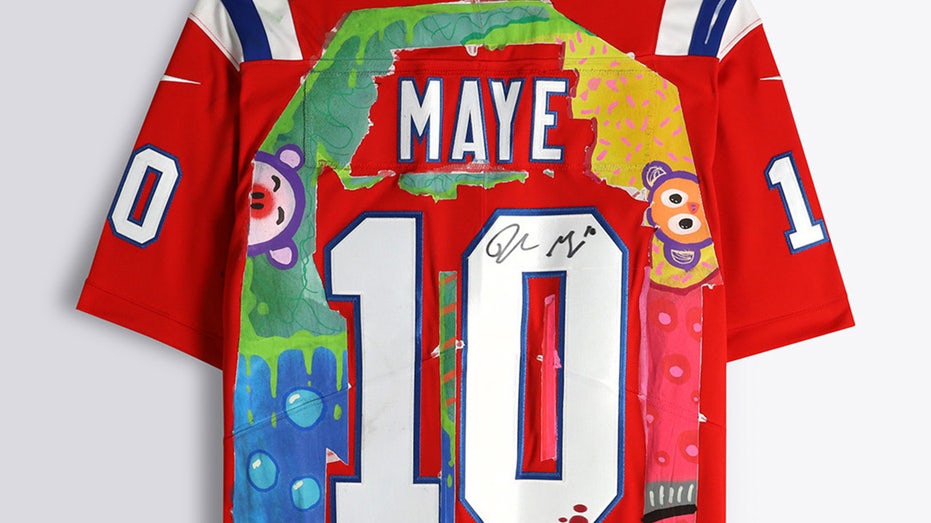
Fanatics Fine Art jersey made for New England Patriots quarterback Drake Maye. (Fanatics)
Fanatics also responded to criticism of jersey quality in the press release, defending its products and noting that it is ordering more team-color jerseys and alternate options for consumers as complaints are addressed.
‘NFL REDZONE’ HOST SCOTT HANSON EXPLAINS WHY SAM DARNOLD IS TOP SUPER BOWL LX ‘HUMAN INTEREST STORY’
“We’ve heard questions about the quality of these alternate jerseys and can assure you that, despite some unflattering photos, these jerseys are identical to the standard Nike replica ‘Game’ jersey,” the statement said.
The sportswear giant advised buyers that any product that does not meet their expectations can be returned “free of charge” using the Fanatics app.
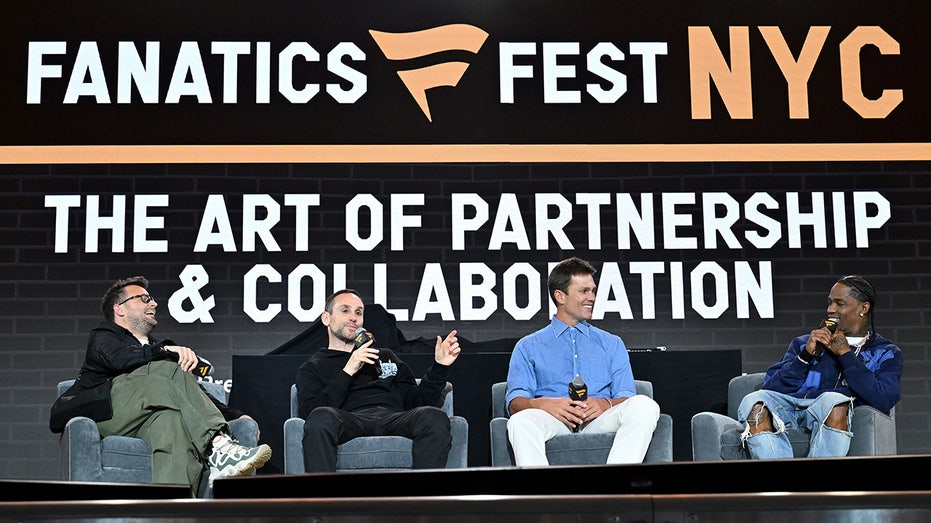
Fanatics CEO Michael Rubin, left, Tom Brady and Travis Scott onstage at Fanatics Fest at Javits Center on June 20, 2025, in New York City. (Slaven Vlasic/Getty Images)
Fanatics is in the midst of a 10-year partnership with the NFL that began in 2020. It became the exclusive distributor of Nike’s adult-sized jerseys and other apparel, boosting its prominence as a dominant player in the online sportswear industry.
The brand has also made recent forays into hosting conventions and the content creation business. The annual Fanatics Fest, featuring some of the biggest names in sports and entertainment, takes place at the Javits Center in New York City, and CEO Michael Rubin recently announced the launch of Fanatics Studios, a new production company that is a joint venture between the brand and OBB Media.


A world championship cycling event will be held in the South West this year.
Business
Australian Businesses Face Billions in Annual Losses from Traffic Congestion as 2026 Costs Climb

Sydney — Traffic congestion continues to exact a heavy toll on Australian businesses, with recent estimates showing national economic losses from road delays and related inefficiencies reaching into the billions annually. While comprehensive 2026-specific figures for business-only impacts remain limited, updated analyses and reports from 2025 point to broader congestion costs exceeding $10 billion yearly across major cities, with a substantial portion borne by commercial operations through delayed deliveries, lost productivity and higher operating expenses.

A November 2025 report highlighted by iSelect and covered in outlets like Drive.com.au calculated that full-time workers in Australia’s 11 largest cities collectively lose 212 million hours annually to traffic. This translates to $9.7 billion in lost productivity — valued at average median hourly wages — plus $462 million in wasted fuel, for a combined national hit of more than $10.1 billion per year. Although the figure encompasses all motorists, businesses feel the pinch acutely: freight delays, employee commute times affecting work hours, and supply chain disruptions directly erode profits and competitiveness.
For businesses, the costs manifest in multiple ways. Logistics firms, construction companies, tradespeople and delivery services bear disproportionate burdens from idling vehicles, unpredictable travel times and increased fuel consumption. In sectors reliant on timely transport — such as retail, manufacturing and services — every extra minute in gridlock equates to lost revenue. Older Bureau of Infrastructure, Transport and Regional Economics (BITRE) modeling from 2015 broke down metropolitan congestion costs into roughly $8 billion in business time losses out of a $16.5 billion total, suggesting commercial impacts historically comprised nearly half the burden. Adjusted for inflation and growth, similar proportions in recent years imply business-specific losses in the range of $4-6 billion annually, though no updated BITRE breakdown for 2026 has been released.
Projections indicate the problem is worsening. Infrastructure Australia and iMOVE Australia reports consistently forecast road congestion costs in major cities approaching $38.8 billion to $39.6 billion per year by 2031 without significant intervention, up from around $19 billion in 2016. These long-term estimates include private time, business productivity, vehicle operating expenses and environmental factors, with road delays accounting for the vast majority. A 2025 analysis cited in economic commentary estimated national road congestion at $13.8 billion (US) for 2024, exceeding the United Kingdom’s figure and positioning cities like Brisbane and Melbourne among global leaders in delays. Without policy shifts, costs could more than double by 2030, reaching $27.6 billion (US) or higher.
City-specific data underscores regional variations. Melbourne topped the 2025 iSelect rankings as Australia’s most congested capital, with motorists facing average annual costs of about $4,627 per person from delays and fuel — the highest among major centers. Sydney followed closely at $4,567, with Perth, Brisbane and Adelaide ranging from $3,377 to $3,495. These per-driver figures compound for businesses operating fleets or relying on employee mobility. For example, outer-suburban commuters in Sydney and Melbourne reportedly spend 41% of their trips stuck in traffic, equating to roughly 77 hours — or two full working weeks — per year, amplifying productivity drags for employers.
Experts attribute the rising toll to population growth, urban sprawl and insufficient infrastructure investment relative to demand. Freight remains overwhelmingly road-dependent, with national projections showing road freight volumes rising 77% by 2050 while rail share stays minimal. This intensifies congestion in key corridors, particularly around ports and urban centers. Reports from groups like the Business Council of Australia have called for congestion pricing mechanisms — such as peak-hour charges — to be incorporated into evolving road user fees as electric vehicle adoption reduces fuel excise revenue.
Government responses include billions in transport commitments: New South Wales allocated $55.6 billion over four years for transport projects, Queensland $41.7 billion focused on highway upgrades, and Western Australia $10.7 billion emphasizing freeway improvements and METRONET. Yet critics argue these efforts lag behind freight and passenger growth, failing to curb worsening gridlock. Calls for road pricing reforms persist, with advocates arguing time-based charges could manage demand, fund alternatives and offset future revenue shortfalls.
The human and environmental costs add layers to the economic strain. Commuters report stress, fatigue and reduced family time, while idling vehicles contribute to higher emissions and poorer air quality. Businesses face indirect hits through employee well-being, recruitment challenges in congested areas and supply chain unreliability amid global disruptions.
As Australia navigates post-pandemic recovery and urban expansion, traffic congestion stands as a persistent drag on economic efficiency. With projections signaling escalation toward $30 billion or more in avoidable costs by decade’s end, stakeholders urge accelerated investment in public transport, active mobility and smart pricing to alleviate the burden on businesses and households alike.

Canadian investor Stephen Smith is set to take a 26.9% stake in the publisher of the Economist magazine, after reaching an agreement with Lynn Forester de Rothschild to buy her family’s long-held shares in the storied publication.
The Economist Group said Tuesday that Smith had agreed to buy the stake alongside his family’s Smith Financial holding company, which has interests in various businesses including proxy adviser Glass Lewis.
Copyright ©2026 Dow Jones & Company, Inc. All Rights Reserved. 87990cbe856818d5eddac44c7b1cdeb8
Check out what’s clicking on FoxBusiness.com.
Popular ticket-selling platform SeatGeek is facing backlash after a job posting offering up to $175,000, along with perks like $25,000 in “gender-affirming care” benefits, sparked outrage online and renewed criticism over the company’s pricing.
The company is seeking an analytics engineer to join SeatGeek’s data team, noting applicants should have a “strong opinion” on how data should drive decision-making.
Along with a salary range of $121,000 to $175,000, the listing highlights a slate of benefits, including mental health subscriptions, unlimited paid time off (PTO), four months of fully paid family leave, remote or in-office work options, a home office stipend and a student loan matching program.
TAYLOR SWIFT BREAKS SILENCE ON TICKETMASTER FIASCO

The SeatGeek ticket app on a smartphone. (Gabby Jones/Bloomberg via Getty Images / Getty Images)
The application also includes a section labeled “Voluntary Demographic Questions,” asking candidates to identify their gender as “male, female, non-binary, third gender, prefer not to say, or prefer to self-describe.”
Prospective employees can also indicate if they consider themselves “a member of the LGBTQ+ community.”
Critics have raised concerns about the relevance of the prompts, with some social media users calling for a boycott of the platform.
GAVIN ROSSDALE ON TAYLOR SWIFT TICKET FIASCO: ‘EVERYBODY WANTS TO CRASH THE SERVERS’
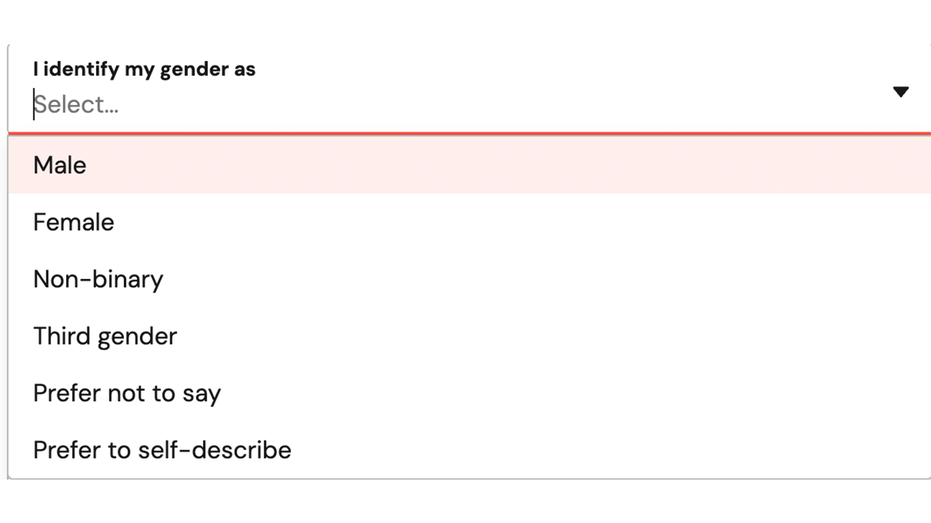
SeatGeek lists a number of gender options on its job application, including “third gender.”
Multiple people questioned whether the $25,000 could be used for elective surgeries that are not related to sex reassignment, while others pointed out the four months of paid family leave seemed unnecessary given the unlimited PTO.
“Private companies can offer incentives to employees. If it’s still legal and that’s the kind of employee they want to attract,” X user @dank1j wrote in a comment on a post shared by @LibsofTikTok. “Of course those who aren’t trans inclined ought to be able to substitute breast augmentation or other plastic surgery. I’d be PO’d if they don’t pony up for my tattoo.”
User @WomanDefiner commented he would like to put the funds toward male “self-care.”
“I need 25k to affirm my Gender as a biological male,” @WomanDefiner wrote. “I’m going to take a fishing trip. It’s called we do a little selfcare.”
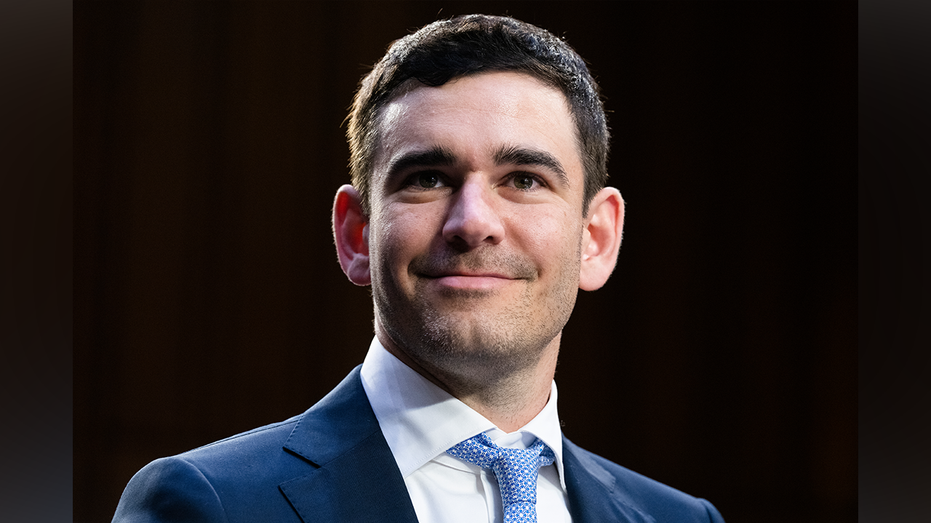
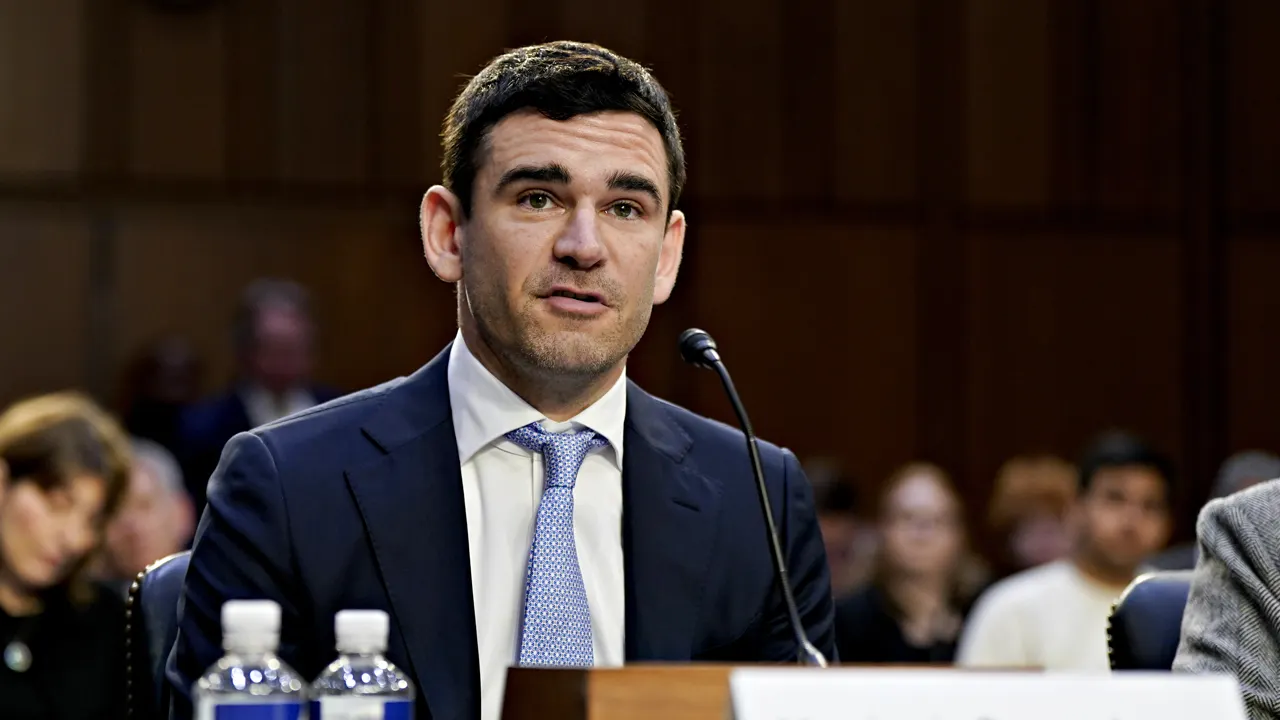
Jack Groetzinger, CEO of SeatGeek, testifies during the Senate Judiciary Committee hearing in 2023. (Tom Williams/CQ-Roll Call, Inc via Getty Images / Getty Images)
TAYLOR SWIFT TOUR DEBACLE: TICKETMASTER AND LIVE NATION MAY NEED BREAKUP, DEMOCRATIC SENATORS SAY
The generous salary and benefits also reignited a debate about the company’s high ticket pricing and price-gouging accusations.
“I would conclude that their prices are inflated, if they can offer such expensive ‘benefits,’” user @Mayhawwoman wrote.
User @Gentrywgevers added, “This also proves they’re price gouging if they can afford to offer this.”
Others, like user @AmericanPamia, suggested lower prices for all so “they can save their own money for their own preferences.”
GET FOX BUSINESS ON THE GO BY CLICKING HERE
SeatGeek said the demographic questions are voluntary and used to “measure our own diversity and inclusion efforts,” in compliance with Equal Employment Opportunity (EEO) reporting requirements.
Questions about gender and sexual identification are standard and voluntary in many U.S. job applications for EEO compliance.
SeatGeek did not immediately respond to FOX Business’ request for comment.

Both indices had dropped roughly 8.3% from the start of March till Friday, spooked by the spike in oil prices sparked by the conflict in West Asia. The pace of the fall had resulted in markets turning oversold, typically followed by a rebound – a phenomenon that analysts describe as ‘dead cat bounce’.
 Agencies
‘UNLOVED RALLY’ IN 3RD DAY Uncertainty on whether Nifty has formed a bottom with no let-up in FII selling
The Sensex and Nifty have recovered up to 2.9% in the past three trading sessions till Wednesday, bouncing off their lowest levels since April 2025, but the tentative bounce in this period underscores doubts about the durability of the rally.
The main stock indices gave up a portion of their early gains on these trading sessions. For instance, on Wednesday, Nifty closed 0.8% higher after gaining as much as 1.2% earlier in the day. Similarly, the index rose 1.1% and 1.5% on Tuesday and Monday but ended the day 0.7% and 1.1% higher, respectively.
“The word on the Street is caution given the significant drawdowns recently, and while they are hoping for a resolution soon, investors are wary and lack optimism due to uncertain outcomes,” said Lakshmi Iyer, Group president and CEO, Bajaj Alternates. “The durability of gains can be assessed only when there is clarity on the endgame on the war front,” she said.

One reason for this is the unrelenting foreign institutional selling amid the rebound. Overseas fund managers pulled out ₹16,400 crore in the previous three trading sessions, taking their sales tally for March so far to nearly ₹75,000 crore – the highest selling in a month since January 2025.
In index futures, the cuts in foreigners’ bearish bets, as reflected in their long-short ratio, have also been moderate, analysts said. “The FII long short ratio rose from 10% on Friday to 14% on Wednesday, which indicates only a marginal reduction in short positions by global investors,” said Nilesh Jain, VP and head of Technical and Derivative Research, Centrum Finverse.
Dwindling trader confidence also stems from uncertainty over whether the Nifty has formed a bottom, fuelling confusion. “Until it crosses 24,300 levels, this indecision could persist.”
While many investors are of the view that the conflict may not stretch on for long, they appear unwilling to deploy cash aggressively into equities now.
“The rebound does not enthuse foreign investors while domestic investors are stuck after buying at higher levels,” said Siddarth Bhamre, head of Research, Asit C Mehta Intermediates. “Retail investors, however, are not participating much in the buying and are waiting to see how the war shapes up.”
“The geopolitical risk from a closure of the Strait of Hormuz remains a sword hanging over us,” he said. “There are no reasons to be bullish currently and unless there is a resolution of the conflict, further declines are likely.”

Worawith Ounpeng/iStock via Getty Images
PPI) The Producer Price Index is a price index calculated to measure the average change in prices received by producers over a period of time.” data-id=”2208911029″ data-type=”getty-image” width=”1536″ height=”1024″ srcset=”https://static.seekingalpha.com/cdn/s3/uploads/getty_images/2208911029/image_2208911029.jpg?io=getty-c-w1536 1536w, https://static.seekingalpha.com/cdn/s3/uploads/getty_images/2208911029/image_2208911029.jpg?io=getty-c-w1280 1280w, https://static.seekingalpha.com/cdn/s3/uploads/getty_images/2208911029/image_2208911029.jpg?io=getty-c-w1080 1080w, https://static.seekingalpha.com/cdn/s3/uploads/getty_images/2208911029/image_2208911029.jpg?io=getty-c-w750 750w, https://static.seekingalpha.com/cdn/s3/uploads/getty_images/2208911029/image_2208911029.jpg?io=getty-c-w640 640w, https://static.seekingalpha.com/cdn/s3/uploads/getty_images/2208911029/image_2208911029.jpg?io=getty-c-w480 480w, https://static.seekingalpha.com/cdn/s3/uploads/getty_images/2208911029/image_2208911029.jpg?io=getty-c-w320 320w, https://static.seekingalpha.com/cdn/s3/uploads/getty_images/2208911029/image_2208911029.jpg?io=getty-c-w240 240w” sizes=”(max-width: 767px) calc(100vw – 36px), (max-width: 1023px) calc(100vw – 132px), (max-width: 1199px) calc(100vw – 666px), (max-width: 1307px) calc(100vw – 708px), 600px” fetchpriority=”high”>
By Jennifer Nash
The latest report on the Producer Price Index (PPI) shows that wholesale inflation for final demand increased by 0.7% in February. This uptick was higher than the expected 0.3% growth and follows a 0.5% increase in January. On
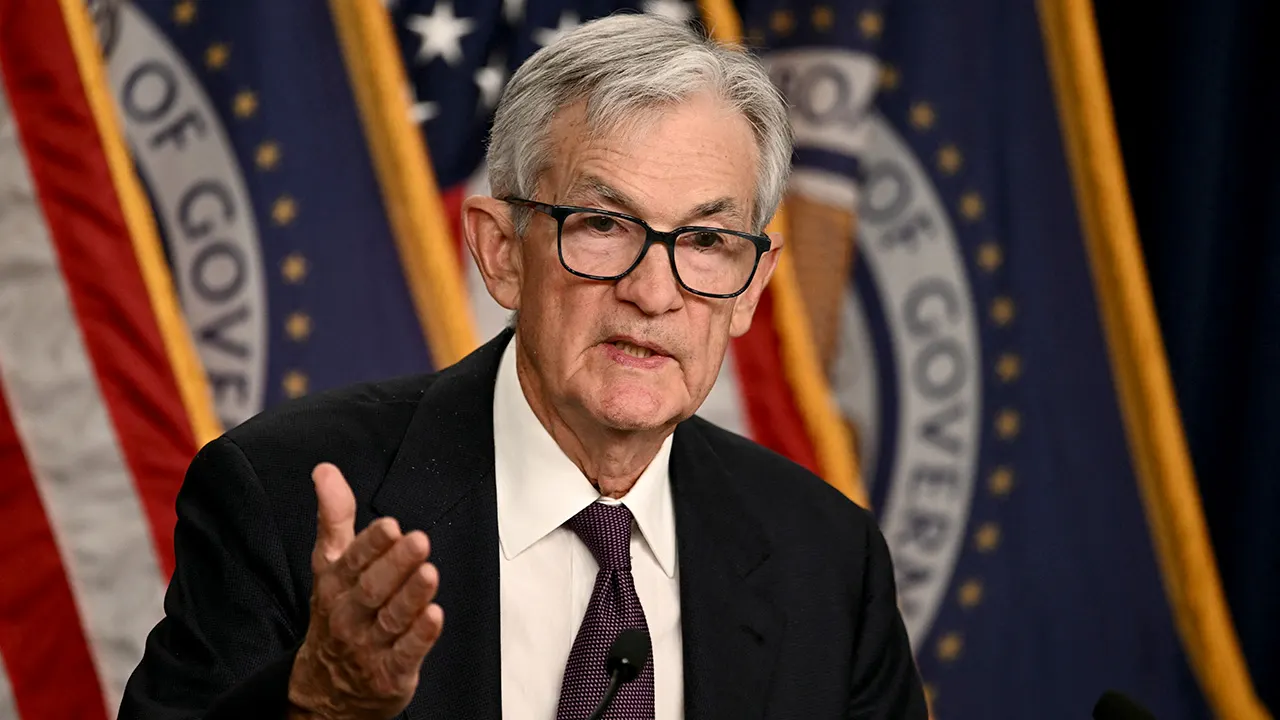
QI Research CEO and chief strategist Danielle DiMartino Booth discusses Federal Reserve chair Jerome Powell’s remarks about the federal criminal probe on ‘Making Money.’
The Federal Reserve on Wednesday left interest rates unchanged amid mounting uncertainty over how the Iran war will impact the economy and in turn the central bank’s approach to monetary policy, raising questions over whether any rate cuts will occur this year.
The Fed’s monetary policy panel, known as the Federal Open Market Committee (FOMC), voted 11-1 to leave the benchmark federal funds rate unchanged at a range of 3.5% to 3.75%. It marked the second straight meeting with rates being held steady after three successive 25-basis-point cuts in September, October and December to end last year.
Policymakers released a summary of economic projections (SEP), which showed that the median projection for interest rates sees just one 25 basis point cut the rest of this year followed by a single cut of that size in 2027.
“In our SEP, FOMC participants wrote down their individual assessments of an appropriate path for the federal funds rate under what each participant judges to be the most likely scenario for the economy,” Federal Reserve Chair Jerome Powell said. “The median participant projects that the appropriate level of the federal funds rate will be 3.4% at the end of this year and 3.1% at the end of next year, unchanged from December.”
FEDERAL RESERVE HOLDS INTEREST RATES STEADY
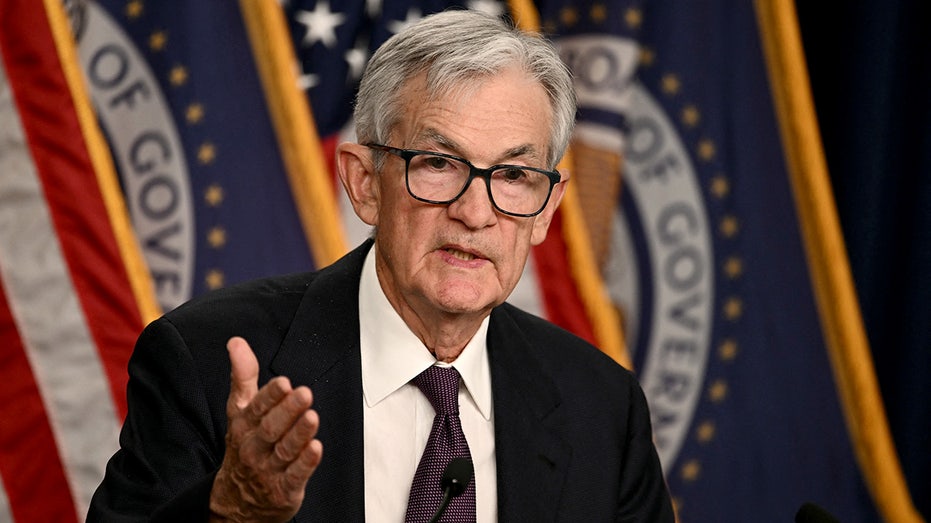
Federal Reserve Chair Jerome Powell said that an interest rate cut this year will depend on progress in taming inflation and other economic data. (Brendan Smialowski/AFP via Getty Images)
“As is always the case, these individual forecasts are subject to uncertainty and they are not a committee plan or decision,” Powell added.
During the post-announcement press conference, Powell was asked what officials are seeing that led them to project a cut despite higher forecasts for both inflation and unchanged projections for the unemployment rate and economic growth.
The SEP showed policymakers projected that the personal consumption expenditures (PCE) index – the Fed’s preferred inflation gauge – will be 2.7% at the end of this year, well above the central bank’s 2% target. That’s up from 2.4% in the Fed’s prior projection in December.
Core PCE, which excludes volatile measurements of food and energy, was also revised up to 2.7% at the end of this year. The previous projection had it at 2.5%.
“There are 19 people, and so 19 reasons, 19 individual submissions,” Powell said. “If you notice, the median didn’t change, but there was actually a meaningful amount of movement toward fewer cuts by people, so four or five people went from two cuts to one cut.”
“Essentially, the forecast is that we will be making some progress on inflation, not as much as we had hoped, but some progress on inflation,” Powell said. “It should come as we start to see in the middle of the year progress on tariffs going through once and then tariff inflation coming down. We should be seeing that.”
“And you know, the rate forecast is conditional on the performance of the economy, so if we don’t see that progress, then you won’t see the rate cut,” he explained.
FED OFFICIALS CLOSELY MONITOR IRAN CONFLICT FOR POTENTIAL INFLATION IMPACT
The market responded to the Fed’s projection by pulling back expectations surrounding interest rate cuts this year, which were previously expected to begin as early as June.
The CME FedWatch tool showed an 89.2% probability that rates will remain at their current level following the Fed’s June meeting in the wake of today’s announcement. That’s up from 79.5% yesterday, 62.8% a week ago and 37.8% last month – while the tool also now shows a 3.8% chance of a 25 basis point hike in June, up from zero a month ago.
The market now sees it being more likely than not that the Fed will leave rates unchanged through the end of this year.
GET FOX BUSINESS ON THE GO BY CLICKING HERE
The CME FedWatch tool shows a 51.3% chance of rates being at their current range after the Fed’s December meeting – up from 23.5% a week ago and 4.9% last month.
Probabilities for December show a 35.7% chance of one 25 basis point reduction by then, while the odds of a second cut between now and then have fallen to 9.5% from 32.5% a month ago.
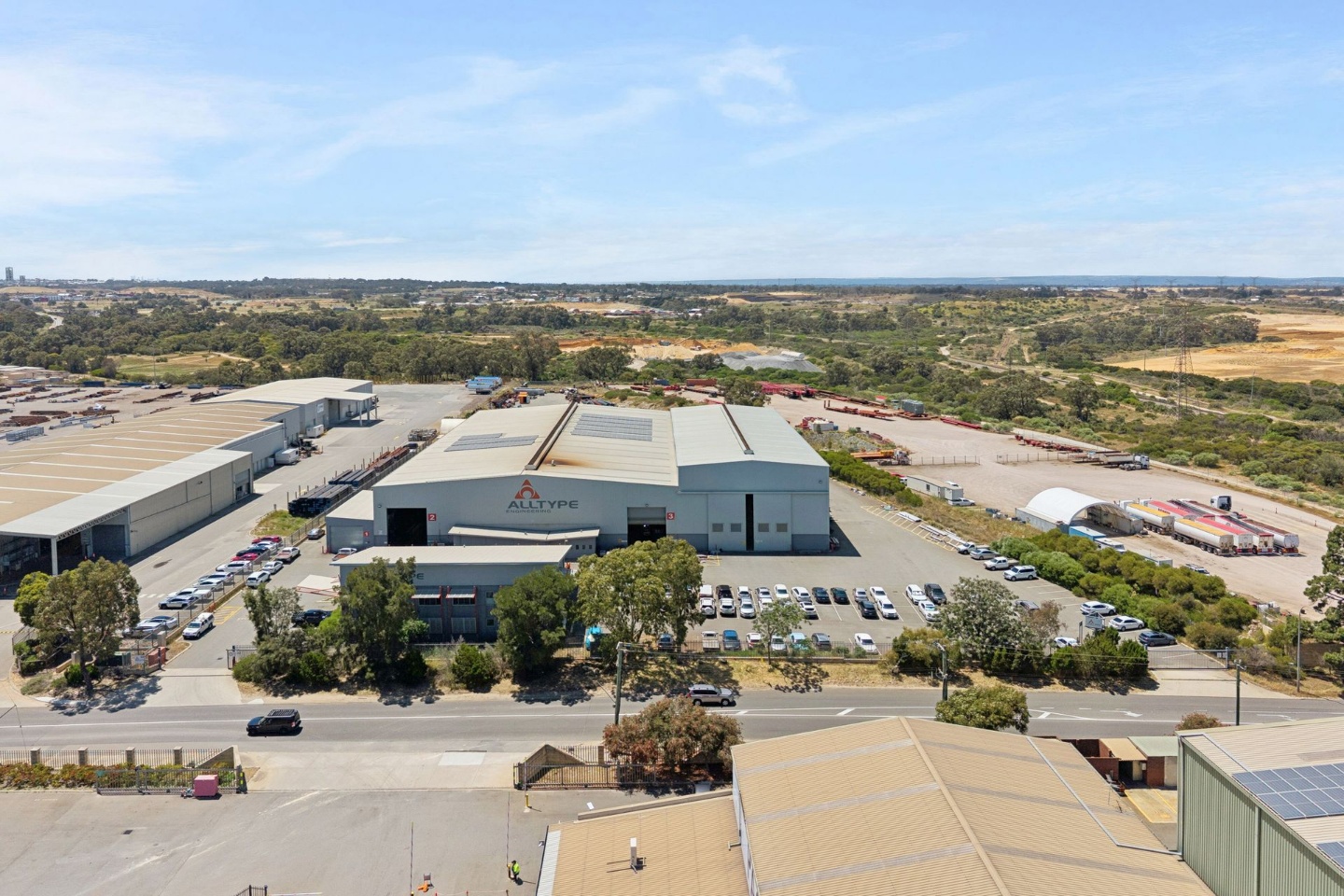
The West Leederville property fund has purchased an industrial property for $16.5 million.

Micron Just Smashed Estimates – Buy The Dip

Slootman Frank sells Snowflake (SNOW) shares worth $1.38 million

Nannup rolling on a global stage
Smartest Ripple (XRP) Alternative? Smart Money Move To Taurux (TAUX) as Presale Surpasses $300K Raised

The First Spider-Man: Brand New Day Trailer Is Here To Save The MCU


-
 Crypto World5 days ago
HYPE Token Enters Net Deflation as HyperCore Buybacks Outpace Staking Rewards
-

 Tech3 days ago
Your Legally Registered ‘Motorcycle’ Might Not Count Under Proposed US Law
-

 Fashion5 days ago
Weekend Open Thread: Addict Lip Glow
-
Sports4 days ago
Why Duke and Michigan Are Dead Even Entering Selection Sunday
-
 Tech1 day ago
Are Split Spacebars the Next Big Gaming Keyboard Trend?
-

 Business3 days ago
Search for Savannah Guthrie’s Mother Enters Seventh Week with No Arrests
-

 Business4 days ago
US Airports Launch Donation Drives for Unpaid TSA Workers as Partial Government Shutdown Enters Fifth Week
-
Crypto World4 days ago
Coinbase and Bybit in Investment Talks: Could Bybit Finally Enter the US Crypto Market?
-

 Business3 days ago
Australian shares drop as Iran war enters third week
-

 Business5 days ago
Country star Brantley Gilbert enters growing non-alcoholic beer market
-

 Crypto World3 days ago
Crypto Lender BlockFills Enters Chapter 11 with Up to $500M in Liabilities
-

 Sports5 days ago
College Basketball Best Bets: Conference Tournament Semifinal Picks
-

 Politics15 hours ago
The House | The new register to protect children from their abusers shows Parliament at its best
-
 Crypto World7 days ago
Three Binance Charts May Be Hinting at Bitcoin’s Next Move
-
 Business6 days ago
Trump demands Powell cut rates as Iran conflict raises energy prices
-

 Crypto World6 days ago
Senate Votes to Include CBDC Ban in Bipartisan Housing Bill
-

 Fashion3 days ago
25 Celebrities with Curly Hair That Are Naturally Beautiful
-

 News Videos8 hours ago
RBA board divided on rate cut, unusually buoyant share market | Finance Report | ABC NEWS
-

 NewsBeat6 days ago
Deane Road crash near Bolton colleges and university
-

 News Videos6 days ago
Tom Lee: The 100x Opportunity EVEN Bigger Than Bitcoin (New Ethereum Prediction 2026)


You must be logged in to post a comment Login