
Business
Fishing industry ‘shell-shocked’ by demersal species ban

The state’s commercial fishing lobby says affordable fish and chips could be a thing of the past due to reductions to demersal catches along most of Western Australia’s coast.
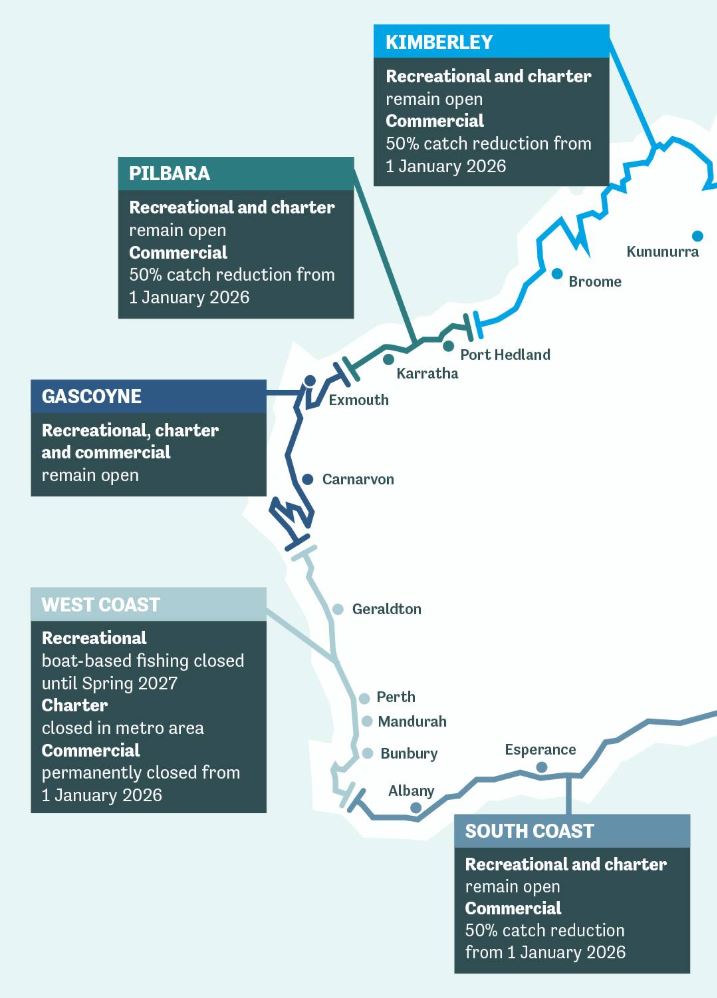
From January next year the allowable take of dhufish, red emperor, and snapper by commercial anglers will be halved everywhere north of Onslow and east of Augusta.
Along the west coast – Augusta to Kalbarri – commercial fishing for demersal species will be banned.
Charter fishing has been banned in the metro area, and boat-based recreational fishing closed until late 2027.
The Gascoyne, home to two World Heritage marine parks, will remain open.
The state government has enacted limits to protect severely depleted stocks of demersal species, which are among the most popular fish on plates and for recreational fishers to target.
WA Premier Roger Cook said demersal species were on the brink of extinction.
“These are difficult decisions to make, but they are the right thing to do,” he said.
“We want our kids and grandkids to be able to enjoy fishing in our beautiful State into the future.
“That’s why we are implementing these strong measures along WA’s coastline and asking everyone who has an interest in these fish stocks to play their part.”
The state government will make $29.9 million available to commercial anglers to buy back licenses in the west coast region, support alternative recreational fishing endeavours, and to offer rebates to tackle shop and recreational boat owners.
Western Australian Fisheries Industry Council chief executive Melissa Haslam said the buyback package was inadequate.
“With 50 commercial demersal licenses and another 20 shark licenses in this zone, $20 million is nowhere near enough,” she said.
“And there’s no mention of compensation for the Pilbara, which faces cuts of up to 80 per cent.
“Without immediate intervention, generational fishing businesses will collapse, thousands of jobs will vanish, regional communities will suffer.
“The scale of these closures demands a fair, timely compensation plan and a dignified exit for those forced out.”
Ms Haslam said the ban would hurt WA’s reputation for world-class seafood, force prices up, and lead to more imports on supermarket shelves.
“Our fishers have followed the rules set by government and are now being punished for doing so,” she said.
The state government will work on policy to protect spawning fish during the 21-month closure.
Real-time reporting of demersal catches and revised bag limits will apply in areas outside of the west coast zone.
Fisheries Minister Jackie Jarvis said this was the only way to give demersal fish stocks a chance to recover.
Recfishwest chief executive Andrew Rowland said the policy was the biggest fisheries reset in the state’s history.
“It is bloody tough and a shock to all of us. It is a seismic change and people will need time to absorb what it means,” he said.
“The winner right now is dhufish – and that matters. Fishers have been calling for stronger protection, and this decision delivers that.
“It’s short-term pain for long-term gain — the winners in the long run will be the fish and the fishing community.”



