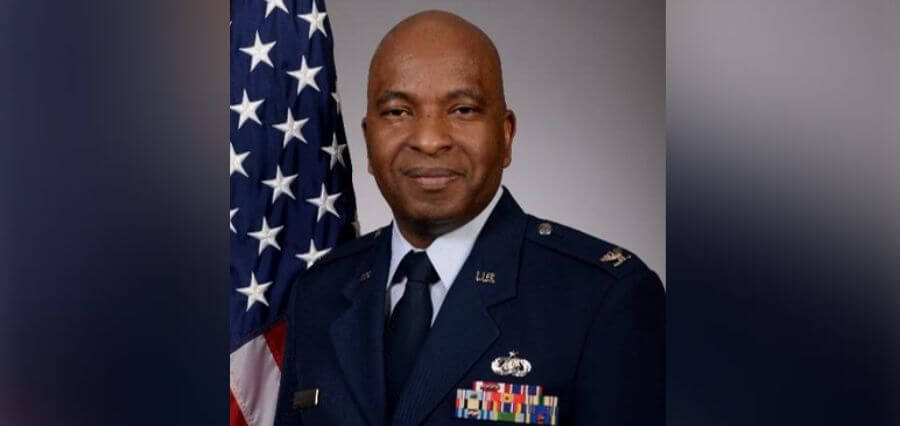
Colonel Nashid Salahuddin has spent more than three decades in uniform preparing for a challenge that defines modern military leadership: developing leaders who can operate confidently in ambiguity while delivering measurable readiness today.
Now serving as Director of Human Resources for the Air National Guard at Joint Base Andrews, Colonel Nashid Salahuddin oversees the human capital strategy supporting roughly 1,800 military and civilian personnel at headquarters. His mandate is clear and strategic . He ensures the right people are in the right positions at the right time, maintains a fully trained and ready workforce, and deliberately develops leaders for both current missions and future conflict environments.
That mission reflects a straightforward belief: readiness is built through people long before it is tested in operations.
Leadership for Ambiguity, Not Just Compliance
The Air National Guard operates at both a state and national level in order to respond to domestic events while also being able to ensure power is projected globally for US interests. In order to properly fulfill both of these duties, leaders must think much further than simply using checklists or doctrine when performing their daily duties.
Colonel Nashid Salahuddin has developed his own philosophy of leading through the use of adaptability and situational awareness. His experiences include starting out as an airman at 18 in 1990 to being a commissioned officer at the age of 24 in 1996 before completing various operational commands and assignments with the Office of The Secretary of War(Pentagon). This plethora of experiences has taught him that no two teams are identical and any crisis is different from others.
For example, during one of Colonel Salahuddin’s most significant moments for developing leadership, he was deployed to Iraq, where he served for six months as a Senior Advisor to the MoI (Ministry of Interior). He led through influence (without authority) so that he could align Coalition and Sovereign Partners’ objectives with no one being subordinate to him. In order to be successful in this effort, he relied heavily on his credibility and cultural understanding, along with disciplined listening. From this experience, the guiding principle of Colonel Salahuddin is to develop future-ready leaders capable of leading without authority.
Additionally, Colonel Salahuddin applies this philosophy of developing future-ready leaders by embedding their professional development in the execution of the organization’s mission. Decreasing the gap between performance and development was achieved by tracking professional development for individuals, in relation to the mission. Assignments create an opportunity to challenge an individual’s judgment versus just their technical skill. Feedback is both intentional and continuous. Coaching is an expectation.
Ultimately, the goal of Colonel Salahuddin is to create an organization that can adapt to complex situations; rather than just being trained.
Development as a Readiness Strategy
In his current role, Colonel Nashid Salahuddin treats human capital strategy as a readiness function, not an administrative requirement. That perspective has produced measurable results.
After examining the headquarters hiring process through the lens of his Six Sigma Black Belt training, he led a process overhaul that reduced time-to-fill vacancies by approximately 50 percent, cutting timelines from six months to roughly three. The result was not efficient for its own sake. Faster placement of qualified personnel into mission-critical positions directly strengthened operational readiness.
These efforts reflect a consistent view: leadership development and mission execution are interdependent.
Senior leaders often feel tension between immediate readiness requirements and long-term talent cultivation. Colonel Nashid Salahuddin does not see these as competing priorities. Organizations that neglect development in pursuit of short-term output eventually undermine their own capacity. For that reason, he integrates mentorship, stretch assignments, and succession planning directly into operational workflows.
Data-Informed, Human-Centered Leadership
Modern military personnel management generates vast amounts of data. Retention patterns, assignment timelines, performance metrics, and demographic trends provide valuable insight into workforce health. Colonel Nashid Salahuddin views data as essential, but incomplete on its own.
Data establishes baselines and exposes trends. It highlights retention challenges, recruiting pressures, and uneven developmental pathways. It strengthens transparency in promotion and assignment decisions. However, data does not fully explain morale, motivation, or trust.
For that, leaders must engage directly.
He combines quantitative analysis with sustained dialogue. Conversations with Airmen and civilians, 360-degree feedback, and structured forums provide context that dashboards cannot. The combination of evidence and engagement allows policy adjustments that are both measurable and human.
This approach also reinforces fairness. Transparent criteria and documented performance data reduce bias and build confidence in the system. In an institution that depends on trust, that legitimacy is essential.
His leadership philosophy balances disciplined process improvement with genuine concern for the people inside those processes.
Succession Planning and Bench Strength
Preparing future-ready leaders requires more than strong individual performance. It demands deliberate succession planning and institutional depth.
Colonel Nashid Salahuddin evaluates human capital effectiveness across several dimensions: readiness indicators, retention quality, engagement levels, and succession strength. The central question is not simply whether a vacancy can be filled today, but whether qualified successors are being prepared for critical roles five and ten years from now.
He encourages developmental breadth. Junior officers and enlisted personnel are urged to pursue cross-functional assignments that broaden perspective beyond a single specialty. Exposure to operational, strategic, and administrative domains builds leaders capable of systems thinking, a necessary skill in complex environments.
His own career illustrates that philosophy. From serving as Inspector General and Mission Support Group Commander to holding senior strategist roles at the Pentagon, he has operated at both field and enterprise levels. That experience informs his insistence that future leaders must understand both tactical execution and institutional design.
Bench strength is not accidental. It is built intentionally.
Cross-Generational Insight with Institutional Discipline
While his work focuses primarily on institutional systems, one enduring influence shapes his leadership philosophy: the example of his father, whose 87-year life journey is documented in the book Sacred Journey. The reference is contextual rather than promotional. It reflects lessons about resilience, integrity, and steady leadership through societal change.
From that example, Colonel Nashid Salahuddin internalized the importance of ethical steadiness in shifting environments.
Ethical leadership, in his practice, is operational. It requires clarity of standards, consistency in accountability, and the willingness to enforce consequences fairly. It means doing what is right even when oversight is limited. In high-complexity environments where supervision cannot reach every decision, character becomes the control mechanism.
Cross-generational insight also informs how he approaches workforce modernization. Younger Airmen contribute technological fluency and fresh perspective. Senior leaders provide institutional memory and contextual depth. He creates forums where these perspectives intersect, accelerating innovation while preserving experience.
Change is constant. Principles endure.
Institutional Leadership Over Personal Recognition
Colonel Nashid Salahuddin does not frame advancement as personal achievement. Recognition, in his view, reflects collective accomplishment. Leaders who focus primarily on individual recognition weaken trust. Leaders who elevate teams strengthen performance.
This perspective shapes how he measures impact. He looks for organizations that are stronger at the end of his tenure than at the beginning. He looks for leaders who have grown, systems that function more effectively, and policies that align more tightly with mission demands.
He does not emphasize legacy. He emphasizes stewardship.
That mindset is particularly relevant as the Air National Guard adapts to evolving strategic realities, including domestic response requirements and great-power competition. The environment demands leaders who can integrate strategic thinking with disciplined human capital management, modernize systems without losing sight of people, and sustain ethical clarity under pressure.
Colonel Nashid Salahuddin’s career progression, from enlisted Airman to colonel and from field commander to headquarters director, reflects a consistent focus on building capacity in others.
Preparing Leaders for What Cannot Be Predicted
The core challenge in military leadership development is not predicting specific threats. It is preparing leaders to operate effectively in uncertainty.
Colonel Nashid Salahuddin cultivates intellectual flexibility by encouraging leaders to question assumptions and seek diverse perspectives. He builds resilience by allowing emerging leaders to confront difficult assignments with appropriate mentorship and support. He reinforces ethical grounding by maintaining that integrity is non-negotiable, regardless of operational tempo.
He does not promise certainty. He prepares for volatility.
As Director of Air National Guard Human Resources, his mission remains direct: place the right people in the right positions at the right time, ensure they are fully trained and ready, and deliberately develop leaders who can meet today’s demands and tomorrow’s challenges.
Aircraft, technology, and strategy remain essential. Yet without leaders capable of thinking clearly, adapting quickly, and acting with integrity, none of those assets achieve their full potential.
Colonel Nashid Salahuddin has built his career on a disciplined conviction. Readiness begins long before deployment orders are issued. It begins with people who are prepared not only to execute, but to think, adapt, and lead.

























































You must be logged in to post a comment Login