
Business
Franchise Horizons: Investment Strategies and Innovative Concepts

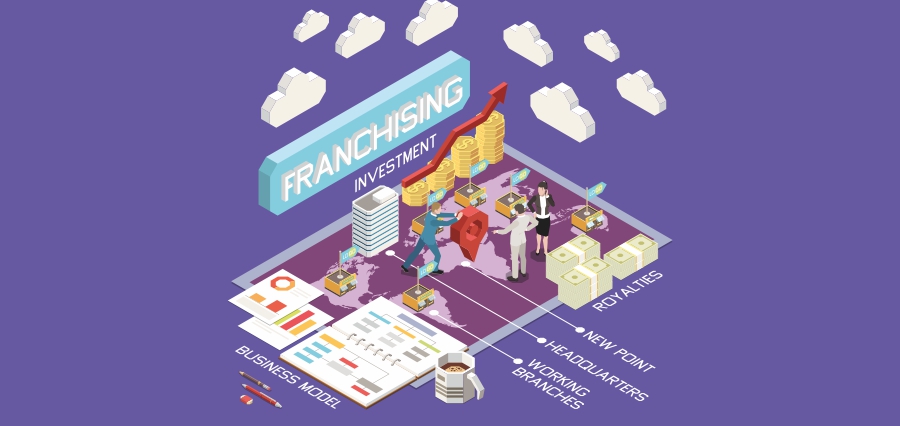
Franchising has always promised a practical bridge between entrepreneurship and proven systems. What’s changing now is the caliber of opportunities and the sophistication of the playbooks behind them. Today’s strongest franchise concepts blend durable demand with technology, supply chain leverage, and data-driven operations—creating businesses that are more resilient and more scalable than their predecessors.
For investors and operators, the horizon is wide: essential services, sustainability-focused models, specialized B2B offerings, and brands that monetize community as much as commerce. This article maps out the trends reshaping franchising, spotlights innovative concepts across industries, and offers a pragmatic framework for choosing and scaling your next investment.
The evolution of franchising
Classic franchise value rested on brand recognition and standardized procedures; those matter—but the modern edge comes from system-level optimization:
- Technology as infrastructure: Scheduling platforms, CRM and marketing automation, inventory intelligence, dynamic routing, and integrated payments reduce friction and turn once-opaque operations into dashboards you can manage in real time.
- Procurement power: Centralized buying and vendor agreements protect margins in categories with volatile input costs, while private-label SKUs and exclusive supplier relationships build defensibility.
- Talent and training flywheels: Structured recruiting, credentialing, and advancement paths help owners win in tight labor markets and keep service quality consistent.
- Data visibility: Mature brands provide unit economics benchmarks and guardrails, enabling investors to model outcomes with more confidence than a scratch-built startup.
Bottom line: the best franchisors are no longer just licensors of a logo and an operations manual—they’re platform partners that amplify local execution.
Where the growth is
A “rising tide” isn’t lifting every category equally. The concepts winning attention from savvy investors share three traits: essential or recurring demand, operational leverage through technology or supply chain scale, and room to expand share within fragmented markets.
1) Powering modern life: batteries, devices, and critical components
Electrification and digitization make one thing very clear: reliable power is non-negotiable. From smartphones and laptops to forklifts, medical carts, EV accessories, and emergency systems, battery-supported uptime is now a business imperative.
That’s why a commercial battery franchise opportunity is attractive for multi-unit owners who want B2B revenue, sticky repeat customers, and a product mix that ranges from consumer to industrial. These models often combine retail storefronts with commercial accounts, on-site solutions, device repair, and specialized services for fleets and facilities.
The mix produces resilient cash flow while tapping long-term growth drivers: more devices, more mobility, and more backup requirements for critical infrastructure.
Investor angle: Route density in B2B, negotiated contracts, and consumable repeats (replacement cycles) support predictable revenue. Add cross-sell—think lighting, accessories, and diagnostics—and you create a defensible local footprint.
2) Fitness reimagined: niches, neuroscience, and community
Health and wellness aren’t one-size-fits-all. The fastest-growing fitness franchises target specific outcomes (mobility, low-impact strength, longevity, metabolic health) or specific communities (youth athletes, seniors, recovery populations). They differentiate with science-based programming, personalized coaching, and a social layer that keeps members engaged.
The opportunity for operators: choose a platform that blends evidence-based training with scalable unit economics (efficient footprints, flexible staffing models, membership-driven cash flow). If you’re scouting this category, start with curated and unique fitness business ideas that turn specialization into stickiness: create communities they won’t want to leave.
Investor angle: Recurring revenue via memberships, high lifetime value, and referrals tied to measurable results. Winning concepts also capture secondary spend: assessments, small-group intensives, retail, and recovery services.
3) Essential services: restoration, facility care, logistics, and at-home support
Beyond batteries and fitness, essential service brands continue to modernize with IoT monitoring, AI dispatch, and predictive maintenance.
Restoration, facility services, and home-based care remain resilient because they solve urgent, non-discretionary problems. As these systems adopt smarter tooling and standardized documentation (especially for insurance or compliance), they gain speed and trust—two drivers of outsized share in fragmented markets.
Investor angle: Mission-critical demand, B2B contracts, and operational maturity that supports multi-unit scale.
Investment strategies that separate signal from noise
Strong concepts are necessary but not sufficient. Sustainable returns come from disciplined selection, capitalization, and management. Use this framework.
1) Demand, defensibility, and differentiation
- Demand: Is it essential, recurring, or counter-cyclical? Validate with real numbers: local business density, replacement cycles, or household demographics within 10–15 miles.
- Defensibility: What moats exist—procurement, training, certifications, proprietary tooling, or a hard-to-copy service mix?
- Differentiation: Can the offer be communicated in a sentence that prospects actually care about? If not, CAC will swell.
2) Unit economics and the path to payback
- Throughput, not just revenue: In retail and service hybrids, track average ticket, visit frequency, and capacity utilization. In fitness, monitors show up rate, retention, and upgrade mix.
- Margin drivers: Understand COGS volatility, labor ratios at different volume bands, and how procurement contracts shore up gross margin.
- Payback clarity: Model cash-on-cash returns under base, bear, and bull cases. Your payback window should be visible—not hypothetical.
3) Capital stack and liquidity buffer
- Right-size debt: Match loan terms to ramp curves and seasonality; preserve covenant headroom.
- Maintain a buffer: Opening delays happen. Carry 3–6 months of operating runway beyond projections to avoid reactive decisions.
4) Territory design and route density
- B2B-heavy models: Prioritize compact geographies with high target-business concentrations and efficient drive times.
- Consumer models: Align with anchor generators (schools, retail corridors, employers) and verify parking, visibility, and egress—simple details that compound foot traffic.
5) Talent flywheel and leadership bench
- Recruit like you sell: Top-of-funnel sourcing, screen-to-offer conversion, and a weekly cadence to keep the pipeline moving.
- Grow managers from within: A bench of shift leads and GMs is your throttle for multi-unit scale.
6) System partnership: demand gen, tech stack, and coaching
- Marketing operations: Ask for proven channel mixes, CAC benchmarks, and review/reputation playbooks.
- Technology: Confirm integrations (POS, CRM, scheduling, accounting) and access to your own data.
- Coaching & peer network: Field visits, peer groups, and transparent KPI scorecards prevent drift and accelerate best-practice adoption.
Execution blueprint: your first 120 days
A smart start compounds. Here’s a practical ramp that works across many concepts:
Days 1–30: Foundations
- Complete training, finalize licenses, hire a core team, and configure your tech stack.
- Build a one-page scorecard with 10–12 leading indicators: speed-to-lead, trial-to-member conversion (fitness), ticket mix and commercial quotes (batteries), staffing ratios, and NPS/CSAT.
Days 31–60: Pipeline and launch
- B2B: Map the top 200 accounts; run a four-touch cadence (intro, demo/value drop, follow-up, close). Offer a “first-order fast lane” to prove responsiveness.
- B2C: Launch local SEO, review velocity, and geo-targeted campaigns. Track cost per booked appointment or trial, not just clicks.
- Partnerships: Co-market with complementary businesses and community groups; codify referral rewards that make partners look good.
Days 61–90: Quality and retention
- Tighten SOPs where friction shows up: inventory turns, appointment lead times, or class capacity.
- Introduce loyalty/upgrade paths; analyze cohort behavior to refine offers and programming.
Days 91–120: Scale and delegation
- Elevate a lead or assistant manager; shift the owner’s focus to partnerships and multi-unit scouting.
- Re-forecast the P&L with real performance data; schedule quarterly “deep dives” with your franchisor coach.
Future horizons: sustainability, specialization, and multi-units
The next decade of franchising will be defined by three shifts:
- Sustainability as strategy, not slogan: Energy efficiency, circular economy services, and electrification-focused offerings will keep gaining ground. Battery-centric models illustrate how environmental practicality and strong unit economics can align.
- Specialization that scales: Concepts that “own a niche” will beat generalists—especially those with proprietary programming, certification tracks, or product ecosystems that elevate perceived value.
- Multi-unit mastery: Professional operators will keep consolidating territories and layering adjacent brands to leverage shared back offices. The winners will standardize playbooks, hire ahead of growth, and build a leadership bench that keeps culture consistent at scale.
Pick platforms, not just products
Franchise opportunities are no longer interchangeable storefronts. The best are platforms: technology-enabled, supply-chain savvy, data-transparent, and training-rich. If you prioritize essential or recurring demand, insist on real unit economics visibility, and partner with systems that invest in your success, you can build durable cash flow and scale with confidence.
If you’re ready to explore categories at the forefront of these trends, start with a proven commercial battery franchise opportunity and research unique fitness business ideas that demonstrate measurable outcomes, sticky communities, and unit economics you can model.
The horizon is bright for investors who combine disciplined analysis with concepts built for the way people live, work, and power their lives today.
*Sponsored Blog Post



