


Mumbai: As negotiations between Brussels and New Delhi over the EU-India trade agreement gather pace, a slew of European multinationals are increasingly exploring listing their Indian subsidiaries in Mumbai.
Investment bankers said they are already seeing a clear uptick in enquiries for initial public offerings (IPOs) from European industrial companies, particularly in auto components, speciality chemicals and clean energy, especially after the trade deal. More notably, the vibrant domestic fund-raising market – where multinational companies have been able to sell shares at eye-popping valuations in the last two years – is also encouraging them to explore domestic listings.
According to bankers, German auto components firm MAHLE GmbH and Swedish gaming company Modern Times Group, through its Indian mobile gaming subsidiary PlaySimple are preparing to file draft red herring prospectuses (DRHPs) with the market regulator for proposed IPOs soon. Danish brewer Carlsberg is also contemplating an IPO. Emails sent to the companies remained unanswered.
Agencies
Auto parts, specialty chem & clean energy cos among those keen to unlock value
This week, Italian giant Bonfiglioli Transmissions filed a DRHP for a ₹2,000 crore IPO. Last year, German Green Steel & Power received Sebi nod to go ahead with the IPO and will be launching its IPO soon. SAEL Industries, an Indian renewable energy firm backed by Norwegian state-run fund Norfund, filed papers in November 2025 for an ₹4,575 crore IPO. “The emerging interest from European industrial, auto-component and clean-energy firms signals a deeper level of confidence in India’s regulatory architecture, disclosure standards and institutional investor base,” said Bhavesh Shah, managing director and head – Investment Banking, Equirus Capital. “It is the growing base of the domestic institutional investors that is triggering this trend.”
Advertisement
Live Events
Shah said if the momentum in the IPO market sustains, India could evolve into a preferred regional hub for multinational listings. Several mandates are believed to be at the pre-filing stage, with listings expected over the next 12 to 18 months. The pipeline, according to bankers, spans sectors from precision engineering and renewable energy equipment to consumer-facing brands with deep European heritage. “The conclusion of the India-EU Free Trade Agreement, has turned India’s capital markets into a strategic expansion route for European multinationals specifically for European automakers,” said Neha Agarwal, MD and head, Equity Capital Markets, JM Financial Institutional Securities.
“Following the successful listings of Orkla India and Carraro India, we are seeing a structural shift where European parents no longer view India just as a manufacturing hub, but as a primary destination to unlock equity value,” according to Agarwal.
“With firms like Bonfiglioli now in the pipeline, the FTA acts as the ultimate ‘confidence bridge’, allowing European giants to tap into India’s high-valuation premiums and capital to fund their global green ambitions.”
Not all are convinced the floodgates’re about to open. Dev Chandrasekhar, partner at Mumbai-based valuations and branding advisory firm Transcendum, expects listings by European firms in India to be “selective and opportunistic rather than a stampede”. “For European companies seeking to de-risk supply chains away from China while accessing a $4 trillion economy, an Indian listing may no longer be optional, but it may be inevitable… let’s not get ahead of ourselves because the EU-India deal is still being negotiated.”
Also, many European firms may be sceptical of listing here “European companies are notoriously cautious about the governance dilution that comes with a public listing in an emerging market,” said Chandrasekhar. “The regulatory environment has improved, but Sebi’s disclosure norms, related-party transaction scrutiny and promoter lock-in requirements can be uncomfortable for European sponsors used to lighter-touch regimes.”
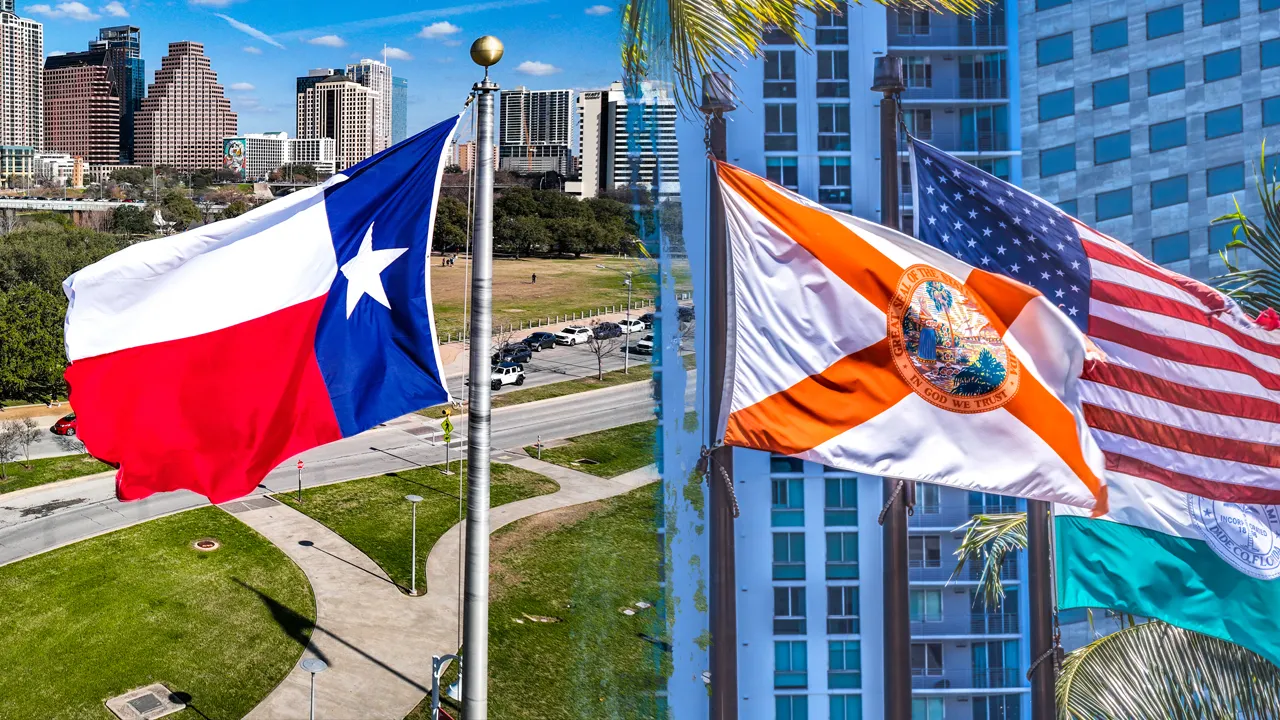
Exxon MobilXOM 2.23%increase; green up pointing triangle plans to move its legal home to Texas from New Jersey, joining other companies that have flocked to the Lone Star state in search of a more business-friendly environment.
Exxon, which has been incorporated in New Jersey since 1882, plans to ask its shareholders to vote on a proposal to redomicile in Texas. If successful, Exxon will follow Tesla, Coinbase GlobalCOIN 0.35%increase; green up pointing triangle and others that have reincorporated in Texas.
The war in Iran could raise global food prices as the conflict disrupts fertilizer shipments through one of the world’s most critical trade routes.
While energy markets have focused on oil supply risks, analysts say threats to fertilizer supply chains through the Straight of Hormuz may also bring long-term economic issues through food inflation.
“Beyond energy, another risk receiving less attention is the potential knock-on effect on food prices, as fertilizer shortages push agricultural costs higher,” said Wolfe Research chief economist Stephanie Roth in a note written on Tuesday.
Roth estimates the disruption could raise “food-at-home” inflation by roughly 2 percentage points, adding about 0.15 percentage points to headline inflation in the U.S., on top of roughly 0.40 percentage point increase from energy.
Customers shop at Walmart on January 22, 2026 in Little Rock, Arkansas.
Will Newton | Getty Images
More than one-third of globally traded fertilizer passes through the Straight of Hormuz, making it a critical artery for agricultural supply chains. Commercial traffic through the route has largely been halted since the war started late last month, disrupting shipments just as farmers across the Northern Hemisphere prepare fields for spring planting.
Advertisement
The timing is critical because fertilizers are applied early in the crop cycle and help determine yields later in the year.
“If fertilizer supply tightens during this window, farmers may reduce application rates,” Roth said in the note. That could reduce yields for crops like corn, soybeans, wheat and rice and increase agricultural costs.
Economists in the fertilizer industry are equally concerned and say prices are already rising.
Between the weeks ending Feb. 27 and March 6 — which encompass the start of the war — the price per short ton of urea fertilizer imports in the U.S. jumped by 30%, according to data collected by industry advocacy group The Fertilizer Institute.
Advertisement
Urea — a nitrogen-based fertilizer widely used to boost crop yields — is one of the most heavily traded fertilizers moving through the region.
Higher fertilizer prices for farmers and retailers could ultimately raise food costs for consumers if the trade disruption lasts, said Veronica Nigh, chief economist at The Fertilizer Institute.
“This is a global impact on fertilizer costs,” said Nigh. “I would imagine that there would be much more passing on of these costs to consumers in this scenario, which is not something we have seen before.”

The U.S. relies on global fertilizer markets, importing roughly 20% of its total use, though nitrogen fertilizers like urea come from a more wide-ranging group of suppliers including Canada, Trinidad and Tobago, Russia and elsewhere.
Advertisement
The ripple effect could stretch around the world and beyond commodities. Asia and Africa are especially dependent on fertilizer exports from the Gulf region. Countries such as India rely heavily on Gulf supplies, while several African economies depend on imported materials used to produce fertilizers.
While disruptions to fertilizer shipments could lower crop yields for farmers and raise costs for households, fertilizer producers could stand to benefit.
CF Industries hit an all-time high Monday and shares are up nearly 10% over the past week, their biggest multi-day gain since 2022.
Medtronic plc (MDT) Leerink Global Healthcare Conference 2026 March 11, 2026 9:20 AM EDT
Company Participants
Thierry Pieton – Executive VP & CFO
Conference Call Participants
Advertisement
Michael Kratky – Leerink Partners LLC, Research Division
Presentation
Michael Kratky Leerink Partners LLC, Research Division
Advertisement
All right. I think we can kick things off. But thank you all for joining. My name is Mike Kratky. I’m our Senior MedTech Analyst at Leerink and thrilled to be joined today by Medtronic’s CFO, Thierry Pieton. So thanks so much for joining.
Thierry Pieton Executive VP & CFO
Yes. Thanks for having me.
Advertisement
Question-and-Answer Session
Michael Kratky Leerink Partners LLC, Research Division
Advertisement
You just passed the 1-year mark at Medtronic. We’d love to maybe kick it off by hearing from your perspective, how the business has evolved over the last year. And as you look out over the next 12 months, what gets you most excited?
Thierry Pieton Executive VP & CFO
Yes. Look, first of all, it’s been an interesting 12 months. I mean we’ve had a lot of things going on between sort of accelerating some of the new product launches and some of the portfolio actions that we’ve taken that I’m sure we’ll talk about, the IPO of MiniMed and we’re going back on offense in M&A, and we’ve done a couple of things in the last 3 or 4 months. So it’s been pretty busy. Look, I think the business has growing confidence.
Advertisement
I think a lot of the work that has been done for several years in the past few years to build the portfolio and to reinforce some of the operating mechanisms in the team and to work on R&D on some of the innovations that we’re launching now, it’s starting to pay off. And I think there’s a lot of excitement