
Business
From Pixar to Disney+: The $100-billion blueprint behind Bob Iger’s Disney

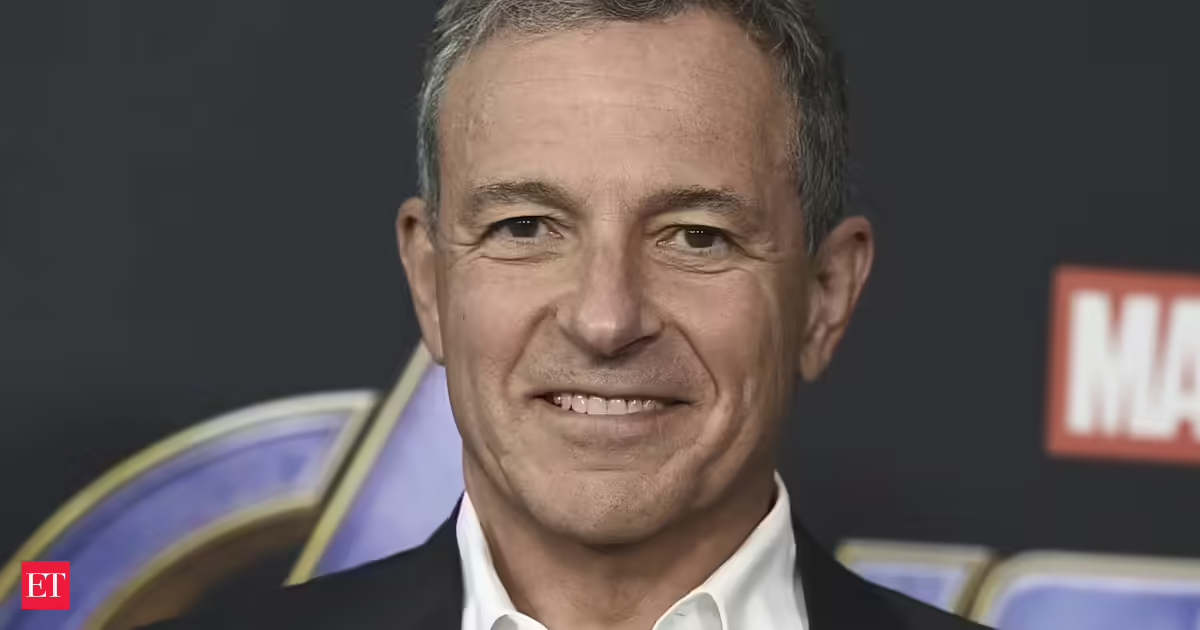
In one of his first moves, Iger made Disney shows like Lost and Desperate Housewives available for sale on Apple ‘s iTunes platform, ushering in the unique idea of watching TV online. Three months later he bought Pixar from Apple co-founder Steve Jobs. That $7.4 billion deal was an eye-popper, paving the way for blockbusters like Cars and Inside Out that reinvigorated Disney’s animated film business.
Those early moves hinted at key parts of Iger’s strategy: acquire marquee entertainment franchises and find new ways to exploit them. As he prepares to hand the reins next month to his successor, theme-parks chief Josh D’Amaro, Iger leaves a legacy that includes snapping up the biggest brand names in Hollywood via more than $100 billion in mergers and acquisitions, expanding in China and building a streaming business that delivered $24.6 billion in revenue from people watching movies and TV shows online last year.
“That’s one huge insight of his,” said David Collis, an executive education fellow at Harvard Business School who has written about Iger. “If you own these incredible entertainment franchises, any device only increases demand for your content.”
More deals followed Pixar, including Marvel Entertainment and its stable of superheroes, Star Wars-parent Lucasfilm and the $71 billion acquisition of 21st Century Fox in 2019, which brought in franchises like The Simpsons and Avatar.

“The deal we did for Fox, in many ways, was ahead of its time,” Iger said this week on an earnings call when asked about Netflix’s pending acquisition of Warner Bros Discovery.
Those acquired characters and stories found their way into Disney’s theme parks. In 2013, when the company first began exploring a Star Wars land for the parks, Iger told his designers, “Be the most ambitious that you have ever been,” Bob Weis, the longtime head of Disney’s parks design business, recalled in his 2024 autobiography.Iger was also keen on international expansion, green-lighting the $5.4 billion Shanghai Disneyland. Before its 2016 opening, Iger flew to China on a nearly monthly basis to monitor its progress, according to Weis.
The same year the Fox acquisition closed, Iger launched Disney+, the company’s flagship streaming service, the company’s response to the growing dominance of Netflix in online viewing. Providing a new outlet for programming that ran on networks like the Disney Channel was a threat to the company’s lucrative cable-TV business, but in the end, Iger relented.
Disney+ was a hit from the start. Ten million customers signed up the first day, driven by programming such as the Star Wars-spinoff The Mandalorian. The company reported 132 million Disney+ subscribers at the end of its latest fiscal year.
TV Star
Iger has spent his whole career in the TV business, rising up the ranks at ABC and performing every task, from getting a bottle of Listerine for Frank Sinatra before a TV special to scheduling the 1988 Winter Olympics. He was considered a likely CEO of broadcaster Capital Cities/ABC until that company was acquired by Disney in 1996 and he had to start clawing his way up the corporate ladder again.
When a shareholder revolt finally prompted the retirement of Disney CEO Michael Eisner in 2005, Iger got his shot.
More than 20 years later, the worst grade on Iger’s corporate report card likely comes in succession planning. Multiple extensions of his contract over the years led senior Disney executives to exit. When he finally stepped down for the first time in 2020, his handpicked successor Bob Chapek proved to be disappointment.
As Iger prepares to pass the baton to D’Amaro on March 18, he leaves plenty of work still to be done. On the recent earnings call, Iger said he hoped his replacement would carry on with his focus on reinvention.


A union says the announcement came as a blow to employees with up to 275 positions at risk.
Signage outside Johnson & Johnson offices in Irvine, California, US, on Friday, Oct. 10, 2025.
Kyle Grillot | Bloomberg | Getty Images
Johnson & Johnson on Wednesday said the U.S. Food and Drug Administration approved its once-daily psoriasis pill, the first oral option to rival best-selling shots.
The FDA approved the pill, Icotyde, to treat moderate to severe plaque psoriasis, an autoimmune condition that causes rough patches of skin. Patients typically start treatment with topical medications.
If those don’t work, they advance to pills or shots. J&J sees Icotyde becoming the first-line systematic treatment for psoriasis, in between topicals and shots.
Drugmakers have been developing more advanced medicines than standard topicals, turning psoriasis into a highly competitive space. Icotyde targets the same IL-23 receptor as best-selling shots like J&J’s Tremfya and AbbVie‘s Skyrizi, giving patients an oral alternative to some of the most advanced — and most expensive — drugs on the market.
“To be able to to be able to have something that is relatively simple, that offers that level of clearance, trusted safety profile, and in a simple pill, we think is going to be revolutionary,” said Jennifer Taubert, chairman of J&J Innovative Medicine.
J&J estimates about 8 million people in the U.S. have plaque psoriasis, and that 75% of people don’t advance from topicals to shots because of reasons like fearing needles. Taubert sees Icotyde appealing to those patients.
“We believe having the type of profile that Icotyde has in a simple, once-daily oral pill, we think it’s going to be an absolute game changer for patients,” Taubert said.
J&J hasn’t announced how much Icotyde will cost beyond saying the company will help people pay for the medicine. Rival shots Tremfya and Skyrizi cost around $100,000 a year.
J&J sees peak annual sales of Icotyde exceeding $5 billion once it’s approved for other autoimmune conditions. It’s testing the drug for psoriatic arthritis, ulcerative colitis and Crohn’s disease.
Shares of J&J slid one-quarter of a percent Wednesday while shares of Skyrizi-maker AbbVie fell more than 4%. Protagonist Therapeutics, a biotech company that developed Icotyde with J&J, was trading about flat.

Brightstar Lottery stock hits 52-week low at 12.6 USD

Stocks Can’t Recover While Oil Prices Surge. Why the Fed’s Unlikely to Help.
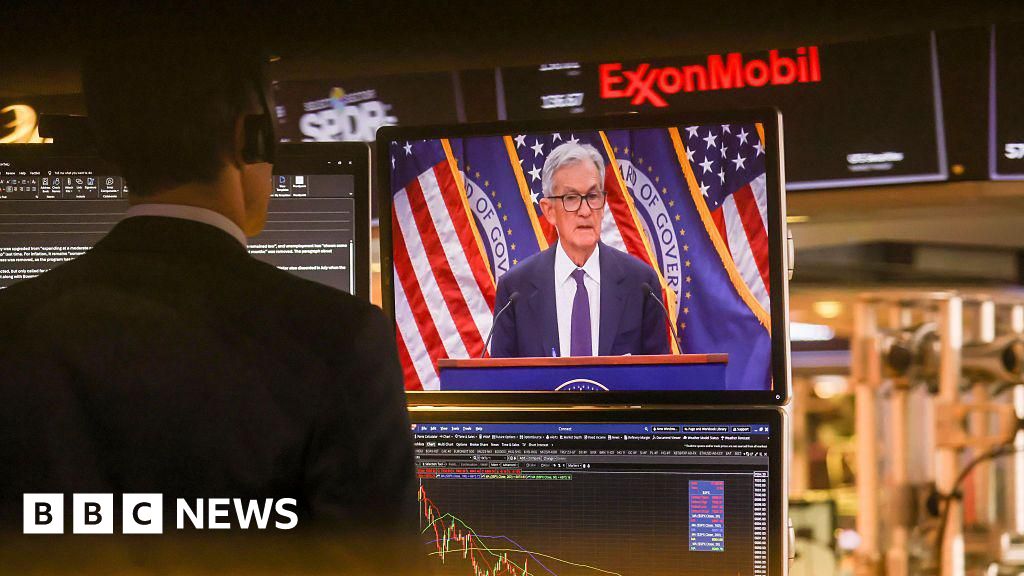
The US central bank is moving cautiously, despite pressure from the president to cut interest rates.
Big Tech’s Huge Conglomerate Premium


Top chains specialized in focused concepts and tapped into trending flavors.
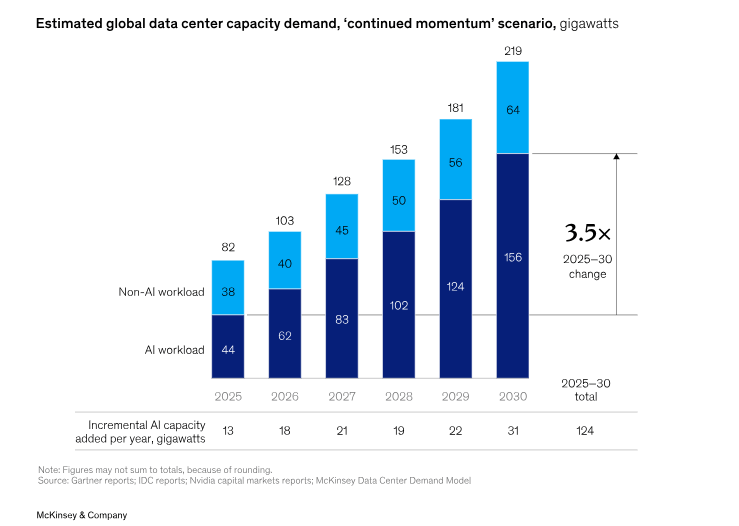
Hewlett Packard Enterprise's AI Story Moved To The Network Layer
Former Consul General of Israel in New York Ambassador Ido Aharoni joins ‘Mornings with Maria’ to break down Iran-Israel tensions, defend U.S.-Israeli strikes and warn Tehran’s regime is weakening.
Iran’s latest military escalation is backfiring on the global stage as new strikes and widening regional fallout expose what a former Israeli consul general in New York called a critical miscalculation by Tehran.
Ambassador Ido Aharoni, who served as consul general of Israel in New York, joined FOX Business’ “Mornings With Maria” on Wednesday to discuss the broader implications of Iran’s recent actions and the shifting dynamics across the Middle East.
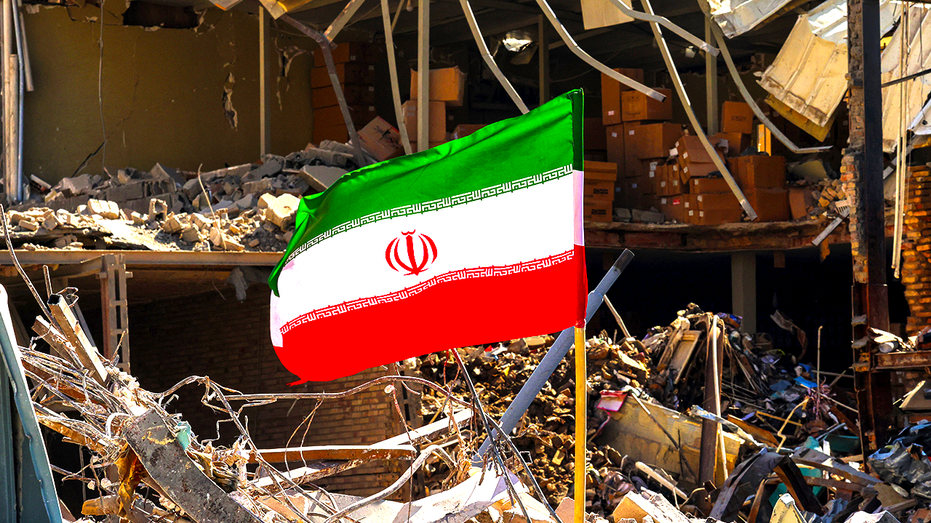
An Iranian flag lies amid rubble and debris in Tehran. (Atta Kenare/AFP via Getty Images)
“Iran made a terrible mistake attacking Cyprus, thus bringing in the European Union,” Aharoni told host Maria Bartiromo.
He said Iran’s decision to expand its targets is drawing in new international pressure and raising concerns far beyond the region.
IRAN WAR UNLIKELY TO TRIGGER GLOBAL SUPPLY CHAIN CRISIS, GOLDMAN SACHS SAYS
“Iran is presenting a threat to the entire world,” Aharoni said.
Rep. Rick Crawford, R-Ark., joins ‘Mornings with Maria’ to discuss US-Israel strikes on Iran, a top counterterror official’s resignation and rising security concerns amid the DHS shutdown and FISA debate.
The former consul general argued the U.S. and Israel’s ongoing military campaign is reshaping deterrence and exposing the regime’s vulnerabilities.
“For the first time since 1979, Iran is being punished for its motivation, for its ideology, not just for their actions… This sends a very powerful message throughout the region,” Aharoni said.
“This is how you restore deterrence… This is exactly what is being done.”
He said Iran’s long-term position is weakening as a result of Operation Epic Fury.
“They’re not going to be the same regional power that they were before or after this. It will take them decades to rebuild the infrastructure that was destroyed,” Aharoni explained.
Sen. Bill Cassidy, R-La., joins Maria Bartiromo to discuss recent Israeli and U.S. strikes on Iranian targets, including the killing of Iran’s intelligence minister.
Aharoni underscored that Iran’s actions are impacting its own population as instability grows.
“The Iranians are the number one victims of their own regime,” Aharoni said.
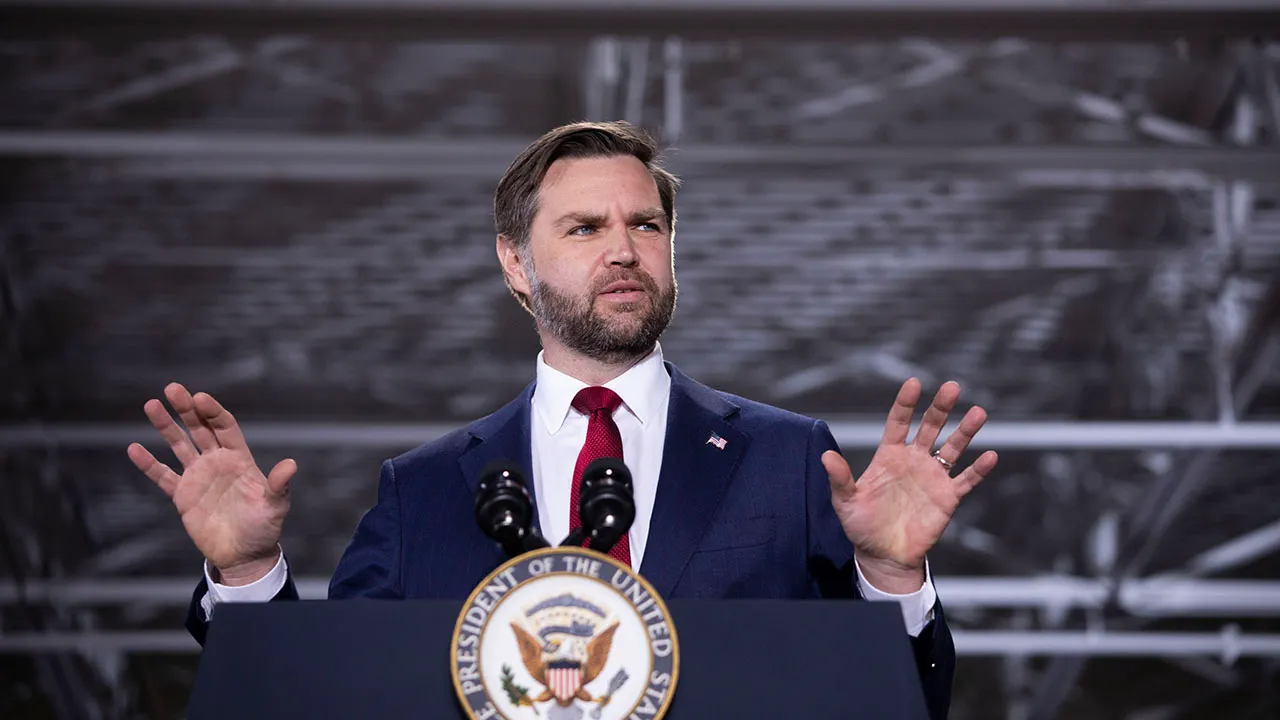
Vice President JD Vance takes questions from reporters during an event at a Michigan manufacturing plant.
The Trump administration is working to lower gas prices as motorists continue to pay more at the pump since the outbreak of the Iran war, Vice President JD Vance said Wednesday, noting that the increase is temporary.
Vance was at the Engineering Design Services, Inc. manufacturing plant in Auburn Hills, Michigan, where he was asked about rising gas prices.
“Gas prices are up, and we know they’re up,” Vance said. “We know that people are hurting because of it, and we’re doing everything that we can to ensure that they stay lower.”
Vance said prices will eventually start to decline.
AMERICANS HIT WITH SOARING ELECTRICITY BILLS AS PRICE HIKES OUTPACE INFLATION NATIONWIDE
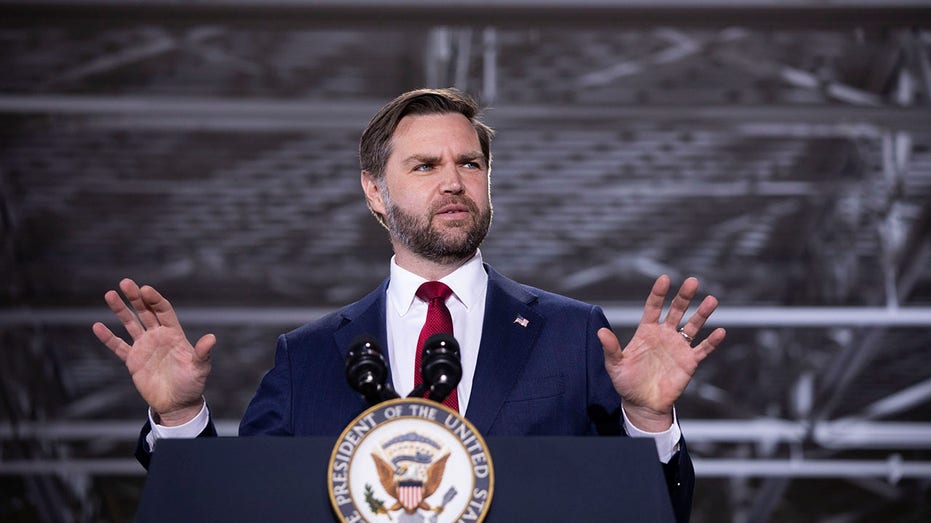
Vice President JD Vance speaks onstage at Engineering Design Services, Inc. on Wednesday in Auburn Hills, Michigan. (Bill Pugliano/Getty Images / Getty Images)
“The president said this, and I certainly agree with it. This is a temporary blow,” he said. “What happened under the Biden administration is that gas prices were high for four years. Gas prices are higher right now, and frankly, they’re not even as high as they were during certain parts of the Biden administration.”
Prices have steadily risen following U.S. and Israeli attacks against Iran in recent weeks.
As of Wednesday, the average price for a regular gallon of gas was $3.84, up from $2.92 a month ago, according to AAA.
GAS PRICES SURGE, PINCHING AMERICANS AND HANDING THE GOP A NEW MIDTERM HEADACHE
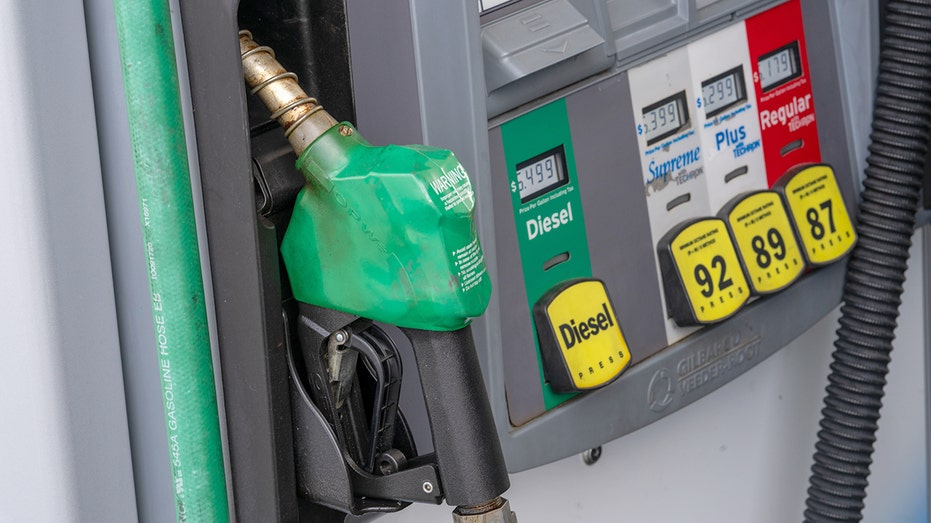
A diesel fuel pump at a Chevron gas station in Seattle, Washington, US, on Monday, March 9, 2026. (M. Scott Brauer/Bloomberg via Getty Images / Getty Images)
In recent weeks, the administration has worked with its allies to release hundreds of millions of barrels of oil from petroleum reserves in an effort to put downward pressure on prices, Vance said.
Many U.S. allies are “suffering” much more than many Americans, Vance said.
“So as much as we’ve got to focus on getting these gas prices down, the reality is, overseas they’re feeling it far worse than we did because we’ve taken the steps to protect our energy economy.”
Once military operations against Iran conclude, prices should decrease to previous levels, said Vance.
‘The Big Money Show’ panelist discusses Vice President JD Vance’s remarks on the economy and the Trump administration’s economic messaging ahead of the midterms.
CLICK HERE TO GET FOX BUSINESS ON THE GO
“We promise that when this conflict draws to a close, when this operation draws to close, we’re going to see those energy prices come back down to reality, because that’s what the president promised to do,” he said. “He delivered an energy-dominant agenda. It’s made us much more secure in the face of these things. But yeah, we’ve got a rough road ahead of us for the next few weeks, but it’s temporary.”
The U.S. produces more oil than any other country, according to the Energy Information Administration (EIA). As of 2023, the latest data available, the U.S. produces 1roughly3 millions barrels per day, followed by Russia and Saudi Arabia.

The Versatile Knit Rule – Julia Berolzheimer

Metropolitan Police sex abuser found out, yes another one

Drogheda United: Joanna Byrne reiterates stance despite being told to resign by Trivela Group


![Trump's Worst FEAR Just Came True! [This Happens To Oil Next]](https://wordupnews.com/wp-content/uploads/2026/03/1773864099_maxresdefault-80x80.jpg)


-
 Crypto World5 days ago
HYPE Token Enters Net Deflation as HyperCore Buybacks Outpace Staking Rewards
-

 Tech3 days ago
Your Legally Registered ‘Motorcycle’ Might Not Count Under Proposed US Law
-

 Fashion5 days ago
Weekend Open Thread: Addict Lip Glow
-
Sports4 days ago
Why Duke and Michigan Are Dead Even Entering Selection Sunday
-

 Business3 days ago
Search for Savannah Guthrie’s Mother Enters Seventh Week with No Arrests
-
 Tech1 day ago
Are Split Spacebars the Next Big Gaming Keyboard Trend?
-

 Business4 days ago
US Airports Launch Donation Drives for Unpaid TSA Workers as Partial Government Shutdown Enters Fifth Week
-
Crypto World4 days ago
Coinbase and Bybit in Investment Talks: Could Bybit Finally Enter the US Crypto Market?
-

 Business4 days ago
Country star Brantley Gilbert enters growing non-alcoholic beer market
-

 Business2 days ago
Australian shares drop as Iran war enters third week
-

 Crypto World2 days ago
Crypto Lender BlockFills Enters Chapter 11 with Up to $500M in Liabilities
-

 Sports5 days ago
College Basketball Best Bets: Conference Tournament Semifinal Picks
-

 Politics10 hours ago
The House | The new register to protect children from their abusers shows Parliament at its best
-
 Crypto World7 days ago
Three Binance Charts May Be Hinting at Bitcoin’s Next Move
-
 Business6 days ago
Trump demands Powell cut rates as Iran conflict raises energy prices
-

 Crypto World6 days ago
Senate Votes to Include CBDC Ban in Bipartisan Housing Bill
-

 Fashion2 days ago
25 Celebrities with Curly Hair That Are Naturally Beautiful
-

 News Videos3 hours ago
RBA board divided on rate cut, unusually buoyant share market | Finance Report | ABC NEWS
-

 NewsBeat6 days ago
Deane Road crash near Bolton colleges and university
-

 News Videos6 days ago
Tom Lee: The 100x Opportunity EVEN Bigger Than Bitcoin (New Ethereum Prediction 2026)


You must be logged in to post a comment Login