
Business
Geopolitical tensions rising; diversify globally and rebalance toward defensives, says LGT Wealth’s Nikhil Advani


Nikhil Advani, Managing Director, International Business at LGT Wealth India, believes this is a time to focus on resilience rather than chase short-term returns.
In an interaction with Kshitij Anand, he underscores the importance of global diversification and strategic rebalancing toward defensive sectors such as utilities, healthcare, and dividend-yielding stocks.
He also highlights the need for phased investing and exposure to long-term themes like infrastructure and AI, as investors navigate a rapidly evolving global landscape. Edited excerpts:
Q) Thanks for taking the time out. Geopolitical tensions seem to be escalating across regions. How should global investors interpret these developments from a macro and market perspective?

A) These are testing times for investors. Markets are facing a new war, AI stress, and credit cracks all at once. The US-Israel conflict with Iran has resulted in a sharp surge in oil prices, with Brent crude frequently testing the $100-$120 range.
In many ways, the energy market is the one that matters most right now, as the price of oil is baked into the cost of almost everything. As per a Bloomberg report, there is US$8.27 trillion lying in US money market funds, an all-time high.
So clearly, investors are being cautious in the current environment. However, a lot of this capital will flow back into global financial assets when there are signs of easing in geopolitical tensions.
Q) Historically, markets tend to react sharply to geopolitical shocks but recover quickly. Is it time to diversify globally and which markets are looking attractive?
A) We at LGT have always encouraged clients to diversify globally to reduce concentration risk to a single economy and currency. It is impossible to time the markets, so our approach with clients has been to build resilient multi-asset global portfolios, as diversification can reduce volatility without necessarily compromising returns.
Currently, we see a stronger need to diversify traditional long-only equity exposure with less correlated strategies such as long-short and market-neutral. High-quality dividend yield strategies focused on companies with strong balance sheets and sustainable cash flows also remain a useful way to balance valuation risk and income needs.
Keeping inflation in mind, infrastructure is a core theme for us in 2026, with a focus on investments in global data centres, renewables, power grids, and storage facilities. Our approach to investing in the current environment is to look at quality assets and deploy capital in a phased manner.
Q) How could rising crude oil prices and commodity volatility reshape the global investment landscape?
A) The effective closure of the Strait of Hormuz, which controls over 20% of global oil and natural gas supplies, is causing the most significant disruption to energy supply since the 1970s.
Even the record-breaking 400-million-barrel release by the International Energy Agency (IEA) can only cover the supply gap for a few weeks if the strait remains closed.
Countries in Europe and Asia have opened talks with Iran to negotiate deals to guarantee safe passage for their ships. As a result, the global landscape is shifting from globalisation to fragmentation. The winners of the next five years will be the nations and companies that can secure and control their own supply chains.
Q) What role does rebalancing play during volatile periods when asset prices move sharply due to geopolitical shocks?
A) Given the uncertain outlook, we advocate rebalancing toward defensive exposures such as utilities, healthcare, and quality dividend stocks, while retaining long-term exposure to resilient secular growth themes including AI-linked memory, semiconductor equipment, and power infrastructure. In 2026, we are not just looking for growth; we are looking for “resilient growth.”
Q) How can investors use ETFs to achieve better asset allocation across equities, debt, gold, and international markets?
A) Globally, mutual funds continue to see net outflows, while ETFs draw strong inflows, underscoring the structural shift toward passive and broad market exposures.
Year after year, statistics show that the vast majority of active managers fail to outperform their benchmarks, especially over five- and ten-year horizons. ETFs allow investors to capture market returns reliably across asset classes, at a fraction of the cost.
Q) Which global ETF themes such as technology, semiconductors, or global indices do you believe investors should track in the current environment?
A) In my opinion, one of the best ways to access the global equity market is via an ETF that tracks the MSCI All-Country World Index. This index has a 65% exposure to the US, and the balance 35% exposure to developed and emerging markets in Asia and Europe, across sectors such as technology, healthcare, and financials. It also gives currency diversification as a third of the investment is in non-US dollar securities.
It is a benchmark for equity long-only fund managers and gives investors access to the global equity market in a single investment. To ensure that the index remains a current reflection of the market, MSCI undertakes a rebalancing exercise by doing a disciplined review on a regular basis to add or remove constituents.
Q) Ideally, what percentage of capital should be diversified globally for someone who is 30-40 years old? And if someone wants to deploy fresh capital, what would you advise?
A) Someone who is between the age of 30 and 40 should think about long-term compounding and inflation protection. Investments should be made keeping in mind global megatrends over the next ten years.
Most of the innovation in artificial intelligence, healthcare, and the space economy is happening outside India, so investors should target having an exposure of 20%-25% globally over time.
Diversification beyond traditional asset classes with an allocation to private markets and infrastructure assets should also be considered. There should be some exposure to gold as a hedge against fiscal expansion and confidence shocks.
(Disclaimer: Recommendations, suggestions, views and opinions given by the experts are their own. These do not represent the views of The Economic Times.)


Fortescue expects to be running its Pilbara mining network on green energy by 2028, netting the miner a predicted cost saving of up to $US800 million.

Wendy's: Why The Turnaround Story Still Doesn't Add Up

Barrick Mining: IPO Spinoff Dream Hits Royalty Shocker And Margin Squeeze

Matador Resources gains 63% after Fair Value signal identifies upside
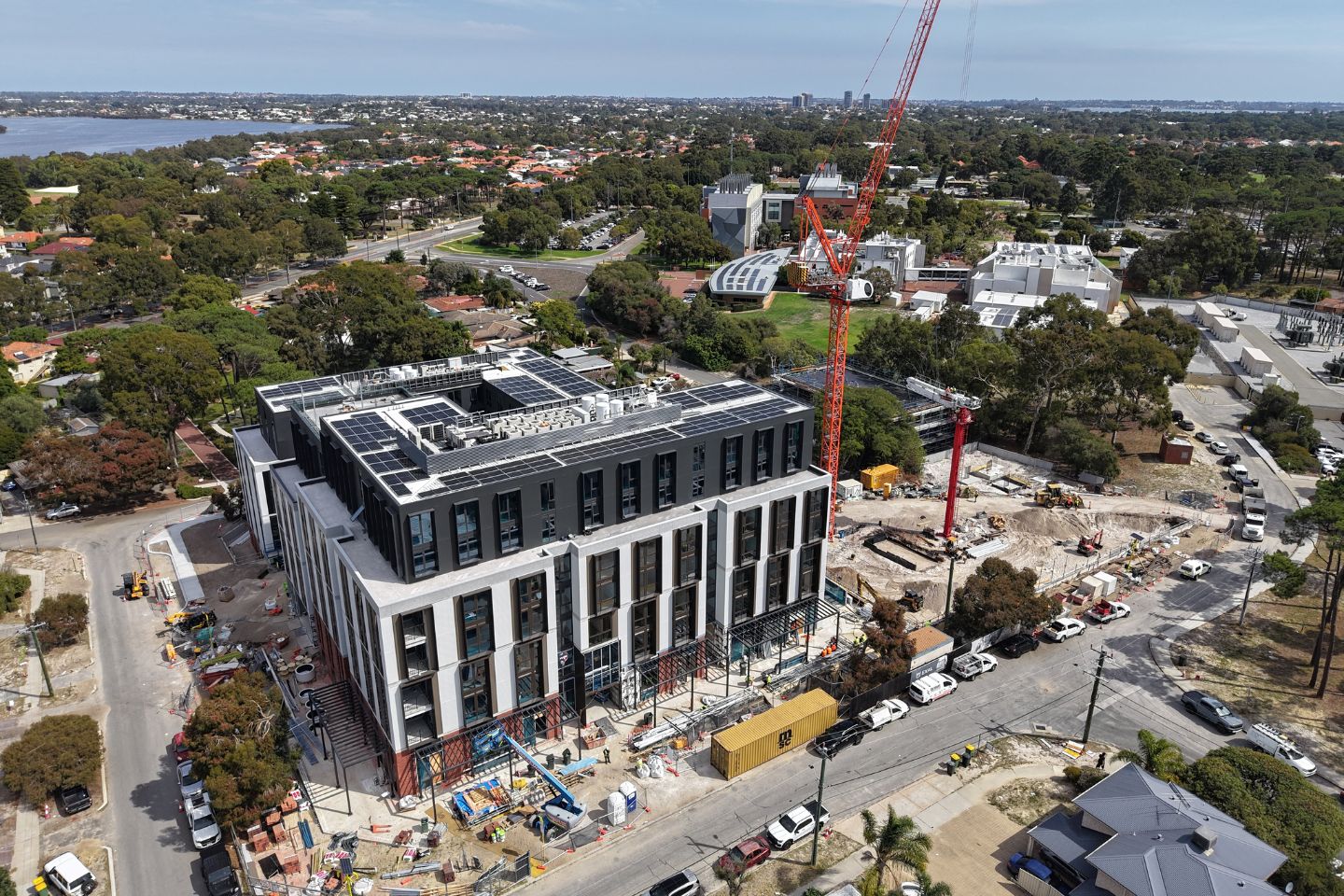
Developer Exal Group has secured funding from a Singaporean backer for its 916-bed student accommodation complex in Waterford.
Tempus AI stock rises on Gilead collaboration deal

How Policymakers Can Lower Mortgage Costs And Increase Housing Affordability

DENVER — Travelers at Denver International Airport faced manageable security wait times Friday as the busy spring travel period tapered off, with standard TSA lines averaging 10 to 17 minutes across the facility’s East and West checkpoints amid moderate passenger volume on April 10, 2026.

According to real-time data from the airport’s official website, East Security showed standard lane estimates of 13-17 minutes and TSA PreCheck lanes at 4-8 minutes. West Security reported lighter conditions with standard waits of 10-14 minutes and PreCheck as quick as 1-5 minutes. Both checkpoints remained open from 3 a.m. to 1 a.m., with PreCheck available through late evening hours.
The relatively short lines offered relief after a spring break season that saw more than 1.3 million passengers screened at DEN between mid-March and late March, with some peak mornings pushing waits higher. Airport officials continue to recommend arriving at least two hours before domestic flights to account for check-in, baggage and potential fluctuations in security processing.
Denver International, one of the nation’s busiest hubs and a major gateway for United Airlines and Southwest Airlines, handled steady Friday traffic typical of a post-holiday weekend. While early April brought scattered flight delays due to weather and national airspace issues, security operations appeared efficient thanks to recent checkpoint upgrades that nearly doubled screening capacity in some lanes.
Real-Time Conditions and Peak Patterns
As of mid-morning Friday, conditions stayed well below the 30-minute mark that can occur during heavy rushes. Historical patterns at DEN show peak congestion often hits between 3-4:30 a.m., 8-10 a.m. and 3-5 p.m., when departure banks overlap with business and leisure travelers. On April 10, afternoon and evening projections suggested waits could remain in the low teens for standard screening.
The airport’s two main security checkpoints in the Jeppesen Terminal — East on the east side of the Great Hall and West on the opposite side — serve all passengers. CLEAR biometric expedited lanes are available at both, further shortening times for enrolled members. TSA PreCheck, now used by millions nationwide, continued to deliver the fastest throughput.
Travelers without trusted traveler programs can still speed things up through the free DEN Reserve system, which allows booking a dedicated security time slot up to 14 days in advance for flights departing between 6 a.m. and 9 p.m. Slots are limited and tend to fill quickly during busier periods.
Airport spokespeople emphasized that wait times can shift rapidly based on passenger volume, staffing and random secondary screenings. Officials urged checking flydenver.com/security or the MyTSA app before heading to the airport for the latest estimates.
Spring Break Aftermath and Operational Improvements
The just-concluded spring break window tested DEN’s infrastructure, with TSA forecasting heavy volume through late March. While some mornings saw lines stretching longer — including isolated reports of over an hour during the height of the rush — overall waits at Denver remained shorter than at many peer airports facing similar pressures.
Recent multimillion-dollar upgrades to the security checkpoints have helped. Newer lanes can process nearly twice as many passengers per hour, contributing to smoother flow even when volumes spike. These enhancements came online in recent years as part of broader terminal modernization efforts at the sprawling facility, known for its tent-like roof and underground train system connecting concourses.
Friday’s lighter conditions aligned with national TSA checkpoint data showing typical mid-spring passenger numbers after the March surge. Broader U.S. air travel has seen occasional disruptions from weather, but Denver’s security lines have largely avoided the multi-hour nightmares reported elsewhere during peak periods.
Tips for Smoother Travel Through DEN
Airport officials offered standard advice for minimizing stress:
- Arrive early: Two hours for domestic flights, three for international.
- Pack smart: Follow the 3-1-1 liquids rule and remove laptops, liquids and large electronics early.
- Enroll in expedited programs: TSA PreCheck, CLEAR and Global Entry can cut wait times dramatically.
- Use DEN Reserve: Book a free timed slot online to guarantee a dedicated lane.
- Monitor in real time: Bookmark the airport’s security page or use flight apps that integrate wait time data.
Passengers with mobility needs or traveling with young children can request assistance through airline staff or airport customer service. Families should factor in extra time for strollers, car seats and the playful public art installations that can distract little ones while waiting.
DEN’s single terminal design funnels all passengers through the central Great Hall before security, with easy access to dining, shopping and the signature blue mustang statue outside. Once through screening, the underground train whisks travelers to Concourses A, B and C, home to dozens of gates and amenities.
Broader Context for Spring 2026 Travel
Denver International continues to rank among the top 20 busiest U.S. airports by passenger volume. Its central location makes it a critical hub for connecting flights across the Mountain West and beyond. While security remains the most visible choke point for many travelers, other factors like baggage handling, gate availability and air traffic control also influence the overall experience.
Early April brought some operational hiccups, with hundreds of delays logged across the first week due to weather systems moving through Colorado and national airspace constraints. Travelers on Friday were advised to check flight status directly with their airline in addition to monitoring security lines.
Looking ahead, summer travel season will likely bring renewed pressure as families plan vacations and business travel rebounds. Airport leaders have signaled ongoing investment in technology and staffing coordination to keep wait times predictable.
For now, Friday’s moderate lines offered a welcome breather. Passengers moving through East and West Security reported efficient processing, with many clearing checkpoints in well under 20 minutes even without expedited options.
Whether catching a quick domestic hop or embarking on a longer journey, DEN travelers on April 10 benefited from lighter post-spring break traffic and proven operational improvements. As always in air travel, checking real-time data remains the best defense against surprises at one of America’s most distinctive airports.

Marching Through Iran – A First Quarter 2026 Review

A Subiaco-based architecture firm has been accused of breaching a contract over a high-end apartment complex in Burswood.

Fortescue goes for green Pilbara grid by 2028

Japan approves bill to classify crypto as financial assets

Trump’s Comms Chief Slams George Clooney’s ‘War Crime’ Remark


-

 Fashion7 days ago
Weekend Open Thread: Spanx – Corporette.com
-

 Business4 days ago
Three Gulf funds agree to back Paramount’s $81 billion takeover of Warner, WSJ reports
-

 Sports6 days ago
India men’s 4x400m and mixed 4x100m relay teams register big progress | Other Sports News
-

 Business6 days ago
Expert Picks for Every Need
-

 Tech3 days ago
How Long Can You Drive With Expired Registration? What Florida Law Says
-

 Business5 days ago
No Jackpot Winner, Prize to Climb to $231 Million
-

 Fashion4 days ago
Massimo Dutti Offers Inspiration for Your Summer Mood Board
-

 Fashion3 days ago
Let’s Discuss: DEI in 2026
-
Politics7 days ago
Wings Over Scotland | The quality of mercy
-

 Crypto World2 days ago
Bitcoin recovers as US and Iran Agree a Ceasefire Deal
-

 Business6 days ago
Akebia Therapeutics, Inc. (AKBA) Discusses Pipeline Progress and Strategic Focus on Kidney Disease Treatments at R&D Day – Slideshow
-

 Crypto World23 hours ago
Canary Capital Files SEC Registration for PEPE ETF
-

 Politics6 days ago
The UK should not pay a penny in slavery reparations
-

 Fashion7 days ago
Frugal Friday’s Workwear Report: Hammered Metallic Button Sweater Vest
-

 Tech4 days ago
Samsung just gave up on its own Messages app
-

 Tech4 days ago
Haier is betting big that your next TV purchase will be one of these
-

 Fashion7 days ago
Weekly News Update, 4.3.26 – Corporette.com
-

 NewsBeat7 days ago
Kemi Badenoch talks ‘spring cleaning’ Reform defections
-

 Tech4 days ago
Gamer Restores the Original PlayStation Portal From Two Decades Ago
-

 Tech7 days ago
Flat tire? Dead battery? Speedy’s serves stranded Seattle riders as a quicker e-bike picker-upper
You must be logged in to post a comment Login